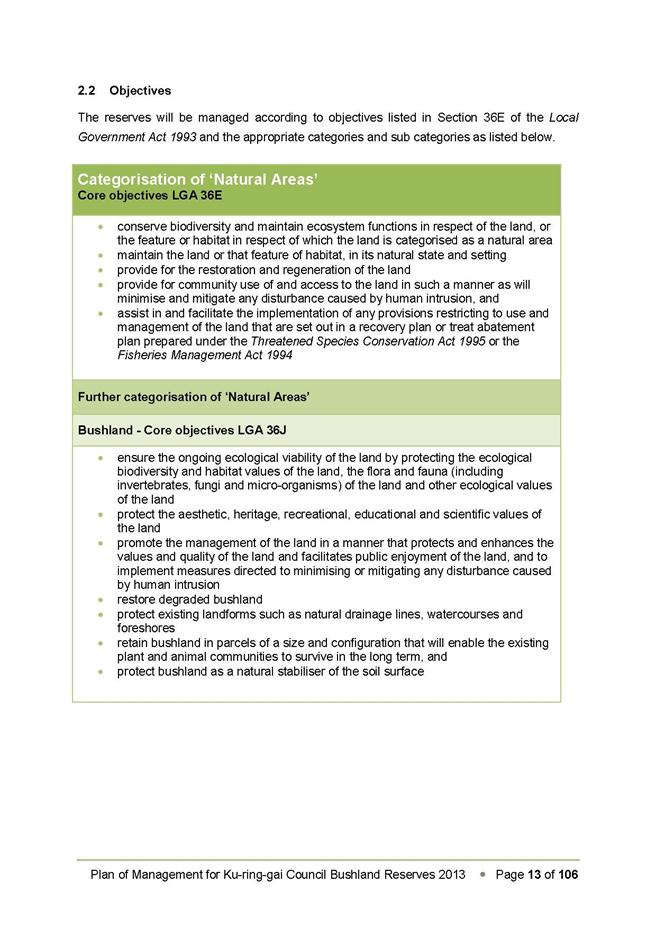
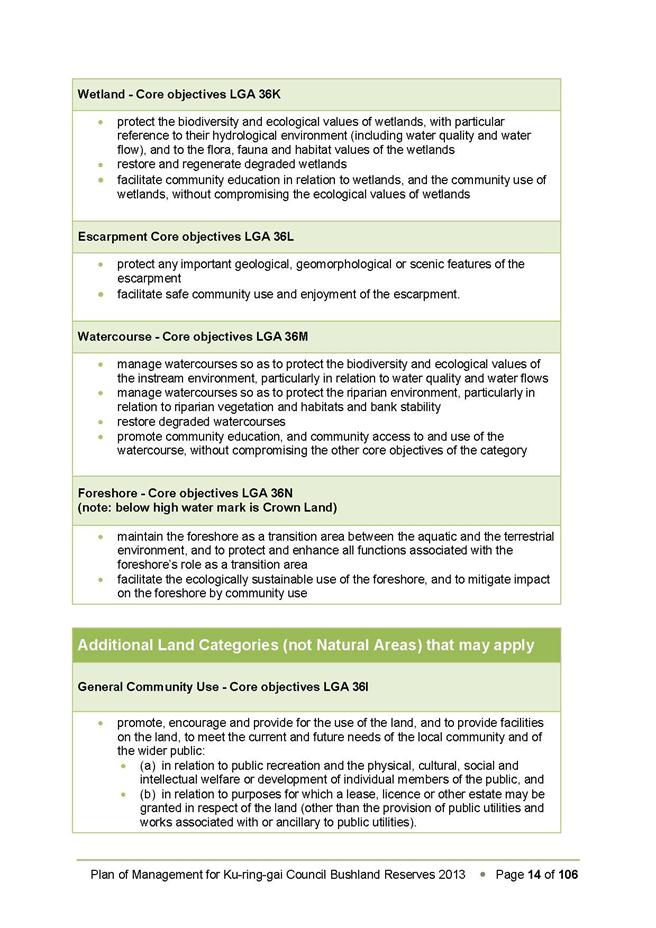
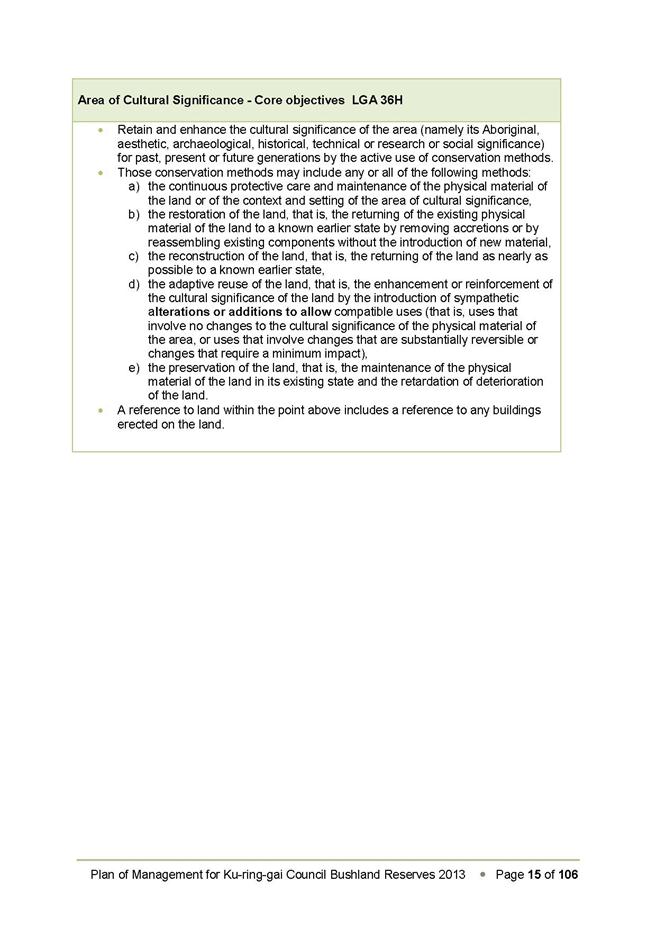
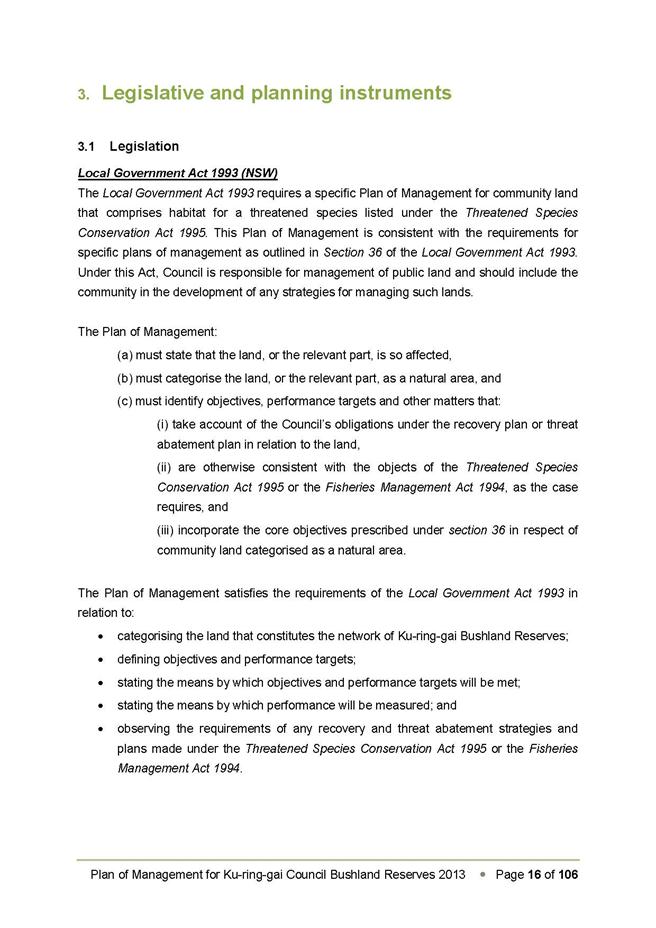
|
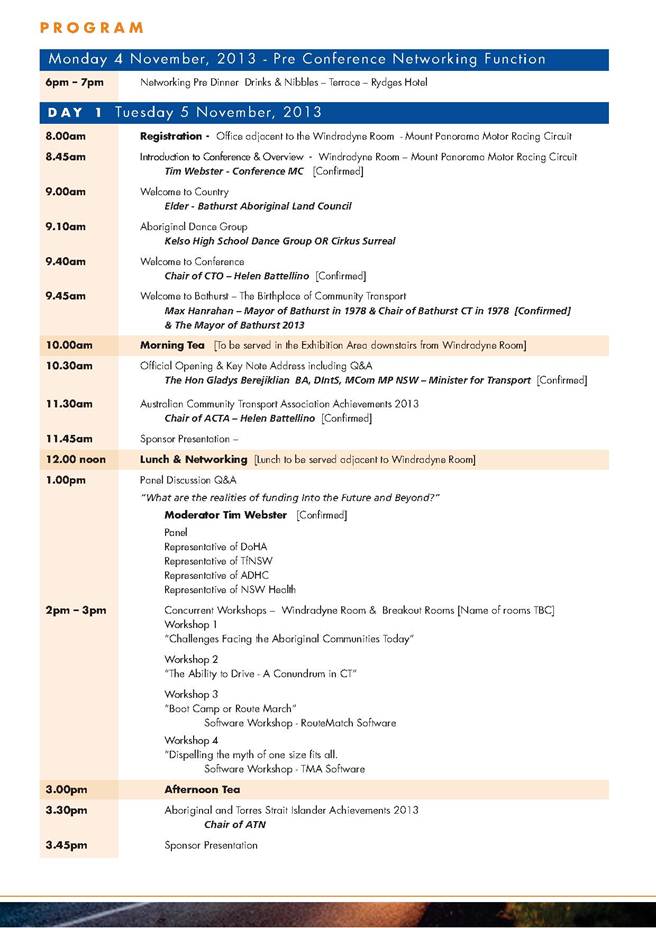
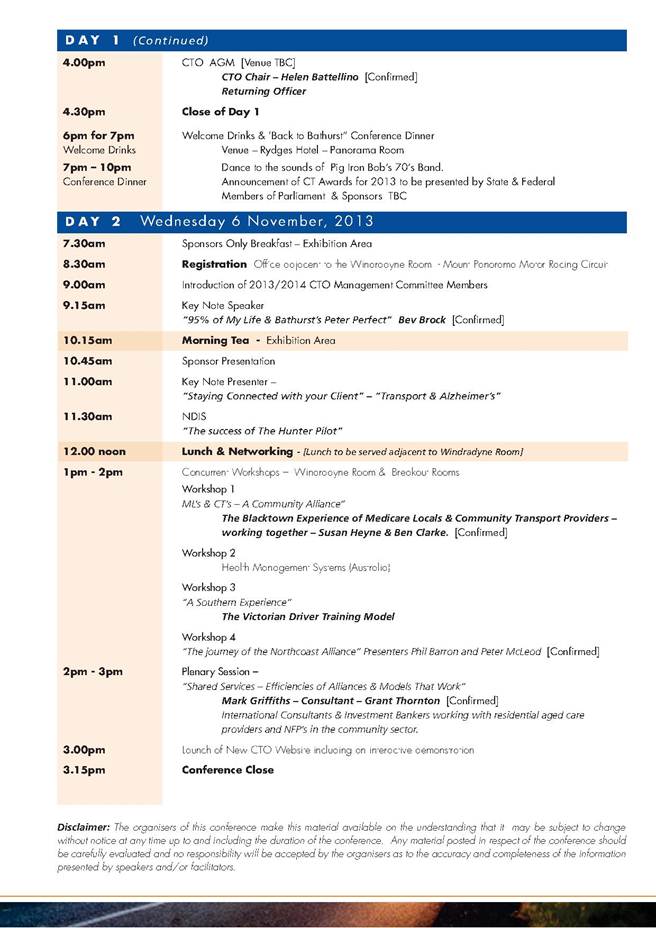
APPENDIX No: 1 - Community Transport Organisation conference program |
|
Item No: GB.2 |


Ordinary Meeting of Council
TO BE HELD ON Tuesday, 22 October 2013 AT 7.00pm
Level 3 Council Chambers
Agenda
** ** ** ** ** **
NOTE: For Full Details, See Council’s Website –
www.kmc.nsw.gov.au under the link to business papers
DECLARATIONS OF INTEREST
Confirmation of Reports to be Considered in Closed Meeting
Address the Council
NOTE: Persons who address the Council should be aware that their address will be tape recorded.
Documents Circulated to Councillors
CONFIRMATION OF MINUTEs
Minutes of Ordinary Meeting of Council 7
File: S02131
Meeting held 8 October 2013
Minutes numbered 301 to 316
minutes from the Mayor
Petitions
PT.1 Petition Against Changes to Parking Arrangements - Coonanbarra Road Car Park, Wahroonga - (Three Thousand and Sixteen [3016] Signatures) 53
File: S02281
"We, the undersigned local residents and shopkeepers are outraged at the proposal for paid and display parking and also the enforcement of the one visit per day rule.
All people concerned are of the opinion that the proposal would be detriment to both local businesses and the community.
The proposal does not take into account the bigger issue, the lack of adequate parking available for customer, commuters and staff that all park in Wahroonga. We, therefore, ask Council to -
• Not introduce paid parking;
• Allow more than one visit to the car park per day.”
GENERAL BUSINESS
i. The Mayor to invite Councillors to nominate any item(s) on the Agenda that they wish to have a site inspection.
ii. The Mayor to invite Councillors to nominate any item(s) on the Agenda that they wish to adopt in accordance with the officer’s recommendation allowing for minor changes without debate.
GB.1 Appointment of External Auditor for the Six Year Period to 30 June 2019 54
File: S09746
To appoint Council’s auditor for the period 1 July 2013 to 30 June 2019, pursuant to Section 422 of the Local Government Act 1993.
Recommendation:
That pursuant to Section 422 of the Local Government Act 1993, Council hereby appoints Tenderer A as identified in the Confidential Summary (Attachment A1) to the report.
GB.2 CTO Annual State Conference 58
File: CY00043/5
To advise Council of the 2013 Community Transport Organisations (CTO) Annual State Conference.
Recommendation:
That Councillors interested in attending the CTO Annual State Conference advise the General Manager by close of business Wednesday, 23 October 2013.
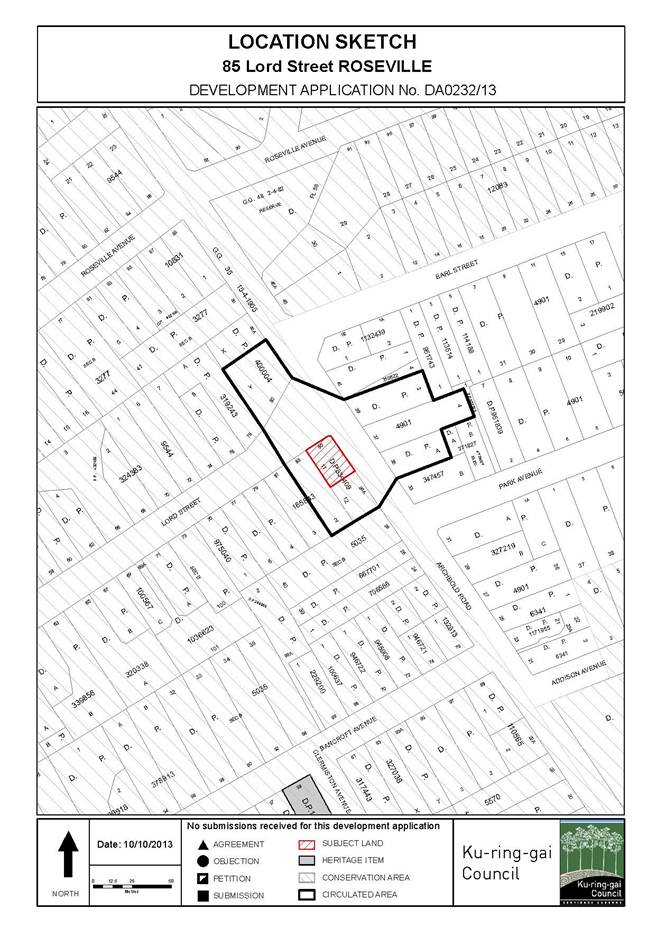
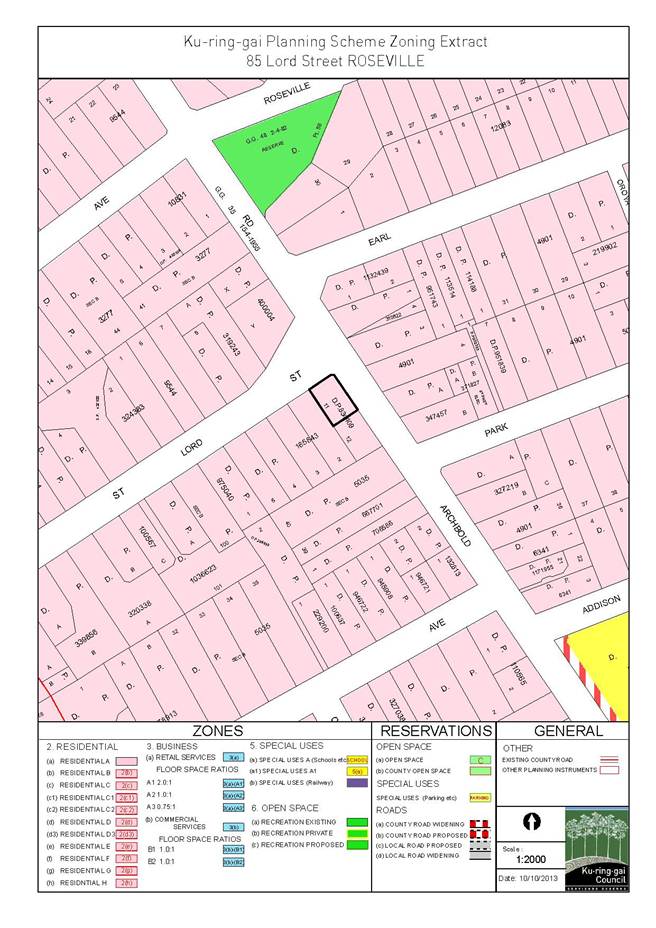
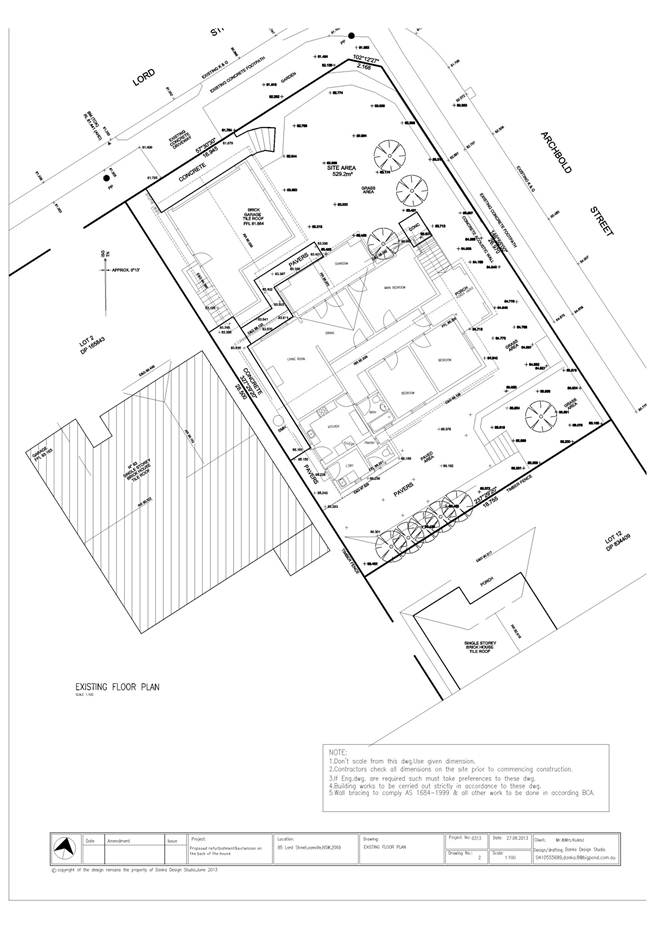
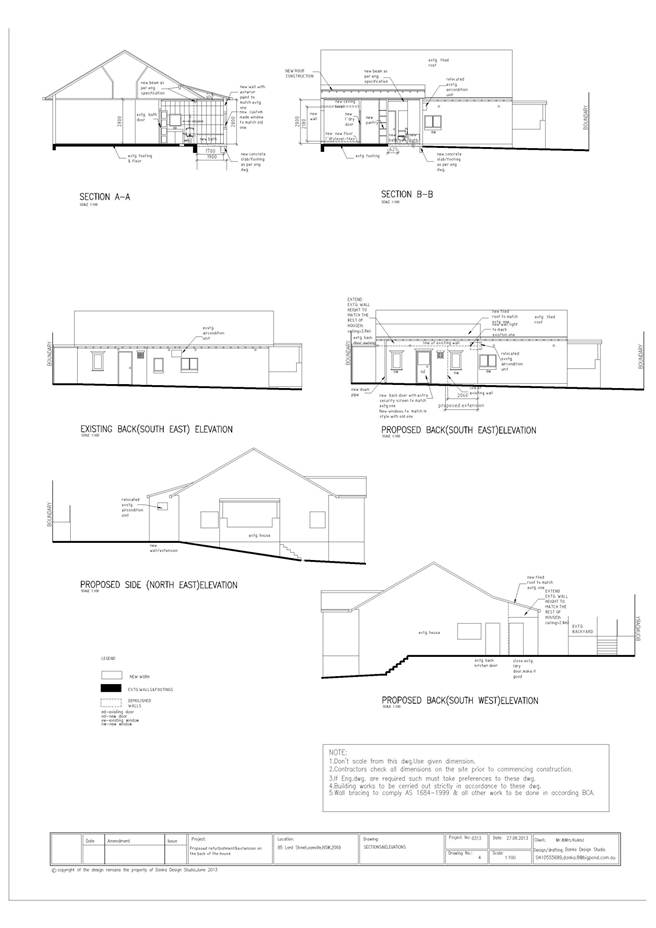
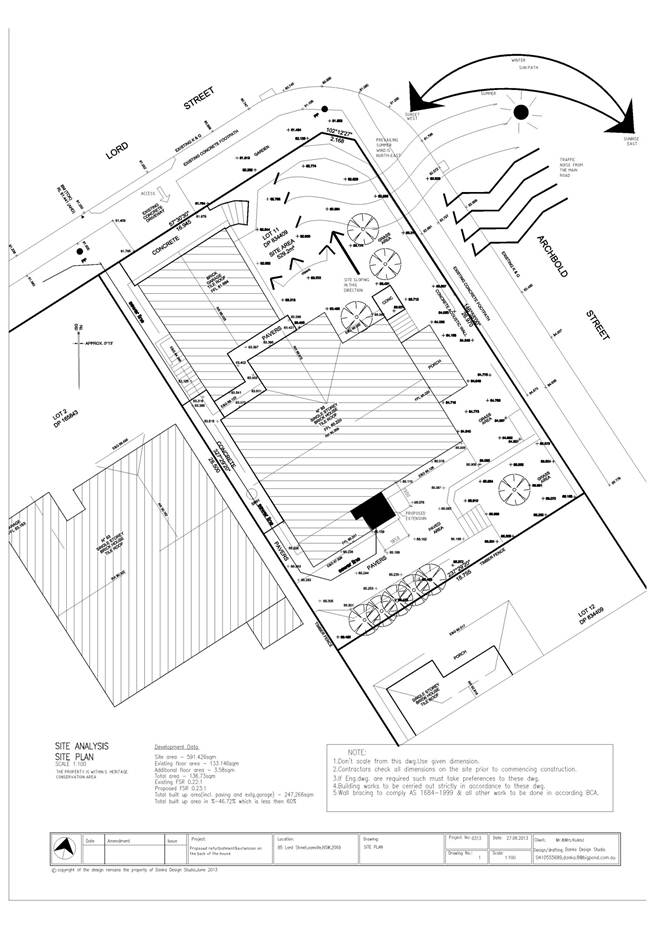
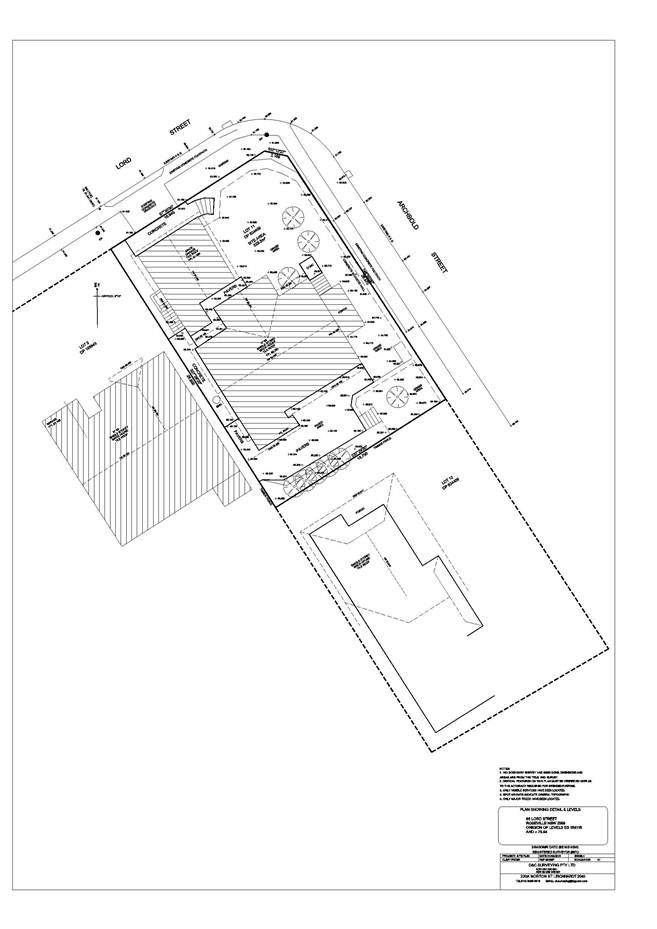
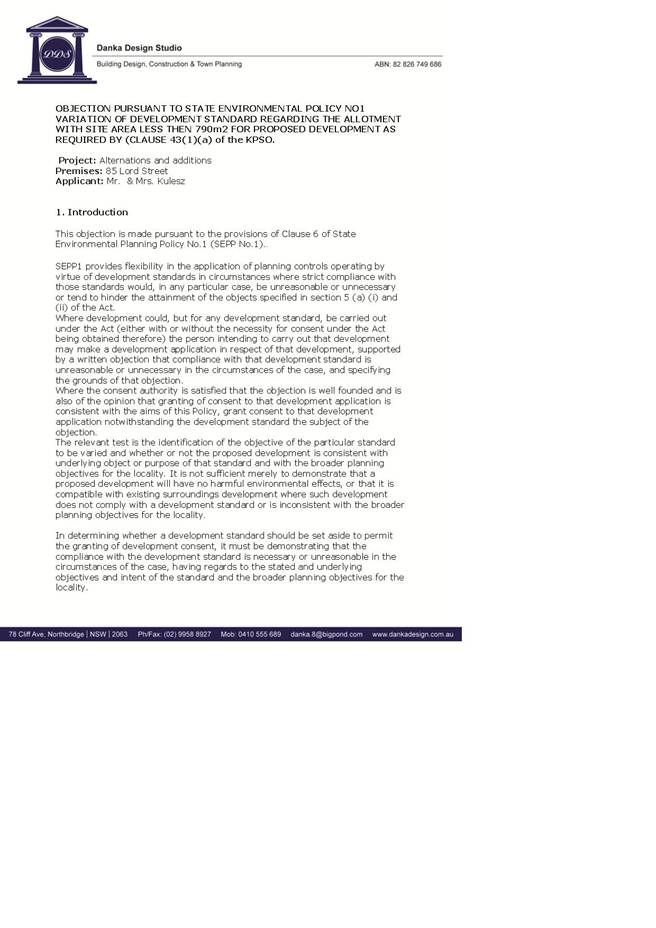
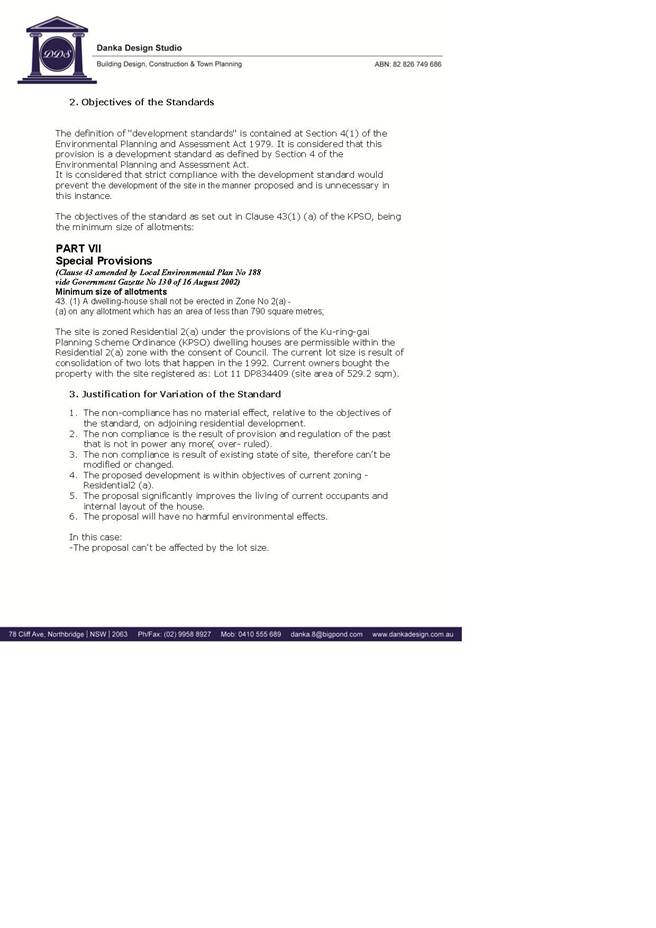
GB.3 85 Lord Street, Roseville - Alterations and Additions 65
File: DA0232/13
Ward: Roseville
Applicant: Peter & Bernadette Kulesz
Owner: Peter & Bernadette Kulesz
To determine Development Application No.0232/13 for alterations and additions at 85 Lord Street, Roseville.
Recommendation:
Approval.
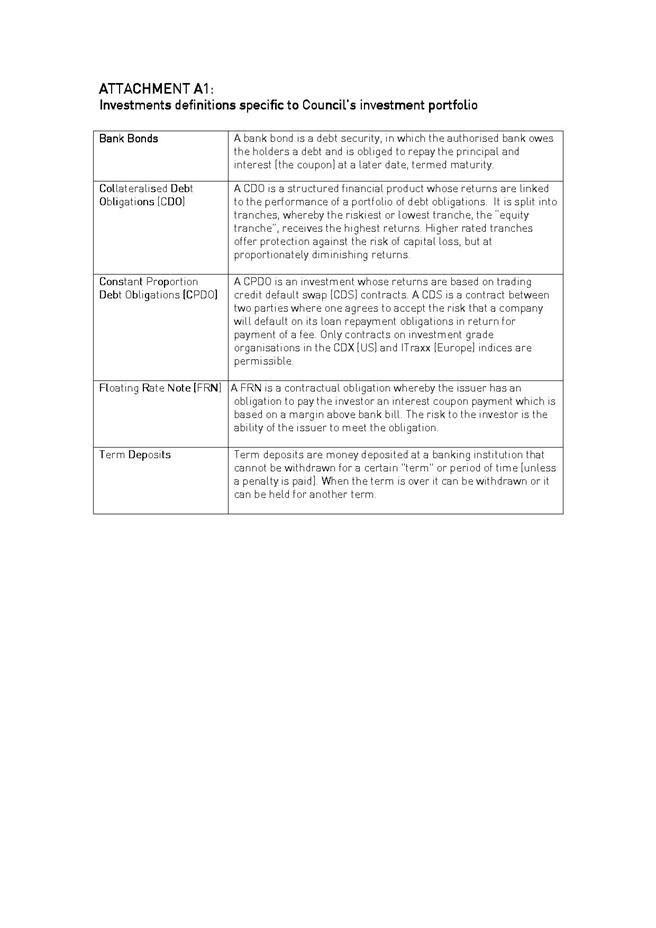
GB.4 Investment Report as at 30 September 2013 99
File: S05273
To present Council’s investment portfolio performance for September 2013.
Recommendation:
That the summary of investments performance for September 2013 be received and noted; and that the Certificate of the Responsible Accounting Officer be noted and report adopted.
GB.5 Draft Swimming Pool Barrier Inspection Policy 108
File: S07162
To present to Council the proposed Swimming Pool Barrier Inspection Policy.
Recommendation:
That the draft Swimming Pool Barrier Inspection Policy, as attached to this report be adopted by Council.
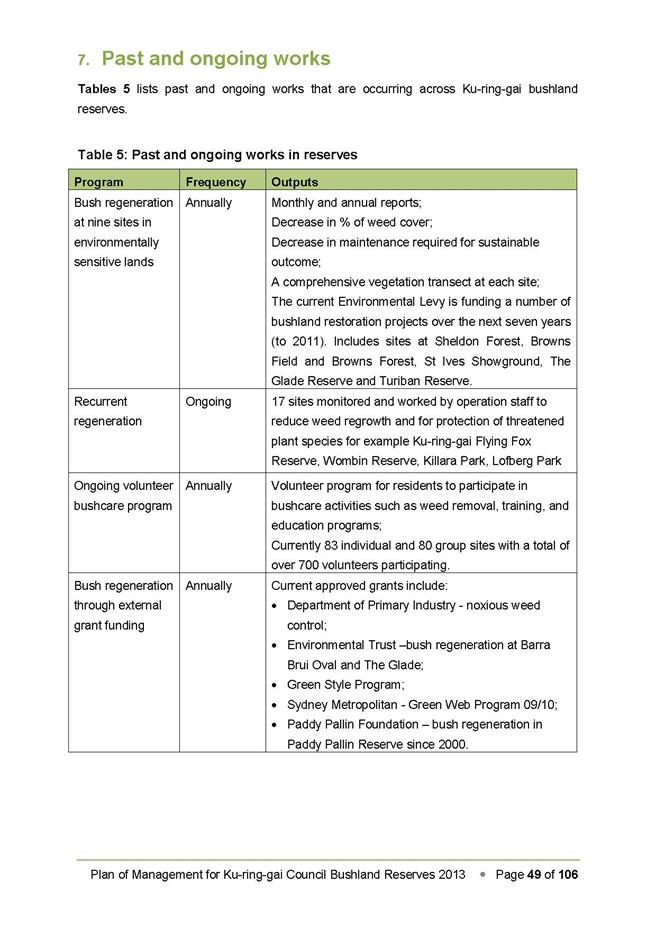
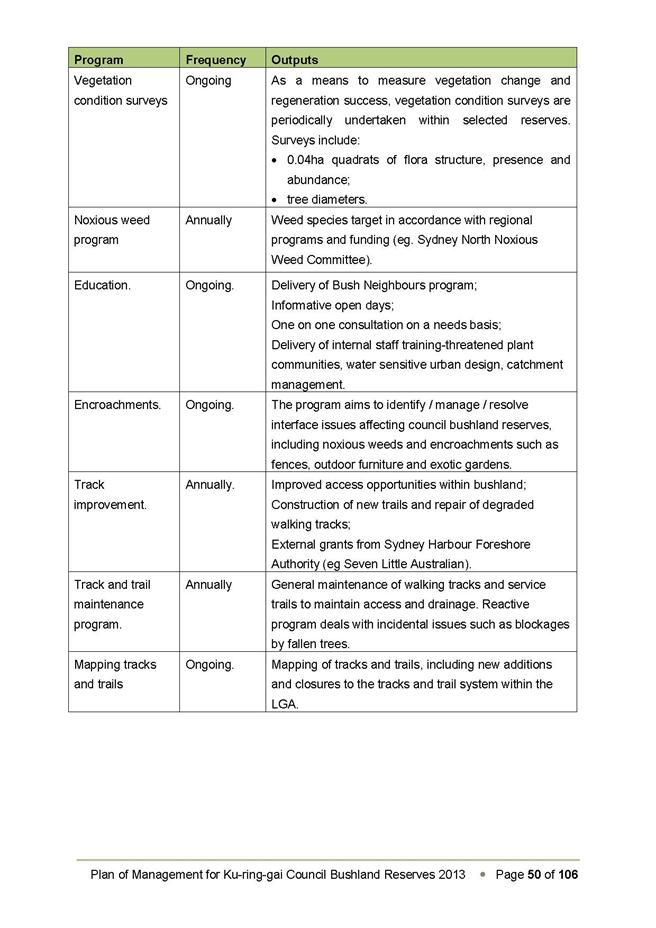
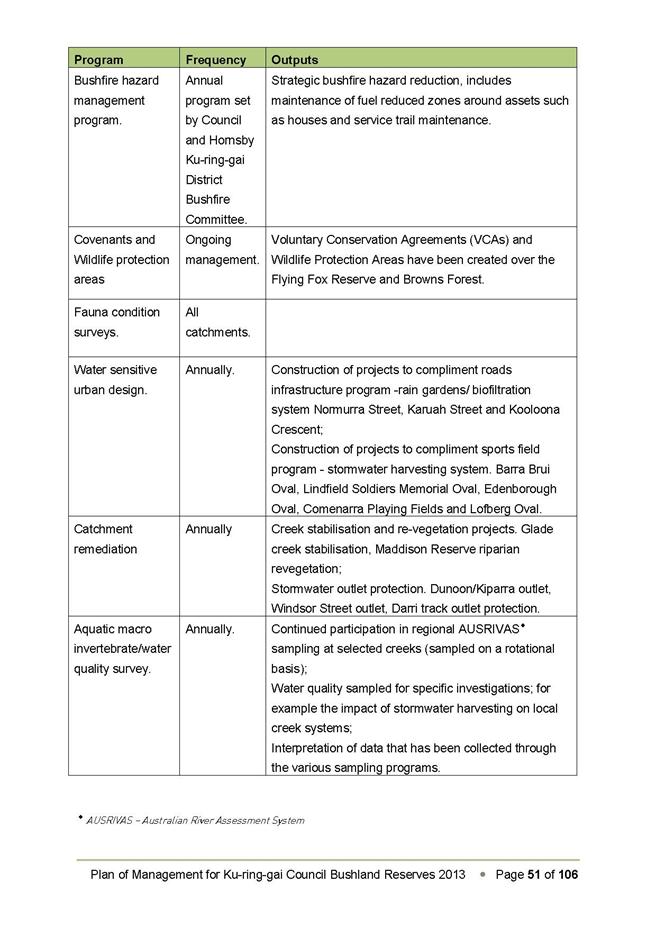
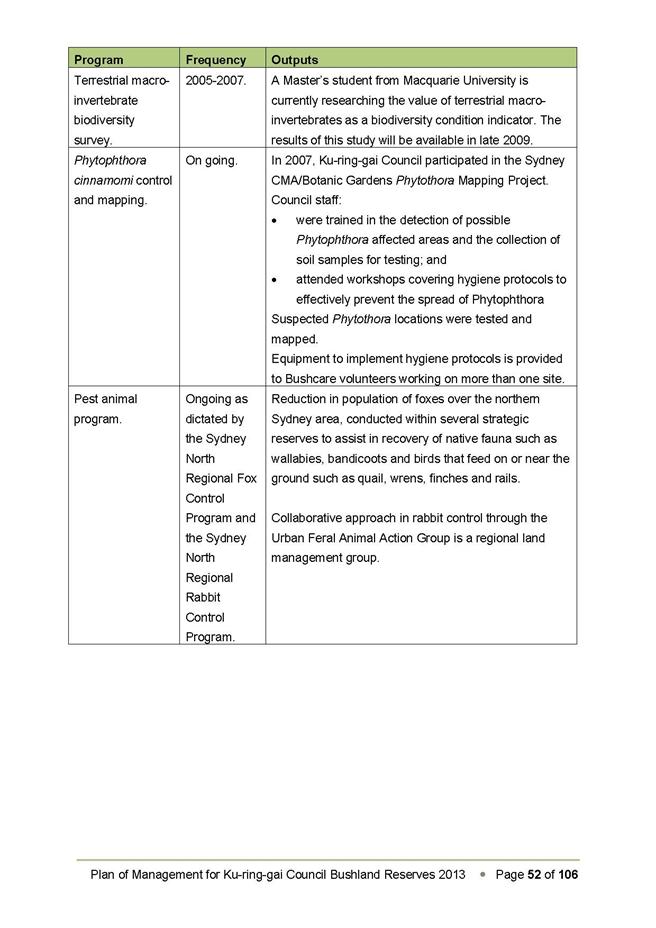
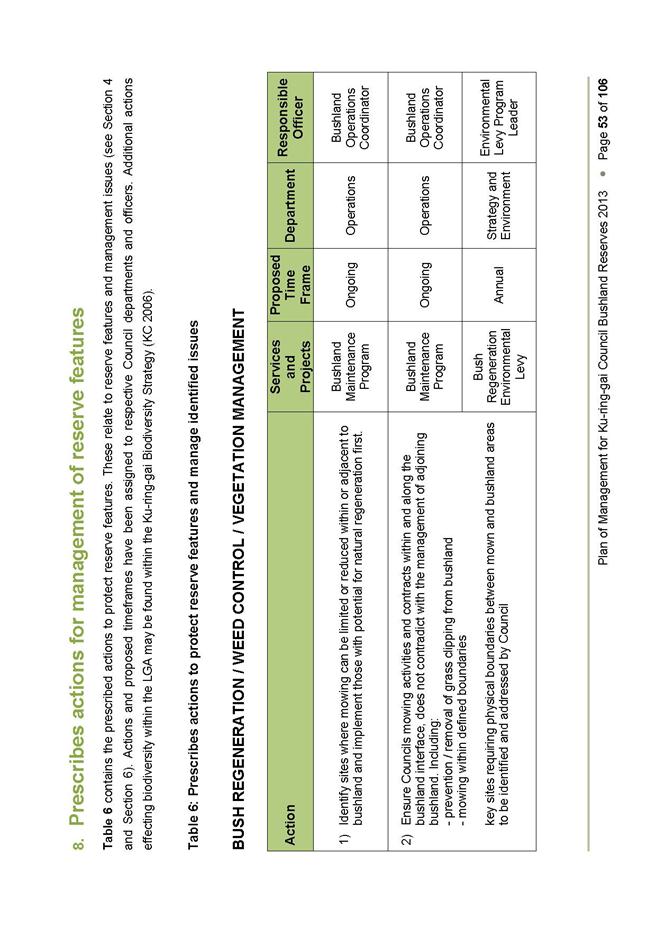
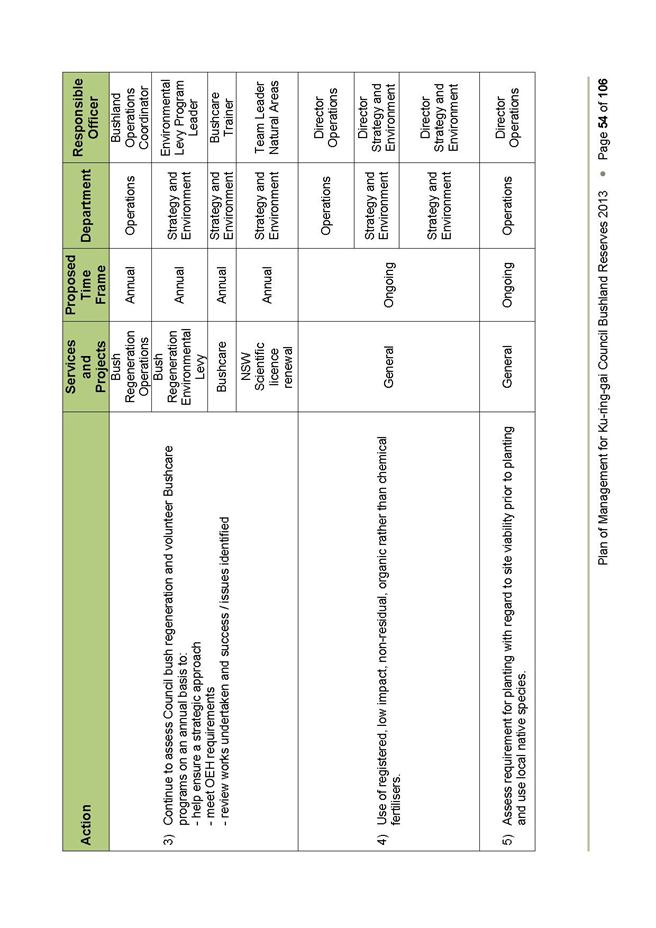
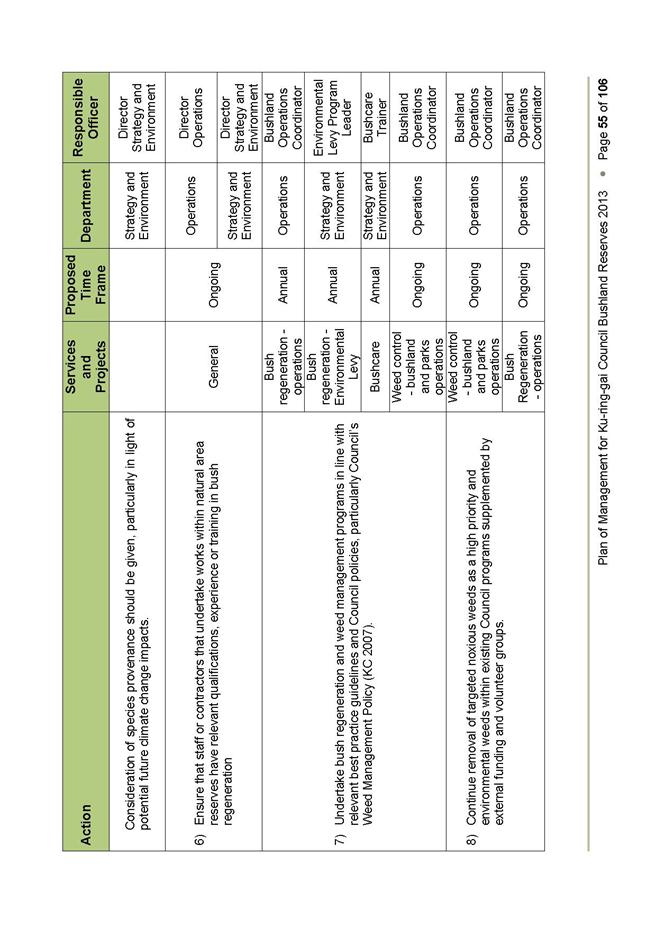
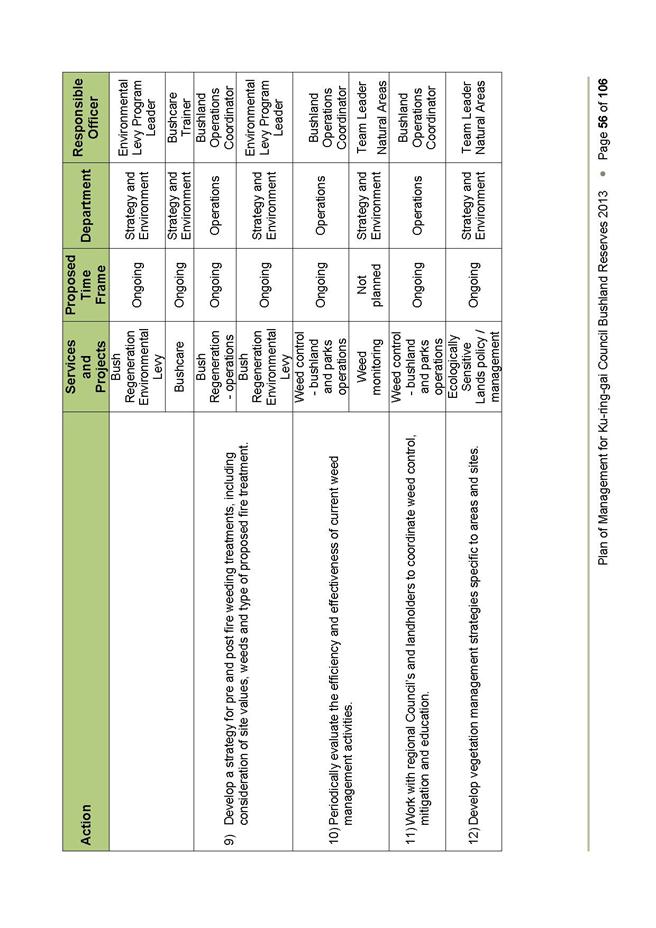
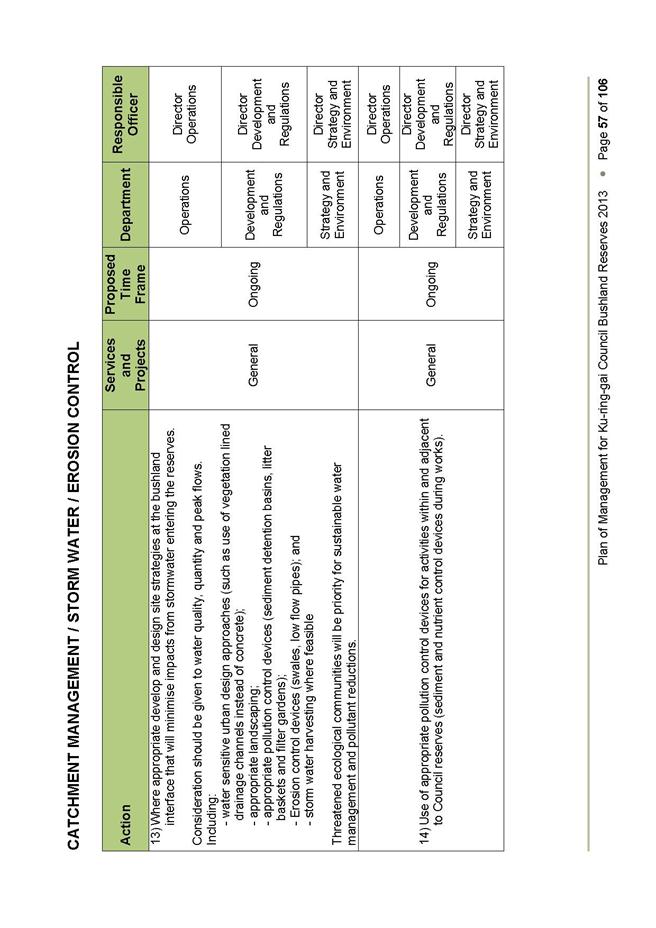
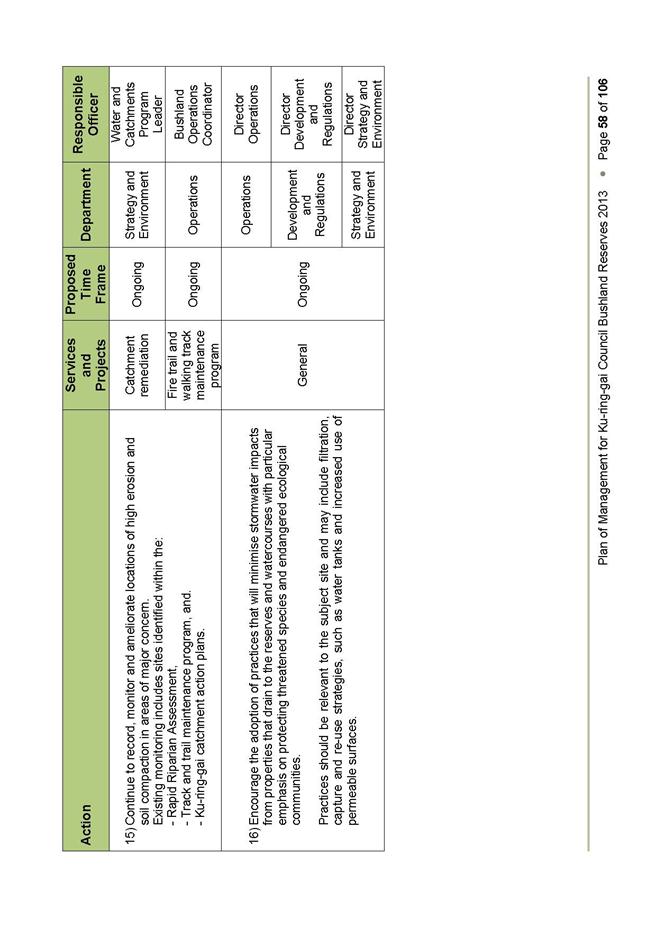
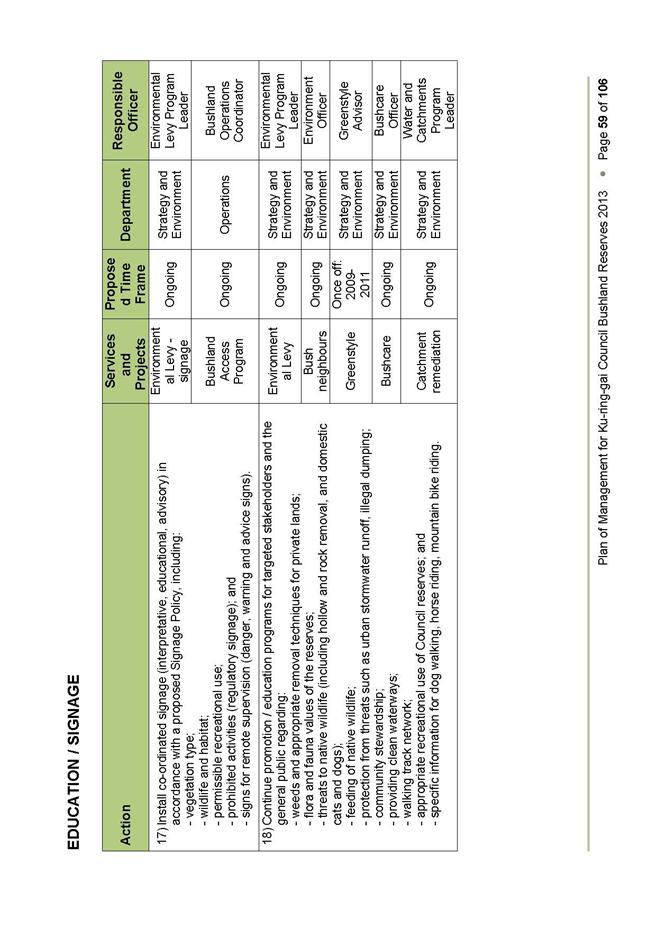
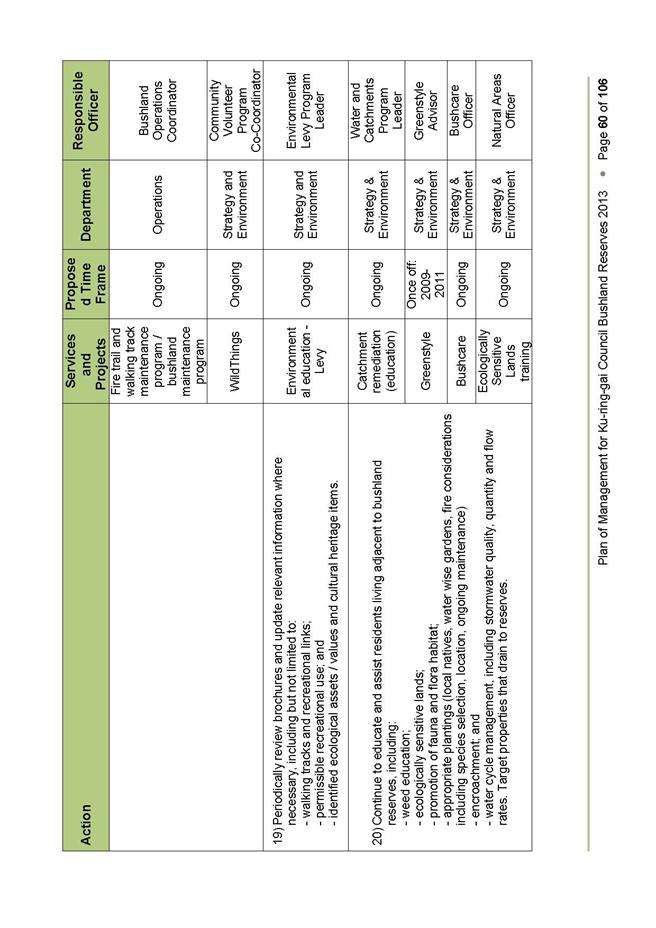
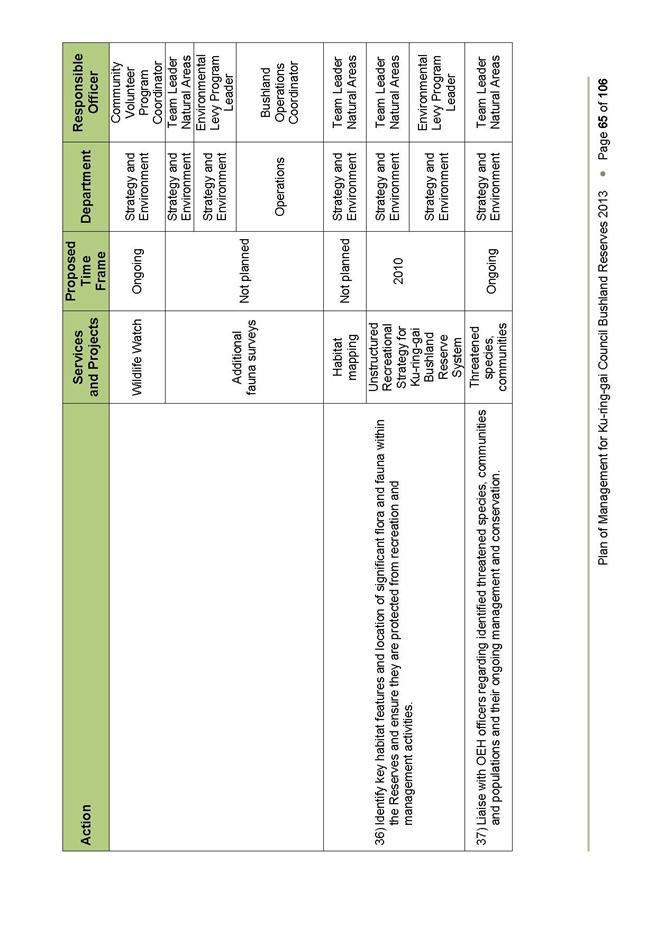
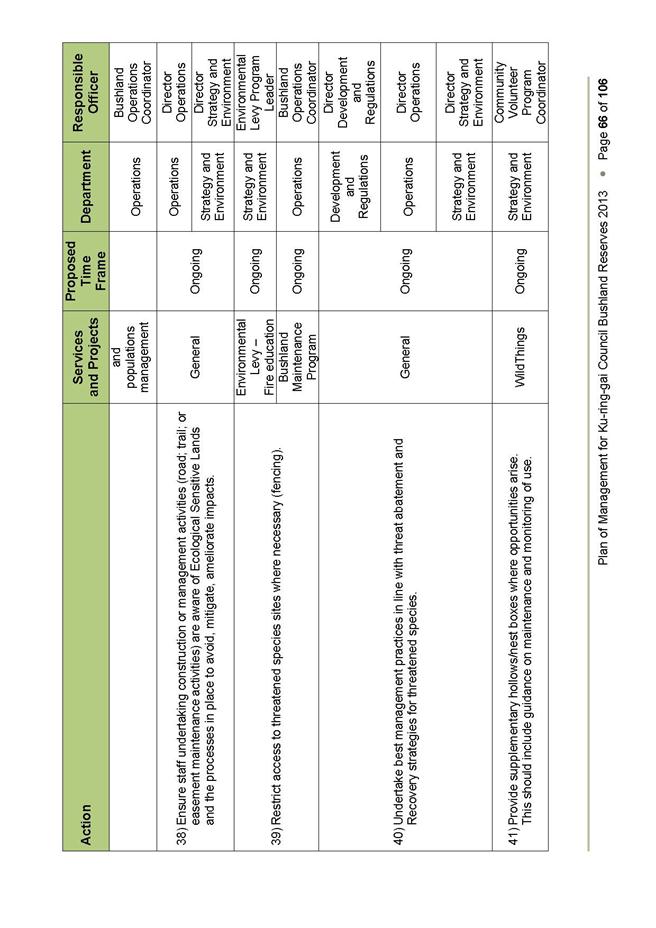
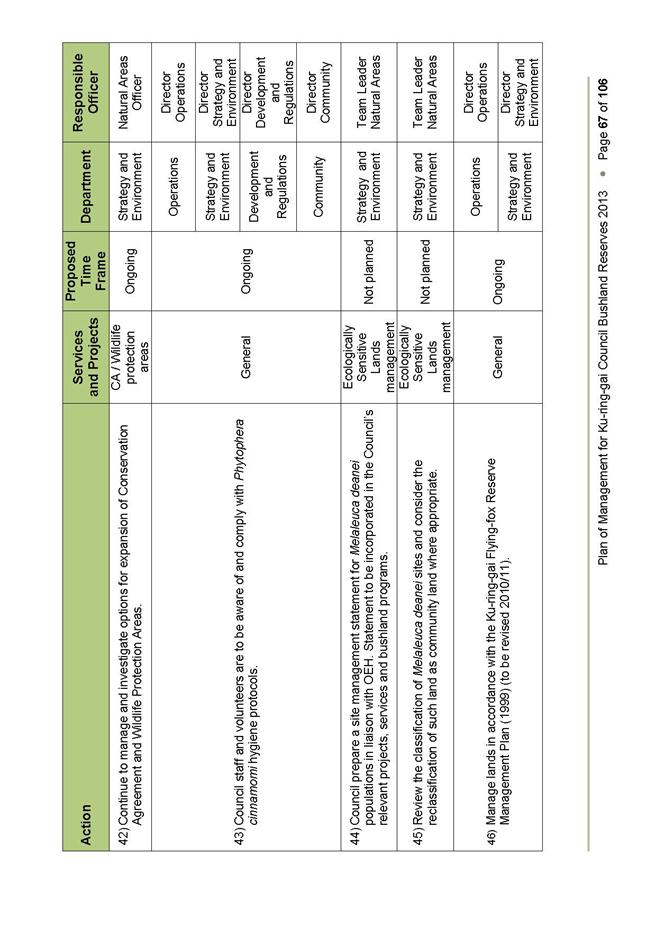
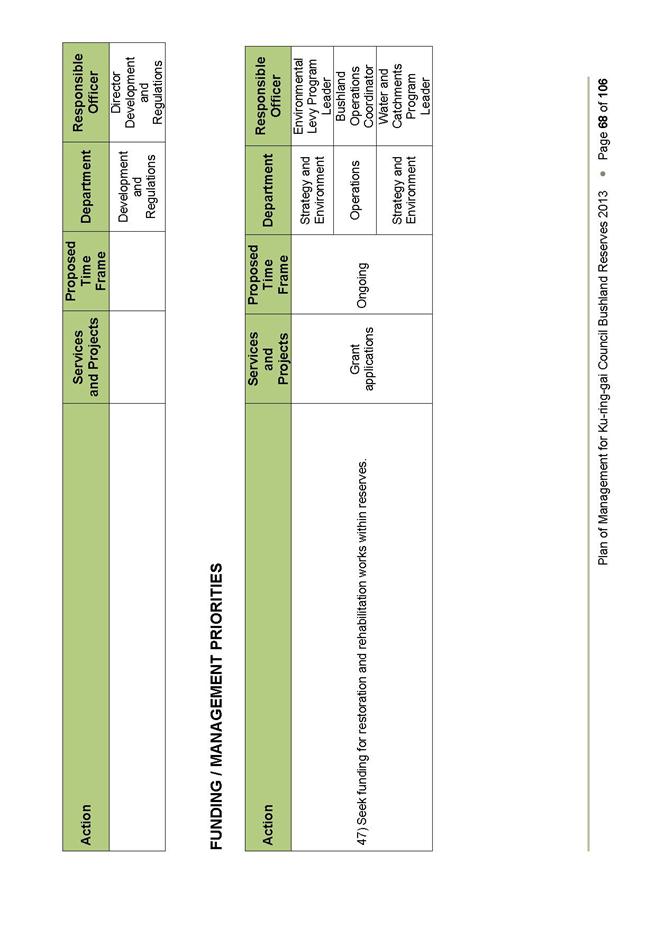
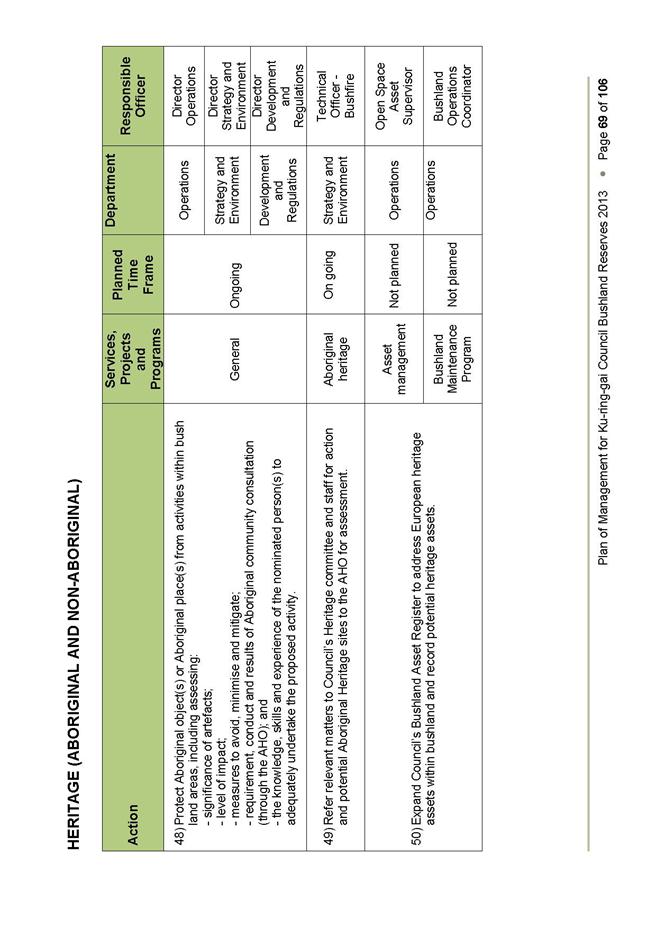
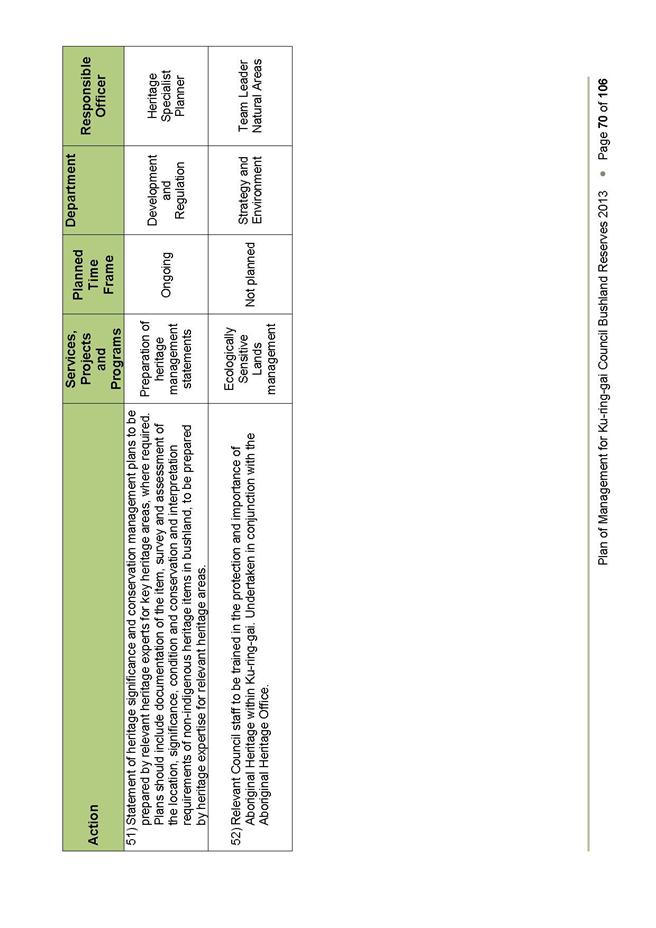
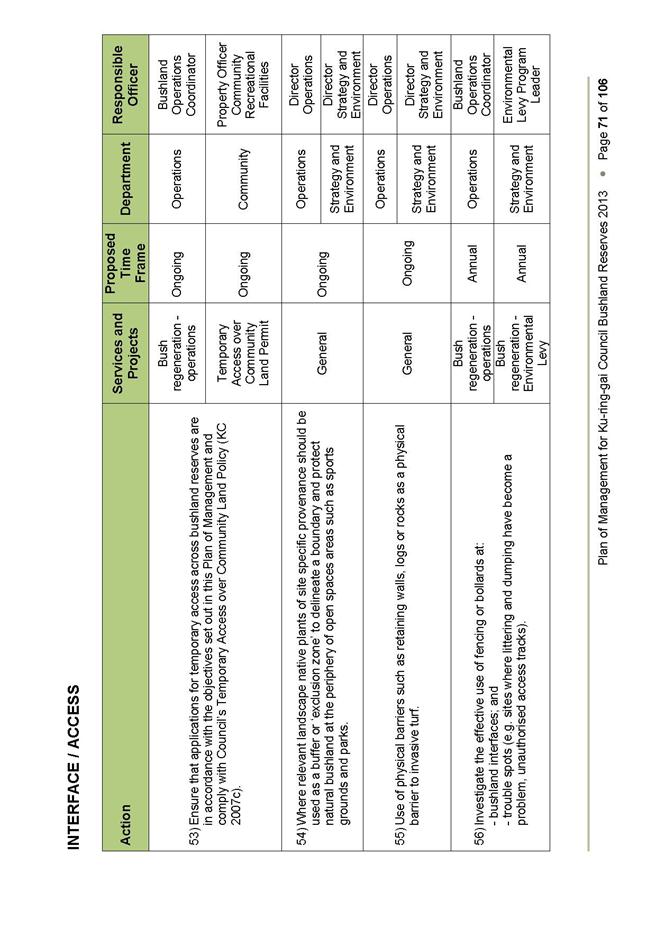
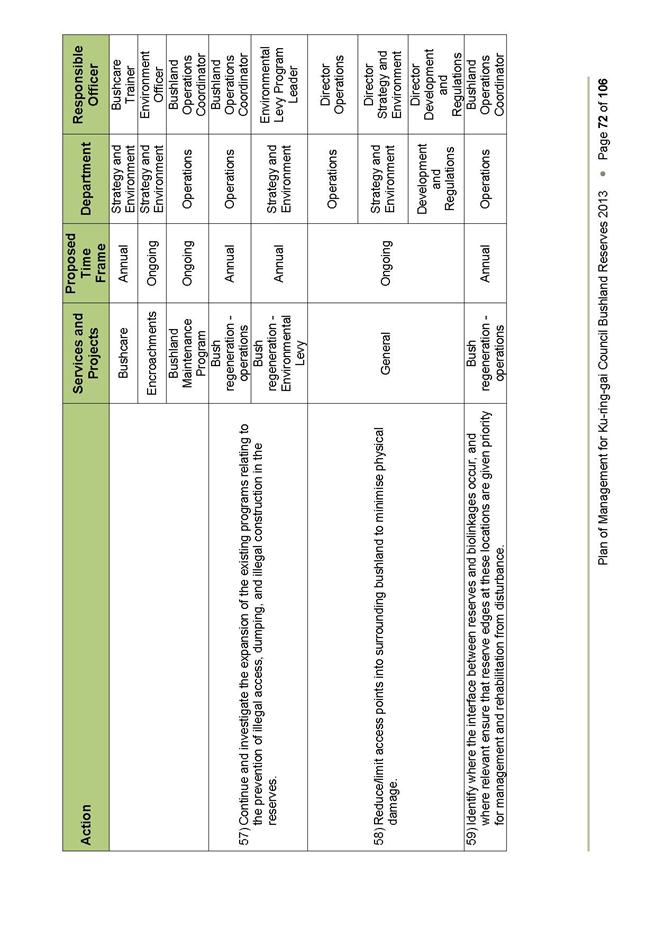
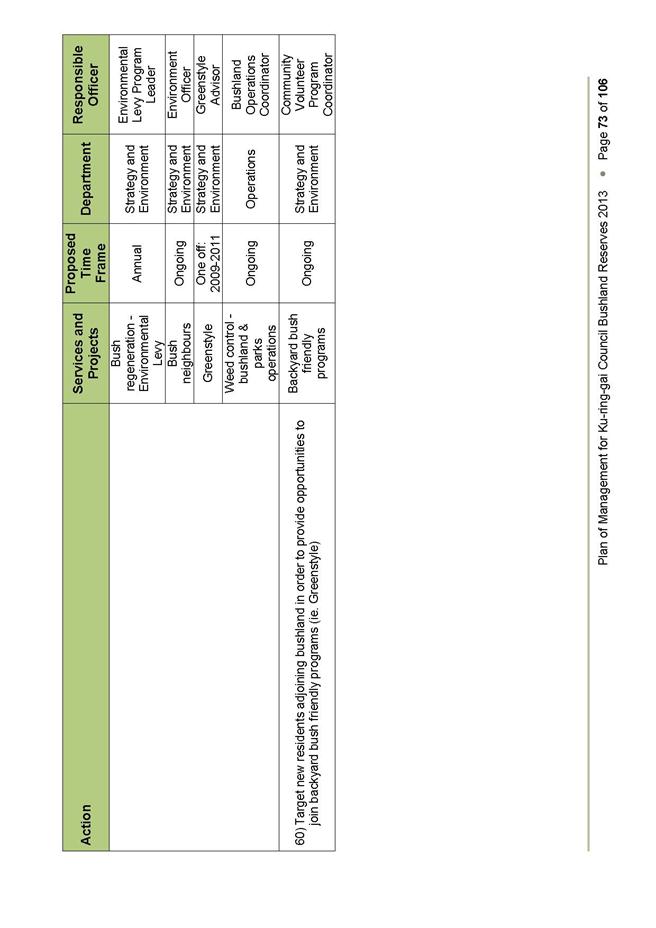
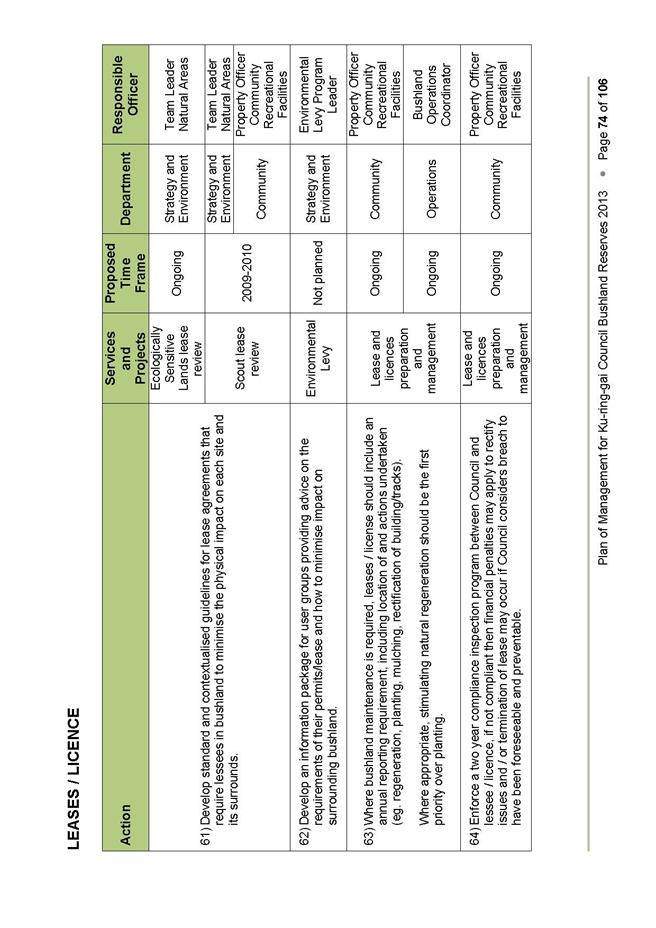
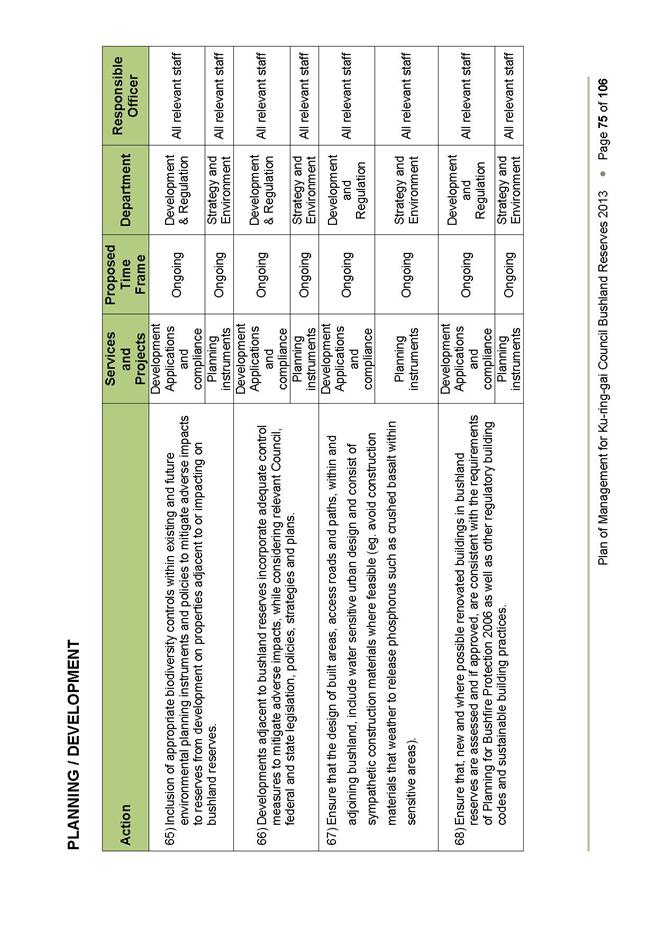
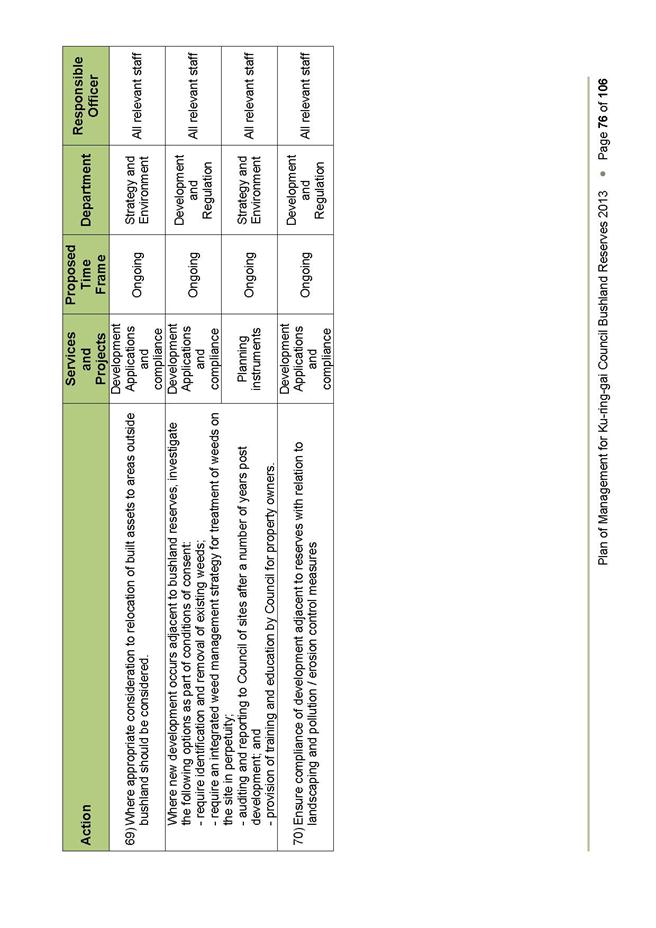
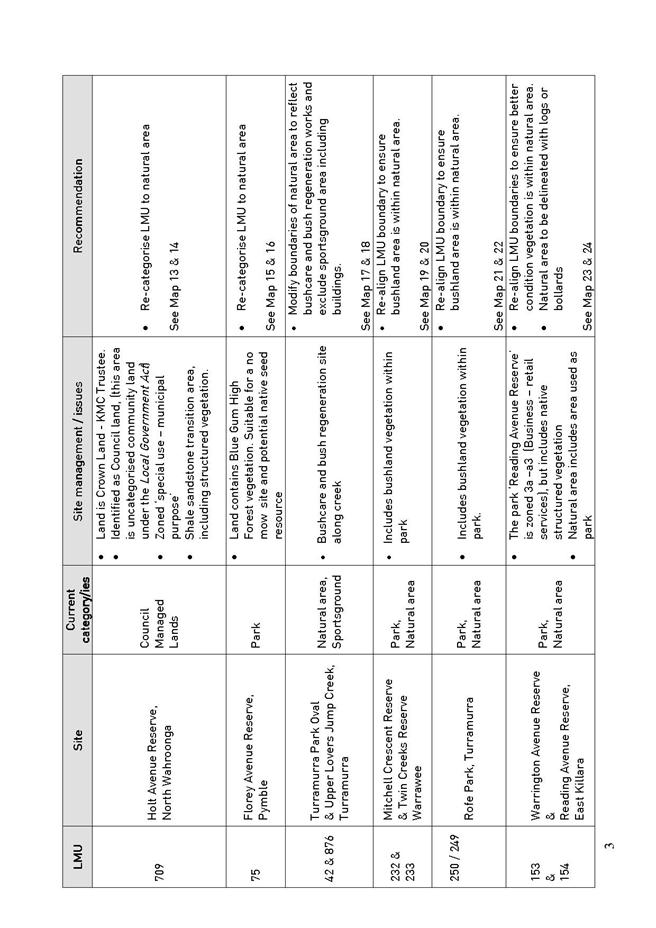
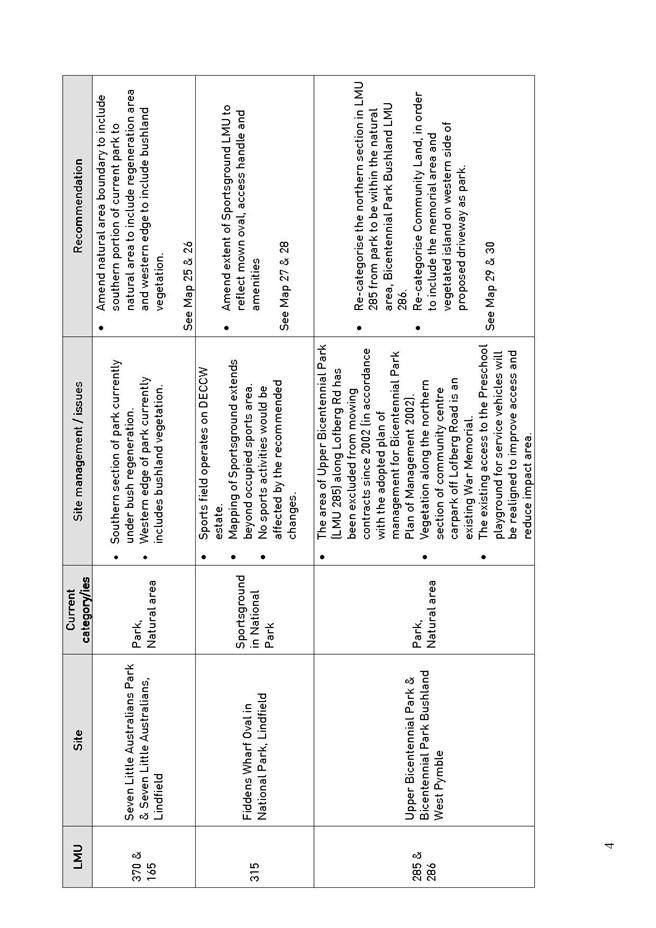
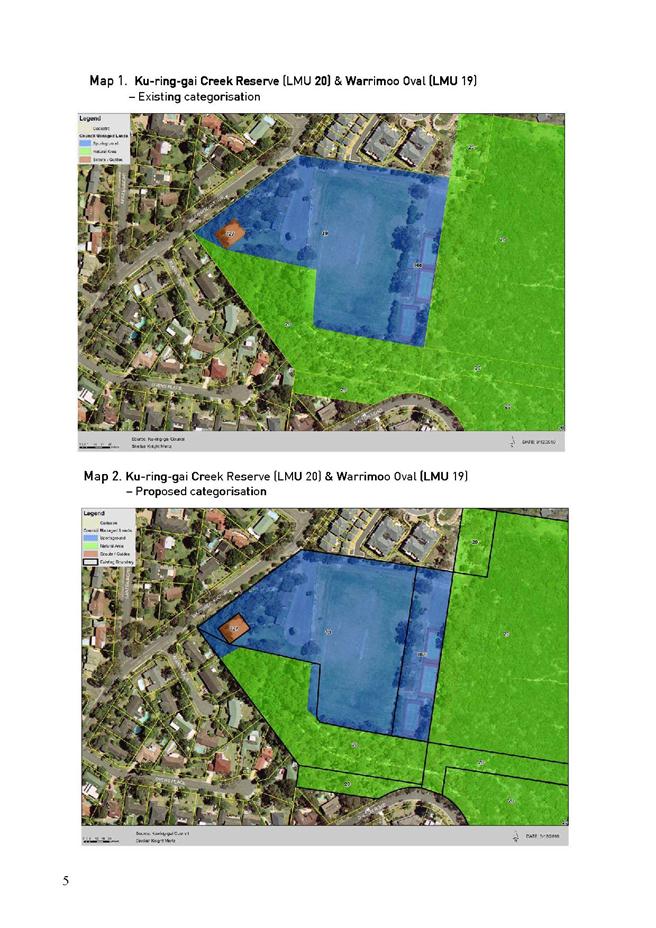
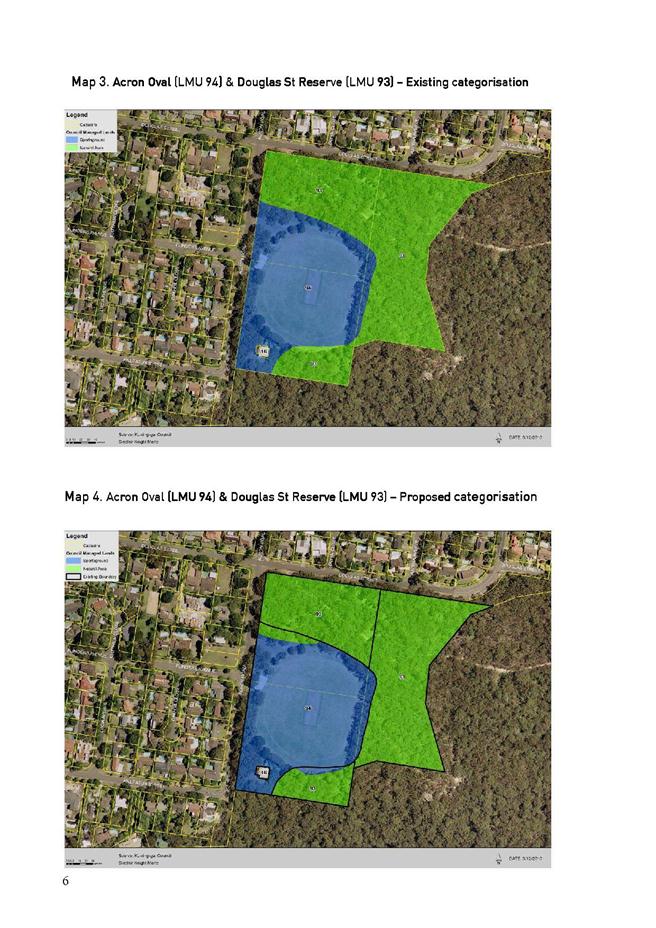
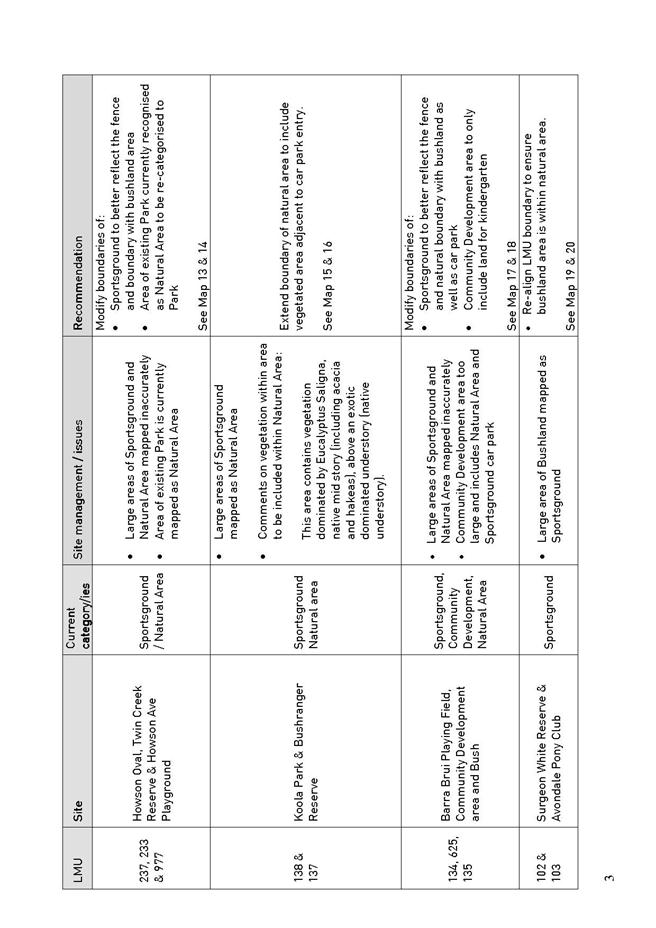
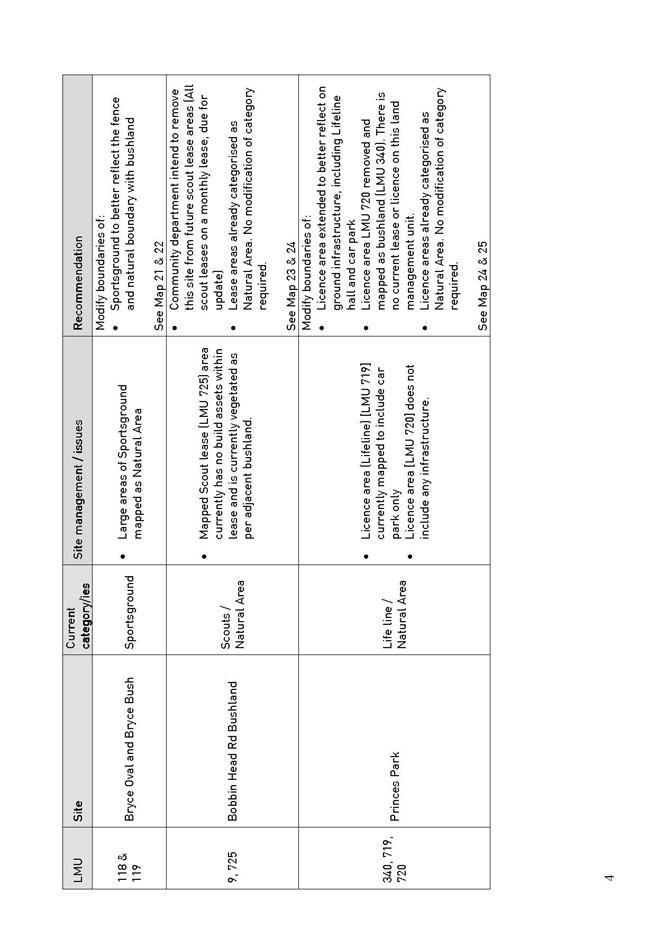
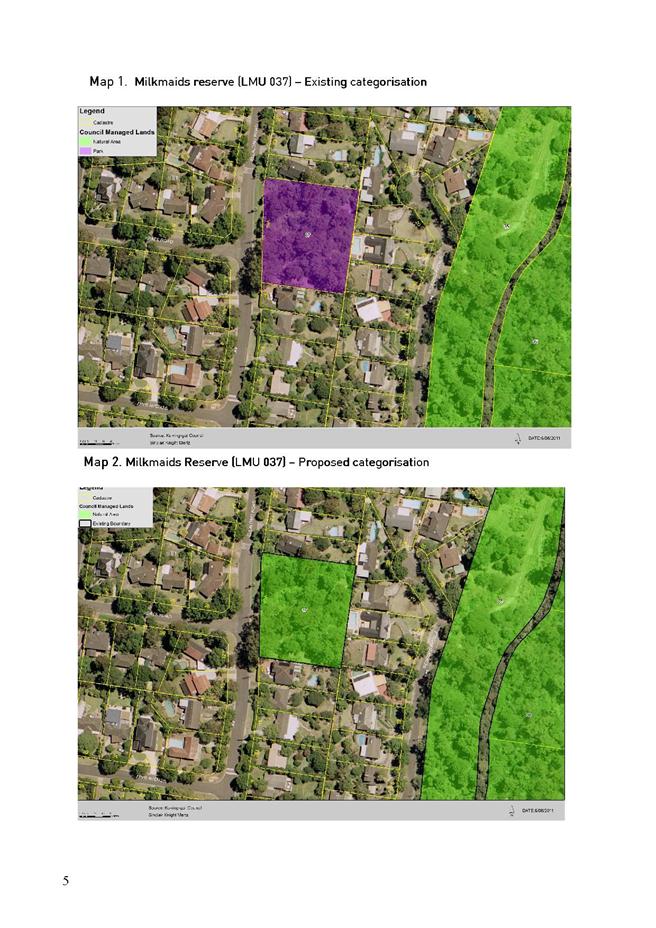
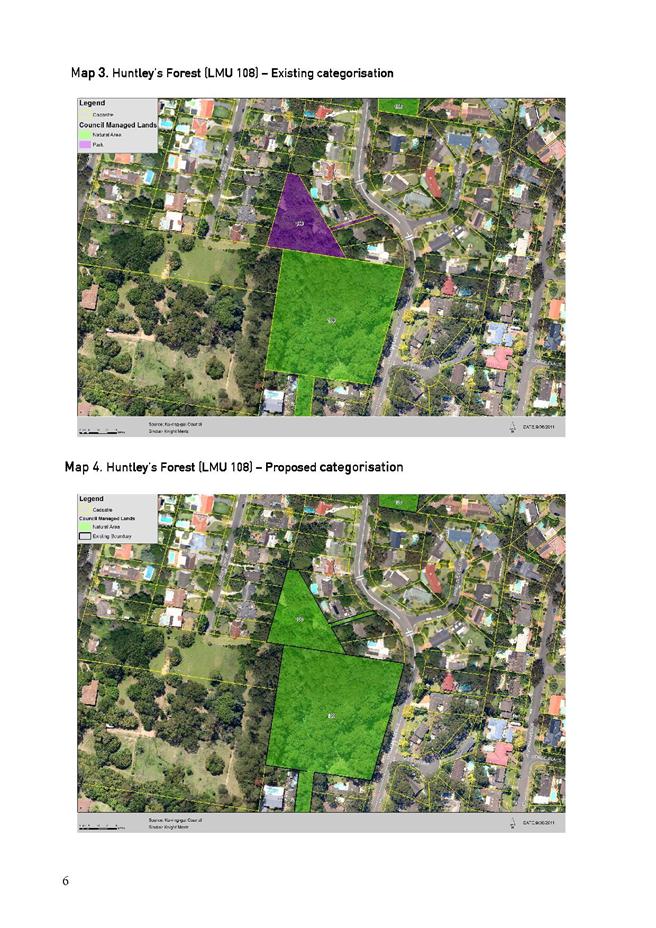
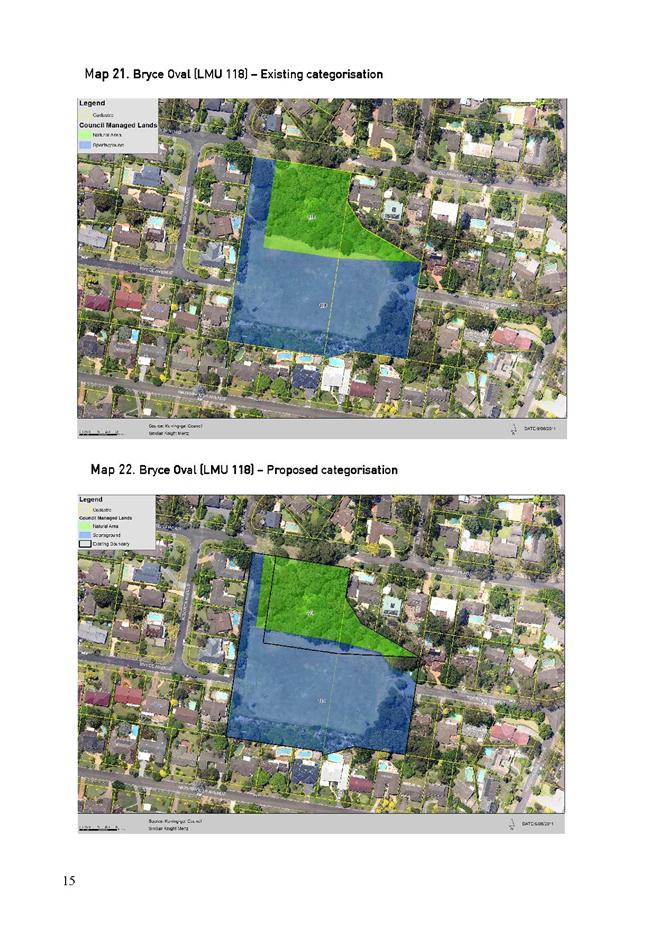
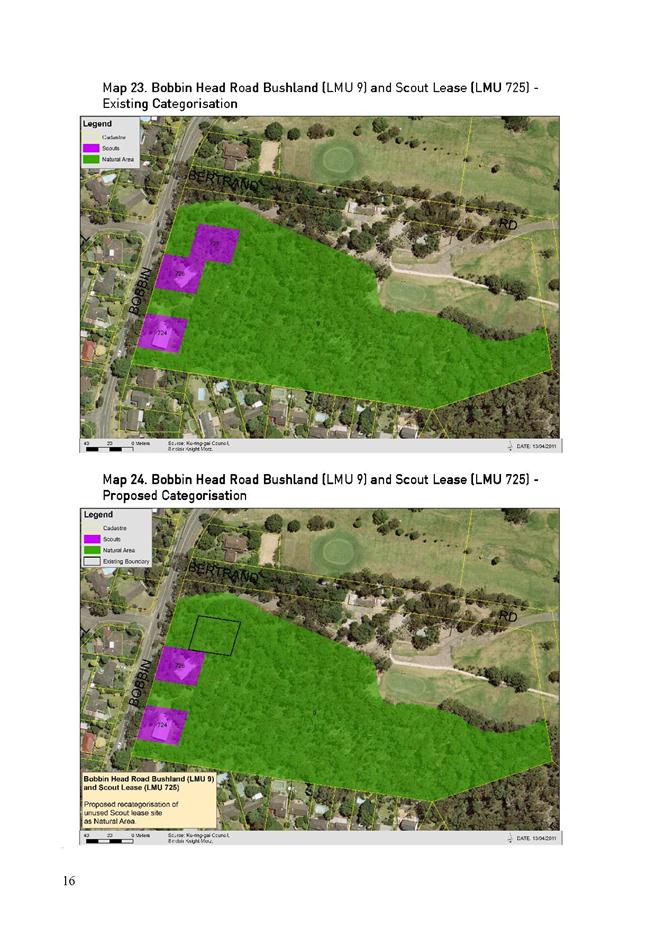
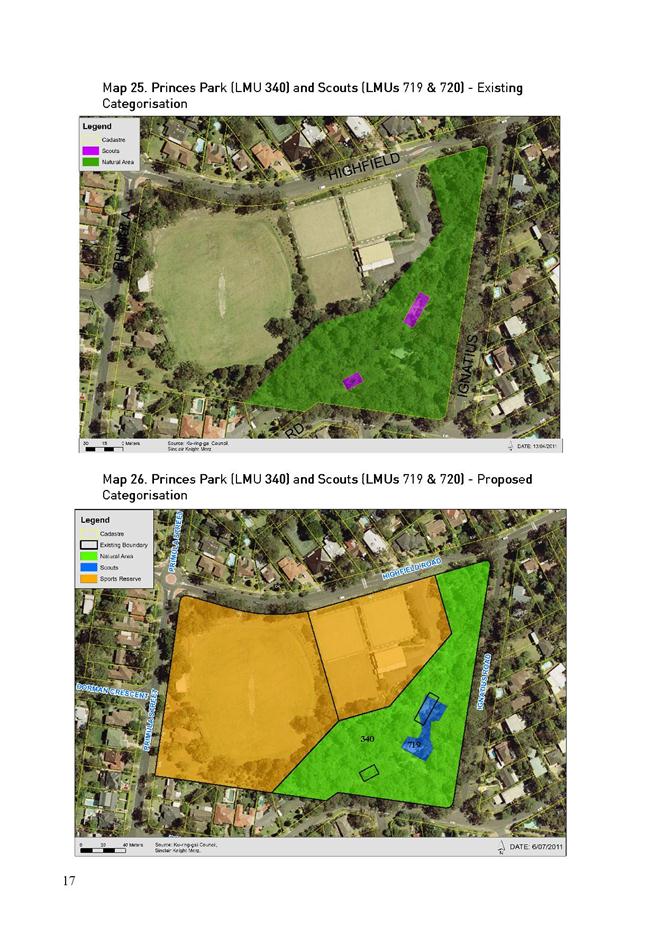
GB.6 Public Exhibition - Draft Bushland Reserves Plan of Management 117
File: S04326
To seek Council’s endorsement to: (i) place the draft Ku-ring-gai Bushland Reserves Plan of Management (PoM) on public exhibition and conduct a public hearing, in accordance with the requirements of the Local Government Act 1993; and (ii) to exhibit notice of the proposal to create a Biobanking Agreement (within the meaning of Part 7A of the Threatened Species Conservation Act 1995), at Rofe Park, Sheldon Forest and Comenarra Creek Reserve, Ku-ring-gai, in accordance with the requirements of the Local Government Act 1993.
Recommendation:
That Council endorses the public exhibition of, and public hearing for, the draft Ku-ring-gai Bushland Reserves PoM; and public exhibition of the proposal to create a Biobanking Agreement at Rofe Park, Sheldon Forest and Comenarra Creek Reserve, Ku-ring-gai, in accordance with the requirements of the Local Government Act 1993.
GB.7 Tender NSROC - Road Surfacing, Patching, and associated Works - 2013 to 2015 301
File: S09584
To seek Council's approval to accept the Northern Sydney Regional Organisation of Councils (NSROC) tender for the schedule of rates for supply; supply and delivery; and supply, delivery and laying of asphaltic concrete, including associated road profiling and heavy patching and other work items for the period 2013/2014 and 2014/2015.
Recommendation:
That Council accepts the tenderers identified in Confidential Attachment A1 to supply; supply and delivery; and supply, delivery and laying of asphaltic concrete, including associated road profiling and heavy patching and other work items for the period 2013/2014 and 2014/2015.
GB.8 Tender T08/2013 - Minor Concrete, Asphalt and Related Civil Works 2013 to 2016 - Schedule of Rates Contractor List 306
File: S09611
To consider the appointment of tenderers to a list of contractor’s Schedule of Rates for minor concrete, asphalt and related civil works 2013 to 2016.
Recommendation:
That Council accepts the tenders identified in the Confidential Attachment A1 to provide services under a Schedule of Rates contract.
Extra Reports Circulated to Meeting
Motions of which due Notice has been given
NM.1 St Ives Shuttle Bus Service 311
File: TM9/05
Notice of Motion from Councillor Ossip dated 14 October 2013
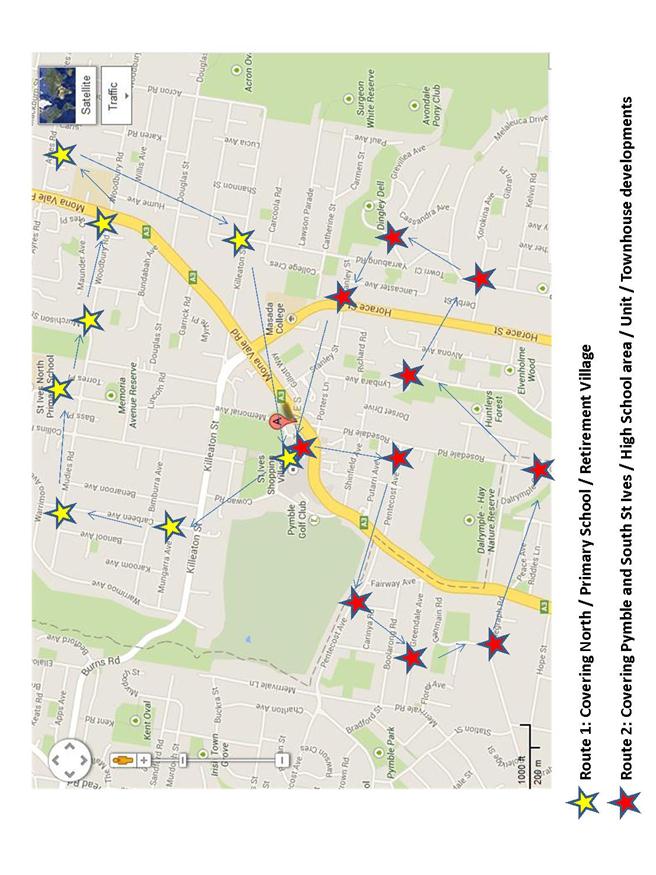
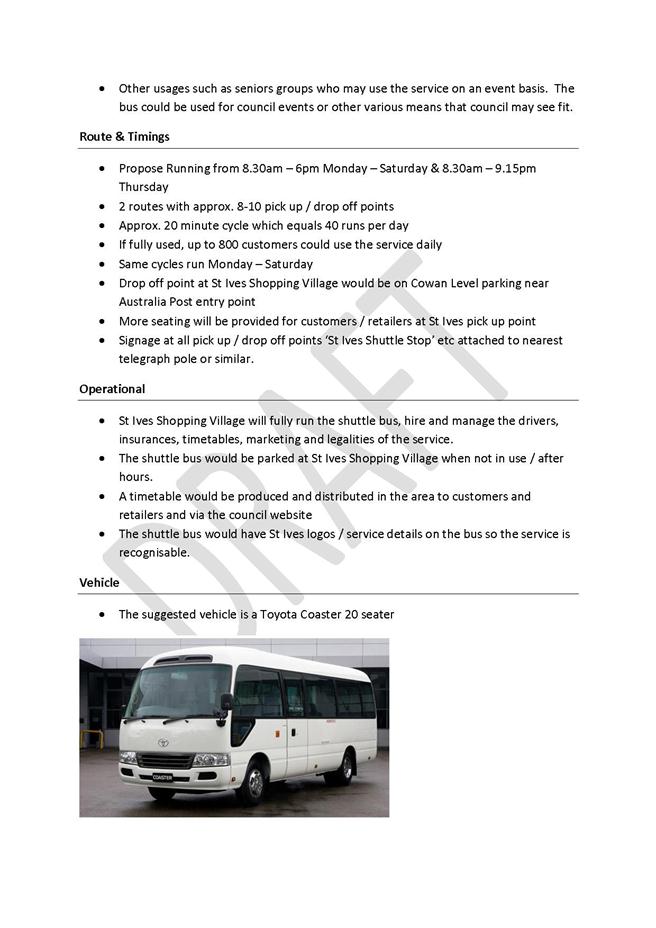
The St Ives Shopping Village is a focal point for St Ives. Together with the Village Green, it is at the heart of the community. It is also the largest employer in Ku-ring-gai with 900 people employed at the Centre, and approximately 40% of those employees living locally. However, it is becoming increasingly difficult and frustrating for both residents and employees to access the precinct due to growing congestion and limited parking. Facing these issues, the St Ives Shopping Village Management has sought Council’s approval to provide a free shuttle bus service, which would take local residents and local employees of the centre across St Ives to and from the Shopping Village and Village Green.
Such a service would assist elderly customers who prefer not to drive or who rely on others at present for transport, general customers who would prefer not to have to find parking, and retail employees who live locally and would find the service a more convenient way of getting to and from work. A regular and timely shuttle bus service would free up parking spaces at the Centre and would be particularly useful at busy times of the year, such as Christmas, where customers have to negotiate traffic and limited parking.
The possibilities for such a scheme are substantial and include working with local retirement villages and nursing homes to service their residents.
This is an innovative solution to overcome existing infrastructure defects, promote economic development and allow residents and employees to more readily and easily access the social hub of the community. The proposal, by EK Nominees Pty Ltd, was submitted to a working party of the Council on 30 September 2013 and is set out in their letter attached.
A similar free shuttle service is operated by Manly Council.
I move:
“1. That Council endorse in principle a St Ives shuttle bus service as outlined by the owners of the St Ives Shopping Village to council staff at its meeting on 30 September 2013.
2. That Council request that the Ku-ring-gai Traffic Committee give urgent consideration and advice on the acceptability of the routes proposed by the owners and any relevant legal issues to be taken into account.
3. That a staff report regarding the implementation of the St Ives Shuttle Bus Service be submitted to the Council meeting of 19 November 2013 for Council’s further consideration.”
BUSINESS WITHOUT NOTICE – SUBJECT TO CLAUSE 241 OF GENERAL REGULATIONS
Questions Without Notice
Inspections Committee – SETTING OF TIME, DATE AND RENDEZVOUS
Confidential Business to be dealt with in Closed Meeting
C.1 Performance Review Panel to carry out the General Manager's 1
Performance Reviews
File: CY00254/5
In accordance with the Local Government Act 1993 and the Local Government (General) Regulation 2005, in the opinion of the General Manager, the following business is of a kind as referred to in section 10A(2)(a), of the Act, and should be dealt with in a part of the meeting closed to the public.
Section 10A(2)(a) of the Act permits the meeting to be closed to the public for business relating to personnel matters concerning particular individuals (other than Councillors).
Report by the Mayor, Councillor Jennifer Anderson dated 2 October 2013.
John McKee
General Manager
** ** ** ** ** **
MINUTES OF Ordinary Meeting of Council
HELD ON Tuesday, 8 October 2013
|
Present: |
The Mayor, Councillor J Anderson (Chairperson) (Roseville Ward) Councillors E Malicki & J Pettett (Comenarra Ward) Councillors D Citer & C Szatow (Gordon Ward) Councillors C Berlioz & D Ossip (St Ives Ward) Councillor D Armstrong (Roseville Ward) Councillors C Fornari-Orsmond (Wahroonga Ward) |
|
|
|
|
Staff Present: |
General Manager (John McKee) Director Corporate (David Marshall) Director Development & Regulation (Michael Miocic) Director Operations (Greg Piconi) Director Strategy & Environment (Andrew Watson) Director Community (Janice Bevan) Manager Corporate Communications (Virginia Leafe) Manager Records & Governance (Matt Ryan) Governance Officer (Christie Spry) |
The Meeting commenced at 7.00pm
The Mayor offered the Prayer
|
301 |
File: S02194
Councillor Duncan McDonald tendered an apology for non-attendance [work commitment] and requested leave of absence.
|
|
|
(Moved: Councillors Fornari-Orsmond/Armstrong)
That the apology from Councillor McDonald be accepted and leave of absence granted.
CARRIED UNANIMOUSLY |
The Mayor adverted to the necessity for Councillors and staff to declare a Pecuniary Interest/Conflict of Interest in any item on the Business Paper.
No such Interest was declared.
The following member of the public addressed Council on an item not on the Agenda:
B Watson
DOCUMENTS CIRCULATED TO COUNCILLORS
The Mayor adverted to the documents circulated in the Councillors’ papers and advised that the following matters would be dealt with at the appropriate time during the meeting:
|
Late Item: |
Refer GB.13 – Ku-ring-gai Historical Society’s Anniversary Dinner |
|
Memorandum: |
Refer GB.12 – Class 1 Appeal – Concept Plan and Stage 1 Project Application Avon Road and Beechworth Road, Pymble –Memorandum from Manager Urban and Heritage Planning dated 8 October 2013 advising Councillors of additional recommendations to the report. |
PETITIONS
|
313 |
4 Lamond Drive Turramurra - Demolition of Existing Structures and Construction of a Residential Flat Building containing 15 Units under SEPP (Affordable Rental Housing) 2009
File: DA0132/13 Vide: GB.10
|
||||||||||||||||||||||||||||||||||||||||||||||||||||||||||||||||||||||||||||||||||||||||||||||||||||||||||||||||||||||||||||||||||||||||||||||||||||||||||||||||||||
|
|
Demolition of existing structures and construction of a residential flat building containing 15 units under SEPP (Affordable Rental Housing) 2009.
|
||||||||||||||||||||||||||||||||||||||||||||||||||||||||||||||||||||||||||||||||||||||||||||||||||||||||||||||||||||||||||||||||||||||||||||||||||||||||||||||||||||
|
|
(Moved: Councillors Malicki/Ossip)
That Council, as the consent authority, grant development consent to Development Application No. DA0132/13 for the demolition of existing structure and construction of a residential flat building containing 15 units, basement parking and ancillary site works pursuant of SEPP (Affordable Rental Housing) 2009 on land at 4 Lamond Drive, Turramurra for a period of two (2) years, subject to the following conditions:
Conditions that identify approved plans:
1. Approved architectural plans and documentation (new development)
The development must be carried out in accordance with the following plans and documentation listed below and endorsed with Council’s stamp, except where amended by other conditions of this consent:
Reason: To ensure that the development is in accordance with the determination.
2. Inconsistency between documents
In the event of any inconsistency between conditions of this consent and the drawings/documents referred to above, the conditions of this consent prevail.
Reason: To ensure that the development is in accordance with the determination.
3. Approved landscape plans
Landscape works shall be carried out in accordance with the following landscape plan(s), listed below and endorsed with Council’s stamp, except where amended by other conditions of this consent:
Reason: To ensure that the development is in accordance with the determination.
Conditions to be satisfied prior to demolition, excavation or construction:
4. Road opening permit
The opening of any footway, roadway, road shoulder or any part of the road reserve shall not be carried out without a road opening permit being obtained from Council (upon payment of the required fee) beforehand.
Reason: Statutory requirement (Roads Act 1993 Section 138) and to maintain the integrity of Council’s infrastructure.
5. Asbestos works
All work involving asbestos products and materials, including asbestos-cement-sheeting (ie. Fibro), must be carried out in accordance with the guidelines for asbestos work published by WorkCover Authority of NSW.
Reason: To ensure public safety
6. No Parking on one side of Lamond Drive
Prior to the commencement of any works on site, the Applicant is to apply to Council for a construction-stage No Parking restriction on one side of Lamond Drive. The application is to be accompanied by the appropriate fee. If approval is granted by the Ku-ring-gai Traffic Committee, then the signs are to be installed at the Applicant’s expense prior to the commencement of bulk excavation. The Applicant is to arrange for the removal of the signs upon completion of works at the site.
Reason: To ensure adequate traffic arrangements for Lamond Drive
7. Notice of commencement
At least 48 hours prior to the commencement of any development (including demolition, excavation, shoring or underpinning works), a notice of commencement of building or subdivision work form and appointment of the principal certifying authority form shall be submitted to Council.
Reason: Statutory requirement.
8. Notification of builder’s details
Prior to the commencement of any development or excavation works, the Principal Certifying Authority shall be notified in writing of the name and contractor licence number of the owner/builder intending to carry out the approved works.
Reason: Statutory requirement.
9. Dilapidation survey and report (public infrastructure)
Prior to the commencement of any development or excavation works on site, the Principal Certifying Authority shall be satisfied that a dilapidation report on the visible and structural condition of all structures of the following public infrastructure, has been completed and submitted to Council:
Public infrastructure
· Full road pavement width, including kerb and gutter, of Lamond Drive over the site frontage. · All driveway crossings and laybacks opposite the subject site.
The report must be completed by a consulting structural/civil engineer. Particular attention must be paid to accurately recording (both written and photographic) existing damaged areas on the aforementioned infrastructure so that Council is fully informed when assessing any damage to public infrastructure caused as a result of the development.
The developer may be held liable to any recent damage to public infrastructure in the vicinity of the site, where such damage is not accurately recorded by the requirements of this condition prior to the commencement of works.
Note: A written acknowledgment from Council must be obtained (attesting to this condition being appropriately satisfied) and submitted to the Principal Certifying Authority prior to the commencement of any excavation works.
Reason: To record the structural condition of public infrastructure before works commence.
10. Dilapidation survey and report (private property)
Prior to the commencement of any demolition or excavation works on site, the Principal Certifying Authority shall be satisfied that a dilapidation report on the visible and structural condition of all structures upon the following lands, has been completed and submitted to Council:
The dilapidation report must include a photographic survey of adjoining properties detailing their physical condition, both internally and externally, including such items as walls ceilings, roof and structural members. The report must be completed by a consulting structural/geotechnical engineer as determined necessary by that professional based on the excavations for the proposal and the recommendations of the submitted geotechnical report.
In the event that access for undertaking the dilapidation survey is denied by a property owner, the applicant must demonstrate in writing to the satisfaction of the Principal Certifying Authority that all reasonable steps have been taken to obtain access and advise the affected property owner of the reason for the survey and that these steps have failed.
Note: A copy of the dilapidation report is to be provided to Council prior to any excavation works been undertaken. The dilapidation report is for record keeping purposes only and may be used by an applicant or affected property owner to assist in any civil action required to resolve any dispute over damage to adjoining properties arising from works.
Reason: To record the structural condition of likely affected properties before works commence.
11. Geotechnical report
Prior to the commencement of any bulk excavation works on site, the applicant shall submit to the Principal Certifying Authority, the results of the detailed geotechnical investigation comprising a minimum of three cored boreholes to at least 1 metre below the proposed basement level. The report is to address such matters as:
· appropriate excavation methods and techniques · vibration management and monitoring · dilapidation survey · support and retention of excavates faces · hydrogeological considerations
The recommendations of the report are to be implemented during the course of the works.
Reason: To ensure the safety and protection of property.
12. Construction and traffic management plan
The applicant must submit to Council a Construction Traffic Management Plan (CTMP), which is to be approved prior to the commencement of any works on site.
The plan is to consist of a report with Traffic Control Plans attached.
The report is to contain commitments which must be followed by the demolition and excavation contractor, builder, owner and subcontractors. The CTMP applies to all persons associated with demolition, excavation and construction of the development.
The report is to contain construction vehicle routes for approach and departure to and from all directions.
The report is to contain a site plan showing entry and exit points. Swept paths are to be shown on the site plan showing access and egress for an 11 metre long heavy rigid vehicle.
The Traffic Control Plans are to be prepared by a qualified person (red card holder). One must be provided for each of the following stages of the works:
o Demolition o Excavation o Concrete pour o Construction of vehicular crossing and reinstatement of footpath o Traffic control for vehicles reversing into or out of the site.
Traffic controllers must be in place at the site entry and exit points to control heavy vehicle movements in order to maintain the safety of pedestrians and other road users.
When a satisfactory CTMP is received, a letter of approval will be issued with conditions attached. Traffic management at the site must comply with the approved CTMP as well as any conditions in the letter issued by Council. Council’s Rangers will be patrolling the site regularly and fines may be issued for any non-compliance with this condition.
Reason: To ensure that appropriate measures have been considered during all phases of the construction process in a manner that maintains the environmental amenity and ensures the ongoing safety and protection of people.
13. Work zone
A Works Zone is to be provided
in Lamond Drive subject to the approval of the
No loading or unloading must be undertaken from the public road or nature strip unless within a Works Zone which has been approved and paid for.
In the event the work zone is required for a period beyond that initially approved by the Traffic Committee, the applicant shall make a payment to Council for the extended period in accordance with Council’s schedule of fees and charges for work zones prior to the extended period commencing.
Reason: To ensure that appropriate measures have been made for the operation of the site during the construction phase.
14. Erosion and drainage management
Earthworks and/or demolition of any existing buildings shall not commence until an erosion and sediment control plan is submitted to and approved by the Principal Certifying Authority. The plan shall comply with the guidelines set out in the NSW Department of Housing manual "Managing Urban Stormwater: Soils and Construction" certificate. Erosion and sediment control works shall be implemented in accordance with the erosion and sediment control plan.
Reason: To preserve and enhance the natural environment.
15. Tree protection fencing
To preserve the following tree/s, no work shall commence until the area beneath their canopy is fenced off at the specified radius from the trunk/s to prevent any activities, storage or the disposal of materials within the fenced area. The fence/s shall be maintained intact until the completion of all demolition/building work on site.
Reason: To protect existing trees during the construction phase.
16. Tree protective fencing type galvanised mesh
The tree protection fencing shall be constructed of galvanised pipe at 2.4 metre spacing and connected by securely attached chain mesh fencing to a minimum height of 1.8 metres in height prior to work commencing.
Reason: To protect existing trees during construction phase.
17. Tree protection signage
Prior to works commencing, tree protection signage is to be attached to each tree protection zone, displayed in a prominent position and the sign repeated at 10 metres intervals or closer where the fence changes direction. Each sign shall contain in a clearly legible form, the following information:
Tree protection zone.
· This fence has been installed to prevent damage to the trees and their growing environment both above and below ground and access is restricted. · Any encroachment not previously approved within the tree protection zone shall be the subject of an arborist's report. · The arborist's report shall provide proof that no other alternative is available. · The Arborist's report shall be submitted to the Principal Certifying Authority for further consultation with Council. · The name, address, and telephone number of the developer.
Reason: To protect existing trees during the construction phase.
18. Tree protection mulching
Prior to works commencing and throughout construction, the area of the tree protection zone is to be mulched to a depth of 100mm with composted organic material being 75% Eucalyptus leaf litter and 25% wood.
Reason: To protect existing trees during the construction phase.
19. Tree fencing inspection
Upon installation of the required tree protection measures, an inspection of the site by the Principal Certifying Authority is required to verify that tree protection measures comply with all relevant conditions.
Reason: To protect existing trees during the construction phase.
20. Construction waste management plan
Prior to the commencement of any works, the Principal Certifying Authority shall be satisfied that a waste management plan, prepared by a suitably qualified person, has been prepared in accordance with Council’s Local Centres DCP 2012.
The plan shall address all issues identified in the Local Centres DCP, including but not limited to: the estimated volume of waste and method for disposal for the construction and operation phases of the development.
Note: The plan shall be provided to the Certifying Authority.
Reason: To ensure appropriate management of construction waste.
21. Noise and vibration management plan
Prior to the commencement of any works, a noise and vibration management plan is to be prepared by a suitably qualified expert addressing the likely noise and vibration from demolition, excavation and construction of the proposed development and provided to the Principal Certifying Authority. The management plan is to identify amelioration measures to achieve the best practice objectives of AS 2436-2010 and NSW Department of Environment and Climate Change Interim Construction Noise Guidelines. The report shall be prepared in consultation with any geotechnical report that itemises equipment to be used for excavation works.
The management plan shall address, but not be limited to, the following matters:
· identification of the specific activities that will be carried out and associated noise sources · identification of all potentially affected sensitive receivers, including residences, churches, commercial premises, schools and properties containing noise sensitive equipment · the construction noise objective specified in the conditions of this consent · the construction vibration criteria specified in the conditions of this consent · determination of appropriate noise and vibration objectives for each identified sensitive receiver · noise and vibration monitoring, reporting and response procedures · assessment of potential noise and vibration from the proposed demolition, excavation and construction activities, including noise from construction vehicles and any traffic diversions · description of specific mitigation treatments, management methods and procedures that will be implemented to control noise and vibration during construction · construction timetabling to minimise noise impacts including time and duration restrictions, respite periods and frequency · procedures for notifying residents of construction activities that are likely to affect their amenity through noise and vibration · contingency plans to be implemented in the event of non-compliances and/or noise complaints
Reason: To protect the amenity afforded to surrounding residents during the construction process.
22. Archaeological survey
Prior to commencement of any development or excavation works, the Principal Certifying Authority shall be satisfied that an archaeological survey has been completed and submitted to Council’s Heritage Advisor.
The survey shall be carried out by a qualified archaeologist and shall identify the likelihood of remains and/or artefacts, whether European or Aboriginal, being present on site.
If this report identifies that such items are likely to be on site, demolition, earthworks and excavation shall be undertaken under the direct supervision of the consultant archaeologist. An excavation permit under S140 of the Heritage Act may be required if it is likely relics will be uncovered.
In the event that remnants or artefacts are found during the progression of works on the site, excavation or disturbance of the area is to stop immediately. In accordance with section 146(a) of the ‘Heritage Act, 1977’ the Applicant must ensure the Heritage Council of NSW is notified within a reasonable time of the discovery or location of these relics. Archaeological assessment and approval, or endorsement, may be required prior to works continuing in the affected area(s) based on the nature of the discovery.
A policy of managing the known relics and an interpretative strategy developed on how to interpret any relics found on the site must be developed and subject to separate approval by Council’s heritage Officer.
Reason: To comply with the provisions of the NSW Heritage Act and to ensure the proper management of relics and historical artefacts.
Conditions to be satisfied prior to the issue of the construction certificate:
23. Amendments to approved architectural plans
Prior to the issue of a Construction Certificate, the Principal Certifying Authority shall be satisfied that the approved architectural plans, listed below and endorsed with Council’s stamp, have been amended in accordance with the requirements of this condition as well as other conditions of this consent:
The above architectural plan(s) shall be amended in the following ways:
· Bollards shall be provided in front of the lift lobby in the basement to ensure pedestrian safety.
Prior to the issue of the Construction Certificate, the Principal Certifying Authority shall be satisfied that the landscape plan has been amended are required by this condition.
Note: An amended plan, prepared by a registered architect shall be submitted to the Certifying Authority.
Reason: To ensure adequate landscaping of the site
24. Amendments to approved landscape plan
Prior to the issue of a Construction Certificate, the Principal Certifying Authority shall be satisfied that the approved landscape plans, listed below and endorsed with Council’s stamp, have been amended in accordance with the requirements of this condition as well as other conditions of this consent:
The above landscape plan(s) shall be amended in the following ways:
· The Sydney Blue Gum (Eucalyptus saligna) proposed to be located adjacent to the southern site corner above the existing crib block retaining wall shall be relocated to the garden bed below the retaining wall with a greater setback of 3.0m from the building. · The proposed retaining walls adjacent to the north-eastern and south-eastern boundaries shall be deleted. Existing levels and grades shall be maintained within the soft landscape areas/setbacks. Notations to this effect shall be placed on plan. · The existing embankment adjacent to the north-eastern site boundary within a ten metre radius of Tree 10 shall be maintained. · The proposed paved courtyard within the south-west frontage that is accessed from the Lobby of the Lower Ground Floor shall be deleted and replaced with soft landscape area and planted with ornamental grasses and shrub species consistent with the remaining landscape setting.
Prior to the issue of the Construction Certificate, the Principal Certifying Authority shall be satisfied that the landscape plan has been amended are required by this condition.
Note: An amended plan, prepared by a landscape architect or qualified landscape designer shall be submitted to the Certifying Authority.
Reason: To ensure adequate landscaping of the site
25. Amendments to approved engineering plans
Prior to the issue of a Construction Certificate, the Certifying Authority shall be satisfied that the approved engineering plan(s), listed below and endorsed with Council’s stamp, have been amended in accordance with the requirements of this condition as well as other conditions of this consent:
The above engineering plan(s) shall be amended as follows:
1. The rainwater tank is to be sized to reduce the number of runoff days from the site by 50%, as required in Volume C Part 4B.3-4 and Table 4B.6-1 of the Local Centres DCP. It is likely that a larger tank size and greater level of re-use will be required.
2. Water quality measures are to be provided and a MUSIC model prepared to demonstrate that Council’s water quality targets will be achieved, as required in Volume C Part 4B.6-4 of the Local Centres DCP.
The above amendments are required to ensure compliance with the following:
· Ku-ring-gai Local Centres Development Control Plan.
Note: An amended engineering plan, prepared by a qualified engineer shall be submitted to the Certifying Authority.
Reason: To ensure that the development is in accordance with the determination.
26. Long service levy
In accordance with Section 109F(i) of the Environmental Planning and Assessment Act a Construction Certificate shall not be issued until any long service levy payable under Section 34 of the Building and Construction Industry Long Service Payments Act 1986 (or where such levy is payable by instalments, the first instalment of the levy) has been paid. Council is authorised to accept payment. Where payment has been made elsewhere, proof of payment is to be provided to Council.
Reason: Statutory requirement.
27. Builder’s indemnity insurance
The applicant, builder, developer or person who does the work on this development, must arrange builder’s indemnity insurance and submit the certificate of insurance in accordance with the requirements of Part 6 of the Home Building Act 1989 to the Certifying Authority for endorsement of the plans accompanying the Construction Certificate.
It is the responsibility of the applicant, builder or developer to arrange the builder's indemnity insurance for residential building work over the value of $20,000. The builder's indemnity insurance does not apply to commercial or industrial building work or to residential work valued at less than $20,000, nor to work undertaken by persons holding an owner/builder's permit issued by the Department of Fair Trading (unless the owner/builder's property is sold within 7 years of the commencement of the work).
Reason: Statutory requirement.
28. Access for people with disabilities (residential)
Prior to the issue of the Construction Certificate, the Certifying Authority shall be satisfied that access for people with disabilities to and from and between the public domain, residential units and all common open space areas is provided. Consideration must be given to the means of dignified and equitable access.
Compliant access provisions for people with disabilities shall be clearly shown on the plans submitted with the Construction Certificate. All details shall be provided to the Principal Certifying Authority prior to the issue of the Construction Certificate. All details shall be prepared in consideration of the Disability Discrimination Act, and the relevant provisions of AS1428.1, AS1428.2, AS1428.4 and AS 1735.12.
Reason: To ensure the provision of equitable and dignified access for all people in accordance with disability discrimination legislation and relevant Australian Standards.
29. Adaptable units
Prior to the issue of the Construction Certificate, the Certifying Authority shall be satisfied that the nominated adaptable units within the development application, [Units 6 and 11], are designed as adaptable housing in accordance with the provisions of Australian Standard AS4299-1995: Adaptable Housing.
Note: Evidence from an appropriately qualified professional demonstrating compliance with this control is to be submitted to and approved by the Certifying Authority prior to the issue of the Construction Certificate.
Reason: Disabled access & amenity.
30. Noise from road and rail (residential only)
Prior to the issue of the Construction Certificate, the Certifying Authority shall submit evidence to Council demonstrating that the development will be acoustically designed and constructed to ensure that the following LAeq levels are not exceeded:
(a) in any bedroom in the building-35 dB(A) at any time between 10 pm and 7 am, (b) anywhere else in the building (other than a garage, kitchen, bathroom or hallway)-40 dB(A) at any time.
Plans and specifications of the required acoustic design shall be prepared by a practicing acoustic engineer and shall be submitted to the Principal Certifying Authority.
Reason: To minimise the impact of noise from the adjoining road or rail corridor on the occupants of the development.
31. Location of plant
Prior to the issue of the Construction Certificate, the Certifying Authority shall be satisfied that all plant and equipment (including but not limited to air conditioning equipment) is located within the basement.
C1. Note: Architectural plans identifying the location of all plant and equipment shall be provided to the Certifying Authority.
Reason: To minimise impact on surrounding properties, improved visual appearance and amenity for locality.
32. Driveway crossing levels
Prior to issue of the Construction Certificate, driveway and associated footpath levels for any new, reconstructed or extended sections of driveway crossings between the property boundary and road alignment must be obtained from Ku-ring-gai Council. Such levels are only able to be issued by Council under the Roads Act 1993. All footpath crossings, laybacks and driveways are to be constructed according to Council's specifications "Construction of Gutter Crossings and Footpath Crossings".
Specifications are issued with alignment levels after completing the necessary application form at Customer Services and payment of the assessment fee. When completing the request for driveway levels application from Council, the applicant must attach a copy of the relevant development application drawing which indicates the position and proposed level of the proposed driveway at the boundary alignment.
This development consent is for works wholly within the property. Development consent does not imply approval of footpath or driveway levels, materials or location within the road reserve, regardless of whether this information is shown on the development application plans. The grading of such footpaths or driveways outside the property shall comply with Council's standard requirements. The suitability of the grade of such paths or driveways inside the property is the sole responsibility of the applicant and the required alignment levels fixed by Council may impact upon these levels.
The construction of footpaths and driveways outside the property in materials other than those approved by Council is not permitted.
Reason: To provide suitable vehicular access without disruption to pedestrian and vehicular traffic.
33. Basement car parking details
Prior to issue of the Construction Certificate, certified parking layout plan(s) to scale showing all aspects of the vehicle access and accommodation arrangements must be submitted to and approved by the Certifying Authority. A qualified civil/traffic engineer must review the proposed vehicle access and accommodation layout and provide written certification on the plans that:
· all parking space dimensions, driveway and aisle widths, driveway grades, transitions, circulation ramps, blind aisle situations and other trafficked areas comply with Australian Standard 2890.1 - 2004 “Off-street car parking” · a clear height clearance of 2.6 metres (required under DCP40 for waste collection trucks) is provided over the designated garbage collection truck manoeuvring areas within the basement · no doors or gates are provided in the access driveways to the basement carpark which would prevent unrestricted access for internal garbage collection at any time from the basement garbage storage and collection area · the vehicle access and accommodation arrangements are to be constructed and marked in accordance with the certified plans
Reason: To ensure that parking spaces are in accordance with the approved development.
34. Car parking allocation
Car parking within the development shall be allocated in the following way:
Each adaptable dwelling must be provided with car parking complying with the dimensional and location requirements of AS2890.1 - parking spaces for people with disabilities.
At least one visitor space shall also comply with the dimensional and location requirements of AS2890.1 - parking spaces for people with disabilities.
Consideration must be given to the means of access from disabled car parking spaces to other areas within the building and to footpath and roads and shall be clearly shown on the plans submitted with the Construction Certificate.
Reason: To ensure equity of access and appropriate facilities are available for people with disabilities in accordance with federal legislation.
35. Number of bicycle spaces
The basement car park shall be adapted to provide 5 bicycle spaces. The bicycle parking spaces shall be designed in accordance with AS2890.3. Details shall be submitted to the satisfaction of the Certifying Authority prior to the issue of a Construction Certificate.
Reason: To provide alternative modes of transport to and from the site.
36. Utility provider requirements
Prior to issue of the Construction Certificate, the applicant must make contact with all relevant utility providers whose services will be impacted upon by the development. A written copy of the requirements of each provider, as determined necessary by the Certifying Authority, must be obtained. All utility services or appropriate conduits for the same must be provided by the developer in accordance with the specifications of the utility providers.
Reason: To ensure compliance with the requirements of relevant utility providers.
Conditions to be satisfied prior to the issue of the construction certificate or prior to demolition, excavation or construction (whichever comes first):
37. Infrastructure restorations fee
To ensure that damage to Council Property as a result of construction activity is rectified in a timely matter:
a) All work or activity taken in furtherance of the development the subject of this approval must be undertaken in a manner to avoid damage to Council Property and must not jeopardise the safety of any person using or occupying the adjacent public areas.
b) The applicant, builder, developer or any person acting in reliance on this approval shall be responsible for making good any damage to Council Property, and for the removal from Council Property of any waste bin, building materials, sediment, silt, or any other material or article.
c) The Infrastructure Restoration Fee must be paid to the Council by the applicant prior to both the issue of the Construction Certificate and the commencement of any earthworks or construction.
d) In consideration of payment of the Infrastructure Restorations Fee, Council will undertake such inspections of Council Property as Council considers necessary and also undertake, on behalf of the applicant, such restoration work to Council Property, if any, that Council considers necessary as a consequence of the development. The provision of such restoration work by the Council does not absolve any person of the responsibilities contained in (a) to (b) above. Restoration work to be undertaken by the Council referred to in this condition is limited to work that can be undertaken by Council at a cost of not more than the Infrastructure Restorations Fee payable pursuant to this condition.
e) In this condition:
“Council Property” includes any road, footway, footpath paving, kerbing, guttering, crossings, street furniture, seats, letter bins, trees, shrubs, lawns, mounds, bushland, and similar structures or features on any road or public road within the meaning of the Local Government Act 1993 (NSW) or any public place; and
“Infrastructure Restoration Fee” means the Infrastructure Restorations Fee calculated in accordance with the Schedule of Fees & Charges adopted by Council as at the date of payment and the cost of any inspections required by the Council of Council Property associated with this condition.
Reason: To maintain public infrastructure.
38. Section 94 Contributions - Centres.
This development is subject to a development contribution calculated in accordance with Ku-ring-gai Contributions Plan 2010, being a s94 Contributions Plan in effect under the Environmental Planning and Assessment Act, as follows:
The contribution shall be paid to Council prior to the issue of any Construction Certificate, Linen Plan, Certificate of Subdivision or Occupation Certificate whichever comes first in accordance with Ku-ring-gai Contributions Plan 2010.
The contributions specified above are subject to indexation and will continue to be indexed to reflect changes in the consumer price index and housing price index until they are paid in accordance with Ku-ring-gai Contributions Plan 2010 to reflect changes in the consumer price index and housing price index. Prior to payment, please contact Council directly to verify the current payable contributions.
Copies
of Council’s Contribution Plans can be viewed at Council Chambers,
Reason: To ensure the provision, extension or augmentation of the Key Community Infrastructure identified in Ku-ring-gai Contributions Plan 2010 that will, or is likely to be, required as a consequence of the development.
Conditions to be satisfied during the demolition, excavation and construction phases:
39. Prescribed conditions
The applicant shall comply with any relevant prescribed conditions of development consent under clause 98 of the Environmental Planning and Assessment Regulation. For the purposes of section 80A (11) of the Environmental Planning and Assessment Act, the following conditions are prescribed in relation to a development consent for development that involves any building work:
· The work must be carried out in accordance with the requirements of the Building Code of Australia · In the case of residential building work for which the Home Building Act 1989 requires there to be a contract of insurance in force in accordance with Part 6 of that Act, that such a contract of insurance is in force before any works commence.
Reason: Statutory requirement.
40. Hours of work
Demolition, excavation, construction work and deliveries of building material and equipment must not take place outside the hours of 7.00am to 5.00pm Monday to Friday and 8.00am to 12 noon Saturday. No work and no deliveries are to take place on Sundays and public holidays.
Excavation or removal of any materials using machinery of any kind, including compressors and jack hammers, must be limited to between 7.30am and 5.00pm Monday to Friday, with a respite break of 45 minutes between 12 noon 1.00pm.
Where it is necessary for works to occur outside of these hours (ie) placement of concrete for large floor areas on large residential/commercial developments or where building processes require the use of oversized trucks and/or cranes that are restricted by the RTA from travelling during daylight hours to deliver, erect or remove machinery, tower cranes, pre-cast panels, beams, tanks or service equipment to or from the site, approval for such activities will be subject to the issue of an "outside of hours works permit" from Council as well as notification of the surrounding properties likely to be affected by the proposed works.
Note: Failure to obtain a permit to work outside of the approved hours will result in on the spot fines being issued.
Reason: To ensure reasonable standards of amenity for occupants of neighbouring properties.
41. Approved plans to be on site
A copy of all approved and certified plans, specifications and documents incorporating conditions of consent and certification (including the Construction Certificate if required for the work) shall be kept on site at all times during the demolition, excavation and construction phases and must be readily available to any officer of Council or the Principal Certifying Authority.
Reason: To ensure that the development is in accordance with the determination.
42. Statement of compliance with Australian Standards
The demolition work shall comply with the provisions of Australian Standard AS2601: 2001 The Demolition of Structures. The work plans required by AS2601: 2001 shall be accompanied by a written statement from a suitably qualified person that the proposal contained in the work plan comply with the safety requirements of the Standard. The work plan and the statement of compliance shall be submitted to the satisfaction of the Principal Certifying Authority prior to the commencement of any works.
Reason: To ensure compliance with the Australian Standards.
43. Site notice
A site notice shall be erected on the site prior to any work commencing and shall be displayed throughout the works period.
The site notice must:
· be prominently displayed at the boundaries of the site for the purposes of informing the public that unauthorised entry to the site is not permitted · display project details including, but not limited to the details of the builder, Principal Certifying Authority and structural engineer · be durable and weatherproof · display the approved hours of work, the name of the site/project manager, the responsible managing company (if any), its address and 24 hour contact phone number for any inquiries, including construction/noise complaint are to be displayed on the site notice · be mounted at eye level on the perimeter hoardings/fencing and is to state that unauthorised entry to the site is not permitted
Reason: To ensure public safety and public information.
44. Dust control
During excavation, demolition and construction, adequate measures shall be taken to prevent dust from affecting the amenity of the neighbourhood. The following measures must be adopted:
· physical barriers shall be erected at right angles to the prevailing wind direction or shall be placed around or over dust sources to prevent wind or activity from generating dust · earthworks and scheduling activities shall be managed to coincide with the next stage of development to minimise the amount of time the site is left cut or exposed · all materials shall be stored or stockpiled at the best locations · the ground surface should be dampened slightly to prevent dust from becoming airborne but should not be wet to the extent that run-off occurs · all vehicles carrying spoil or rubble to or from the site shall at all times be covered to prevent the escape of dust · all equipment wheels shall be washed before exiting the site using manual or automated sprayers and drive-through washing bays · gates shall be closed between vehicle movements and shall be fitted with shade cloth · cleaning of footpaths and roadways shall be carried out daily
Reason: To protect the environment and amenity of surrounding properties.
45. Further geotechnical input
The geotechnical and hydro-geological works implementation, inspection, testing and monitoring program for the excavation and construction works must be in accordance with the report submitted prior to the commencement of works. Over the course of the works, a qualified geotechnical/hydro-geological engineer must complete the following:
· further geotechnical investigations and testing recommended in the above report(s) and as determined necessary · further monitoring and inspection at the hold points recommended in the above report(s) and as determined necessary · written report(s) including certification(s) of the geotechnical inspection, testing and monitoring programs
Reason: To ensure the safety and protection of property.
46. Compliance with submitted geotechnical report
A contractor with specialist excavation experience must undertake the excavations for the development and a suitably qualified and consulting geotechnical engineer must oversee excavation.
Geotechnical aspects of the development work, namely:
· appropriate excavation method and vibration control · support and retention of excavated faces · hydro-geological considerations
must be undertaken in accordance with the recommendations of the geotechnical report prepared prior to the commencement of works. Approval must be obtained from all affected property owners, including Ku-ring-gai Council, where rock anchors (both temporary and permanent) are proposed below adjoining property(ies).
Reason: To ensure the safety and protection of property.
47. Use of road or footpath
During excavation, demolition and construction phases, no building materials, plant or the like are to be stored on the road or footpath without written approval being obtained from Council beforehand. The pathway shall be kept in a clean, tidy and safe condition during building operations. Council reserves the right, without notice, to rectify any such breach and to charge the cost against the applicant/owner/builder, as the case may be.
Reason: To ensure safety and amenity of the area.
48. Guarding excavations
All excavation, demolition and construction works shall be properly guarded and protected with hoardings or fencing to prevent them from being dangerous to life and property.
Reason: To ensure public safety.
49. Toilet facilities
During excavation, demolition and construction phases, toilet facilities are to be provided, on the work site, at the rate of one toilet for every 20 persons or part of 20 persons employed at the site.
Reason: Statutory requirement.
50. Recycling of building material
During demolition and construction, the Principal Certifying Authority shall be satisfied that building materials suitable for recycling have been forwarded to an appropriate registered business dealing in recycling of materials. Materials to be recycled must be kept in good order.
Reason: To facilitate recycling of materials.
51. Approval for rock anchors
Approval is to be obtained from the property owner for any anchors proposed beneath adjoining private property. If such approval cannot be obtained, then the excavated faces are to be shored or propped in accordance with the recommendations of the geotechnical and structural engineers.
Reason: To ensure the ongoing safety and protection of property.
52. Road reserve safety
All public footways and roadways fronting and adjacent to the site must be maintained in a safe condition at all times during the course of the development works. Construction materials must not be stored in the road reserve. A safe pedestrian circulation route and a pavement/route free of trip hazards must be maintained at all times on or adjacent to any public access ways fronting the construction site. Where public infrastructure is damaged, repair works must be carried out when and as directed by Council officers. Where pedestrian circulation is diverted on to the roadway or verge areas, clear directional signage and protective barricades must be installed in accordance with AS1742-3 (1996) “Traffic Control Devices for Work on Roads”. If pedestrian circulation is not satisfactorily maintained across the site frontage, and action is not taken promptly to rectify the defects, Council may undertake proceedings to stop work.
Reason: To ensure safe public footways and roadways during construction.
53. Services
Where required, the adjustment or inclusion of any new utility service facilities must be carried out by the applicant and in accordance with the requirements of the relevant utility authority. These works shall be at no cost to Council. It is the applicants’ full responsibility to make contact with the relevant utility authorities to ascertain the impacts of the proposal upon utility services (including water, phone, gas and the like). Council accepts no responsibility for any matter arising from its approval to this application involving any influence upon utility services provided by another authority.
Reason: Provision of utility services.
54. Sydney Water Section 73 Compliance Certificate
The applicant must obtain a Section 73 Compliance Certificate under the Sydney Water Act 1994. An application must be made through an authorised Water Servicing Co-ordinator. The applicant is to refer to “Your Business” section of Sydney Water’s web site at www.sydneywater.com.au <http://www.sydneywater.com.au> then the “e-develop” icon or telephone 13 20 92. Following application a “Notice of Requirements” will detail water and sewer extensions to be built and charges to be paid. Please make early contact with the Co-ordinator, since building of water/sewer extensions can be time consuming and may impact on other services and building, driveway or landscape design.
Reason: Statutory requirement.
55. Arborist’s report
The tree/s to be retained shall be inspected, monitored and treated by a qualified Arborist during and after completion of development works to ensure their long term survival. Regular inspections and documentation from the Arborist to the Principal Certifying Authority are required at the following times or phases of work:
Reason: To ensure protection of existing trees.
56. Treatment of tree roots
If tree roots are severed for the purposes of constructing the approved works, they shall be cut cleanly by hand, by an experienced AQF3 Arborist/Horticulturist. All pruning works shall be undertaken as specified in Australian Standard 4373-2007 - Pruning of Amenity Trees.
Reason: To protect existing trees.
57. Cutting of tree roots
No tree roots of 30mm or greater in diameter located within the specified radius of the trunk/s of the following tree/s shall be severed or injured in the process of any works during the construction period. All pruning works shall be undertaken as specified in Australian Standard 4373-2007 - Pruning of Amenity Trees:
Reason: To protect existing trees.
58. Approved tree works
Approval is given for the following works to be undertaken to trees on the site:
Removal or pruning of any other tree on the site is not approved, excluding species exempt under Council’s Tree Preservation Order.
Reason: To ensure that the development is in accordance with the determination.
59. Excavation and arboricultural certification
To minimise impacts to existing trees, excavation for the basement shall be undertaken with vertical cuts/shore piling excavation techniques. The excavation shall be directly supervised and certified by the project arborist within the specified radius of the following trees:
Certification of correct excavation and arborist supervision as required by this condition shall be submitted to the principal certifying authority with a copy to Council at the completion of excavation works on site.
NOTE: Existing levels and grades shall be maintained outside of the excavation line within the specified radius.
Reason: To protect existing trees.
60. Hand excavation
All excavation within the specified radius of the trunk/s of the following tree/s shall be hand dug:
Reason: To protect existing trees.
61. No storage of materials beneath trees
No activities, storage or disposal of materials shall take place beneath the canopy of any tree protected under Council's Tree Preservation Order at any time.
Reason: To protect existing trees.
62. Removal of refuse
All builders' refuse, spoil and/or material unsuitable for use in landscape areas shall be removed from the site on completion of the building works.
Reason: To protect the environment.
63. Canopy replenishment trees to be planted
The canopy replenishment trees to be planted shall be maintained in a healthy and vigorous condition until they attain a height of 5.0 metres whereby they will be protected by Council’s Tree Preservation Order. Any of the trees found faulty, damaged, dying or dead shall be replaced with the same species.
Reason: To maintain the treed character of the area.
64. Survey and inspection of waste collection clearance and path of travel
At the stage when formwork for the ground floor slab is in place and prior to concrete being poured, a registered surveyor is to:
· ascertain the reduced level of the underside of the slab at the driveway entry, · certify that the level is not lower than the level shown on the approved DA plans; and · certify that the minimum headroom of 2.6 metres will be available for the full path of travel of the small waste collection vehicle from the street to the collection area. · This certification is to be provided to Council’s Development Engineer prior to any concrete being poured for the ground floor slab. · No work is to proceed until Council has undertaken an inspection to determine clearance and path of travel.
At the stage when formwork for the ground floor slab is in place and prior to concrete being poured, Council’s Development Engineer and Manager Waste Services are to carry out an inspection of the site to confirm the clearance available for the full path of travel of the small waste collection vehicle from the street to the collection area. This inspection may not be carried out by a private certifier because waste management is not a matter listed in Clause 161 of the Environmental Planning and Assessment Regulation 2000.
Reason: To ensure access will be available for Council’s contractors to collect waste from the collection point.
65. On site retention of waste dockets
All demolition, excavation and construction waste dockets are to be retained on site, or at suitable location, in order to confirm which facility received materials generated from the site for recycling or disposal.
· Each docket is to be an official receipt from a facility authorised to accept the material type, for disposal or processing. · This information is to be made available at the request of an Authorised Officer of Council.
Reason: To protect the environment.
Conditions to be satisfied prior to the issue of an Occupation Certificate:
66. Easement for waste collection
Prior to the issue of the Occupation Certificate, an easement for waste collection is to be created under Section 88B or 88E of the Conveyancing Act 1919. This is to permit legal access for Council, Council's contractors and their vehicles over the subject property for the purpose of collecting waste from the property. The terms of the easement are to be generally in accordance with Council's draft terms for an easement for waste collection and shall be to the satisfaction of Council's Development Engineer.
Reason: To permit legal access for Council, Council's contractors and their vehicles over the subject site for waste collection.
67. Compliance with BASIX Certificate
Prior to the issue of an Occupation Certificate, the Principal Certifying Authority shall be satisfied that all commitments listed in BASIX Certificate No. 476640M_02 have been complied with.
Reason: Statutory requirement.
68. Clotheslines and clothes dryers
Prior to the issue of the Occupation Certificate, the Principal Certifying Authority shall be satisfied that the units either have access to an external clothes line located in common open space or have a mechanical clothes dryer installed.
Reason: To provide access to clothes drying facilities.
69. Completion of landscape works
Prior to the release of the Occupation Certificate, the Principal Certifying Authority is to be satisfied that all landscape works, including the removal of all noxious and/or environmental weed species, have been undertaken in accordance with the approved plan(s) and conditions of consent.
Reason: To ensure that the landscape works are consistent with the development consent.
70. Accessibility
Prior to the issue of an Occupation Certificate, the Principal Certifying Authority shall be satisfied that:
· the lift design and associated functions are compliant with AS 1735.12 & AS 1428.2 · the level and direction of travel, both in lifts and lift lobbies, is audible and visible · the controls for lifts are accessible to all persons and control buttons and lettering are raised · international symbols have been used with specifications relating to signs, symbols and size of lettering complying with AS 1428.2 · the height of lettering on signage is in accordance with AS 1428.1 - 1993 · the signs and other information indicating access and services incorporate tactile communication methods in addition to the visual methods
Reason: Disabled access & services.
71. Retention and re-use positive covenant
Prior to issue of the Occupation Certificate, the applicant must create a positive covenant and restriction on the use of land under Section 88E of the Conveyancing Act 1919, burdening the property with the requirement to maintain the site stormwater retention and re-use facilities on the property.
The terms of the instruments are to be generally in accordance with the Council's "draft terms of Section 88B instruments for protection of retention and re-use facilities" and to the satisfaction of Council (refer to appendices of Ku-ring-gai Local Centres DCP). For existing titles, the positive covenant and the restriction on the use of land is to be created through an application to the Land Titles Office in the form of a request using forms 13PC and 13RPA. The relative location of the reuse and retention facility, in relation to the building footprint, must be shown on a scale sketch, attached as an annexure to the request forms.
Registered title documents showing the covenants and restrictions must be submitted to and approved by the Principal Certifying Authority prior to issue of an Occupation Certificate.
Reason: To protect the environment.
72. Certification of drainage works (dual occupancies and above)
Prior to issue of the Occupation Certificate, the Principal Certifying Authority is to be satisfied that:
· the stormwater drainage works have been satisfactorily completed in accordance with the approved Construction Certificate drainage plans · the minimum retention and on-site detention storage volume requirements of BASIX and Ku-ring-gai Local Centres DCP respectively, have been achieved · retained water is connected and available for use · basement and subsoil areas are able to drain via a pump/sump system installed in accordance with AS3500.3 and Appendix 7.1.1 of Ku-ring-gai Local Centres DCP · all grates potentially accessible by children are secured · components of the new drainage system have been installed by a licensed plumbing contractor in accordance with the Plumbing and Drainage Code AS3500.3 2003 and the Building Code of Australia · all enclosed floor areas, including habitable and garage floor levels, are safeguarded from outside stormwater runoff ingress by suitable differences in finished levels, gradings and provision of stormwater collection devices
The rainwater certification sheet contained in the Ku-ring-gai’s Local Centres DCP, must be completed and attached to the certification. Where an on-site detention system has been constructed, the on-site detention certification sheet contained in the DCP must also be completed and attached to the certification.
Note: Evidence from a qualified and experienced consulting civil/hydraulic engineer documenting compliance with the above is to be provided to Council prior to the issue of an Occupation Certificate.
Reason: To protect the environment.
73. WAE plans for stormwater management and disposal (dual occupancy and above)
Prior to issue of the Occupation Certificate, a registered surveyor must provide a works as executed survey of the completed stormwater drainage and management systems. The survey must be submitted to and approved by the Principal Certifying Authority prior to issue of the Occupation Certificate. The survey must indicate:
· as built (reduced) surface and invert levels for all drainage pits · gradients of drainage lines, materials and dimensions · as built (reduced) level(s) at the approved point of discharge to the public drainage system · as built location and internal dimensions of all detention and retention structures on the property (in plan view) and horizontal distances to nearest adjacent boundaries and structures on site · the achieved storage volumes of the installed retention and detention storages and derivative calculations · as built locations of all access pits and grates in the detention and retention system(s), including dimensions · the size of the orifice or control fitted to any on-site detention system · dimensions of the discharge control pit and access grates · the maximum depth of storage possible over the outlet control · top water levels of storage areas and indicative RL’s through the overland flow path in the event of blockage of the on-site detention system
The works as executed plan(s) must show the as built details above in comparison to those shown on the drainage plans approved with the Construction Certificate prior to commencement of works. All relevant levels and details indicated must be marked in red on a copy of the Principal Certifying Authority stamped construction certificate stormwater plans.
Reason: To protect the environment.
74. OSD positive covenant/restriction
Prior to issue of the Occupation Certificate, the applicant must create a positive covenant and restriction on the use of land under Section 88E of the Conveyancing Act 1919, burdening the owner with the requirement to maintain the on-site stormwater detention facilities on the lot.
The terms of the instruments are to be generally in accordance with the Council's "draft terms of Section 88B instrument for protection of on-site detention facilities" and to the satisfaction of Council (refer to appendices of Ku-ring-gai Local Centres DCP). For existing titles, the positive covenant and the restriction on the use of land is to be created through an application to the Land Titles Office in the form of a request using forms 13PC and 13RPA. The relative location of the on-site detention facility, in relation to the building footprint, must be shown on a scale sketch, attached as an annexure to the request forms.
Registered title documents, showing the covenants and restrictions, must be submitted and approved by the Principal Certifying Authority prior to issue of an Occupation Certificate.
Reason: To protect the environment.
75. Sydney Water Section 73 Compliance Certificate
Prior to issue of an Occupation Certificate the Section 73 Sydney water Compliance Certificate must be obtained and submitted to the Principal Certifying Authority
Reason: Statutory requirement.
76. Reinstatement of redundant crossings and completion of infrastructure works
Prior to issue of the Occupation Certificate, and upon completion of all works on the site which may cause damage to Council's infrastructure, the Principal Certifying Authority must be satisfied that he or she has received a signed inspection form from Council which states that the following works in the road reserve have been completed:
· new concrete driveway crossing in accordance with levels and specifications issued by Council · removal of all redundant driveway crossings and kerb laybacks (or sections thereof) and reinstatement of these areas to footpath, turfed verge and upright kerb and gutter (reinstatement works to match surrounding adjacent infrastructure with respect to integration of levels and materials) · full repair and resealing of any road surface damaged during construction · full replacement of damaged sections of grass verge to match existing
This inspection may not be carried out by the Private Certifier because restoration of Council property outside the boundary of the site is not a matter listed in Clause 161 of the Environmental Planning and Assessment Regulation 2000.
All works must be completed in accordance with the General Specification for the Construction of Road and Drainage Works in Ku-ring-gai Council, dated November 2004. The Occupation Certificate must not be issued until all damaged public infrastructure caused as a result of construction works on the subject site (including damage caused by, but not limited to, delivery vehicles, waste collection, contractors, sub contractors, concrete vehicles) is fully repaired to the satisfaction of Council. Repair works shall be at no cost to Council.
Reason: To protect the streetscape.
77. Fire safety certificate
Prior to the issue of the Occupation Certificate, the Principal Certifying Authority shall be satisfied that a Fire Safety Certificate for all the essential fire or other safety measures forming part of this consent has been completed and provided to Council.
Note: A copy of the Fire Safety Certificate must be submitted to Council.
Reason: To ensure suitable fire safety measures are in place.
78. Affordable rental housing restriction
(a) For 10 years from the date of the issue of the Occupation Certificate:
(i) Residential Units 4, 5, 7, 8, 9 and 10 are to be solely used for the purposes of affordable rental housing, and (ii) All accommodation that is used for affordable housing will be managed by a registered housing provider, and
(b) A restriction will be registered, before the date of the issue of the occupation certificate, against the title of the property on which development is to be carried out, in accordance with section 88E of the Conveyancing Act 1919, that will ensure that the requirements of paragraph (a) are met.
Reason: Statutory requirement
For the Resolution: The Mayor, Councillor J Anderson, Councillors Berlioz, Citer, Ossip, Pettett, Szatow, Malicki and Fornari-Orsmond
Against the Resolution: Councillor Armstrong
|
||||||||||||||||||||||||||||||||||||||||||||||||||||||||||||||||||||||||||||||||||||||||||||||||||||||||||||||||||||||||||||||||||||||||||||||||||||||||||||||||||||
|
315 |
Class 1 Appeal - Concept Plan and Stage 1 Project Application Avon Road and Beechworth Road, Pymble
File: S02979 Vide: GB.12
|
|
|
To advise Council of the Class 1 Appeal for the concept plan and Stage 1 project application Avon Road and Beechworth Road, Pymble.
|
|
|
(Moved: Councillors Malicki/Pettett)
A. That Council monitor the progress of the NSW Land and Environment Court proceedings for the Class 1 Appeal for the concept plan and stage 1 project application - Avon Road and Beechworth Road, Pymble.
B. Request the Minister for Planning and Infrastructure for access to their statement of facts and contentions.
C. Upon
further review of this material, if deemed necessary, the General Manager be
authorised in consultation with the Mayor to join the proceedings for the
CARRIED UNANIMOUSLY
|
|
316 |
Ku-ring-gai Historical Society's Anniversary Dinner
File: CY00043/5 Vide: GB.13
|
|
|
To advise Council of a request from the Ku-ring-gai Historical Society to attend its fiftieth year Anniversary Dinner to be held on Thursday, 7 November 2013 at Roseville Golf Club.
|
|
|
(Moved: Councillors Malicki/Pettett)
A. That Council purchases tickets for the Ku-ring-gai Historical Society’s Anniversary Dinner on Thursday, 7 November 2013.
B. That any Councillors who would like to attend the Ku-ring-gai Historical Society’s Anniversary Dinner advise the General Manager by close of business, Wednesday, 9 October 2013.
CARRIED UNANIMOUSLY |
The Meeting closed at 7.13pm
The Minutes of the Ordinary Meeting of Council held on 8 October 2013 (Pages 1 - 44) were confirmed as a full and accurate record of proceedings on 22 October 2013.
__________________________ __________________________
General Manager Mayor / Chairperson
Refer Minute No 305 ATTACHMENT ‘A’
DELEGATION OF AUTHORITY – MAYOR
That, in addition of the role referred to in Section 226 of the Local Government Act 1993 and by authority of Section 377 of the Local Government Act 1993 and subject to compliance with any other requirements of the Local Government Act or Regulations and expressed Policy of the Council or regulations of any public authority concerned other than the Council, the Mayor, Councillor Jennifer Anderson be and is hereby authorised to exercise or perform on behalf of the Council, the following powers, authorities, duties and functions, and that such delegations shall remain in force unless otherwise revoked or amended in whole or in part, as Council may from time to time determine:
1. Donations
To approve donations up to the sum of $250 subject to Council being informed of any such decision, provided that funds are available within the sum voted by Council for donations in the adopted Delivery Program and Operational Plan.
2. Mayoral Reception
To authorise expenditure for minor civic receptions for visitors up to a maximum of $500 for any one reception provided that funds are available within the sum voted by Council in the adopted Delivery Program and Operational Plan.
3. Temporary General Manager during General Manager’s Leave
In accordance with Section 351(1)(a) of the Local Government Act, the Mayor be given the authority to appoint, after consultation with the General Manager, a temporary General Manager, during the absence of the General Manager on leave.
4. General Manager – Leave
Authority to approve applications for holidays and leave of absence to the General Manager.
ATTACHMENT ‘B’
DELEGATION OF AUTHORITY – DEPUTY MAYOR
The Deputy Mayor may exercise any function of the Mayor at the request of the Mayor or if the Mayor is prevented by illness, absence or otherwise from exercising the function or if there is a casual vacancy in the office of Mayor.
That the Deputy Mayor shall exercise the Delegation of Authority of the Mayor in those cases where the General Manager certifies that the matter is of such an urgent nature that it will not wait until the return of the Mayor.
|
Ordinary Meeting of Council - 22 October 2013 |
PT.1 / 50 |
|
|
|
|
Item PT.1 |
S02281 |
|
|
10 October 2013 |
Petition
Petition
Against Changes to Parking Arrangements - Coonanbarra Road Car Park, Wahroonga
-
(Three Thousand and Sixteen [3016] Signatures)
"We, the undersigned local residents and shopkeepers are outraged at the proposal for paid and display parking and also the enforcement of the one visit per day rule.
All people concerned are of the opinion that the proposal would be detriment to both local businesses and the community.
The proposal does not take into account the bigger issue, the lack of adequate parking available for customer, commuters and staff that all park in Wahroonga. We, therefore, ask Council to -
• Not introduce paid parking;
• Allow more than one visit to the car park per day.”
|
That the petition be received and referred to the appropriate Officer of Council for attention.
|
|
Ordinary Meeting of Council - 22 October 2013 |
GB.1 / 51 |
|
|
|
|
Item GB.1 |
S09746 |
|
|
14 October 2013 |
Appointment of External Auditor
for the Six Year Period to 30 June 2019
EXECUTIVE SUMMARY
|
purpose of report: |
To appoint Council’s auditor for the period 1 July 2013 to 30 June 2019, pursuant to Section 422 of the Local Government Act 1993. |
|
|
|
|
background: |
In accordance with Section 422 of the Local Government Act 1993, Council must appoint a person as its auditor. Under Section 424 this must be for a period of six years. |
|
|
|
|
comments: |
As the term of Council’s current auditor expired on 30 June 2013, Council called for tenders to appoint auditors for the period 1 July 2013 to 30 June 2019. |
|
|
|
|
recommendation: |
That pursuant to Section 422 of the Local Government Act 1993, Council hereby appoints Tenderer A as identified in the Confidential Summary (Attachment A1) to the report. |
Purpose of Report
To appoint Council’s auditor for the period 1 July 2013 to 30 June 2019, pursuant to Section 422 of the Local Government Act 1993.
Background
Section 422 of the Local Government Act 1993 requires Council to tender for audit services for a period of six years. Council called tenders for audit services for the period 1 July 2013 to 30 June 2019. Tender specifications were developed and tenders called on 22 June 2013 closing on 16 July 2013.
Seven tender submissions were received and evaluated by the Tender Evaluation Committee (TEC).
Comments
As the term of Council’s current auditor expired on 30 June 2013, Council called for tenders to appoint auditors for the period 1 July 2013 to 30 June 2019.
Tenders from the following audit firms (in alphabetical order) were received and assessed against the selection criteria specified in the Tender Document:
Auswild & Co
Bishop Collins
Ernst & Young
Hill Rogers Spencer Steer
Lawler Partners Pty Ltd
Pitcher Partners
UHY Haines Norton
It should be noted that the order of the above list of tenderers does not necessarily correspond to the order of the list of tenderers named from A to G in the confidential attachment (for the purposes of identifying the recommended tender).
All tenders were evaluated in accordance with the selection criteria set out below:
· Methodology - The details of the audit specified in the proposed audit plan, including quality and depth of the audit process
· Capacity – including availability of workforce
· Personnel details; qualifications and experience & key contacts
· Past experience in auditing including referees (particularly in the last 5 years)
· Value Added Services
· Fees
A Tender Evaluation Committee (TEC) was appointed to oversee the tender process and evaluate the tenders received. The TEC comprised of the Director Corporate, Acting Manager Finance, Revenue Accountant and Manager Projects.
A confidential summary assessing the evaluation process, including recommendations from TEC is attached (Attachment A1) to this report. The confidential evaluation summary listing all tender submissions and scores against each tenderer is also attached to this report (Attachment A2).
Governance Matters
Section 422 of the Local Government Act 1993 requires Council to tender for audit services for the period commencing 1 July 2013 for a period of six (6) years.
Tenders were called in accordance with Section 55 of the Local Government Act 1993 and Tendering Regulations.
The attachments are considered to be confidential in accordance with Section 10A (2)(d)(ii) of the Local Government Act 1993 as they are considered to contain commercial in confidence information.
In accordance with Paragraph 3.18 of the Division of Local Government Tendering Guidelines, NSW State Government Memorandum 2007-1 Public Disclosure of Information Arising from NSW Government Tenders and Contracts, and Part 3 Division 5 of the Government Information (Public Access Act) 2009 (“GIPA”), once the contract is effective the name of the successful tenderer and other relevant information will be published on Council’s website in the Contract Register. In addition, in accordance with Clause 179 of the Local Government (General) Regulation 2005, unsuccessful tenderers will also be notified once the contract is effective.
Risk Management
The selection of the preferred tenderer was by way of weighted selection criteria with the Tender Evaluation Committee consisting of three experienced staff from Finance and an experienced independent staff member from the Operations Department.
The Tender process has been reviewed by the Tender Review Committee.
Financial Considerations
Refer Confidential Summary (Attachment A1).
Social Considerations
Not applicable
Environmental Considerations
Not applicable
Community Consultation
Not applicable
Internal Consultation
The Manager Projects was a member of the Tender Evaluation Committee which examined tenders submitted to Council.
Summary
Council has called tenders to appoint Council’s auditor for the period 1 July 2013 to 30 June 2019, pursuant to Section 422 of the Local Government Act 1993. After a review process involving scoring of evaluation criteria, the Tender Evaluation Committee has recommended the appointment of Tenderer A identified in the Confidential Report attached( Attachment A1).
|
A. That pursuant to Section 422 of the Local Government Act 1993, Council hereby appoints Tenderer A identified in the Confidential Summary (Attachment A1) as its auditor for the period 1 July 2013 to 30 June 2019.
B. That the General Manager and the Mayor be delegated authority to execute all tender documents on Council’s behalf in relation to the contract.
C. That the Seal of Council be affixed to all necessary documents.
|
|
Angela Apostol Acting Manager Finance |
David Marshall Director Corporate |
|
Confidential Summary - Appointment of external auditor for the six year period to 30 June 2019 |
|
Confidential |
||
|
|
Tender Evaluation Sheet - External Audit |
|
Confidential |
|
Ordinary Meeting of Council - 22 October 2013 |
GB.2 / 55 |
|
|
|
|
Item GB.2 |
CY00043/5 |
|
|
4 October 2013 |
CTO Annual State Conference
EXECUTIVE SUMMARY
|
purpose of report: |
To advise Council of the 2013 Community Transport Organisations (CTO) Annual State Conference. |
|
|
|
|
background: |
The conference is to be held in Bathurst from 5 to 6 November 2013. Bathurst is the birthplace of the first Community Transport service in NSW in the early 1970’s. Community transport provides vital transport services in communities by reducing barriers to transport for people who are frail aged, persons with a disability and their carers. |
|
|
|
|
comments: |
The conference is a two-day event showcasing the Community Transport Industry. The conference aims to provide an interactive platform for discussion on the issues and development affecting the CTO sector as it moves towards 2015. |
|
|
|
|
recommendation: |
That Councillors interested in attending the CTO Annual State Conference advise the General Manager by close of business Wednesday, 23 October 2013. |
Purpose of Report
To advise Council of the 2013 Community Transport Organisations (CTO) Annual State Conference.
Background
The conference is to be held in Bathurst from 5 to 6 November 2013. Bathurst is the birthplace of the first Community Transport service in NSW in the early 1970’s. Community transport provides vital transport services in communities by reducing barriers to transport for people who are frail aged, persons with a disability and their carers.
Comments
The conference is a two-day event showcasing the Community Transport Industry.
The conference aims to provide an interactive platform for discussion on the issues and development affecting the CTO sector as it moves towards 2015.
The conference program is attached to this report [see Attachment A1].
Governance Matters
The Policy on Payment of Expenses and Provision of Facilities to Councillors provides for Council to meet the reasonable costs of Councillors attending conferences authorised by resolution of Council.
Risk Management
There are no risk management considerations associated with the recommendation in this report.
Financial Considerations
The cost of attending the conference is $600 per delegate, an additional $120 applies if delegates wish to attend the Social Event being held on Monday, 4 November 2013, and the conference dinner being held on Tuesday, 5 November 2013.
Travel costs will be additional as transport and accommodation costs will be required due to the location of the conference.
Attendance is provided for in the Councillor’s conference budget in accordance with the Policy on the Payment of Expenses and provision of Facilities to Councillors.
Council has an annual budget of $34,200.00 for Councillor’s attendance at conferences with $24,631.00 remaining in the 2013/2014 financial year.
Social Considerations
There are no social considerations associated with the recommendation in this report.
Environmental Considerations
There are no environmental considerations associated with the recommendation in this report.
Community Consultation
None undertaken or required.
Internal Consultation
None undertaken or required.
Summary
The conference is to be held in Bathurst from 5 to 6 November 2013. Bathurst is the birthplace of the first Community Transport service in NSW in the early 1970’s. Community transport provides vital transport services in communities by reducing barriers to transport for people who are frail aged, persons with a disability and their carers.
The conference is a two-day event showcasing the Community Transport Industry.
The conference aims to provide an interactive platform for discussion on the issues and development affecting the CTO sector as it moves towards 2015.
|
That Councillors interested in attending the CTO Annual State Conference advise the General Manager by close of business Wednesday, 23 October 2013.
|
|
Matt Ryan Manager Records & Governance |
David Marshall Director Corporate |
|
A1View |
Community Transport Organisation conference program |
|
2013/257977 |
|
Ordinary Meeting of Council - 22 October 2013 |
GB.3 / 62 |
|
|
|
|
Item GB.3 |
DA0232/13 |
|
|
9 October 2013 |
development application
Summary Sheet
|
Report title: |
85 Lord Street Roseville - Alterations and additions |
|
ITEM/AGENDA NO: |
GB.3 |
|
Application No: |
|
|
Property Details: |
85 Lord Street, Roseville Lot & DP No: Lot 11 DP 834409 Site area (m2): 529.2m2 Zoning: Residential 2(a) |
|
Ward: |
|
|
Proposal/Purpose: |
To determine Development Application No.0232/13 for alterations and additions at 85 Lord Street, Roseville. |
|
Type of Consent: |
Local |
|
Applicant: |
Peter & Bernadette Kulesz |
|
Owner: |
Peter & Bernadette Kulesz |
|
Date Lodged: |
1 July 2013 |
|
Recommendation: |
Approval. |
Purpose of Report
To determine Development Application DA 0232/13 for alterations and additions to an existing dwelling.
The application is required to be determined by full Council in accordance with NSW Department of Planning and Infrastructure Planning Circular PS08-14 (attached) which requires all development applications that involve a variation to a development standard greater than 10% under the provisions of SEPP No. 1 to be determined by full Council. The existing lot represents a 33% departure from the minimum allotment size standard in the Ku-ring-gai Planning Scheme Ordinance.
Executive Summary
|
Issues: |
Minimum allotment size, built upon area |
|
|
|
|
Submissions: |
Nil |
|
|
|
|
Land and Environment Court: |
Not applicable |
|
|
|
|
Recommendation: |
Approval |
History
Site
Council’s records indicate that the site has historically been used for residential purposes.
Previous Development Application history:
3104/92, 3105/92 – detached dual occupancy and subdivision to create 2 lots
This application was approved by Council on 20 August 1992.
94/01083 - carport
This application was approved by Council on 25 January 1995.
850/98 – concrete boundary fence
The application was approved by Council on 28 January 1999.
Current DA history
1 July 2013 application lodged
4 July 2013 the application was notified to neighbouring property owners for a period of 14 days
28 August 2013 a site inspection was undertaken
19 September 2013 a letter was sent to the applicant requesting a SEPP 1 objection and a BUA plan and calculations
27 September 2013 additional information was received
The Site
Site description
The subject site is legally described as Lot 11 of DP 834409 and is known as 85 Lord Street, Roseville.
The site is rectangular in shape with a chamfered north-eastern corner. The site has a frontage of 16.945 metres to Lord Street and 26.970 metres frontage to Archbold Street, a maximum depth of 28.5 metres and a total area of 529.2m². The site has a 2.678 metres cross fall from the rear south-western corner to the front north-eastern corner. It is located on the south-western side of Lord Street and is on the high side of the street. The areas of the site to be developed do not contain any significant vegetation.
The site is currently occupied by a single storey brick dwelling with a pitched tiled roof and a detached double car garage accessed from Lord Street.
Surrounding development
Surrounding properties are generally zoned for low density residential purposes and comprise a mix of one and two storey dwellings.
The Proposal
The application proposes alterations and additions to the existing single storey dwelling, including:
· ground floor extension, including ground floor reconfiguration to accommodate a laundry, pantry and bathroom
Consultation
Community
In accordance with Development Control Plan No. 56, owners of surrounding properties were given notice of the application. No submissions were received.
Within Council
Heritage
Council’s Heritage Advisor provided the following comments on the proposal:
Heritage status
The existing property is
located within a HCA which was recently gazetted in LEP 218,
Area C 32 which includes most of the eastern side of Roseville outside the
Local Centres area. There are no heritage items within the immediate vicinity
of the site.
Clause 61D (4) of the KPSO requires that before granting consent to the proposed works Council must consider the effect of the works on the heritage item, nearby items or conservation area concerned. Clause 61D (5) allows Council to require a HIS before granting consent.
Proposed works
The works include minor demolition to part of the rear of the existing building, minor internal alterations, a rear addition containing an extended bathroom and kitchen.
Heritage Impact Statement (HIS)
The applicant has submitted a SEE that also addresses heritage. The applicant acknowledges that the site is within a draft HCA in the Ku-ring-gai LEP 2013, but appears to miss the fact that the site is also within a gazetted HCA. The statement of environmental effects concludes that:
“The development proposal creates no significant adverse negative impacts on any neighbouring property…”
Comments on proposed works
The proposed works are
relatively minor, are located to the rear of the existing house and have no
impact on the streetscape of the HCA. The proposed works are mainly internal
re-configurations of the existing house and a very small rear addition. This level
of change in a HCA is considered acceptable.
Conclusions and recommendations
The proposed works are considered to have minimal and acceptable heritage impacts and are supported.
It is not considered necessary to undertake archival recording of the parts of the building that is proposed to be demolished and no heritage conditions are considered necessary.
Outside Council
Not applicable.
Statutory Provisions
This application is deemed to be ‘Local Development’ under Part 4 of the EP and A Act, 1979 and requires development consent pursuant to the KPSO.
State Environmental Planning Policy (SEPP) No. 1 - Development Standards
The intent of SEPP 1 is to allow flexibility in the application of a development standard, particularly where strict application of the standard would unreasonably constrain appropriate development.
Clause 43 (1-a) of the KPSO stipulates that a dwelling-house shall not be erected on land zoned Residential 2(a) unless the allotment has an area of 790m2 or more. The subject site has an area of 529.2m2 being non-compliant with the KPSO. Additionally, the subject allotment was created after the appointed day and, as such, is not entitled to the dispensation under Clause 43 (5) which allows for the erection of dwellings on undersized allotments if the allotment existed prior to the date the KPSO came into force.
This Clause constitutes a development standard which may only be varied by way of an objection made pursuant to SEPP1. Accordingly, a SEPP 1 objection has been lodged in relation to minimum lot size, which is considered below.
State Environmental Planning Policy No. 55 - Remediation of Land
The provisions of SEPP 55 require Council to consider the potential for a site to be contaminated. The subject site has a history of residential use and as such, it is unlikely to contain any contamination and further investigation is not warranted in this case.
Sydney Regional Environmental Planning Policy (Sydney Harbour Catchment) 2005
SREP 2005 applies to the site as the site is located in the Sydney Harbour Catchment. The Planning Principles in Part 2 of the SREP must be considered in the preparation of environmental planning instruments, development control plans, environmental studies and master plans. The proposal is not affected by the provisions of the SREP which relate to the assessment of development applications as the site is not located in the Foreshores and Waterways Area as defined by the Foreshores and Waterways Area Map.
State Environmental Planning Policy (Building Sustainability Index: BASIX) 2004
The cost of works is less than $50,000 and therefore a BASIX certificate is not required.
Ku-ring-gai Planning Scheme Ordinance
Permissibility
The proposal, being the alterations and additions to an existing dwelling house, is permissible within the Residential 2(a) zoning of the subject site, as per Clause 23 of the KPSO.
Development standards
|
Development standard |
Proposed |
Complies |
|
Minimum size allotments |
|
|
|
Site area: 790m2 (min) |
529.2m2 (33% variation) |
NO |
|
Site width: 18m (min) |
18.755m |
YES |
|
Building height 8m (max) |
2.861m |
YES |
|
Built upon area 60%(max) |
58.2% (308.1m2) |
YES |
Minimum size of allotments:
The application proposes alterations and additions to an existing dwelling on an existing allotment with an area of 529.2m2. This allotment is smaller than the minimum of 790m2 required for the erection of a new dwelling on land zoned Residential 2(a), as stipulated by Clause 43 (1-a) of the KPSO. This non-compliance triggers the need for a SEPP1 Objection.
The applicant has lodged a SEPP 1 objection which is assessed as follows:
Whether the control is a development standard
The Ku-ring-gai Planning Scheme Ordinance is a statutory planning instrument. Clause 43 (1-a) contained within the KPSO is a development standard as defined under Section 4 of the Environmental Planning and Assessment Act, 1979.
The underlying objectives or purpose behind the standard
There are no specific objectives relating to Clause 43, however guidance is taken from Schedule 9 of the KPSO which provides aims and objectives for residential zones.
The general aims of Schedule 9 are as follows:
(a) To maintain and, where appropriate, improve the existing amenity and environmental character of residential zone.
(b) To permit new residential development only where it is compatible with the existing environmental character of the locality and has a sympathetic and harmonious relationship with adjoining development.
The specific objectives of Schedule 9 are as follows:
(i) All new dwelling-houses and additions to dwelling-houses maintain a reasonable level of sunlight to neighbours’ living area and recreation space between 9am and 3pm during the winter solstice on 22 June.
(ii) All new dwelling and additions to dwelling-houses are sited and designed so as to minimise overlooking of neighbours’ living areas and recreation space.
(iii) Any building or development work shall maintain or encourage replacement of tree cover whenever possible to ensure the predominant landscape quality of the Municipality is maintained and enhanced.
(iv) Any building or development work on a site avoids total or near total site utilisation by maintaining a reasonable proportion of the site as a soft landscaping area.
(v) All new dwelling houses and additions to existing dwelling houses are of a height, size and bulk generally in keeping with that of neighbouring properties and where larger buildings are proposed, they are designed so as not to dominate and so far as possible to harmonise with neighbouring development.
(vi) In areas where one period, style or genre of architecture predominates, the new dwelling-house reflects either that style of or the main stylistic features such as roof pitch, materials, proportions, setbacks, etc, and additions to existing dwelling-houses reflect the style of and continue the main stylistic features of the existing structure.
(vii) All new dwelling-houses and additions provide reasonable space on the site for the forward entrance and exit of vehicles.
whether compliance with the development standard is consistent with the aims of the policy and, in particular, whether compliance with the development standard hinders the attainment of the objectives specified under Section 5(A)(i), (ii), (iii) and (iv) of the Environmental Planning and Assessment Act, 1979
The aim of SEPP 1 is to:
Provide flexibility in the application of planning controls operating by virtue of development standards in circumstances where strict compliance with those standards would, in any particular case, be unreasonable or unnecessary or tend to hinder the attainment of the objectives specified in Section 5 (a) (i) and (ii) of the Act.
In this regard, the objects of Section 5 (a) (i) and (ii) of the Act are:
(a) To encourage:
(i) the proper management, development and conservation of natural and artificial resources, including agricultural land, natural areas, forests, minerals, water, cities, towns and villages for the purpose of promoting the social and economic welfare of the community and a better environment;
(ii) the promotion and co-ordination of the orderly and economic use and development of land
It is considered that the non-compliance with the development standard is consistent with the aims of SEPP 1 as compliance is unreasonable and unnecessary in this instance (as discussed below). In this particular circumstance, compliance with the development standard would hinder the attainment of the objectives specified in Section 5(a) (i) and (ii) of the Act.
whether compliance with the development standard is unreasonable or unnecessary in the circumstances of the case
The following is a summary of the arguments provided by the
applicant within the submitted
SEPP 1 objection in support of the variation to the development standard:
1. the non compliance has no material effect, relative to the objectives of the standard, on adjoining residential development
2. the non compliance is the result of provision and regulation of the past this is not in power anymore (over-ruled)
3. the non compliance is the result of the existing state of the site, therefore can’t be modified or changed
4. the proposed development is within the objectives of the current zoning – residential 2(a)
5. the proposal significantly improves the living of the current occupants internal layout of the house
6. the proposal will have no harmful environmental effects
It is agreed that requiring
compliance with the development standard is unreasonable and unnecessary in
this circumstance as the relevant objectives of the standards have been
achieved.
It is accepted that the subject allotment was created with the intention of
being developed for the purpose of supporting a residential dwelling. The
alterations and additions are modest in scale and provides an appropriate
balance between built form and the existing landscaping of the site. The
proposal is consistent with the character of the surrounding area.
Additionally, it maintains adequate privacy, solar access and amenity to
neighbouring properties.
whether the objection is well founded
In Wehbe v Pittwater Council, Chief Justice Preston expressed the view that there are five different ways in which an objection may be well founded:
1. The objectives of the standard are achieved notwithstanding non-compliance with the development standard
2. The underlying objective or purpose of the standard is not relevant to the development and therefore compliance is unnecessary
3. The underlying object or purpose would be thwarted if compliance was required and therefore compliance is unreasonable
4. The development standard has been virtually abandoned or destroyed by the Council’s own actions in granting consents departing from the standard and hence compliance with the standard is unnecessary and unreasonable
5. The zoning of the particular land is unreasonable or inappropriate so that a development standard appropriate for that zoning is also unreasonable and unnecessary as it applies to the land and compliance with the standard would be unreasonable or unnecessary. That is, the particular parcel of land should not have been included in that particular zone.
As outlined, the objectives of the development standard are relevant and are considered to be achieved.
The subject site was created as an undersized allotment with the intention of being developed for the purpose of providing a residential dwelling. In this regard, refusing a development that has been designed with due consideration to the constraints presented by a smaller allotment in a manner that achieves the applicable aims and objectives would be unreasonable.
It is not considered that the development standard has been virtually abandoned or destroyed through the issuing of consents that incorporate a variation to the stated minimum size of allotments needed for the erection of a dwelling. The development standard remains relevant, however, for the reasons outlined, requiring compliance with the standards in this instance is unreasonable.
The development standard is appropriate for the zoning of the subject site.
Therefore, on the basis of the above, the objection is deemed to be well founded.
Whether non-compliance with the development standard raises any matter of significance for State or regional environmental planning
Non-compliance with the development standard does not raise any matters of significance for State and regional planning.
Whether there is a public benefit of maintaining the planning controls adopted by the environmental planning instrument
Primarily, the minimum size of allotment standard seeks to ensure a reasonably sized dwelling can be accommodated on a site while retaining sufficient area within the building setbacks for landscaping purposes generally consistent with the subdivision pattern of the area. In this regard, it is considered that there is a public benefit to maintaining the planning control set out under Clause 43 (1-a) of the KPSO. However, for the reasons outlined, there is no material public benefit in maintaining compliance with the applicable development standards in this particular instance.
Schedule 9 – Aims and Objectives for Residential Zones
The development is considered to have satisfied the relevant aims and objectives for residential development outlined in Schedule 9. The proposal is considered to be an appropriate form of development for the Residential 2(a) zoning of the site. Despite the minor non-compliance with the rear setback control in DCP38, the development will not adversely impact streetscape character or neighbouring amenity.
Part C: Heritage /conservation areas:
Council’s Heritage Advisor considers the proposal acceptable with regard to the impacts on the neighbouring heritage item and conservation area given its minor nature and separation from Lord Street.
Local Environmental Plan No. 218
LEP 218 was gazetted on 5 July 2013 but was in draft form at the time this DA was lodged. The provisions of this instrument must be considered in assessing this application. The LEP inserts provisions into the KPSO addressing biodiversity and riparian land as well as heritage conservation.
The LEP recognises the subject site as within a conservation area. Council’s Heritage Advisor is satisfied that the proposal is acceptable with regards to the heritage and conservation area considerations given the modest design of the rear extension and its separation from Lord Street.
POLICY PROVISIONS
Development Control Plan No. 38 - Ku-ring-gai Residential Design Manual
|
Development Control |
Proposed |
Complies |
|
4.1 Streetscape: |
|
|
|
Building setbacks (s.4.1.3) |
|
|
|
Front setback: 14m (Ave) -75% front elevation 12m (min) - 25% front elevation |
No change |
YES |
|
Corner site street frontage setback: 3.8m(min), 4.5m (max) |
10.6m (addition) |
YES |
|
Side setback: Ground floor: 1.5m(min)
|
No change |
N/A |
|
Rear setback: 7.1m(min) |
6.15m |
NO |
|
Front fences (s.4.1.5) |
N/A |
N/A |
|
Side & rear fences (s.4.1.5) |
N/A |
N/A |
|
4.2 Building form: |
|
|
|
FSR (s.4.2.1) single storey (max) |
N/A |
N/A |
|
Height of building (s.4.2.2) |
|
|
|
2 storey (max) and 8m (site >200 slope) or 7m (site <200 slope) |
1 storey & 2.861m |
YES |
|
Building height plane (s.4.2.3) 450 from horizontal at any point 3m above boundary |
No encroachments |
YES |
|
Roof Line (s.4.2.6) |
|
|
|
Roof height (5m - single storey) |
700mm |
YES |
|
Roof pitch 350 (max) |
180 |
YES |
|
Built-upon area (s.4.2.7) 60% (m2) (max) |
58.2% (308.1m2) |
YES |
|
Unrelieved wall length (s.4.2.8) 12m (max) |
|
YES |
|
Solar access (4.2.11) 4h solar access to adjoining properties between 9am to 3pm |
> 4 hours to neighbouring properties |
YES |
|
Cut & fill (s.4.2.14) |
|
|
|
Max cut 900mm |
|
N/A |
|
Max cut & fill across building area of 1800mm and 900mm |
Fill 142mm |
YES |
|
No cut or fill within side setbacks
|
|
YES |
|
4.3 Open space & landscaping: |
|
|
|
Soft landscaping area (4.3.3) 40% (min) |
41.8% |
YES |
|
Landscaping cut & fill (4.3.7) |
|
|
|
max cut or fill 500mm relative to natural ground |
|
N/A |
|
Useable open space (s.4.3.8) Min depth 5m and min area 50m2 |
Depth >5m Area >50m2 |
YES YES |
|
4.4 Privacy & security: |
|
|
|
Refer discussion below. |
|
|
|
4.5 Access & parking: |
|
|
|
No. of car parking spaces (s.4.5.1) 2 spaces behind building line |
Existing 2 spaces behind building line |
N/A |
|
Driveway width (s.4.5.6) 3.5m |
No change |
N/A |
Part 4.1 - Streetscape:
The following are the objectives of Part 4.1:
(a) To ensure that the development is sensitive to the landscape setting, environmental conditions and established character of the street and locality
(b) To ensure that the appearance of new development is of a high visual quality, enhances the streetscape and complements good quality surrounding development
(c) To conserve the natural, built and cultural significance of streetscapes of heritage value
The proposed additions are to the rear of the site and of modest design and therefore will not detract from the streetscape. The proposed development is sensitive to the landscape setting and established character of the area and in this regard will not unreasonably impact on adjacent properties.
Part 4.2 - Building form:
Building setbacks (s.4.1.3)
The proposed development does not comply with the minimum rear building setback control of the DCP.
However, the setbacks of the proposed development are considered to be acceptable. The proposal is single storey in nature and is modest in scale and design. The proposal maintains the existing setback to the rear boundary, albeit with a moderately enlarged floor area and roof form.
Additionally, the proposed development retains sufficient solar access and privacy to neighbouring properties and will not have any impact on the streetscape character. The development meets the underlying objectives of the control and consequently the variation is supported.
Part 4.4 Privacy and security
The proposed development is designed in a manner that maintains sufficient visual and acoustic privacy to neighbouring properties. The windows largely associated with the high use internal areas of the dwelling are located at the ground floor of the building and present to the rear of the dwelling.
In terms of acoustic amenity, a condition is recommended to
ensure any noise associated with plant equipment (such as air conditioning
compressor units) is appropriately attenuated
(Condition No. 33).
The proposed development provides sufficient security provisions, including opportunities for casual surveillance.
Development Control Plan No. 40 – Construction and Demolition Waste Management
A waste management plan has been submitted and is deemed to be acceptable.
Development Control Plan No. 43 – Car Parking
No change is proposed to car parking or vehicular access.
Development Control Plan No. 47 – Water Management
Council’s Development Engineer considered the application at its initial review where it was considered acceptable with regard to Water Management.
Section 94 Development Contribution
The application proposes alterations and additions to an existing dwelling and in this regard a Section 94 contribution is not applicable.
Draft Ku-ring-gai Local Environmental Plan 2013
The draft LEP and supporting material was
exhibited from Monday 25 March 2013 to Monday
6 May 2013. The particular aims of the draft LEP are to guide the future
development of land and the management of environmental, social, economic,
heritage and cultural resources within
Ku-ring-gai. The subject site is located within an area identified on the
statutory maps and as such the draft LEP forms a consideration for the
assessment of this application.
As a result of the plan, the subject site will be zoned ‘R2 Low Density Residential’ and the development is permissible within this zoning. The objectives of the zone are as follows:
(i) To provide for the housing needs of the community within a low density residential environment.
(ii) To enable other land uses that provide facilities or services to meet the day to day needs of residents.
(iii) To provide housing that is compatible with the existing environmental and low density character of Ku-ring-gai
The subject proposal has a built form which is compatible with the existing low density character of the area and the land to be developed. Therefore, the proposal meets the objectives of the draft zone. Additionally, while the Draft LEP specifies a minimum subdivision size of 790m2, the Draft instrument does not stipulate a minimum allotment area needed for the erection of a new dwelling, as is the case with the KPSO.
Likely Impacts
The impacts of the proposed development have been considered and are deemed to be acceptable, subject to conditions.
Suitability of the Site
The site is considered to be suitable for the nature of the proposed development.
Public Interest
The public interest is best served by the consistent application of the requirements of the relevant Environmental Planning Instruments and by Council ensuring that any adverse effects on the surrounding area and the environment are minimised. The proposal has been assessed against the relevant environmental planning instruments and is deemed to be acceptable. Accordingly, the proposal is recommended for approval.
Conclusion
This application has been
assessed under the heads of consideration of Section 79C of the Environmental
Planning and Assessment Act 1979 and all relevant instruments and policies.
The proposal is considered to be generally consistent with the relevant Council
statutory and policy controls. Where strict compliance has not been achieved,
the proposal has been considered with respect of the control outcomes and
supported on merit.
The proposal has been supported by a SEPP 1 objection, seeking a departure from Clause 43 (1-a) of the Ku-ring-gai Planning Scheme Ordinance that relates to the minimum allotment size required for the erection of a new dwelling. This assessment considers the SEPP 1 objection to be well founded.
|
A. THAT the Council, as the consent authority, is of the opinion that the objection under State Environmental Planning Policy No. 1 - Development Standards to clause 43 (1-a) of the Ku-ring-gai Planning Scheme Ordinance and is well founded. The Council is also of the opinion that strict compliance with the development standard is unreasonable and unnecessary in the circumstances of this case.
AND
B. THAT the Council, as the consent authority, being satisfied that the objection under SEPP No. 1 is well founded and also being of the opinion that the granting of consent to DA 232/13 is consistent with the aims of the Policy, grant development consent to DA 232/13 for alterations and additions on land at 85 Lord Street, Roseville, for a period of two (2) years from the date of the Notice of Determination, subject to the following conditions:
Conditions that identify approved plans:
1. Approved architectural plans and documentation (new development)
The development must be carried out in accordance with work shown in colour on the following plans and documentation listed below and endorsed with Council’s stamp, except where amended by other conditions of this consent.
Reason: To ensure that the development is in accordance with the determination.
2. Inconsistency between documents
In the event of any inconsistency between conditions of this consent and the drawings/documents referred to above, the conditions of this consent prevail.
Reason: To ensure that the development is in accordance with the determination.
3. No demolition of extra fabric
Alterations to, and demolition of the existing building shall be limited to that documented on the approved plans (by way of notation). No approval is given or implied for removal and/or rebuilding of any portion of the existing building which is shown to be retained.
Reason: To ensure compliance with the development consent.
Conditions to be satisfied prior to demolition, excavation or construction:
4. Road opening permit
The opening of any footway, roadway, road shoulder or any part of the road reserve shall not be carried out without a road opening permit being obtained from Council (upon payment of the required fee) beforehand.
Reason: Statutory requirement (Roads Act 1993 Section 138) and to maintain the integrity of Council’s infrastructure.
5. Asbestos works
All work involving asbestos products and materials, including asbestos-cement-sheeting (ie. Fibro), must be carried out in accordance with the guidelines for asbestos work published by WorkCover Authority of NSW.
Reason: To ensure public safety
6. Notice of commencement
At least 48 hours prior to the commencement of any development (including demolition, excavation, shoring or underpinning works), a notice of commencement of building or subdivision work form and appointment of the principal certifying authority form shall be submitted to Council.
Reason: Statutory requirement.
7. Notification of builder’s details
Prior to the commencement of any development or excavation works, the Principal Certifying Authority shall be notified in writing of the name and contractor licence number of the owner/builder intending to carry out the approved works.
Reason: Statutory requirement.
8. Structural adequacy (alterations and additions)
Prior to commencement of any development or excavation works, the Principal Certifying Authority shall be satisfied that that those components of the building to be retained and/or altered will be structurally sound and able to withstand the excavation and demolition process.
Reason: To ensure that the development can be undertaken in accordance with accepted construction practices as indicated on the endorsed development plans, without the need for modification of the consent.
9. Construction waste management plan
Prior to the commencement of any works, the Principal Certifying Authority shall be satisfied that a waste management plan, prepared by a suitably qualified person, has been prepared in accordance with Council’s DCP 40 - Construction and Demolition Waste Management.
The plan shall address all issues identified in DCP 40, including but not limited to: the estimated volume of waste and method for disposal for the construction and operation phases of the development.
Note: The plan shall be provided to the Certifying Authority.
Reason: To ensure appropriate management of construction waste.
Conditions to be satisfied prior to the issue of the construction certificate:
10. Long service levy
In accordance with Section 109F(i) of the Environmental Planning and Assessment Act a Construction Certificate shall not be issued until any long service levy payable under Section 34 of the Building and Construction Industry Long Service Payments Act 1986 (or where such levy is payable by instalments, the first instalment of the levy) has been paid. Council is authorised to accept payment. Where payment has been made elsewhere, proof of payment is to be provided to Council.
Reason: Statutory requirement.
11. Builder’s indemnity insurance
The applicant, builder, developer or person who does the work on this development, must arrange builder’s indemnity insurance and submit the certificate of insurance in accordance with the requirements of Part 6 of the Home Building Act 1989 to the Certifying Authority for endorsement of the plans accompanying the Construction Certificate.
It is the responsibility of the applicant, builder or developer to arrange the builder's indemnity insurance for residential building work over the value of $20,000. The builder's indemnity insurance does not apply to commercial or industrial building work or to residential work valued at less than $20,000, nor to work undertaken by persons holding an owner/builder's permit issued by the Department of Fair Trading (unless the owner/builder's property is sold within 7 years of the commencement of the work).
Reason: Statutory requirement.
Conditions to be satisfied prior to the issue of the construction certificate or prior to demolition, excavation or construction (whichever comes first):
12. Infrastructure restorations fee
To ensure that damage to Council Property as a result of construction activity is rectified in a timely matter:
a) All work or activity taken in furtherance of the development the subject of this approval must be undertaken in a manner to avoid damage to Council Property and must not jeopardise the safety of any person using or occupying the adjacent public areas.
b) The applicant, builder, developer or any person acting in reliance on this approval shall be responsible for making good any damage to Council Property, and for the removal from Council Property of any waste bin, building materials, sediment, silt, or any other material or article.
c) The Infrastructure Restoration Fee must be paid to the Council by the applicant prior to both the issue of the Construction Certificate and the commencement of any earthworks or construction.
d) In consideration of payment of the Infrastructure Restorations Fee, Council will undertake such inspections of Council Property as Council considers necessary and also undertake, on behalf of the applicant, such restoration work to Council Property, if any, that Council considers necessary as a consequence of the development. The provision of such restoration work by the Council does not absolve any person of the responsibilities contained in (a) to (b) above. Restoration work to be undertaken by the Council referred to in this condition is limited to work that can be undertaken by Council at a cost of not more than the Infrastructure Restorations Fee payable pursuant to this condition.
e) In this condition:
“Council Property” includes any road, footway, footpath paving, kerbing, guttering, crossings, street furniture, seats, letter bins, trees, shrubs, lawns, mounds, bushland, and similar structures or features on any road or public road within the meaning of the Local Government Act 1993 (NSW) or any public place; and
“Infrastructure Restoration Fee” means the Infrastructure Restorations Fee calculated in accordance with the Schedule of Fees & Charges adopted by Council as at the date of payment and the cost of any inspections required by the Council of Council Property associated with this condition.
Reason: To maintain public infrastructure.
Conditions to be satisfied during the demolition, excavation and construction phases:
13. Prescribed conditions
The applicant shall comply with any relevant prescribed conditions of development consent under clause 98 of the Environmental Planning and Assessment Regulation. For the purposes of section 80A (11) of the Environmental Planning and Assessment Act, the following conditions are prescribed in relation to a development consent for development that involves any building work:
· The work must be carried out in accordance with the requirements of the Building Code of Australia · In the case of residential building work for which the Home Building Act 1989 requires there to be a contract of insurance in force in accordance with Part 6 of that Act, that such a contract of insurance is in force before any works commence.
Reason: Statutory requirement.
14. Hours of work
Demolition, excavation, construction work and deliveries of building material and equipment must not take place outside the hours of 7.00am to 5.00pm Monday to Friday and 8.00am to 12 noon Saturday. No work and no deliveries are to take place on Sundays and public holidays.
Excavation or removal of any materials using machinery of any kind, including compressors and jack hammers, must be limited to between 7.30am and 5.00pm Monday to Friday, with a respite break of 45 minutes between 12 noon 1.00pm.
Where it is necessary for works to occur outside of these hours (ie) placement of concrete for large floor areas on large residential/commercial developments or where building processes require the use of oversized trucks and/or cranes that are restricted by the RTA from travelling during daylight hours to deliver, erect or remove machinery, tower cranes, pre-cast panels, beams, tanks or service equipment to or from the site, approval for such activities will be subject to the issue of an "outside of hours works permit" from Council as well as notification of the surrounding properties likely to be affected by the proposed works.
Note: Failure to obtain a permit to work outside of the approved hours will result in on the spot fines being issued.
Reason: To ensure reasonable standards of amenity for occupants of neighbouring properties.
15. Approved plans to be on site
A copy of all approved and certified plans, specifications and documents incorporating conditions of consent and certification (including the Construction Certificate if required for the work) shall be kept on site at all times during the demolition, excavation and construction phases and must be readily available to any officer of Council or the Principal Certifying Authority.
Reason: To ensure that the development is in accordance with the determination.
16. Statement of compliance with Australian Standards
The demolition work shall comply with the provisions of Australian Standard AS2601: 2001 The Demolition of Structures. The work plans required by AS2601: 2001 shall be accompanied by a written statement from a suitably qualified person that the proposal contained in the work plan comply with the safety requirements of the Standard. The work plan and the statement of compliance shall be submitted to the satisfaction of the Principal Certifying Authority prior to the commencement of any works.
Reason: To ensure compliance with the Australian Standards.
17. Site notice
A site notice shall be erected on the site prior to any work commencing and shall be displayed throughout the works period.
The site notice must:
· be prominently displayed at the boundaries of the site for the purposes of informing the public that unauthorised entry to the site is not permitted · display project details including, but not limited to the details of the builder, Principal Certifying Authority and structural engineer · be durable and weatherproof · display the approved hours of work, the name of the site/project manager, the responsible managing company (if any), its address and 24 hour contact phone number for any inquiries, including construction/noise complaint are to be displayed on the site notice · be mounted at eye level on the perimeter hoardings/fencing and is to state that unauthorised entry to the site is not permitted
Reason: To ensure public safety and public information.
18. Dust control
During excavation, demolition and construction, adequate measures shall be taken to prevent dust from affecting the amenity of the neighbourhood. The following measures must be adopted:
· physical barriers shall be erected at right angles to the prevailing wind direction or shall be placed around or over dust sources to prevent wind or activity from generating dust · earthworks and scheduling activities shall be managed to coincide with the next stage of development to minimise the amount of time the site is left cut or exposed · all materials shall be stored or stockpiled at the best locations · the ground surface should be dampened slightly to prevent dust from becoming airborne but should not be wet to the extent that run-off occurs · all vehicles carrying spoil or rubble to or from the site shall at all times be covered to prevent the escape of dust · all equipment wheels shall be washed before exiting the site using manual or automated sprayers and drive-through washing bays · gates shall be closed between vehicle movements and shall be fitted with shade cloth · cleaning of footpaths and roadways shall be carried out daily
Reason: To protect the environment and amenity of surrounding properties.
19. Use of road or footpath
During excavation, demolition and construction phases, no building materials, plant or the like are to be stored on the road or footpath without written approval being obtained from Council beforehand. The pathway shall be kept in a clean, tidy and safe condition during building operations. Council reserves the right, without notice, to rectify any such breach and to charge the cost against the applicant/owner/builder, as the case may be.
Reason: To ensure safety and amenity of the area.
20. Guarding excavations
All excavation, demolition and construction works shall be properly guarded and protected with hoardings or fencing to prevent them from being dangerous to life and property.
Reason: To ensure public safety.
21. Toilet facilities
During excavation, demolition and construction phases, toilet facilities are to be provided, on the work site, at the rate of one toilet for every 20 persons or part of 20 persons employed at the site.
Reason: Statutory requirement.
22. Protection of public places
If the work involved in the erection, demolition or construction of the development is likely to cause pedestrian or vehicular traffic in a public place to be obstructed or rendered inconvenient, or building involves the enclosure of a public place, a hoarding or fence must be erected between the work site and the public place.
If necessary, a hoarding is to be erected, sufficient to prevent any substance from, or in connection with, the work falling into the public place.
The work site must be kept lit between sunset and sunrise if it is likely to be hazardous to persons in the public place.
Any hoarding, fence or awning is to be removed when the work has been completed.
Reason: To protect public places.
23. Recycling of building material (general)
During demolition and construction, the Principal Certifying Authority shall be satisfied that building materials suitable for recycling have been forwarded to an appropriate registered business dealing in recycling of materials. Materials to be recycled must be kept in good order.
Reason: To facilitate recycling of materials.
24. Construction signage
All construction signs must comply with the following requirements:
· are not to cover any mechanical ventilation inlet or outlet vent · are not illuminated, self-illuminated or flashing at any time · are located wholly within a property where construction is being undertaken · refer only to the business(es) undertaking the construction and/or the site at which the construction is being undertaken · are restricted to one such sign per property · do not exceed 2.5m2 · are removed within 14 days of the completion of all construction works
Reason: To ensure compliance with Council's controls regarding signage.
25. Road reserve safety
All public footways and roadways fronting and adjacent to the site must be maintained in a safe condition at all times during the course of the development works. Construction materials must not be stored in the road reserve. A safe pedestrian circulation route and a pavement/route free of trip hazards must be maintained at all times on or adjacent to any public access ways fronting the construction site. Where public infrastructure is damaged, repair works must be carried out when and as directed by Council officers. Where pedestrian circulation is diverted on to the roadway or verge areas, clear directional signage and protective barricades must be installed in accordance with AS1742-3 (1996) “Traffic Control Devices for Work on Roads”. If pedestrian circulation is not satisfactorily maintained across the site frontage, and action is not taken promptly to rectify the defects, Council may undertake proceedings to stop work.
Reason: To ensure safe public footways and roadways during construction.
26. Services
Where required, the adjustment or inclusion of any new utility service facilities must be carried out by the applicant and in accordance with the requirements of the relevant utility authority. These works shall be at no cost to Council. It is the applicants’ full responsibility to make contact with the relevant utility authorities to ascertain the impacts of the proposal upon utility services (including water, phone, gas and the like). Council accepts no responsibility for any matter arising from its approval to this application involving any influence upon utility services provided by another authority.
Reason: Provision of utility services.
27. Erosion control
Temporary sediment and erosion control and measures are to be installed prior to the commencement of any works on the site. These measures must be maintained in working order during construction works up to completion. All sediment traps must be cleared on a regular basis and after each major storm and/or as directed by the Principal Certifying Authority and Council officers.
Reason: To protect the environment from erosion and sedimentation.
28. Drainage to existing system
Stormwater runoff from all new impervious areas and subsoil drainage systems shall be piped to the existing site drainage system. The installation of new drainage components must be completed by a licensed contractor in accordance with AS3500.3 (Plumbing Code) and the BCA. No stormwater runoff is to be placed into the Sydney Water sewer system. If an illegal sewer connection is found during construction, the drainage system must be rectified to the satisfaction of Council and Sydney Water.
Reason: To protect the environment.
29. No storage of materials beneath trees
No activities, storage or disposal of materials shall take place beneath the canopy of any tree protected under Council's Tree Preservation Order at any time.
Reason: To protect existing trees.
30. Removal of refuse
All builders' refuse, spoil and/or material unsuitable for use in landscape areas shall be removed from the site on completion of the building works.
Reason: To protect the environment.
31. On site retention of waste dockets
All demolition, excavation and construction waste dockets are to be retained on site, or at suitable location, in order to confirm which facility received materials generated from the site for recycling or disposal.
· Each docket is to be an official receipt from a facility authorised to accept the material type, for disposal or processing. · This information is to be made available at the request of an Authorised Officer of Council.
Reason: To protect the environment.
Conditions to be satisfied prior to the issue of an Occupation Certificate:
32. Infrastructure repair
Prior to issue of the Occupation Certificate, the Principal Certifying Authority must be satisfied that any damaged public infrastructure caused as a result of construction works (including damage caused by, but not limited to, delivery vehicles, waste collection, contractors, sub contractors, concrete vehicles) is fully repaired to the satisfaction of Council Development Engineer and at no cost to Council.
Reason: To protect public infrastructure.
Conditions to be satisfied at all times:
33. Noise control - plant and machinery
All noise generating equipment associated with any proposed mechanical ventilation system/s shall be located and/or soundproofed so the equipment is not audible within a habitable room in any other residential premises before 7am and after 10pm Monday to Friday and before 8am and after 10pm Saturday, Sunday and public holidays. The operation of the unit outside these restricted hours shall emit a noise level of not greater than 5dbA above the background when measured at the nearest boundary.
Reason: To protect the amenity of surrounding residents.
|
|
Belinda Newell Senior Assesment Officer |
Shaun Garland Team Leader Development Assessment South |
|
Corrie Swanepoel Manager Development Assessment Services |
Michael Miocic Director Development & Regulation |
|
A1View |
Location sketch |
|
2013/262545 |
|
|
|
A2View |
Zoning extract |
|
2013/262551 |
|
|
A3View |
Existing floor plans |
|
2013/162629 |
|
|
A4View |
Elevations |
|
2013/162628 |
|
|
A5View |
Site plan |
|
2013/162638 |
|
|
A6View |
Survey plan |
|
2013/162641 |
|
|
A7View |
Applicants SEPP 1 objection |
|
2013/262529 |
|
|
A8View |
Planning circular |
|
2013/131689 |
|
Ordinary Meeting of Council - 22 October 2013 |
GB.4 / 94 |
|
|
|
|
Item GB.4 |
S05273 |
|
|
9 October 2013 |
Investment Report as at 30 September 2013
EXECUTIVE SUMMARY
|
purpose of report: |
To present Council’s investment portfolio performance for September 2013. |
|
|
|
|
background: |
Council’s investments are reported monthly to Council in accordance with the Local Government Act 1993, the Local Government (General) Regulation 2005 and Council’s Investment Policy. |
|
|
|
|
comments: |
The net return on investments for the financial year ended September 2013 was $1,020,000 against a budget of $1,075,000, giving a YTD unfavourable variance of $55,000. |
|
|
|
|
recommendation: |
That the summary of investments performance for September 2013 be received and noted; and that the Certificate of the Responsible Accounting Officer be noted and report adopted. |
Purpose of Report
To present Council’s investment portfolio performance for September 2013.
Background
Council’s investments are reported monthly to Council in accordance with the Local Government Act 1993, the Local Government (General) Regulation 2005 and Council’s Investment Policy.
Comments
Investment Portfolio Performance Snapshot
The table below provides the investments portfolio performance against targets identified in Council’s Investment Policy as well as other key performance indicators based on industry benchmarks.
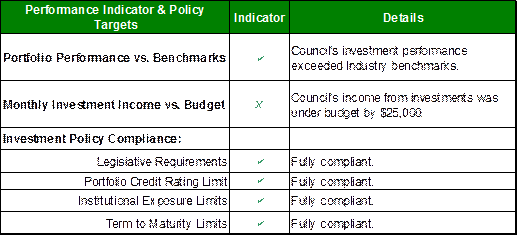
Cumulative Investment Return against Budget
The net return on investments for the financial year ended September 2013 was $1,020,000 against a budget of $1,075,000, giving a YTD unfavourable variance of $55,000. The total return on investments (interest and net capital gain) for the month of September is provided below.

The unfavourable variance compared to budget was due to matured higher interest earning investments reinvested at lower rates. The budget for interest income will be reviewed during September Quarterly Budget Review.
A comparison of the cumulative investment returns against year to date budget is shown in Chart below.
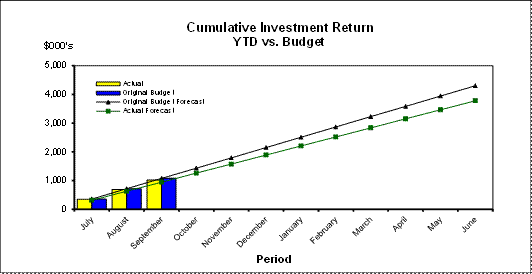
Cash Flow and Investment Movements
Council’s total cash & investment portfolio at the end of September 2013 is $98,184,000, an increase of $7,281,000 from the opening balance of $90,903,000 on 1 July 2013.
The net cash inflow for the month was $2,824,000 mainly due to the remainder of first instalment rates income and Section 94 contributions.
Three investments matured during the month and five new investments were made. Table 1 below provides detailed movement of these investments by institution name, investment rating and interest rates.
Table 1 – Investment Movements - September 2013
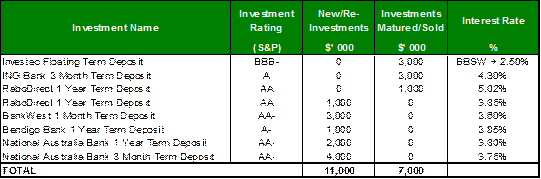
Investment Performance against Industry Benchmarks
Overall during the month of September the investments performance was well above industry benchmark. The benchmarks are specific to the type of investment and details are provided below.
Ø Cash and at call investments are compared against the 11am Cash Rate. This applies to Westpac At Call Account, Westpac Maxi-I Investment Account, AMP Business Easy Saver Account and Citi Bank Money Market At Call Account.
Ø UBS Bank Bill Index is used for all other investments except Cash.
A comparison of the portfolio returns against investment benchmarks is provided in Table 2 below.
Table 2 - Investments Performance against Industry Benchmarks
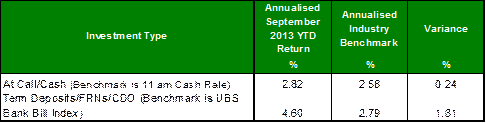
Table 3 below provides a summary of all investments by type and performance during the month.
Attachment A1 provides definitions in relation to different types of investments.
Table 3 - Investments Portfolio Summary
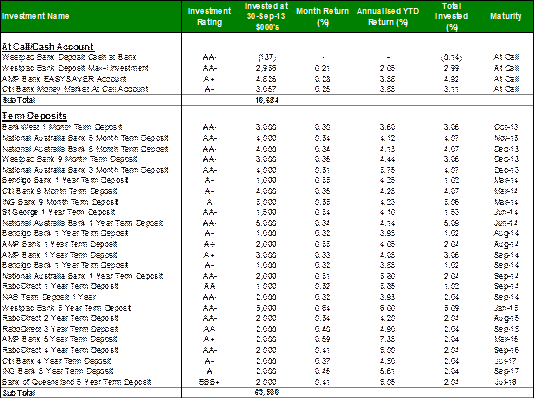
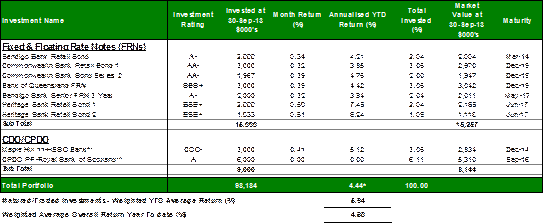
* Weighted average returns excluding Cash/At Call
** Refer to Risk Management section for commentary on these investments
Investment by Credit rating and Maturity Profile
The allocation of Council’s investments by credit rating and the maturity profile are shown below:
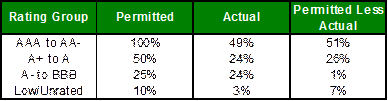
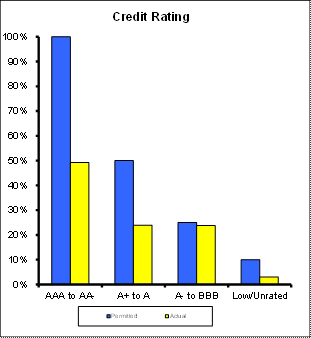
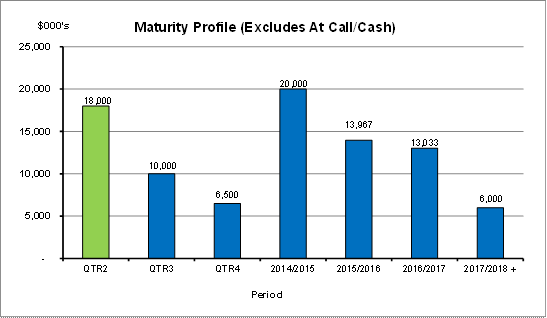
Governance Matters
Council’s investments are made in accordance with the Local Government Act (1993), the Local Government (General) Regulation 2005 and Council’s Investment.
Section 212 of the Local Government (General) Regulation 2005 states:
(1) The responsible accounting officer of a council:
(a) must provide the council with a written report (setting out details of all money that the council has invested under section 625 of the Act) to be presented:
(i) if only one ordinary meeting of the council is held in a month, at that meeting, or
(ii) if more than one such meeting is held in a month, at whichever of those meetings the council by resolution determines, and
(b) must include in the report a certificate as to whether or not the investment has been made in accordance with the Act, the regulations and the council’s investment policies.
(2) The report must be made up to the last day of the month immediately preceding the meeting.
Risk Management
Council manages the risk associated with investments by diversifying the types of investment, credit quality, counterparty exposure and term to maturity profile.
Council invests its funds in accordance with The Ministerial Investment Order.
All investments are made with consideration of advice from Council’s appointed investment advisor, CPG Research & Advisory.
Council has two “Grandfathered” investments in structured products that were previously entered into in accordance with The Ministerial Investment Order at the time. The Ministerial Investment Order no longer allows investment in these products. These investments are:
Maple Hill – HSBC Bank
Maple Hill, with a face value of $3,000,000, is invested by Council on a “held to maturity” basis being December 2014. This CDO has incurred six previous credit events by the underlying securities and can withstand a further five credit events before principal loss is incurred. There are no distressed securities now and independent advice is that the CDO is at low risk of not recovering the full principal. The investment has not operated outside of its terms and conditions, it continues to fully meet interest payments as and when they fall due and there has not been a reduction in the coupon rate. While Council intends to hold this investment to maturity, the market value at 30 September 2013 was quoted by HSBC at $2,834,000.
CPDO PP – Royal Bank of Scotland
This Constant Proportion Debt Obligations Principal Protected (CPDO PP), with a face value of $6,000,000, is invested by Council on a “held to maturity” basis being September 2016. This CPDO is capital protected at maturity date by Royal Bank of Scotland. Since December 2011 it ceased to pay interest, due to a decrease in the credit indices it was linked to, creating an unwind event. The investment now takes the form of a zero coupon senior bank bond with a value of $6M. While Council intends to hold this investment to maturity, the market value at 30 September 2013 was quoted by RBS Morgan at $5,310,000.
Financial Considerations
The budget for interest on investments for the financial year 2013/2014 is $4,300,100. Of this amount approximately $3,031,200 is restricted for the benefit of future expenditure relating to developers’ contributions, $481,200 transferred to the internally restricted Infrastructure & Facility Reserve, and the remainder of $787,700 is available for operations.
Social Considerations
Not applicable.
Environmental Considerations
Not applicable.
Community Consultation
None undertaken or required.
Internal Consultation
None undertaken or required.
Certification - Responsible Accounting Officer
I hereby certify that the investments listed in the attached report have been made in accordance with Section 625 of the Local Government Act 1993, clause 212 of the Local Government General Regulation 2005 and Council’s Investment Policy.
Summary
As at 30 September 2013:
Ø Council’s total cash and investment portfolio is $98,184,000, which is an increase of $7,281,000 compared to the opening balance of $90,903,000 at 1 July 2013.
Ø Council’s net return on investments for the month of September 2013 was $1,020,000 against a budget of $1,075,000, giving a YTD unfavourable variance of $55,000.
|
A. That the summary of investments and performance for September 2013 be received and noted.
B. That the Certificate of the Responsible Accounting Officer be noted and the report adopted.
|
|
Tony Ly Financial Accounting Officer |
Angela Apostol Acting Manager Finance |
|
David Marshall Director Corporate |
|
|
A1View |
Investments definitions specific to Council’s investment portfolio |
|
2013/213934 |
|
Ordinary Meeting of Council - 22 October 2013 |
GB.5 / 103 |
|
|
|
|
Item GB.5 |
S07162 |
|
|
8 October 2013 |
Draft Swimming Pool
Barrier Inspection Policy
EXECUTIVE SUMMARY
|
purpose of report: |
To present to Council the proposed Swimming Pool Barrier Inspection Policy. |
|
|
|
|
background: |
All councils in NSW are required to develop and adopt a local swimming pool barrier inspection program, in consultation with their communities by 29 October 2013.
On 27 August 2013 Council resolved to place the draft Swimming Pool Barrier Inspection Policy on public exhibition. |
|
|
|
|
comments: |
The draft Swimming Pool Barrier Inspection Policy was on public exhibition from Tuesday 10 September to Wednesday 9 October 2013. No submissions or comments were received. |
|
|
|
|
recommendation: |
That the draft Swimming Pool Barrier Inspection Policy, as attached to this report be adopted by Council. |
Purpose of Report
To present to Council the proposed Swimming Pool Barrier Inspection Policy.
Background
Councils in NSW are required to develop and adopt a local swimming pool barrier inspection program, in consultation with their communities, by 29 October 2013.
On 27 August 2013, Council considered and endorsed a draft swimming pool barrier inspection policy for the purpose of public exhibition.
Comments
The draft Swimming Pool Barrier Inspection Policy was placed
on public exhibition from
Tuesday 10 September to Wednesday 9 October 2013. At the close of exhibition
no submissions or comments were received.
Governance Matters
Section 22B of the Swimming Pools Act 2012 imposes a mandatory responsibility on Council to adopt and implement a local swimming pool barrier inspection policy by 29 October 2013.
The legislation specifically states:
- The program must make provision for the inspection at least once every 3 years of any swimming pool situated on premises on which there is tourist and visitor accommodation or more than two dwellings.
- The program is not to require the inspection of a swimming pool in respect of which there is a valid certificate of compliance or a relevant occupation certificate.
- Council must inspect pools in its area in accordance with its local program.
Risk Management
It is estimated that Council has in excess of 18,000 private pools within its area. Council cannot remove the hazard; however it can reduce the risk by inspecting and regulating local pools to ensure that the barriers adequately restrict access to the pools in accordance with the relevant safety standards.
Whilst compliant pool barriers help to reduce the risk of drowning, there are other measures that should also be implemented by the pool owners to further reduce the risk. These include adult supervision at all times, greater safety awareness and resuscitation training.
Financial Considerations
Implementation of the policy will be cost neutral, as Council is allowed to levy a fee for inspection services. The current prescribed fee is $150 for the first inspection and $100 for the second inspection. No further inspection fees are permitted.
Social Considerations
With an estimated 49% of all properties in the Ku-ring-gai area containing a private swimming pool, this proposed policy will affect many residents. The policy has been drafted with the knowledge that Council has only a limited number of qualified staff employed (three) to service the mandatory requirement. The community, in the main will be required to self–regulate, and ensure that their swimming pool barrier is adequate at all times.
Environmental Considerations
This policy will not have any impact on our natural environment.
Community Consultation
The draft Swimming Pool Barrier Inspection policy was placed
on public exhibition from
Tuesday 10 September to Wednesday 9 October 2013. At the close of exhibition,
no submissions were received. As a result, no amendments have been made to the
exhibited draft policy as attached to this report.
Internal Consultation
There has been no internal consultation in the development of this report.
Summary
In accordance with Council’s statutory obligation, a swimming pool barrier inspection policy has been developed. On 27 August 2013 Council resolved to place the draft Swimming Pool Barrier Inspection Policy on public exhibition. At closure of the exhibition period on 9 October 2013 no submissions had been received.
|
That the draft Swimming Pool Barrier Inspection Policy as attached to the report be adopted by Council.
|
|
Anne Seaton Manager Regulation & Compliance |
Michael Miocic Director Development & Regulation |
|
A1View |
Draft Swimming Pool Barrier Inspection Policy |
|
2013/191168 |
|
APPENDIX No: 1 - Draft Swimming Pool Barrier Inspection Policy |
|
Item No: GB.5 |


Purpose
The Swimming Pools Act 1992, section 22B, requires the development and adoption by each council of a policy for the inspection of swimming pools in its area to ensure compliance with the requirements of Part 2 – access to swimming pools – of the Swimming Pools Act 1992.
This policy must be in place to commence implementation by 29 October 2013. Councils are then required to inspect swimming pools in accordance with their individually adopted policy.
Objectives
To ensure that Council complies with its legal obligations under the Swimming Pools Act.
To ensure swimming pools within the Ku-ring-gai Local Government Area are adequately surrounded by a child resistant barrier.
To set guidelines for the inspection program to ensure pools and pool owners comply with relevant legislation.
To promote awareness of the requirements of the Swimming Pools Act.
Application of policy
This policy applies to swimming pools (both outdoor and indoor) and spas that are situated or installed, on premises on which a residential building, a moveable dwelling or tourist and visitor accommodation is located, but does not apply to swimming pools and spas that are situated, or proposed to be constructed or installed, on any premises occupied by the Crown or by a public authority.
Relevant legislation and standards
The legislation, regulation and standards that apply to this Swimming Pool Barrier Inspection Policy include;
· Swimming Pools Act 1992
· Swimming Pools Regulation 2008
· Swimming Pools Amendment Act 2012
· Swimming Pools (consequential amendments) Regulation 2013
· Building Code of Australia
· Australian Standards AS1926.1
· Australian Standards AS1926.2
Definitions
Barrier - a fence or a wall and includes;
(a) a gate or door set in the fence or wall, and
(b) any other structure or thing declared by the regulations to be a barrier for the purposes of the Swimming Pools Act.
Certificate of compliance – in respect of swimming pool, means a certificate issued under section 22D of the Swimming Pools Act.
Dwelling – a room or suite of rooms occupied or used or so constructed or adapted as to be capable of being occupied or used as a separate domicile.
Premises containing more than two dwellings would include a residential flat building, town houses, villas and the like.
Multi-occupancy development – a building, or a group of buildings, that is/are situated on premises that consists of two or more dwellings.
Policy - a formal statement covering the principles approved in administering Council’s statutory responsibilities.
Procedure – a formal statement of the way in which Council will undertake certain activities.
Relevant occupation certificate – in respect of a swimming pool, which means an occupation certificate issued under the Environmental Planning and Assessment Act 1979 that is less than three years old and that authorises the use of the swimming pool.
Swimming pool – an excavation, structure or vessel;
(a) that is capable of being filled with water to a depth greater then 300mm, including inflatable pools, and
(b) that is solely or principally used or that is designed, manufactured or adapted to be solely used, for the purpose of swimming, wading, paddling or any other human aquatic activity, and includes a spa pool, but does not include a spa bath, anything that is situated within a bathroom or anything declared by the regulations not to be a swimming pool for the purposes of the Act.
Tourist and visitor accommodation – a building or place that provides temporary or short term accommodation on a commercial basis and includes back packers accommodation, bed and breakfast accommodation, farm stay accommodation, hotel or motel accommodation and serviced apartments, but does not include camping grounds or caravan parks.
Principles
Local government has a legislative responsibility for ensuring swimming pool safety. Recent changes to the Swimming Pools Act 1992 include the need for councils to;
· Develop a swimming pool barrier inspection program in consultation with the community.
· Report annually on the number of pools inspected and associated compliance level of the barriers when compared against the relevant construction and legislative standard.
· Inspect pools associated with tourist & visitor accommodations and multi occupancy developments at three year intervals.
· At the request of a pool owner, inspect pools prior to lease or sale of property.
· Issue certificates of compliance after an inspection which finds a pool barrier compliant with the requirements of the legislation; and
· Inspect any swimming pool that is the subject of a complaint.
Policy statement
Council’s inspection program will provide measures to identify and address non-compliant swimming pools and raise awareness within the community of the on-going responsibilities of pool owners to ensure fully compliant child resistant barriers at all times.
Council will implement its policy via an inspection regime requiring that inspections be undertaken as follows:
a) Duty of care
At the time of visiting any property for any reason, an officer of Council may take into account the condition of any swimming pool safety barrier.
b) Complaint investigation
On receipt of a complaint to Council concerning an alleged defective swimming pool barrier.
c) Request for certificate of compliance
On receipt of an application for the supply of a certificate of compliance for the swimming pool
d) Request for an exemption
On receipt of an application from a swimming pool owner making application for an exemption from all or any of the requirements of Part 2 of the Act, in certain circumstances.
e) Other inspections at the request of the property owner
Section 22C of the Act provides for a swimming pool owner to make application to Council for an inspection, which includes advice about swimming pool compliances.
f) Following up on notices issued by an accredited certifier
Section 22E of the Act provides for an accredited certifier to inform Council if it is not satisfied that a swimming pool is compliant. Council must follow up on orders and notices to comply as issued by any certifier.
g) Mandatory inspection of all tourist and visitor accommodations and multi occupancy units
All tourist, visitor and multi occupancy units are required to be inspected at least once every three years.
h) Random inspections
Where inspectorial resources permit, the NSW Swimming Pool Register will be reviewed to identify those properties where there is not a current certificate of compliance or a relevant occupation certificate.
Pool inspection program
Given that Ku-ring-gai has over 18 000 pools in its local area, our program is designed to respond to a hierarchy of need, whilst balancing a finite number of resources to support the program.
The following tables set out Council’s proposed course of inspections. Table 1 includes all mandatory inspections (required under the Act and associated legislation) and will take effect from 29 October 2013, unless noted otherwise.
Table 1. Pool Inspection Program – Stage 1.
|
Hierarchy of inspections |
Types of pool inspections |
|
1. |
When Council is made aware of pool barriers that do not comply with the standards enforced when they were built; a) During inspections of other works (not associated with swimming pools) b) When complaints are made in writing to Council (investigations to commence by Council within 3 days, as specified in Section 29A of the Act) c) When a notice is received from an accredited certifier who inspected the pool and is not satisfied that the requirements of the Act have been met (Section 22E of the Act) d) When complaints are made verbally to Council staff e) When Council suspects a pool contravenes the Act (for example, pools constructed without approval and pools that are not registered). |
|
2. |
When an inspection request is received: a) Prior to the sale / lease of properties with pools, mandatory after 29 April 2014 (Schedule 2 of the Swimming Pools Amendment Act 2012) b) Voluntarily from pool owners (Section 22C of the Act). c) Council must carry out these inspections within 10 business days of receiving the inspection requests (Section 17 of the Swimming Pools Regulation 2008). |
|
3. |
Tourist and visitor accommodation every 3 years, mandatory after 29 April 2014 (Section 22B(2) of the Act) consisting of; a) hotels b) motels c) serviced apartments d) bed and breakfast accommodation e) backpackers accommodation,
But does not include: f) camping grounds g) caravan grounds h) eco tourist facilities. |
|
4. |
Multi- residential dwellings, with more than two dwellings, every 3 years, mandatory after 29 April 2014 (Section 22B(2) of the Act). |
Table 2 includes a listing of non-mandatory inspections, but inspections that may be carried out, where resources permit.
Table 2. Pool Inspection Program – Stage 2
|
Hierarchy of inspections |
Types of pool inspections |
|
1. |
Child care facilities / family day care centres |
|
2. |
Properties of pool owners who registered their pools on the NSW Swimming Pool Register but who did not signal that their pool complied with the relevant safety standards |
|
3. |
Pools not inspected during the past 10 years |
|
4. |
Pools not inspected during the last 5 years |
|
5. |
Pools with an exemption under the Act |
|
6. |
Other pools, without a valid Certificate of Compliance or Occupation Certificate. |
Charging of fees
Council will charge a fee for service for inspection of swimming pools. The fee will not be higher than that prescribed by the Swimming Pools Act and Regulations thereunder.
Note: Fees will also be charged, where Council becomes responsible for Notices or Orders initiated by private certifiers.
Inspection services
Inspections may be undertaken by Council’s authorised officers or a qualified accredited certifier (Section 22A of the Act). Council’s power of entry is consistent with the Local Government Act 1993.
Certificate of compliance
In order to obtain a certificate of compliance, under Section 22D of the Act, the swimming pool must:
· be registered on the NSW Register of Swimming pools
· be inspected by an authorised officer or an accredited certifier, and
· comply with the requirements of Part 2 of the Act
A certificate of compliance is valid for 3 years from the date of issue.
A certificate of Compliance ceases to be valid if a subsequent direction is issued under the Act because the pool is later found to be defective and requires rectification.
The inspection process
During a pool barrier inspection, the qualified pool inspector will take measurements and in some cases photographs or video, whilst using a comprehensive checklist to determine whether the pool barrier complies with the relevant safety standards. Where possible, the original approved plans detailing the swimming pools construction will be referenced.
If the pool barrier has:
· Not been altered, then the pool barriers will be required to comply with the safety standards that were applicable at the time of construction.
· Been substantially altered or the means of access to the pool has been rebuilt, the pool barriers will be required to comply with the safety standards that were applicable when the modifications were assessed.
· Never complied with the safety standards that were applicable at the time of the construction the pool barrier will be required to comply with the current safety standards.
Officers will view pool safety offences as serious and will issue notices and directions as standard procedure. Penalty notices will be issued at the discretion of the authorised officer. Prosecution may also be considered where deemed to be appropriate. A minimal tolerance approach is considered appropriate and is consistent with Council’s adopted Compliance Policy.
Non compliant swimming pool barrier
A certificate of compliance may not be issued by a qualified pool inspector when the pool barriers do not satisfy the requirements of the Act.
If the pool barrier is inspected by an accredited certifier, the accredited certifier will need to give a written notice to the pool owner and forward a copy of the notice to Council (Section 22E of the Act). Council will then investigate the non-compliant pool barriers.
If the pool barrier is inspected by Council’s authorised officer, a notice or order will be sent to the owner, outlining the upgrade works required. If the upgrade works are not performed within the timeframes specified, a Penalty Infringement Notice may be issued and legal action may be taken (in accordance with the swimming pools legislation).
Exemptions
In limited circumstances, Council may issue exemptions under the Swimming Pools Act, 1992. Section 22 of the Act allows Council to grant exemptions from swimming pool barriers that are impracticable or unreasonable in particular cases.
Circumstances include the physical nature of the premises, because of the design or construction of the swimming pool or because of special circumstances of a kind recognised by the Regulations as justifying the granting of an exemption, such that an adult occupant of the premises, because of a physical disability or impairment, would be significantly impeded in gaining access to the pool if the swimming pool barrier were made to be installed in accordance with the Act.
Penalty Infringement Notices
Where a Penalty Infringement Notice is issued by Council for a breach of the Swimming Pool Act, any appeal against the issue of the Penalty Infringement Notice will need to be made through the New South Wales State Debt Recovery Office.
A Legal challenge against the issue of a Penalty Infringement Notice is to be made in accordance with the procedural guidelines outlined on the back of the Penalty Infringement Notice.
Legal challenges against Penalty Infringement Notices issued for swimming pool breaches may incur additional Court costs and could result in the Court issuing a greater fine that that specified on the original notice should the notice be upheld by the Court.
|
Doc distribution |
|
Doc status |
|
File No |
|
|
Document owner |
|
Contact officer/s |
|
||
|
Approval date |
|
Approved by |
|
||
|
Effective date |
|
Review period |
|
Review date |
|
|
History of Approved Versions |
|||||
|
Version – Original 1.0 |
Effective date October 2013 |
Summary of changes |
|||
|
Ordinary Meeting of Council - 22 October 2013 |
GB.6 / 112 |
|
|
|
|
Item GB.6 |
S04326 |
|
|
19 September 2013 |
Public Exhibition -
Draft Bushland Reserves
Plan of Management
EXECUTIVE SUMMARY
|
purpose of report: |
To seek Council’s endorsement to: (i) place the draft Ku-ring-gai Bushland Reserves Plan of Management (PoM) on public exhibition and conduct a public hearing, in accordance with the requirements of the Local Government Act 1993; and (ii) to exhibit notice of the proposal to create a Biobanking Agreement (within the meaning of Part 7A of the Threatened Species Conservation Act 1995), at Rofe Park, Sheldon Forest and Comenarra Creek Reserve, Ku-ring-gai, in accordance with the requirements of the Local Government Act 1993. |
|
|
|
|
background: |
On 10 September 2013 (GB5) Council endorsed the creation of a 119 hectare Biobank site at Rofe Park, Sheldon Forest and Comenarra Creek Reserve, Ku-ring-gai, through the ‘Linking Landscapes through Local Action’ project, a grant program being managed by the Office of Environment & Heritage (OEH) and funded through the NSW Environmental Trust.
Establishing a Biobank site involves a number of steps, including updating Council’s Bushland Reserves PoM to facilitate Biobanking within natural areas; and exhibiting notice of the proposal to create a Biobanking Agreement at Rofe Park, Sheldon Forest and Comenarra Creek Reserve, Ku-ring-gai. |
|
|
|
|
comments: |
The Ku-ring-gai Bushland Reserves PoM will be updated as a two staged process. The Stage 1 review (this stage) includes legislative and empirical changes, the inclusion of additional natural areas (including re-categorisations and acquisitions) and expressly authorising the creation of biobanking agreements within Natural Areas. |
|
|
|
|
recommendation: |
That Council endorses the public
exhibition of, and public hearing for, the draft Ku-ring-gai Bushland
Reserves PoM; and public exhibition of the proposal to create a Biobanking
Agreement at Rofe Park, Sheldon Forest and Comenarra Creek Reserve, |
Purpose of Report
To seek Council’s endorsement to: (i) place the draft Ku-ring-gai Bushland Reserves Plan of Management (PoM) on public exhibition and conduct a public hearing, in accordance with the requirements of the Local Government Act 1993; and (ii) to exhibit notice of the proposal to create a Biobanking Agreement (within the meaning of Part 7A of the Threatened Species Conservation Act 1995), at Rofe Park, Sheldon Forest and Comenarra Creek Reserve, Ku-ring-gai, in accordance with the requirements of the Local Government Act 1993.
Background
On 10 September 2013 (GB5) Council endorsed the creation of a 119 hectare Biobank site at Rofe Park, Sheldon Forest and Comenarra Creek Reserve, Ku-ring-gai, through the ‘Linking Landscapes through Local Action’ project, a grant program being managed by the Office of Environment & Heritage (OEH) and funded through the NSW Environmental Trust.
Through this grant program Council will receive an ongoing, annual payment to manage the Biobank site in perpetuity for the purpose of conservation. Grant funding for the Biobank site has been determined, in consultation with OEH, to be approximately $1,571,000, with Council contributing an additional $469,000 over the first 3 years. Total funding for the site is therefore approximately $2,040,000.
Establishing a Biobank site involves a number of steps, including updating Council’s current Bushland Reserves PoM (2009) to facilitate Biobanking within natural areas; and exhibiting notice of the proposal to create a Biobanking Agreement (within the meaning of Part 7A of the Threatened Species Conservation Act 1995), at Rofe Park, Sheldon Forest and Comenarra Creek Reserve, Ku-ring-gai, in accordance with the requirements of the Local Government Act 1993.
Comments
The Local Government Act 1993 requires that all land classified as community land (including Council’s bushland reserves) must have a plan of management that:
· is written by Council in consultation with the community;
· identifies the important features of the land;
· clarifies how Council will manage the land; and
· indicates how the land can be used or developed (such as leasing).
In accordance with the Local Government Act 1993 and Practice Note No. 1 Public Land Management issued by the Department of Local Government, a council can amend a plan of management at any time. However, as an amendment, it is regarded as another plan and must be publicly exhibited in accordance with Section 40 of the Act.
In order to meet the Linking Landscapes grant requirements, Council will update the Ku-ring-gai Bushland Reserves PoM as a two-staged process, involving two public exhibition rounds:
· Stage 1 (this stage) will result in the creation of a one (1) year PoM and will involve:
- the incorporation of additional natural areas;
- legislative and other empirical changes (eg ha of natural areas, km of constructed walking trails, fire or service trails);
- additional content on lease licencing and other estates (including expressly authorising the creation of a Biobanking Agreement within the meaning of Part 7A of the Threatened Species Conservation Act 1995) within natural areas;
- superseding the Ku-ring-gai Bushland Reserves PoM Operational Plan with live GIS data and site management plans for regeneration sites;
- minor amendments to the permissible uses section; and
- amendments to responsibility position titles, as referred to within the “Prescribed actions for management of reserve features” section.
· Stage 2 will involve a complete review of the PoM, in conjunction with a review of Council’s Biodiversity Strategy, and in consultation with Council staff, stakeholders and the community. This review is scheduled for the 2014-2015 financial year and will produce a five (5) year PoM.
The draft Ku-ring-gai Bushland Reserves PoM (Attachment A1) will be the sixth PoM prepared for Ku-ring-gai’s bushland reserves since 1984 and covers bushland owned by, or under the care, control and management of Council, with all bushland reserves dedicated and classified as Natural Areas under the Local Government Act 1993. After the publication date, these lands will be managed in accordance with this PoM.
Key amendments within the draft Ku-ring-gai Bushland Reserves PoM, following the Stage 1 review, are outlined below.
Threatened species recovery programs and plans
A review of relevant threatened species recovery programs and plans has been undertaken and incorporated within the draft Ku-ring-gai Bushland Reserves PoM. Section 36 of the Local Government Act 1993 requires a specific PoM for community land that comprises habitat for a threatened species listed under the Threatened Species Conservation Act 1995 and the Environment Protection and Biodiversity Conservation Act 1999. The draft Ku-ring-gai Bushland Reserves PoM is consistent with the Section 36 requirements.
Biobanking
As a part of the NSW Government’s Green Corridors Program funded by the NSW Environmental Trust, the Office of Environment and Heritage (OEH) is implementing the ‘Linking Landscapes through Local Action’ Project within the Sydney Basin Bioregion, by funding the establishment of permanent conservation covenants under the BioBanking Scheme (biobanking agreements) through which the landowner is paid in perpetuity to protect and manage specific areas of land which have high biodiversity values.
Land nominated by Council within Sheldon Forest, Rofe Park and Comenarra Creek Reserve, in the Ku-ring-gai LGA, was selected through a competitive selection process to receive such funding. The land was selected in consideration of its connectivity and other biodiversity values, the conservation benefits of funding management, the benefits of securing the land under a biobanking agreement, and the cost-effectiveness of the investment.
Council resolved (10 September 2013, GB 5) to proceed with the required stages of consultation, assessment and agreements, in relation to the establishment of a 119 hectare Biobank site at Rofe Park, Sheldon Forest and Comenarra Creek Reserve, Ku-ring-gai, including the following lots:
Lot 137 DP3873, Lot 33 DP15544, Lot 275 DP16943, Lot A DP17300, Lot 11 DP18318, Lot 16 DP18318, Lot 14A DP26062, Lot 9 DP30642, Lot 34 DP203481, Lot 11 DP210103, Lot 15 DP217009, Lot 1 DP219147, Lot 2 DP219147, Lot 56 DP220784, Lot 109 DP222236, Lot 251 DP225067, Lot 281 DP228604, Lot 1 DP343196, Lot A DP373018, Lot B DP373018, Lot B DP411529, Lot 1 DP443820, Lot 1 DP445496, Lot 2 DP445496, Lot 2 DP549143, Lot 3 DP549143, Lot 2 DP555765, Lot 63 DP665141, Lot 32 DP752031, Lot 3 DP815999, Lot 2 DP876378.
The biobanking agreement has been interpreted to be an ‘estate’ for the purpose of Sections 45−47 of the Local Government Act 1993. In accordance with Section 46(1)(b) of the Act, the draft Ku-ring-gai Bushland Reserves PoM expressly authorises Council to consider and to approve or to refuse, as it deems appropriate, entering into a biobanking agreement within natural areas (within the meaning of Part 7A of the Threatened Species Conservation Act 1995).
The Bushland Reserves PoM expressly directs Council to ensure, when approving the granting of any estate or lease over community land, the nature of the land as a community asset is not compromised. Council is required to assess the potential impacts (ecological, cultural, fire hazard and built assets) and ongoing management requirements when approving estates and leases. Council is obliged to ensure that the conditions of use will specify permissible use and restrictions in use in accordance with the context, ecological values, built assets and bushfire hazard of the area. An estate or lease may only be granted where the purpose for which it is granted is consistent with the core objectives as described within the Local Government Act 1993 (and as adopted as objectives within the Ku-ring-gai Bushland Reserves PoM).
Natural area re-categorisations and additions
Since the adoption of the current Ku-ring-gai Bushland Reserves PoM (2009) Council has acquired land for the purpose of conservation, resolved to re-categorise new natural areas and carried out boundary adjustments (14 December 2010 [GB 10], 19 July 2011 [GB6], 9 August 2011 [NM1], 18 October 2011 [GB9]). These amendments have been included in the draft Ku-ring-gai Bushland Reserves PoM and are summarised in Table 1 below, with more detail provided in Attachments A2, A3 and A4.
Table 1: Changes in natural areas since 2009
|
Boundary re-alignment between community land categories |
|
· Ku-ring-gai Creek Reserve (LMU 20)/ Warrimoo Oval (LMU 19), St Ives Chase; · Acron Oval (LMU 94) and Douglas Street Reserve (LMU 93) St Ives; · Kissing Point Road Sports Field (LMU 361) South Turramurra (within Sir David Martin Reserve (LUM 257); · William Lewis Park (LMU 873) and Bush (LMU 216), Fox Valley Road, Wahroonga; · Turramurra Park Oval (LMU 42), Upper Lovers Jump Creek (LMU 876), Turramurra; · Mitchell Crescent Reserve (LMU 232), Twin Creeks Reserve ( LMU 233), Warrawee; · Rofe Park (LMUs 250 and 249), Kate Street Turramurra; · Reading Avenue Reserve (LMU 154), and Warrington Reserve (LMU 153), East Killara; · Seven Little Australians Park (LMU 370) and & Seven Little Australians (LMU 165), Slade Avenue, Lindfield; · Fiddens Wharf Oval (LMU 315) in National Park, Lindfield; Upper Bicentennial Park (LMU 285), West Pymble Chase; · Guiders Park (LMU 13) and Glengarry Annexe (LMU 342), North Turramurra; · Mimosa Oval and Rofe Park, Turramurra; (LMUs 251 & 248); · Darnley Oval and Governor Phillip Reserve, East Gordon Park, Gordon; (LMUs 133 & 132); · Regimental Park Tennis Courts (within Regimental Park); (LMU 856); · George Christie Playing Field and Bradley Park, Wahroonga; (LMUs 242 & 236); · Howson Oval and Twin Creek Reserve, Turramurra; (LMUs 237 & 233); · Koola Park and Bushranger Reserve, Killara; (LMUs 138 & 137); · Barra Brui Playing Field, Community Development Area and Barra Brui Bush, St Ives; (LMUs 134, 625 & 135); · Avondale Pony Club and Surgeon White Reserve, St Ives; (LMUs 103 &102); and · Bryce Oval and Bryce Bush, St Ives; (LMUs 118 & 119).
|
|
Community land categories amended, in their entirety, to Natural Areas |
|
· Aleta End (20 Morona Avenue, Wahroonga) (LMU 337); · Florey Avenue Reserve, Pymble (LMU 75); · Founders Way, St Ives (LMU122); · Holt Avenue Reserve, North Wahroonga (LMU709); · Kissing Park (10A Bowen Avenue, South Turramurra) (LMU 260); · Seven Wives Wood (21 Richard Road, St Ives) (LMU 100); · Milkmaids Reserve (19A Ellalong Road, North Turramurra) (LMU 037); · Huntley’s Forest (37A Lynbara Avenue, St Ives) (LMU 108).
|
|
Acquisition or dedication of additional community land to be classified as Natural Areas |
|
· 26A Northcote Road, Lindfield, added to Seven Little Australians (LMU 165). |
In accordance with Section 47 of the Local Government Act 1993, Council is also giving notice to the public of its intention to create a Biobanking Agreement (within the meaning of Part 7A of the Threatened Species Conservation Act 1995), at Rofe Park, Sheldon Forest and Comenarra Creek Reserve, Ku-ring-gai. The Proposal for an estate - Biobank site at Rofe Park, Sheldon Forest and Comenarra Reserve is provided as Attachment A5.
Governance Matters
In accordance with the Local Government Act 1993 all land classified as community land must be managed in accordance with a plan of management adopted by Council. It is considered that the draft Ku-ring-gai Bushland Reserves PoM is the appropriate plan of management for Council for all community land acquired, re-categorised or dedicated as Natural Areas.
The proposed Biobank site (being Rofe Park, Sheldon Forest and Comenarra Creek Reserve) is currently managed as Natural Areas under the Local Government Act 1993. The proposed Biobank site will be established and managed through the placing of a biobanking agreement (under Part 7A of the Threatened Species Conservation Act 1995) over the three reserves.
The BioBanking scheme provides a streamlined biodiversity assessment process for biobanking sites (conservation areas) and development sites, a rigorous and state approved offsetting scheme and an opportunity for landowners to generate income by managing land for conservation. Further information on biobanking is available at: http://www.environment.nsw.gov.au/biobanking/. Through the creation of a Biobank site, credits are created. These credits may either be sold to offset development or may be purchased for the purpose of conservation (thereby securing ongoing conservation management funding without the impacts of development).
The Proposal for an estate - Biobank site at Rofe Park, Sheldon Forest and Comenarra Reserve (Attachment A5) will not involve offsetting, as all credits created are to be transferred to OEH and retired for the purpose of conservation. Whilst the draft Ku-ring-gai Bushland Reserves PoM will permit biobanking within natural areas any future decision to approve offsetting via the BioBanking scheme will be directed either through a draft Ku-ring-gai Offset Policy (yet to be reported to Council and publicly exhibited) or Council resolution.
Risk Management
Changes to Natural Areas categorisation (as outlined in Table 1 above) was undertaken following a review of existing disturbances, site values and use. These refinements will help ensure that Council is meeting its obligations under the Local Government Act 1993 and Threatened Species Conservation Act 1995. Consequently, Council’s risk of using and managing community land inappropriately is reduced.
Financial Considerations
Once adopted, the implementation of the Ku-ring-gai Bushland Reserves PoM will be funded through Council’s Environmental Levy, capital works and operational budgets. Council will continue to seek external grant funding for specific projects in the PoM, to supplement Council’s current implementation budget.
The draft Ku-ring-gai Bushland Reserves PoM allows Council to adopt a ‘user pays’ principle for special uses, or leases or licences where contribution, either by cash or in-kind, may be required, including for maintenance requirements across the full life cycle of impacts.
Currently there are a number of Council authorised special uses for Ku-ring-gai bushland reserves, including:
· bookings for commercial/organised activities including filming, research, bushwalking, access over land for construction; and
· leases and licences for use of built assets within the bushland (eg Scout and Guide halls).
There is also provision for groups or associations to assist in ongoing maintenance of bushland areas and recreational tracks through, for example, Council’s Bushcare program, which reduces the need to draw on Council’s operational budget for these maintenance activities.
Direct financial considerations, related to the exhibition of the draft Ku-ring-gai Bushland Reserves PoM, are funded through Council’s operational budget and include:
· advertising the exhibition of the draft Ku-ring-gai Bushland Reserves PoM and Proposal for an estate - Biobank site at Rofe Park, Sheldon Forest and Comenarra Reserve; and
· the costs associated with the public hearing for the draft Ku-ring-gai Bushland Reserves PoM.
Through the Linking Landscapes grant program Council will receive an ongoing, annual payment to manage the Biobank site (at Rofe Park, Sheldon Forest and Comenarra Reserve) in perpetuity for the purpose of conservation. Grant funding for the Biobank site has been determined, in consultation with OEH, to be approximately $1,571,000, with Council contributing an additional $469,000 over the first 3 years. Total funding for the site is therefore approximately $2,040,000.
Social Considerations
With the exception of biobanking, minimal changes to actions and permissible uses within the draft Ku-ring-gai Bushland Reserves PoM have been made as part of the Stage 1 review. As such, changes to recreational use of Natural Areas within the Ku-ring-gai Local Government Area (LGA) as are considered to be negligible.
It is proposed that the Biobank site (at Rofe Park, Sheldon Forest and Comenarra Reserve) be limited to the Natural Areas management boundary and will exclude:
· Mimosa Oval, including the playground, car park and amenities block. Biobanking within the adjacent reserve will not impact upon use of this area, but may improve the site’s amenity through increased biodiversity (weed) management (particularly within the north-eastern corner).
· Rofe Park (off Kate Street) and the 1st Turramurra and 2nd Turramurra scout halls. It is considered that changes to current or future lease agreements will not be required as a result of the establishment of the Biobank site. Further consultation with Scouts Australia will be undertaken during the biobanking assessment process.
Environmental Considerations
Ku-ring-gai’s natural areas provide significant environmental, aesthetic, educational and recreational values to the area. As a significant section of Council’s open space reserve system; Ku-ring-gai’s bushland reserves provide habitat and bio-linkage opportunities of regional and local importance, including habitat for a broad range of listed flora and fauna species (as summarised in Table 2 below). The draft Ku-ring-gai Bushland Reserves PoM aims to improve the ecology and biodiversity of natural areas within the LGA.
Table 2: Listed species, populations and threatened ecological communities in Ku-ring-gai’s bushland reserves
|
|
State listed (Threatened Species Conservation Act 1995) |
Federally listed (Environment Protection and Biodiversity Conservation Act 1999) |
|
Flora |
15 |
12 |
|
Fauna |
35 |
16 |
|
Endangered population |
1 |
|
|
Threatened ecological communities |
7 |
2 |
Community Consultation
In accordance with Section 40 and 40A of the Local Government Act 1993, Council will publicly exhibit, as well as hold a public hearing, on the draft Ku-ring-gai Bushland Reserves PoM, due to the PoM containing substantial amendments, in relation to the categorisation, or re- categorisation of community land.
In accordance with Section 47 of the Local Government Act 1993, Council is also giving notice to the public of its intention to create a Biobanking Agreement (within the meaning of Part 7A of the Threatened Species Conservation Act 1995), at Rofe Park, Sheldon Forest and Comenarra Creek Reserve, Ku-ring-gai. Council will publicly exhibit and accept submissions for the Proposal for an estate - Biobank site at Rofe Park, Sheldon Forest and Comenarra Reserve for a period of 28 days.
In accordance with Section 38 of the Local Government Act 1993, Council will publicly exhibit the draft Ku-ring-gai Bushland Reserves PoM for a period of 28 days and accept submissions for a further 14 days after the public exhibition period has closed.
The community and other stakeholders will be notified of the public exhibition period and public hearing through advertisements in the North Shore Times and Hornsby Advocate, Council’s website and direct correspondence from Council, specifically for key stakeholders such as local environment groups, the Ku-ring-gai Bushcare Association, the Department of Lands, Aboriginal Land Council, Rural Fire Service and the Office of Environment and Heritage (Garigal and Lane Cove National Parks office).
Stakeholders directly affected by the proposed creation of a Biobank site within Rofe Park, Sheldon Forest and Comenarra Creek Reserve (including adjacent residents, key user groups, Scouts Australia, and easement holders) will also be notified, as will those who provided comment on the Linking Landscape Council report (10 September 2013, GB 5).
The purchase price for photocopying the draft Ku-ring-gai Bushland Reserves PoM will be $0.20 per page and $30.00 for a CD version, in accordance with Council’s Fees and Charges 2013/14. All documents will be available on Council’s website during the public exhibition period and can be downloaded free of charge, and will also be placed at the Council Chambers, Gordon, and St Ives, Lindfield and Turramurra libraries.
Internal Consultation
Internal consultation has been undertaken in developing the draft Ku-ring-gai Bushland Reserves PoM and the Proposal for an estate - Biobank site at Rofe Park, Sheldon Forest and Comenarra Reserve. Staff from the Operations, Strategy and Environment, Development and Regulation, Community and Civic departments have been included in the consultation process.
Summary
On 10 September 2013 (GB5) Council endorsed the creation of a 119 hectare Biobank site at Rofe Park, Sheldon Forest and Comenarra Creek Reserve, Ku-ring-gai, through the ‘Linking Landscapes through Local Action’ project, a grant program being managed by the Office of Environment & Heritage (OEH) and funded through the NSW Environmental Trust.
Establishing a Biobank site involves a number of steps, including updating Council’s current Bushland Reserves PoM (2009) to facilitate Biobanking within natural areas; and exhibiting notice of the proposal to create a Biobanking Agreement (within the meaning of Part 7A of the Threatened Species Conservation Act 1995), at Rofe Park, Sheldon Forest and Comenarra Creek Reserve, Ku-ring-gai, in accordance with the requirements of the Local Government Act 1993.
In order to meet the Linking Landscapes grant requirements, Council will update the Ku-ring-gai Bushland Reserves PoM as a two-staged process, involving two public exhibition rounds:
· Stage 1 (this stage) will result in the creation of a one (1) year PoM and will involve:
- the incorporation of additional natural areas;
- legislative and other empirical changes (eg ha of natural areas, km of constructed walking trails, fire or service trails);
- additional content on lease licencing and other estates (including expressly authorising the creation of a Biobanking Agreement within the meaning of Part 7A of the Threatened Species Conservation Act 1995) within natural areas;
- minor amendments to the permissible uses section; and
- amendments to responsibility position titles, as referred to within the “Prescribed actions for management of reserve features” section.
· Stage 2 will involve a formal review of the PoM, in conjunction with a review of Council’s Biodiversity Strategy, and in consultation with Council staff, stakeholders and the community. This review is scheduled for the 2014-2015 financial year and will produce a five (5) year PoM.
In accordance with Section 47 of the Local Government Act 1993, Council is also giving notice to the public of its intention to create a Biobanking Agreement at Rofe Park, Sheldon Forest and Comenarra Creek Reserve, Ku-ring-gai. Council will publicly exhibit and accept submissions for the Proposal for an estate - Biobank site at Rofe Park, Sheldon Forest and Comenarra Reserve for a period of 28 days.
In accordance with Section 38 of the Local Government Act 1993, Council will publicly exhibit the draft Ku-ring-gai Bushland Reserves PoM for a period of 28 days and accept submissions for a further 14 days after the public exhibition period has closed.
|
A. That the draft Ku-ring-gai Bushland Reserves Plan of Management is exhibited for a period of 28 days and that submissions are accepted for a further 14 days after the public exhibition period has closed, in accordance with the requirements of the Local Government Act 1993.
B. That a public hearing be held to address the draft Ku-ring-gai Bushland Reserves Plan of Management, specifically in relation to the acquisition and re-categorisation of Natural Areas within the LGA.
C. That
Council exhibits notice of, and accepts submissions for, the Proposal for
an estate - Biobank site at Rofe Park, Sheldon Forest and Comenarra
Creek Reserve for a period of
E. That a further report on the draft Ku-ring-gai Bushland Reserves Plan of Management and Proposal for an estate - Biobank site at Rofe Park, Sheldon Forest and Comenarra Creek Reserve be presented to Council following the public consultation process. |
|
Marnie Kikken Manager Environment & Sustainability |
Andrew Watson Director Strategy & Environment |
|
A1View |
Draft Ku-ring-gai Bushland Reserves Plan of Management |
|
2013/263579 |
|
|
|
A2View |
Additional natural areas |
|
2013/261786 |
|
|
A3View |
Additional natural areas |
|
2013/261788 |
|
|
A4View |
Additional natural areas |
|
2013/261790 |
|
|
A5View |
Proposal for an estate - Biobank site at Rofe Park, Sheldon Forest & Comenarra Reserve |
|
2013/261804 |
|
APPENDIX No: 5 - Proposal for an estate - Biobank site at Rofe Park, Sheldon Forest & Comenarra Reserve |
|
Item No: GB.6 |
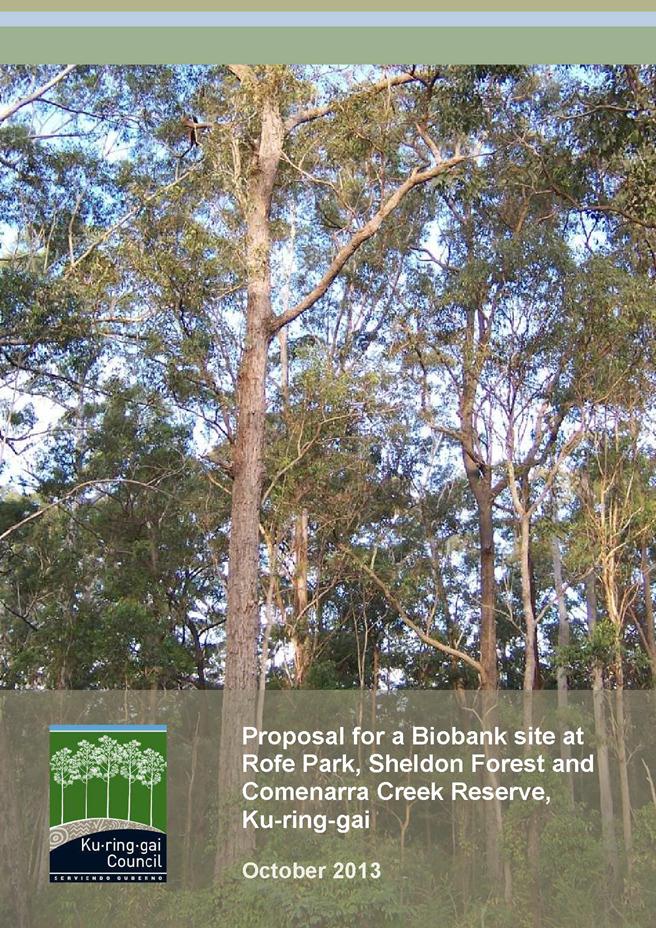
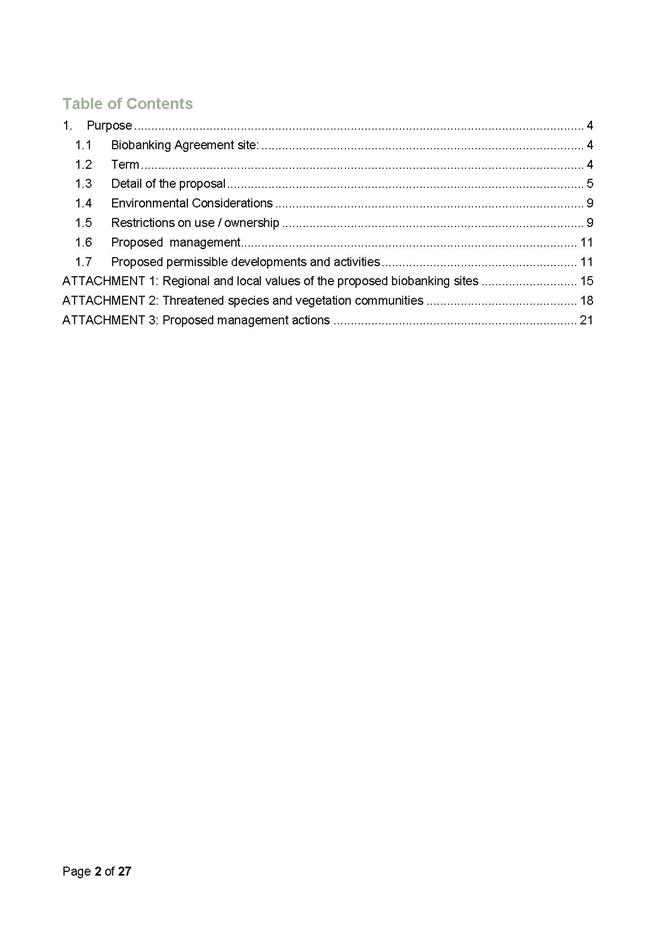
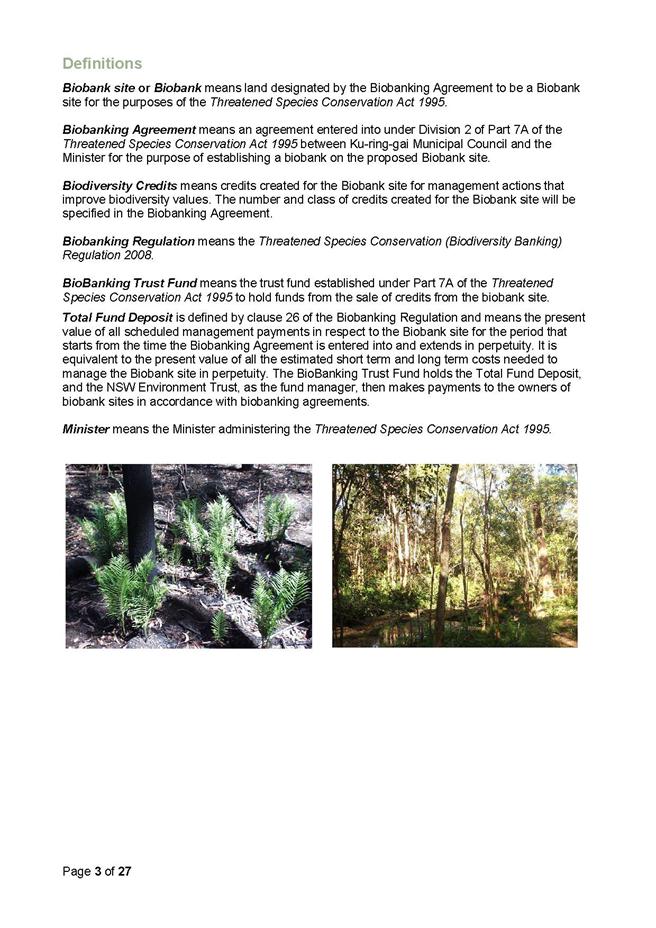
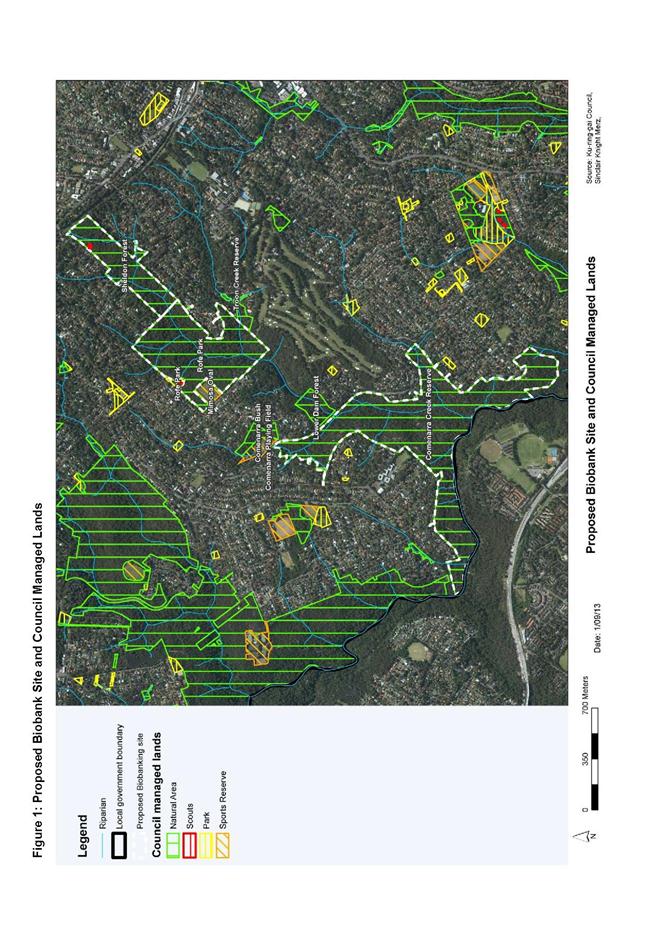
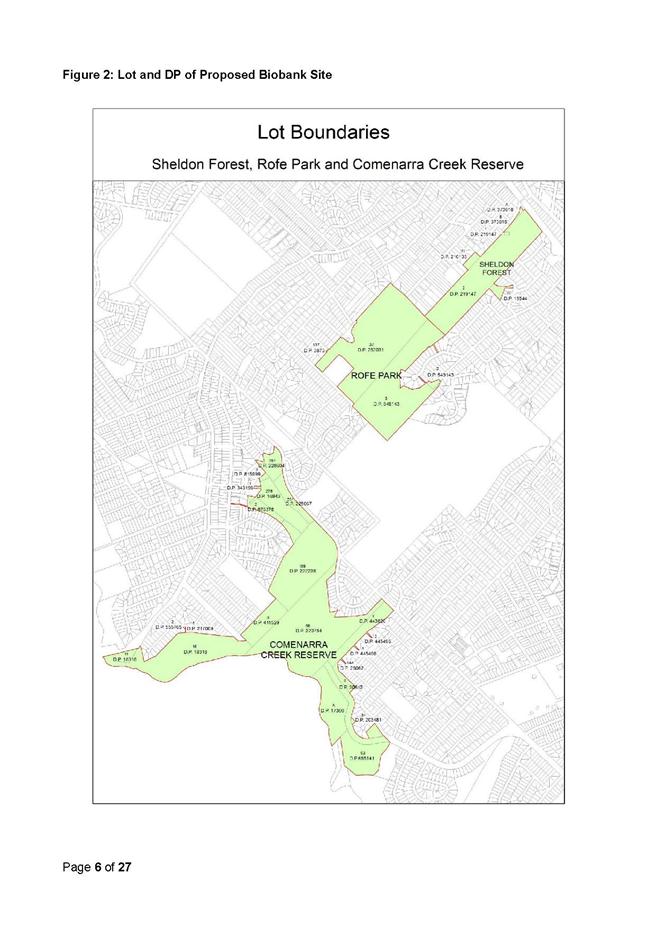
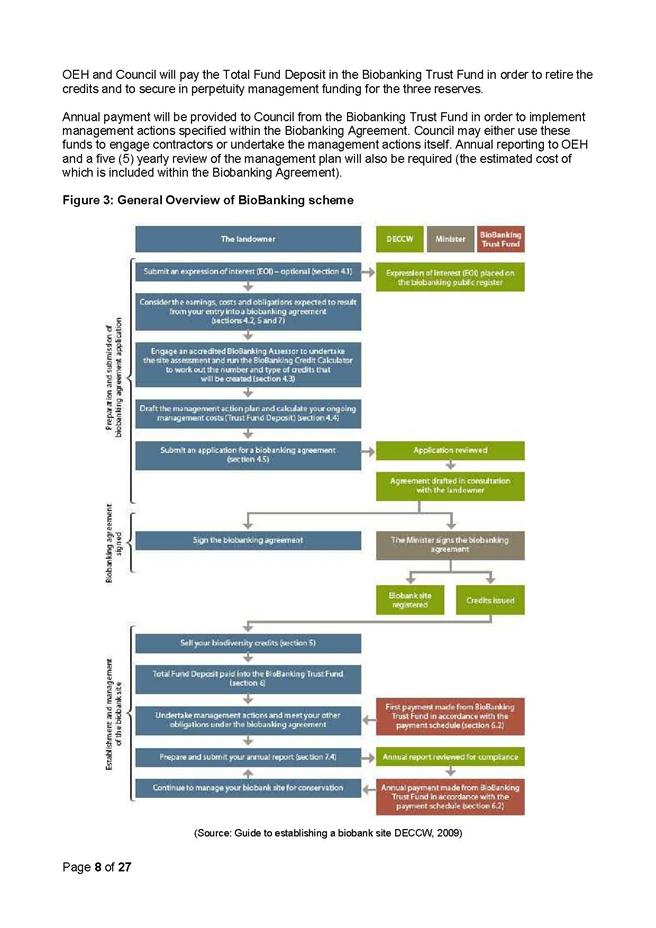
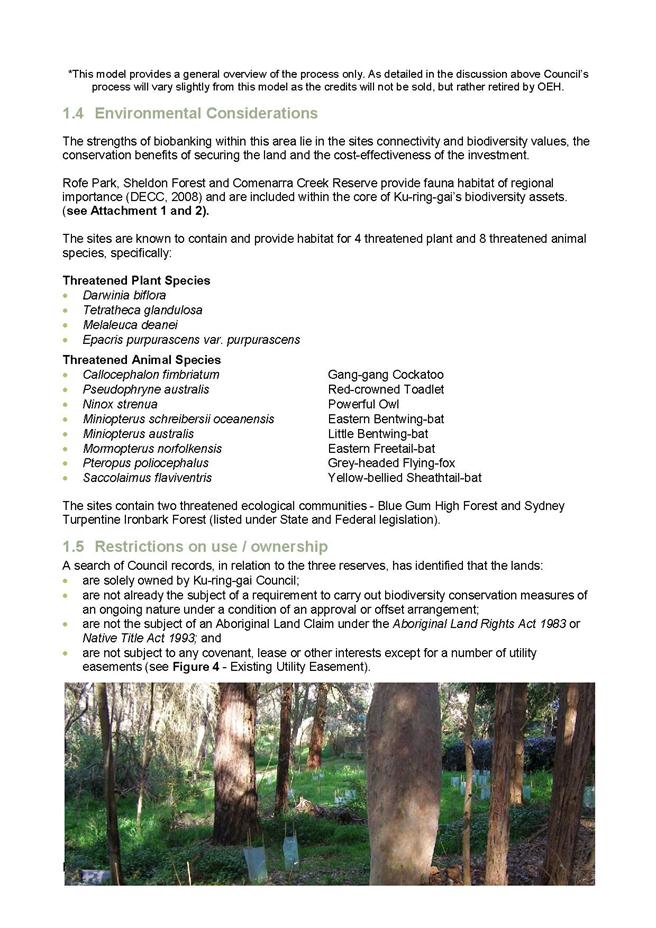
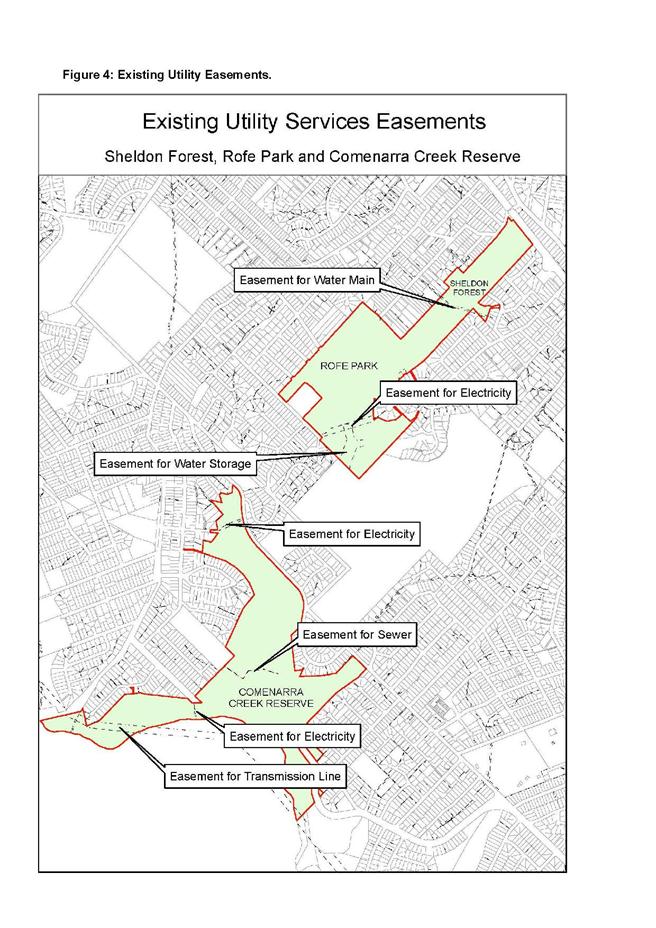
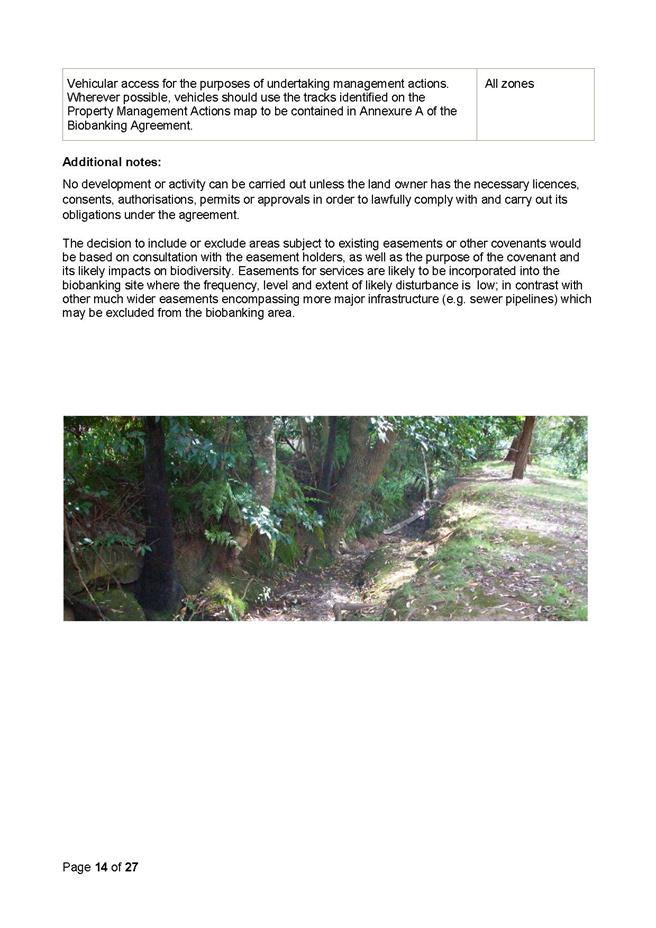
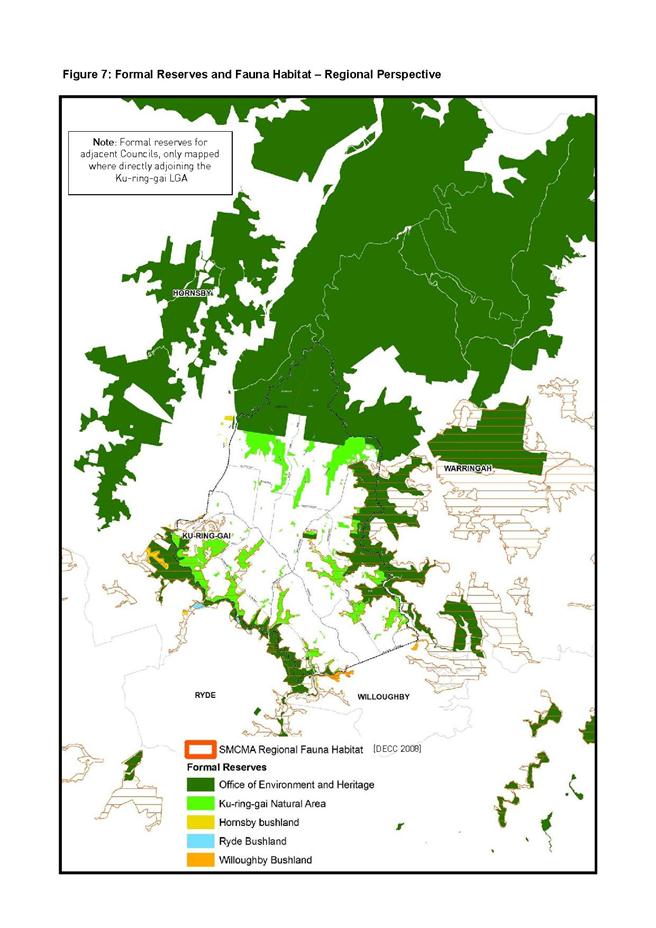
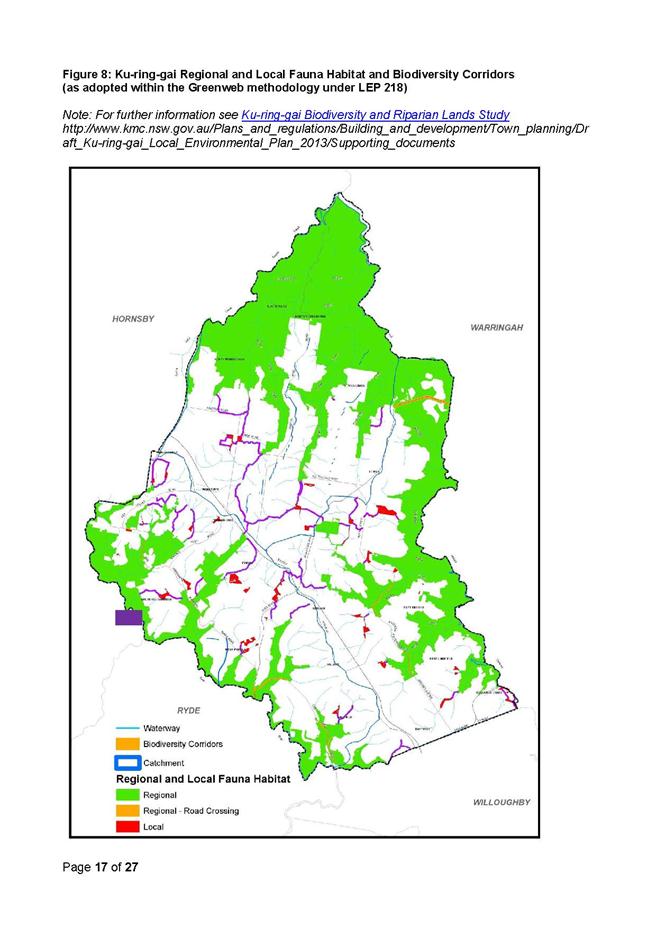
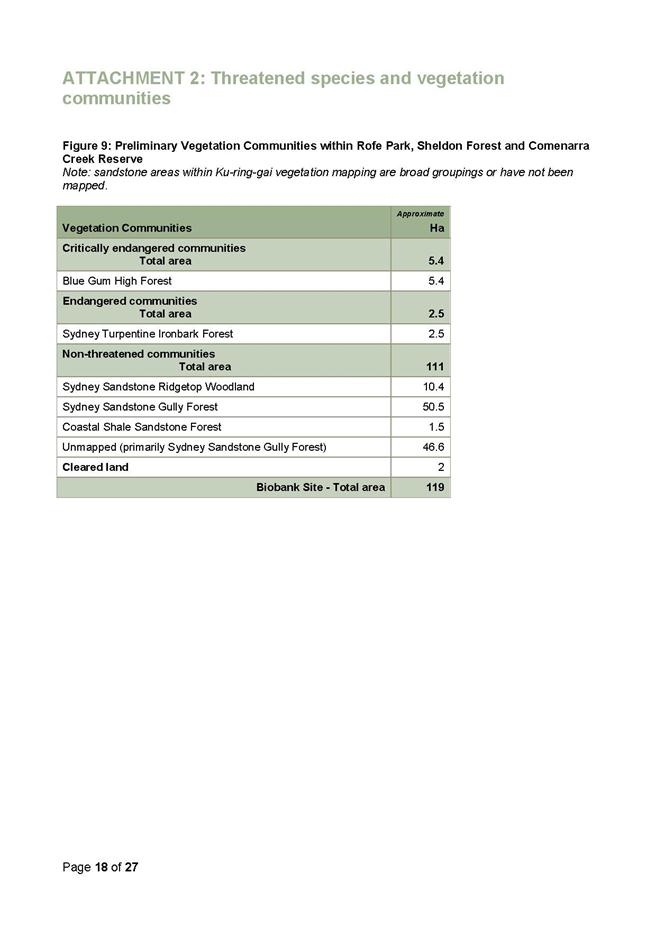
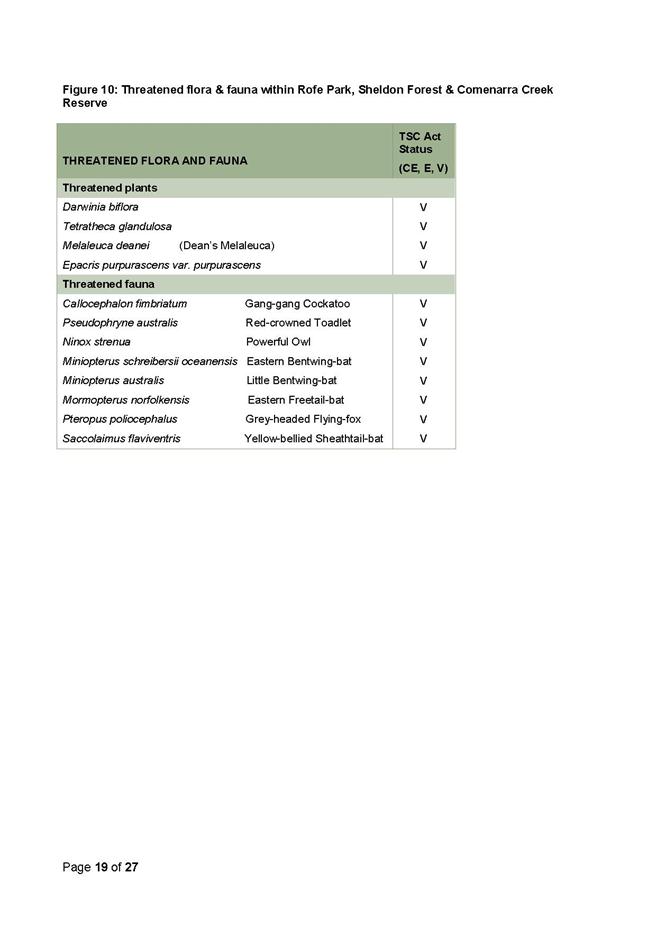
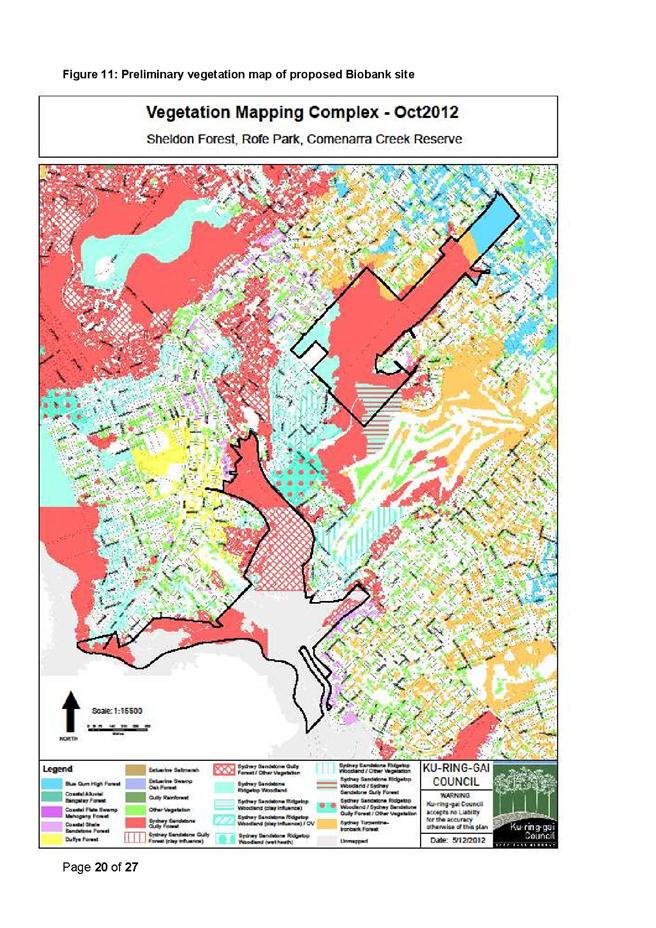
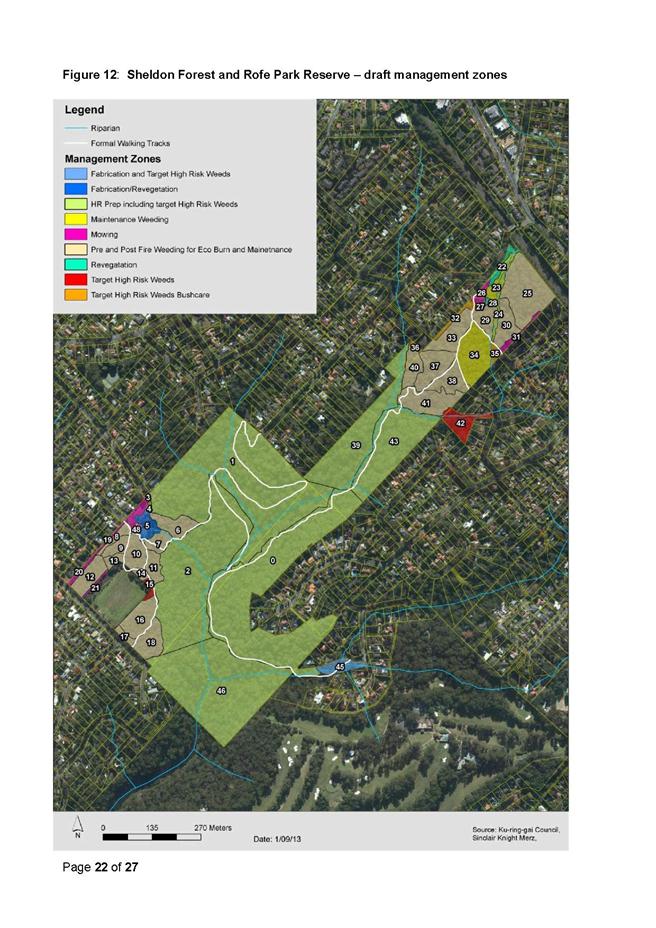
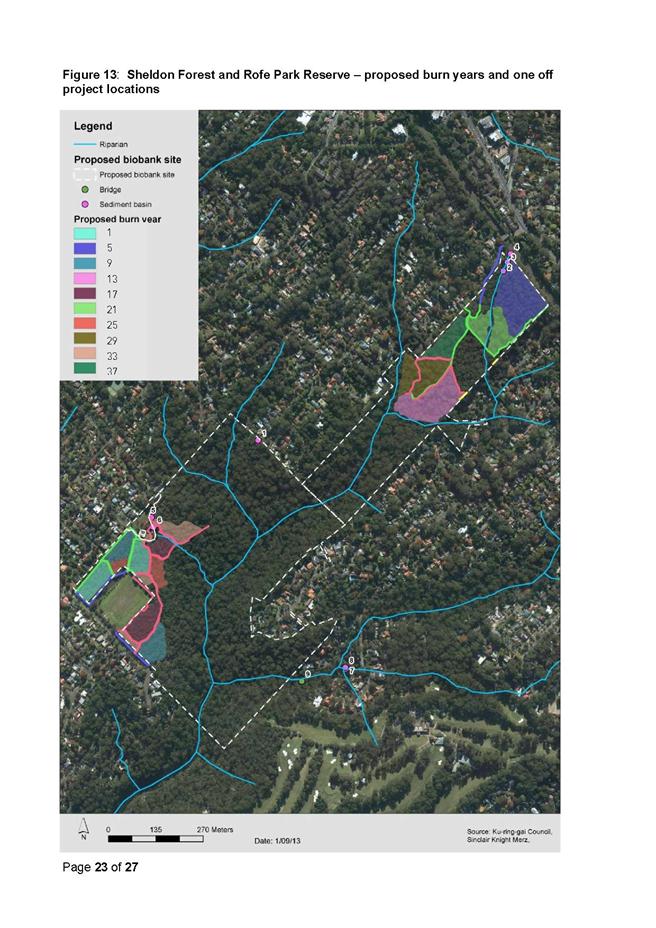
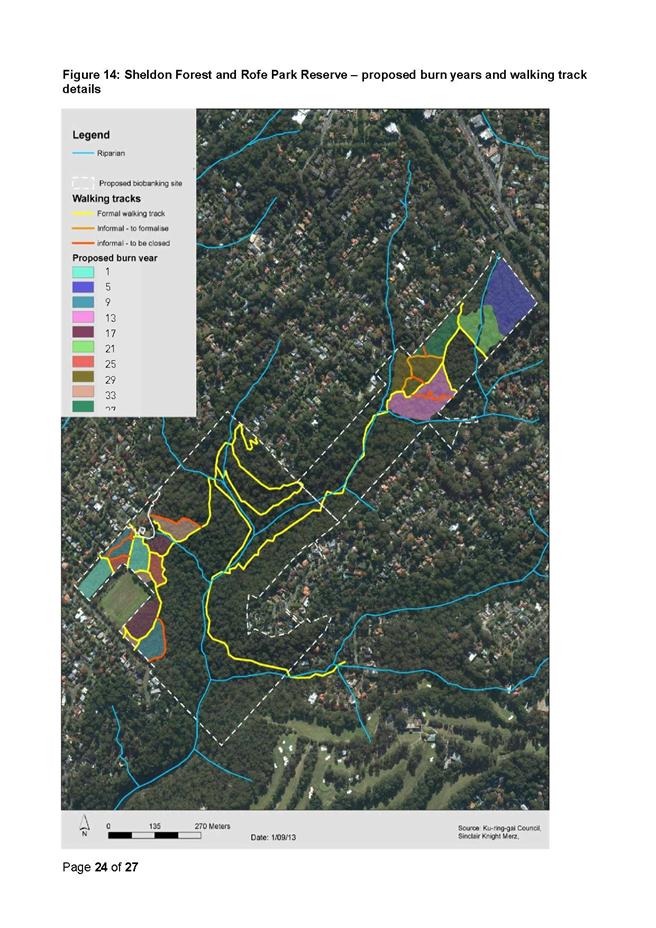
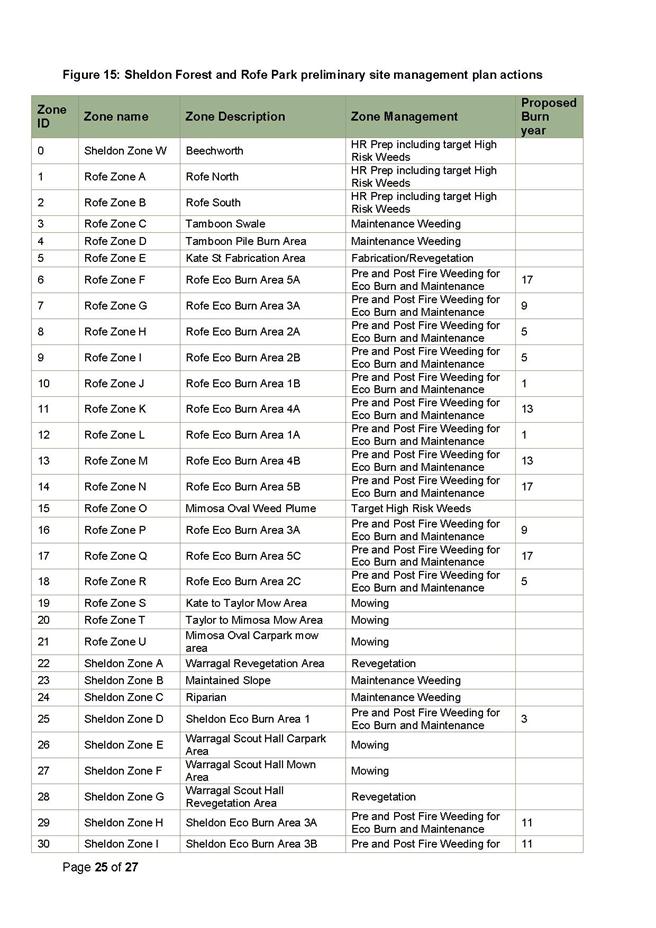
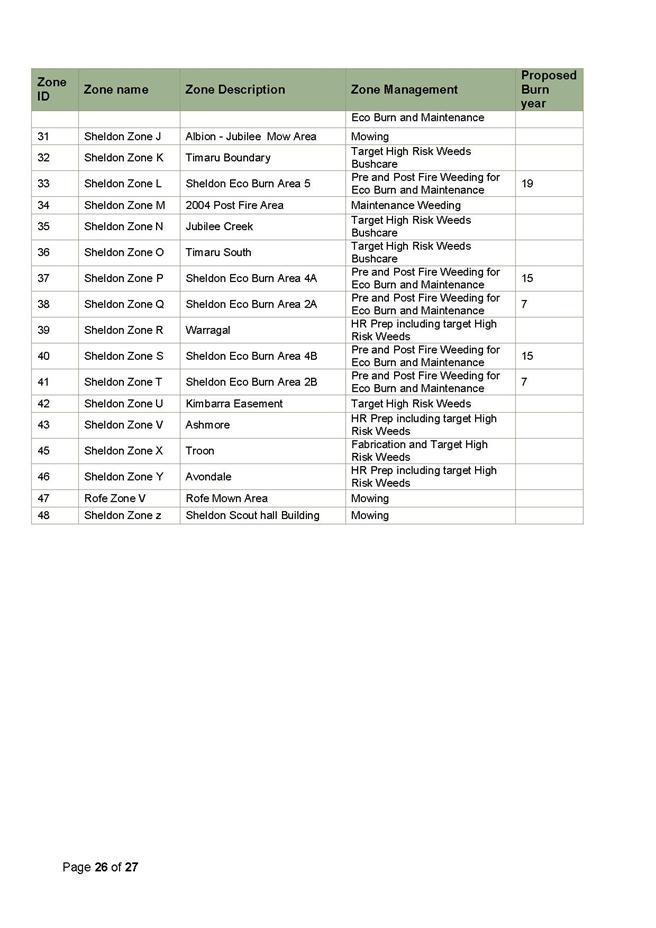
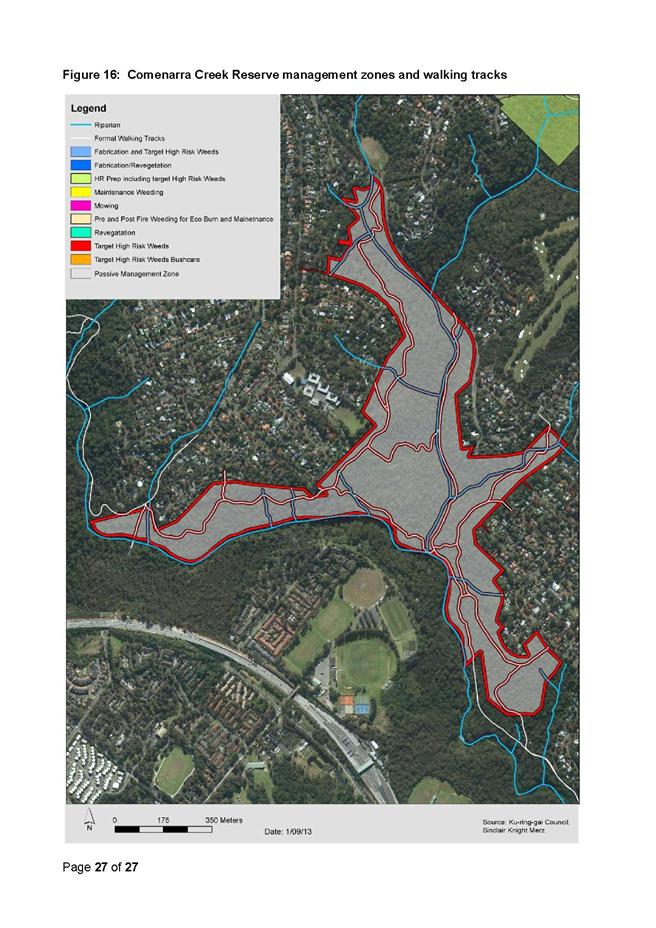
|
Ordinary Meeting of Council - 22 October 2013 |
GB.7 / 295 |
|
|
|
|
Item GB.7 |
S09584 |
|
|
11 October 2013 |
Tender NSROC - Road Surfacing, Patching, and associated Works - 2013 to 2015
EXECUTIVE SUMMARY
|
purpose of report: |
To seek Council's approval to accept the Northern Sydney Regional Organisation of Councils (NSROC) tender for the schedule of rates for supply; supply and delivery; and supply, delivery and laying of asphaltic concrete, including associated road profiling and heavy patching and other work items for the period 2013/2014 and 2014/2015. |
|
|
|
|
background: |
Tenders for the supply, supply and delivery and supply, delivery and laying of asphaltic concrete were called by NSROC on behalf of all member Councils. Submissions for these services for 2013/2014 and 2014/2015 closed in March 2013. |
|
|
|
|
comments: |
Tender documents were received from twelve (12) companies. Significant delay was encountered due to clarification of information requested and provided. |
|
|
|
|
recommendation: |
That Council accepts the tenderers identified in Confidential Attachment A1 to supply; supply and delivery; and supply, delivery and laying of asphaltic concrete, including associated road profiling and heavy patching and other work items for the period 2013/2014 and 2014/2015. |
Purpose of Report
To seek Council's approval to accept the Northern Sydney Regional Organisation of Councils (NSROC) tender for the schedule of rates for supply; supply and delivery; and supply, delivery and laying of asphaltic concrete, including associated road profiling and heavy patching and other work items for the period 2013/2014 and 2014/2015.
Background
Tenders for the supply, supply and delivery; and supply, delivery and laying of asphaltic concrete including the associated road profiling and heavy patching works were called by the Northern Sydney Regional Organisation of Councils (NSROC) for the periods 2013/2014 and 2014/2015. The tender closed March 2013.
Although the tender was called by NSROC, each Council will enter into individual contracts with the successful tenderer(s).
Tenders, in no particular order, were received from the following twelve (12) companies:
1. SRS (Sami) Road Services Pty Ltd;
2. Ozpave (Aust) Pty Ltd;
3. Kizan Pty Ltd (t/as A J Paving);
4. Fulton Hogan Inroads Pty Ltd (formerly Pioneer Asphalt);
5. Ally Property Services Pty Ltd;
6. J & M Schembri Pty Ltd’
7. Roadworx Pty Ltd;
8. Downer Edi Works Pty Ltd;
9. State Asphalt Pty Ltd;
10. Stateline Asphalt Pty Ltd;
11. Boral Asphalt Pty Ltd; and
12. All Pavement Solutions Pty Ltd.
It should be noted that the order of the above list of tenderers does not necessarily correspond to the order of the list of tenderers named from A to L in the confidential attachment (for the purposes of identifying the recommended tenderers).
Comments
Confidential Attachment A1 provides comments on the following tender components to:
· supply, supply and delivery;
· supply, delivery and laying of asphaltic concrete including the associated road profiling
· thin wearing or intermediate surfacing
· bitumen crack sealing of road pavement
Governance Matters
Tenders were called in accordance with Section 55 of the Local Government Act and Tendering Regulations.
The attachments are considered to be confidential in accordance with Section 10A (2)(d)(ii) of The Local Government Act 1993 as they are considered to contain commercial in confidence information.
In accordance with Paragraph 3.18 of the Division of Local Government Tendering Guidelines, NSW State Government Memorandum 2007-1 Public Disclosure of Information Arising from NSW Government Tenders and Contracts, and Part 3 Division 5 of the Government Information (Public Access Act) 2009 (“GIPA”), once the contract is effective the name of the successful tenderers and other relevant information will be published on Council’s website in the Contract Register. In addition, in accordance with Clause 179 of the Local Government (General) Regulation 2005, unsuccessful tenderers will also be notified once the contract is effective.
The confidential attachments to this report also include:
· Tender Evaluation Panel’s minutes (Attachment A2),
· Comparison of Supply and Delivery summary (Attachment A3)
· Summary (Attachment 4)
· Quotes per submission identified as Tenderer A to F (Attachments 5 to 16)
Risk Management
Risks relate to supply of poor quality material and this is covered by the specification. As such, recovery methods are included in the contract if a supplier is not able to comply in accordance with the specification. The tender process has been reviewed by members of Northern Sydney Regional Organisation of Councils (NSROC).
Financial Considerations
The rates submitted as Confidential Attachments 5-16 will be utilised to undertake the majority of works under the 2013/2014 and 2014/2015 Road Pavement Program for local and regional roads which has been adopted by Council.
Social Considerations
Not applicable.
Environmental Considerations
Environmental measures are included in the contract specification.
Community Consultation
Consultation has taken place with other Council members of Northern Sydney Regional Organisation of Councils (NSROC) for the preparation of the tender.
Internal Consultation
Consultation has taken place with staff from the Corporate Department.
Summary
Tenders for the supply, supply and delivery; and supply, delivery and laying of asphaltic concrete including the associated road profiling and heavy patching works were called by the Northern Sydney Regional Organisation of Councils (NSROC) for the periods 2013/2014 and 2014/2015. The tender closed March 2013.
A total of twelve (12) submissions were received and assessed by the Tender Evaluation Panel.
|
A. That the tender rates submitted by Tenderer A and Tenderer B be accepted as the preferred for contractors for the supply, supply and delivery and the supply, delivery and laying of asphaltic concrete and associated road profiling works for 2013/1014 and 2014/2015, and other companies where lower rates may apply to different work types be accepted.
B. That the tender rates submitted by Tenderer C and Tenderer D be accepted as the preferred contractors for heavy patching for 2013/2014 and 2014/2015, and other companies where lower rates may apply to different work types be accepted.
C. That tender rates submitted by Tenderer E be accepted as the preferred contractors for thin wearing or intermediate surfacing but also accept submissions from Tenderer F, Tenderer G and Tenderer L in case of non-performance.
D. That tender rates submitted by Tenderer A and Tenderer B be accepted as alternate submissions to the thin wearing or intermediate surfacing.
E. That the tender rates submitted by Tenderer F for bituminous crack sealing of road pavement for 2013/2014 and 2014/2015 be accepted, with the option to accept any other submission if the performance from Tenderer F should they be unable to supply or performance is not satisfactory.
F. That authority be given to the Mayor and General Manager to affix the Common Seal of Council to the instrument for the Contract for the for supply; supply and delivery; and supply, delivery and laying of asphaltic concrete, including associated road profiling and heavy patching and other work items for the period 2013/2014 and 2014/2015.
|
|
Stephen Wandel Asset and Pavement Engineer |
Ian Taylor Acting Director Operations |
|
Report evaluation comments |
|
Confidential |
||
|
|
Tender Evaluation Committee - Minutes |
|
Confidential |
|
|
|
Comparison of Supply and Delivery |
|
Confidential |
|
|
|
Summary |
|
Confidential |
|
|
|
Tenderer A |
|
Confidential |
|
|
|
Tenderer B |
|
Confidential |
|
|
|
Tenderer C |
|
Confidential |
|
|
|
Tenderer D |
|
Confidential |
|
|
|
Tenderer E |
|
Confidential |
|
|
|
Tenderer F |
|
Confidential |
|
|
|
Tenderer G |
|
Confidential |
|
|
|
Tenderer H |
|
Confidential |
|
|
|
Tenderer I |
|
Confidential |
|
|
|
Tenderer J |
|
Confidential |
|
|
|
Tenderer K |
|
Confidential |
|
|
|
Tenderer L |
|
Confidential |
|
Ordinary Meeting of Council - 22 October 2013 |
GB.8 / 300 |
|
|
|
|
Item GB.8 |
S09611 |
|
|
14 October 2013 |
Tender T08/2013 - Minor Concrete, asphalt
and related civil works 2013 to 2016 -
Schedule of Rates contractor list
EXECUTIVE SUMMARY
|
purpose of report: |
To consider the appointment of tenderers to a list of contractor’s Schedule of Rates for minor concrete, asphalt and related civil works 2013 to 2016. |
|
|
|
|
background: |
Tenders were called for the construction, reconstruction, restoration and repairs of concrete footpaths, kerbs, gutters and associated works on an as required basis for the period ending 30 June 2016. |
|
|
|
|
comments: |
Twelve (12) tenders were received and evaluated by the Tender Evaluation Committee. |
|
|
|
|
recommendation: |
That Council accepts the tenders identified in the Confidential Attachment A1 to provide services under a Schedule of Rates contract. |
Purpose of Report
To consider the appointment of tenderers to a list of contractor’s Schedule of Rates for minor concrete, asphalt and related civil works 2013 to 2016.
Background
The Capital Works and Road Rehabilitation Programs, which are approved by Council, include a number of projects that involve the construction or reconstruction of concrete works as part of the whole project. These programs include maintenance and repair of existing infrastructure, some of which involve concrete works.
Some concrete works are of a minor nature which included footpaths, kerb and gutter and associated works. It is not economical to call for separate tenders or quotations for each project. Therefore, tenderers have been requested to submit a Schedule of Rates to enable comparison of costs for the various project works.
As the total amount of works exceed the capacity of Council’s staff to complete all works within the financial year, qualified contractors are required. A list of contractors and their Schedule of Rates for various minor works is prepared for a period of time. The cheapest available contractors are engaged, as needed, using the supplied Schedule of Rates, rather than calling tenders or quotes for each separate project.
While the total cost of concrete works, for any particular project, will be considerably less than $150,000, the total for the financial years 2013-2016 will exceed $150,000 which is the current threshold limit under the Local Government Act.
The most open and transparent process to prepare a list of contractors was to call for tenders.
The calling of tenders commenced on 31 August 2013 and closed 24 September 2013. A Tender Evaluation Committee (TEC) was established to evaluate each tender. The TEC comprised of staff from the Operations Department.
The objective of the Tender is to provide a list of preferred contractors for Council to select from for various works as required, on a Schedule of Rates basis, applicable till 30 June 2016.
Comments
Tenders were received via the Tenderlink portal and Tenderbox.
Submissions, in no particular order, were received from the following companies:
· Stateline Asphalt Pty Ltd;
· Performance Concrete Pty Ltd;
· Pathfinder Systems Australia Pty Ltd;
· Marts Paving;
· Mansour Paving (Aust) Pty Ltd;
· Kelbon Project Services Pty Ltd;
· Jeankon Pty Ltd;
· Foster Civil Contracting Construction Pty Ltd;
· Comfortone Constructions Pty Ltd;
· C W Concrete Pty Ltd;
· BOUCON Group Pty Ltd and
· Asphalt Laying Services Pty Ltd.
Most of the tenderers have previously done work for Ku-ring-gai Council, other Councils and the Roads & Maritime Services (RMS).
The Schedule of Rates received from the contractors will be used to create a list for use in engaging contractors as needed.
Confidential Attachment A1 provides a review of the submissions and evaluation report.
Governance Matters
Tenders were called in accordance with Section 55 of the Local Government Act, 1993 and associated tendering regulations. Tender documents were developed in accordance with Council’s Tendering Procedure and sign-off by the internal Tender Review Committee.
The attachments are considered to be confidential in accordance with Section 10A (2) (d) (ii) of the Local Government Act, 1993 as they are considered to contain commercial in confidence information.
In accordance with Paragraph 3.18 of the Division of Local Government Tendering Guidelines, NSW State Government Memorandum 2007-1 Public Disclosure of Information Arising from NSW Government Tenders and Contracts, and Part 3 Division 5 of the Government Information (Public Access Act) 2009 (“GIPA”), once the contract is effective the name of the successful tenderers and other relevant information will be published on Council’s website in the Contract Register. In addition, in accordance with Clause 179 of the Local Government (General) Regulation 2005, unsuccessful tenderers will also be notified once the contract is effective.
Risk Management
Tenders for the Schedule of Rates are conducted for legal compliance with State legislation, and to reduce exposure to costing risks associated with project charges. Cost estimating of projects, before construction, is essential for the control of expenditure and performance involved with construction and maintenance of Council’s infrastructure such as footpaths, roads and drains.
A Contractor induction session was held on Wednesday 16th October 2013 to provide general Council induction for the tenderers. Specific site inductions will be held on an as needs basis to suit specific projects.
Contractors will be required to have current registration with the BNG Conserve system during any works for Council.
The BNG system is an online web-based software, developed and maintained by BNG Consulting. This is to assist both the contractor and Council in achieving compliance. The selected contractor is required to register their WHS Management System prior to commencing work for Ku-ring-gai Council. It allows contractors to manage the up-keep of their WHS Management System, in-line with legislative requirements, by giving them the ability to self-audit, manage their employees and sub-contractors insurances, licenses and qualification requirements and be notified in advance of impending expiry dates.
Financial Considerations
Funds for the projects are allocated in the Delivery Program 2013/2017 and Operational Plan 2013/2014. The preparation of a list of preferred contractors and their Schedule of Rates does not commit Council to providing a certain amount of work to any or all contractors. The list is to facilitate the completion of projects that are approved and funded through the Delivery Program 2013/2017 and Operations Plan 2013/12014.
Rates in the contract expire 30 June 2016 and are to be indexed annually on 1 July 2014 and 1 July 2015 based on relevant ABS construction index.
Confidential Attachment A2 details the Schedule of Rates from each company
Social Considerations
Construction and maintenance of footpaths and roads is a core function of Council and subject to regular requests for increasing levels of service. By having a panel of contractors who have provided a Schedule of Rates reduces costs for Council when meeting works programmed within the Delivery Program 2013/2017 and Operational Plan 2013/2014 and to meet the tender requirements of the Local Government Act, 1993.
Environmental Considerations
Part of the selection process for contractors for a particular project includes environmental systems and performance as well as meeting legislative requirements. The use of recycled material is encouraged and specifications for recycled materials were included in the tender documents.
Community Consultation
Consultation with referees provided by the tenderers who have not previously worked for Ku-ring-gai Council will be contacted prior to any offer of work. These details will be included in the list for use in engaging contractors as needed.
Internal Consultation
Internal consultation was undertaken with Strategy & Environment and Operations Departments to overview performance and reliability of contractors regarding delivery of projects and expenditure.
Summary
The calling of Tender for Minor Concrete, Asphalt and related Civil Works commenced on 31 August and closed 24 September. 2013.
To complete the annual program under Council’s Delivery Program 2013/2017 and Operational Plan 2013/2014, qualified contractors are required. The most open and transparent process to prepare a list of contractors was to call for tenders, given that the Schedule of Rates is to operate for a period of three (3) years. The total for each of the financial years 2013-2016 will exceed $150,000 which is the current threshold limit under the Local Government Act, 1993.
The Schedule of Rates received from the contractors will be used to create a list for use in engaging contractors as needed.
|
A. That Council accept the Tenderers identified in Confidential Attachment A1 for provision of minor concrete, asphalt and related civil works 2013 to 2016 as the Schedule of Rates contractors list.
B. That the Mayor and General Manager be delegated authority to execute all tender documents on Council’s behalf in relation to the contract.
C. That the Seal of Council be affixed to all necessary documents.
D. That all tenderers be advised of council’s decision in accordance with Clause 178 of the Local Government tendering Regulations.
|
|
Jim Turner Team Leader Design & Projects |
Ian Taylor Acting Director Operations |
|
Assessment |
|
Confidential |
||
|
|
Schedule of Rates |
|
Confidential |
|
Ordinary Meeting of Council - 22 October 2013 |
NM.1 / 305 |
|
|
|
|
Item NM.1 |
TM9/05 |
|
|
14 October 2013 |
Notice of Motion
St Ives Shuttle Bus Service
Notice of Motion from Councillor Ossip dated 14 October 2013
The St Ives Shopping Village is a focal point for St Ives. Together with the Village Green, it is at the heart of the community. It is also the largest employer in Ku-ring-gai with 900 people employed at the Centre, and approximately 40% of those employees living locally. However, it is becoming increasingly difficult and frustrating for both residents and employees to access the precinct due to growing congestion and limited parking. Facing these issues, the St Ives Shopping Village Management has sought Council’s approval to provide a free shuttle bus service, which would take local residents and local employees of the centre across St Ives to and from the Shopping Village and Village Green.
Such a service would assist elderly customers who prefer not to drive or who rely on others at present for transport, general customers who would prefer not to have to find parking, and retail employees who live locally and would find the service a more convenient way of getting to and from work. A regular and timely shuttle bus service would free up parking spaces at the Centre and would be particularly useful at busy times of the year, such as Christmas, where customers have to negotiate traffic and limited parking.
The possibilities for such a scheme are substantial and include working with local retirement villages and nursing homes to service their residents.
This is an innovative solution to overcome existing infrastructure defects, promote economic development and allow residents and employees to more readily and easily access the social hub of the community. The proposal, by EK Nominees Pty Ltd, was submitted to a working party of the Council on 30 September 2013 and is set out in their letter attached.
A similar free shuttle service is operated by Manly Council.
I move:
“1. That Council endorse in principle a St Ives shuttle bus service as outlined by the owners of the St Ives Shopping Village to council staff at its meeting on 30 September 2013.
2. That Council request that the Ku-ring-gai Traffic Committee give urgent consideration and advice on the acceptability of the routes proposed by the owners and any relevant legal issues to be taken into account.
3. That a staff report regarding the implementation of the St Ives Shuttle Bus Service be submitted to the Council meeting of 19 November 2013 for Council’s further consideration.”
|
That the above Notice of Motion as printed be adopted.
|
|
Councillor David Ossip Councillor for St Ives Ward |
|
|
A1View |
St Ives Shuttle Bus Route Map |
|
2013/262583 |
|
|
|
A2View |
Proposal St Ives Shuttle Bus Service 2013 |
|
2013/262593 |