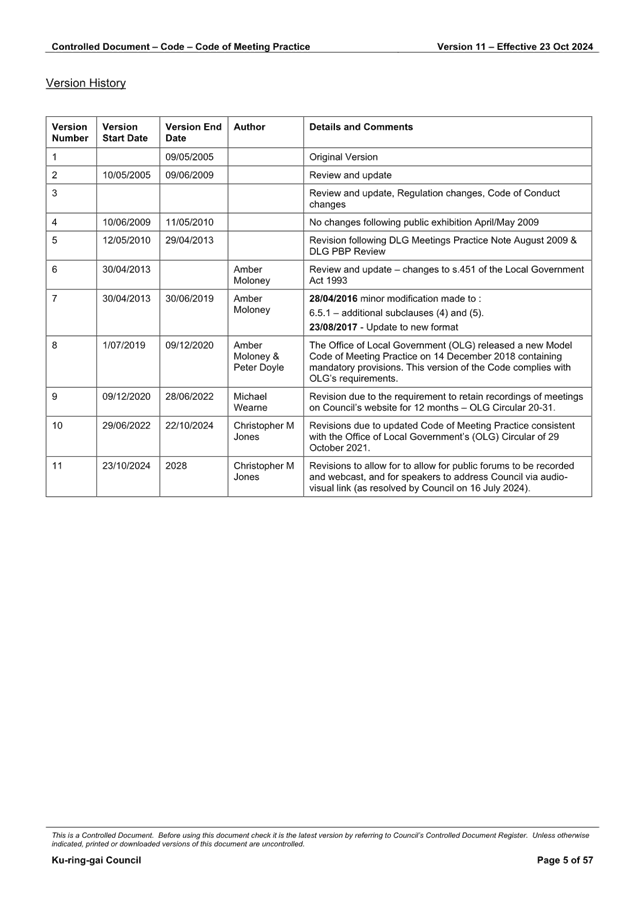
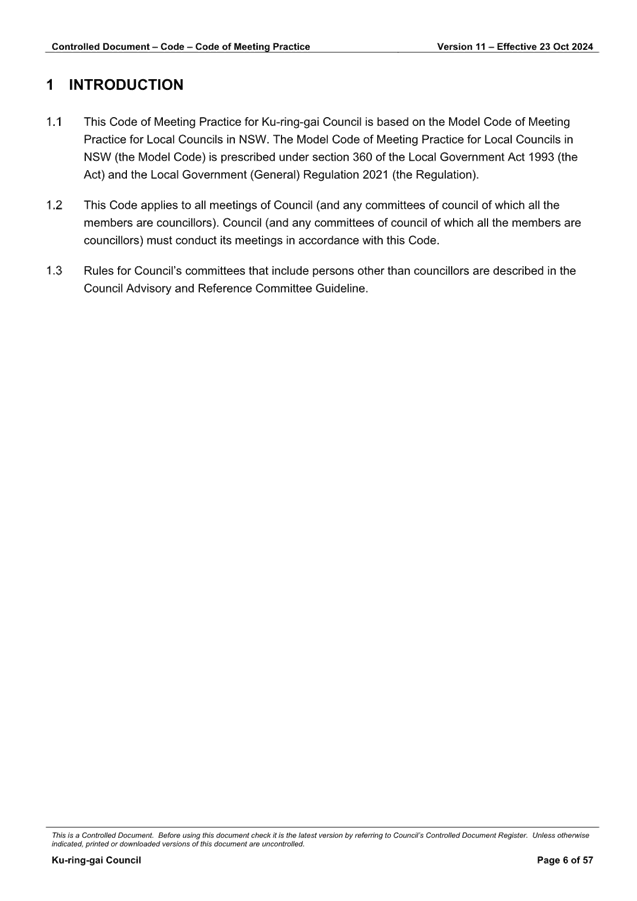
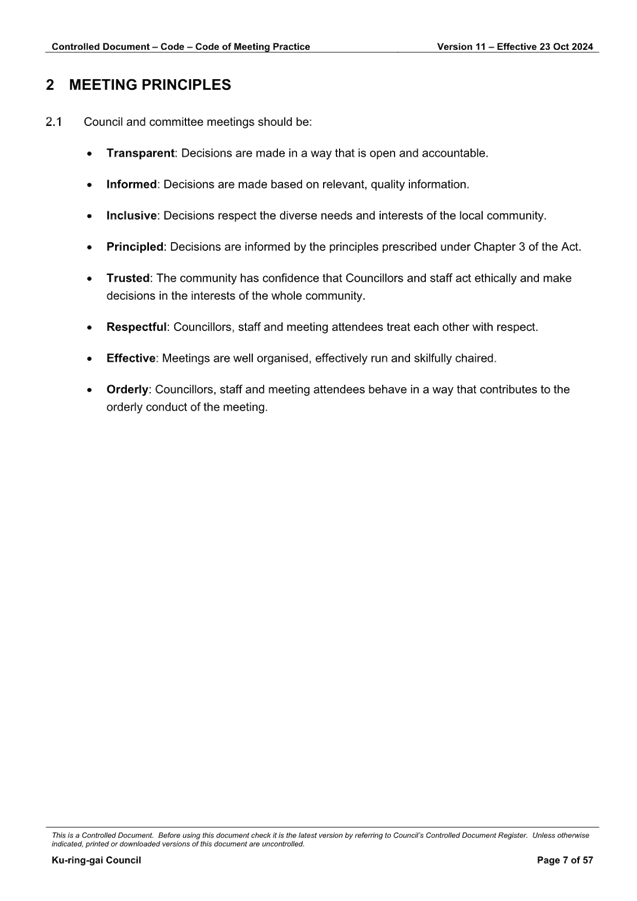
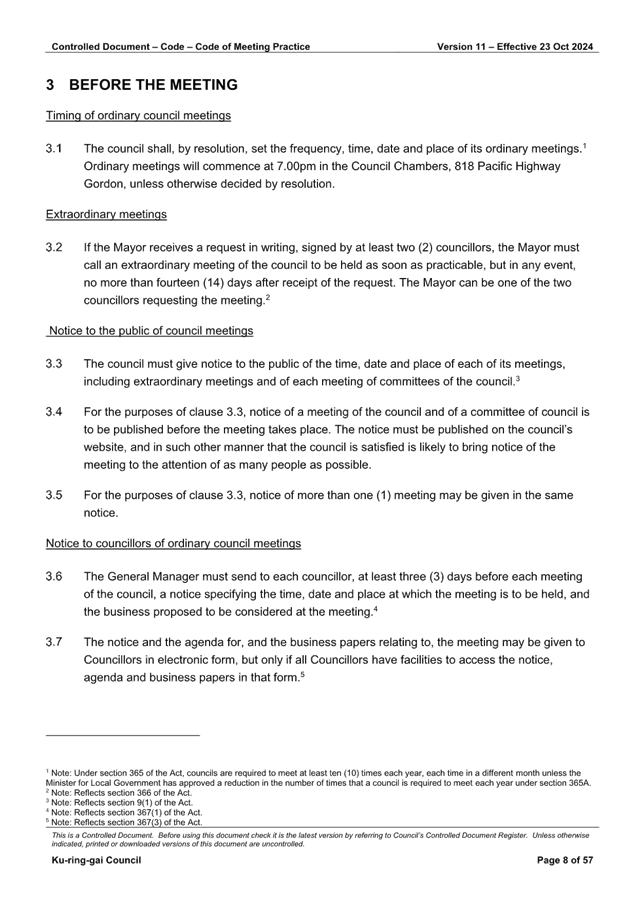
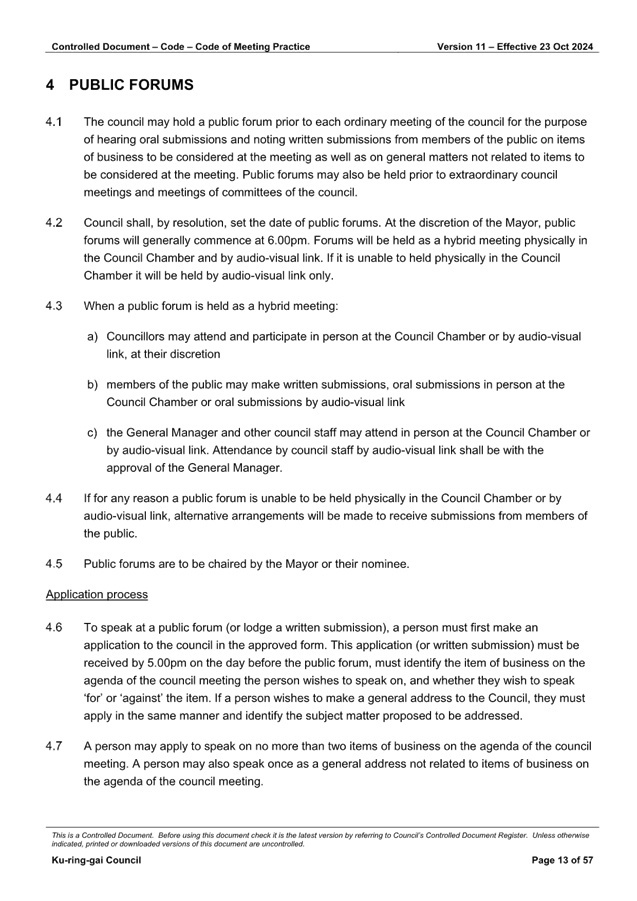
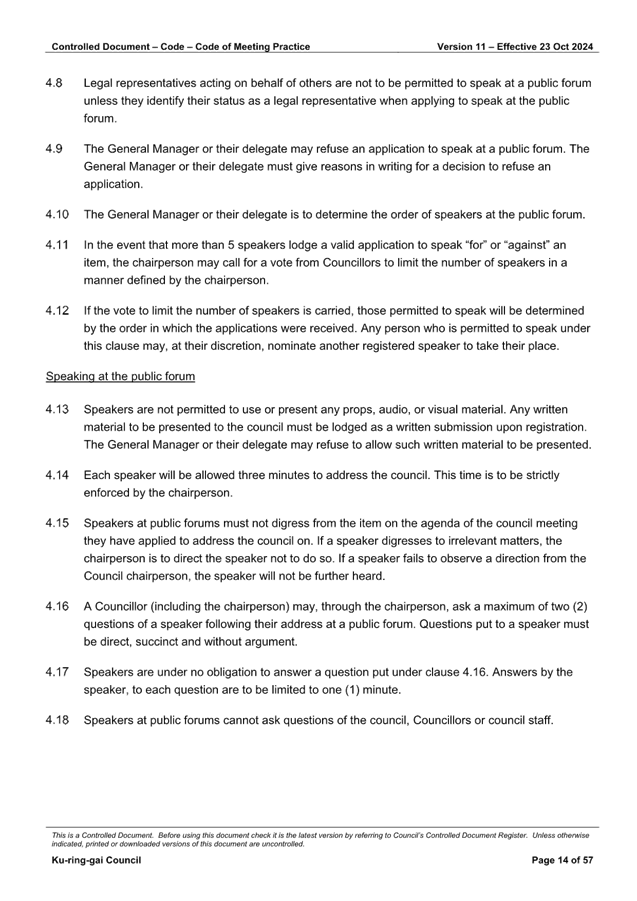
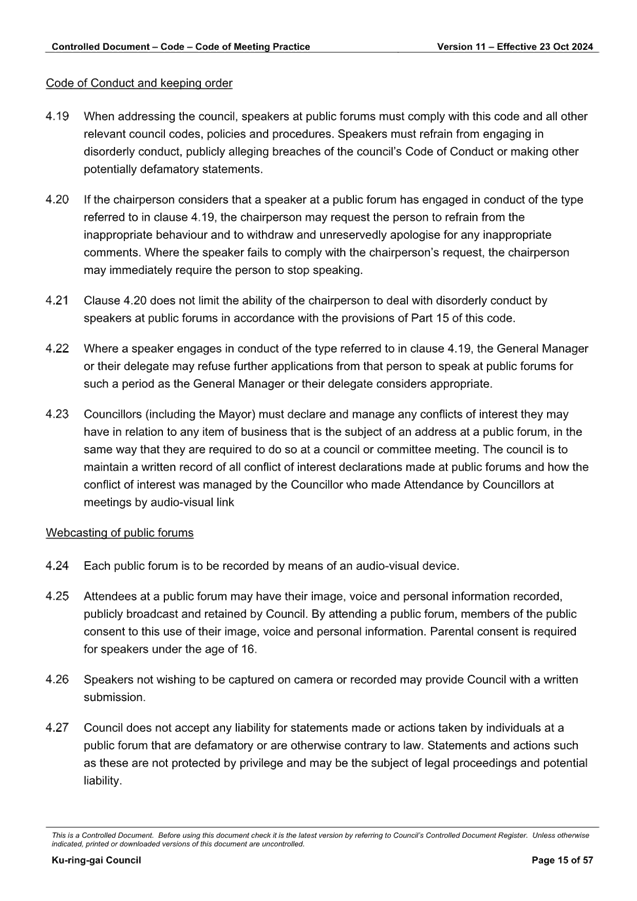
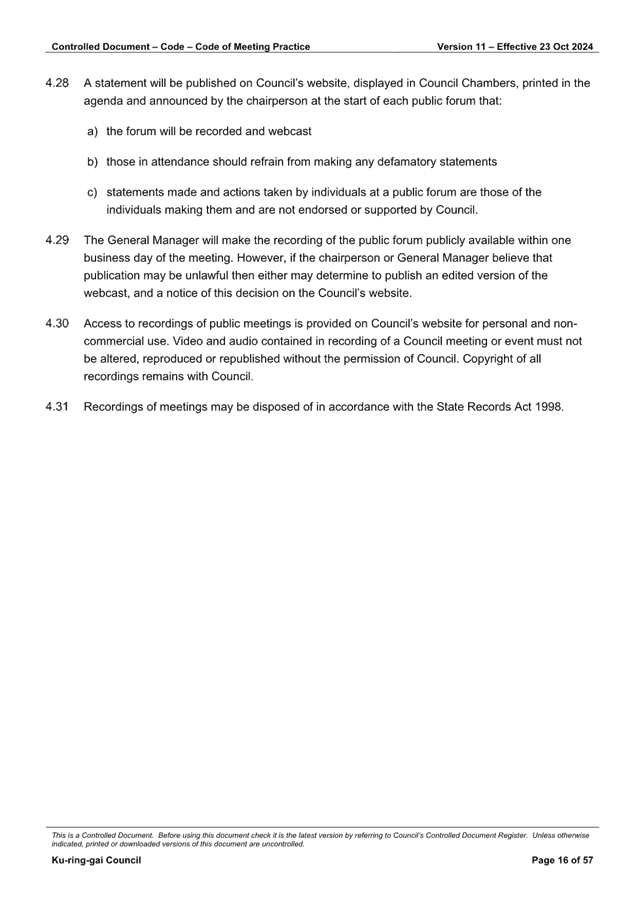
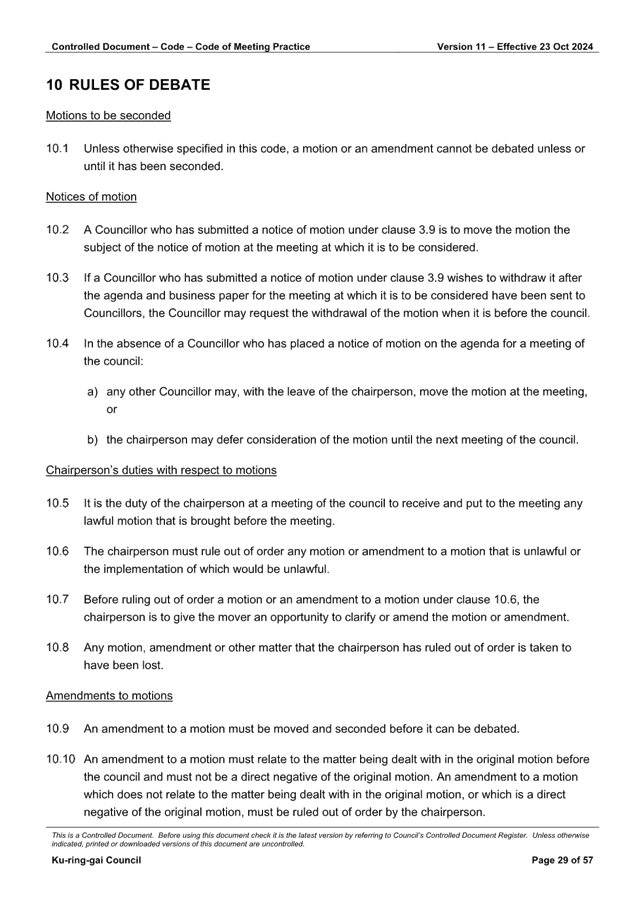
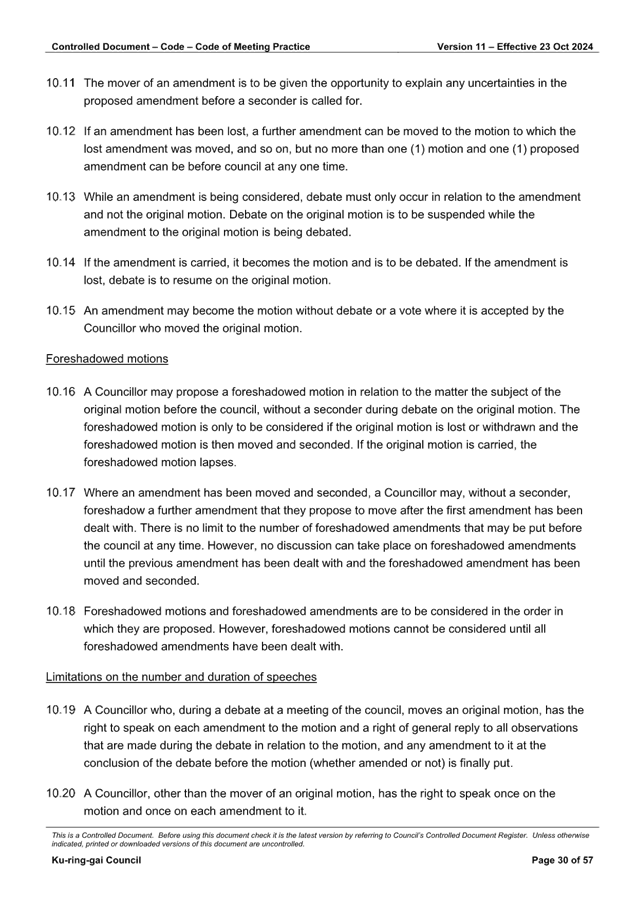
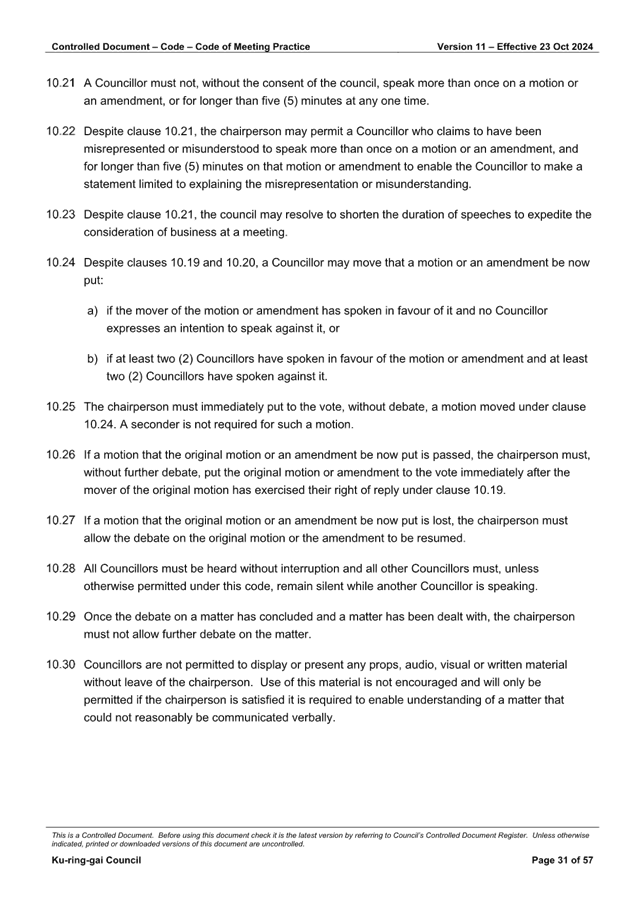
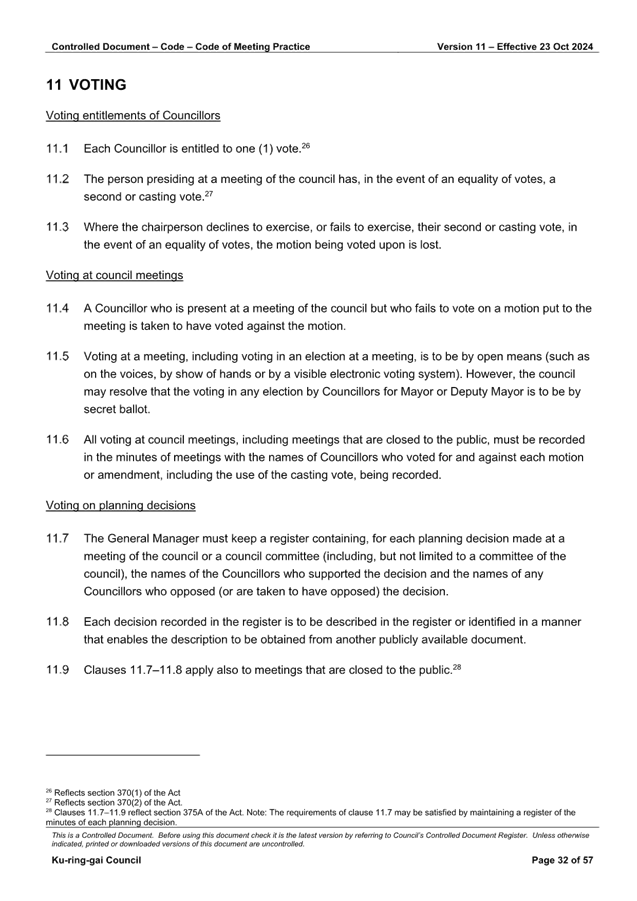
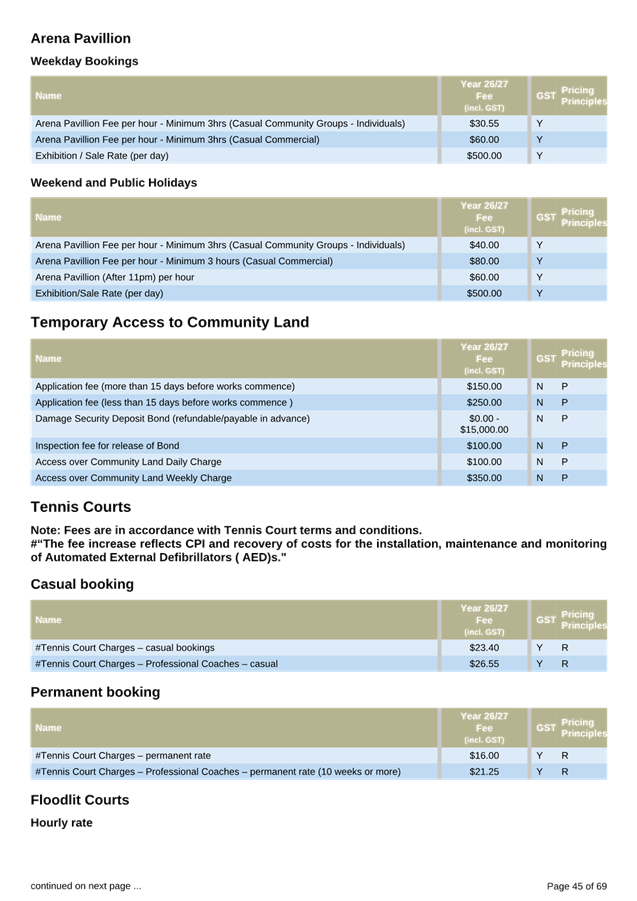
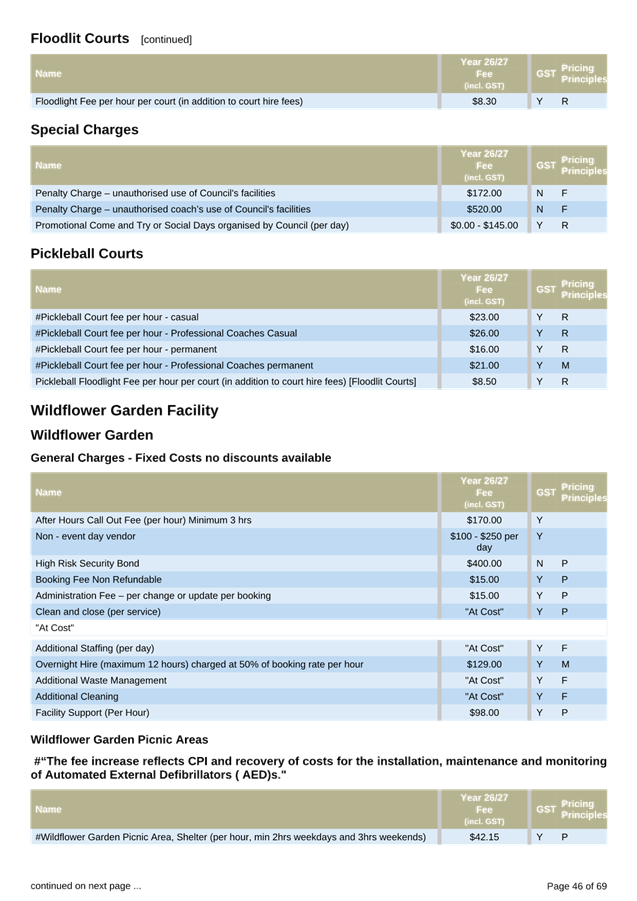
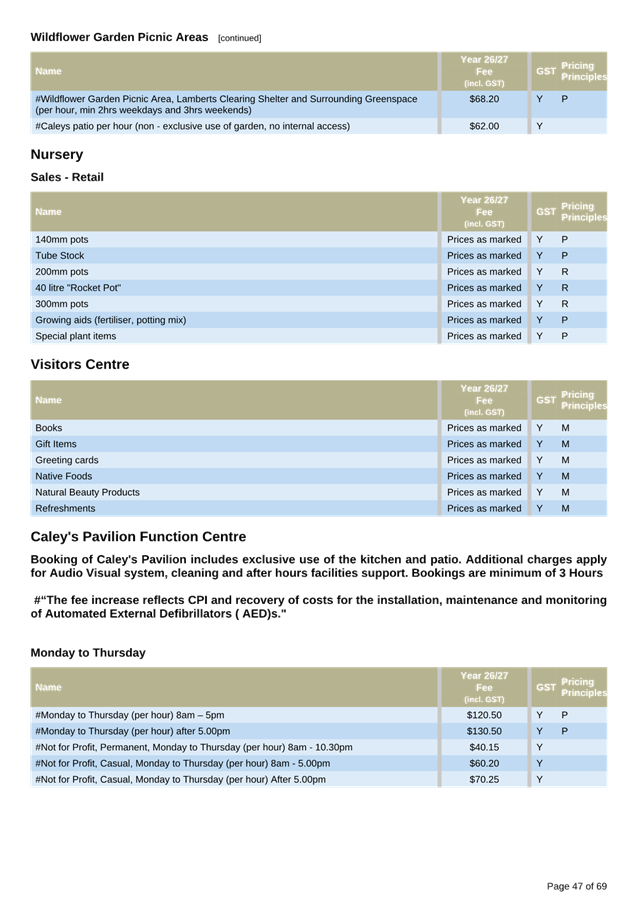
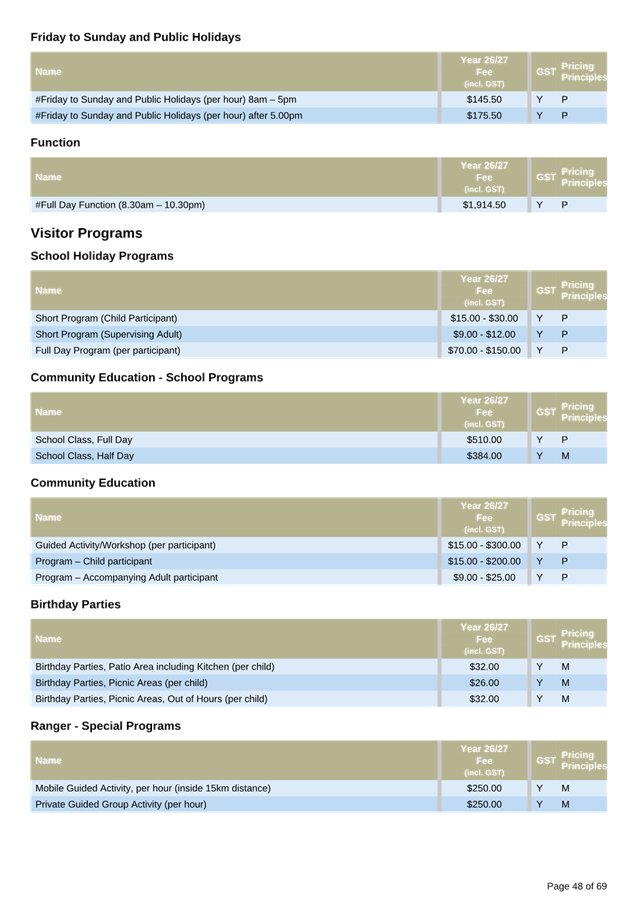
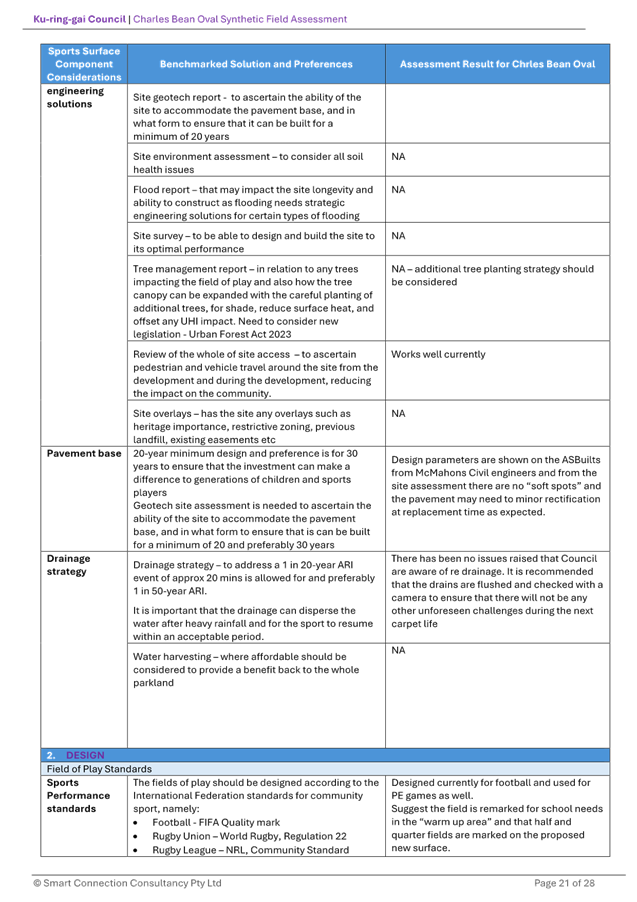
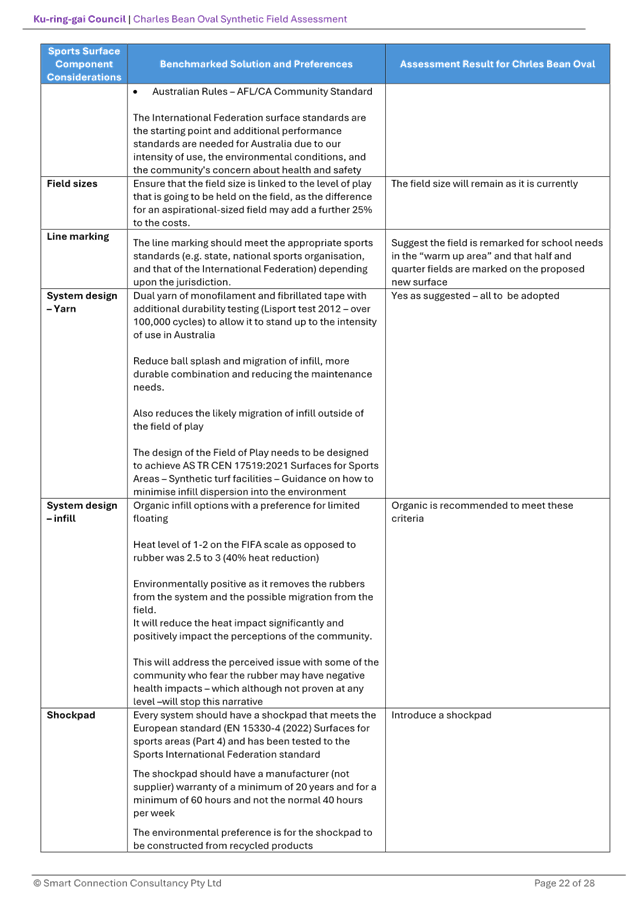
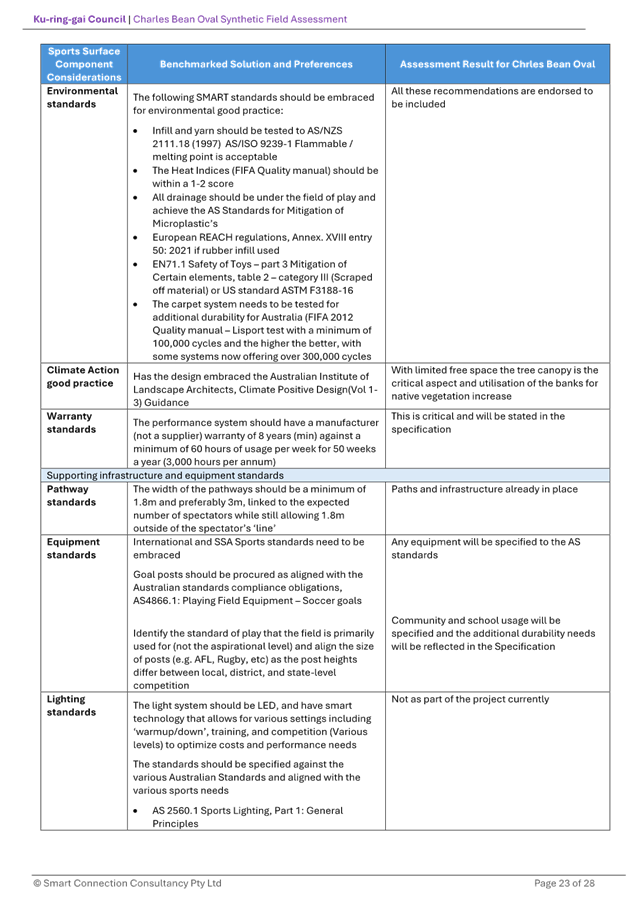
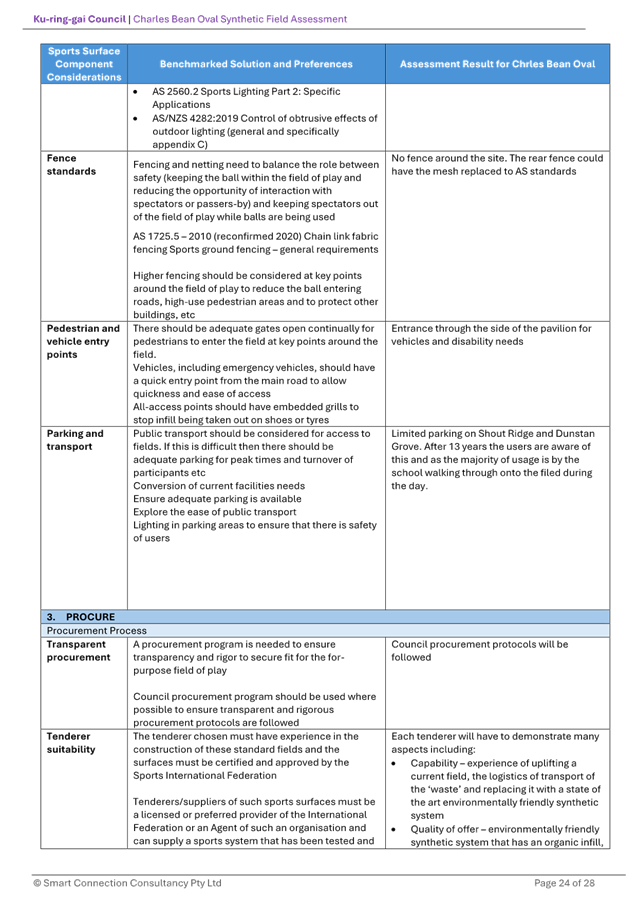
|
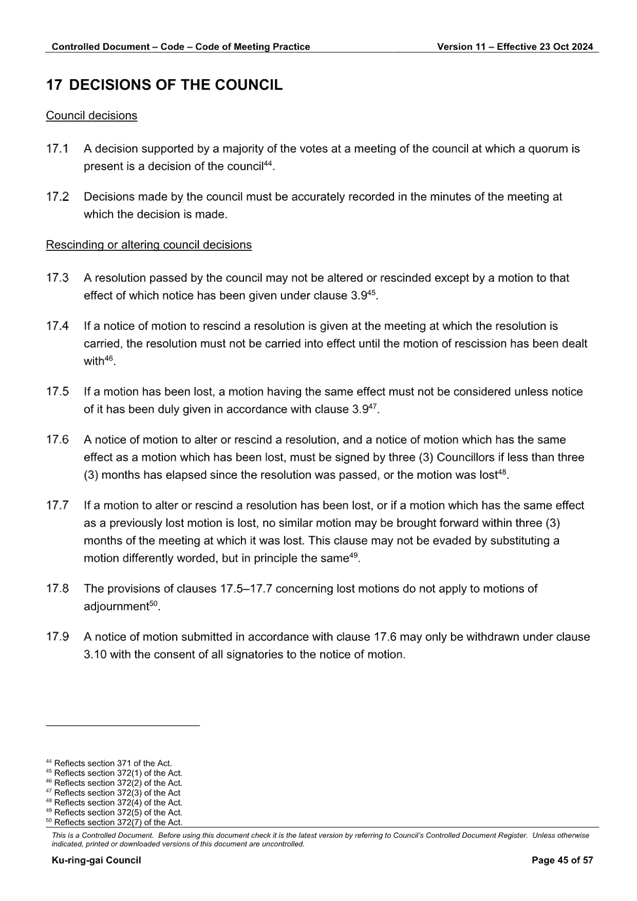
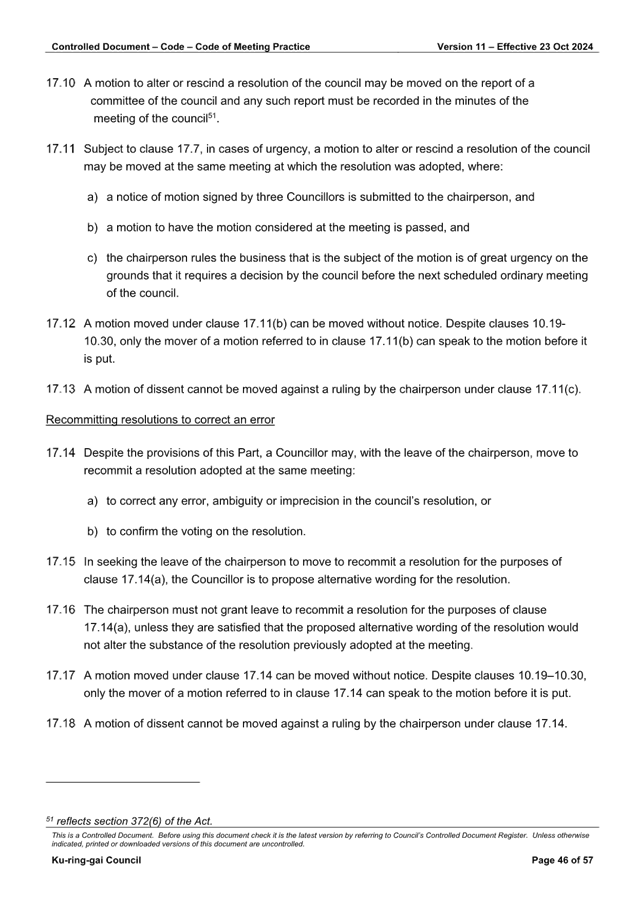
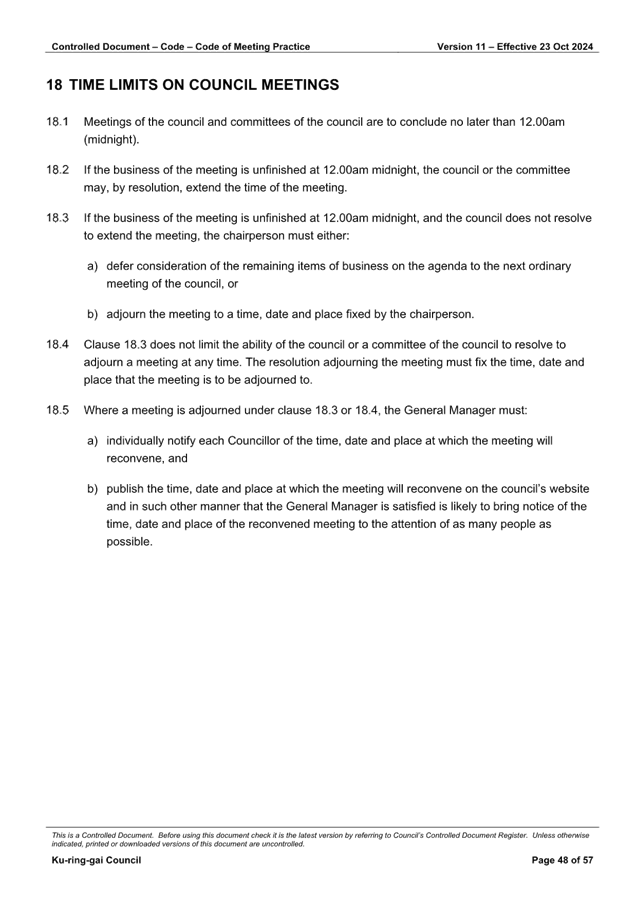
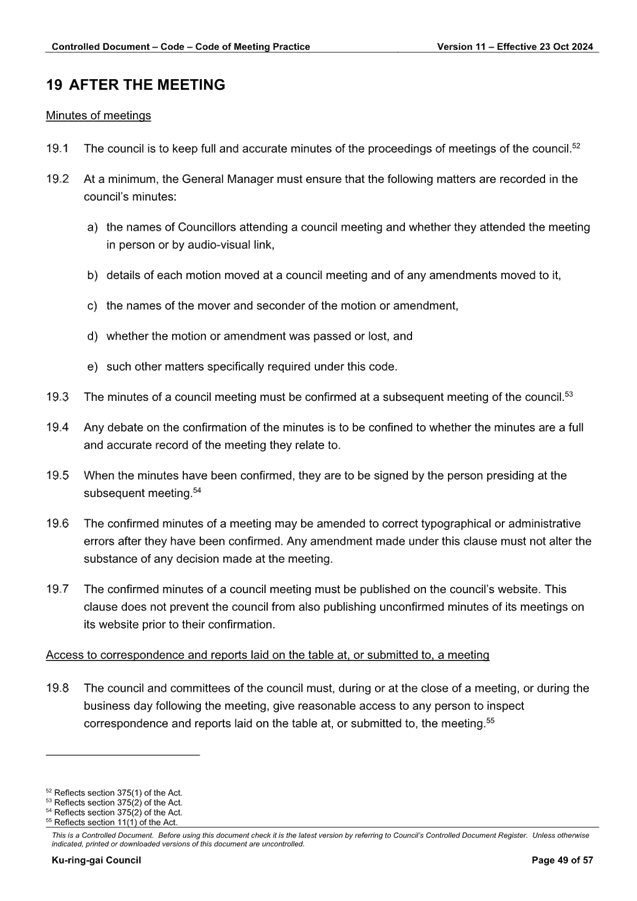
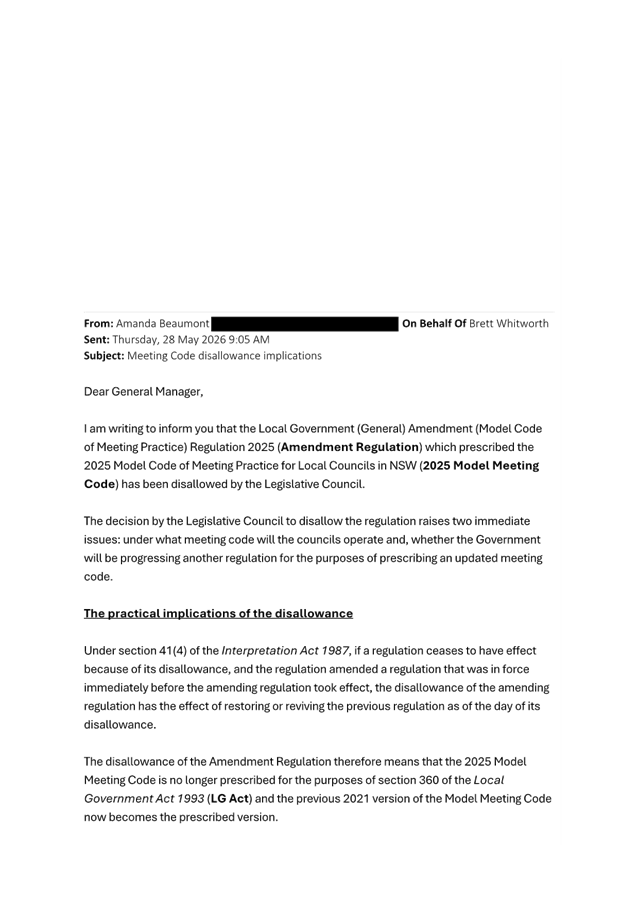
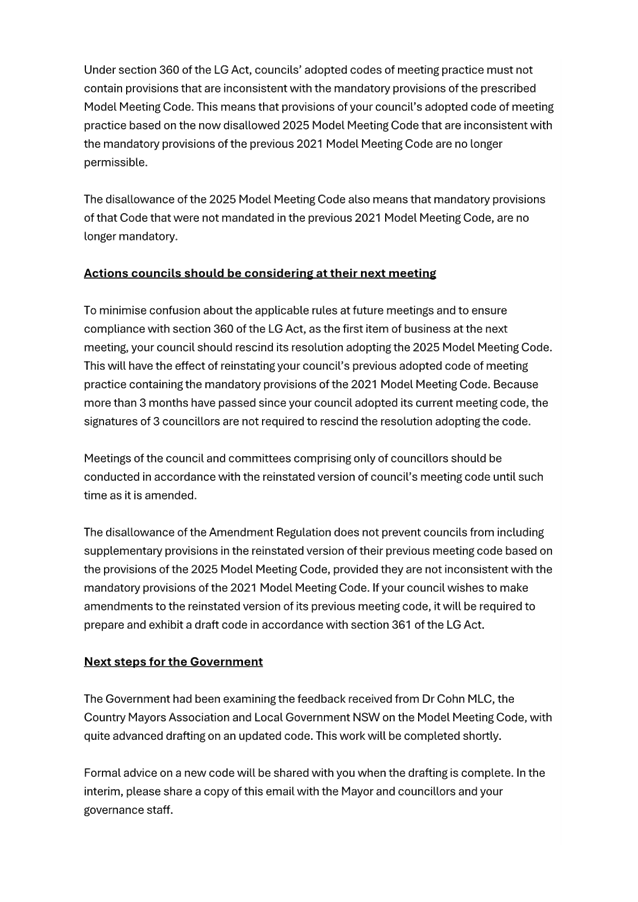
ATTACHMENT No: 1 - Attachment 1 - Correspondence from OLG - Meeting Code disallowance implications |
|
Item No: GB.1 |
Ordinary Meeting of Council
TO BE HELD ON Tuesday, 16 June 2026 AT 7:00 PM
Level 3, Council Chamber
Agenda
** ** ** ** ** **
NOTE: For Full Details, See Council’s Website –
https://www.krg.nsw.gov.au under the link to business papers
The Livestream can be viewed here:
https://www.krg.nsw.gov.au/Council/Council-meetings/Council-meeting-live-stream
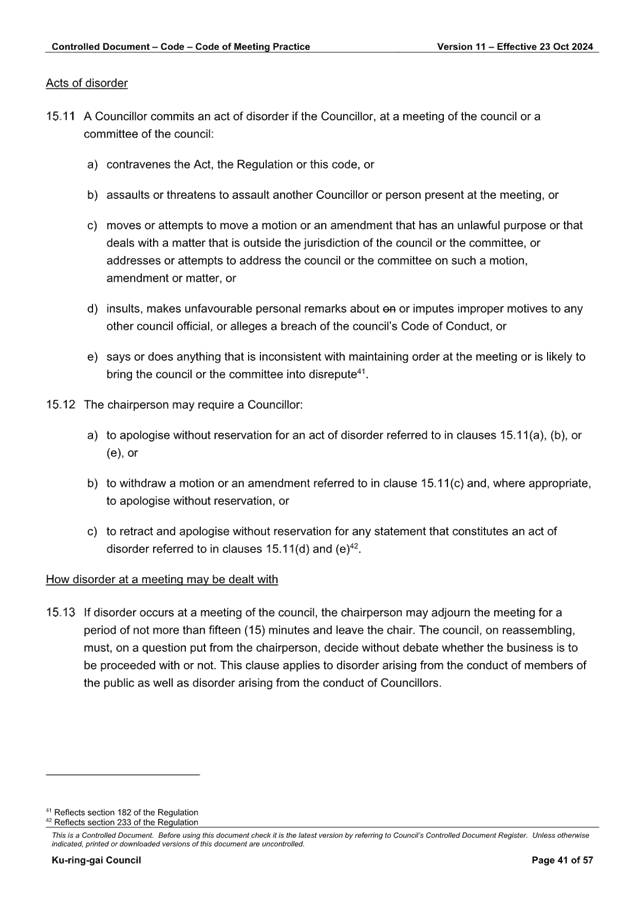
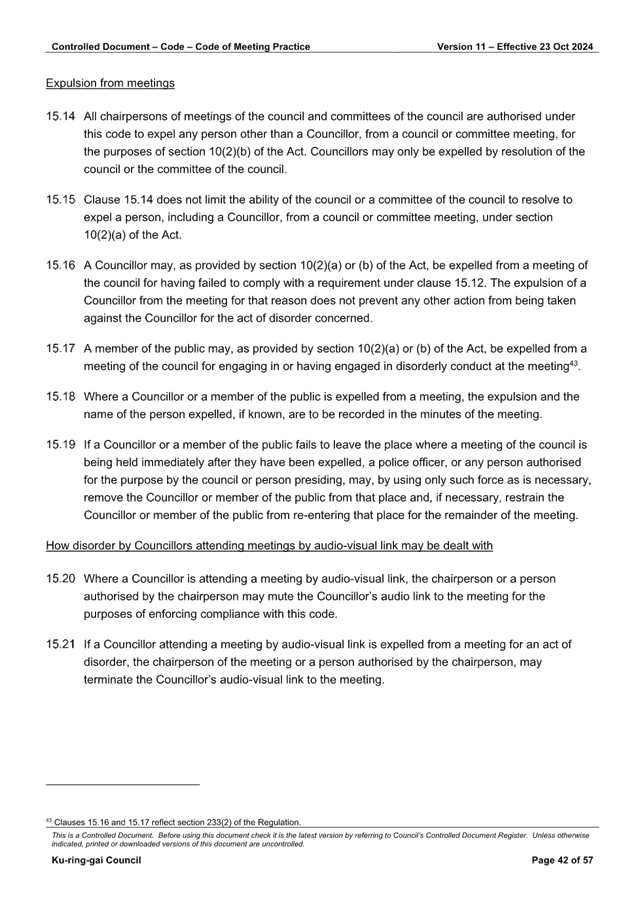
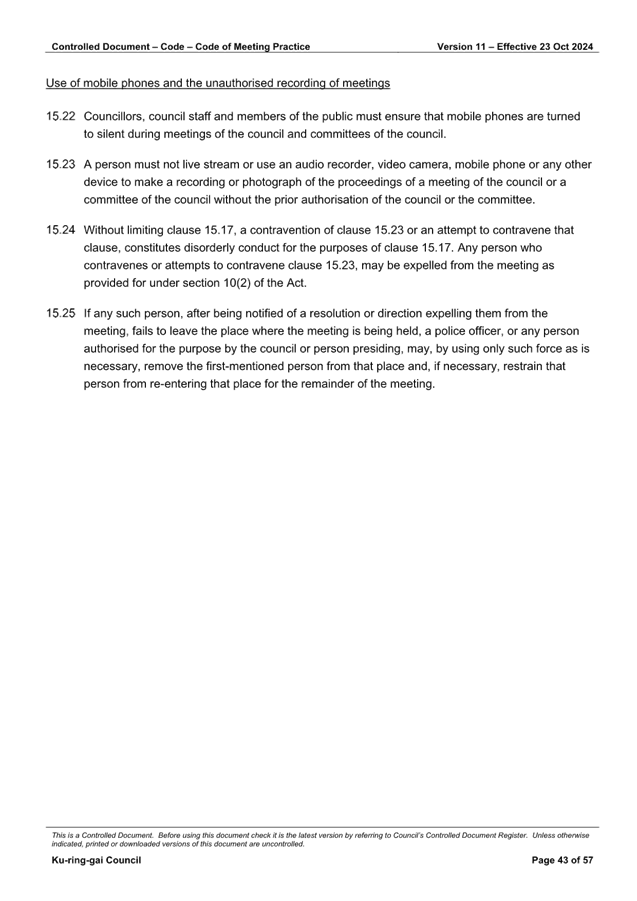
Disclaimer: All Ku-ring-gai Council Ordinary Meetings of Council are livestreamed for on-demand viewing on the KRG website. Although Council will do its best to ensure the public is excluded from the livestream, Council cannot guarantee a person’s image and/or voice won’t be broadcast. Accordingly, attendance at Council meetings is considered consent by a person for their image and/or voice to be webcast. Council accepts no liability for any damage that may result from defamatory comments made by persons attending meetings. As per clause 15.21 of Council’s Code of Meeting Practice, a person must not live stream or use an audio recorder, video camera, mobile phone or any other device to make a recording or photograph of the proceedings of a meeting of the council or a committee of the council without the prior authorisation of the council.
Please refer to Part 4 of Council’s Code of Conduct for Pecuniary Interests and Part 5 of Council’s Code of Conduct for Non-Pecuniary Interests.
The Oath or Affirmation taken is as below:
Oath:
I [name of Councillor] swear that I will undertake the duties of the office of Councillor in the best interests of the people of the Ku-ring-gai Local Government area and the Ku-ring-gai Council, and that I will faithfully and impartially carry out the functions, powers, authorities and discretions vested in me under the Local Government Act 1993 or any other Act to the best of my ability and judgement.
Affirmation:
I [name of Councillor] solemnly and sincerely declare and affirm that I will undertake the duties of the office of Councillor in the best interests of the people of the Ku-ring-gai Local Government area and the Ku-ring-gai Council, and that I will faithfully and impartially carry out the functions, powers, authorities and discretions vested in me under the Local Government Act 1993 or any other Act to the best of my ability and judgement.
APOLOGIEs
DECLARATIONS OF INTEREST
Documents Circulated to Councillors
Confirmation of Reports to be Considered in Closed Meeting
NOTE:
That in accordance with the provisions of Section 10 of the Local Government Act 1993, all officers’ reports be released to the press and public, with the exception of following confidential report(s) and attachments:
C.1 Lindfield Village Hub - Confidential Update
In accordance with 10A(2)(c), (d)(i), (d)(ii) and (g):
Attachment 1: Confidential Attachment A1 - LVH - Overview of Project Delivery Agreement - Nov 2023
Attachment 2: Confidential Attachment A2 - LVH - Final Masterplan for PDA - Nov 2023
Attachment 3: Confidential Attachment A3 - LVH - Strategic options for procurement of development partner - Aug 2025
Attachment 4: Confidential Attachment A4 - LVH - Legal advice re tender negotiations - July 2025
Attachment 5: Confidential Attachment A5 - LVH - Probity advice re tender negotiations - April 2026
Attachment 6: Confidential Attachment A6 - LVH - Analysis of Key Project Risks - Nov 2023
C.2 Project Review - Progress against Action Plan (June 2026)
In accordance with 10A(2)(g):
Attachment 1: Project and procurement management improvement plan - progress report (June 2026)
NOTE:
That in accordance with the provisions of Section 10 of the Local Government Act 1993, all officers’ reports be released to the press and public, with the exception of confidential attachments to the following General Business reports:
GB.9 RFT7-2026 Playspace Upgrade Sequoia Close Park, West Pymble
In accordance with 10A(2)(d)(ii):
Attachment 1: RFT7-2026 Playspace Upgrade - Sequoia Close - List of Submitters
In accordance with 10A(2)(d)(ii):
Attachment 2: RFT7-2026 Placespace Upgrade - Sequoia Park - Tender Evaluation Report
GB.10 RFT1-2026 Pacific Highway and Beaconsfield Parade Lindfield - Traffic Signal Modelling and Detailed Design
In accordance with 10A(2)(d)(ii):
Attachment 1: RFT1-2026 - Tender Evaluation Plan
In accordance with 10A(2)(d)(ii):
Attachment 2: RFT1-2026 - List of tenders received
In accordance with 10A(2)(d)(ii):
Attachment 3: RFT1-2026 - Tender Evaluation Report
GB.11 DCP Amendment - to align with state government housing reforms
In accordance with 10A(2)(g):
Attachment 1: Confidential Legal Advice - LMR and Part 6
CONFIRMATION OF MINUTEs
Minutes of Extrardinary Meeting of Council 15
File: EM00055/2
Meeting held 18 May 2026
Minutes numbered 84 to 87
Minutes of Ordinary Meeting of Council 21
File: EM00049/4
Meeting held 19 May 2026
Minutes numbered 88 to 100
minutes from the Mayor
MM.1 Vale Patrick Voon - community leader 44
File: CY00455/14
It is my sad duty to inform the Ku-ring-gai community and Council of the passing of Patrick Voon, a longstanding local resident and former President of the Chinese Australian Forum.
For decades Patrick dedicated himself to building understanding between the Chinese community and the broader Australian society. He worked tirelessly on issues of multiculturalism, racial harmony and community representation at a time when these matters were often difficult and unpopular to raise publicly.
Patrick was a life member of the Australian Chinese Forum (CAF) serving as President between 2011 and 2013 and holding various roles, including most recently the position of treasurer.
Among the causes that Patrick championed were:
• the CAF complaint to the Australian Human Rights Commission concerning racial hatred radio broadcasts under the Racial Discrimination Act
• the CAF campaign to urge voters of Randwick City Council to support candidates who would protect the Heritage Listed La Perouse Chinese Market Gardens
• appearing before the NSW Legislative Council inquiry into racial vilification laws in 2013
• In Turramurra, together with local MP Alister Henskens, convening a community conference responding to racism against members of the Chinese community.
Through his leadership, Patrick also coordinated important community forums, cultural events and public discussions which strengthened the voice of the Chinese Australian community across New South Wales.
Many people saw Patrick’s gentle smile, calm manner and kindness. What many did not see was the quiet determination behind the scenes to ensure Chinese Australians were treated with dignity, respect and equality under the law.
Patrick leaves behind a lasting legacy through the countless people he helped, mentored, and encouraged over many decades of service to the community. On behalf of Council and our community, I offer our sincere condolences to his widow Patricia, daughter Alison and his many friends.
A. That the Mayoral Minute be received and noted
B. That we stand for a minute’s silence to honour Patrick Voon.
C. That the Mayor write to Patrick’s family and enclose a copy of the Mayoral Minute.
Petitions
GENERAL BUSINESS
i. The Mayor to invite Councillors to nominate any item(s) on the Agenda that they wish to have a site inspection.
ii. The Mayor to invite Councillors to nominate any item(s) on the Agenda that they wish to adopt in accordance with the officer’s recommendation allowing for minor changes without debate.
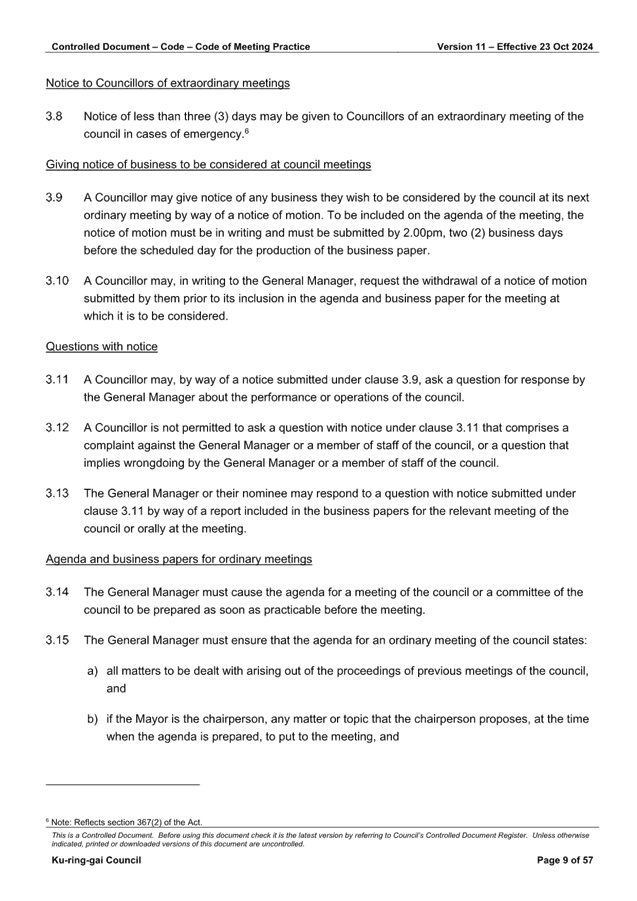
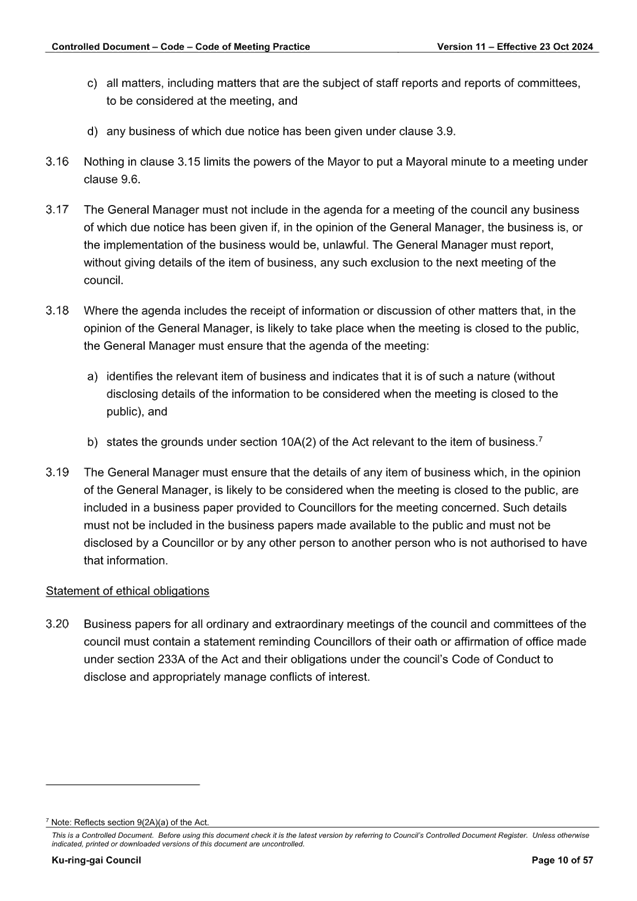
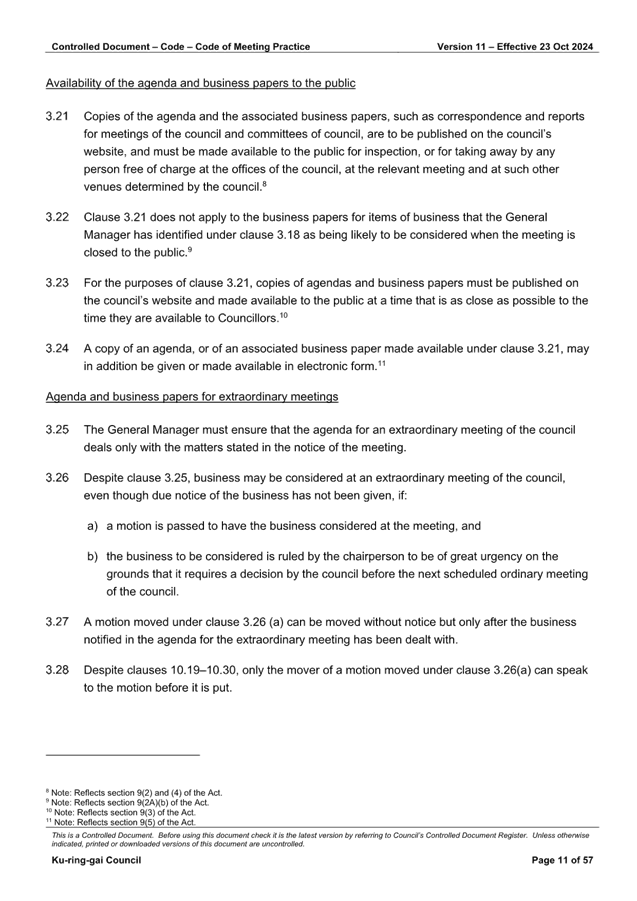
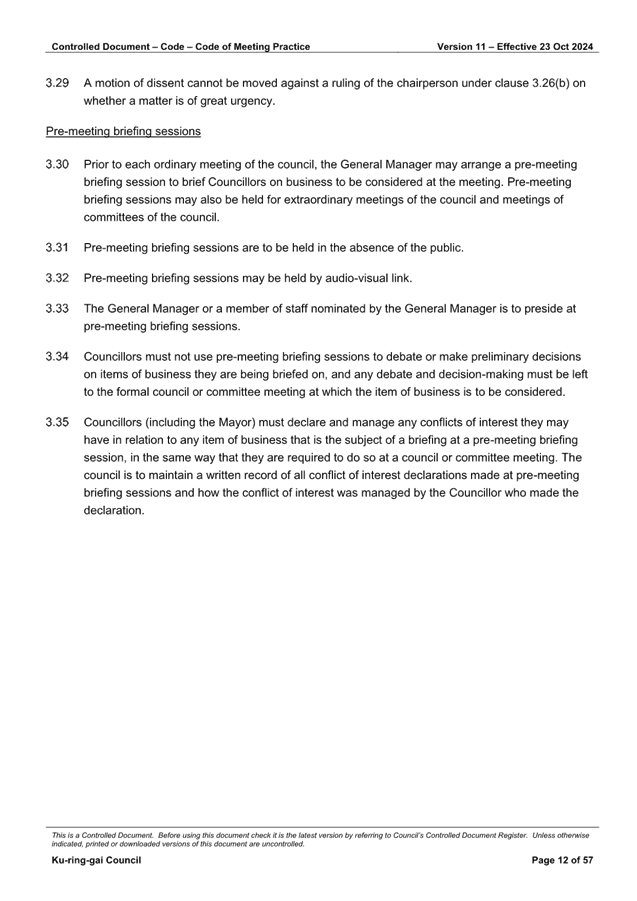
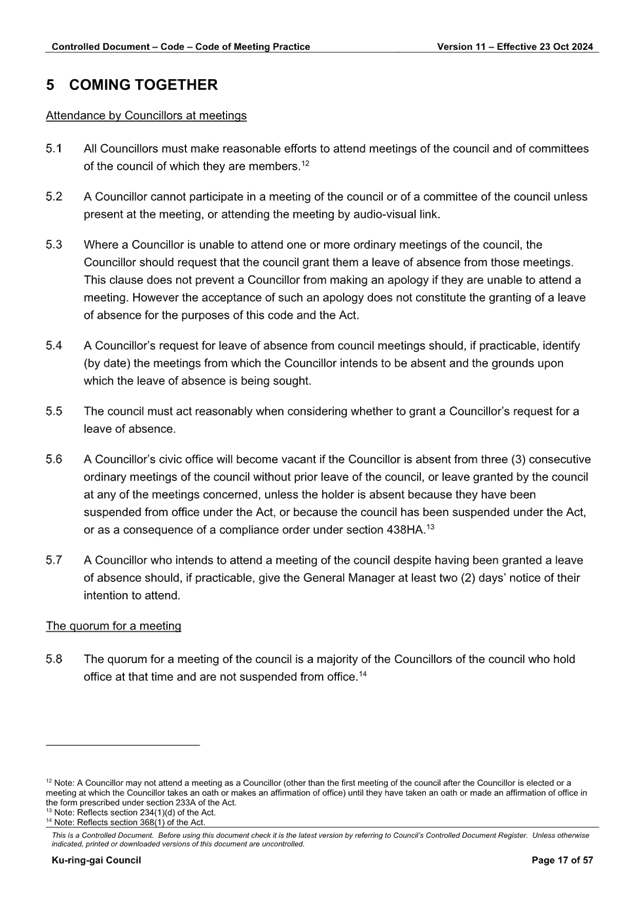
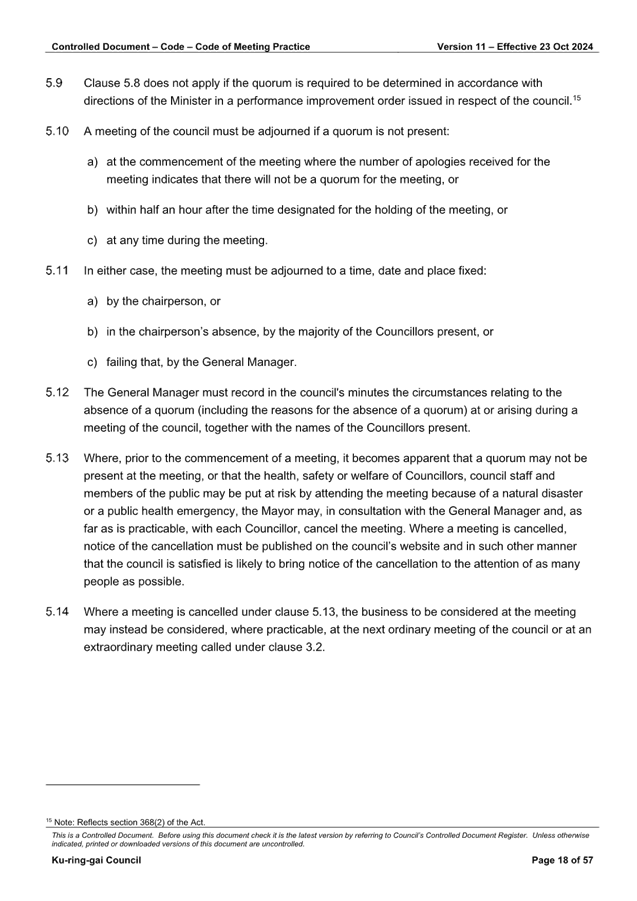
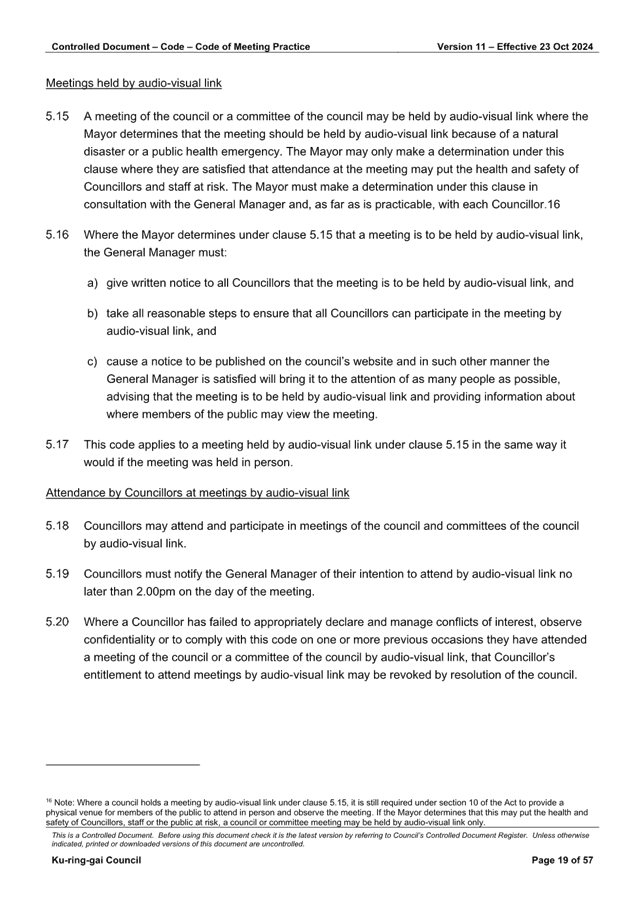
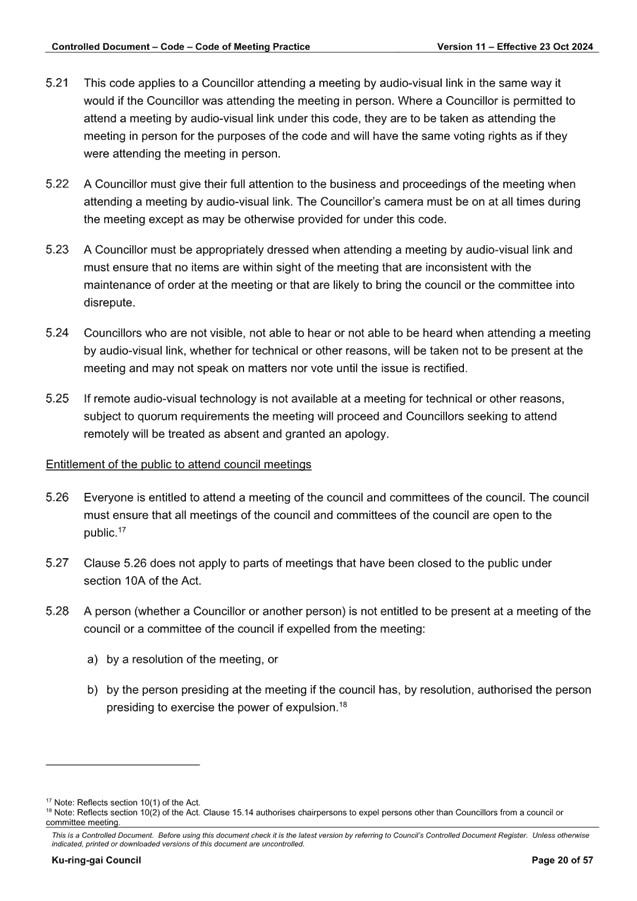
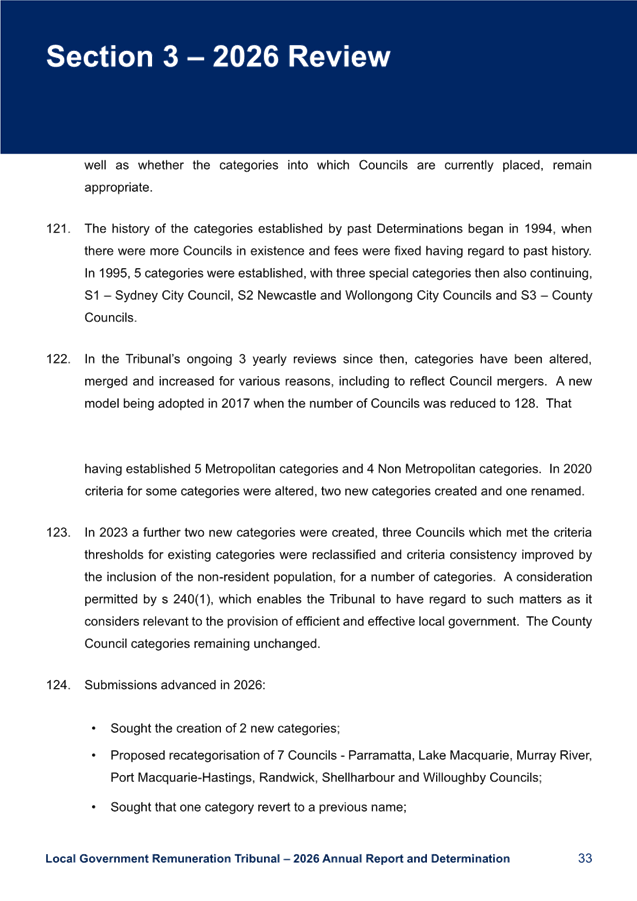
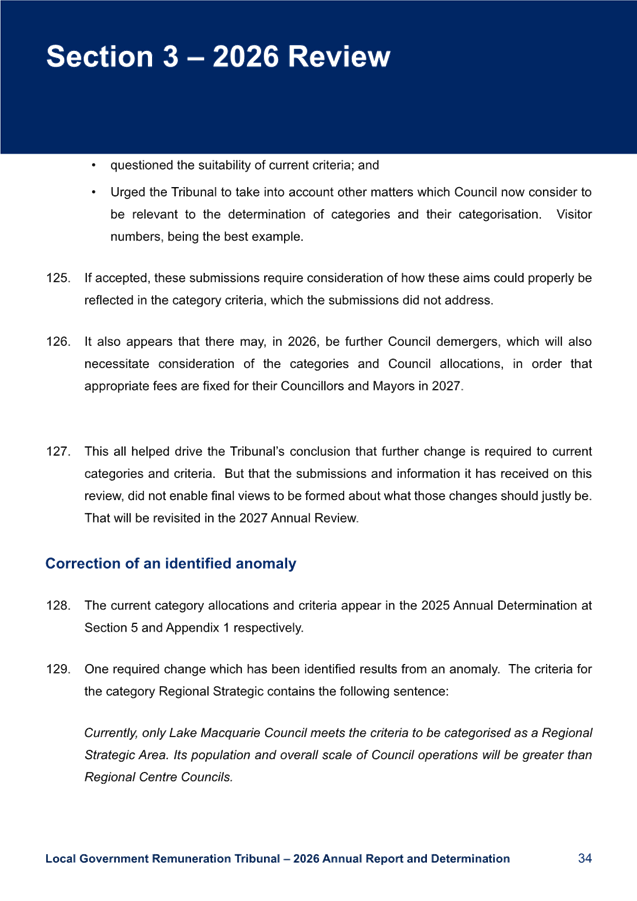
GB.1 Code of Meeting Practice - Disallowance of the Local Government (General) Amendment (Model Code) Regulation 2025 46
File: CY00564/9
To brief Council on the disallowance motion passed by the NSW Legislative Council and its impact on the Model Code of Meeting Practice.
Recommendation:
That Council:
A. Note the disallowance of the Local Government (General) Amendment (Model Code) Regulation 2025 by the NSW Legislative Council.
B. Rescind the 21 October 2025 resolution to adopt the 2025 Code of Meeting Practice (minute no. 191)
C. Revert to the Code of Meeting Practice adopted on 22 October 2024, effective immediately.
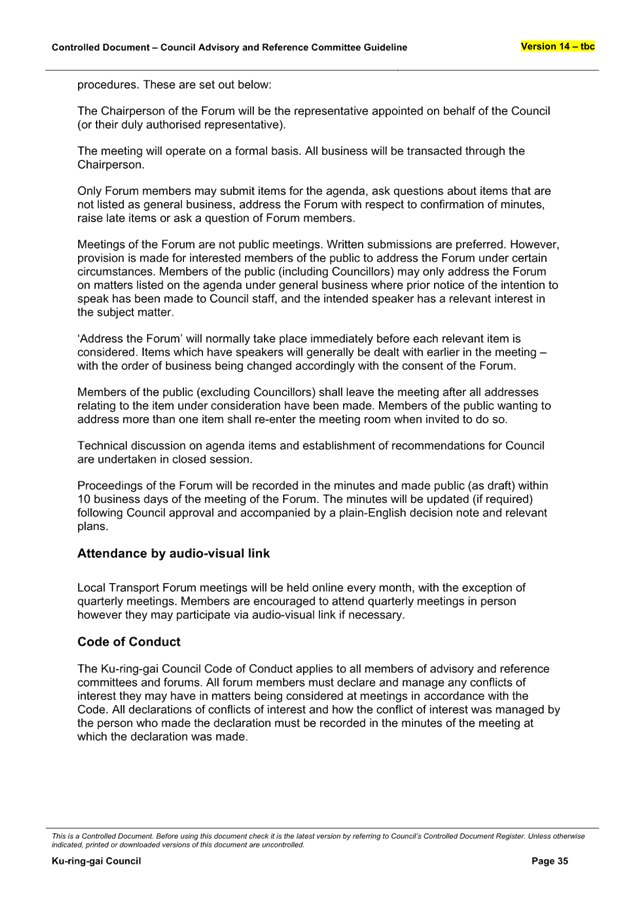
GB.2 Ku-ring-gai Local Transport Forum - Minutes of Meeting 20 May 2026 112
File: CY00022/18
To consider the Minutes from the Ku-ring-gai Local Transport Forum (LTF) Meeting held on 20 May 2026.
Recommendation:
That Council:
A. Receive and note the Ku-ring-gai Local Transport Forum (LTF) Minutes held on 20 May 2026.
B. Approves the recommendations of the Ku-ring-gai Local Transport Forum held on 20 May 2026 (Attachment A1).
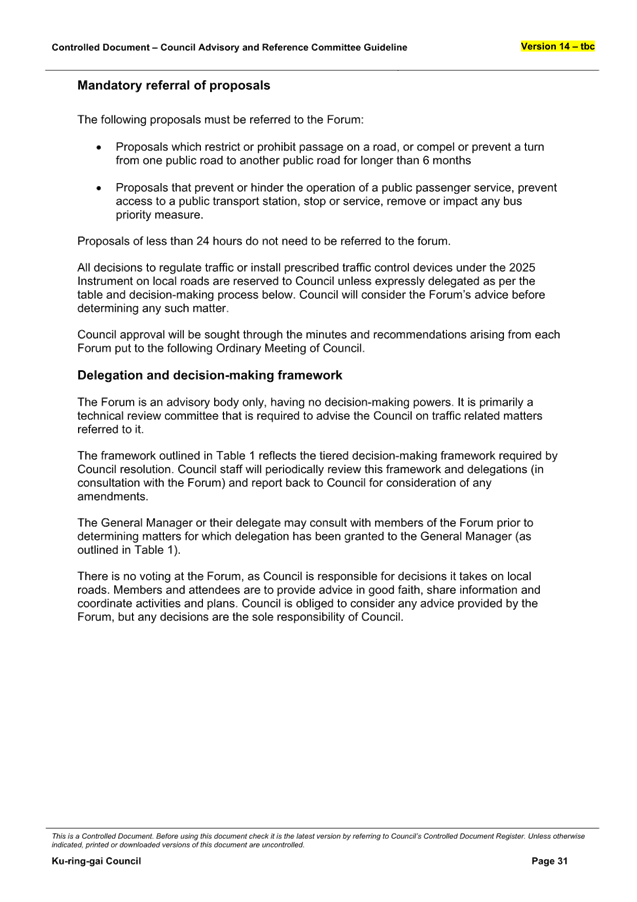
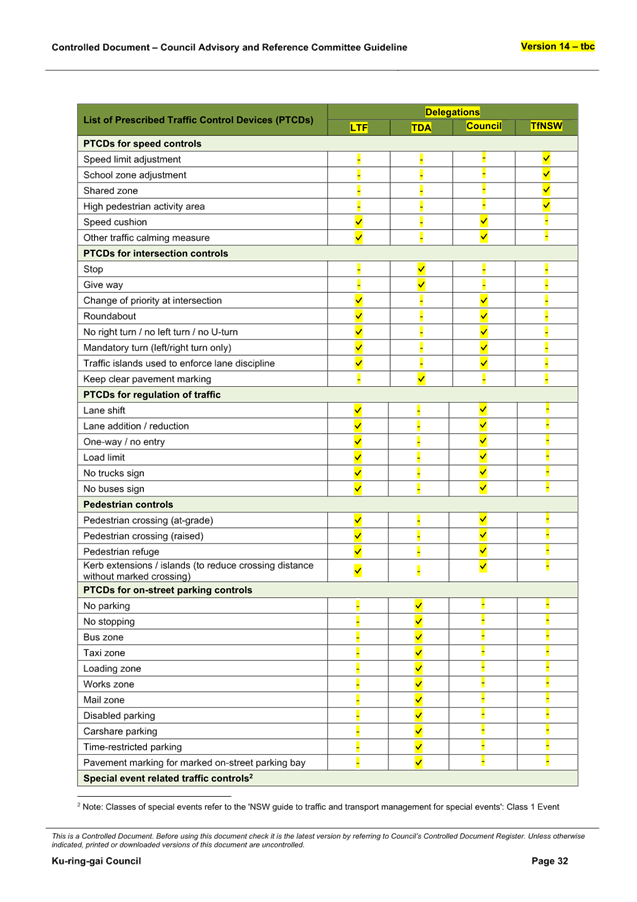
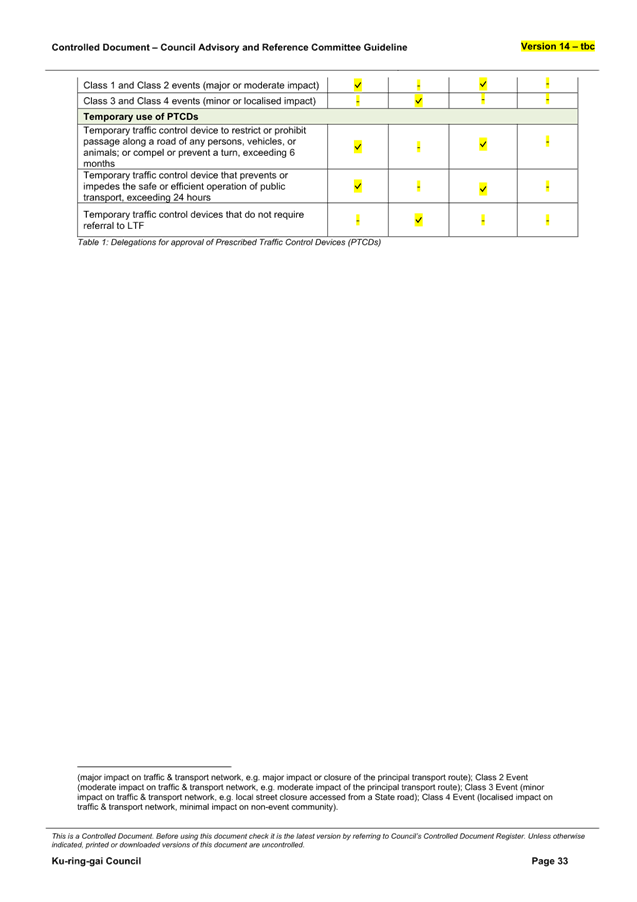
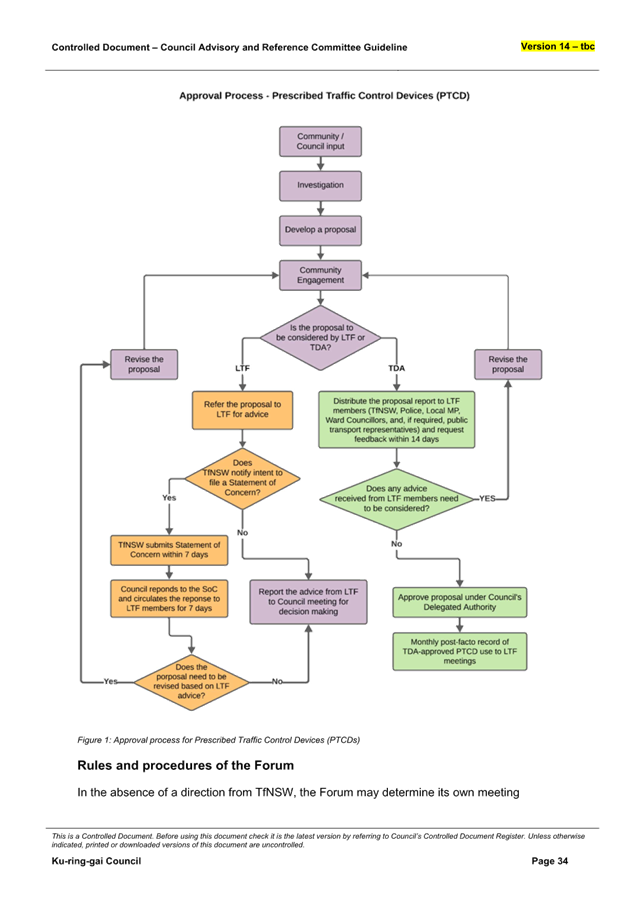
C. Approves the amended delegations to the Prescribed Traffic Control Devices (PTCDs) Terms of Reference – Version 14 (Attachment A2).
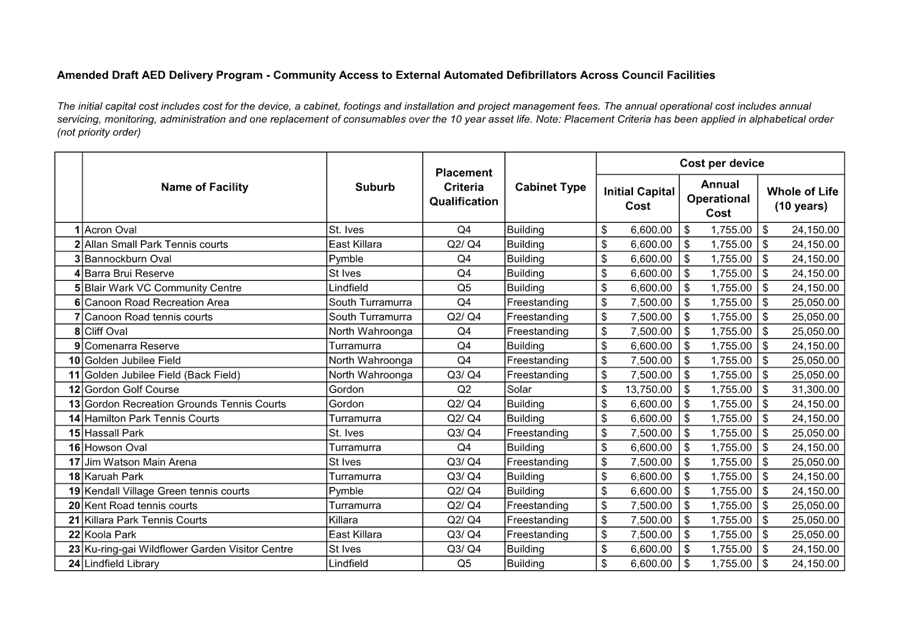
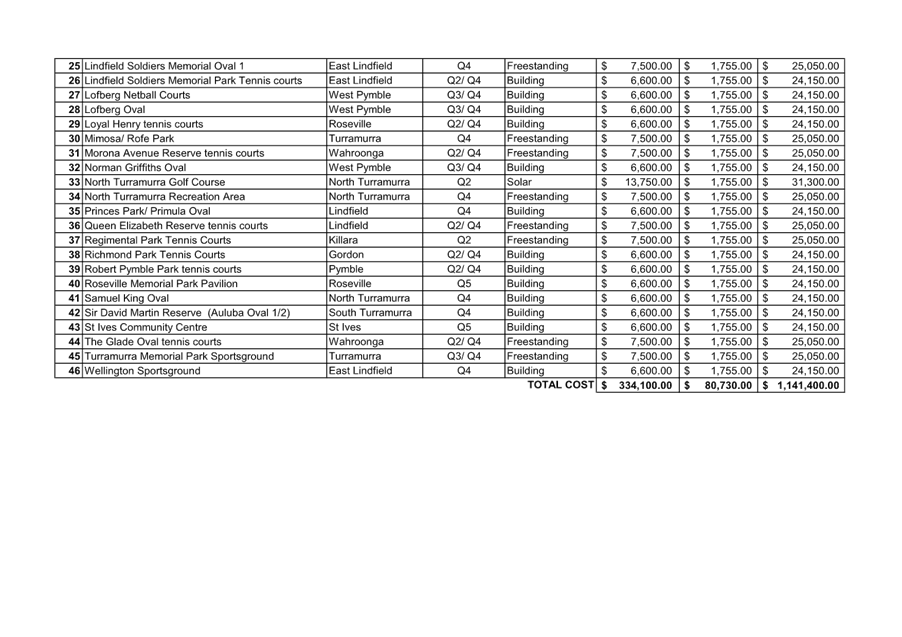
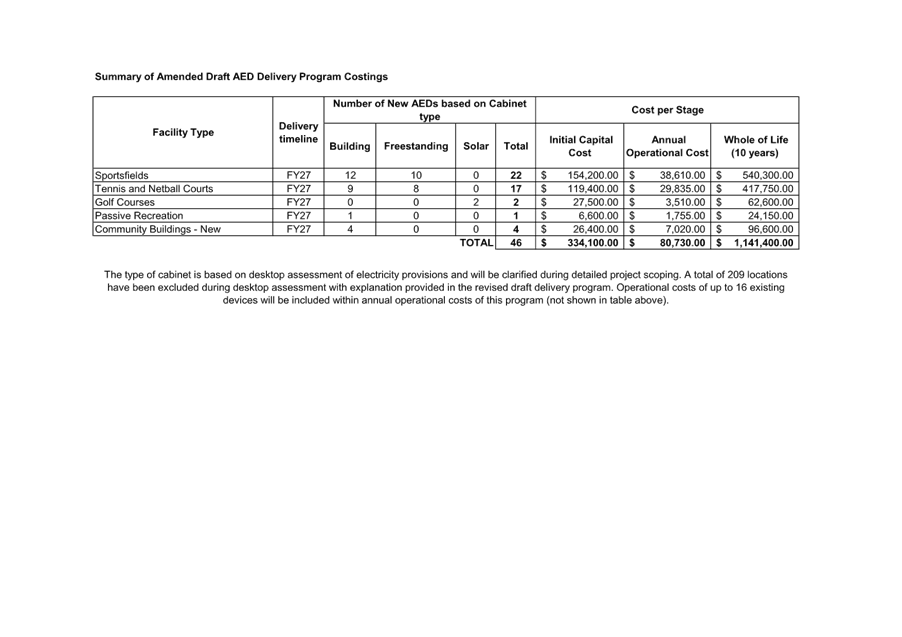
GB.3 Community Access to Automated External Defibrillators (AED) Across Council Facilities "LACHY'S HEARTSTART PROJECT" 127
File: S15185
This report provides Council with further information in relation to providing community access to Automated External Defibrillators (AEDs) across Council facilities in response to Council’s resolution from the Ordinary Meeting of Council on 17 March 2026.
Recommendation:
That Council approves the implementation of the Automated External Defibrillator (AED) Program as detailed in this report.
GB.4 Post Exhibition - Revised Resourcing Strategy, Revised Delivery Program and Operational Plan (NEW) 231
File: S15168
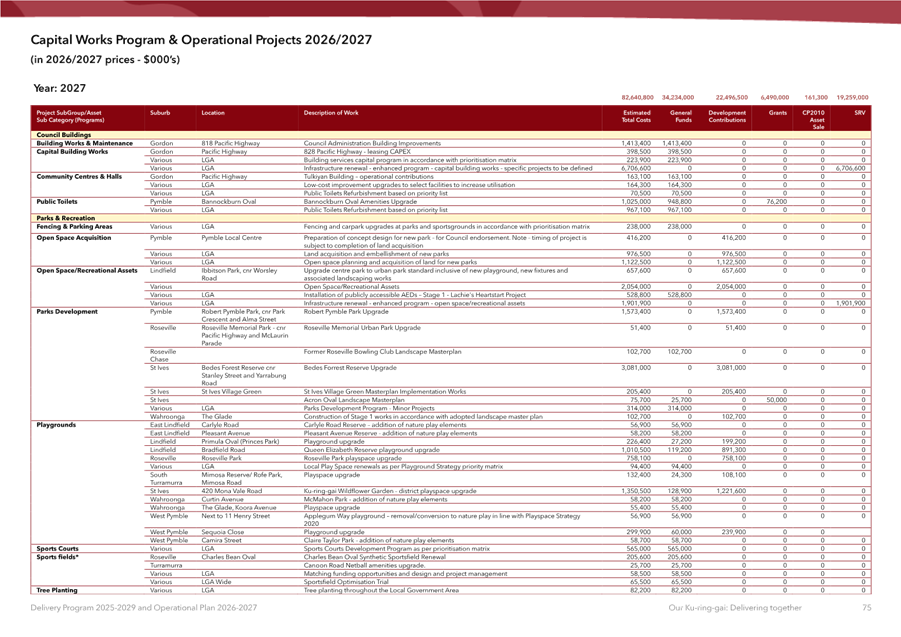
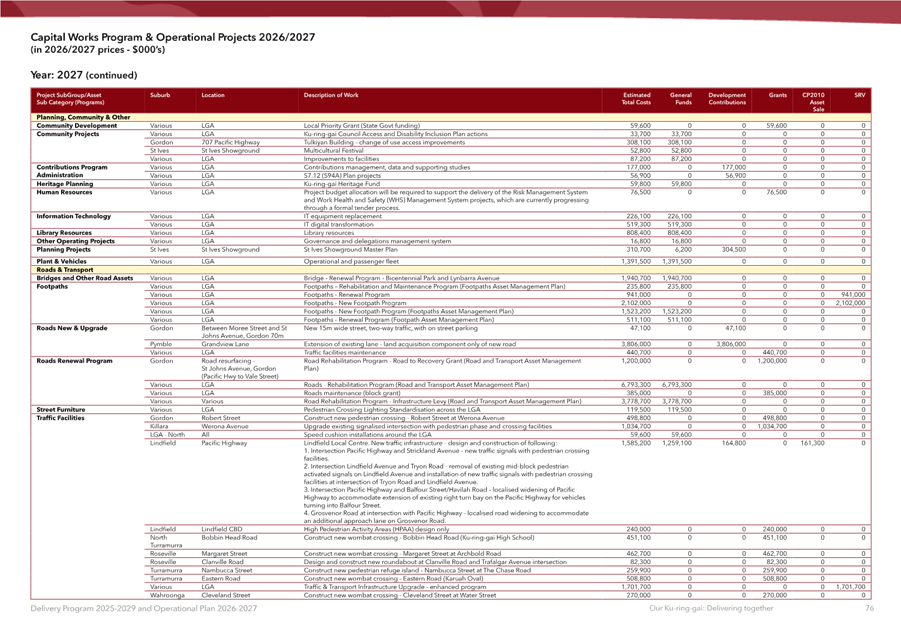
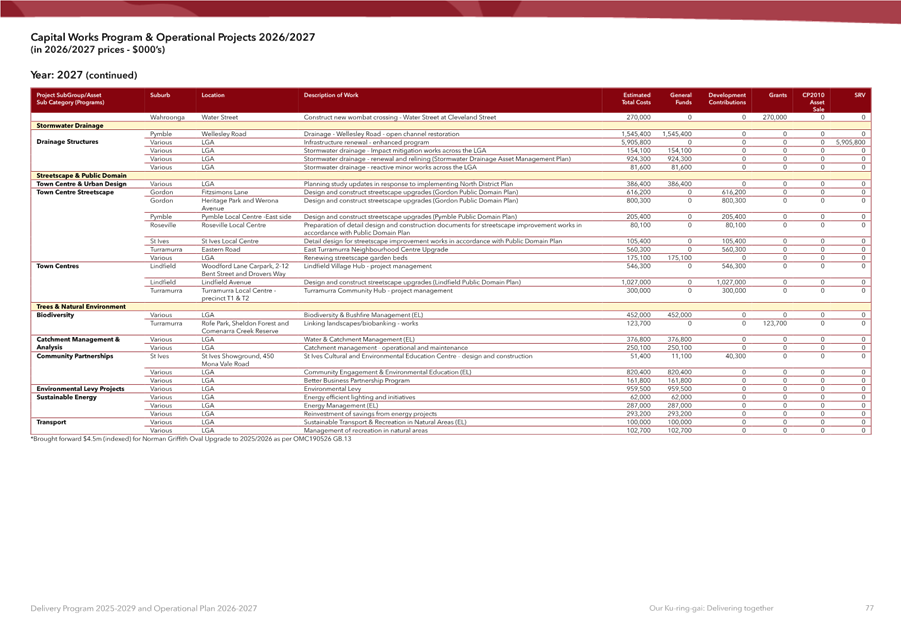
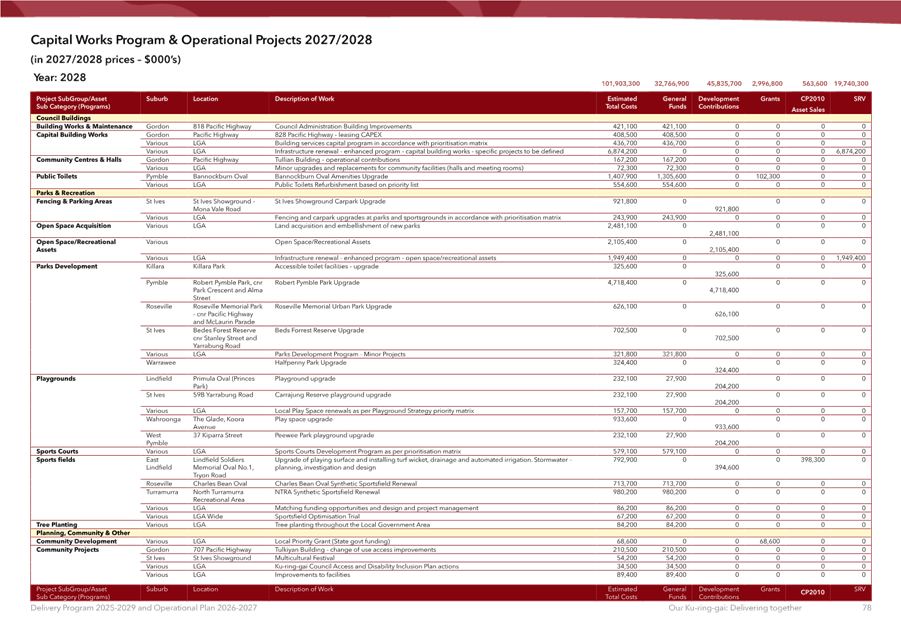
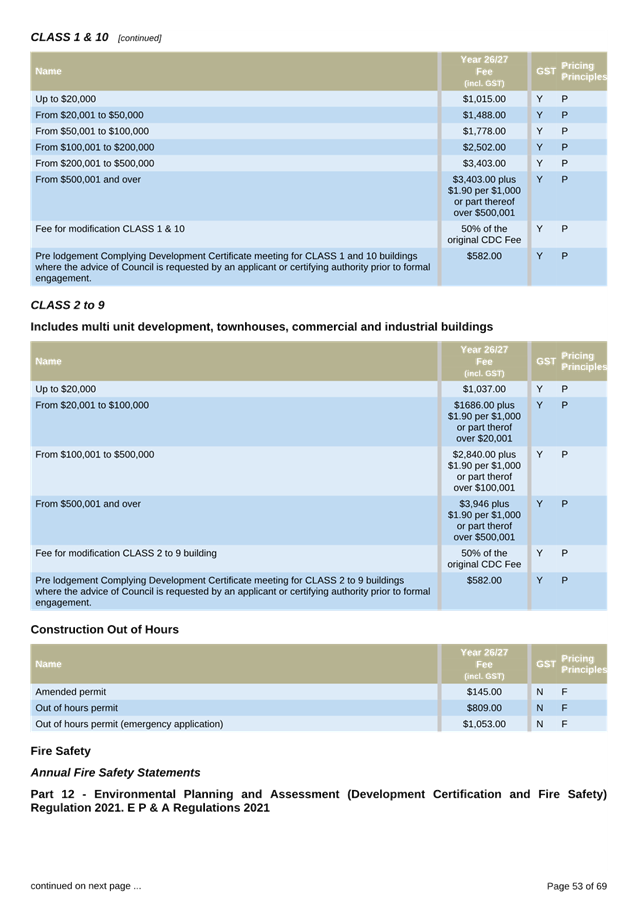
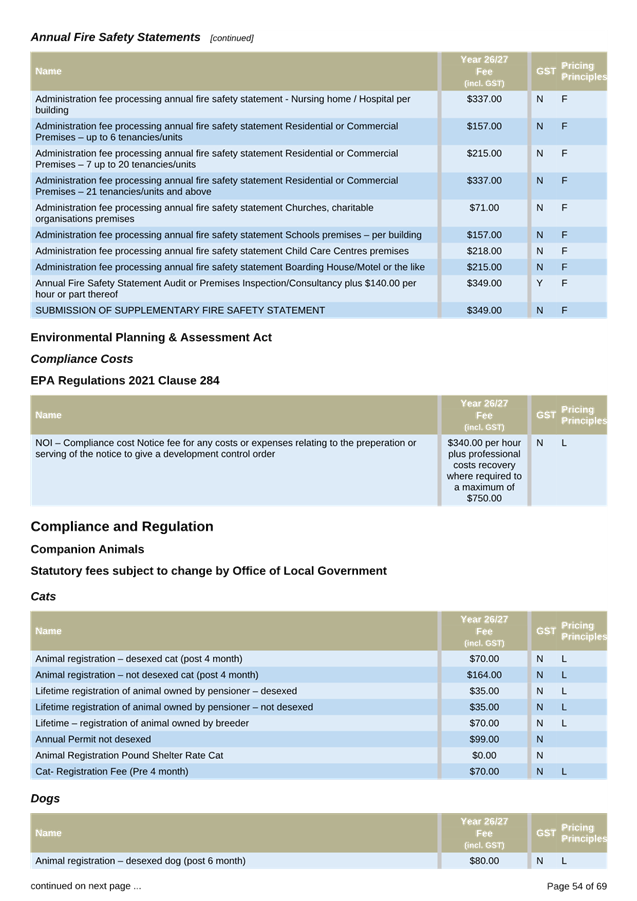
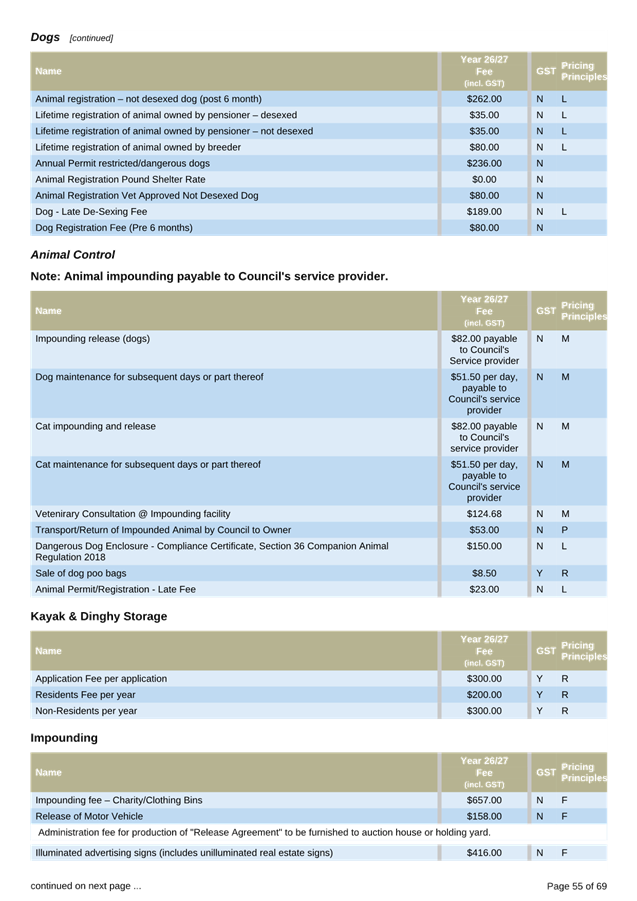
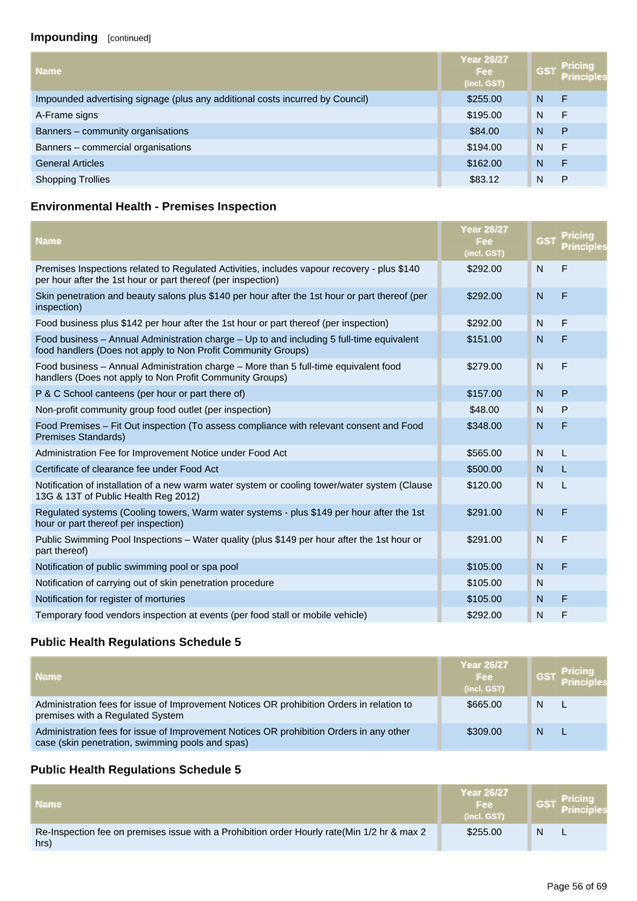
To adopt the revised Resourcing Strategy 2026-2036, revised Delivery Program 2025-2029 and Operational Plan 2026-2027, incorporating the Budget, Capital Works Program, Statement of Revenue Policy and Fees and Charges for 2026-2027.
Recommendation:
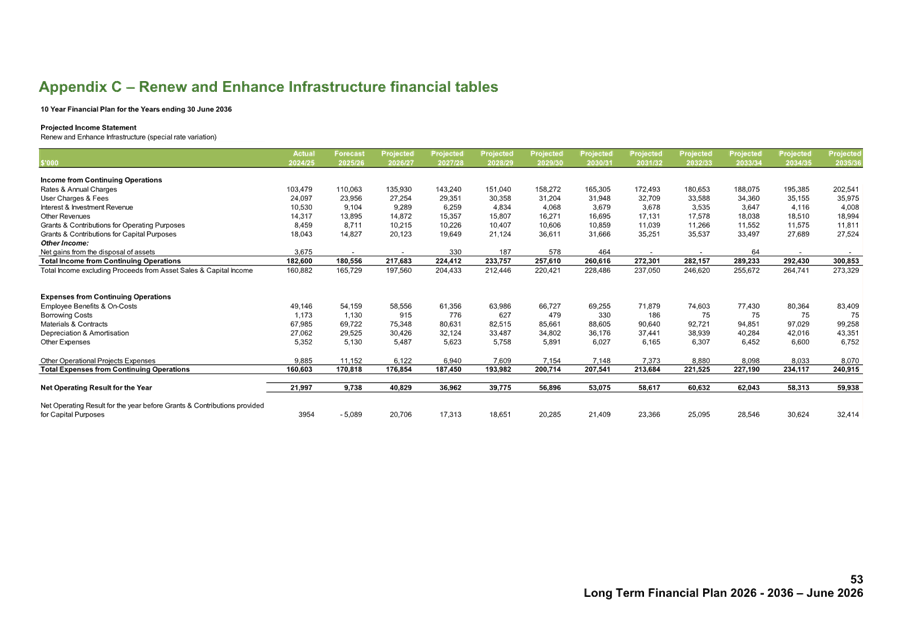
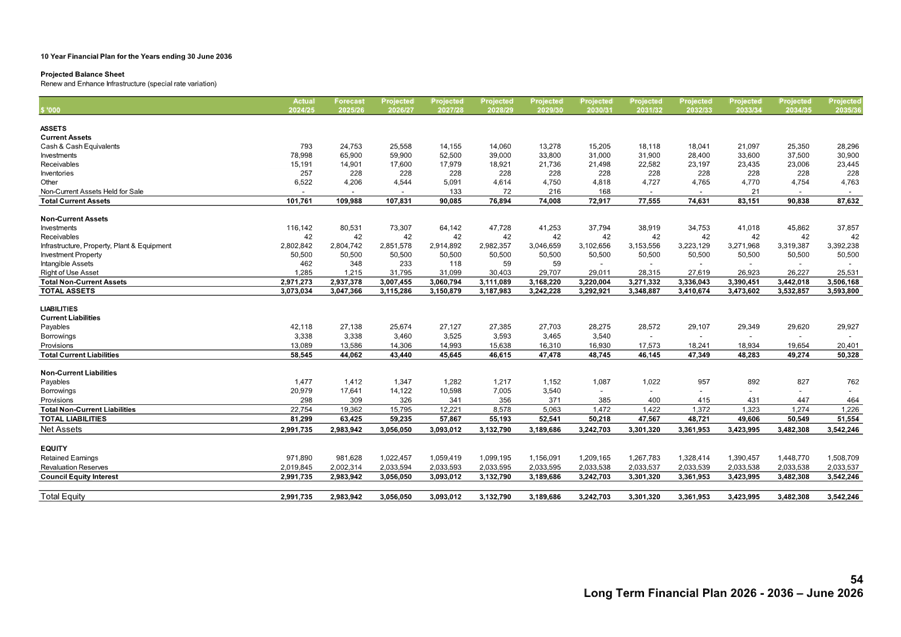
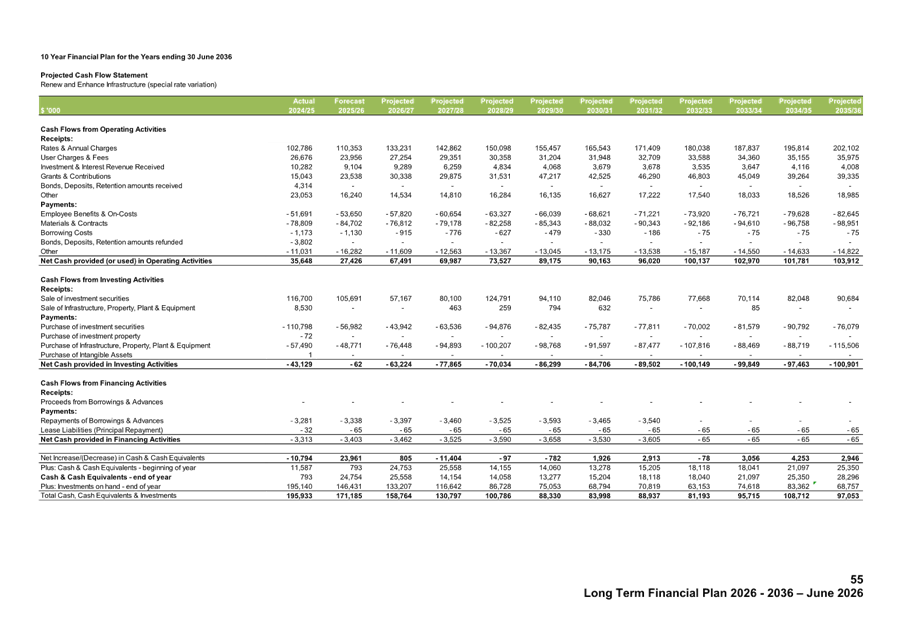
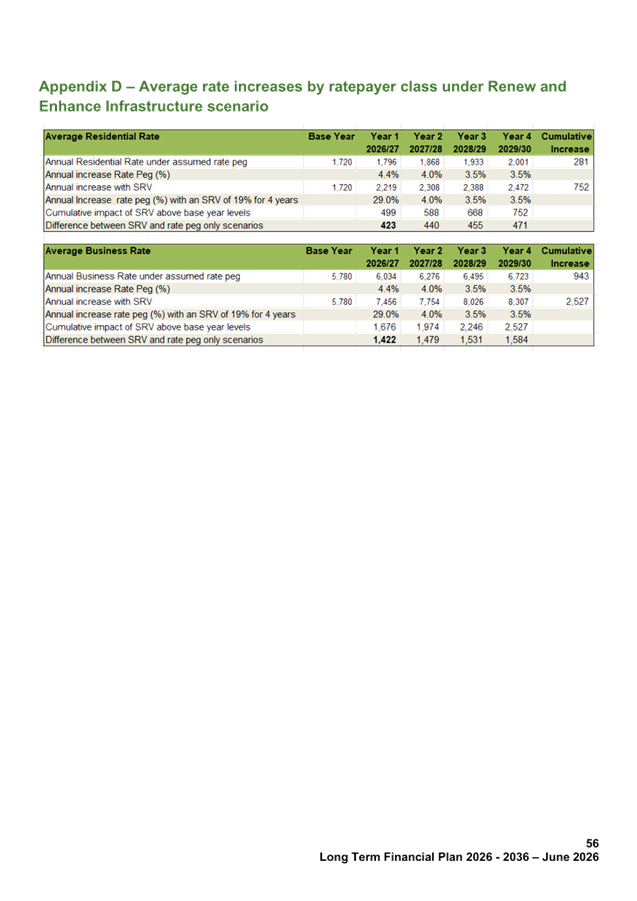
That Council adopt the revised Resourcing Strategy 2026-2036, revised Delivery Program 2025-2029 and Operational Plan 2026-2027, incorporating the Budget, Capital Works Program, Statement of Revenue Policy and Fees and Charges for 2026-2027, incorporating a Special Rate Variation (SRV) of 24.6% to begin from 1 July 2026 which, when combined with the confirmed 4.4% rate peg, will result in a 29% rate revenue increase in 2026/27.
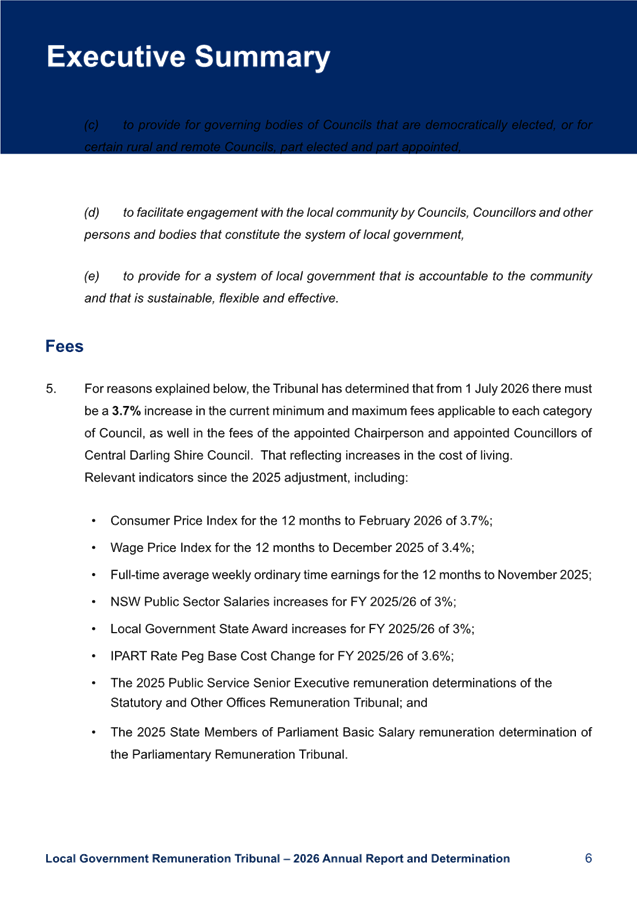
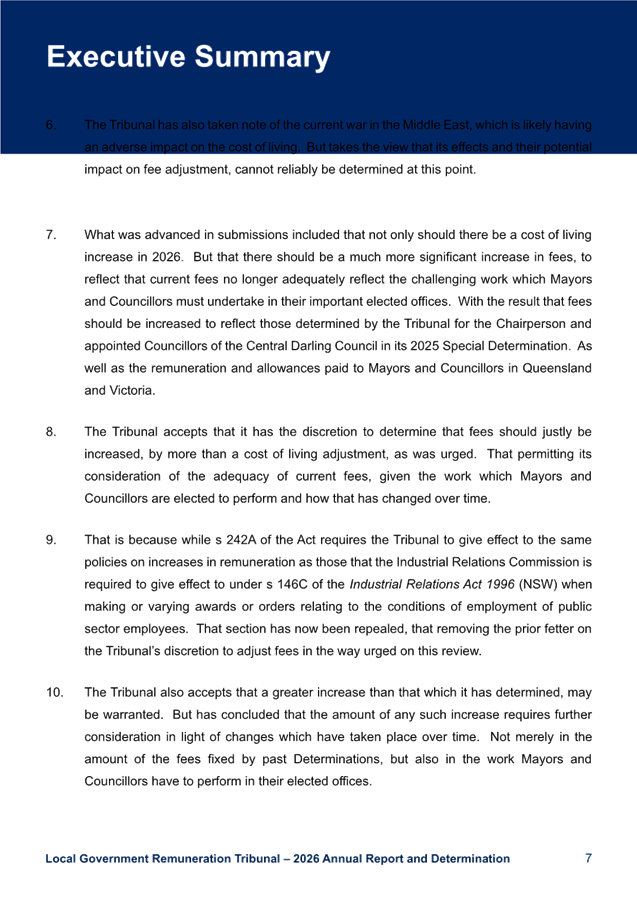
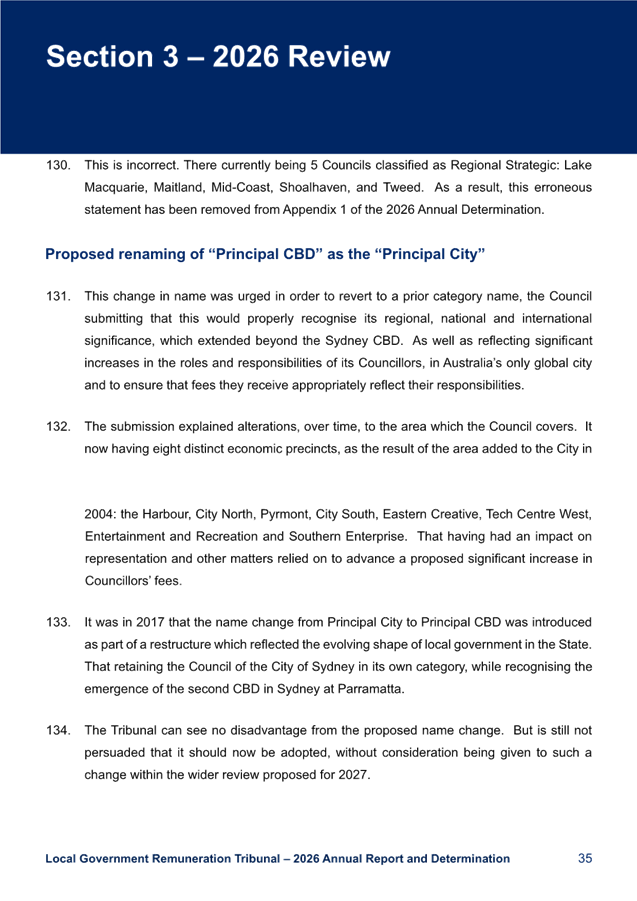
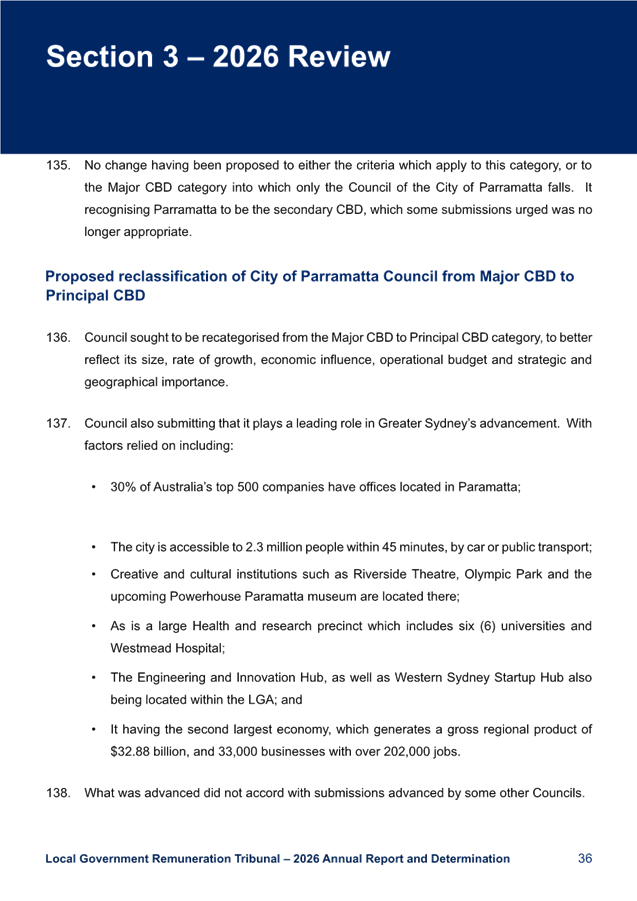
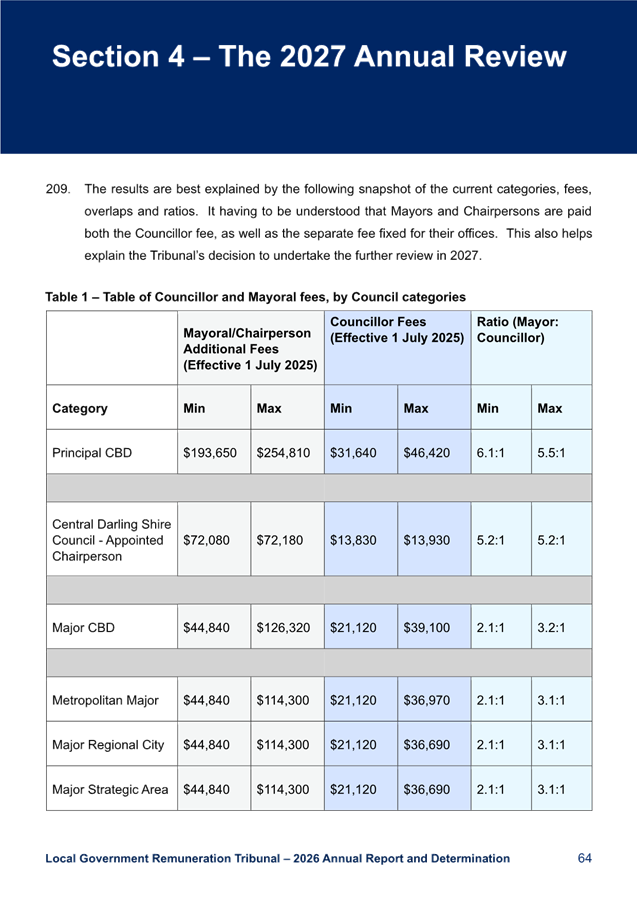
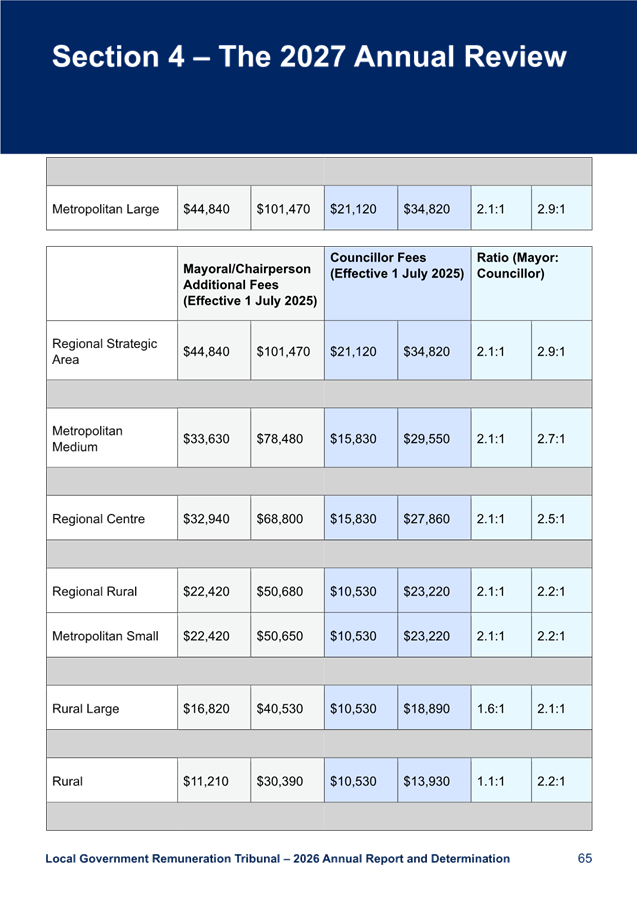
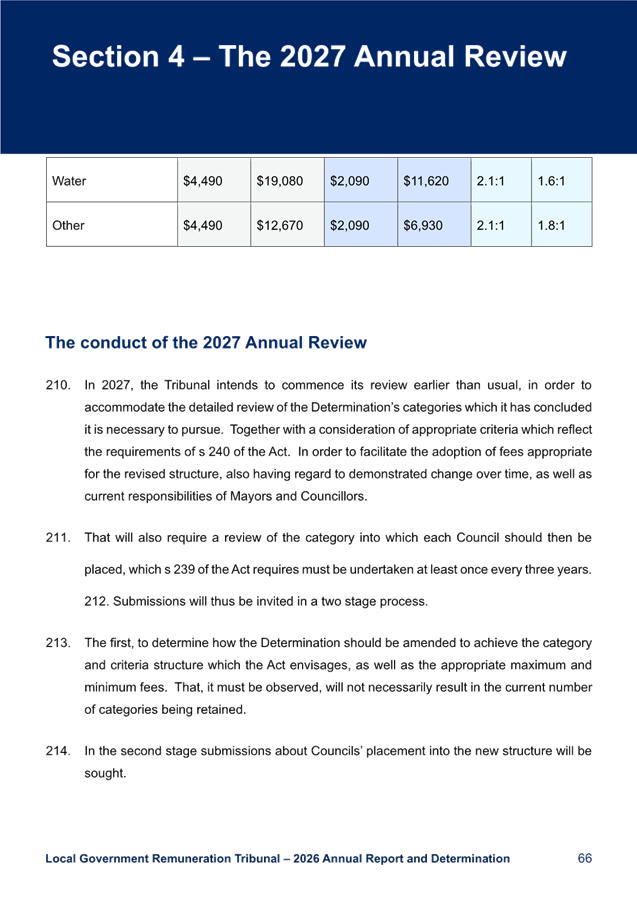
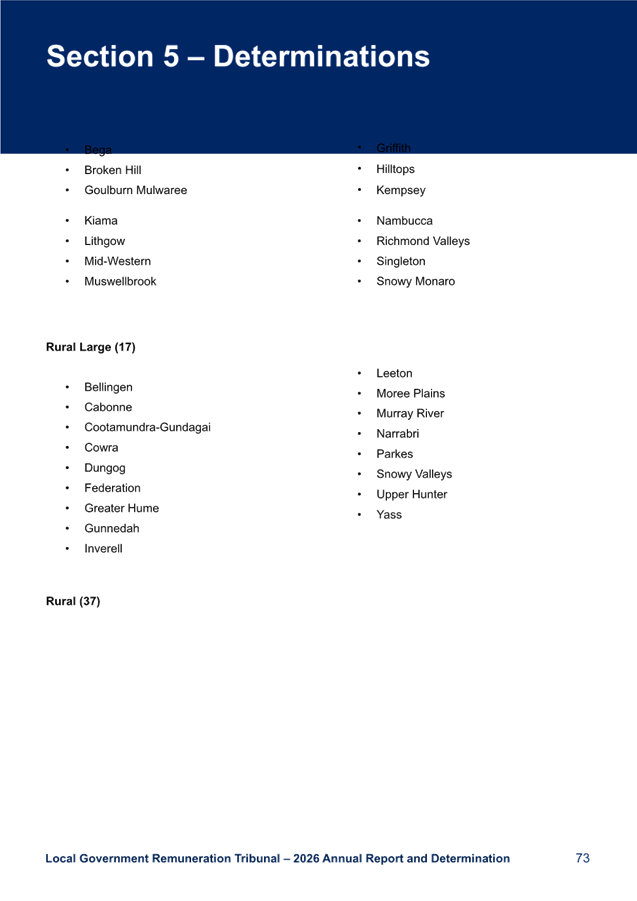
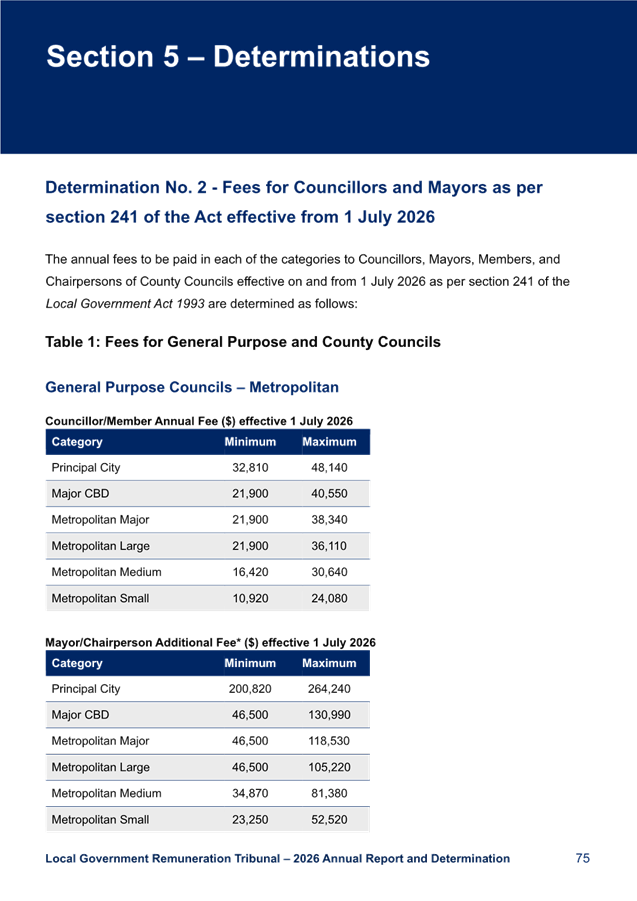
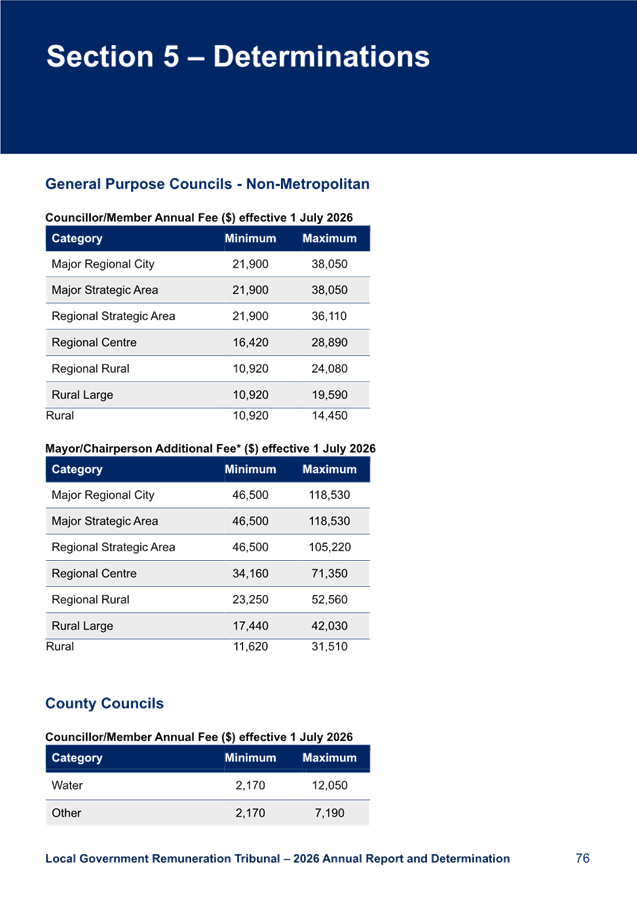
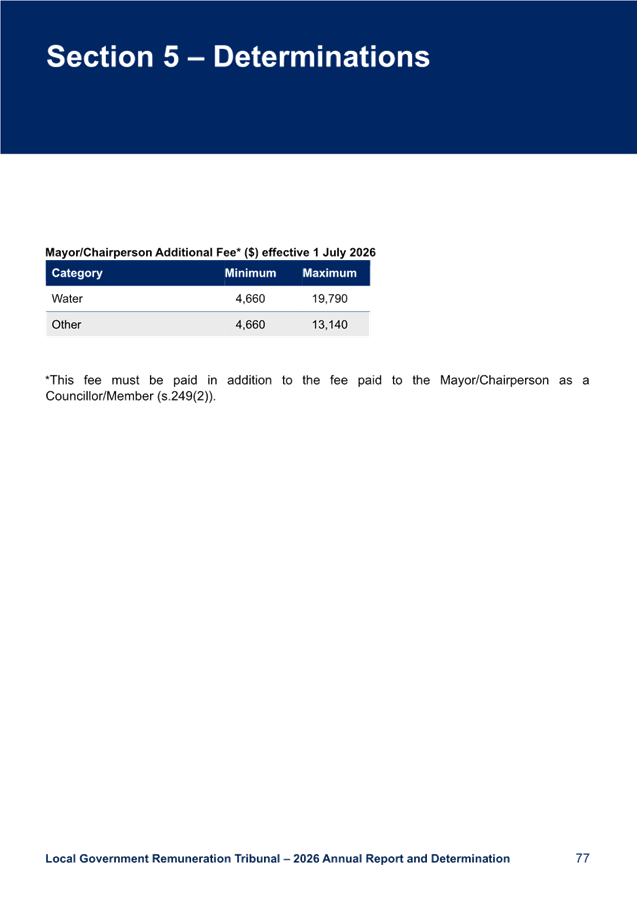
GB.5 Mayor and Councillor Fees - 2026/27 Local Government Remuneration Tribunal Determination 547
File: EM00049/5
To determine the mayoral and councillor fees for the 2026/27 financial year.
Recommendation:
That effective 1 July 2026:
A. The
annual councillor fee be set at maximum $30,640; and
B. The annual mayoral fee be set at $81,380, in addition to the councillor fee.
GB.6 Review of Councillor Expenses and Facilities Policy 638
File: CY00474/13
For Council to adopt the updated Councillor Expenses and Facilities Policy
Recommendation:
That the updated Councillor Expenses and Facilities Policy be placed on public exhibition for a period of 28 days. If any submissions are received, the matter be reported back to Council after the consultation period. If no submissions are received, that Council adopt the policy to come into effect on 1 October 2026.
GB.7 Investment Report as at 31 May 2026 667
File: FY00623/8
To present Council’s investment portfolio performance for May 2026.
Recommendation:
That the summary of investments performance for May 2026 be received and noted; and that the Certificate of the Responsible Accounting Officer be noted and the report adopted.
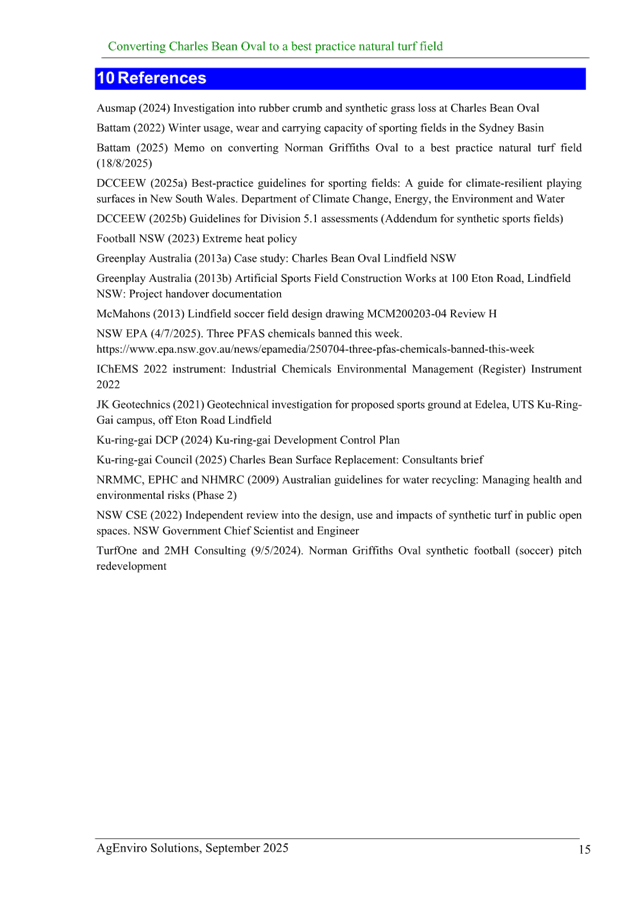
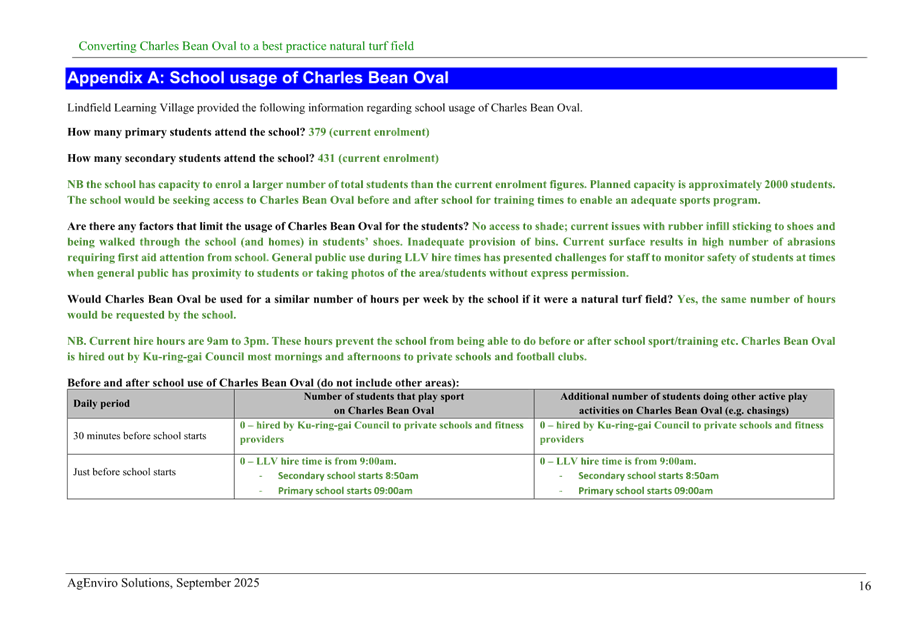
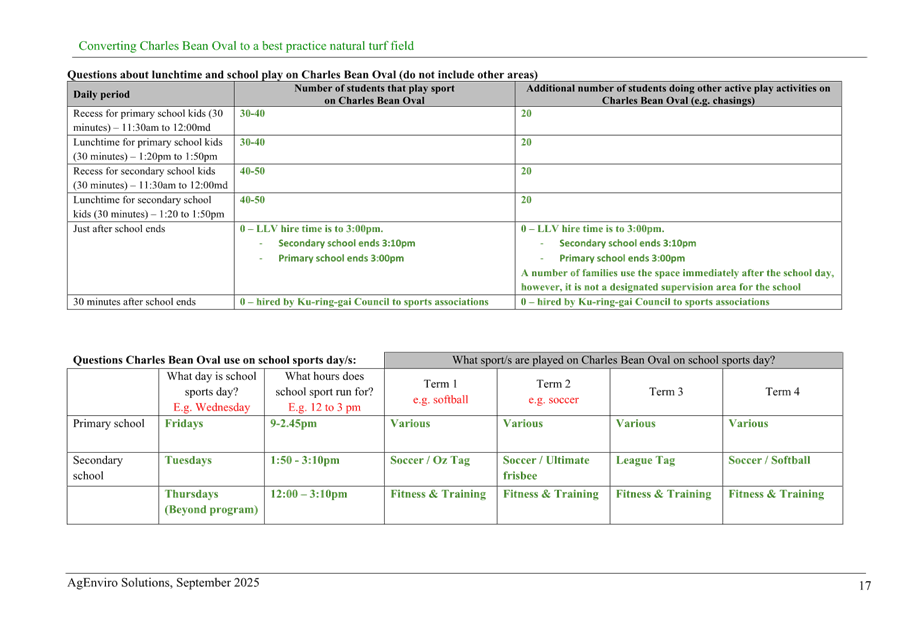
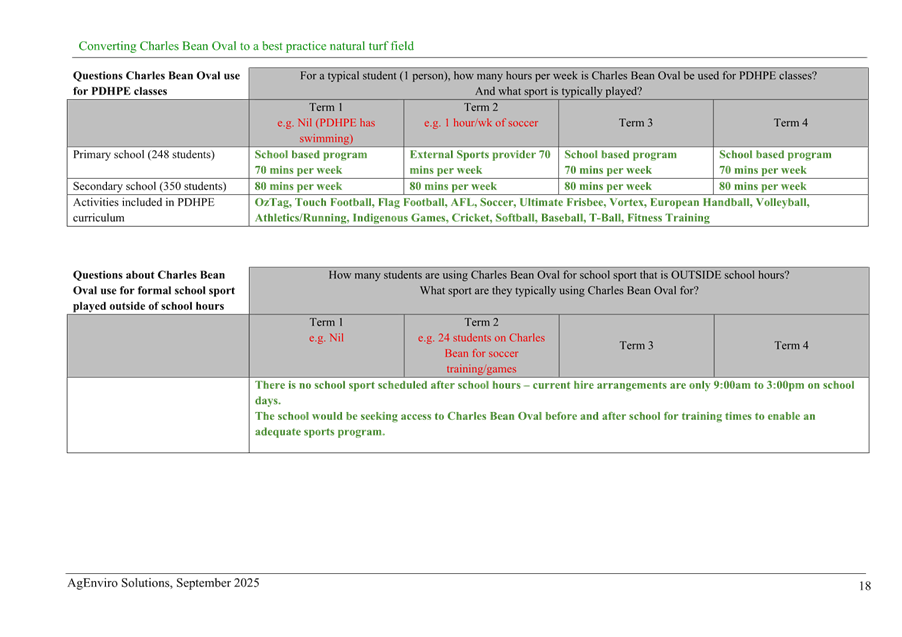
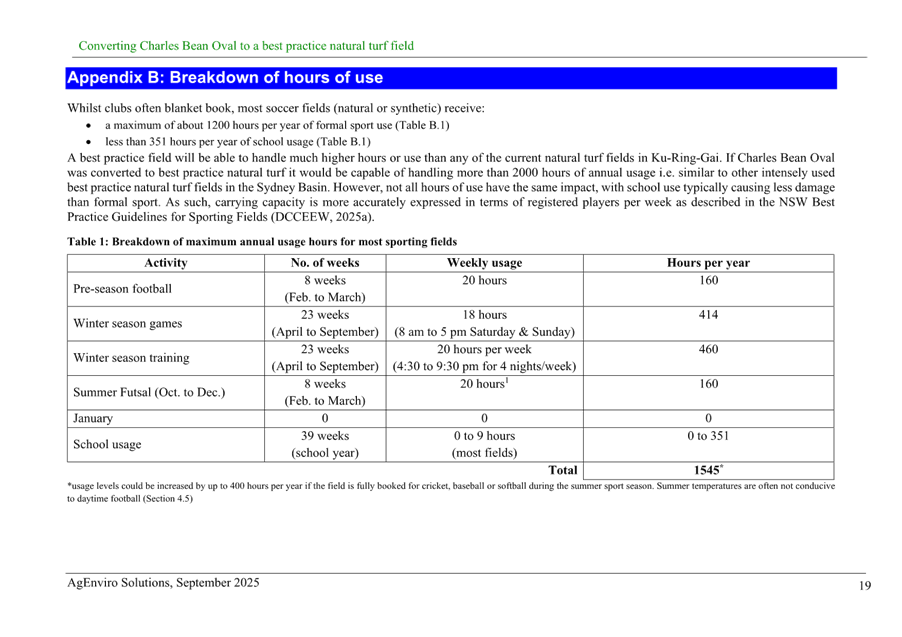
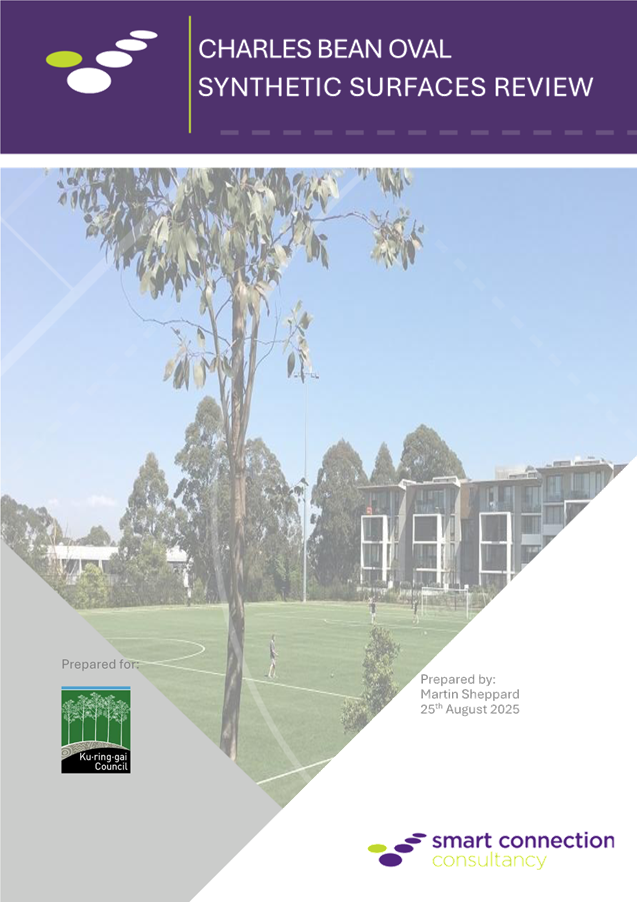
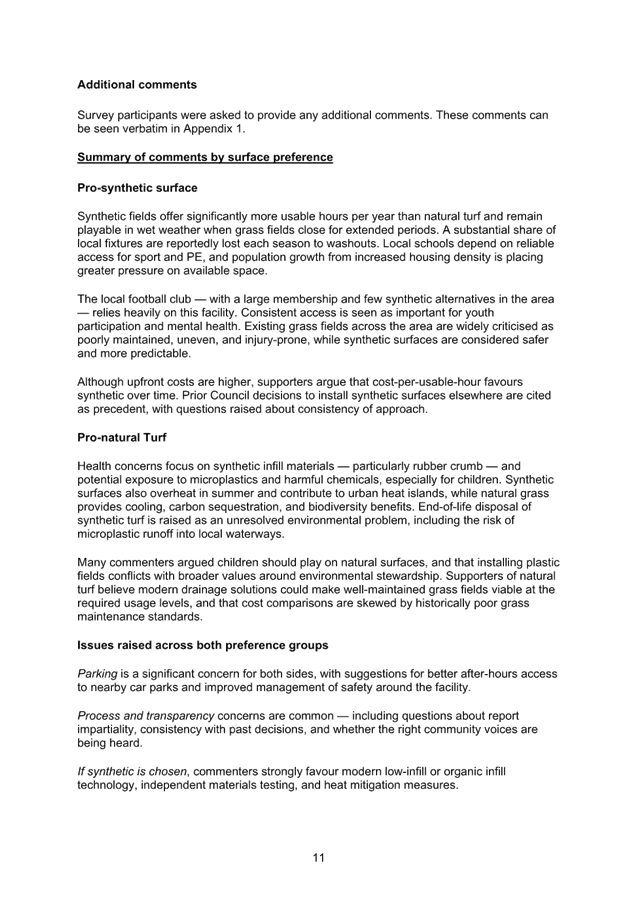
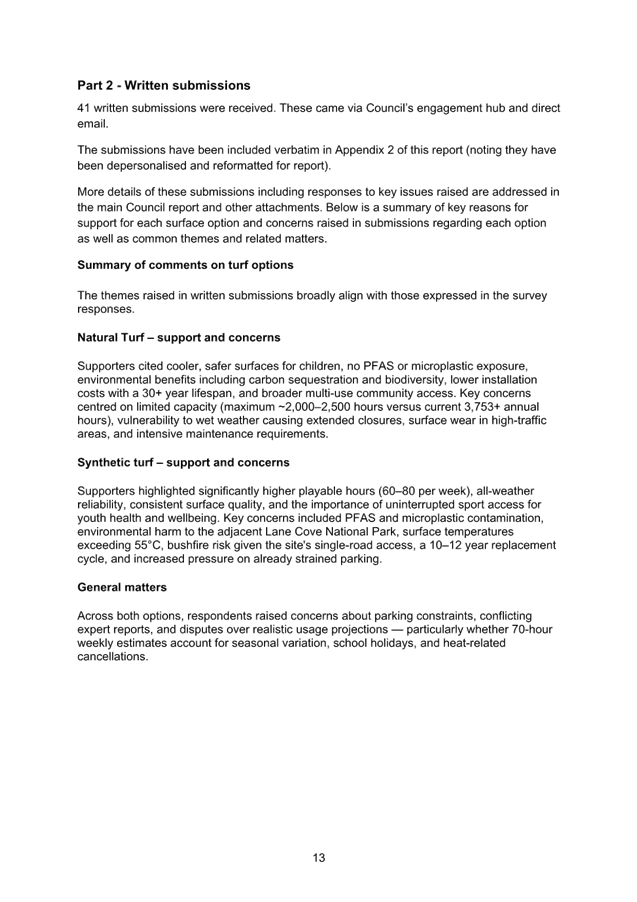
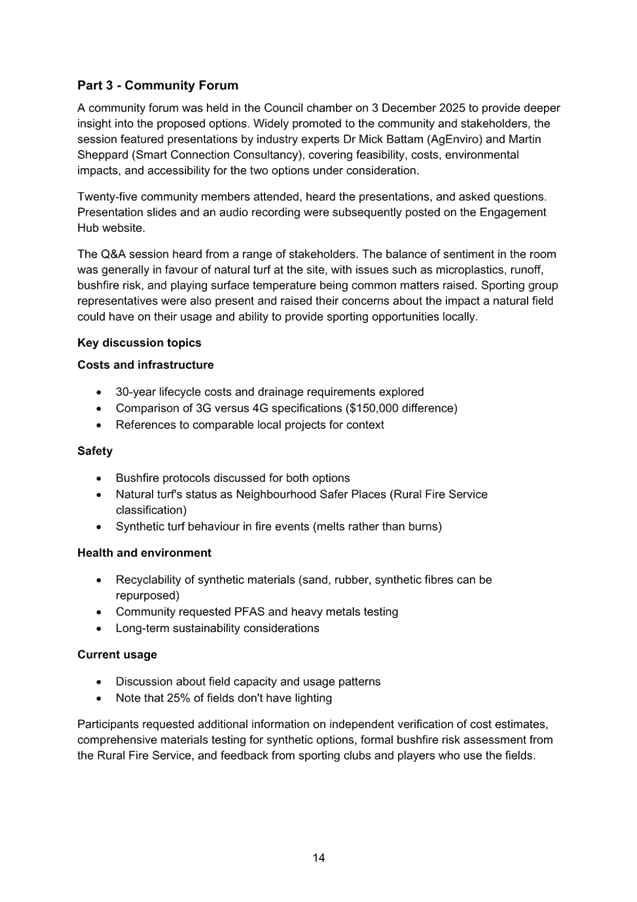
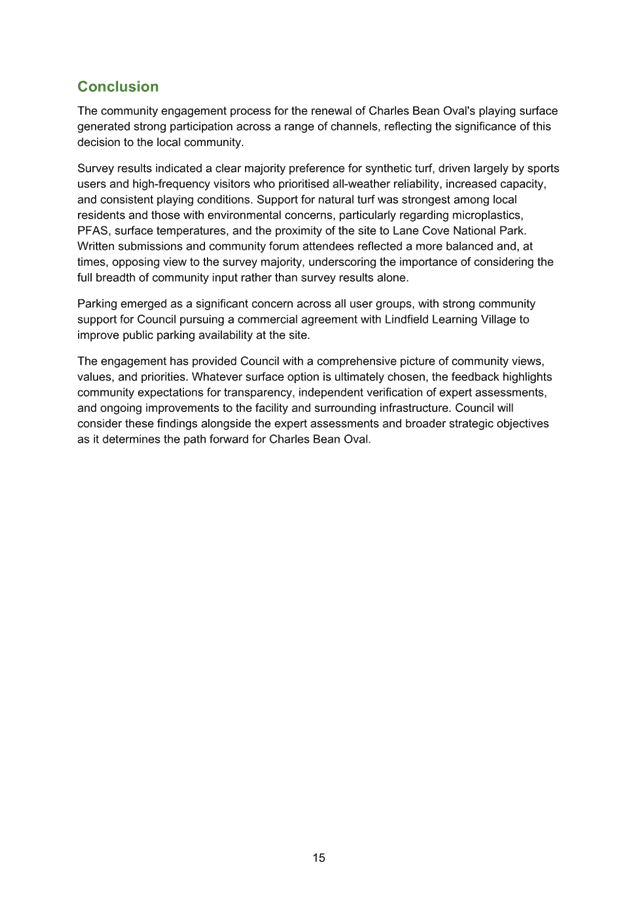
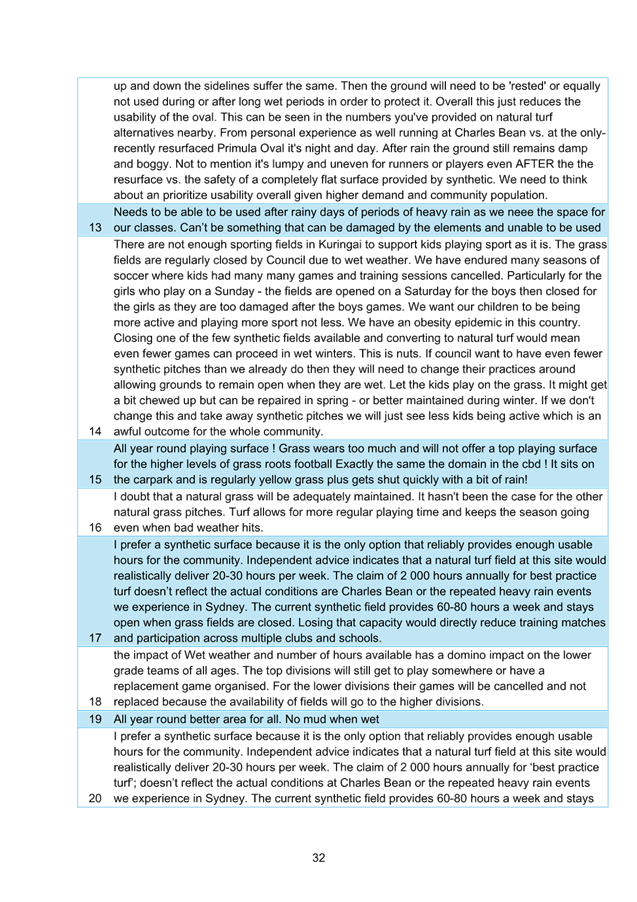
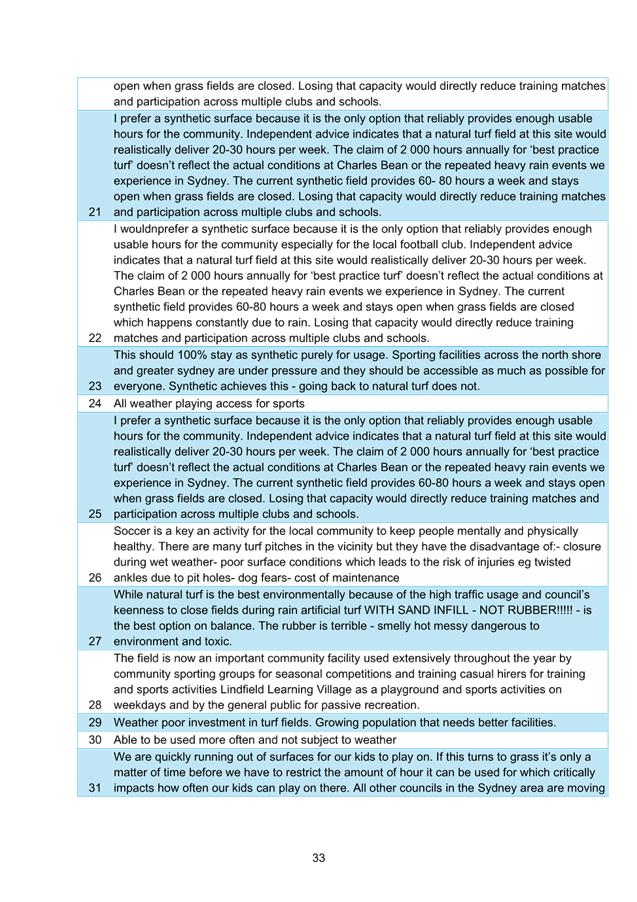
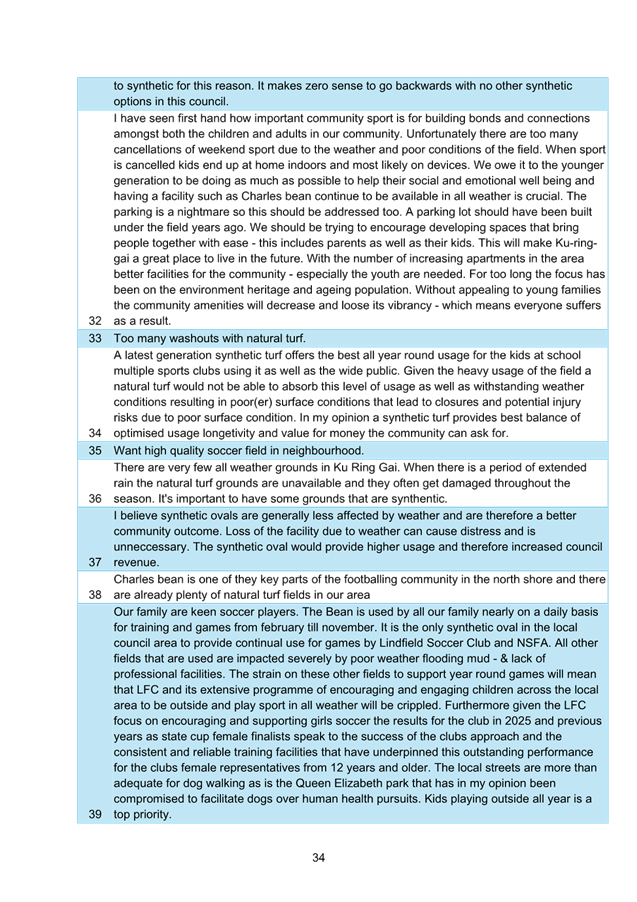
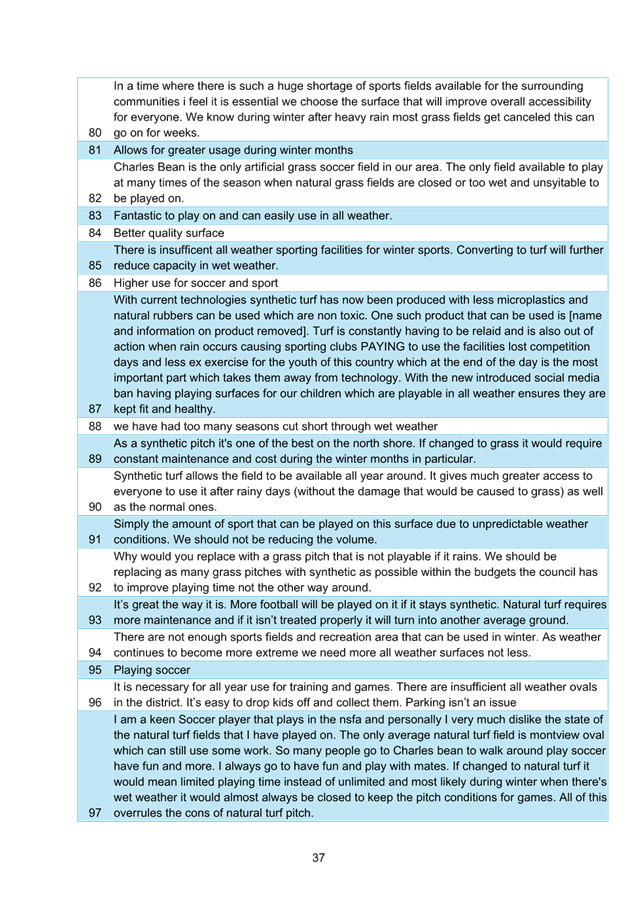
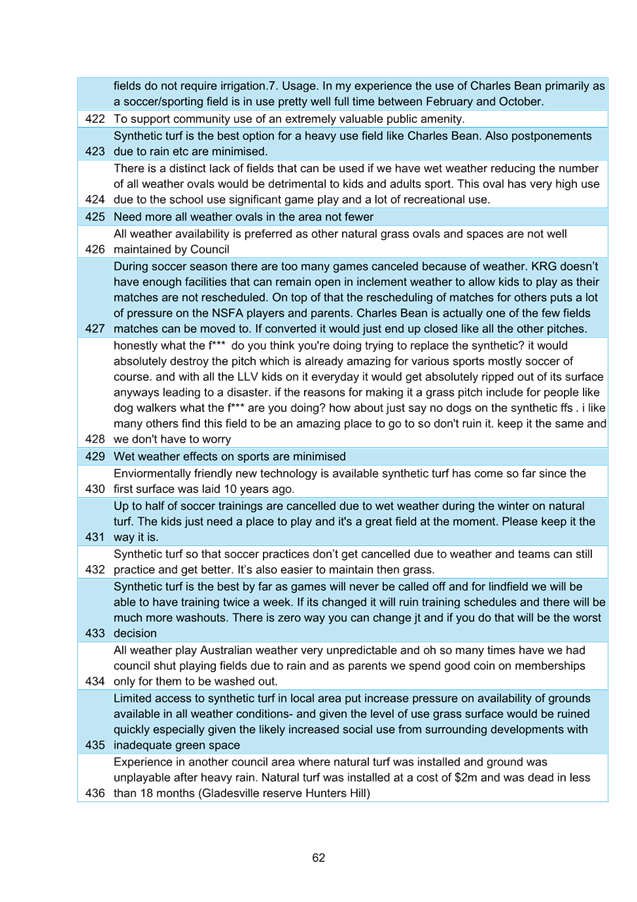
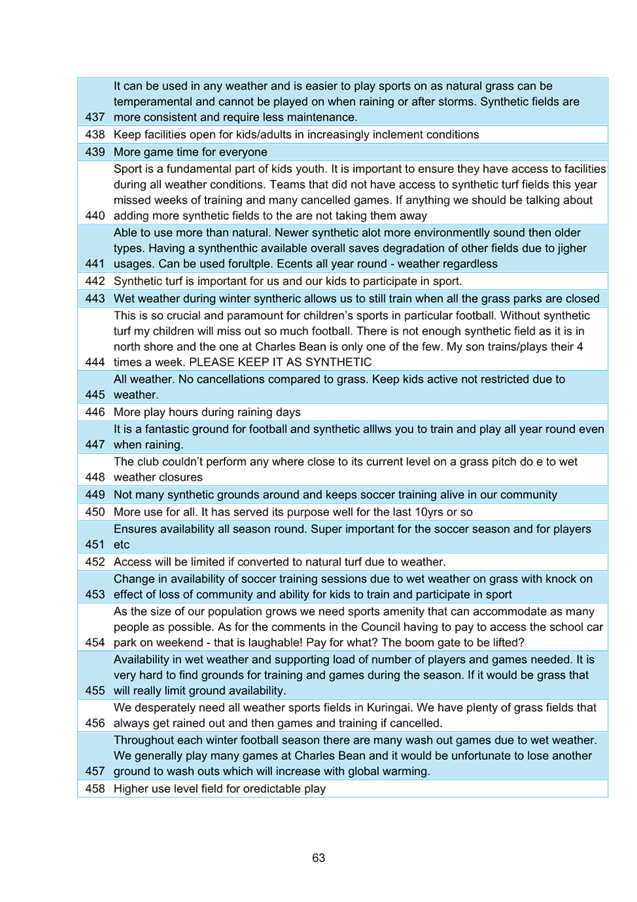
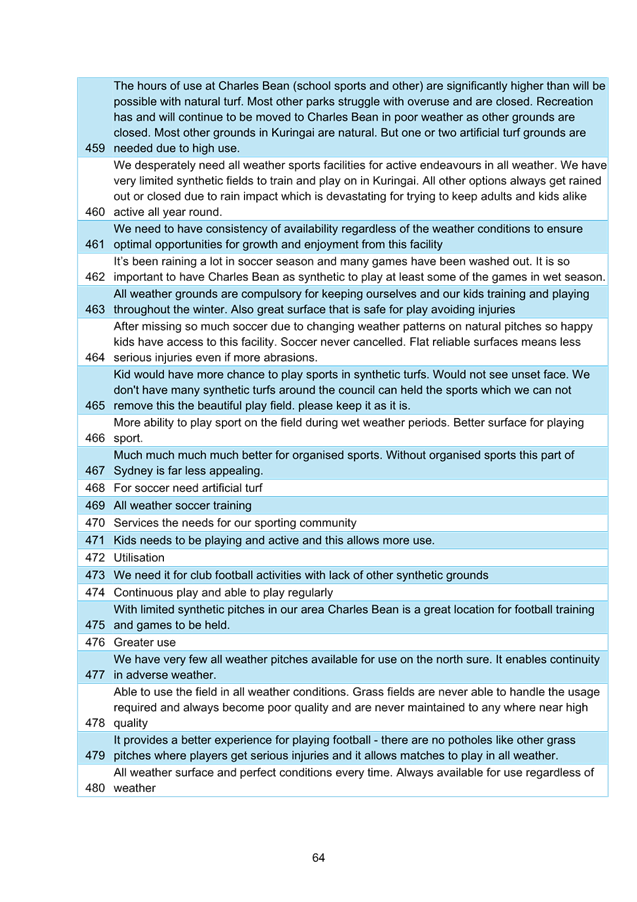
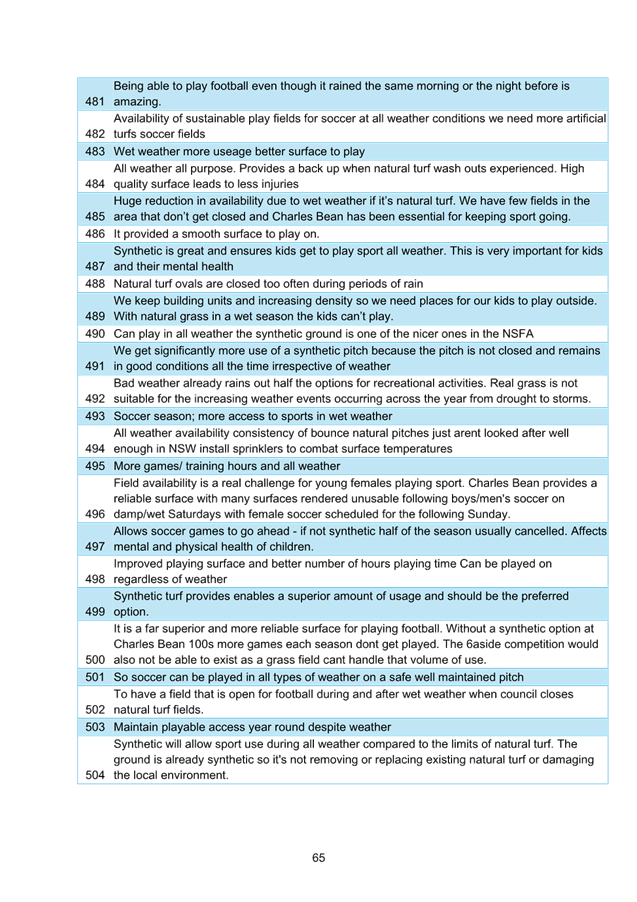
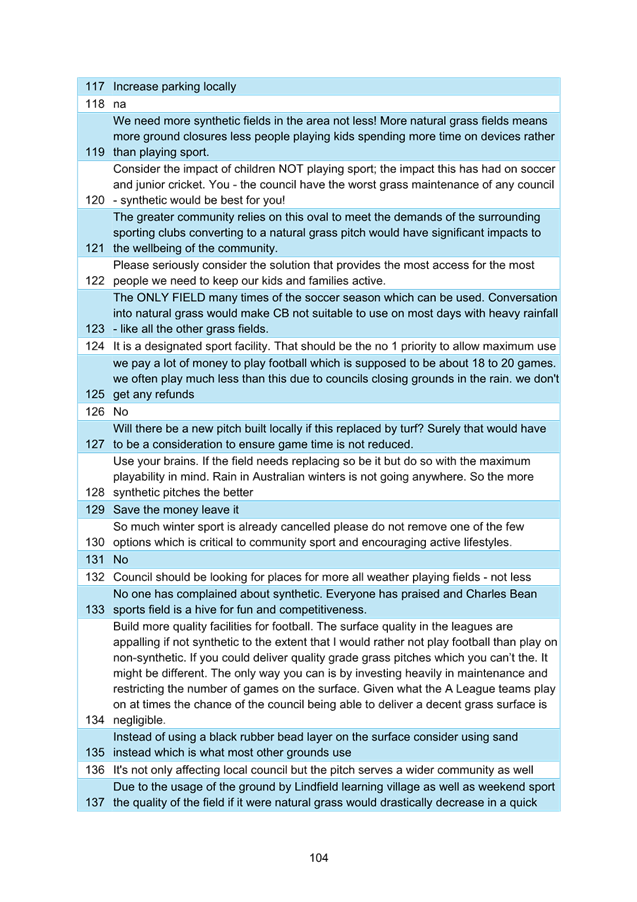
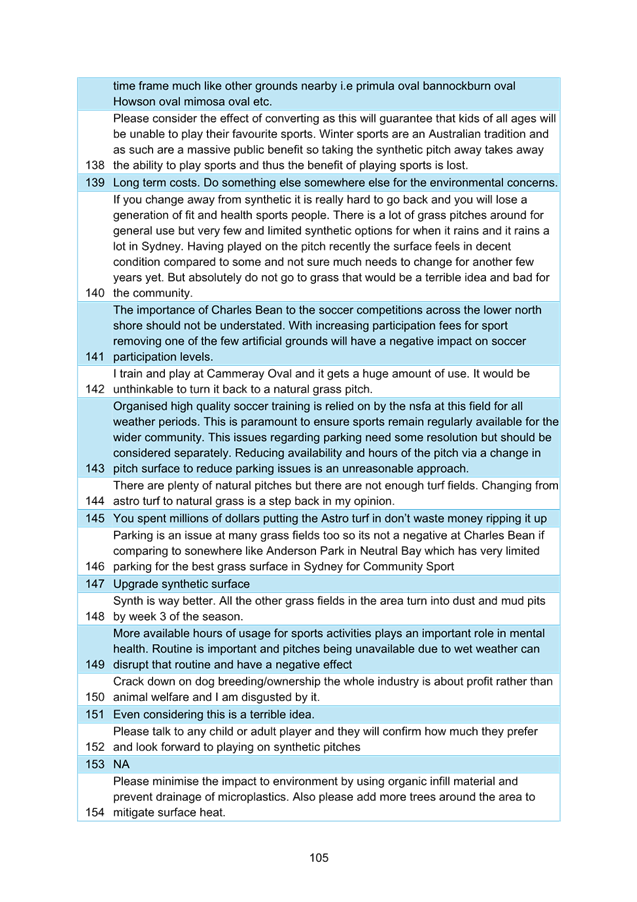
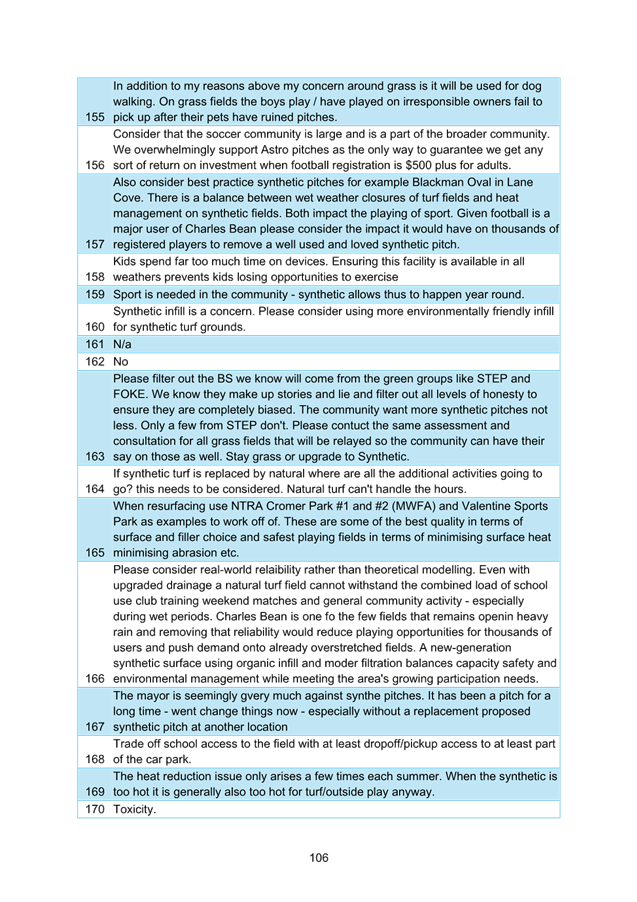
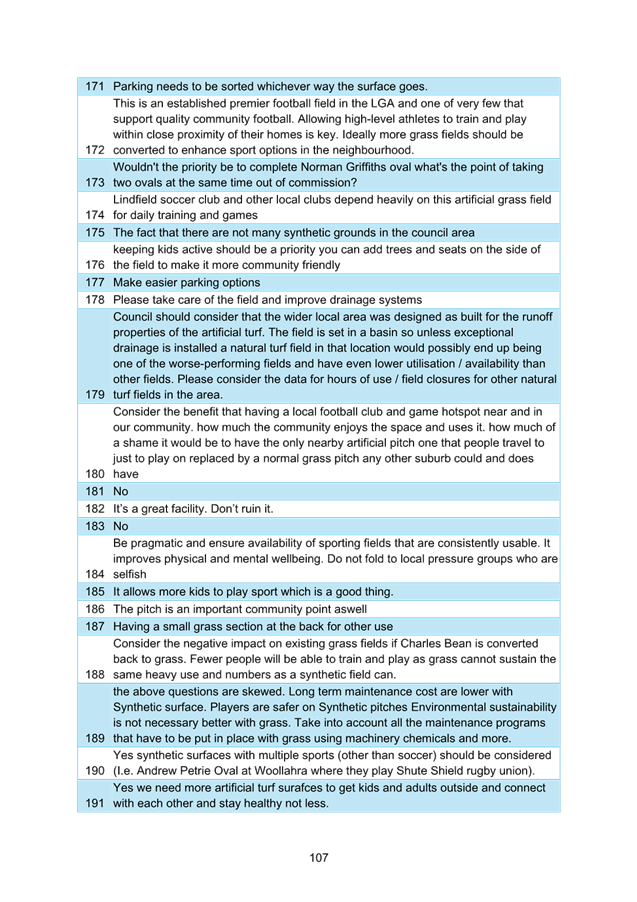
GB.8 Charles Bean Oval Lindfield - Renewal of Playing Surface 675
File: S15140
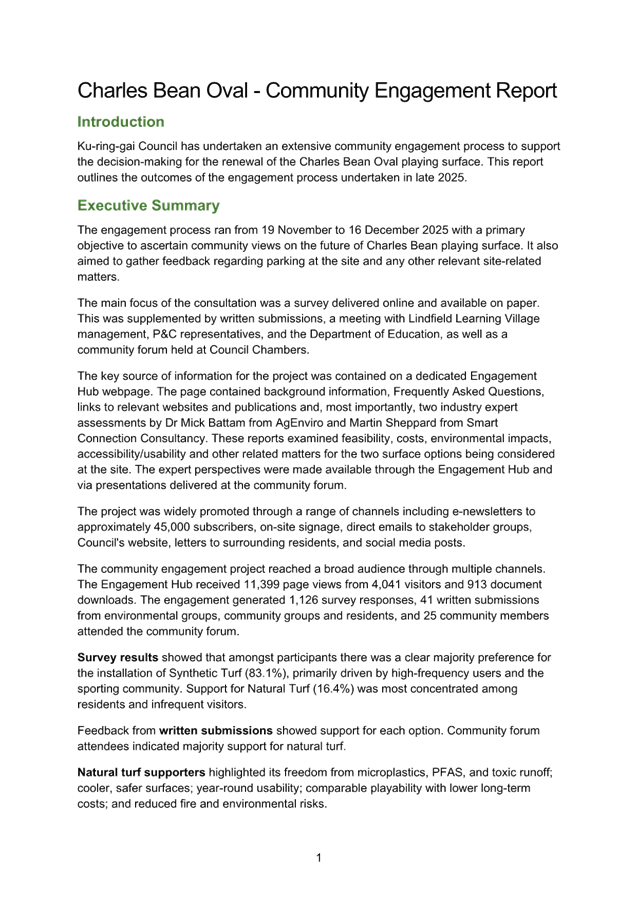
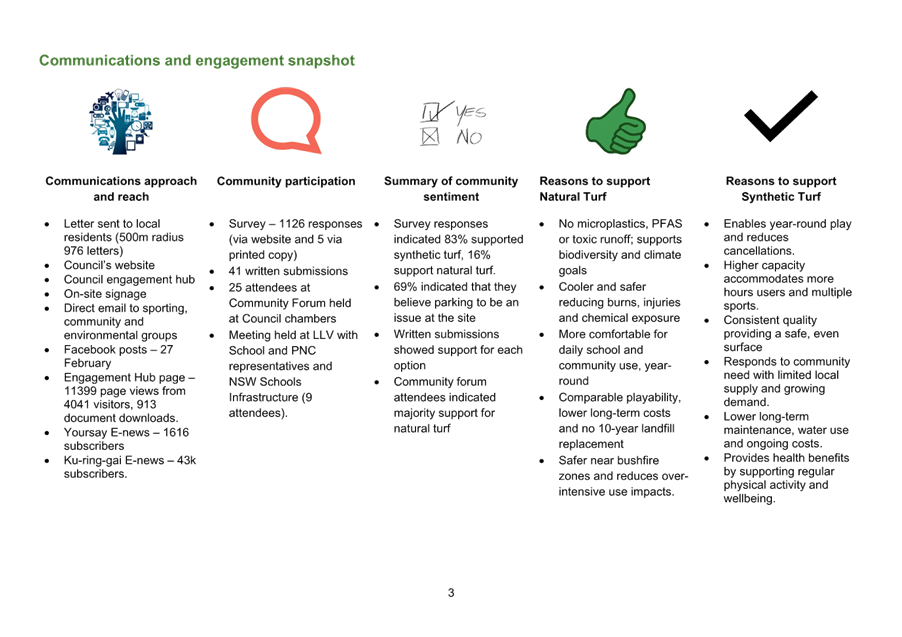
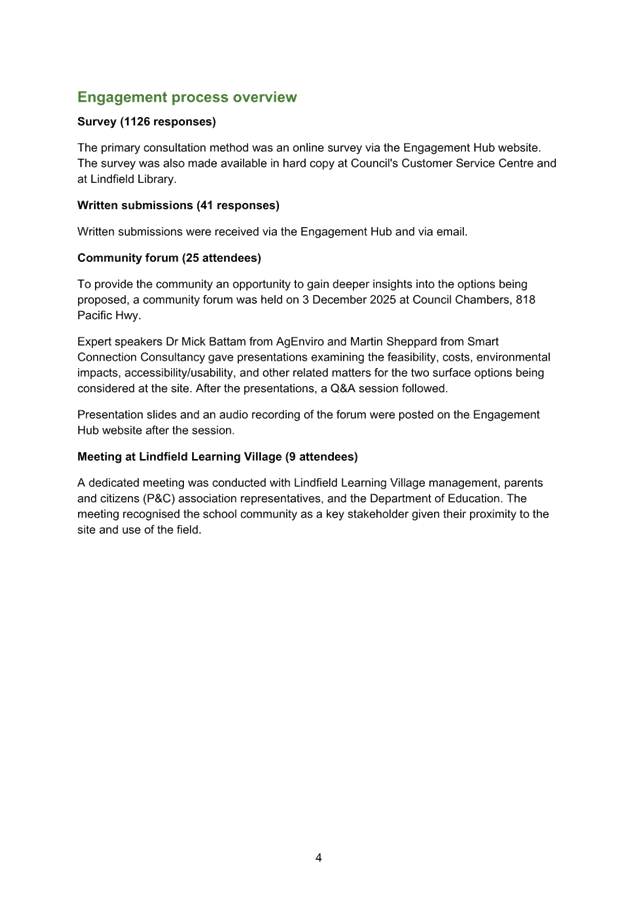
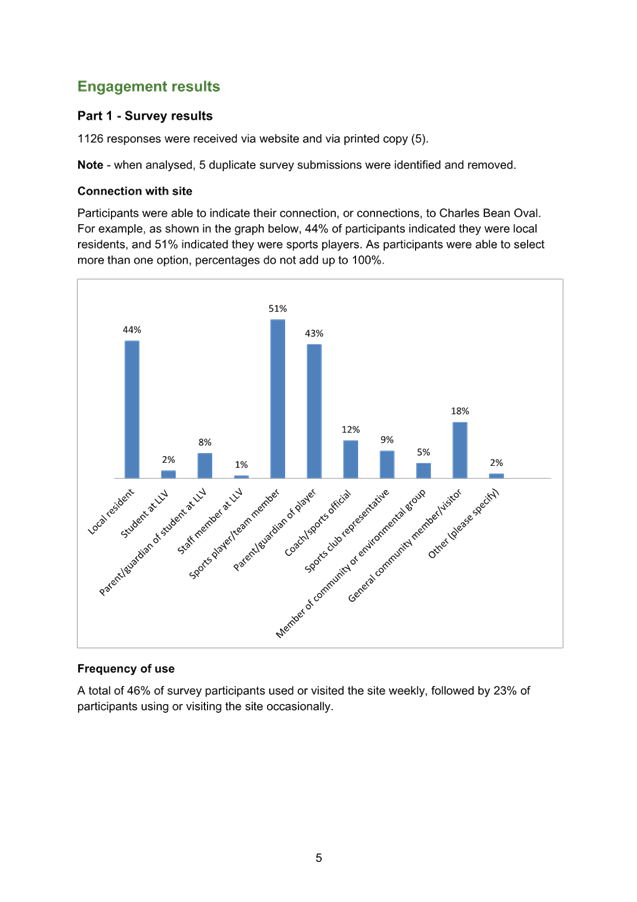
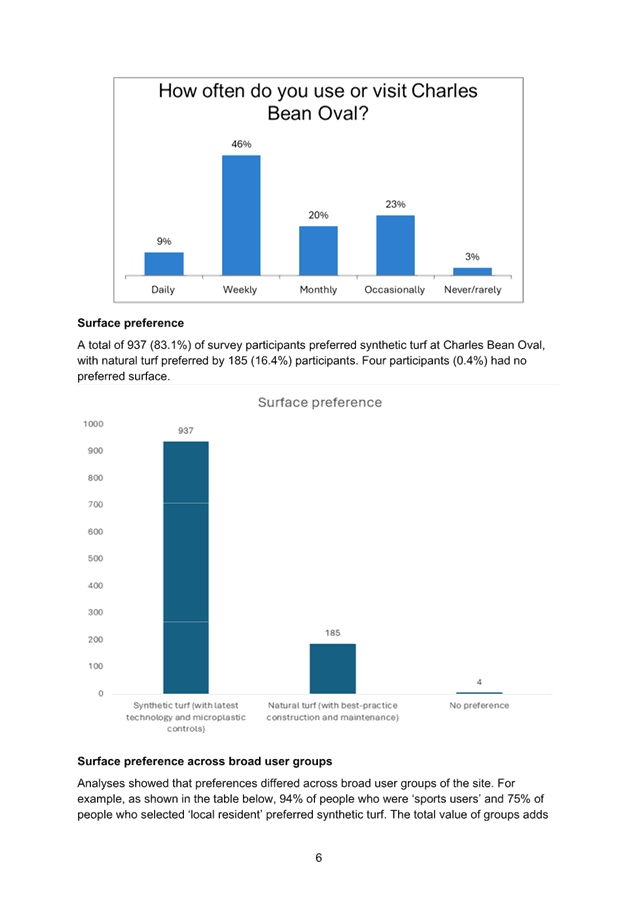
This report provides Council with an update on the renewal of the synthetic turf playing surface project at Charles Bean Oval Lindfield including the community consultation undertaken.
Recommendation:
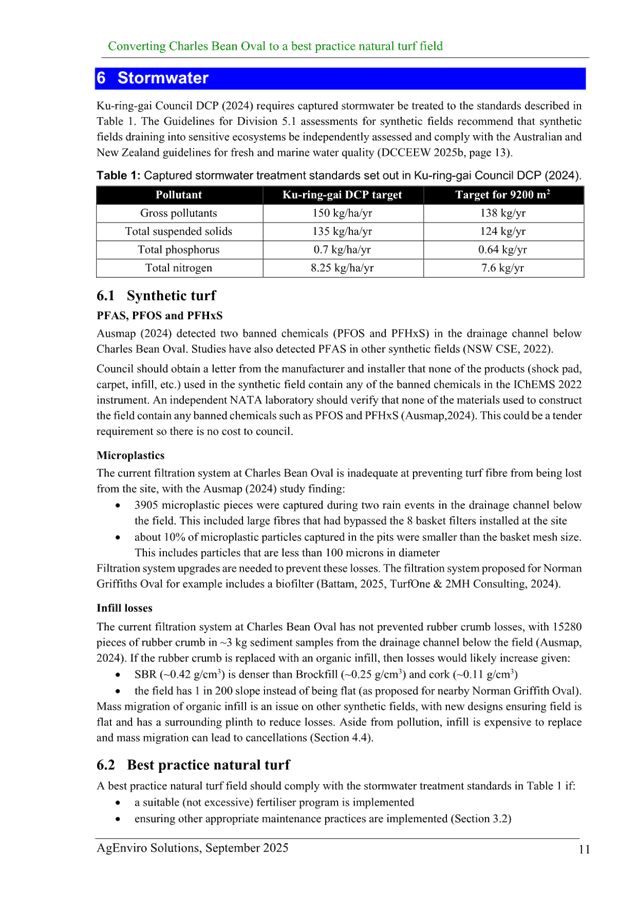
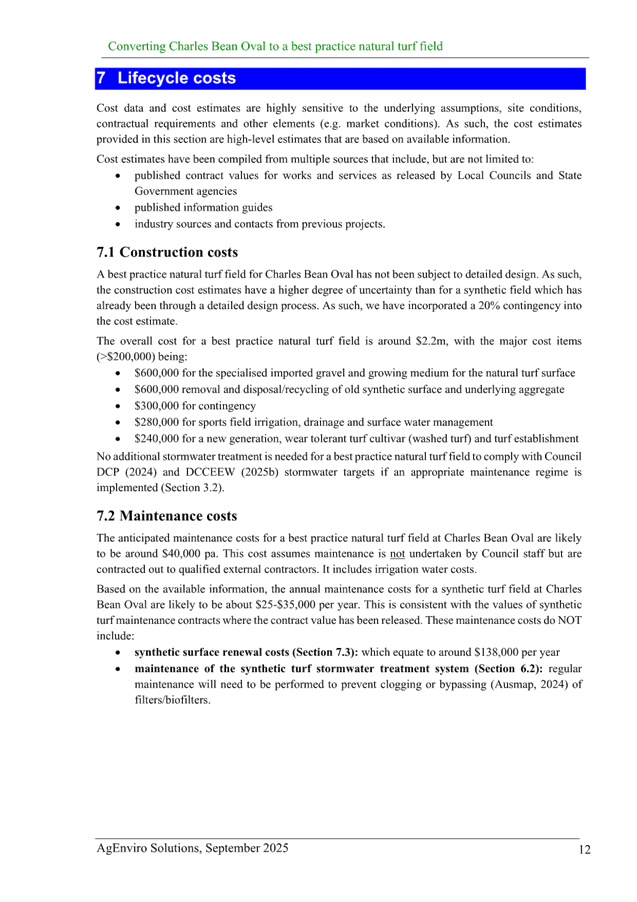
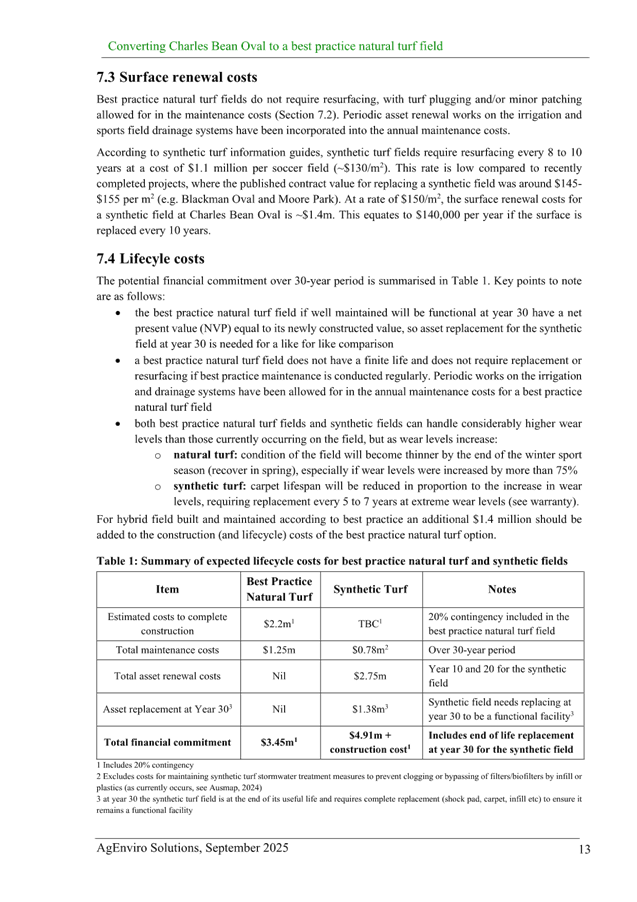
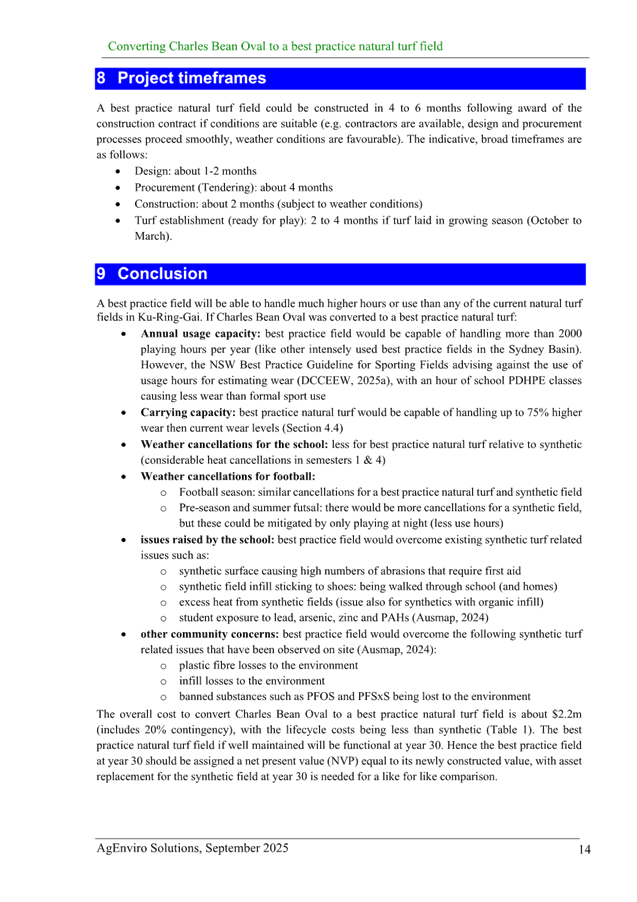
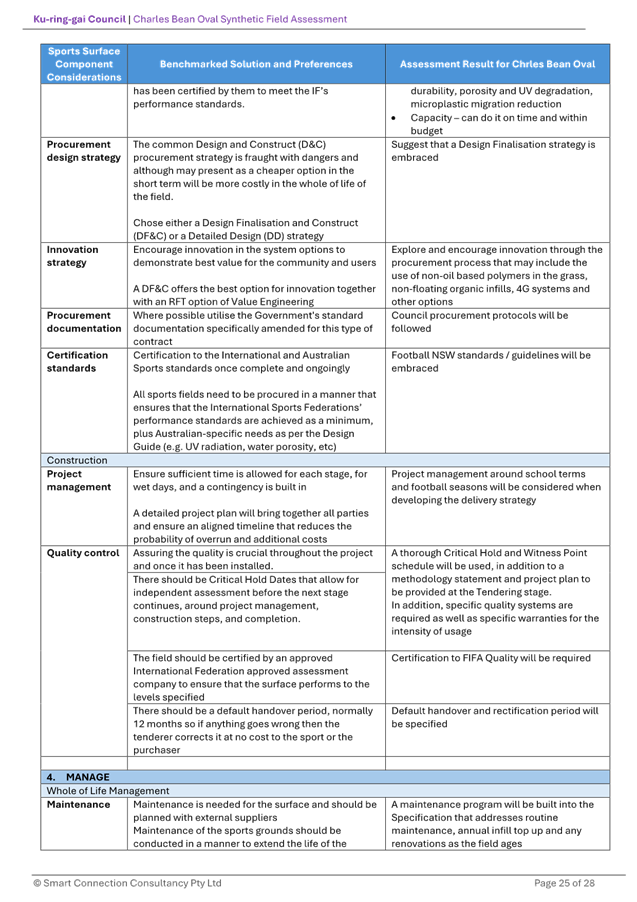
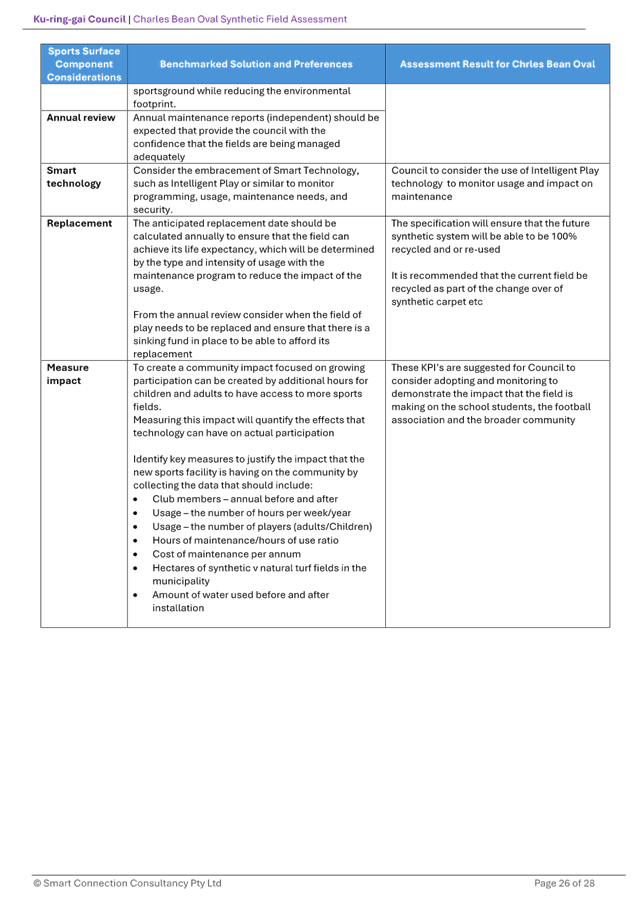
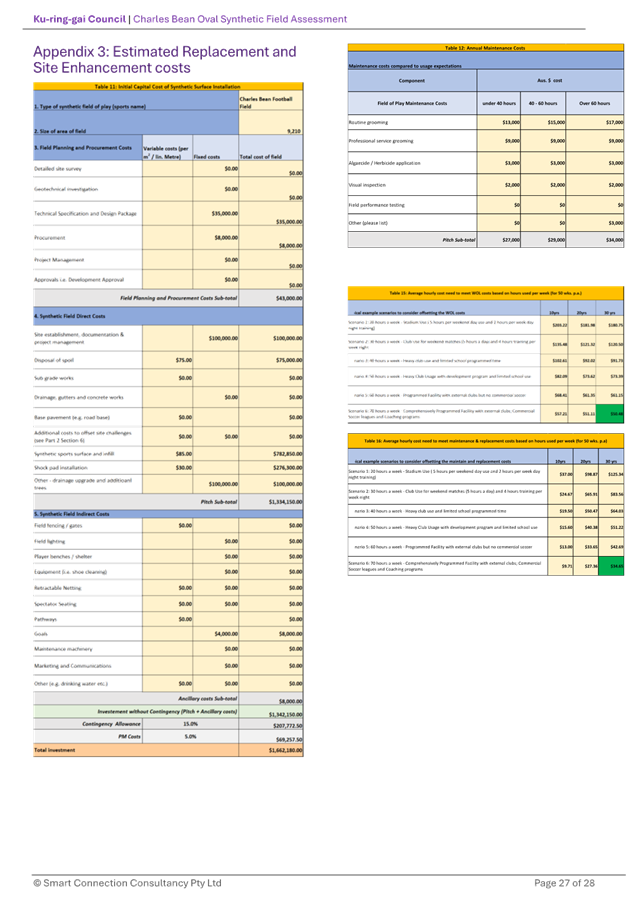
That Council receive and note this report, engage NSW Public Works or another suitably qualified independent expert to provide a cost comparison of delivering a best practice natural turf field at Charles Bean Oval compared to a synthetic turf field, and make a decision on the type of playing surface for Charles Bean Oval when the independent costing is reported back to Council.
GB.9 RFT7-2026 Playspace Upgrade Sequoia Close Park, West Pymble 981
File: RFT7-2026
The purpose of this report is to consider the tenders received for RFT7-2026 Playspace Upgrade Sequoia Close Park, West Pymble so as to appoint the preferred tenderer.
Recommendation:
In accordance with Section 55 of the Local Government Act and Tender Regulation 2021, it is recommended Council accept the Tender submitted by Tenderer A.
GB.10 RFT1-2026 Pacific Highway and Beaconsfield Parade Lindfield - Traffic Signal Modelling and Detailed Design 986
File: RFT1-2026/R
To consider the tenders received for RFT1-2026 Pacific Highway and Beaconsfield Parade Lindfield - Traffic Signal Modelling and Detailed Design, and to appoint the preferred tenderer.
Recommendation:
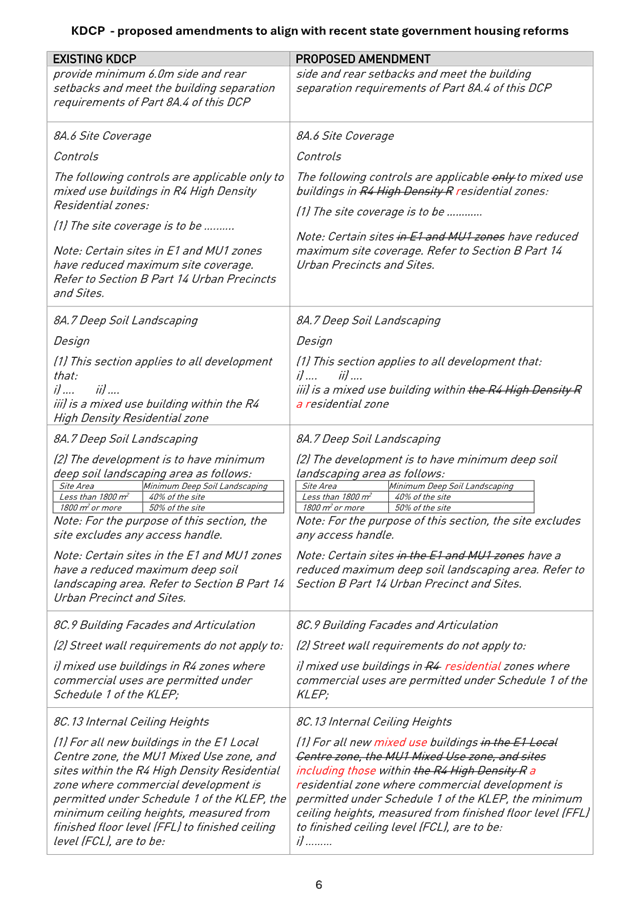
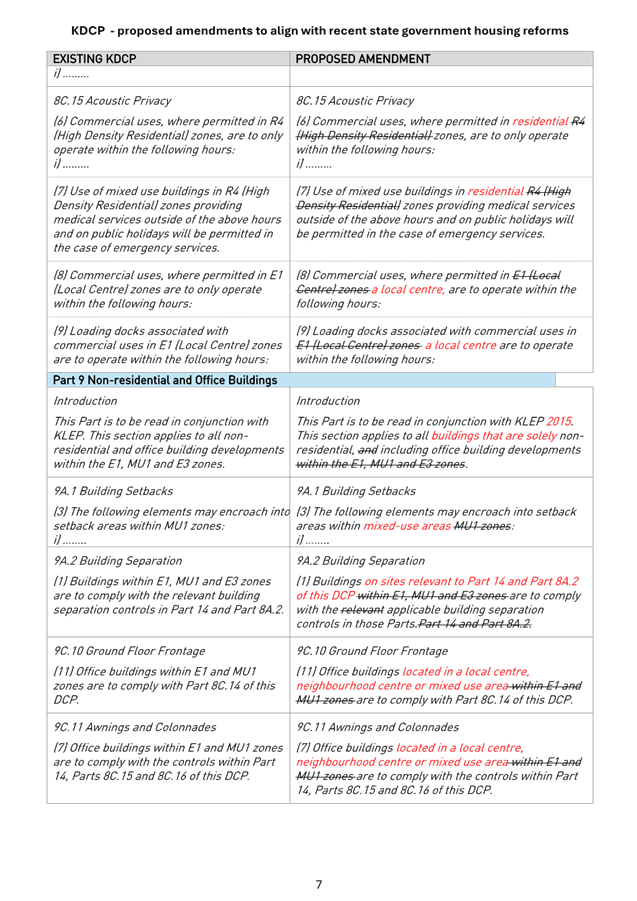
GB.11 DCP Amendment - to align with state government housing reforms 992
File: S15328
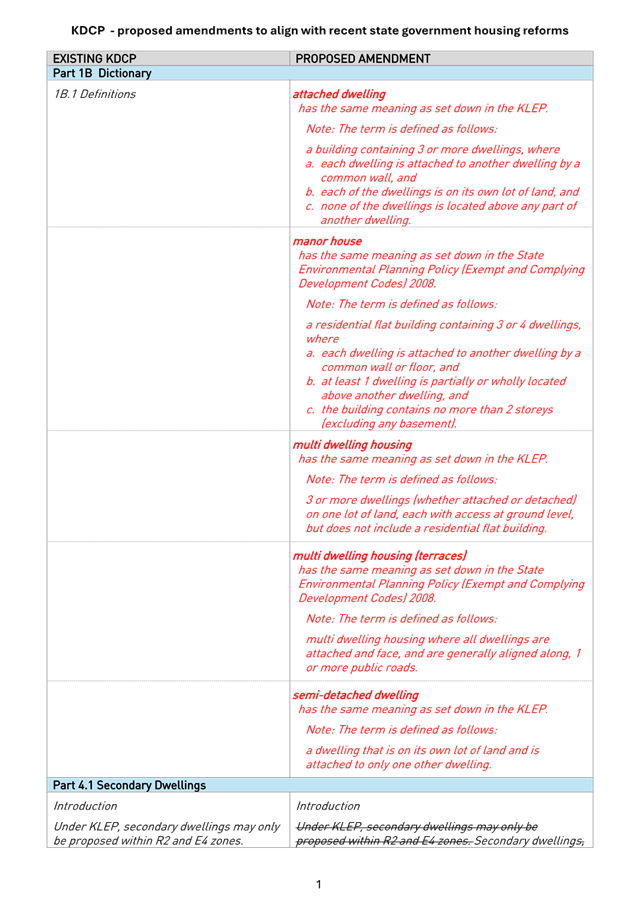
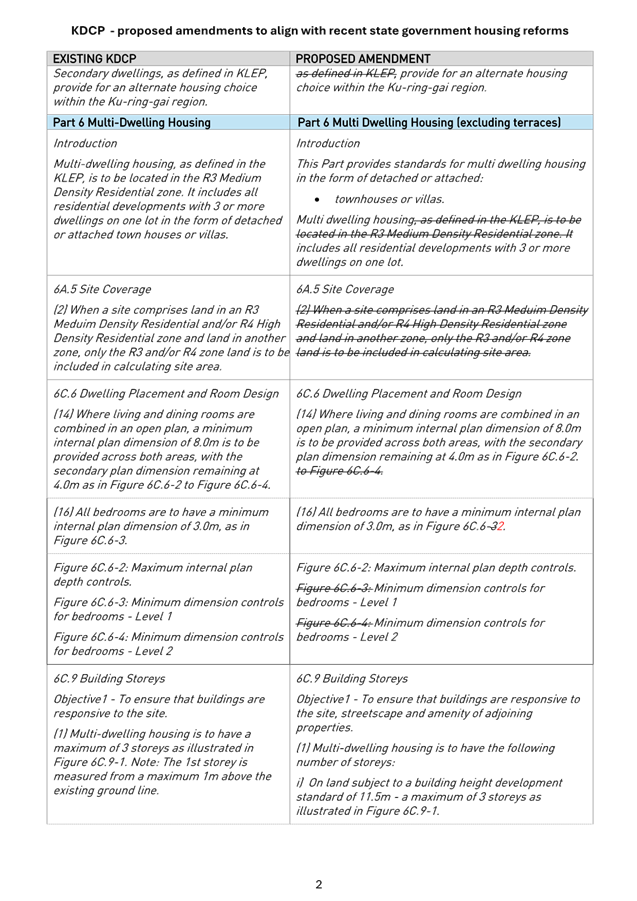
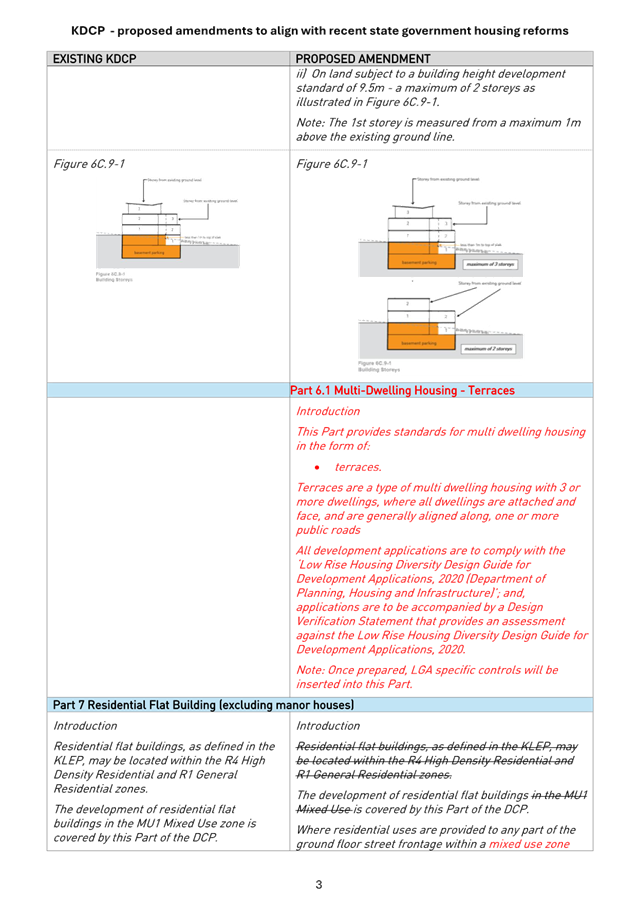
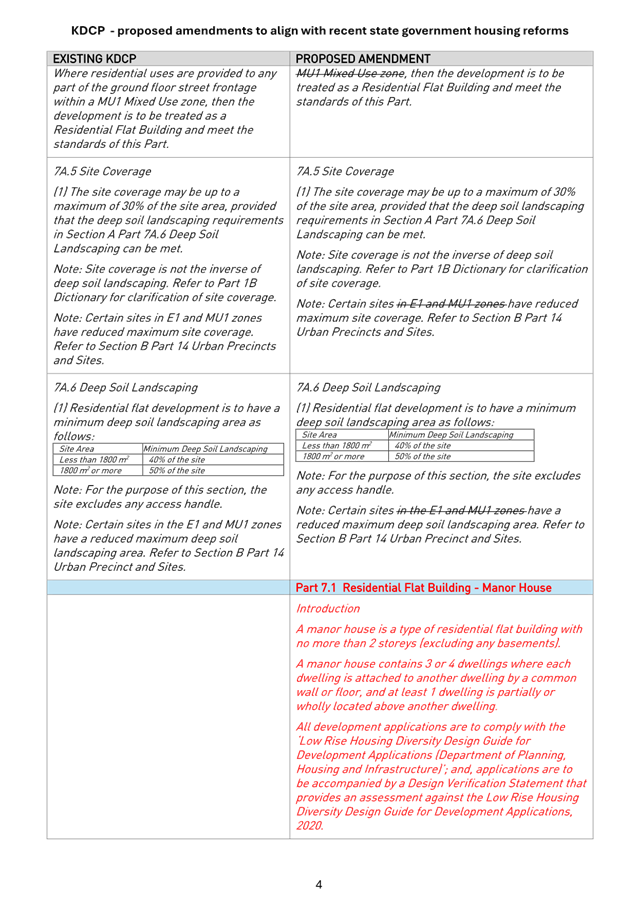
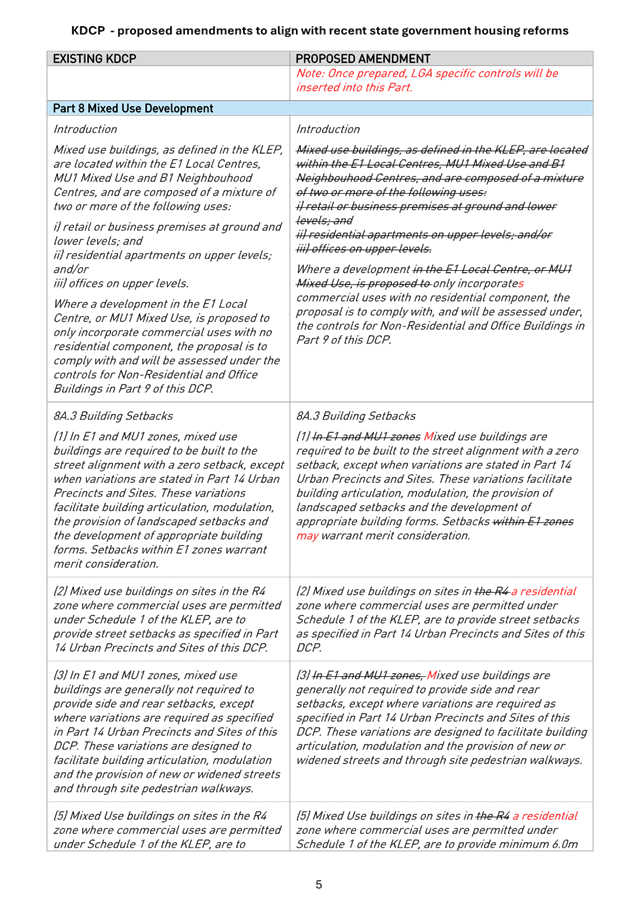
For Council to consider the amendment to update the Ku-ring-gai Development Control Plan (KDCP) so that it is consistent with, and applicable to, development introduced by the recent low and mid-rise housing reforms and for Council to endorse the public exhibition of the proposed amendment.
Recommendation:
That Council endorse the proposed amendment to the Ku-ring-gai Development Control Plan to make updates consistent with state government reforms and to apply a uniform approach across the whole policy as detailed in Attachment A2 of this report.
Extra Reports Circulated to Meeting
Motions of which due Notice has been given
NM.1 Tulkiyan House – Future Ownership and Long-Term Financial Sustainability 1006
File: EM00049/5
Notice of Motion from Councillor Taylor dated 29 May 2026
Tulkiyan is a State heritage-listed property bequeathed to Council by the Donaldson family in 1985. The property is currently managed under agreement by the Historic Houses Association of Australia and is intended to operate as a heritage house museum.
Council currently allocates operational funding toward the maintenance, management and conservation of the property, with additional capital expenditure proposed in future budgets for accessibility and associated improvements.
This Notice of Motion seeks to consult with the Heritage Committee at its next meeting, prior to undertaking an assessment of alternative custodial or ownership arrangements, including the legal pathway to a change in future ownership whether by sale or other form of transfer.
It is therefore recommended that Council seeks advice from the Heritage Committee on the following items:
A. That Council receive a report that outlines:
a. the legal, statutory and heritage considerations applying to Tulkiyan House;
b. the operational and capital expenditure associated with the property over the past 10 years and forecast for the coming five years;
c. the current management arrangements associated with the property;
d. the current and proposed use of the property and associated community benefit outcomes;
e. potential alternative custodial or ownership models for Tulkiyan House and its contents;
f. constraints on the transfer of ownership or disposal by sale of the property; and
g. the indicative statutory and planning processes associated with any such options.
B. That the forthcoming Heritage Strategy refresh includes a review of heritage assets that the Council owns or manages.
Advice received from the Heritage Committee will be reported to Council once received, and expenditure on Tulkiyan will be limited to basic maintenance until council has considered it.
That the above Notice of Motion as printed be adopted.
NM.2 Marian Street Theatre Redevelopment Project: Financial Accountability, Strategic Accountability and Community Mandate 1008
File: S10577/5
Notice of Motion from Councillor Ward dated 29 May 2026
The Marian Street Theatre redevelopment project has been before Council and the community for many years as a significant proposed investment in arts and cultural infrastructure.
The Save Marian Street Theatre Fundraising Feasibility Study was undertaken in October 2017. A business Plan, based on the recommendations from the fundraising feasibility study, was developed by the Save Marian Street Theatre Committee (SMSTC) in May 2018. The Feasibility Study and Business Plan provided a strategy for the refurbishment and re-opening of the Marian Street Theatre through a $4m public fund-raising campaign (no funds were raised). The Feasibility Study and Business Plan also required a capital contribution from Council of approximately $6m, plus up to $900,000 for fundraising costs, an operational subsidy of $1m p.a. for the first 2 years followed by an annual subsidy of $546,000, and a 25-year lease on the theatre to the SMSTC. Council received and noted the Feasibility Study and Business Plan in June 2018 but did not commit to the financial model presented.
In March 2019 Council considered a feasibility study and business case, both now outdated, that provided three recommendations to Council. The three design Options were as follows:
1. ‘Minimum Option’. A slight improvement on the existing facilities prior to the building’s closure (estimated $8.5m),
2. ‘Medium Option’. An improvement on the building and facilities prior to its closure but within the existing building shell (estimated $10.5m),
3. ‘Maximum Option’. Based on the ‘Save Marian Street Theatre’ design including a new child learning Centre. This Option explores extending the building to the east into Selkirk Park (estimated $22m).
While Council adopted the ‘Medium Option’ at $10.5 million, scope creep subsequently saw the project looking more like Option 3 than Option 2. Consequently, with the progress of time, change of scope, cost escalation throughout Covid and beyond, due diligence, delays in commencement, and costs of satisfaction of conditions of development consent saw the “all in” cost of the project increase from $10.5m to $30.3m by October 2024.
Possible delivery of the Marian Street Theatre redevelopment in recent years has principally been linked to potential funding associated with a Special Rate Variation.
However:
1. Council's final Special Rate Variation package submitted to IPART does not include Marian Street Theatre redevelopment funding,
2. No confirmed State Government or Commonwealth Government funding pathway has been identified for delivery of the full project,
3. Approximately $500,000 has been allocated in the current financial year for works associated with preserving the existing Development Consent,
4. Council presently has multiple competing capital priorities across community infrastructure, transport infrastructure, public domain improvements, sporting infrastructure, parks and cultural infrastructure investment opportunities.
Council recognises and supports arts and culture as a critical component of community life. However, Council also recognises that contemporary cultural delivery models increasingly incorporate:
1. Distributed community arts spaces,
2. Partnership opportunities with mixed-use developments and strategic centres,
3. Co-location opportunities within community hubs,
4. Multiple accessible cultural facilities rather than concentrated investment in a single location.
Council further notes that where no identified funding pathway or implementation strategy exists, it is appropriate that any further expenditure be supported by strategic justification, community mandate and appropriate financial accountability.
Council also notes the NSW Office of Local Government Capital Expenditure Review framework requirements relating to strategic justification, options appraisal, community consultation and risk management.
I, therefore, move that:
Financial accountability
A. Council notes that no identified funding source presently exists for the delivery of the Marian Street Theatre redevelopment project,
B. Council notes that the project has been subject to successive increases in budget estimates:
1. $6m June 2018 (forecast Council co-contribution. The report also indicated “that theatres operated by local government generally rely on subsidies of anywhere between on $0.5m up to $1.5m per annum”),
2. $10.5m March 2019 (approves a capital funding budget of $10.5m for refurbishment of the Marian Street Theatre),
3. $30.3m October 2024 (quantity surveyor report).
C. Council notes that Council's final Special Rate Variation package, following extensive community consultation, and submitted to IPART does not include funding for the Marian Street Theatre redevelopment.
D. The following elements be incorporated into the Community and Cultural Facilities Strategy commencing in 2026/2027, where possible:
1. Continuation of the existing Marian Street Theatre redevelopment proposal;
2. Distributed smaller arts and cultural spaces across the LGA,
3. Partnership opportunities associated with strategic centres and mixed-use development opportunities,
4. Co-location opportunities within community hubs and emerging centres;
5. Alternate cultural infrastructure delivery models that maximise community accessibility and usage,
6. Comparative capital and operating costs across alternate options;
7. Comparative assessment of geographic accessibility outcomes across the Local Government Area,
8. Comparative assessment of activation outcomes, including opportunities to support night-time economy activity and precinct development,
9. An assessment of the estimated cost and strategic feasibility of delivering multiple connected performance, exhibition and community arts spaces distributed across the Local Government Area compared to delivery of a single legacy venue.
Community mandate
E. Council notes that expenditure of this scale warrants demonstrated contemporary community support prior to committing further expenditure,
F. In conjunction with and to inform the Community and Cultural Facilities Study referred to in D above, Council conduct representative (not opt-in) community consultation through an external provider, with a budget of $30,000, regarding priorities for future cultural infrastructure investment including:
1. Resident preferences regarding delivery of arts and cultural infrastructure,
2. Comparative information regarding costs, benefits and strategic trade-offs associated with alternate delivery models,
3. Geographic accessibility and distribution of arts and cultural opportunities across the Local Government Area,
4. Reporting outcomes back to Council no later than March 2027.
Strategic accountability
G. No expenditure associated with preserving, substantially commencing or otherwise extending the life of Development Consent DA0144/20 occur until Council has considered and determined the outcomes of this review process,
H. Subject to the outcomes of the Community and Cultural Facilities Strategy and representative survey in Items D and F above, Council undertake and complete a Capital Expenditure Review consistent with NSW Office of Local Government requirements and relevant OLG guidance material, including:
1. Strategic justification,
2. Option appraisal,
3. Community consultation requirements,
4. Risk assessment and risk management,
5. Whole-of-life financial implications,
6. Funding pathway identification,
7. Opportunity cost assessment relative to competing Council infrastructure priorities.
That the above Notice of Motion as printed be adopted.
BUSINESS WITHOUT NOTICE – SUBJECT TO CLAUSE 9.3 OF code of meeting practice
Questions With Notice
QN.1 TOD Acquisitions 1012
File: EM00049/5
QN.2 Council’s Artificial Intelligence Policy 1041
File: EM00049/5
InspectionS– SETTING OF TIME, DATE AND RENDEZVOUS
Confidential Business to be dealt with in Closed Meeting
C.1 Lindfield Village Hub - Confidential Update
File: S12165-4-7
In accordance with the Local Government Act 1993 and the Local Government (General) Regulation 2021, in the opinion of the General Manager, the following business is of a kind as referred to in sections 10A(2)(c), 10A(2)(d)(i), 10A(2)(d)(ii) & 10A(2)(g), of the Act, and should be dealt with in a part of the meeting closed to the public.
Section 10A(2)(c) of the Act permits the meeting to be closed to the public in respect of information that would, if disclosed, confer a commercial advantage on a person with whom the Council is conducting (or proposes to conduct) business.
The matter is classified confidential because it deals with the proposed acquisition and/or disposal of property.
It is not in the public interest to release this information as it would prejudice Council’s ability to acquire and/or dispose of the property on appropriate terms and conditions.
Section 10A(2)(d) of the Act permits the meeting to be closed to the public for business relating to commercial information of a confidential nature that would, if disclosed:
(i) prejudice the commercial position of the person who supplied it, or
(ii) confer a commercial advantage on a competitor of Council, or
(iii) reveal a trade secret.
This matter is classified confidential under section 10A(2)(d)(i) because it deals with tenders. Tender details, should they be revealed, may result in commercial disadvantage to parties involved in the tender process. Some information provided to Council by tenderers is provided on the basis that Council will treat it as commercial in confidence.
It is not in the public interest to reveal details of these tenders or the assessment process. Tenderers have provided sensitive information about their operations in the confidence that their details will not be made public by Council. The practice of publication of sensitive information provided by tenderers could result in the withholding of such information by tenderers and reduction in the provision of information relevant to Council’s decision.
Section 10A(2)(d) of the Act permits the meeting to be closed to the public for business relating to commercial information of a confidential nature that would, if disclosed:
(i) prejudice the commercial position of the person who supplied it, or
(ii) confer a commercial advantage on a competitor of Council, or
(iii) reveal a trade secret.
This matter is classified confidential under section 10A(2)(d)(ii) because it would confer a commercial advantage on a competitor of the Council.
Section 10A(2)(g) of the Act permits the meeting to be closed to the public for business relating to advice concerning litigation, or advice that would otherwise be privileged from production in legal proceedings on the ground of legal professional privilege.
This matter is classified confidential under section 10A(2)(g) because it contains advice concerning a legal matter that:
(a) is a substantial issue relating to a matter in which the Council is involved
(b) is clearly identified in the advice, and
(c) is fully discussed in that advice.
It is not in the public interest to release details of the legal advice as it would prejudice Council’s position in court proceedings.
Report by General Manager
C.2 Project Review - Progress against Action Plan (June 2026)
File: S14999
In accordance with the Local Government Act 1993 and the Local Government (General) Regulation 2021, in the opinion of the General Manager, the following business is of a kind as referred to in section 10A(2)(g), of the Act, and should be dealt with in a part of the meeting closed to the public.
Section 10A(2)(g) of the Act permits the meeting to be closed to the public for business relating to advice concerning litigation, or advice that would otherwise be privileged from production in legal proceedings on the ground of legal professional privilege.
This matter is classified confidential under section 10A(2)(g) because it contains advice concerning a legal matter that:
(a) is a substantial issue relating to a matter in which the Council is involved
(b) is clearly identified in the advice, and
(c) is fully discussed in that advice.
It is not in the public interest to release details of the legal advice as it would prejudice Council’s position in court proceedings.
Report by General Manager
David Marshall
General Manager
** ** ** ** ** **
MINUTES OF Extraordinary Meeting
HELD ON Monday, 18 May 2026
|
Present: |
The Mayor, Councillor Christine Kay (Chairperson) Councillors M Devlin & J Pettett (Comenarra Ward) Councillors I Balachandran & B Ward (Gordon Ward) Councillors S Ngai & A Taylor (Roseville Ward) Councillor M Smith (St Ives Ward) Councillors C Spencer & K Wheatley (Wahroonga Ward) |
|
|
|
|
Staff Present: |
General Manager (David Marshall) Director Community (Meagan Ang) Director Corporate (Angela Apostol) A/Director Development & Regulation (Anne Seaton) Director Operations (Peter Lichaa) Director Strategy & Environment (Andrew Watson) Corporate Lawyer (Jamie Taylor) Manager Governance and Corporate Strategy (Christopher M Jones) |
|
|
|
|
Others Present: |
A/Manager Corporate Communications (Sally Williams) Manager Infrastructure Services (Matt Drago) Manager Project Services (Claire Ashby) |
The Meeting commenced at 7:30 PM
The Mayor offered the Acknowledgement of Country
|
|
File: S02194
|
|
|
The General Manager advised of an apology from the Director Development & Regulation, Michael Miocic, with Anne Seaton acting as Director Development & Regulation. |
The Mayor referred to the necessity for Councillors and staff to declare a Pecuniary Interest/Conflict of Interest in any item on the Business Paper.
No Interest was declared.
DOCUMENTS CIRCULATED TO COUNCILLORS
The Mayor referred to the documents circulated in the Councillors’ papers and advised that the following matters would be dealt with at the appropriate time during the meeting:
|
Late Items: |
GB.3 - Advice from NSW Office of Local Government - Capital Expenditure Review requirements - Report by General Manager dated 18 May 2026 an attachment. |
|
Councillors Information: |
GB.2 - Request for supplementary information - GB.1 Norman Griffiths Oval Upgrade - Project Update - Report by General Manager dated 12 May 2026 |
BUSINESS WITHOUT NOTICE – SUBJECT TO CLAUSE 9.3 OF code of meeting practice
Nil
Nil
The Meeting closed at 8:20pm
The Minutes of the Extraordinary Meeting held on 18 May 2026 (Pages 1 - 6) were confirmed as a full and accurate record of proceedings on <Insert confirmation date …>.
__________________________ __________________________
General Manager Mayor / Chairperson
MINUTES OF Ordinary Meeting of Council
HELD ON Tuesday, 19 May 2026
|
Present: |
The Mayor, Councillor Christine Kay (Chairperson) Councillors M Devlin & J Pettett (Comenarra Ward) Councillors I Balachandran & B Ward (Gordon Ward) Councillors S Ngai & A Taylor (Roseville Ward) Councillor M Smith (St Ives Ward) Councillors C Spencer & K Wheatley (Wahroonga Ward) |
|
|
|
|
Staff Present: |
General Manager (David Marshall) Director Community (Meagan Ang) Director Corporate (Angela Apostol) Acting Director Development & Regulation (Shaun Garland) Director Operations (Peter Lichaa) Director Strategy & Environment (Andrew Watson) Corporate Lawyer (Jamie Taylor) Manager Governance and Corporate Strategy (Christopher M Jones) |
|
|
|
|
Others Present: |
Manager Project Services (Claire Ashby) A/Manager Corporate Communications (Sally Williams) Nicholas Najar (Executive Assessment Officer) |
The Meeting commenced at 7:00 PM
The Mayor offered the Acknowledgement of Country
|
|
Apologies
File: S02194
The General Manager advised of an apology from the Director Development & Regulation, Michael Miocic, with Shaun Garland acting as Director Development & Regulation.
|
DECLARATIONS OF INTEREST
The Mayor referred to the necessity for Councillors and staff to declare a Pecuniary Interest/Conflict of Interest in any item on the Business Paper.
No Interest was declared.
DOCUMENTS CIRCULATED TO COUNCILLORS
The Mayor referred to the documents circulated in the Councillors’ papers and advised that the following matters would be dealt with at the appropriate time during the meeting:
|
Late Items: |
MM.1 - VALE Thomas John Sweeney OAM - Report by Coordinator Executive Support dated 12 May 2026 |
|
Memorandums: |
GB.12 - Late memorandum - GB.10 - Heritage Reference Committee membership – Update on consultation - Report by Director Strategy & Environment dated 19 May 2026 an attachment. GB.13 - Late memorandum - GB.3 - 2025 - 2026 Budget Review - 3rd Quarter ended March 2026 - Report by Director Corporate dated 19 May 2026 an attachment. |
|
Councillors Information: |
GB.11 - Request for supplementary information - GB.7 Norman Griffiths Oval Upgrade - Project Update - Report by General Manager dated 14 May 2026 |
CONFIRMATION OF MINUTEs
|
88 |
Minutes of Ordinary Meeting of Council File: EM00049/3 |
|
|
Meeting held 28 April 2026 Minutes numbered 56 to 82
|
|
|
Resolved:
(Moved: Councillors Taylor/Ward)
That Minutes numbered 56 to 82 circulated to Councillors were taken as read and confirmed as an accurate record of the proceedings of the Meeting.
CARRIED UNANIMOUSLY |
minutes from the Mayor
|
89 |
VALE Thomas John Sweeney OAM
File: CY00455/14 Vide: MM.1
|
|
|
It is my sad duty to inform my Council colleagues and the Ku-ring-gai community of the passing of Tom Sweeney OAM, a Killara resident and local champion of the arts.
Tom was a passionate supporter of local theatre and was actively involved in groups across the North Shore, including as Vice President of the Pymble Players.
Tom was a lifelong member of the Willoughby Theatre Company and previously served as the theatre’s President.
His service to the arts was recognised with an Order of Australia Medal in 2018.
Tom also had a long career in community relations, including positions at Macquarie Park Cemetery and Crematorium, North Shore Heart Research Foundation, the Royal Institute for Deaf and Blind Children and Hornsby Hospital. He was also a former president of the Rotary Club of Crows Nest.
Tom Sweeney will be remembered by those who knew him as local theatre legend, a great supporter of the arts and a true gentleman.
Tom may have taken his final bow on stage, but his impact on local arts will last forever.
On behalf of Council and the Ku-ring-gai community I extend my deepest sympathies to his wife Joy and all his family and friends.
|
|
|
Resolved:
(Moved: The Mayor, Councillor Kay)
A. That the Mayoral Minute be received and noted B. That we stand for a minute’s silence to honour Tom Sweeney. C. That the Mayor write to Tom’s family and enclose a copy of the Mayoral Minute.
CARRIED UNANIMOUSLY |
PETITIONS
None
GENERAL BUSINESS
The Mayor noted that the following items relating to the Norman Griffiths Oval Upgrade were withdrawn from the agenda as the matter was determined by Council at the Extraordinary Meeting of Council on 18 May 2026:
|
90 |
Investment Report as at 30 April 2026
File: FY00623/8 Vide: GB.1
|
|
|
To present Council’s investment portfolio performance for April 2026.
|
|
|
Resolved:
(Moved: Councillors Ward/Wheatley)
That:
A. The summary of investments and performance for April 2026 be received and noted.
B. The Certificate of the Responsible Accounting Officer be noted and the report adopted.
CARRIED UNANIMOUSLY
|
|
91 |
Analysis of Land and Environment Court Costs - 3rd Quarter 2025 to 2026
File: FY00623/8 Vide: GB.2
|
|
|
To report legal costs in relation to development appeal matters in the Land and Environment Court for the quarter ended 31 March 2026.
|
|
|
Resolved:
(Moved: Councillors Ward/Wheatley)
That the analysis of Land and Environment Court costs for the period ended 31 March 2026 be received and noted.
CARRIED UNANIMOUSLY
|
|
92 |
2025 - 2026 Budget Review - 3rd Quarter ended March 2026
File: FY00701/2 Vide: GB.3
|
|
|
To inform Council of the results of the third quarter budget review of 2025/26 and proposed adjustments to the annual budget based on the actual financial performance and trend for the period 1 July 2025 to 31 March 2026.
|
|
|
Resolved:
(Moved: Councillors Ward/Wheatley)
That the March 2026 Quarterly Budget Review and the recommended changes be received and noted, including the additional changes presented in the late memorandum at GB.13.
CARRIED UNANIMOUSLY
|
|
93 |
Council response to draft Statewide Community Participation Plan
File: S15266 Vide: GB.4
|
|
|
This report outlines the implications of the NSW Department of Planning, Housing and Infrastructure's (DPHI) draft Statewide Community Participation Plan for Council and the Ku-ring-gai community and seeks that Council endorses the attached submission in response to the public exhibition.
|
|
|
Resolved:
(Moved: Councillors Ward/Wheatley)
That Council:
A. Notes the implications of the draft
Statewide Community Participation Plan, including that it will replace
Council’s existing Community Participation Plan for planning matters;
and B. Endorses the draft submission for submission to the NSW Department of Planning, Housing and Infrastructure in response to the public exhibition.
CARRIED UNANIMOUSLY |
|
94 |
RFT3-2026 Bedes Forest Urban Park St Ives
File: RFT3-2026/R Vide: GB.5
|
|
|
To consider the tenders received for RFT3-2026 Bedes Forest Urban Park St, Ives and to appoint the preferred tenderer.
|
|
|
Resolved:
(Moved: Councillors Ward/Wheatley)
That:
A. Council accepts the tender submission from Tenderer A to carry out the construction of the new Bedes Forest urban park St Ives.
B. The Mayor and General Manager be delegated authority to execute all tender documents on Council’s behalf in relation to the contract.
C. The Seal of Council be affixed to all necessary documents.
D. All tenderers be advised of Council’s decision in accordance with Clause 178 of the Local Government Tendering Regulation 2021.
CARRIED UNANIMOUSLY |
|
95 |
RFT4-2026 Mimosa Oval Playspace Upgrade
File: RFT4-2026/R Vide: GB.6
|
|
|
To consider the tenders received for RFT4-2026 Playspace Upgrade Mimosa Oval, Turramurra and to appoint the preferred tenderer.
|
|
|
Resolved:
(Moved: Councillors Ward/Wheatley)
That:
A. Council accepts the tender submission from Tenderer A to carry out the Playspace Upgrade Mimosa Oval.
B. The Mayor and General Manager be delegated authority to execute all tender documents on Council’s behalf in relation to the contract.
C. The Seal of Council be affixed to all necessary documents.
D. All tenderers be advised of Council’s decision in accordance with Clause 178 of the Local Government Tendering Regulation 2021.
CARRIED UNANIMOUSLY
|
|
96 |
Northern Beaches Network Review
File: TM1/18 Vide: GB.8
|
|
|
To consider Council’s submission to the Northern Beaches Network Review.
|
|
|
Resolved:
(Moved: Councillors Ward/Wheatley)
That the draft submission be adopted and forwarded to Transport for NSW for consideration in the Northern Beaches Network Review.
CARRIED UNANIMOUSLY
|
|
97 |
Climate Change Policy 2026 - Public Exhibition
File: S13127 Vide: GB.9
|
|
|
To update Council on the draft Climate Change Policy 2026 (Attachment A1), and recommend the draft policy be placed on public exhibition.
|
|
|
Resolved:
(Moved: Councillors Ward/Wheatley) A. That the draft policy to be placed on public exhibition for minimum period of 28 days to invite community feedback.
B. That, following the public exhibition:
a. If submissions are received that necessitate material amendments, a revised Policy be reported back to Council for adoption; or b. If no significant amendments are required, the Policy be adopted as exhibited.
CARRIED UNANIMOUSLY
|
|
98 |
Late memorandum - GB.10 - Heritage Reference Committee membership – Update on consultation
File: EM00049/4 Vide: GB.12
|
|
|
To provide Council with supplementary information, including late memoranda and formal responses to questions raised by Councillors, following the distribution of the business paper.
|
|
|
Resolved:
(Moved: Councillors Ward/Wheatley)
A. Receive and note the supplementary information. B. Note that the information contained within the attached documents is to be read in conjunction with the published Business Paper and, where specified, supersedes previous staff advice or recommendations.
CARRIED UNANIMOUSLY |
|
99 |
Late memorandum - GB.3 - 2025 - 2026 Budget Review - 3rd Quarter ended March 2026
File: EM00049/4 Vide: GB.13
|
|
|
To provide Council with supplementary information, including late memoranda and formal responses to questions raised by Councillors, following the distribution of the business paper.
|
|
|
Resolved:
(Moved: Councillors Ward/Wheatley) A. Receive and note the supplementary information. B. Note that the information contained within the attached documents is to be read in conjunction with the published Business Paper and, where specified, supersedes previous staff advice or recommendations.
CARRIED UNANIMOUSLY
|
|
100 |
Heritage Reference Committee membership
File: CY00413/14 Vide: GB.10
|
|
|
To review the current community membership of Council’s Heritage Reference Committee. Based on this review, it is recommended that both existing community members be reappointed.
|
|
|
Resolved:
(Moved: Councillors Wheatley/Balachandran)
That Council:
CARRIED UNANIMOUSLY
|
BUSINESS WITHOUT NOTICE – SUBJECT TO CLAUSE 9.3 OF code of meeting practice
Nil
QUESTIONS WITH NOTICE
|
|
Ku-ring-gai
Community and Business Energy Summit:
File: S08513/2 Vide: QN.1
|
|
|
QUESTIONS: Questions from Cr Matt Devlin, Comenarra Ward, dated 10 April 2026
I’d like to acknowledge and thank the Ku-ring-gai Chamber of Commerce for hosting the recent Community and Business Energy Summit, delivered in collaboration with EnergyZE, and supported by Ku-ring-gai Council. It was a well-attended and genuinely valuable forum, bringing together residents, local businesses and subject matter experts to discuss the practical challenges and opportunities associated with energy, emissions and sustainability.
A consistent theme throughout the evening was that the community is engaged, informed and keen to be part of the solution, but is often navigating complexity, whether that be access to renewable energy, the transition to electric vehicles, or broader environmental concerns such as tree canopy and development impacts.
The following Questions with Notice seek to capture those themes and provide an opportunity for Council to outline the work already underway, as well as identify where further advocacy or action may be required.
QUESTIONS
1. Tree Loss and Environmental Oversight
In light of community concerns raised at the recent Ku-ring-gai Community and Business Energy Summit regarding tree loss and the perceived ability for development pathways to circumvent local controls, can staff outline:
a. Council’s current approach to tree protection and enforcement; b. How Council engages with State agencies, including NSW Department of Climate Change, Energy, the Environment and Water, where approvals sit outside local determination; and, c. Any recent initiatives or advocacy undertaken by Council to strengthen tree protection outcomes?
2. Community Batteries and Energy Storage
What is Council’s current position on community batteries and local energy storage solutions, and are there any existing or proposed initiatives within Ku-ring-gai to support their rollout?
3. Renewable Energy Access (Including Renters and Apartments)
What programs, advocacy positions or partnerships are currently in place (if any), or under consideration (if any), to improve access to renewable energy for residents who are unable to install rooftop solar, including renters, strata residents and small businesses?
4. Electric Vehicles and Charging Infrastructure
Can staff provide an update on:
a. The current provision of public EV charging infrastructure across Ku-ring-gai; b. How Council is supporting or advocating for improved access to EV charging within Council facilities or public domains; and, c. How Council is supporting or advocating for improved access to EV charging for residents in apartments and mixed-use developments?
5. Energy Efficiency and Emissions Reduction
What are the key actions currently being undertaken by
Council to reduce emissions within the
a. Improvements to Council-owned assets (such as lighting and facilities); b. Programs supporting household energy efficiency (including insulation and retrofitting); and, c. Broader strategies aligned with Council’s net zero objectives?
6. Waste, Circular Economy and Demolition
Given community concern regarding the volume of demolition occurring within Ku-ring-gai, what measures are currently in place, or being explored, to:
a. Improve the reuse and recycling of building materials; and, b. Support a more circular economy approach to construction and development within the LGA.
7. Planning System and Sustainability Outcomes
How is Council currently leveraging its planning framework, including the Local Environmental Plan and Development Control Plan, to:
a. Encourage energy-efficient building design; b. Support the integration of renewable energy systems in new developments; and, c. Respond to emerging issues such as EV readiness and building electrification?
8. Business and Innovation Opportunities
What opportunities exist for Council to support local businesses in transitioning to lower-emissions operations, including:
a. Access to EV infrastructure; b. Energy efficiency upgrades; and, c. Participation in emerging technologies and innovation within the clean energy sector?
ReSPONSE:
Responses provided by the General Manager, Director Development & Regulation, Director Operations and Director Strategy & Environment.
1. Tree Loss and Environmental Oversight
In light of community concerns raised at the recent Ku-ring-gai Community and Business Energy Summit regarding tree loss and the perceived ability for development pathways to circumvent local controls, can staff outline:
a. Council’s current approach to tree protection and enforcement; b. How Council engages with State agencies, including NSW Department of Climate Change, Energy, the Environment and Water, where approvals sit outside local determination; and, c. Any recent initiatives or advocacy undertaken by Council to strengthen tree protection outcomes?
Management response:
a. The Ku-ring-gai Urban Forest Strategy provides a strategic framework to guide how Council protects, manages and enhances its urban forest into the future. The Strategy establishes clear, measurable targets and directions to safeguard our existing tree, vegetation and soil assets and strives to increase canopy cover.
The management and protection of trees on private property is regulated through Part 13 of Council’s DCP. This part outlines when and where vegetation removal requires assessment and a permit, or when a development application may be required. See Trees on your property Ku-ring-gai for an overview of managing trees on private property.
Council has also acquired high resolution aerial data on Ku-ring-gai’s trees, including location and canopy height, and is working to integrate this data into a comprehensive online Tree Inventory which will be finalised later this year. The intention is to increase the public’s understanding of the value of trees and the make-up of our urban forest. As the Tree Inventory develops, further information about individual trees on private and public land – including species and information on any permits to prune or remove - will become publicly available.
Council actively investigates unlawful work to trees and is currently engaged in various stages of action in relation to multiple sites in Ku-ring-gai, including obtaining evidence, issuing fines, and bringing Court prosecutions. Council can and does prosecute those procuring or carrying out illegal works. There are currently six prosecutions proceeding in the Courts against persons for a range of tree-related offences.
In the 2025-2026 financial year to February 2026 the Council received 658 reports from the public concerning alleged illegal tree removals. While the majority of the reported incidents were found to be carried out lawfully, Council issued 54 fines totalling $189,000.
b. Council maintains a close working relationship with DCCEEW, enabling timely responses to related matters and efficient confirmation of applications that may require approval under the NSW Biodiversity Conservation Act. This collaboration also ensures that referrals are made to the appropriate authority when necessary. Council staff also undertake mapping review and provide feedback to DCCEEW where it is identified vegetation mapping data requires update or refinement.
c. Recent initiatives and advocacy since 2023 to strengthen tree protection include: · Education campaigns including brochures and posters in multiple languages, and the Killior'ra Tree Trail Ku-ring-gai. · Developing an online mapping tool for the public to cross-reference tree-related applications, aiding in identifying potential unauthorised work. · Development of a Council Tree Inventory Management System · Establishment of an Iconic Tree Register · Amendment to Ku-ring-gai Development Control Plan Part 13: Tree and Vegetation Protection to enhance clarity around Council’s legislative obligations and the interaction with instruments such as the SEPP (Biodiversity and Conservation) 2021 and the Biodiversity Conservation Act 2016. · Implementing a requirement to advertise tree permits at the front of properties when removing or pruning trees under the terms of development consent. · Requiring property owners to replace trees through Tree Replacement Orders. · Contacting the Minister of Planning and Public Spaces twice, urging stricter penalties on both individuals and organisations involved in illegal tree-related actions. · Council has lobbied its peers through the LGNSW organisation to press the NSW Government for steeper financial penalties. · The Northern Sydney Regional Organisation of Councils (NSROC) is also undertaking work on how councils may act together on a regional basis to prevent, investigate and respond to illegal tree removal on public land. · Councils across NSW are awaiting the implementation of proposed new measures to prevent illegal tree removal put forward by the NSW Department of Planning, Housing and Infrastructure in 2025. Ku-ring-gai Council made a submission during the EIE for the proposed changes and will continue to work with DPHI and advocate for legislative updates that help strengthen local government enforcement of tree protection measures.
2. Community Batteries and Energy Storage
What is Council’s current position on community batteries and local energy storage solutions, and are there any existing or proposed initiatives within Ku-ring-gai to support their rollout?
Management response:
Council’s Net Zero strategy includes assessing the feasibility of energy transition projects such as community batteries. This has included reviews of existing community battery trials, community battery, assessments with retailers and consultation with network providers. As part of its battery storage strategy, Council is continuing to assess the feasibility of community battery models.
Council’s Environmental Levy funds the Energy Smart rebate program which is available to homes and individual apartments and the Smart Units rebate program which is available to apartment blocks.
The Energy Smart Solar PV rebate applied to solar PV (minimum 5kW) or battery (minimum 5kWh). In line with developments in battery storage and household electrification a new separate battery rebate (up to $500) came into effect on 30th July 2025.
The Smart Units rebates are available for shared solar PV where a minimum of 8 residential units will be connected (up to $4000). A review of the program is underway and the addition of batteries to this rebate offering will be considered.
3. Renewable Energy Access (Including Renters and Apartments)
What programs, advocacy positions or partnerships are currently in place (if any), or under consideration (if any), to improve access to renewable energy for residents who are unable to install rooftop solar, including renters, strata residents and small businesses?
Management response:
The Energy Smart rebates are available to rented homes and individual apartments with landlord approval. The Smart Units rebates are generally applied for through a Strata Committee or Strata/ Building Manager. Sustainability upgrades require a Sustainability Infrastructure Resolution to be passed at an AGM or EGM by 50% of all owners entitled to vote and present. As noted above the Smart Units rebate includes up to 50% of cost (up to $4000) for shared solar PV for a minimum of 8 units. The NSW Government Solar for Apartment Residents (SoAR) grant offers up to $150,000 towards solar installation on eligible apartment blocks. This program has recently been extended to 30th December 2026 and at least 7 apartment blocks in Ku-ring-gai have received SoAR grants.
Council’s Net Zero Ku-ring-gai website includes Electrify Action checklists to assist residents, renters and Strata blocks in their home electrification.
Council’s Net Zero Champions community volunteer program supports the Net Zero Action Collective – a group of individual residents and local community organisations actively advocating for community-led renewables.
Despite these initiatives, it is widely acknowledged there are significant barriers to renters and strata residents in accessing renewable energy. Ku-ring-gai Council is a partner in the Race for 2030 CRC Driving Energy Upgrades in Private Rental Homes research project delivered through the Institute for Sustainable Futures, University of Technology Sydney involving tenants, landlords and Real Estate Agents within the Ku-ring-gai LGA. The project is seeking to understand the barriers home renters face in securing sustainability home upgrades and the government policies and incentives that can overcome them.
4. Electric Vehicles and Charging Infrastructure
Can staff provide an update on:
a. The current provision of public EV charging infrastructure across Ku-ring-gai; b. How Council is supporting or advocating for improved access to EV charging within Council facilities or public domains; and, c. How Council is supporting or advocating for improved access to EV charging for residents in apartments and mixed-use developments?
Management response:
a. As of 21 April 2026, there are 43 public EV charging ports with combined capacity of 859 kW of charging provided both by Council and other providers. There are 21 additional kerbside charging spaces (total 462kW) and 8 additional fast charging spaces (total 300 kW) planned for deliver this calendar year. b. Council has an active program of delivering kerbside and fast charging solutions throughout Ku-ring-gai. c. For new developments, Part 7, 8 and 9 of the DCP requires all medium and high-density residential development and residential dwellings in mixed-use development to provide EV readiness. This includes provision for conduits, switchboards, electrical capacity/load management etc, to facilitate the installation of electric vehicle charging points that are linked to each individual dwelling’s electricity meter. Council’s Smart Units rebate program offers 50% of cost up to $2000 for EV charging. The rebate is available for a smart enabled shared electric car charging station or infrastructure to support individual charging points to a minimum of 5 residential parking lots (such as upgrade of distribution board and cable infrastructure).
5. Energy Efficiency and Emissions Reduction
What are the key actions currently being undertaken by
Council to reduce emissions within the
a. Improvements to Council-owned assets (such as lighting and facilities); b. Programs supporting household energy efficiency (including insulation and retrofitting); and, c. Broader strategies aligned with Council’s net zero objectives?c
Management response:
a. Initiatives to reduce emissions from Council facilities include upgrades for energy efficient lighting, air conditioning, smart building controls, rooftop solar PV, battery storage, electric vehicles, gas plant electrification, smart metering and energy management systems. b. The Energy Smart, Smart Units and Pool Pump rebate programs offer rebates to residents in homes and apartments to retrofit across a range of areas from windows and insulation through to hot water heat pumps, induction cooktops, solar and batteries. The program is supported by our Greenstyle consultation service where residents can seek advice on electrification and home comfort through a phone call or face to face visit from our staff sustainability experts. This is a very well-supported program. Council’s Net Zero Communities website is a subsite of the KRG website and provides a range of current advice and support around reducing our emissions c. Council also undertakes a) strategic energy procurement to source 100% renewable energy for electricity used int Council facilities, b) participates in regional working groups and communities of practice, and c) tracks community and council emissions using a number of data analytics tools.
6. Waste, Circular Economy and Demolition
Given community concern regarding the volume of demolition occurring within Ku-ring-gai, what measures are currently in place, or being explored, to:
a. Improve the reuse and recycling of building materials; and, b. Support a more circular economy approach to construction and development within the LGA.
Management response:
Part 23.3 and 23.9 of the DCP address building material sustainability and recycling. Other conditions of consent may be attached to a particular development application if required.
During demolition and construction, The Principal Certifier shall be satisfied that building materials suitable for recycling have been forwarded to an appropriate registered business dealing in recycling of materials. Materials to be recycled must be kept in good order.
7. Planning System and Sustainability Outcomes
How is Council currently leveraging its planning framework, including the Local Environmental Plan and Development Control Plan, to:
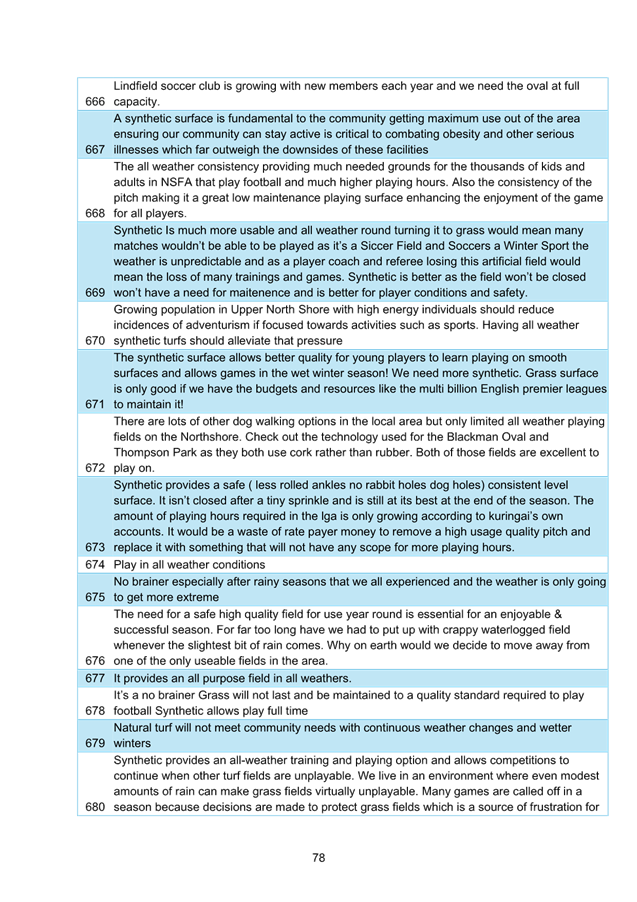
a. Encourage energy-efficient building design; b. Support the integration of renewable energy systems in new developments; and, c. Respond to emerging issues such as EV readiness and building electrification?
Management response:
Part 23.2 of the Development Control Plan requires incorporation of sustainability/energy efficiency/low emission developments for all non-residential buildings. The SEPP Sustainability 2021 includes requirements for residential and office buildings which Council’s LEP/DCP cannot override. The DCP had filled any gaps that the SEPP has not covered.
Part 7, 8 of the DCP requires all high-density development to provide EV readiness. Staff are researching other Councils and looking to exclude gas appliances in the DCP and a move towards electrification.
8. Business and Innovation Opportunities
What opportunities exist for Council to support local businesses in transitioning to lower-emissions operations, including:
a. Access to EV infrastructure; b. Energy efficiency upgrades; and, c. Participation in emerging technologies and innovation within the clean energy sector?
Management response:
Ku-ring-gai Council has expanded its support for local businesses who are championing sustainability in their work practices. Better Business Partnership (BBP) program members can take advantage of rebates to install energy and water efficiency measures, Electric vehicle chargers and solar PV and battery storage. BBP program also offer tailored support to businesses to reduce their energy bills.
|
|
|
Social Housing Stock and Condition in Ku-ring-gai
File: S06610 Vide: QN.2
|
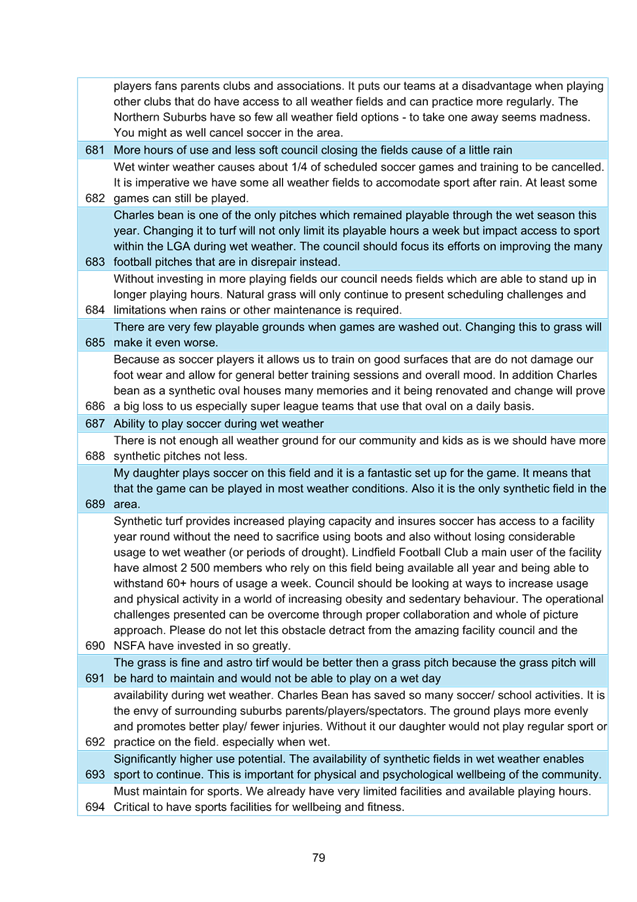
|
|
QUESTION: Questions from Councillor Matt Devlin, Comenarra Ward, dated 10 April 2026
Housing affordability and availability continue to be a growing concern across Sydney, including within Ku-ring-gai. While the area is often perceived as relatively affluent, there is an increasing cohort of residents experiencing housing stress, including older people, single-parent households, key workers and those on lower incomes.
It is important to distinguish between social housing and affordable housing, as they serve different but complementary roles within the housing system.
Social housing refers to housing owned and managed by the NSW Government or registered community housing providers, allocated to individuals and families with the highest level of need. This includes public housing and community housing, typically provided at subsidised rents and managed through agencies such as Homes NSW.
Affordable housing, by contrast, is generally provided at below-market rent or purchase price for households on low to moderate incomes, including key workers. It is often delivered through planning mechanisms, partnerships, or private sector contributions, and sits outside the traditional social housing system.
While the provision and management of social housing is the responsibility of the NSW Government, local government plays an important role in understanding community need, advocating for residents, and ensuring that local impacts are clearly communicated to the relevant authorities.
This is particularly important in areas such as Ku-ring-gai, where there is limited availability of diverse housing options, and where vulnerable residents may face additional barriers in remaining within their local community.
QUESTIONS
1. Social Housing Demand and Trends
Can staff provide an overview of any available data or insights regarding demand for social housing within Ku-ring-gai, including:
a. The number and distribution of existing social housing dwellings within the LGA; b. Known waiting list trends or pressures (where available); and, c. Any observed changes in the number or nature of resident enquiries relating to housing insecurity?
2. Engagement with State Government
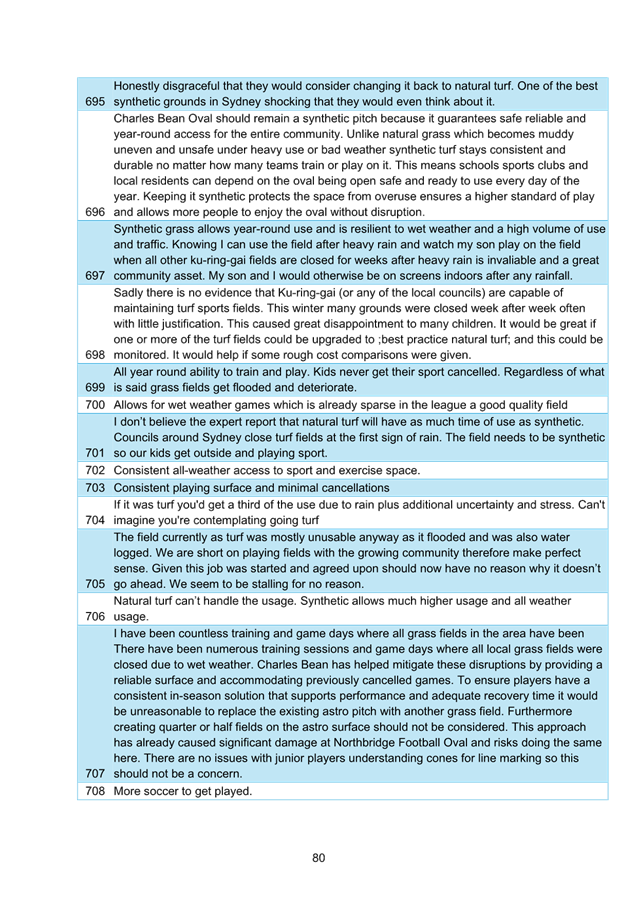
What mechanisms are currently in place for Council to engage with the NSW Government, including Homes NSW, in relation to:
a. The condition and maintenance of existing social housing stock; and, b. The planning and delivery of new social housing within the LGA?
3. Advocacy Opportunities
Has Council undertaken any recent advocacy, or is it considering advocacy, to the NSW Government in relation to:
a. Renewal or repair of existing social housing stock; b. Increasing the supply of social housing within Ku-ring-gai, particularly smaller dwellings suitable for seniors and single-person households; and, c. Ensuring that social housing provision aligns with identified local need?
4. Council Role and Local Response
Within its current powers, what role can Council play in:
a. Supporting vulnerable residents experiencing housing insecurity; and, b. Facilitating or encouraging the delivery of additional affordable or social housing through planning or partnership mechanisms?
ReSPONSE:
Response provided by the General Manager, Director of Community, Director of Strategy & Environment:
1. Social Housing Demand and Trends
Can staff provide an overview of any available data or insights regarding demand for social housing within Ku-ring-gai, including:
a. The number and distribution of existing social housing dwellings within the LGA; b. Known waiting list trends or pressures (where available); and, c. Any observed changes in the number or nature of resident enquiries relating to housing insecurity?
Management response:
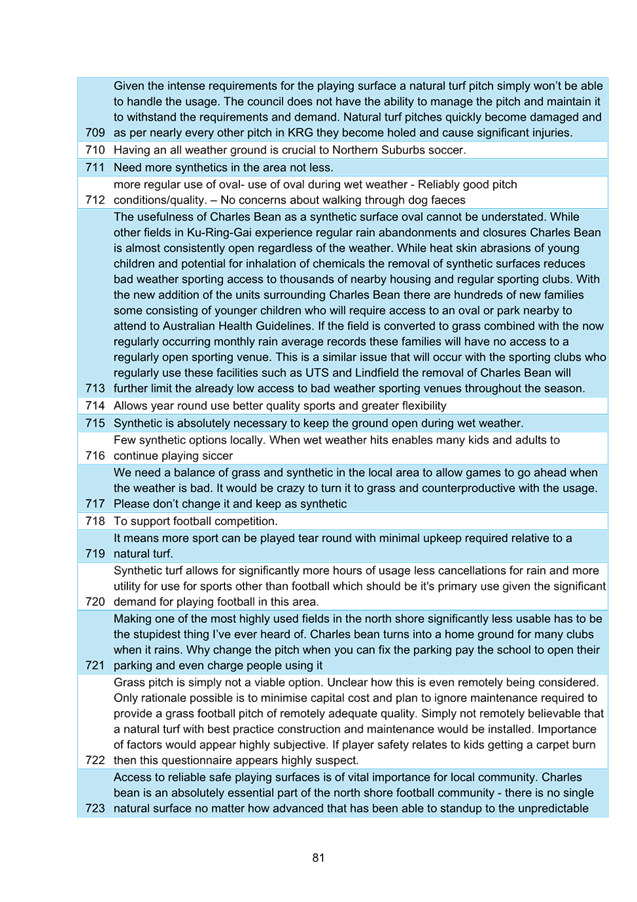
a. Information related to the number and distribution of social housing dwellings within the LGA is not publicly available, however in the 2021 Census, 119 persons self-reported as renting social housing properties in Ku-ring-gai. Staff will make further enquiries with the NSW Department of Communities and Justice to seek further information regarding the number and distribution of existing social housing dwellings within the LGA and the response to this enquiry will be reported to Council once received.
b. The median wait time for social housing placement in NSW remains ostensibly unchanged for the past year, sitting at 15 months in March 2025 and 15.1 months in March 2026.
State-level data indicates sustained demand pressures, with approximately 67,968 households on the NSW Housing Register as at January 2026, however as stated in National Housing Supply and Affordability Council’s 2025 annual report ‘State of the Housing System‘, the supply of social and affordable housing is expected to accelerate.
The NSW Department of Communities and Justice (DCJ) maintains social housing waiting list data on its website at www.dcj.nsw.gov.au. This data includes information regarding types of housing applications, median wait times and comparative data for housing allocation zones and housing districts.
Ku-ring-gai falls within DCJ’s Northern Suburbs housing allocation zone, which includes Ryde and Hornsby local government areas, and sits within DCJ’s Sydney district. According to the data provided by DCJ, there were a total of 2,574 applicants on the NSW Housing Register within the Northern suburbs housing allocation zone as at 31 March 2026 that were waiting for social housing.
Staff will make further enquiries with DCJ to seek further information regarding waiting list trends and pressures specific to the Ku-ring-gai local government area and the number and distribution of existing social housing and the response to this enquiry will be reported to Council once received.
c. There are no observed changes in the number or nature of resident enquiries relating to housing insecurity in Ku-ring-gai, however it should be noted that in Council’s community research report undertaken by Micromex in in 2024, concerns for housing availability/affordability significantly increased from 5% in 2021 to 22% in 2024.
Council does not currently undertake systematic data collection in relation to social housing demand, which is consistent with its role within the broader housing system, however staff will seek further information from local service networks and DCJ regarding this matter and will report these responses to Council once received.
2. Engagement with State Government
What mechanisms are currently in place for Council to engage with the NSW Government, including Homes NSW, in relation to:
a. The condition and maintenance of existing social housing stock; and, b. The planning and delivery of new social housing within the LGA?
Management response:
a. There is currently no forum through which engagement with the NSW Government and its representative agencies relating to the condition and maintenance of existing social housing stock routinely occurs, however staff will seek advice from DCJ regarding its maintenance and asset condition assessment processes and report this response to Council once received.
b. Council works with a district service provider network that includes community housing providers and representatives from State government agencies. The network coordinates service responses and discusses the housing needs of persons experiencing or at risk of homelessness. This network would serve as a mechanism through which staff could raise evidence-based needs, including a need for new social housing in Ku-ring-gai if it were identified. Further to this, staff will seek a response from DCJ regarding its planning for and delivery of social housing within the local government area, and the response will be provided to Council once received.
3. Advocacy Opportunities
Has Council undertaken any recent advocacy, or is it considering advocacy, to the NSW Government in relation to:
a. Renewal or repair of existing social housing stock; b. Increasing the supply of social housing within Ku-ring-gai, particularly smaller dwellings suitable for seniors and single-person households; and, c. Ensuring that social housing provision aligns with identified local need?
Management response:
a. To date, Council has not undertaken any advocacy to the NSW Government in relation to the renewal or repair of existing social housing stock, however, Council may choose to advocate regarding this matter following its consideration of the response to the enquiry that will be sent to DCJ regarding its maintenance and asset condition assessment processes.
b. Whilst Council has not undertaken nor is currently considering advocacy regarding the type and number of social housing dwellings provided in the local government area, Council works with a district service provider network that includes community housing providers and representatives from State government agencies.
This network provides an opportunity for agencies, including Council, to raise system-wide capacity pressures with State agencies, including any limitations related to the availability of social housing within the local government area to meet the identified need.
Staff will make direct enquiries both with DCJ and the district service provide network to understand the demand for social housing within the local government area, and this will be further reported to Council. Council may resolve to advocate to the State Government regarding the provision of social housing within the local government area pending its consideration of the information received in response to these enquiries.
4. Council Role and Local Response
Within its current powers, what role can Council play in:
a. Supporting vulnerable residents experiencing housing insecurity; and, b. Facilitating or encouraging the delivery of additional affordable or social housing through planning or partnership mechanisms?
Management response:
a. Council’s role is primarily facilitative when supporting vulnerable residents experiencing housing insecurity. Council works in partnership with service providers, supporting access to community facilities, participating in interagency coordination, and providing information and referral pathways to assist residents in accessing appropriate support services.
b. Ku-ring-gai Council adopted its first Affordable Housing Policy on 15 April 2025 and continued to work on an Affordable Housing Contributions Scheme to support the proposed alternative Transport Oriented Development around the four stations of Gordon, Killara, Lindfield and Roseville. The supporting Affordable Housing Contributions Scheme (AHCS) was exhibited in August/September 2025 and adopted at the Ordinary Meeting of Council held on 21 October 2025. The next step in the process of implementing the Affordable Housing Policy and the AHCS is to engage an accredited Community Housing Provider to manage Council’s future affordable housing portfolio.
Affordable housing will help ensure that Ku-ring-gai’s community remains diverse, allowing people from various income levels and backgrounds to live near their jobs, social networks and neighbourhood connections. Affordable housing supports the local economy by assisting local businesses and essential services to attract and retain employees. By enabling employees to live closer to their place of employment, affordable housing would help to retain Ku-ring-gai’s vital workers, strengthen the local economy and reduce the risk of labour shortages in essential industries. In the case of care workers, such as aged care workers and childcare workers, high staff turnover directly impacts the quality and continuity of care.
Planning for social housing in NSW is driven by evidence-based need, is aimed at increasing supply, diversity, and affordability, and is informed by local housing strategies and demographic data.
Council works with a district service provider network that includes community housing providers and representatives from State government agencies. The network coordinates service responses and discusses the housing needs of persons experiencing or at risk of homelessness. This network would serve as a mechanism through which staff could raise evidence-based needs, including a need for new social housing in Ku-ring-gai if it were identified.
As abovementioned, staff will make direct enquiries both with DCJ and the district service provide network to understand the demand for social housing within the local government area, and this will be further reported to Council. Council may decide to advocate to the State Government regarding the provision of social housing within the local government area pending its consideration of the information received in response to these enquiries.
|
Inspections– SETTING OF TIME, DATE AND RENDEZVOUS
Nil
The Meeting closed at 7:17pm
The Minutes of the Ordinary Meeting of Council held on 19 May 2026 (Pages 1 - 38) were confirmed as a full and accurate record of proceedings on Tuesday 16 June 2026.
__________________________ __________________________
General Manager Mayor / Chairperson
|
MM.1 / 6 |
|
|
|
|
|
Item MM.1 |
|
Mayoral Minute
Vale Patrick Voon - community leader
For decades Patrick dedicated himself to building understanding between the Chinese community and the broader Australian society. He worked tirelessly on issues of multiculturalism, racial harmony and community representation at a time when these matters were often difficult and unpopular to raise publicly.
Patrick was a life member of the Australian Chinese Forum (CAF) serving as President between 2011 and 2013 and holding various roles, including most recently the position of treasurer.
Among the causes that Patrick championed were:
• the CAF complaint to the Australian Human Rights Commission concerning racial hatred radio broadcasts under the Racial Discrimination Act
• the CAF campaign to urge voters of Randwick City Council to support candidates who would protect the Heritage Listed La Perouse Chinese Market Gardens
• appearing before the NSW Legislative Council inquiry into racial vilification laws in 2013
• In Turramurra, together with local MP Alister Henskens, convening a community conference responding to racism against members of the Chinese community.
Through his leadership, Patrick also coordinated important community forums, cultural events and public discussions which strengthened the voice of the Chinese Australian community across New South Wales.
Many people saw Patrick’s gentle smile, calm manner and kindness. What many did not see was the quiet determination behind the scenes to ensure Chinese Australians were treated with dignity, respect and equality under the law.
Patrick leaves behind a lasting legacy through the countless people he helped, mentored, and encouraged over many decades of service to the community. On behalf of Council and our community, I offer our sincere condolences to his widow Patricia, daughter Alison and his many friends.
A. That the Mayoral Minute be received and noted
B. That we stand for a minute’s silence to honour Patrick Voon.
C. That the Mayor write to Patrick’s family and enclose a copy of the Mayoral Minute.
|
Councillor Christine Kay Mayor |
|
|
GB.1 / 8 |
|
|
|
|
|
Item GB.1 |
CY00564/9 |
Code of Meeting Practice - Disallowance of the Local Government (General) Amendment (Model Code) Regulation 2025
EXECUTIVE SUMMARY
|
purpose of report: |
|
|
|
|
|
background: |
The 2025 Model Code of Meeting Practice was issued by the Office of Local Government (OLG) and prescribed under the Local Government (General) Regulation 2021 enacted on 3 September 2025. Councils were required to adopt a code of meeting practice that incorporated the mandatory provisions of the 2025 Model Code by 31 December 2025. On 26 May 2026, the NSW Legislative Council voted to disallow the amendment to the regulation. This effectively repealed the 2025 Model Code and its supporting provisions in the Regulation. |
|
|
|
|
comments: |
The mandatory requirements, administrative processes and restrictions introduced by the 2025 Model Code no longer carry statutory force. To maintain clarity, legal certainty and ensure effective governance, it is recommended that Council rescind its resolution to adopt the 2025 Model Code and revert to the previously adopted Code of Meeting Practice (aligned with the 2021 Model Code). |
|
|
|
|
recommendation:
|
A. Note the disallowance of the Local Government (General) Amendment (Model Code) Regulation 2025 by the NSW Legislative Council. B. Rescind the 21 October 2025 resolution to adopt the 2025 Code of Meeting Practice (minute no. 191) C. Revert to the Code of Meeting Practice adopted on 22 October 2024, effective immediately. |
Purpose of Report
To brief Council on the disallowance motion passed by the NSW Legislative Council and its impact on the Model Code of Meeting Practice.
Background
The 2025 Model Code of Meeting Practice was issued by the Office of Local Government (OLG) and prescribed under amendments to the Local Government (General) Regulation 2021 enacted on 3 September 2025. Councils were required to adopt a code of meeting practice that incorporated the mandatory provisions of the 2025 Model Code by 31 December 2025.
Council resolved to adopt a new Code of Meeting Practice at the Ordinary Meeting of Council (OMC) on 21 October 2025, subject to public exhibition. At this same meeting, Council resolved to submit a motion to the LGNSW Annual Conference objecting to these restrictive provisions and write directly to the Minister for Local Government seeking a response on these concerns. This motion was carried at the conference.
Council has been operating under the provisions of the new Code since 1 January 2026.
On 26 May 2026, a motion tabled by Dr Amanda Cohn MLC to disallow the new Code of Meeting Practice was passed by the Legislative Council. Under Parliamentary standing orders and the Interpretation Act 1987, the passing of the disallowance motion means that the Local Government (General) Amendment (Model Code of Meeting Practice) Regulation 2025 ceases to have effect.
This means that the 2025 Model Meeting Code is no longer prescribed for the purposes of section 360 of the Local Government Act 1993 . The previous 2021 version of the Model Meeting Code now becomes the prescribed version. Under section 360 of the Act, Council’s adopted Code of Meeting Practice must not contain provisions that are inconsistent with the mandatory provisions of the prescribed Model Code. As a result, certain unique provisions of the current adopted Code are no longer legally permissible.
Comments
In accordance with advice provided by the Deputy Secretary of the Office of Local Government (see Attachment A1), Council should rescind its resolution adopting the 2025 Model Meeting Code. This will minimise confusion about the applicable rules at future meetings and ensure compliance with section 360 of the Local Government Act 1993 .
This rescission will have the immediate effect of reinstating the Code of Meeting Practice adopted on 22 October 2024 (see Attachment A2). Because more than three months have elapsed since Council adopted the current meeting code, the signatures of three councillors are not required to move this rescission.
The following is a summary of key changes introduced by the 2025 Model Code that are amended or removed by this rescission:
· Prohibition on pre-meeting briefing sessions: The prohibition on councillor briefing sessions regarding items listed on the business paper no longer applies.
· Attendance at meetings by audio-visual link: The restriction limiting remote Councillor attendance to cases of ill-health, medical reasons or unforeseen caring responsibilities is removed.
· Questions with notice and allegations of breaches of the Code: The rescission reinstates provisions that prevent a councillor from submitting a question with notice that comprises a complaint or allegation of wrongdoing against the General Manager or a member of staff.
· Supporting the neutrality of the General Manager: The rescission reintroduces provisions enabling the General Manager to provide formal reports on the legal, strategic, financial or policy implications of a Notice of Motion submitted by a councillor.
· Mayoral minutes: The provision that a Mayoral Minute must not be used to table matters without notice that are routine, non-urgent or complex is reestablished.
· Extraordinary meetings: The unilateral pathway for the Mayor to call an extraordinary meeting is removed. Procedures revert to Section 366 of the Local Government Act 1993, which requires a written request signed by at least two councillors (which may include the Mayor).
· Making information considered at closed meetings public: The rescission removes the requirement for the General Manager review and publish confidential business papers once the grounds for confidentiality expire.
· Voting on planning decisions: The rescission removes the obligation to record formal reasons whenever Council resolves to make a planning decision that is inconsistent with a staff recommendation.
· Dealing with disorder: The explicit restrictions regarding the bringing of flags, signs or protest symbols into the gallery are removed. Control of the gallery reverts to the existing powers of the Chairperson to manage disruption.
The recission of the following provisions will have little or no impact on existing policy or meeting procedures at Ku-ring-gai:
· Dealing with urgent business at meetings will revert to previous procedures. Moving business without notice requires a motion and ruling that the matter is of great urgency by the Chairperson.
· The mandatory requirement for council meetings and public forums to be livestreamed is removed. Council will continue to livestream these events under the terms of the previous Code.
· Provisions requiring Council to state the reasons for refusing a leave of absence are removed.
· Non-mandatory provisions relating to standards of dress, modes of address and encouraging staff and councillors to stand when the Mayor enters the chamber are removed.
· Reinstates the previous procedures governing the management of amendments and foreshadowed motions.
The adoption of the 2025 Model Code required Councils to determine whether to authorise the person presiding at a meeting to exercise a power of expulsion on the adoption of the new code and at the commencement of each council term. Council resolved that a Councillor could only be expelled by a resolution of Council, which was consistent with the previous Code. Therefore, the recission will have no impact.
The disallowance of the amendment does not prevent Council from including supplementary provisions or making changes to the reinstated version of the Code. However, any future amendments would require Council to exhibit the draft for a minimum of 28 days under the Act.
Advice from the OLG indicates that the Government is currently drafting a revised Model Code, and further comprehensive advice will be brought back to Council for consideration as soon as it becomes available.
integrated planning and reporting
Outcome 5: Leadership and service excellence
|
Community Strategic Plan Strategy |
Delivery Program Term Achievement |
Operational Plan Action |
|
L1: Provide strong and ethical civic leadership to ensure good governance and build and maintain trust and confidence within the community. |
L1.2: Council's governance framework supports probity, transparency, compliance with legislative requirements and a culture of ethical conduct and informed decision-making. |
L1.2.5: Review and update Council's policy and procedures for the conduct of Council meetings, public forums and committees in line with Office of Local Government requirements. |
Governance Matters
The Model Code of Meeting Practice for Local Councils in NSW is prescribed under section 360 of the Local Government Act 1993 and the Local Government (General) Regulation 2021. The Model Meeting Code applies to all meetings of councils and committees of councils of which all the members are councillors (committees of council).
All councils must adopt a code of meeting practice that incorporates the mandatory provisions of the Model Meeting Code. A council’s adopted code of meeting practice may also incorporate the non-mandatory provisions of the Model Meeting Code and other supplementary provisions. However, a code of meeting practice adopted by a council must not contain provisions that are inconsistent with the mandatory provisions of this Model Meeting Code.
Risk Implication statement
There are no material risks that arise from the recommendations contained in this report. Minor issues may occur, but these can be managed within Council’s current policies, procedures, resources and budget.
Financial Considerations
There are no direct financial costs associated with the review and update of the Code of Meeting Practice.
Social Considerations
No significant impact.
Environmental Considerations
No significant impact.
Community Consultation
Not required.
Internal Consultation
The Corporate Lawyer have been consulted on the changes.
Summary
The 2025 Model Code of Meeting Practice was issued by the Office of Local Government (OLG) and prescribed under the Local Government (General) Regulation 2021 enacted on 3 September 2025. Councils were required to adopt a code of meeting practice that incorporated the mandatory provisions of the 2025 Model Code by 31 December 2025. On 26 May 2026, the NSW Legislative Council voted to disallow the amendment to the regulation. This effectively repealed the 2025 Model Code and its supporting provisions in the Regulation. It is recommended that Council rescind its resolution to adopt the 2025 Model Code and revert to the previously adopted Code of Meeting Practice (aligned with the 2021 Model Code).
That Council:
A. Note the disallowance of the Local Government (General) Amendment (Model Code) Regulation 2025 by the NSW Legislative Council.
B. Rescind the 21 October 2025 resolution to adopt the 2025 Code of Meeting Practice (minute no. 191)
C. Revert to the Code of Meeting Practice adopted on 22 October 2024, effective immediately.
|
Christopher M Jones Manager Governance and Corporate Strategy |
|
|
Attachments: |
A1⇩ |
Correspondence from OLG - Meeting Code disallowance implications |
|
2026/161957 |
|
|
A2⇩ |
Ku-ring-gai Council Code of Meeting Practice (v11) |
|
2024/210922 |
|
ATTACHMENT No: 1 - Attachment 1 - Correspondence from OLG - Meeting Code disallowance implications |
|
Item No: GB.1 |
|
GB.2 / 14 |
|
|
|
|
|
Item GB.2 |
CY00022/18 |
Ku-ring-gai Local Transport Forum - Minutes of Meeting 20 May 2026
EXECUTIVE SUMMARY
|
purpose of report: |
|
|
|
|
|
background: |
Council is required to consider and receive the Minutes of the Ku-ring-gai Local Transport Forum and to make them publicly available via Council’s website. |
|
|
|
|
comments: |
A number of agenda items were discussed at the Ku-ring-gai Local Transport Forum (LTF). The Minutes of the meeting are attached to this report as Attachment A1 and the amended delegations in the Prescribed Traffic Control Devices (PTCDs) Terms of Reference – Version 14 in Attachment A2. |
|
|
|
|
recommendation: (Refer to the full Recommendation at the end of this report) |
A. Receive and note the Ku-ring-gai Local Transport Forum (LTF) Minutes held on 20 May 2026. B. Approves the recommendations of the Ku-ring-gai Local Transport Forum held on 20 May 2026 (Attachment A1). C. Approves the amended delegations to the Prescribed Traffic Control Devices (PTCDs) Terms of Reference – Version 14 (Attachment A2). |
Purpose of Report
To consider the Minutes from the Ku-ring-gai Local Transport Forum (LTF) Meeting held on 20 May 2026.
Background
Council is required to consider and receive the Minutes of the LTF and to make them publicly available via Council’s website.
Comments
The following items were discussed at the LTF meeting on 20 May 2026:
· Minutes of Previous Meeting – Amendment to Terms of Reference – Prescribed Traffic Control Devices (PTCD) for speed controls.
· GB.1 – Items Approved Under Delegated Authority
· GB.2 – Park Avenue, Roseville – Proposed speed cushion and additional Stop Sign
· GB.3 – Lady Game Drive, Lindfield – Proposed upgrade to the existing roundabout
The Minutes from the LTF meeting are in Attachment A1 to this report.
The delegations for the Prescribed Traffic Control Devices (PTCDs) Terms of Reference – Version 14 has been amended and is in Attachment A2 to this report.
integrated planning and reporting
Outcome 3: Infrastructure and assets support community needs.
|
Community Strategic Plan Strategy |
Delivery Program Term Achievement |
Operational Plan Action |
|
A4: Provide, upgrade and maintain Ku-ring-gai’s local road and footpath network, traffic facilities and other road infrastructure.
|
A4.2: The local road network and associated traffic facilities are improved and maintained. |
A4.2.1: Obtain endorsement and approval from the Ku-ring-gai Local Transport Forum and Council for the new or upgraded traffic and pedestrian facilities at identified sites and secure funding.
A4.2.2: Support monthly meetings of the Ku-ring-gai Local Transport Forum or as required. |
Governance Matters
The Local Transport Forum operates within a framework prescribed by Terms of Reference consistent with Council’s Code of Conduct, confidentiality and record management policies and procedures.
Risk Implication statement
There are no material risks that arise from the recommendations contained in this report. Minor issues may occur, but these can be managed within Council’s current policies, procedures, resources and budget.
Financial Considerations
There are no financial implications associated with this report.
Social Considerations
There are no social implications associated with this report.
Environmental Considerations
There are no environmental implications associated with this report.
Community Consultation
Community consultation was undertaken for all Items except for GB.1 – Items Approved Under Delegated Authority. Responses received on each item were carefully considered prior to making recommendation.
Internal Consultation
The LTF includes Councillors and is facilitated by Council staff. Where relevant, consultation with other departments has occurred.
Summary
Council is required to consider and receive the Minutes of the LTF and to make them publicly available via Council’s website. These Minutes are now being referred to Council as Attachment A1 to this report.
Council is also to consider the amended delegations to the Prescribed Traffic Control Devices (PTCDs) Terms of Reference – Version 14 in Attachment A2 to this report.
That Council:
A. Receive and note the Ku-ring-gai Local Transport Forum (LTF) Minutes held on 20 May 2026.
B. Approves the recommendations of the Ku-ring-gai Local Transport Forum held on 20 May 2026 (Attachment A1).
C. Approves the amended delegations to the Prescribed Traffic Control Devices (PTCDs) Terms of Reference – Version 14 (Attachment A2).
|
Deva Thevaraja Manager Traffic and Transport |
|
|
Attachments: |
A1⇩ |
Ku-ring-gai Local Transport Forum Minutes 20 May 2026 |
|
2026/164804 |
|
|
A2⇩ |
Revised Terms of Reference - Version 14 |
|
2026/164496 |
|
ATTACHMENT No: 1 - Attachment 1 - Ku-ring-gai Local Transport Forum Minutes 20 May 2026 |
|
Item No: GB.2 |
|
GB.3 / 20 |
|
|
|
|
|
Item GB.3 |
S15185 |
Community Access to Automated External Defibrillators (AED) Across Council Facilities "LACHY'S HEARTSTART PROJECT"
EXECUTIVE SUMMARY
|
purpose of report: |
|
|
|
|
|
background: |
At the Ordinary Meeting of Council on 17 March 2026, Council considered report GB.8 (Community Access to Automated External Defibrillators (AED) Across Council Facilities "Lachy’s Heartstart Project") and in part resolved to seek expert cardiac health advice and undertake community consultation prior to final consideration and adoption of the draft delivery program and associated increase to 2026/27 fees and charges. |
|
|
|
|
comments:
|
Staff consulted with NSW Ambulance regarding expert cardiac health advice to inform the placement criteria for AED locations and public awareness strategies. Using expert health advice, a proposed placement criteria has been developed. The original AED delivery program was assessed against the placement criteria, resulting in an amended draft AED delivery program. The amended draft AED delivery program proposes 46 new externally accessible AEDs will be installed at an estimated capital cost of $334,100 and an annual operational cost of $80,730. Should Council adopt the amended AED delivery program, the revised fees and charges outlined in this report would also need to be adopted. |
|
|
|
|
recommendation: (Refer to the full Recommendation at the end of this report) |
That Council approves the implementation of the Automated External Defibrillator (AED) Program as detailed in this report. |
Purpose of Report
This report provides Council with further information in relation to providing community access to Automated External Defibrillators (AEDs) across Council facilities in response to Council’s resolution from the Ordinary Meeting of Council on 17 March 2026.
Background
Following a Notice of Motion by Councillors Devlin and Kay at the Ordinary Meeting of Council held on 18 November 2025, Council resolved that a report be provided to Council with information on delivering a program of publicly accessible AEDs across Council facilities, including whole of life costs, delivery considerations and the associated risks and liabilities. The report GB.8 (Community Access to Automated External Defibrillators (AED) Across Council Facilities "Lachy’s Heartstart Project") was provided to Council at the Ordinary Meeting of Council held on 17 March 2026 and Council resolved:
A. Seek expert cardiac health advice to inform the placement criteria for AED locations and public awareness strategies, and to assist in refining the proposed locations for Stage 1 (Sportsfields) and Stage 2 (Community buildings);
B. Include the proposed implementation of Stage 1 (Sportsfields – up to 60 AEDs) and Stage 2 (Community buildings – up to 10 AEDs) in the 2026/27 draft Delivery Program and Operational Plan for exhibition;
C. Include an increase to relevant fees in the draft 2026/27 Fees & Charges for exhibition, to offset the annualised whole of life cost of installing, maintaining and monitoring the AEDs, phased in over two financial years commencing 2026/27;
D. Consult directly with key user groups, in addition to the general exhibition process, prior to reporting back to Council for final consideration and adoption in June 2026;
E. Include the expert health advice and feedback from user groups in the report back to Council following the exhibition of the draft Delivery Program and Operational Plan including any recommended changes or reduction in the sites identified in B to be incorporated into the final DP&OP; and,
F. Consider funding Stage 3 (Playgrounds and Off-leash Parks) and Stage 4 (Reserves) in advance of preparing the next Community Strategic Plan, with a tailored consultation recognising the varied nature of users and considering the expert cardiac health advice.
In response to the resolution, this report provides Council with information, including expert health advice, feedback from the community, recommended placement criteria and an amended draft delivery plan.
Comments
Expert Health Advice
Expert health advice was sought from multiple sources. NSW Health is the lead state authority responsible for public health policy, community education and strategic direction regarding cardiac arrest response in NSW. NSW Health’s key partners in NSW and their respective roles in relation to cardiac arrest response are.
- NSW Ambulance: leads the operational response and AED registry
- NSW Heart Foundation NSW: involved in education and public health campaigns
- St John Ambulance NSW: provides training and community resources
Staff from NSW Health and NSW Ambulance provided advice that there are no formal guidelines outlining a specific placement criteria for AED locations. NSW Ambulance staff provided resources from the NSW Health website to support planning and implementation. These resources included Attachment A1: Rapid Literature Review on Public Access to Defibrillation prepared by NSW Health.
This literature provided by NSW Health provides research on the placement of AEDs and relevant key points are summarised below:
· The American Heart Association recommends installation at sites that experience out of hospital cardiac arrest (OHCA) once every 5 years and the European Resuscitation Council at sites of OHCA once every 2 years.
· There is evidence to support that AED placement should occur in places where response time of a bystander could potentially be guaranteed.
· Data from the NSW Ambulance Service in 2012 shows that most calls that were classified as “cardiac or respiratory arrest or death” came from residential areas (69%), and only 6% came from a public or community area (NSW Ambulance OHCA Registry 2022 provided updated data showing an increase in OHCA events in private residence (79%) and public places (11%)).
· There is limited data on the outcomes of OHCA occurring during exercise.
· The uptake of lay-person bystander defibrillation is low (<1% to 2.3%).
· Lack of public knowledge, confidence in using a defibrillator and the inability to locate a nearby device may be more important than a lack of defibrillators themselves.
NSW Ambulance also reviewed Council’s draft AED delivery program. It was recommended that new devices are registered and included in AED mapping to enable both emergency services and members of the public to quickly locate nearby devices during a cardiac emergency.
A recent white paper from Australian Sudden Cardiac Arrest (SCA) Alliance Attachment A2: A Call to Action to Improve Cardiac Arrest Outcomes: A Report from the National Summit for Cardiac Arrest provides a ‘Circle of Hope’ encapsulating all facets of cardiac arrest. This includes access to defibrillators. Relevant keys points are summarised below.
· Use of an AED in the early stages of a cardiac arrest (the first 3–5 minutes) more than doubles survival rates. Thus, members of the community can have a substantial impact on sudden cardiac arrest (SCA) survival if they have received basic training and an AED is available.
· Bystander CPR rates in Australia are suboptimal, and regions with higher rates have a greater proportion of their population trained in CPR.
· Progression to smaller, cheaper devices with longer battery life and lesser maintenance requirement (‘ultraportable defibrillators’) was noted as a logical solution to increase AED access. The impact of this technology is limited without accompanied education, awareness and data on efficacy.
As identified by Kovoor et al. (2023), in Attachment A3: Public attitudes towards automated external defibrillators, AEDs must be publicly accessible and swiftly identifiable to enable rapid defibrillation by lay responders. This information provides some elements of a framework. However, the information is inconclusive as this is an evolving area of public policy lacking specific prior research and relevant examples elsewhere.
Community Consultation
Community engagement, including directly with user groups, was conducted in May 2026 as part of the draft DP&OP community consultation and is referenced further in this report.
Most respondents were for or neutral towards Council providing publicly accessible AEDs. Within the community survey and written responses, the community were not in favour of the cost of publicly accessible AEDs being placed entirely on the hirers of facilities.
Further details of this engagement are provided in the Community Consultation section later in this report.
Proposed AED Placement Criteria
The original draft AED delivery program was developed after a desktop assessment of 272 facilities. This assessment was undertaken to identify potential locations for the installation of AEDs. The assessment included identifying priorities based on usage, current AED provisions, access to power and nearby facilities. Council may need placement criteria as all sites may not have a pronounced need or sufficient benefit to warrant the placement of an AED.
In the absence of formalised guidelines from NSW Health or NSW Ambulance regarding placement within open community settings, proposed placement criteria have been developed as shown in Table 1. This placement criteria refines the list of facilities previously reported to Council during the March OMC. This revision ensures that the devices are placed at venues with higher visitation and a higher likelihood of use in the event of a Sudden Cardiac Arrest (SCA). The criteria do not consider the likelihood of a SCA event at that facility as there is no research to support this.
Table 1: Proposed AED Placement Criteria
|
No. |
Qualifying Question |
Justification |
|
Q1 |
Has there been a recorded SCA event at this facility in the last five years? |
Aligns to American Heart Association recommendation. |
|
Q2 |
Is the activity undertaken majority of the time in groups of two or more related adults? e.g. tennis, golf |
A related party is more likely to aid in an SCA event than a bystander. |
|
Q3 |
Is there a walking track around this facility? |
Higher visitation facility and greater chance of bystander to aid. |
|
Q4 |
Is this a high use facility (over 800 bookable hours per annum or unstructured recreation of equivalent value)? |
Higher visitation facility and greater chance of bystander to aid. |
|
Q5 |
Is there high use infrastructure surrounding the building occurring while the facility is closed or not in use? (Applies to Community Buildings only to determine if an existing AED should be provided externally). |
Higher visitation facility and greater chance of bystander to aid. |
A “yes” to any one or more of the questions may be used to qualify a facility for inclusion in the amended draft AED delivery program. Facilities that fall outside of this placement criteria may be considered in future on a case-by-case basis using a site-specific risk assessment. Venues with two or more qualifying facilities have had the number of AEDs consolidated where logistically possible considering a 3–5-minute response time.
In addition to the placement criteria, all devices installed should follow the AED Location Checklist developed by St John Ambulance Victoria. The correct positioning ensures the device is in the right place to provide fast and easy access in an emergency. The location checklist includes:
· Location – The AED should be installed in a high traffic area where the greatest number of people interact.
· Visibility – The AED should be installed in a location with clear signage and visibility and not be hidden or obstructed from view.
· Storage – The AED should be protected in an appropriate case or enclosure that remains easily accessible during an emergency. Secure storage should not prevent public access.
· Availability – The AED should be publicly accessible whenever possible, with preference given to 24-hour accessibility.
· Registration – The AED location must be registered on the NSW Ambulance GoodSAM AED Registry.
· Signage – Internationally recognised green AED signage will be installed to clearly communicate the location of an AED.
Changes to the Draft AED Delivery Program
The proposed placement criteria have been applied to the 272 facilities assessed during the desktop assessment. An amended draft delivery program can be found in Attachment A4: Amended Draft AED Delivery Program. The amended cost of the draft delivery program is summarised in Table 2 with a more summary costings available in Attachment A5: Summary of Amended Draft AED Delivery Program Costings.
Table 2: Estimated Whole of Life Costs of the Amended Draft AED Delivery Program
|
Category |
Number of Devices |
Initial Capital Cost ($) |
Annual Operational Cost ($, p.a.) |
Whole of Life Cost ($, 10 years) |
|
Sportsfields (22) including tennis and netball courts (17) |
39 |
273,600 |
68,445 |
958,050 |
|
Community Buildings |
4 |
26,400 |
7,020 |
96,600 |
|
Golf Courses |
2 |
27,500 |
3,510 |
62,600 |
|
Passive Recreation (Wildflower Garden) |
1 |
6,600 |
1,755 |
24,150 |
|
Totals |
46 |
334,100 |
80,730 |
1,141,400 |
An estimated total capital cost of $334,100 and operational cost of $80,730 per annum is required to deliver this project. The revised proposed increases in fees and charges are based on the above estimates.
The key change to the draft AED delivery program is the removal of low use, most commonly Class 3 and/or unlit (i.e. no floodlighting) sportsfields and retaining internal access for existing devices within select community buildings. A list of excluded facilities is available in Attachment A6: Excluded Facilities – Amended Draft AED Delivery Program.
Existing AEDs
The existing 16 AEDs within community and operational buildings will remain internally accessible when there is no high use infrastructure surrounding the building. The ongoing maintenance of these devices is unfunded once the initial maintenance period ends in November 2026. These costs are summarised in Attachment A7: Summary of Estimated Operational Costs for Existing AEDs. It is proposed that these AEDs are renewed to the latest specification after these sites are considered for renewal at a future date. The costs related to existing AEDs are excluded from the fees and charges.
Additionally, the use of third-party sporting club AEDs has not been considered in this program given the associated risks and liabilities of making third party sporting AEDs publicly accessible.
This amended program does not fully address community consultation feedback regarding an unfair burden being placed on hirers, in particular sporting clubs as discussed in the community consultation section of this report.
Additional considerations
Additional considerations for the implementation of the draft AED delivery program based on expert health advice includes.
· All newly installed AEDs will be registered with the GoodSAM database and will be included on Council’s website.
· Provide clear venue signage for all AED locations.
· Provide public awareness and community training initiatives alongside the installation of AED devices to increase bystander CPR and defibrillation rates.
· Ultraportable defibrillators and other technological progressions should be monitored. It may reduce the need for publicly accessible AEDs in the future including replacements at end of asset life.
Public Awareness Strategies
Should Council proceed with the installation of AEDs, it is proposed to implement a public awareness campaign that would include registration of all AEDs on the NSW Ambulance GoodSAM AED Registry; communication of AED availability and locations through Council’s venue hire processes and communication; promotion of AED locations through signage and partnering with the National Heart Foundation to deliver community education programs.
The NSW Ambulance GoodSAM AED Registry is a publicly accessible mapping system integrated with Triple Zero dispatch systems and the GoodSAM mobile application. This application also alerts registered volunteers and directs responders to the nearest publicly accessible AED.
Staff also propose that further public awareness implemented through Council’s communication channels, venue hire process and The National Heart Foundation of Australia’s “Heart of the Nation” program. The National Heart Foundation of Australia’s “Heart of the Nation” program is aimed at increasing community awareness and confidence in performing CPR and using AEDs.
As part of this initiative, the “Shockingly Simple” program offers free non-accredited CPR and AED awareness sessions that provide practical education aligned with basic life support principles, including:
· recognising the signs of cardiac arrest;
· understanding the process for calling Triple Zero (000);
· the role of early CPR and defibrillation in improving survival outcomes;
· demonstration of CPR techniques and AED use; and
· increasing community confidence to respond in emergency situations and overcoming common fears and barriers associated with providing assistance.
Council can partner with the program by providing a venue and assisting with promotion of the sessions through Council’s communication channels. The program has been recently piloted with Cumberland, North Sydney, Tamworth and Griffith Councils, with the outcomes currently being evaluated.
The program can also be tailored to local sports clubs and community groups and may incorporate the use of CPR mannequins and training AED devices.
Should Council proceed with the rollout of AEDs, it is recommended partnering with the National Heart Foundation to deliver CPR and AED sessions. Tailored sessions would be offered to regular hirers of Council’s halls and facilities, and where AEDs are on-site, this would be promoted via hirer forms.
Participants attending the training program would be encouraged to register as volunteer responders through the GoodSAM App.
Through a combination of publicly accessible AED infrastructure, community education and increased awareness of the GoodSAM responder network, the proposed rollout would contribute to strengthening community emergency response capability across the local government area.
integrated planning and reporting
Outcome 3: Infrastructure and assets support community needs
|
Community Strategic Plan Strategy |
Delivery Program Term Achievement |
Operational Plan Action |
|
A3: Provide, upgrade and maintain community buildings and facilities to meet the needs of current and future user groups and a growing population. |
A3.2: Usage of existing community buildings and facilities is optimised. |
A3.2.5: Align capital works programs with adopted open space and recreational assets management plans to ensure Council’s recreation services meet customer needs. |
Governance Matters
There are no significant Governance matters associated with this report.
Risk Implication statement
There are several risks relevant to this report that need to be considered, as shown in the table below:
|
Risk description |
Key Controls |
Residual Risk Rating |
Risk Appetite |
|
Liability and duty of care exposure specifically due to vandalism and device reliability. |
· Respond to reactive requests including reports of vandalism and device removal within two business days. · Provide vandal proof cabinets and/or device tracking for Council facilities with known rates of vandalism. · Provide signage that clearly states emergency services should be contacted, and no immediate response is provided by Council when the device is used. · Develop a disclaimer to further inform the users of Council’s limited liability to develop reasonable expectations. · Capture any use, tampering, or malfunction of an AED through existing incident reporting and escalation mechanisms to support follow-up and continuous improvement. |
15 |
Threshold |
|
Failure of device due to maintenance and oversight. |
· Engage a third-party contractor to service and monitor the devices on an annual program. · Establish a proactive inspection schedule and oversight of maintenance schedule. Responsibilities and record keeping requirements will be clearly defined. |
15 |
Threshold |
|
General public unfamiliar on use of AEDs resulting in death. |
· ‘The Good Samaritan Act’ removes liability however Council could implement regular educational campaign through the Council website and social media. · Provide signage with instructions on how to use the device and contact details for emergency services. |
15 |
Threshold |
|
Failure of long-term engagement of third-party contractor (e.g. financial collapse of contractor). |
· Engage a provider with established history of providing this service. |
13 |
Threshold |
|
Failure of AED device not provided by Council but publicly accessible within a Council facility. |
· Develop a disclaimer to further inform the users of Council’s limited liability to develop reasonable expectations. · Create an internal register of AEDs provided by community groups and stored within a Council facility e.g. cabinet within clubhouse, so publicly accessible AEDs can be monitored by Council staff. |
15 |
Threshold |
Financial Considerations
The provision of publicly available AEDs of this scale would represent a new service (and assets) for Council. Therefore, it is proposed that the cost of the program be funded by increases in 2026/27 and 2027/28 fees and charges. These increases were included in the recently exhibited draft 2026/27 Delivery Program and Operational Plan.
As this report alters the previously exhibited costs and associated increases in fees and charges, there will be a need to adjust these fees should Council decide to adopt the amended AED delivery program as outlined in this report.
The fees and charges for the amended AED delivery program are generally lower than those that were included in the recently exhibited draft 2026/27 Delivery Program and Operational Plan.
As outlined in Table 2 earlier in this report, the delivery of the proposed revised placement is estimated to require a capital cost of $334,100 and ongoing operational cost of $80,730 per annum. Over a 10-year asset life, the annualised cost of both the capital and operational cost is $114,140 ($104,480 for sports fields and recreational assets and $9,660 for community buildings). This is a reduction of $60,195 per annum from the original proposed AED program due to a reduction in 34 new devices.
To recover the annual cost of $114,140, the proposed fee increases would be phased in, over two financial years starting from 2026/27, subject to Council approval. For sports fields and tennis courts, an additional increase of 2.3% per year would apply in each of the two years. This increase is lower than the previously exhibited increases for sportsfields, but higher than the previously exhibited increases for tennis, reflecting the amended AED placement criteria. Minor increases would also apply to other community halls and meeting rooms, golf course fees and Wildflower Garden venue hire fees. These increases would be in addition to the standard CPI based annual adjustment.
For each of the two financial years, the following increases will apply in addition to the standard CPI-based increase:
· Sportsfields hire fees: 2.3% per year (previously exhibited at 5.75% per year)
· Tennis courts, including pickleball: 2.3% per year (previously exhibited at 1.1% per year)
· Community Buildings (halls and meeting rooms): 0.35% per year (previously exhibited at 2.6% per year)
· Golf course green fees: 0.15% per year
· Wildflower Garden venue hire fees: 0.3% per year
The amended Fees and Charges are included in Attachment A10: Amended Fees and Charges for Amended Draft AED Delivery Program.
Under the amended draft AED delivery program, the AED fee would be removed from Class 3 sports fields, as these are underutilised sites where AEDs are no longer proposed to be installed.
It is worth noting that community consultation highlighted concerns of the whole cost of this project being funded by hirers. The cost for Council to deliver externally accessible AEDs is significantly higher than the cost of a sport club to provide AED devices for their members. The attached amended draft AED delivery program provides a reduction in the proposed fees and charges; however, it does not address the concerns around the program being a cost burden to sports clubs.
Social Considerations
The installation of publicly accessible AEDs across Council facilities would support improved community access to emergency response equipment and may improve outcomes for persons experiencing cardiac arrest.
Public awareness initiatives and promotion of community responder programs may also improve community confidence and preparedness in responding to cardiac emergencies.
Environmental Considerations
Some facilities do not have access to a power supply to allow for monitoring. In these cases, a solar powered enclosure will be used. Insignificant environmental impacts are expected.
Community Consultation
In response to Part D of the GB.8 (Community Access to Automated External Defibrillators (AED) Across Council Facilities "Lachy’s Heartstart Project") resolution, Community consultation took place in May 2026 alongside Council’s exhibited draft Delivery Program and Operational Plan. The primary objective was to ascertain community views on the installation of AEDs in Ku-ring-gai sportsfields and community facilities and the method of funding.
Permanent and regular hirers of sportsfields, halls and meeting rooms, tennis and netball courts were directly contacted with information on the project, and the impact on draft fees and charges.
The Community Engagement report is provided in Attachment A8: Community Engagement Report - AEDs at Ku-ring-gai Sportsgrounds and Community Facilities.
There was low participation in the community survey. From the seventeen (17) survey responses, 65% were in support of the installation of AEDs and 35% were neutral. Support for the funding of the program through an increase in fees and charges was low at 41%, 47% were not in favour of the increase and 12% were uncertain. There were four primary themes in survey responses
· Existing AEDs are already provided by sports clubs.
· The increase in fees and charges is too high for sports clubs to absorb when considering additional CPI increases.
· This funding doesn’t provide fee equity and penalising facilities that already have higher fees and charges.
· There is a need for cost clarity and cost benefit study.
A total of 13 written responses were received. A summary of written submissions and response can be found in Attachment A9: Summary of written submissions and response. Five (5) tennis court users and one (1) hall and meeting room user were in favour of the program and increase in the fees and charges. One (1) tennis court user was against the program. However, all six (6) written submissions received from sports clubs and associations were against this program and the increase in fees and charges. The feedback is summarised as following:
· The cost of the program is inflated and unreasonable.
· The increase in the fees and charges is unequitable burden on sports clubs for a community wide benefit.
· The sporting club already provides access to an AED for their members. It was requested to opt out of the program for this reason. Some sporting clubs offered to make their devices available to the public as part of this opt out.
Whilst the provision of externally accessible AEDs in Council facilities is generally supported, the community consultation indicated that funding the program through an increase to fees and charges is not supported.
Staff recommend a reduction in the scale of the project and as such, the proposed increase to fees and charges has now been reduced as detailed in this report.
Internal Consultation
Consultation has been undertaken with relevant business areas.
Summary
Community consultation was generally in support of AEDs however there are concerns about the cost being solely applied to sporting clubs through fees and charges.
There are no formalised guidelines outlining specific placement criteria for AED locations. A proposed placement criteria has been created after consideration of expert health advice and literature. This has been applied to the draft delivery program to prioritise facilities, and a new amended draft delivery program has been developed.
Bystander CPR rates in Australia are suboptimal. Increased community training and public awareness for CPR and AEDs are proven to increase bystander assistance. The Heart of the Nation flagship is an opportunity to provide this training to residents as part of a wider Council public awareness campaign.
That Council:
A. Receives and notes this report.
B. Approves the implementation of the Automated External Defibrillator (AED) Program as detailed in this report to provide publicly accessible AEDs across Council facilities.
C. Approves a variation to the initial capital project cost for the Installation of Publicly Accessible AEDs – Lachy's Heartstart Project to $334,100 in 2026/27, together with associated annual operational costs of $80,730, and authorises the incorporation of these revised costs into the final 2026/2027 Resourcing Strategy and Delivery Program and Operational Plan.
D. Approves the revised fees and charges outlined in this report for inclusion in the final 2026/27 Fees & Charges, with the increase phased in over two financial years commencing 2026/27, to offset the annualised whole of life cost of installing, maintaining and monitoring AEDs.
E. Approves registering Council’s interest in joining the Heart of the Nation flagship program.
F. Authorises the development of an ongoing, annual public awareness and education campaign for CPR and AEDs.
G. Includes AED consultation within future community engagement on Council’s strategic plans to inform future AED installations.
|
Meghan Andrew Coordinator Open Space, Recreational and Building Assets |
William Adames Community & Business Engagement Co-ordinator |
|
Mursaleen Shah Manager Assets & Technical Services |
Matthew Drago Manager Infrastructure Services |
|
Meagan Ang Director Community |
Angela Apostol Director Corporate |
|
Peter Lichaa Director Operations |
|
|
Attachments: |
A1⇩ |
Attachment 1. Rapid Literature Review on Public Access to Defibrillation |
|
2026/154240 |
|
|
A2⇩ |
Attachment 2. A Call to Action to Improve Cardiac Arrest Outcomes: A Report from the National Summit for Cardiac Arrest |
|
2026/154236 |
|
|
A3⇩ |
Attachment 3. Public attitudes towards automated external defibrillators |
|
2026/161185 |
|
|
A4⇩ |
Attachment 4. Amended Draft AED Delivery Program |
|
2026/154242 |
|
|
A5⇩ |
Attachment 5. Summary of Amended Draft AED Delivery Program Costings |
|
2026/154248 |
|
|
A6⇩ |
Attachment 6. Excluded Facilities - Amended Draft AED Delivery Program |
|
2026/157754 |
|
|
A7⇩ |
Attachment 7. Summary of Estimated Operational Costs for Existing AEDs |
|
2026/159603 |
|
|
A8⇩ |
Attachment 8. Community Engagement Report - AEDs at Ku-ring-gai Sportsgrounds and Community Facilities |
|
2026/162981 |
|
|
A9⇩ |
Attachment 9. Summary of written submissions and response |
|
2026/163049 |
|
|
A10⇩ |
Attachment 10. Amended Fees and Charges for Amended Draft AED Delivery Program |
|
2026/166014 |
|
ATTACHMENT No: 1 - Attachment 1 - Rapid Literature Review on Public Access to Defibrillation |
|
Item No: GB.3 |

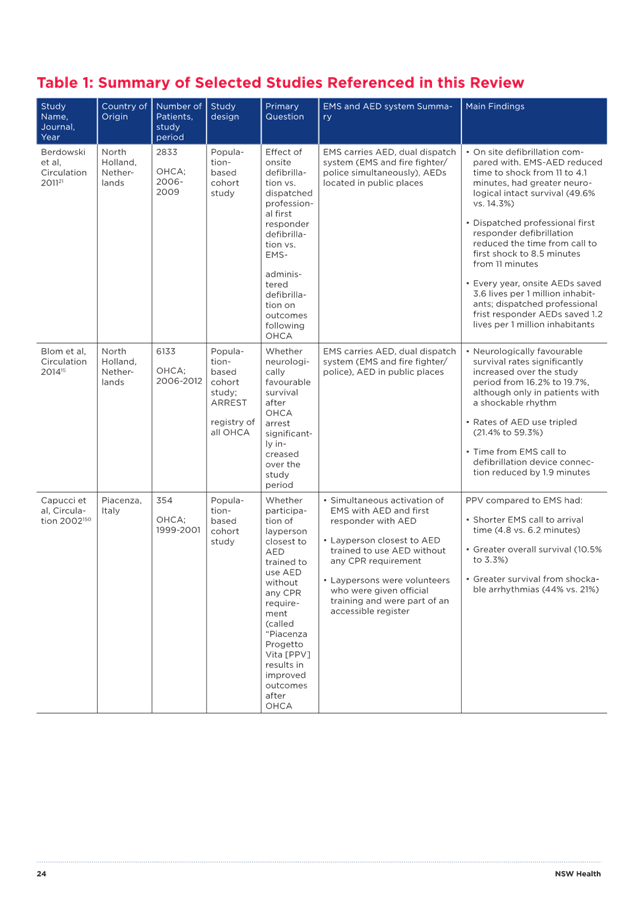
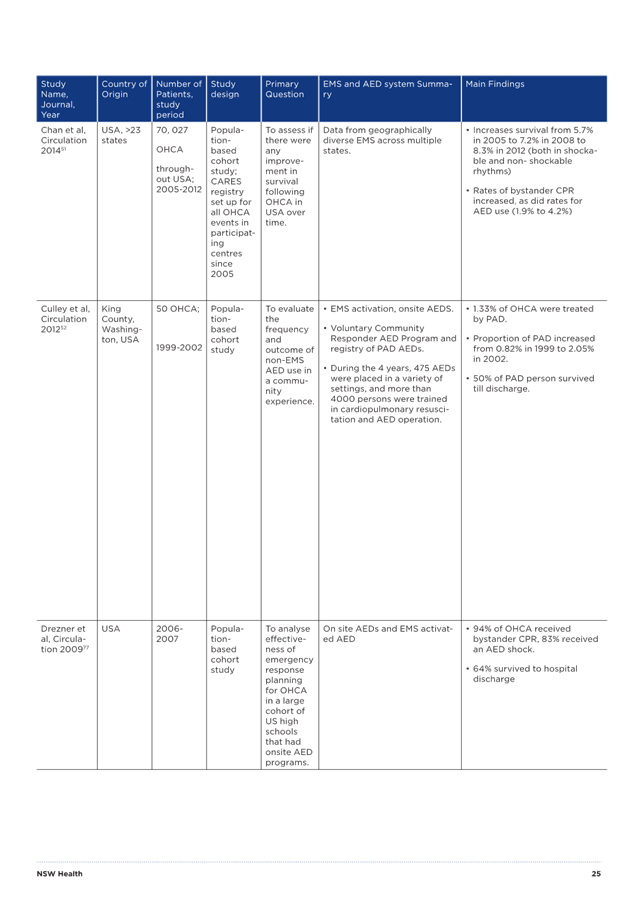
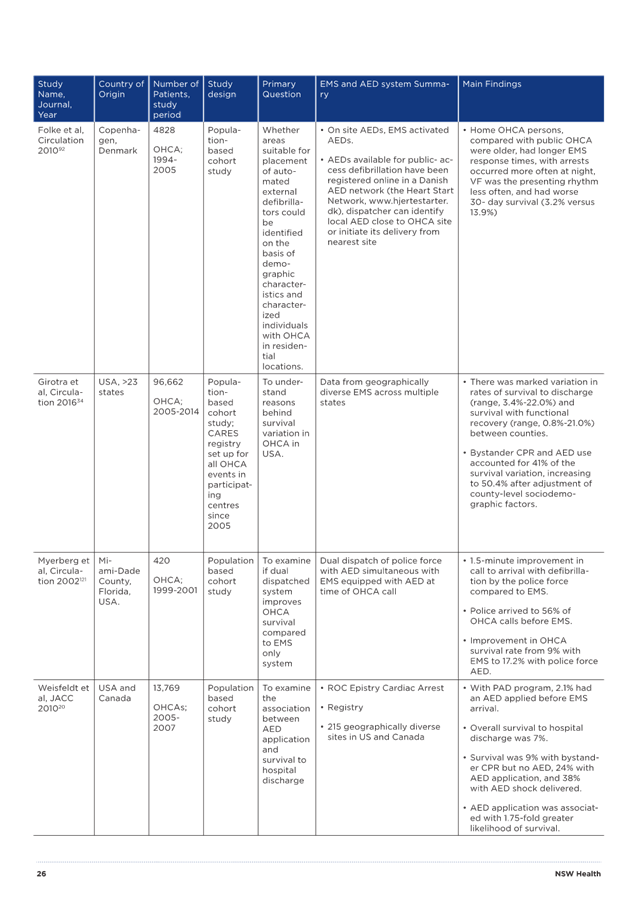
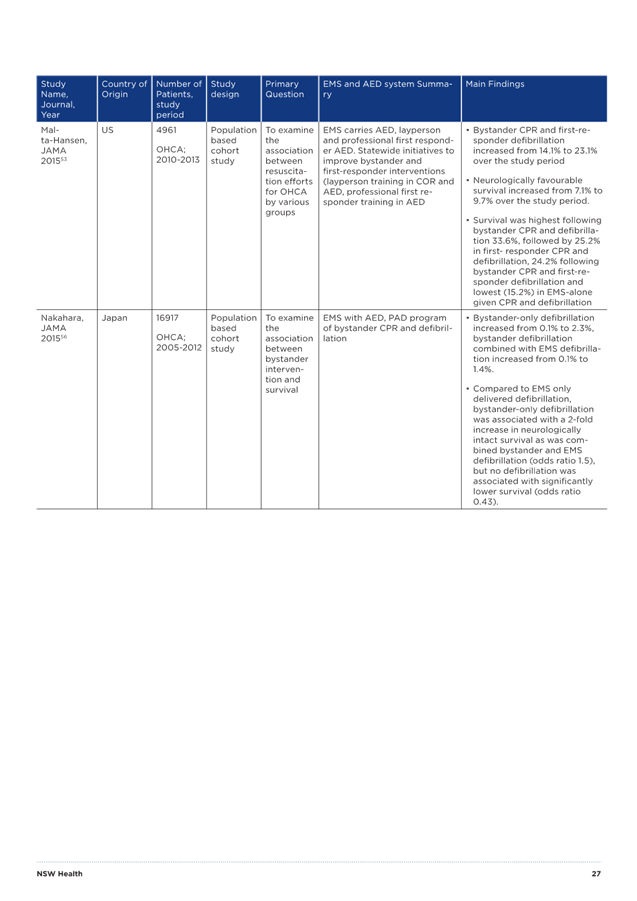
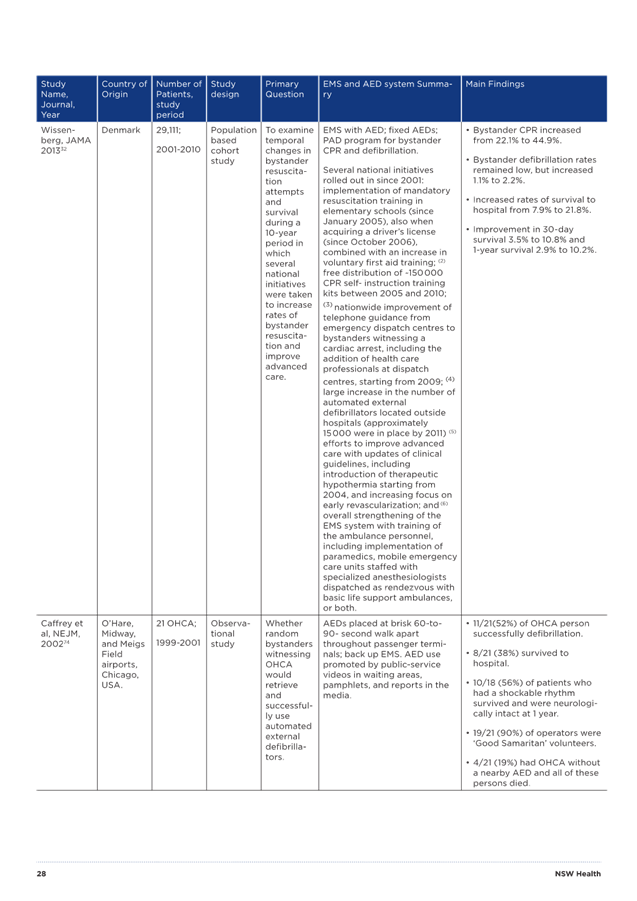
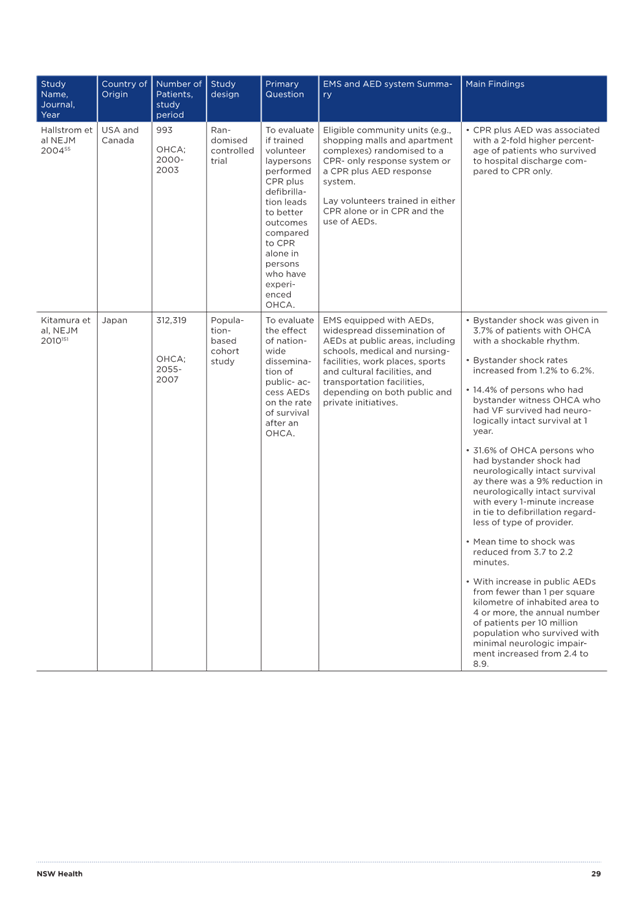
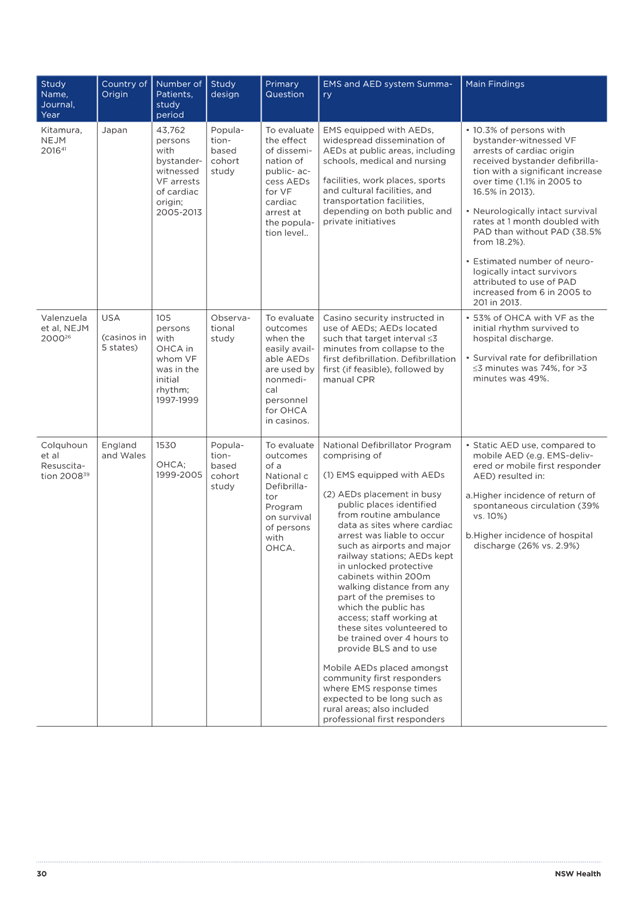
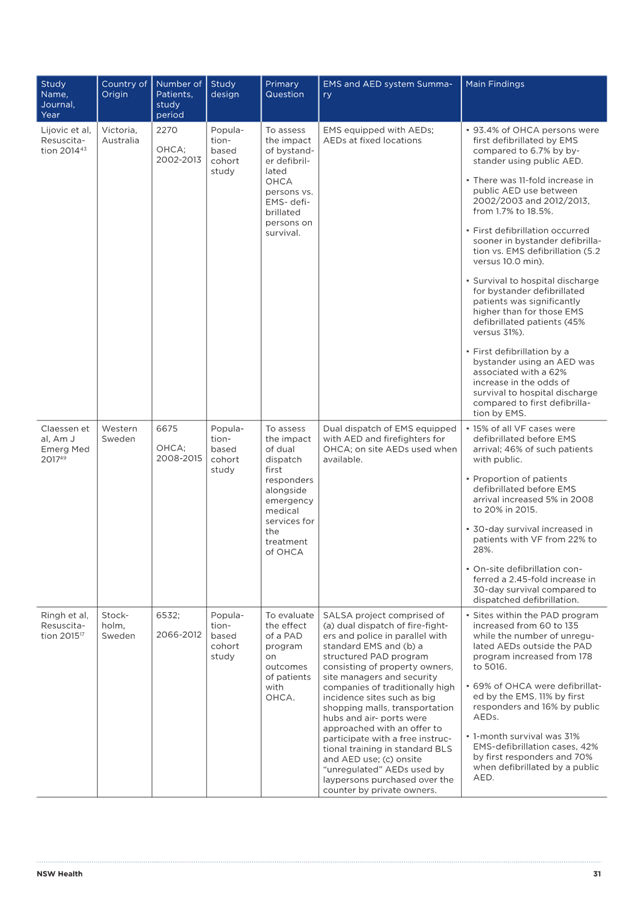
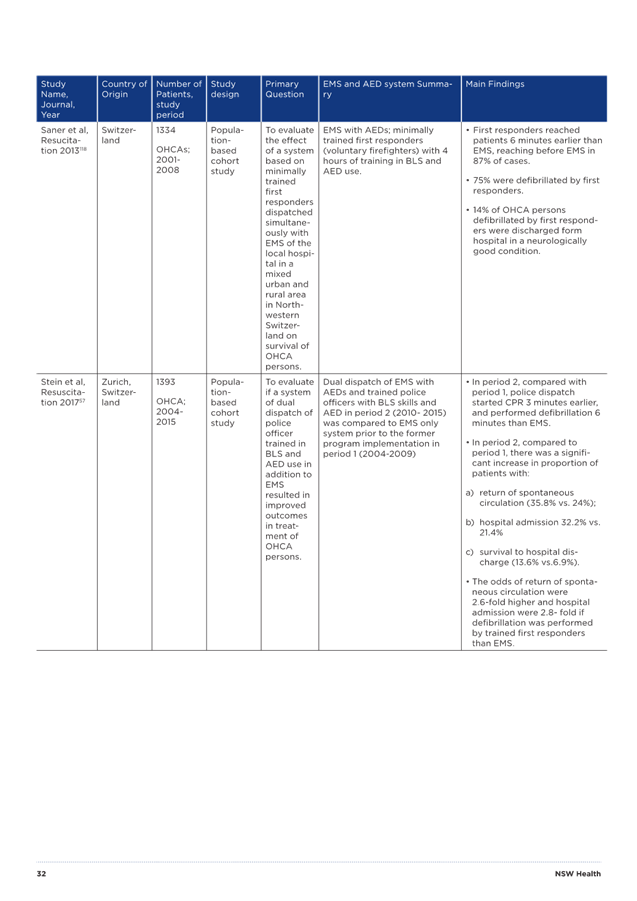
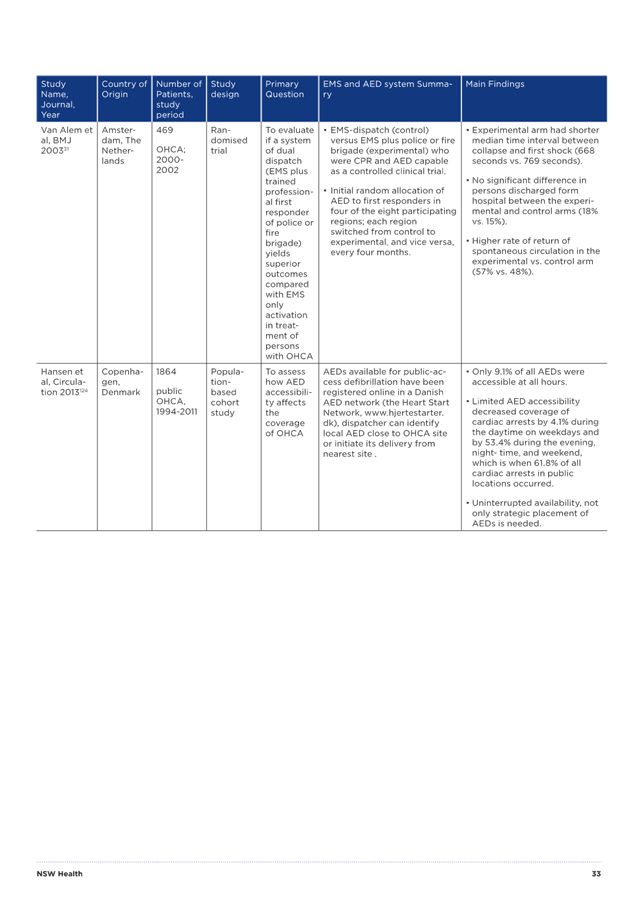
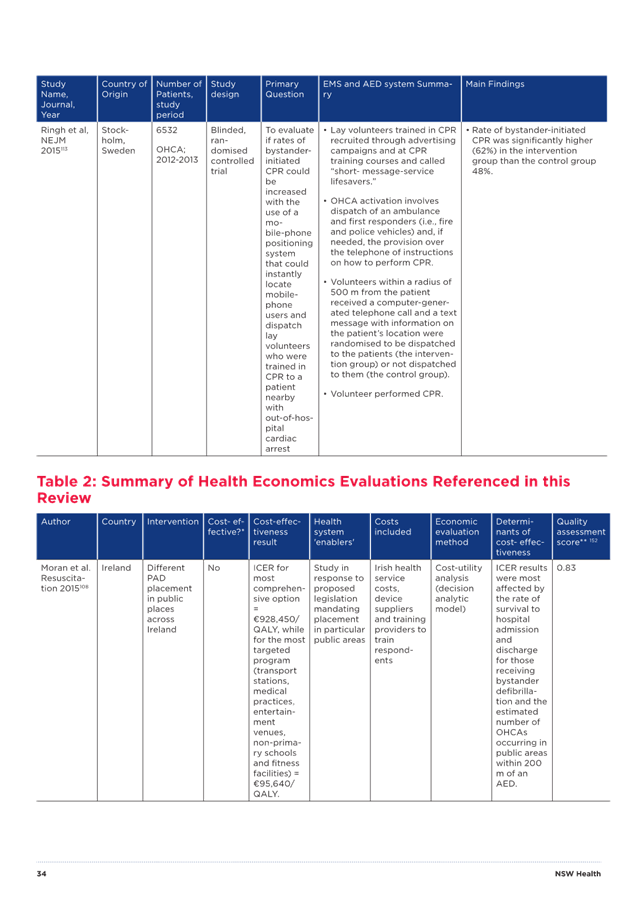
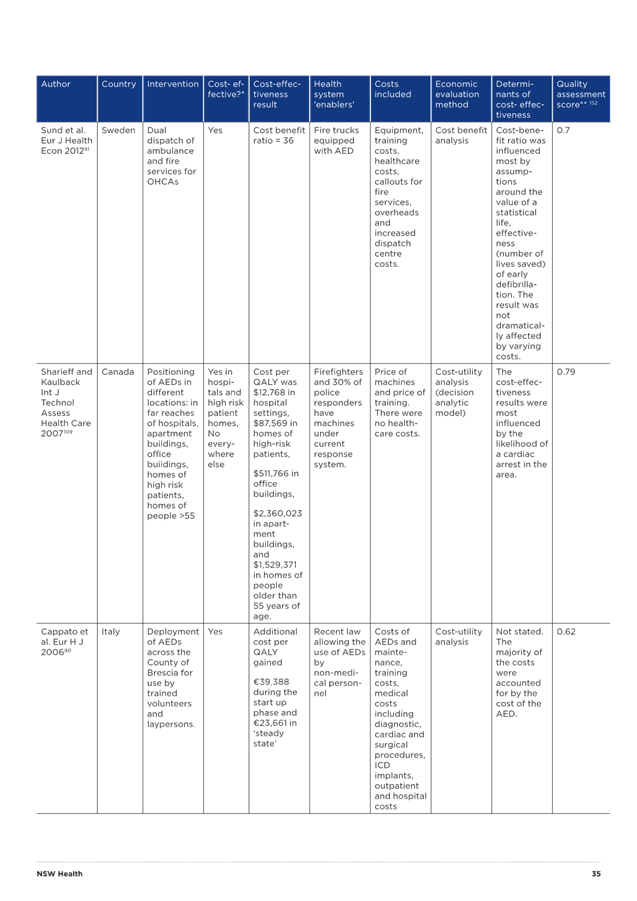
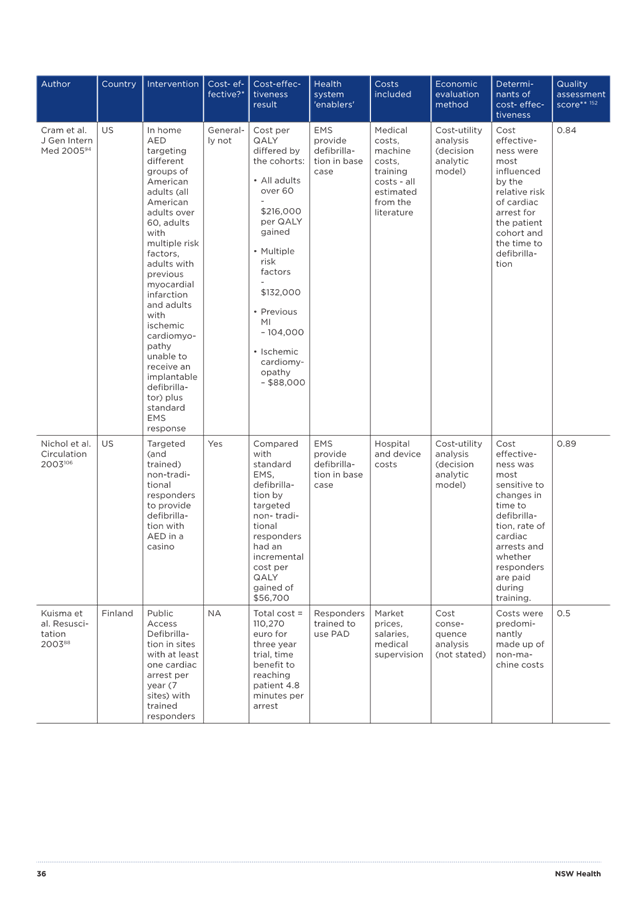
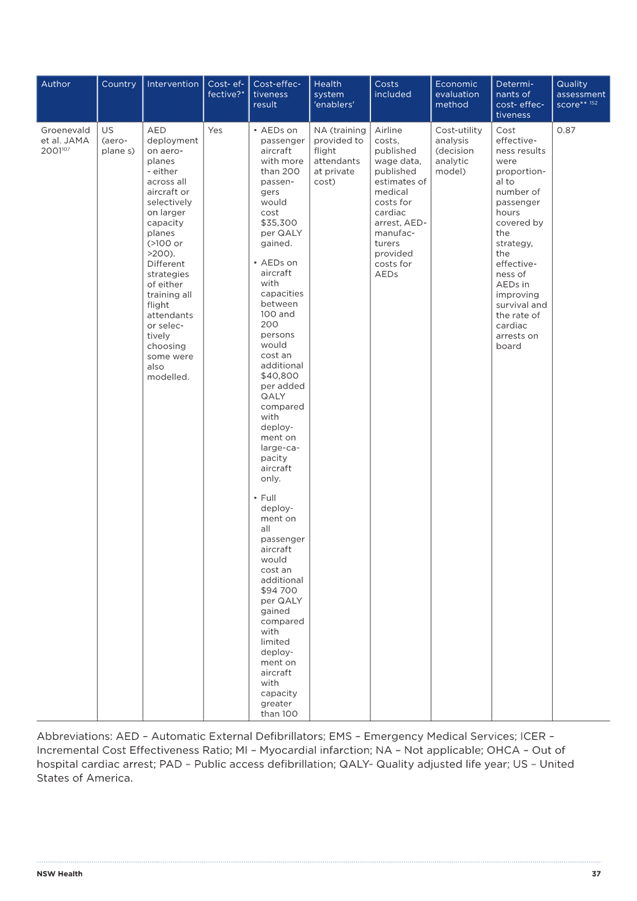


|
ATTACHMENT No: 2 - Attachment 2 - A Call to Action to Improve Cardiac Arrest Outcomes: A Report from the National Summit for Cardiac Arrest |
|
Item No: GB.3 |
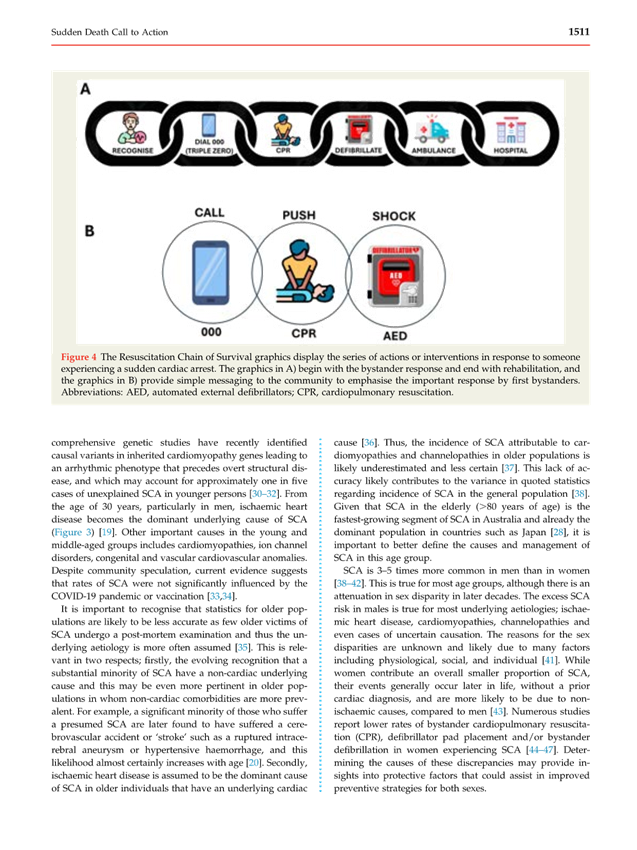
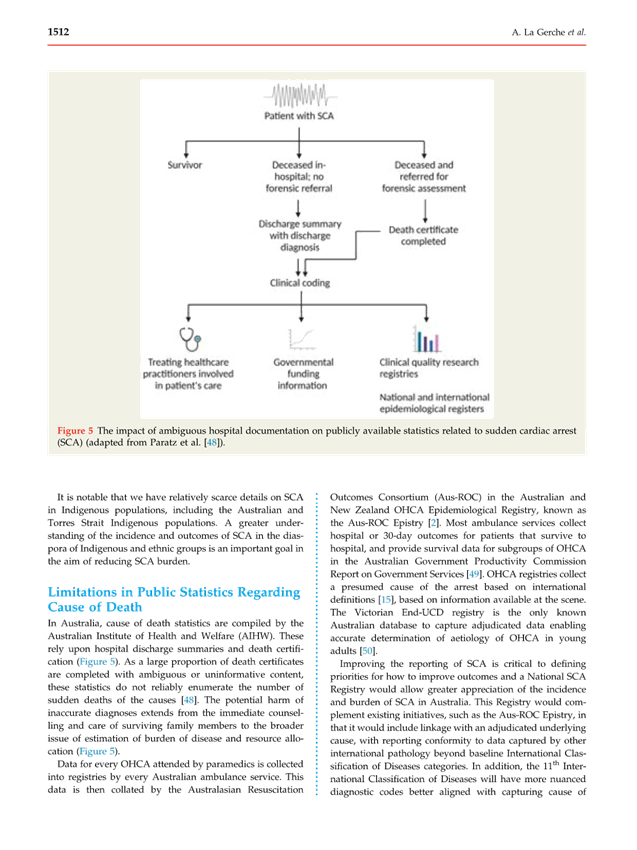

|
ATTACHMENT No: 3 - Attachment 3 - Public attitudes towards automated external defibrillators |
|
Item No: GB.3 |

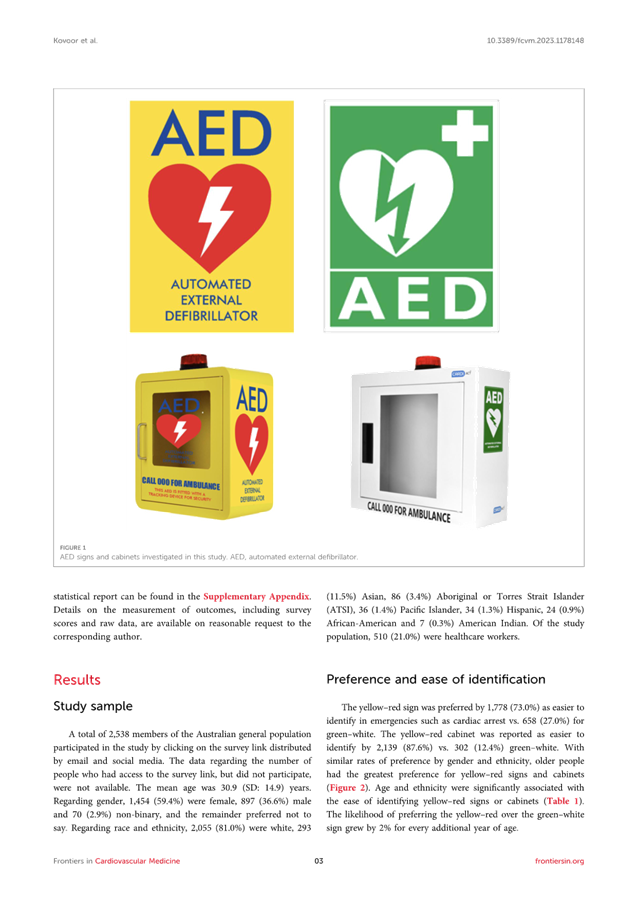
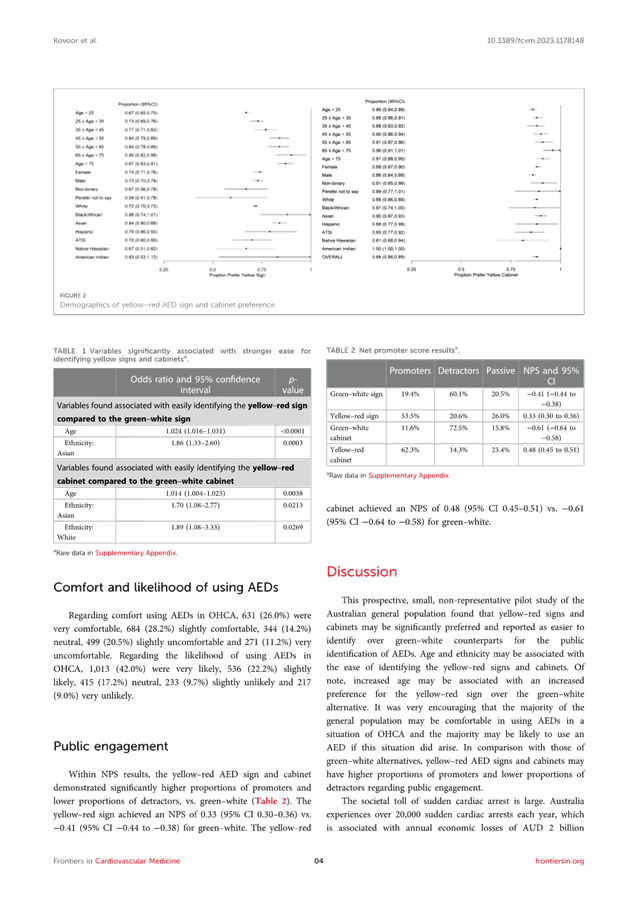
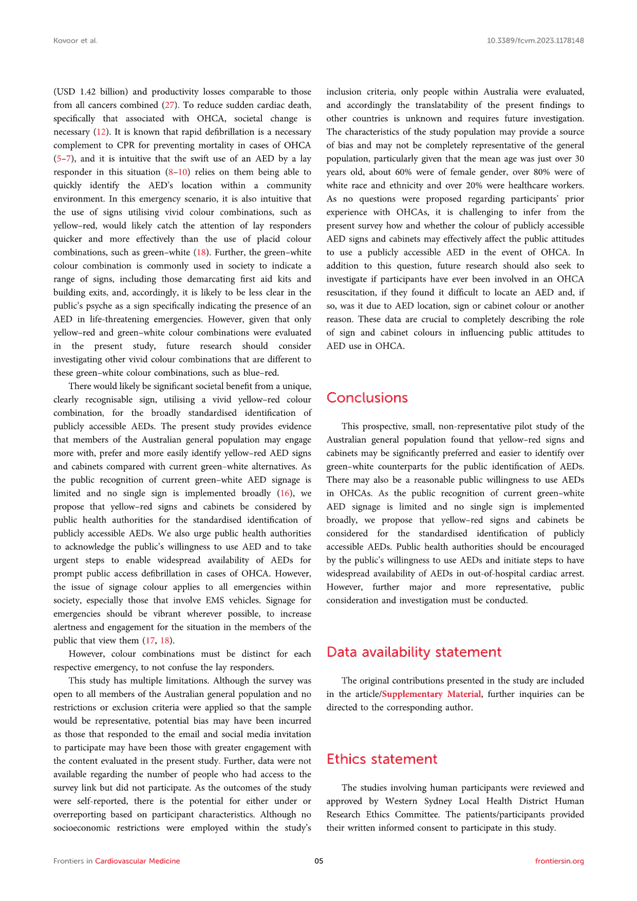
|
ATTACHMENT No: 5 - Attachment 5 - Summary of Amended Draft AED Delivery Program Costings |
|
Item No: GB.3 |
|
ATTACHMENT No: 6 - Attachment 6 - Excluded Facilities - Amended Draft AED Delivery Program |
|
Item No: GB.3 |
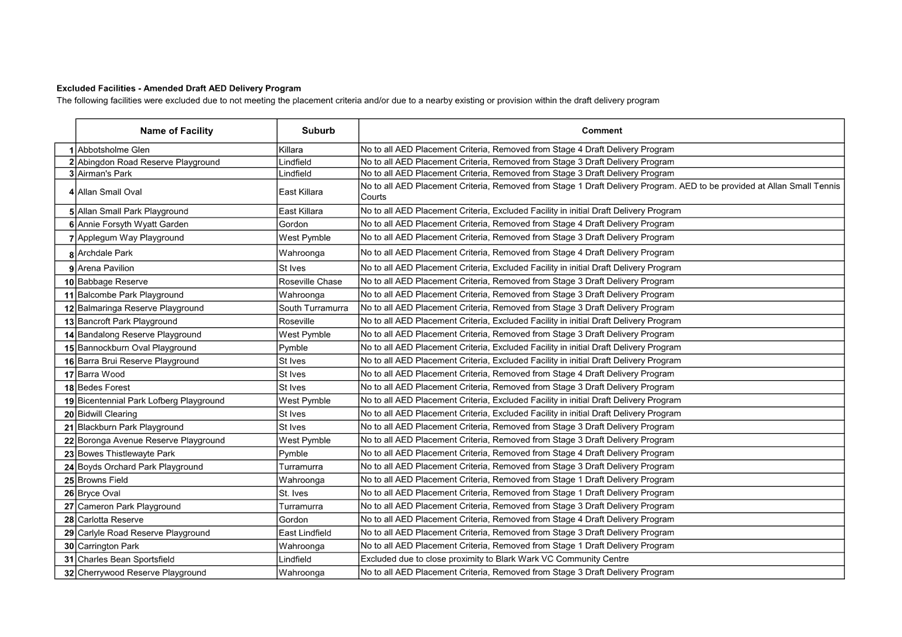
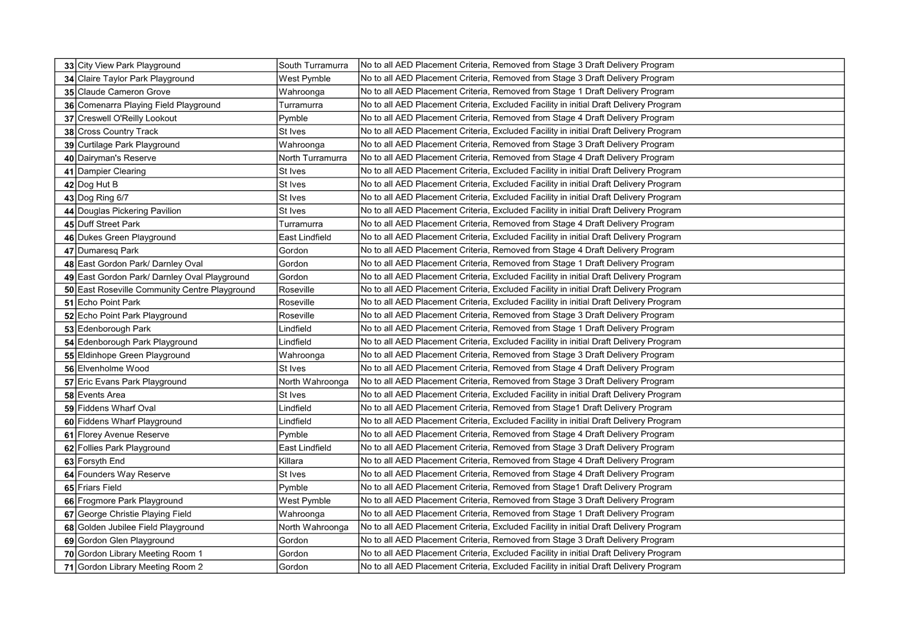
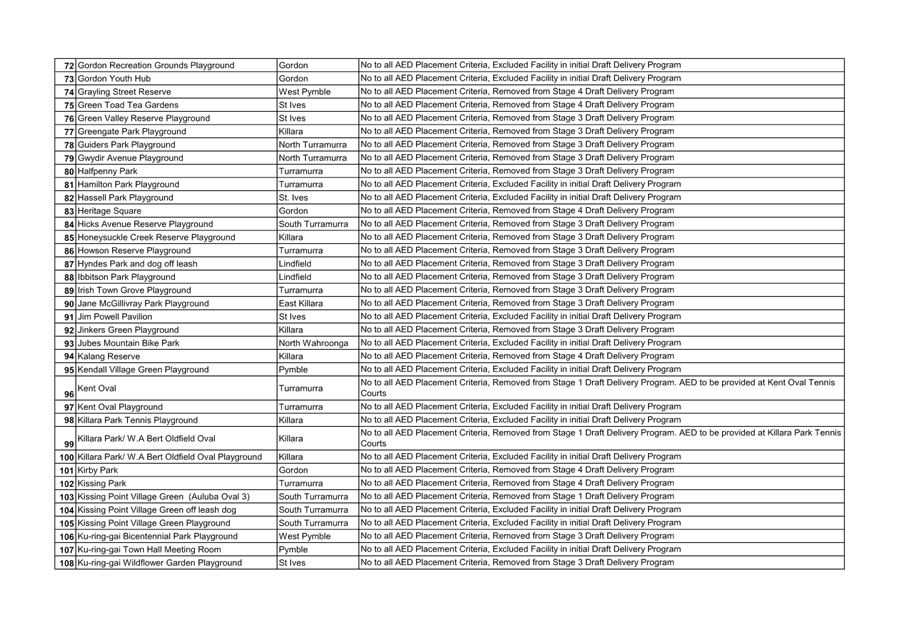
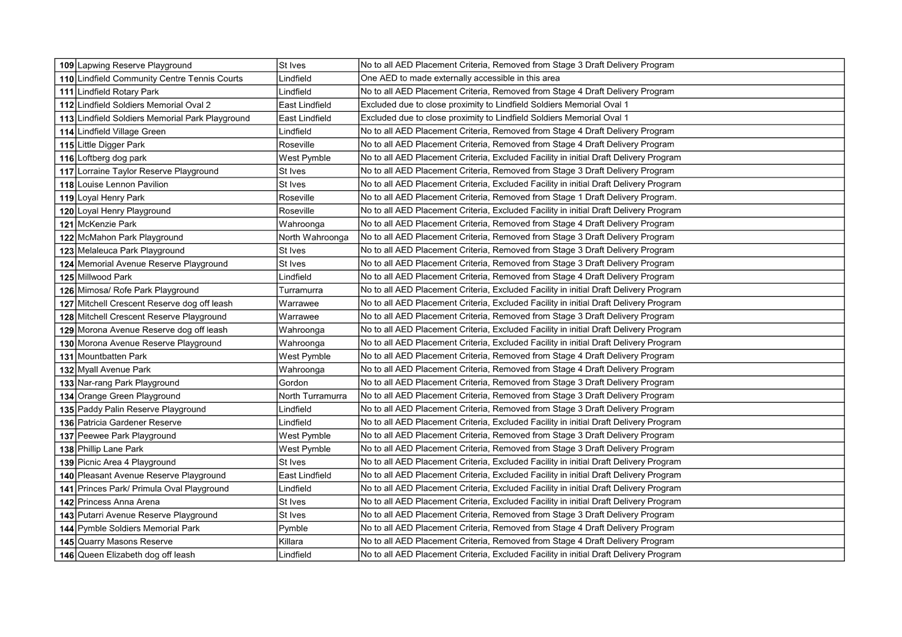
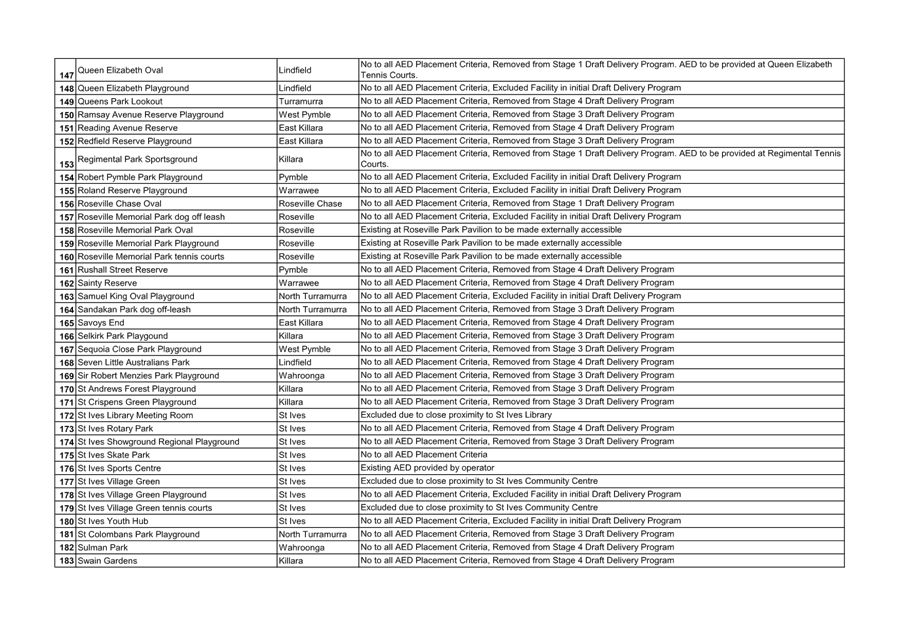
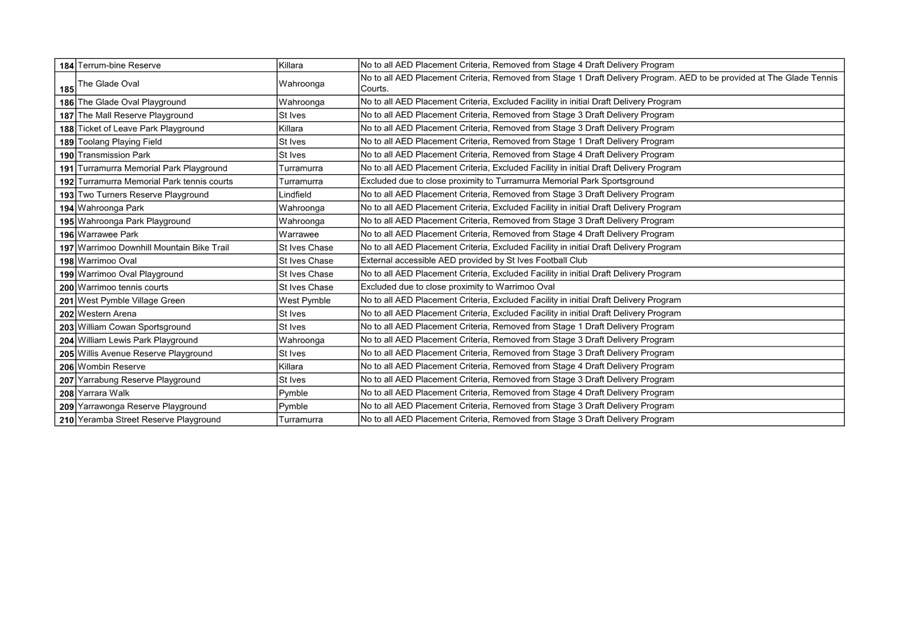
|
ATTACHMENT No: 7 - Attachment 7 - Summary of Estimated Operational Costs for Existing AEDs |
|
Item No: GB.3 |
|
ATTACHMENT No: 8 - Attachment 8 - Community Engagement Report - AEDs at Ku-ring-gai Sportsgrounds and Community Facilities |
|
Item No: GB.3 |
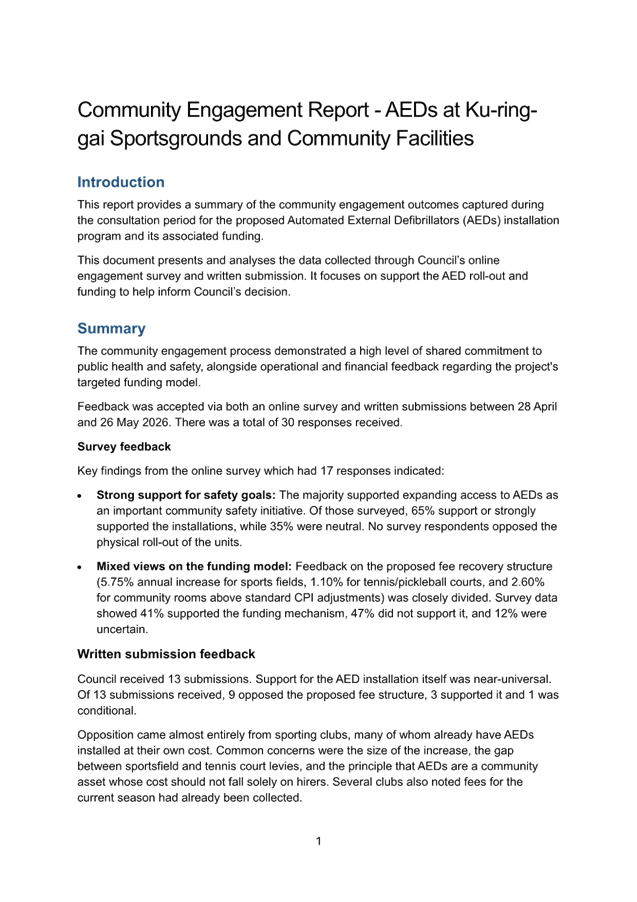

|
ATTACHMENT No: 10 - Attachment 10 - Amended Fees and Charges for Amended Draft AED Delivery Program |
|
Item No: GB.3 |
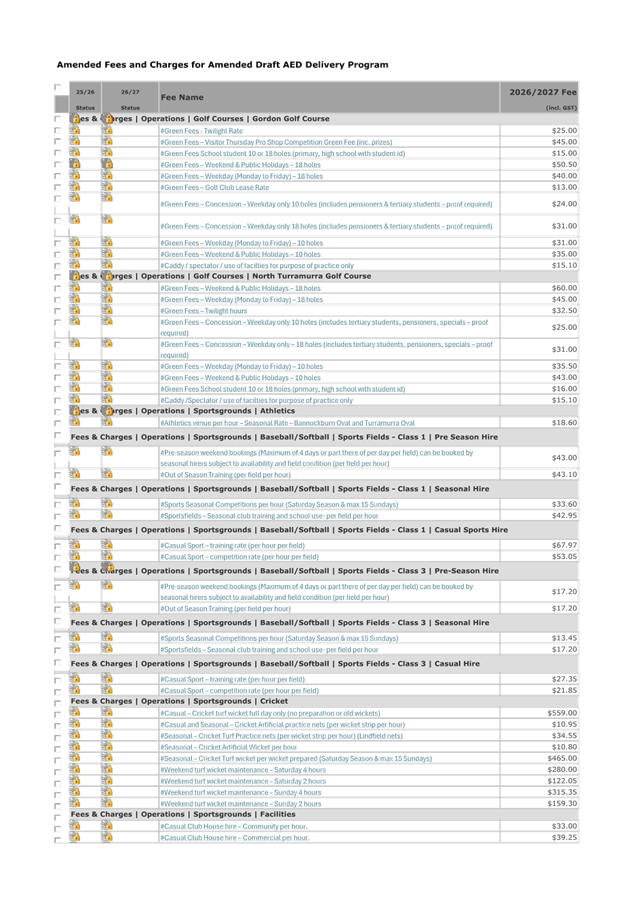
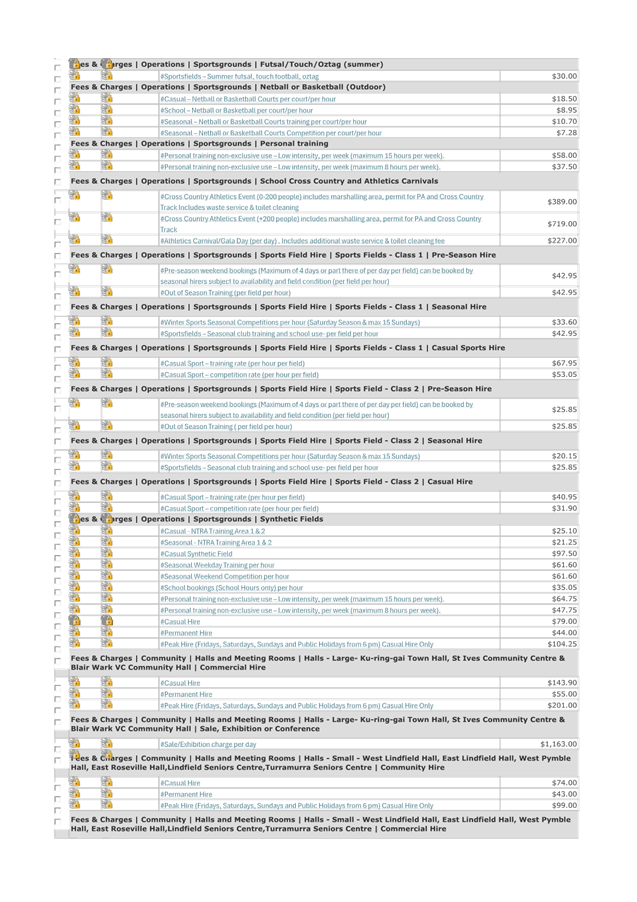
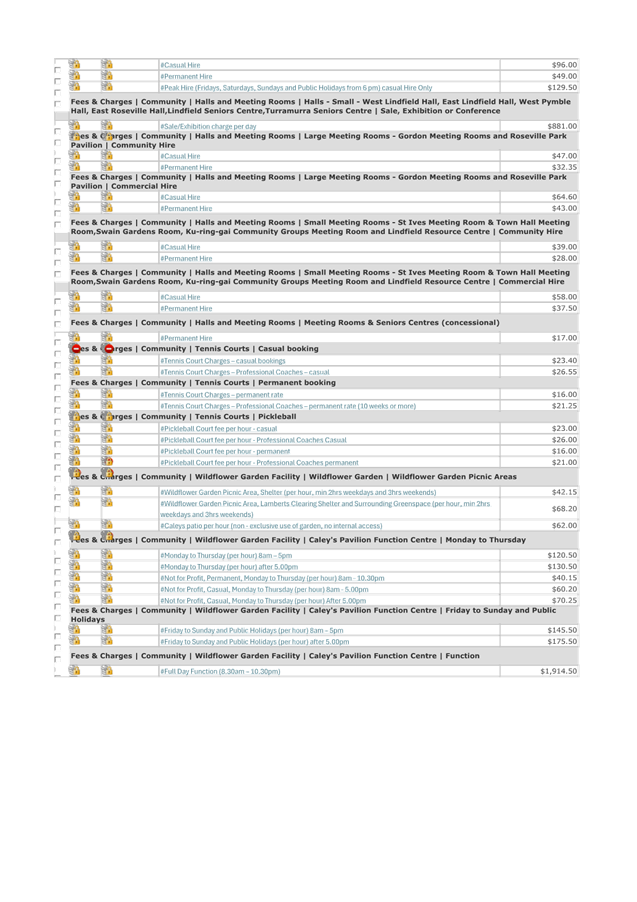
|
GB.4 / 42 |
|
|
|
|
|
Item GB.4 |
S15168 |
Df
Post Exhibition - Revised Resourcing Strategy, Revised Delivery Program and Operational Plan (NEW)
EXECUTIVE SUMMARY
|
|
|
|
background: |
At its meeting of 28 April 2026, Council considered a report on the draft revised Resourcing Strategy, revised Delivery Program and draft Operational Plan. Council resolved that the draft plans, subject to adopted changes and minor corrections, be placed on public exhibition for a minimum of 28 days. |
|
|
|
|
comments: |
The draft plans and strategy were exhibited for a period of 28 days from 29 April to 26 May 2026. Council’s Fees and Charges were exhibited in a separate document. On 2 June 2026, IPART released its decision to approve Council’s Special Rate Variation (SRV) application. Note that the recommendation below is subject to any amendments to the exhibited project costs and Fees and Charges for the Automated External Defibrillator (AED) program being considered separately at this meeting. |
|
|
|
|
recommendation: (Refer to the full Recommendation at the end of this report) |
Purpose of Report
To adopt the revised Resourcing Strategy 2026-2036, revised Delivery Program 2025-2029 and Operational Plan 2026-2027, incorporating the Budget, Capital Works Program, Statement of Revenue Policy and Fees and Charges for 2026-2027.
Background
Exhibition of draft Resourcing Strategy, Delivery Program and Operational Plan
On 28 April 2026, Council considered a report (ref: GB.9) on the draft revised Resourcing Strategy, draft revised Delivery Program and draft Operational Plan, incorporating the Budget, Capital Works Program, Statement of Revenue Policy and draft Fees and Charges for 2026-2027. At that meeting Council resolved the following:
That Council:
A. Amend page 67 of Attachment A1 to delete references to playground removals at Carlyle Road Reserve, Pleasant Avenue Reserve, McMahon Park, and Claire Taylor Park – and instead make it clear that nature play elements are being added to each playground to enhance utility and enjoyment. The specific wording changes are:
From
· East Lindfield, Carlyle Road, Carlyle Road Reserve – playground removal
· East Lindfield, Pleasant Avenue Reserve, Playground removal and nature play
· Wahroonga, Curtin Avenue, McMahon Park – playground removal and nature play
· West Pymble, Camira Street, Clarie Taylor Park – playground removal and natural play
To
· East Lindfield, Carlyle Road, Carlyle Road Reserve – addition of nature play elements
· East Lindfield, Pleasant Avenue, Pleasant Avenue Reserve – addition of nature play elements
· Wahroonga, Curtin Avenue, McMahon Park – addition of nature play elements
· West Pymble, Camira Street, Clarie Taylor Park – addition of nature play elements
B. Endorse the revised Delivery Program 2025-2029, draft Operational Plan 2026-2027 and revised Resourcing Strategy 2026-2036, for public exhibition for 28 days.
C. Note that a report will be provided to Council in June 2026 for consideration of any final changes, public submissions and adoption of the plans.
Stage 1 and 2 implementation of AEDs in the 2026/27 draft Delivery Program and Operational Plan for exhibition
On 17 March, Council considered a report (ref: GB.8) on the provision of community access to external AEDs across Council facilities. At that meeting Council resolved the following:
That Council:
A. Seek expert cardiac health advice to inform the placement criteria for AED locations and public awareness strategies, and to assist in refining the proposed locations for Stage 1 (Sportsfields) and Stage 2 (Community buildings);
B. Include the proposed implementation of Stage 1 (Sportsfields – up to 60 AEDs) and Stage 2 (Community buildings – up to 10 AEDs) in the 2026/27 draft Delivery Program and Operational Plan for exhibition;
C. Include an increase to relevant fees in the draft 2026/27 Fees & Charges for exhibition, to offset the annualised whole of life cost of installing, maintaining and monitoring the AEDs, phased in over two financial years commencing 2026/27;
D. Consult directly with key user groups, in addition to the general exhibition process, prior to reporting back to Council for final consideration and adoption in June 2026;
E. Include the expert health advice and feedback from user groups in the report back to Council following the exhibition of the draft Delivery Program and Operational Plan including any recommended changes or reduction in the sites identified in B to be incorporated into the final DP&OP; and,
F. Consider funding Stage 3 (Playgrounds and Off-leash Parks) and Stage 4 (Reserves)in advance of preparing the next Community Strategic Plan, with a tailored consultation recognising the varied nature of users and considering the expert cardiac health advice.
Comments
Consistent with statutory requirements and community engagement objectives the plans were exhibited concurrently for 28 days.
Delivery Program and Operational Plan
The exhibited revised Delivery Program and Operational Plan was informed by the strategies contained in the Community Strategic Plan, Council priorities over its term, policies and strategies, prioritisation of capital works projects, service delivery requirements, income from external sources and fees and charges.
As required by legislation, the Delivery Program and Operational Plan contains a Statement of Revenue Policy, Fees and Charges and Budget for Council over the coming year to support the delivery of Council’s services and projects. To assist presentation and readability the Delivery Program and Operational Plan are integrated into one document.
Attachment A1 provides a copy of the post exhibition revised Delivery Program 2025-2029 and Operational Plan 2026-2027 incorporating the Budget, Capital Works Program and Statement of Revenue Policy. Attachment A2 provides a copy of the Fees and Charges for 2026-2027.
Resourcing Strategy
The Resourcing Strategy is the link between the long-term Community Strategic Plan and the Delivery Program. The Strategy includes a 10-year Long-term Financial Plan, 10-year Asset Management Strategy and 4-year Workforce Management Strategy. All three components of the Resourcing Strategy listed below were reviewed prior to exhibition to incorporate updated asset, financial and workforce information.
· Long Term Financial Plan 2026-2036 (Attachment A3)
· Asset Management Strategy 2026–2036 (AttachmentA4)
· Workforce Management Strategy 2026-2030 (Attachment A5)
Long-Term Financial Plan (LTFP)
The Long-Term Financial Plan (LTFP) aligns with the Community Strategic Plan and Delivery Program, highlighting community needs and Council’s strategic priorities. It also aligns closely with the Asset Management Strategy and Workforce Strategy.
Asset Management Strategy (AMS)
The AMS provides information on how Council’s asset portfolio supports the service delivery needs of the community both now and over the next 10 years. It has been revised to align with Councils revised LTFP. Capital expenditure data and the required renewal costs have been included in the AMS to establish Council’s funding gap for infrastructure assets.
The AMS is supported by Asset Management Plans for each asset class. Together, these documents and supporting data and systems (including asset registers and technical databases) make up Council’s Asset Management Framework.
A review of Council’s Asset Management Plans is being completed. These will be updated in response to IPART’s determination of Council’s Special Rate Variation (SRV) application, if approved by Council and accelerated review of the scheduling and resourcing of projects (as resolved by Council on 17 March 2026). These plans will be separately reported to Council for adoption.
Workforce Management Strategy (WMS)
The third component of the Resourcing Strategy is the Workforce Management Strategy (WMS). An effective WMS establishes a framework for building the capability of the organisation’s workforce and provides a link between the delivery of strategies and services and their associated workforce implications. In addressing the human capital requirements for Council’s Delivery Program, the WMS spans four years.
Service improvement program
In accordance with the IP&R framework, Council is required to specify its program for service reviews within the DP&OP. Progress and outcomes of these reviews, including any service improvements or efficiencies identified, must then be reported via the Annual Report.
The following service reviews were included in the exhibited plans for completion in 2026/27:
· Stormwater renewal and maintenance
· Tree management
· Roads (under the Service Review in a Box Program)
· Workforce management (under the Service Review in a Box Program)
In addition to the above reviews, Council’s Accelerated Project Portfolio and Resourcing Review has also been included in the review program for 2026/27 (see page 20 of the DP&OP)
The LG Professionals Service Reviews in a Box program is designed to assist councils in conducting service reviews by having a cohort of councils participate and progress through the stages of a service review together. This collaborative approach ensures that Council can share insights, experiences and best practices, at a significantly lower cost than engaging external consultants to undertake this review.
Inclusion of Stage 1 and 2 implementation of AEDs in the 2026/27 draft Delivery Program and Operational Plan for exhibition
The program was included in Council’s exhibited draft Delivery Program and Operational Plan and draft Fees and Charges document with notification of the exhibition sent directly to regular hirers of sportsfields, tennis courts and community buildings. A report on the outcomes of the exhibition, as it relates to the proposed AED program, including received submissions is reported separately to the June OMC meeting.
The project costs listed in the Delivery Program and Operational and the Schedule of Fees and Charges attached to this report will be adjusted to incorporate any amendments resolved by Council on this item.
Update on Special Rate Variation (SRV) for Infrastructure
In February 2026, Council applied to IPART for approval to increase rates to help address ageing infrastructure. On 2 June 2026, IPART advised that Council’s application was successful. A copy of IPART’s final report is available here: Ku-ring-gai Council - Special Variation Application 2026-27 - Final Report. The approved increase to rates is 29%, including the 4.4% rate peg, and is proposed to take effect from 1 July 2026. This is outlined in detail in the LTFP, the DP&OP and the AMS.
Council will decide at its June meeting whether to proceed with the approved special rate variation from 1 July 2026. If approved by the Council, a rate increase of 29% including a 4.4% rate peg would apply to Ku-ring-gai ratepayers from that date.
If approved by Council, the SRV will secure an additional $20.7 million per annum in funding strictly earmarked to address Ku-ring-gai’s increasing infrastructure backlog across the following asset classes:
Stormwater and drainage
Stormwater and drainage infrastructure will receive $5.9 million per annum. Council is responsible for nearly 300km of stormwater pipes and 12,100 drainage pits, mostly constructed between the early and mid-1900s, with recent reviews finding that 43% are now in poor or very poor condition. Current funding only allows for the renewal of 900m of pipes and 30 kerb inlet pits each year, which would cause the backlog to grow from $41 million to $79 million by 2034/35, leading to increased localised flooding, road closures and waterway contamination. The SRV funding is expected to accelerate pipe renewals up to 6.9km per year and inlet pit upgrades to 250 pits per year. Additional funding is expected to contain the projected 2034/35 stormwater backlog to $13 million.
Community buildings
Around $6.7 million per year will be directed toward community buildings. Council manages 300 buildings, of which approximately 53% currently require capital upgrades. At current funding levels, Council can only replace or refurbish an average of two buildings per year, with the backlog projected to grow from $63 million to $104 million by 2034/35. The SRV will enable the refurbishment or replacement of up to eight buildings per year, including sportsground amenity blocks, public toilets, bus shelters, community centres and childcare facilities. These works will directly address modern accessibility standards, provide improved changing facilities and toilets for female athletes and ultimately reduce the projected 2034/35 backlog down to $37 million.
Recreational facilities
Recreational facilities will be supported by an additional allocation of $1.9 million per annum. This includes sportsfields, parks, bushland locations, play courts, walking tracks, fire trails and the Ku-ring-gai Sports and Aquatic Centre. Without the SRV, Council is limited to completing around five to six minor improvement projects a year, with the infrastructure backlog projected to increase to $25.5 million by 2034/35 and increasing the risk of playing surface failures. The SRV boosts delivery to up to nine major projects per year. After 2031/32, this asset class will absorb an additional $1.46 million annually as the St Ives loan concludes. This is projected to reduce the infrastructure backlog to $6.7 million by 2034/35.
Existing footpaths
Under the SRV, an additional $0.94 million per year will be allocated to maintaining and renewing existing footpaths. Council services 377km of existing footpaths, and the current renewal backlog sits at $6.6 million. Due to limited funds, about 20% of existing footpaths are expected to fall into an unsatisfactory condition over the next decade, doubling the backlog to $13.58 million by 2034/35. The SRV funding is expected to double the rate of footpaths repaired and rebuilt each year, and capping the long-term infrastructure backlog to $6.98 million.
New footpaths
To improve the walkability of Ku-ring-gai’s suburbs, $2.1 million per year will be allocated to constructing new footpaths. Currently, around 250km of local streets do not have a footpath. The additional SRV funding will fast-track this program towards having a safe footpath on every street in 30 years.
Traffic and transport
A further $1.7 million per year will be directed towards traffic and transport assets. While road surfaces, car parks and bridges maintain adequate baseline funding, this investment directly addresses the funding gap for targeted road safety improvements. This will include upgrades of bus stops to meet disabled access standards, as well as the construction of roundabouts, median islands and pedestrian crossings across the LGA.
The SRV will also allocate $1.46 million per annum through to 2031/32 to service the loan repayments for the construction of the St Ives Indoor Sports Centre. This joint partnership with the Department of Education has expanded the St Ives High School facility to a world-class four-court indoor sporting complex, including ancillary rooms, a café and car parking. Funding the $13.5 million loan via the SRV prevents costs from impacting general revenue, protecting day-to-day council operations and services.
Impact on ratepayers and affordability
As outlined in Council’s independent report and IPART’s determination, a common theme in submissions is concerns from ratepayers that they could not afford the rate increase.
The 29% increase corresponds to an estimated $499 average residential rate increase (or $9.60 per week) and an estimated $1,676 average business rate increase (or $32.23 per week) in 2026/27. In October 2025, Council considered an independent capacity to pay analysis report which found that, on balance, there is a capacity for ratepayers to pay the proposed increase.
Nonetheless, it is acknowledged that some ratepayers will find it difficult to afford an increase in living expenses. In response, Council has a variety of methods to help manage financial hardship. These include flexible payment plans, interest relief, pensioner concessions, hardship application processing and debt recovery and support.
Council’s Rates, Charges and Sundry Debts - Assistance, Concessions and Recovery Policy was amended and adopted at the November 2025 meeting of Council. Under the policy, ratepayers experiencing financial hardship can apply for assistance. Applications are reviewed confidentially, in line with Council’s policy and legislative requirements. Staff will offer guidance and support through the hardship application process.
Ratepayers facing financial difficulty may request customised payment plans. Arrangements are assessed individually, with consideration given to the applicant’s circumstances and payment history. Council may also reduce or waive interest on overdue rates and charges for eligible applicants who demonstrate genuine hardship and adhere to agreed payment arrangements. As noted in the capacity to pay report considered at the October meeting, at the end of 2024/25 three ratepayers were utilising these provisions.
Statutory rebates and additional voluntary concessions are available to eligible pensioners under the policy. This includes a statutory concession of up to $250, which Council is required to provide under the Local Government Act. Council also provides an additional voluntary concession of 8.5% of total rates and charges, which is an additional $146 in 2025/26 for the average pensioner.
Furthermore, Council introduced a flexible payment solution (Payble) enables ratepayers to easily set up and manage payment plans for current and overdue rates. The platform aims to make paying rates more convenient, reduce the number of overdue accounts and lower administrative costs associated with payment processing.
Cost containment and efficiency
Independent analysis by IPART confirms that Council operates with a high level of structural efficiency, maintaining a lower operating expenditure per capita and fewer staff relative to population than comparable councils. Its annual operating expenditure growth represents the fourth lowest of all Sydney councils, demonstrating a sustained commitment to lean operations.
Over the past five years (2020-21 to 2024-25), Council has delivered a range of efficiency initiatives that have delivered an estimated $7.4 million in savings. It also identified and forecasted an estimated 3.9 million in future savings from 2025-26 to 2026-27. A detailed summary of Council’s cost efficiency measures is available in the application submitted to IPART (publicly available) and in the December 2025 OMC report.
IPART conditions
In making its determination, IPART has imposed the following conditions to ensure accountability to the Office of Local Government and the Ku-ring-gai community:
· That Council use the additional income for the purpose of funding the proposed program
· That Council report in its annual report for each year from 2026-27 to 2031-32 (inclusive):
o the program of expenditure that was actually funded by the additional income, and any differences between this program and the proposed program
o any significant differences between the council’s actual revenues, expenses and operating balance and the projected revenues, expenses and operating balance as outlined in the LTFP, and the reasons for those differences
o the outcomes achieved as a result of the additional income
o whether or not the council has implemented the productivity improvements as set out in Appendix B, and if so, the annual savings achieved through these measures, and what these equate to as a proportion of the council's total annual expenditure, and if not, the rationale for not implementing them
o any other productivity and cost containment measures the council has in place, the annual savings achieved through these measures, and what these savings equate to as a proportion of the council's total annual expenditure.
Council will be embedding these requirements directly into the Integrated Planning and Reporting (IP&R) framework, including dedicated tracking to ensure additional funding is directed to the specific asset class it was intended to fund and the successful delivery of its efficiency initiatives.
integrated planning and reporting
Outcome 5 – Leadership and service excellence
|
Community Strategic Plan Strategy |
Delivery Program Term Achievement |
Operational Plan Task |
|
L1: Provide strong and ethical civic leadership to ensure good governance and build and maintain trust and confidence within the community. |
L1.1: The Community Strategic Plan drives delivery of community priorities through effective strategic planning, prioritisation, advocacy, partnerships and reporting to the community on performance. |
L1.1.1: Implement a new integrated planning and reporting framework to support the implementation of Council’s strategies and plans, and prioritisation of projects and initiatives based on strategic alignment, community needs and availability of resources. |
Governance Matters
Council has a statutory obligation to review its Long Term Financial Plan and Delivery Program and prepare an Operational Plan for the forthcoming year, for community feedback to be considered, and for the plans to be adopted before the end of the current financial year. Consistent with past years the other two components of the Resourcing Strategy, the Asset Management Strategy and Workforce Management Strategy, were reviewed and placed on public exhibition with the Long Term Financial Plan.
Risk Management
There are no material risks that arise from the recommendations contained in this report. Minor issues may occur, but these can be managed within Council’s current policies, procedures, resources and budget.
Financial Considerations
The primary focus of the budget in addition to funding core services, is to continue to fund asset maintenance, depreciation, renewal and upgrades to Council’s infrastructure assets, valued at $1.8 billion. Out of the $76 million capital budget, 49% is allocated to renewing existing assets, and 51% is directed toward upgrading or constructing new assets. In addition, $19.6 million is allocated to asset maintenance.
Despite these funding allocations, infrastructure asset indicators still fail to meet long-term benchmarks; the infrastructure backlog ratio is forecast to reach benchmark towards the end of the ten-year period; however, the asset maintenance ratio is forecast to decline further. A continuing challenge for Council is maintaining long term financial sustainability while funding the ongoing maintenance and renewal of its large portfolio of infrastructure assets.
Council’s key infrastructure assets (buildings, footpaths, drains and other assets) built decades ago require increased investment to remain fit for purpose. There is now a greater focus on improving these and constructing new and upgraded facilities to meet the needs of a growing population, especially in response to government housing reforms. Managing these assets is a financial challenge for both current and future generations, as they have been insufficiently funded over their lifecycle.
The years ahead are an important implementation phase, as Council responds to population growth and state housing policy. Council will manage these changes by continuing to update plans and strategies in a way that addresses local requirements. In response to population growth and housing reform, Council will prioritise planning, infrastructure and community investment while managing financial capacity to ensure long term sustainability. While future budgets allow for some growth, the timing and scale of this growth remain uncertain, requiring a balanced approach to investing in ageing assets and new infrastructure.
To successfully deliver key projects and increase funding to renew aging infrastructure like buildings, footpaths, and drains, and build and upgrade new facilities additional rates revenue will be necessary. This requirement is modelled in the long-term financial plan under the Renew and Enhance Infrastructure scenario.
Some key issues in the 2026/27 budget are discussed below.
Funding our operations
· In the current ongoing economic uncertainty and increasing costs, Council is carefully monitoring the impact of higher fuel and related costs. Internal reserves may provide some short-term flexibility; however, further adjustments may be required in future budgets.
· Rates income remains insufficient to fully offset rising expenses. While IPART has set the 2026/27 rate peg at 4.4%, which is higher than general CPI assumptions reflected in the budget, it does not adequately cover increasing operational and labour costs in the current high-cost environment. Labour costs (projected to increase by 5.3%) are projected to grow faster than previously expected over the next decade due to award rate increases and performance related costs.
· Council continues to face other cost pressures, as many of Council’s major expenses including utilities, insurance, technology fees, materials and major contractor services have increased by more than CPI.
· The annual depreciation expense (representing the loss of value of assets over time) continues to increase as the asset base increases and has a significant impact on Council’s annual operating expenses. Over time with additional new assets and further increases in the value of existing assets this cost will increase.
These factors will continue to strain Council budgets in the future, requiring a review and adjustments to Council’s funding strategy.
An overview of the budget in the revised Delivery Program and Operational Plan is provided below.
2026/27 Budget Summary
Operating Budget: The draft 2026/27 operational budget is set at $177 million, representing a 7% increase from the current year, primarily driven by changes in employee costs, materials and contracts and depreciation expense. These variations have been offset by a projected income budget of $217.7 million, mainly from additional rates and annual charges, user fees, interest revenue and capital grants and contributions.
The budget forecasts an operating surplus of $40.8 million, after capital grants and contributions. However, when these are excluded, the underlying operating result reflects a surplus of $20.6 million which is allocated to infrastructure renewal and enhancement.
The following table provides Council’s income statement, including comments on major budget variations between the current original 2025/26 budget and projected 2026/27 budget including a special rate variation.
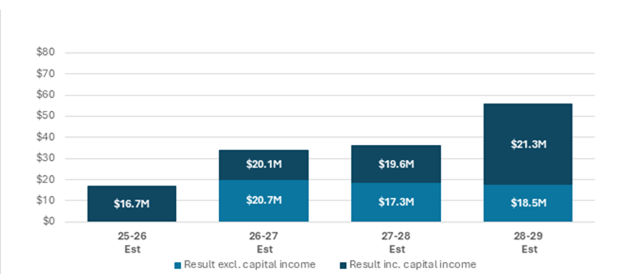
Diagram 1: Operating result including capital grants and contributions ($million)
The following table provides Council’s income statement and comments on major budget variations between the projected 2026/27 budget and the original 2025/26 budget.
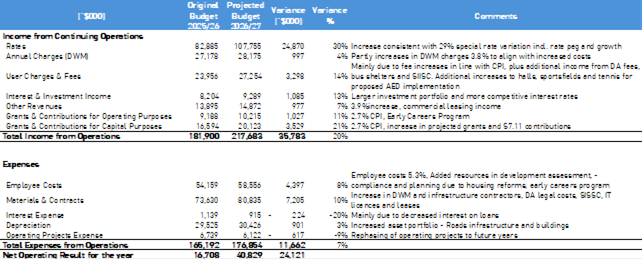
Capital Budget: In 2026/27 the allocated budget for the capital works program is $76 million (refer to diagram 5). A further $6.1 million is estimated for operational projects and is included in the operational budget.
The capital works program focuses on improving community facilities and infrastructure assets. The largest portion, $30.4 million (40%), will go towards roads rehabilitation, footpaths renewal, and traffic facilities. Parks, playgrounds, sports courts, sports fields, and open space assets will receive $16.6 million (22%), while $12 million (16%) is allocated for upgrading town centre streetscapes and public domain. Council buildings and amenities will receive $11.0 million (14%), and $2.7 million (4%) will be spent on stormwater assets. The remaining budget will support natural environment, planning and community projects.
The capital works program is mainly funded from general revenue from rates (through internal reserves) (65%), development contributions (27%), and grant income (8%).
Details of the capital works program for 2026/27 to 2028/29 can be found in the revised Delivery Program 2025-2029 and Operational Plan 2026-20273
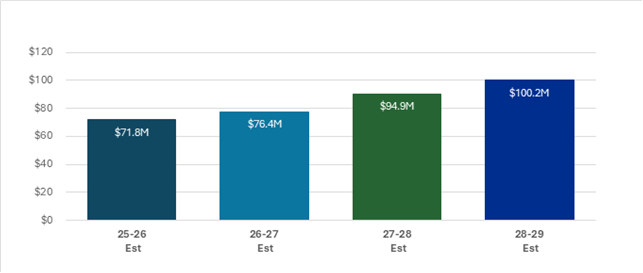
Diagram 2: Capital works ($million)
Liquidity position: Council’s Long Term Financial Plan and budget ensures that Council maintains sufficient liquidity and has the ability to meet short term obligations for the unrestricted activities of Council. This is demonstrated by the ‘unrestricted current ratio’ (UCR). The UCR is specific to local government and measures the difference between Council’s unrestricted short term assets and short term debts. The industry benchmark of greater than 1.5:1 is considered to be ‘satisfactory’ and greater than 2:1 to be ‘good’.
Council’s budget maintains a ‘good’ unrestricted current ratio of 2.2:1 on average which is favourable compared to the benchmark of 2:1. This is an indication that Council will be able to maintain adequate cash levels to meet current liabilities (see diagram 3).
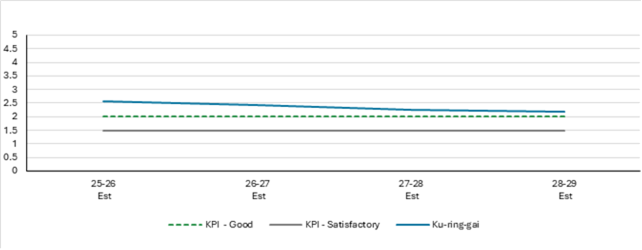
Diagram 3: Unrestricted current ratio
Debt management: Council’s budget provides for loan capital repayments (interest and principal) of $4.2 million in 2026/27 and $4.1 million in 2028/29 reducing the outstanding debt to $10.6 million by the end of 2028/29. This will include the remaining loans of $5.7 million for the acquisition of Council’s investment property at 828 Pacific Highway, Gordon and $4.7 million to fund a component of the St Ives Indoor Sports Centre.
Council has sufficient cash to discharge loan repayments as they fall due and is actively monitoring its debt portfolio. Debt management is discussed in more detail in Council’s Long Term Financial Plan. Diagram 4 shows outstanding loan balances from 2025/26 – 2028/29.
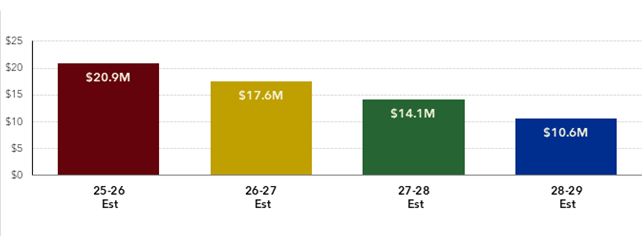
Diagram 4: Loan balance ($million)
Development Contributions (S7.11): Council collects s7.11 contributions from developers to help pay for new infrastructure and facilities for the growing population of the area. Some of the works to be undertaken in the Development Contributions Plan cater for the existing population and these works require a co-contribution from Council’s general funds. A total of $18 million projects funded from s7.11 and grants and contributions will be delivered in 2026/27. Funding by specific project is detailed in the capital works program later in this report.
The funding allocated to works programmed to be undertaken over the next three years are shown in Diagram 5.
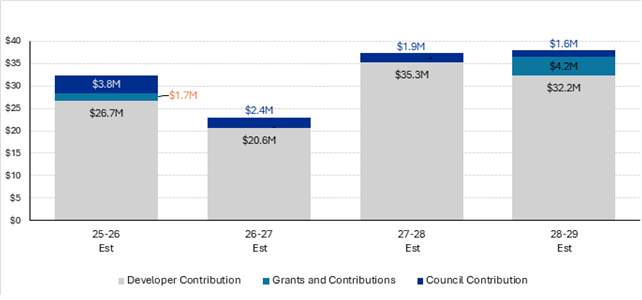
Diagram 5: s7.11 works program ($million)
Rates and Rates Structure: Council’s total rates income is ‘pegged’ by the State Government and approval must be obtained for increases above this amount (known as Special Rates Variations). The Independent Pricing and Regulatory Tribunal (IPART) announced the 2026/27 rate peg as 4.4%. The peg is still insufficient to cover increased operational and labour costs in the current environment of high inflation and rising costs. Council has successfully applied for a Special Rates Variation for a total rate increase of 29% to meet community needs and infrastructure renewal that will take effect for the rating year 2026/27.
In the 2026/27 budget the projected rates income is $87.5 million with the 4.4% peg or $108.1 million with the permanent SRV. This amount includes the permanent existing Special Rate Variations for Infrastructure/Roads ($4.7 million) and the Environmental Levies ($4.9 million) respectively.
The proposed rates restructure for 2026/27 is outlined below. The proposed rates structure includes the proposed SRV of 24.4% and the rate peg of 4.4%, totalling 29%.
Rates structure including rate pegging and Special Rate Variation increase of 29%
|
Type |
Category |
Rate in $ |
Min/base amount ($) |
% of Revenue from |
Yield $ |
|
Ordinary |
Residential |
0.00056195 |
698 |
|
50,625,980 |
|
Ordinary |
Business |
0.00408210 |
698 |
|
7,479,034 |
|
Special |
Infrastructure - Primary Rate |
0.0002855 |
|
|
20,205,494 |
|
Special |
Infrastructure - Primary Rate |
|
434 |
49.96% |
20,172,754 |
|
Special |
Infrastructure - Special Rate Variation |
0.00003532 |
|
|
2,871,162 |
|
Special |
Infrastructure - Special Rate Variation |
|
40 |
39.30% |
1,859,240 |
|
Special |
Environmental - Special Rate Variation |
0.00006069 |
|
|
4,933,645 |
|
Total |
|
|
|
|
$108,147,309 |
Funding Statement: A summary of Council’s Funding Statement for the next years is provided below. Following IPART’s approval, a special rate variation (SRV) is proposed to commence in 2026/27 and has been included in the projected operating income from that year onward. The SRV funds will be allocated specifically to infrastructure assets.
The funding statement outlines the capital movements, the funding of the capital works program, and a stable forecast for working capital changes.
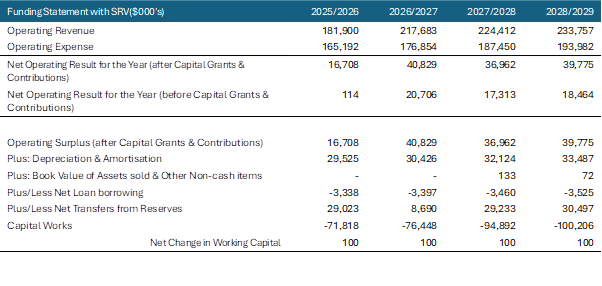
Changes made to the Delivery Program 2025-2029 and
Operational Plan 2026-2027 post exhibition:
· Capital Works. The funding statement and budget statements for 2026/27 financial year and onwards have been updated to reflect Councils resolution of the Ordinary Meeting of Council 19 May 2026 (GB.13) to bring forward the allocated budget of $4.4m for Norman Griffith Oval Upgrade from 2026/27 to 2025/26. This change mainly results in a reduction of capital works in 2026/27 and some minor adjustment to interest earned on investments. The change reduces the Summary of Capital Works Program and Operational Projects 2026/27 as well as Capital Works Program & Operational Projects 2026/2027 outlined in the Delivery Program 2025-2029 and Operational Plan 2026-2027.
· Rates structure table have been updated to reflect rating data as of May 2026.
Fees and charges schedule for 2026-27
Automated External Defibrillators (AEDs)
In March 2026, Council resolved to include an increase to relevant fees in the draft 2026/27 Fees and Charges for exhibition, to offset the annualised whole of life cost of installing, maintaining and monitoring AEDs, phased in over two financial years commencing in 2026/27.
Following exhibition, a revised AED placement program is proposed. As a result, amendments to the Fees and Charges schedule are required. These amendments are considered in a separate report to Council at the same meeting.
Updates to the Long-Term Financial Plan post exhibition
The LTFP covers the financial years 2026/27 to 2035/36. It recognises Council’s current and future financial capacity to continue delivering services, facilities and infrastructure to the community to achieve the goals set down in its Community Strategic Plan. The LTFP notes that Council’s financial position, and its current infrastructure backlog, will worsen without additional sources of funding. It also notes that Council is currently running an efficient operation, with a population to staffing level which is the second lowest in Sydney.
· Base case – NSW Government rate peg only (4.4%)
· Renew and Enhance Infrastructure (24.6% SRV above peg)
These scenarios will continue to be reflected in the LTFP under the Scenario planning section until next year’s review as part of the 2027/28 budgeting cycle.
The Renew and Enhance Infrastructure scenario has been updated to incorporate the confirmed 2026/27 rate peg and is Council’s preferred scenario as it will provide major infrastructure improvements, namely extensive renewal and upgrade work to existing stormwater and drainage, community building, recreational facility and footpath infrastructure, and build new footpaths and traffic and transport related infrastructure.
Some minor changes have been reflected because of bringing forward the allocated budget of $4.4m for Norman Griffith Oval Upgrade from 2026/27 to 2025/26 as per May 2026 Council resolution. This change mainly results in a reduction of capital works in 2026/27 as mentioned earlier in the report.
No other material changes are noted.
Social Considerations
Preparation of the revised Resourcing Strategy, revised Delivery Program and Operational Plan was informed by a review of social and economic changes, including effects of the NSW government’s housing and affordability policy initiatives, anticipated population growth and future service and asset management demands.
Environmental Considerations
Preparation of the revised Resourcing Strategy, revised Delivery Program and Operational Plan was informed by a review of urban planning, environmental and sustainability changes and challenges, including the effects of Councils’ alternative TOD plans and proposed NSW government’s policy changes relating to planning for the Sydney Metropolitan area, employment lands and Council’s local strategic planning strategy.
Community Consultation
The draft revised Resourcing Strategy (including LTFP, AMS and WMS), revised Delivery Program and draft Operational Plan, including Fees and Charges, were exhibited for community input for 28 days, between 29 April and 26 May 2026.
Consultation on AED program
Details of communications and submissions related directly to the AED program are included in a separate report to this meeting.
Consultation on Resourcing Strategy, Delivery Program and Operational Plan
It is the responsibility of Council to consider all submissions made during the exhibition period, prior to adopting the plans and strategies.
Communications for the exhibition of the plans generally included the following:
|
Communications
|
Details |
|
Council website and engagement portal |
Exhibition advertised with draft documents on website and engagement portal 29 April – 26 May 2026 (28 days):
DPOP webpage - 274 page views Engagement Hub: • 541 page views on portal • 778 unique visitors to portal • 27 document downloads Draft Documents included translated assistance information (6 languages). |
|
Draft hard copy documents and flyers |
Draft documents available at four Council libraries and customer service centre |
|
Newspaper advertisement |
North Shore Times ¼ page – 21 May 2026
|
|
Media release– inviting public comments on draft plans |
7 May 2026
|
|
News item on Council website – inviting public comments on draft plans
|
8 May 2026 |
|
Your Say e-news notification |
Sent to approx. 1600 subscribers on 30 April 2026 |
|
Social media posts |
Facebook - 15 May 2026 (3202 reach) – 79 engagement, 74 clicks |
A full copy of all submissions will be distributed separately to Councillors. The key issues in the non-AED submissions have been summarised in the table below. The summary includes responses and recommendations, with no changes proposed to the exhibited plans.
|
Submission/s |
Issues raised |
|
President Gordon Cricket Club |
Objects to the proposed additional fees to fund Council’s program for community access to AED’s on the basis that: · the fees are excessive and place an additional financial burden on the club on top of hiring fees for turf cricket ovals and a separate lease change to use the Killara Pavilion · Gordon Cricket Club has already provided a defibrillator inside Killara Oval Pavilion · seeks removal of the separate lease charge for use of the Pavilion and its inclusion in the ground hire · queries the proposed imposition of additional fees on the club when the condition of Killara Oval is considered to be poor. |
|
Response
Proposed fees to fund the AED rollout
The issues raised in relation to the costs of the AED rollout and proposed fees to be applied to the club are addressed in the separate report Community Access to Automated External Defibrillators (AEDs) across Council Facilities in this Business Paper.
Lease arrangement and charge for use of the Killara Pavilion
Council’s Management of Community and Recreation Land and Facilities Policy mandates that a licence agreement is required where there is use and occupation of the premises (Killara Pavilion) separate to fees for booking sporting fields. Council officers have previously discussed a number of options for the club in relation to its use of the pavilion premises, including a new licence at reduced rates or a casual hire arrangement. The club has also previously been informed that its existing licence agreement permits usage by the club during their set usage times, and at all other times the premises is available for use by other users.
Condition of Killara Oval
Council undertakes an annual sportsfield renovation program that includes aeration, selective topdressing, weed control, fertiliser application and turf replacement as required. In addition to these scheduled works, additional drainage works have been undertaken in 2026 to address drainage issues at the main entrance to the ground from the pavilion. Council will continue to work with users on other reactive issues that come up and these are addressed on a priority basis.
Recommendation
Subject to Council’s decision on the recommendations for this report, the club to be advised in terms of the response above, relating to the licence agreement for Killara Pavilion and condition of Killara Oval. |
|
|
Strongly objects to Council’s proposal to increase rates by 29% in the exhibited Long Term Financial Plan for the following reasons: · Disagrees with the assertion that ratepayers / residents are supportive for the rate increase, on the basis that stating that 45% are 'at least somewhat supportive' does not indicate support · Ku-ring-gai Council is not considered to be fiscally responsible, based on unnecessary services and expenditure reported in the media · Advises Council to focus on maintenance of existing footpaths and fixing roads, not building new ones and undertaking excessive capital works · Raises concerns that developers should be paying for the infrastructure requirements generated by new developments, not residents and ratepayers. · Disagrees that Ku-ring-gai residents should pay for the rate increase because they are assessed as being able to pay |
|
|
Response
Council’s decision to proceed with the rate increase
Council undertook a comprehensive engagement process for rate rise options that was multi-staged, and robust, ensuring that the decision on the proposed 29% rate increase was well-informed by diverse community views.
The results of community engagement from the first phase (July-September 2025) were considered by Council in the Community Engagement Outcomes Report in October 2025. This was published on Council’s YourSay page and was publicly available before Council’s October meeting. Council’s decision-making was informed by a statistically valid representative survey. This demonstrated that a majority of residents (over 60%) preferred a Special Rate Variation (SRV) option over a 'No SRV' scenario, which would have resulted in cuts to local services and worsening infrastructure.
Council's decision to proceed with the 29% rate increase (an amended Option 3) at its December meeting, balanced the community's desire for infrastructure renewal (as shown by majority support for an SRV option) with the need for a significant, long-lasting financial solution. While representative survey results showed that Option 2 (22% increase) was the most preferred SRV option, the 29% increase was ultimately selected because it represented an optimal balance of financial necessity and community benefit, as well as:
· aligning with the Community Strategic Plan to make Ku-ring-gai a better place to live by providing infrastructure that is more accessible, connected, modern, safe and enjoyable · delivering a noticeable and significant improvement in the quality of Council's infrastructure, specifically targeting high-priority, low-satisfaction areas like footpaths and traffic and transport-related infrastructure · reducing the infrastructure backlog by 39% over the next 10 years, ensuring assets are renewed faster than they are depreciating · providing the necessary funding for the construction loan of the St Ives Indoor Sports Centre · preventing future generations from being burdened with the increased costs of deteriorating infrastructure and temporary repairs. · Council has a long-standing, disciplined approach to managing costs supported by a Service Improvement Review Program and other efforts to streamline business processes and reduce waste.
Funding Infrastructure
Council’s current infrastructure backlog is primarily due to historical funding challenges. The backlog has developed over decades of structural financial shortfalls. Rate revenue, limited by the annual rate peg, has been consistently lower than the actual cost of renewing depreciating assets. A key priority for Council continues to be maintaining existing core infrastructure. The majority of funds sought under Council’s SRV application are tied to improving existing infrastructure, including deteriorating local footpaths.
Council has consistently endorsed the view that existing ratepayers should not bear all the financial burden of infrastructure required to support new housing developments. Under NSW planning legislation, Council utilises developer contribution frameworks (Section 7.11 and 7.12 plans) to ensure developers help fund the infrastructure generated by their projects.
Council has estimated a significant mismatch between future required infrastructure funding and planned housing capacity under the Ku-ring-gai TOD areas. At its meeting of 28 April 2026 Council resolved to request the DPHI to include Ku-ring-gai’s TOD areas in the NSW Government’s Transport Oriented Development Community Infrastructure Program, which is investing up to $520 million in community infrastructure (including road upgrades, transport links and high-quality public open spaces.)
Capacity to pay
While an independent financial assessment supported general capacity to pay the proposed increase in rates, Council has previously recognised that this does not reflect the individual financial hardships of every household. To protect vulnerable community members, Council has a policy that provides relief and assistance options for residents experiencing genuine financial hardship.
Recommendation
Subject to Council’s decision on the recommendations for this report, the resident to be advised in terms of the response above.
|
|
|
Resident – Ku-ring-gai |
Raises concerns that: · active transport access along the strategically important Comenarra Parkway is fragmented and unsafe in many sections despite the corridor connecting significant residential areas, the SAN precinct, Thornleigh train station and shopping centre and Lane Cove National Park recreational destinations across council boundaries. · the latest SAN precinct plans propose further density increases, road junction reconfiguration and transport changes · now is the appropriate time to also plan and deliver integrated active transport infrastructure as part of those works and avoid costly and complex retrofitting connections in the future Seeks council support to: · formally support investigation of a shared walking and cycling path along Comenarra Parkway from Fox Valley Road to Pennant Hills Road. · work collaboratively with Hornsby Shire Council on future corridor planning · advocate to the NSW Government through submissions and engagement relating to SAN precinct development and associated transport planning · investigate opportunities for an initial feasibility or corridor study to help make the project grant-ready for future state or federal funding opportunities · early strategic and support and planning would ensure opportunities are not lost as surrounding development and infrastructure development proceeds |
|
Response
As part of Council’s submission to the Secretary’s Environmental Assessment Requirements (SEARs) for the Wahroonga Estate Central Masterplan, additional documents and details were requested to be submitted with any future Environmental Impact Statement for State Significant Development Application 111445995. Specifically, the following assessment requirements in relation to active and public transport were articulated:
The Sustainable Transport Initiative (Appendix J) that underpinned the Wahroonga Estate Concept Plan approval identified a suite of site opportunities, which have been largely sidelined or watered down over the delivery of various elements of the Concept Plan. This should be a starting point for sustainable and active transport provision.
Provision for active transport should be made on Fox Valley Road and The Comenarra Parkway frontages. Provision of active transport infrastructure through the site should be made accessible to the public, with connections to The Comenarra Parkway (towards Thornleigh) and Fox Valley Road (towards Warrawee/Turramurra/Wahroonga).
Upgrade of existing 573 and 589 bus services to provide All Day Frequent Network (ADFN)-style service.
Council will work with Department of Planning, Housing and Infrastructure, Hornsby Shire Council and the Wahroonga Estate to ensure active and public transport opportunities are thoroughly explored, and suitable provision made for active transport infrastructure.
Recommendation
Subject to Council’s decision on the recommendations for this report, the resident to be advised in terms of the response above. |
|
|
Resident - Ku-ring-gai |
Requests information on Council’s planning for the Turramurra Community Hub including information on development applications, approvals and timelines.
|
|
Response
Council continues to work with the major private land owner (Coles) on the site to progress towards the first stage of development. As endorsed by Council in April 2026, the Turramurra Community Hub project will be integrated into a placed-based strategic land-use planning framework for employment zoned land in Turramurra and St Ives (as a Stage 1 Primary Centre) within a Town Centre Revitalisation Program for Ku-ring-gai. Under the program, the formal strategic planning framework and community master planning phase is expected to commence in 2027/28.
There is existing development interest in the Turramurra town centre, including a private planning proposal for the Turramurra Plaza site (Pacific Highway and Kissing Point Road) and the Coles site on Ray Street.
It is anticipated that the Coles planning proposal will include the balance of Council landholdings in the Ray Street Precinct to ensure that development of those Council lands is not compromised by development of the Coles landholdings.
Recommendation
Subject to Council’s decision on the recommendations for this report, the resident to be advised in terms of the response above. |
|
|
Resident – South Turramurra |
Seeks information on Council’s plans for the upgrade of Saddington Street, South Turramurra
|
|
Response
The project is currently planned to progress to detailed design in FY2026/27, with construction scheduled for FY2027/28. Due to competing priorities and the need to allocate resources to higher priority projects, the timing of this project has been adjusted. Council will continue to progress the design and planning to ensure the project is delivered in line with the FY2027/28. Works will be undertaken under the roads rehabilitation program and are listed in Council’s Roads and Transport Asset Management Plan.
Recommendation
Subject to Council’s decision on the recommendations for this report, the resident to be advised in terms of the response above. |
|
|
Four separate resident submissions –South Turramurra |
Residents thank Council for its continued commitment to the Road Rehabilitation Program 2026/2027 particularly for Vernon Street, South Turramurra to complete the project from Chisolm Street to the cul-de-sac. |
|
Response
The resident comments are noted.
Recommendation
Subject to Council’s decision on the recommendations for this report, the residents to be thanked for their feedback to Council’s plans. |
|
|
Resident – Lindfield
|
· Supports proposed new traffic signals with pedestrian crossing facilities at the intersection of Pacific Highway and Strickland Avenue, Lindfield on the basis that it will provide safe access for pedestrians seeking to cross the highway · Supports progression of the Lindfield Village Hub project which has been in the planning stages for a long time · Raises concerns that the LVH will be delayed further · Raises concerns that the planned upgrade to Ibbitson Park, Lindfield is unnecessary and will not be used by community members |
|
Response
Proposed traffic signals and pedestrian crossing facilities - intersection of Pacific Highway and Strickland Avenue, Lindfield
The resident comments are noted.
Lindfield Village Hub project
In April 2026 Council endorsed a new planning framework to guide future development, infrastructure delivery and landuse outcomes across all town centres in the local government area.
The report noted that The Lindfield Hub site, located at the Woodford Lane car park, was planned to include a new library and community centre, park and plaza, underground parking, shops and housing. Council had negotiated an agreement for delivery of the development with a preferred proponent when in November 2023 funding of $9.8m for a commuter car park was withdrawn by Transport for NSW. As a result, the development did not proceed.
The April report noted that, as a result of amendments to Ku-ring-gai LEP 2015 in 2025, the planning controls for floor space and height on the Lindfield Hub site have been increased and this provides an opportunity for Council to revisit delivery of the project.
Feasibility and strategic options to progress the project have since been considered and will be the subject of a further report to Council.
Ibbitson Park upgrade, Wolesley Road, Lindfield
Ibbitson Park is one of the parks identified in the Lindfield Town Centre Public Domain Plan. The upgrade incorporates the existing closure of one end of Wolseley Road, Lindfield. The proposed park upgrade is to elevate the park to an urban park level befitting the Lindfield town centre character and support the increase in housing density and population planned in the vicinity through Transport Oriented Development. The upgrade will include additional amenities such as seating, bubblers, bins, picnic facilities, an improved play space and a bike track. The existing road closure will increase opportunities for passive recreation and improve pedestrian amenity.
Recommendation
Subject to Council’s decision on the recommendations for this report, the resident to be advised in terms of the response above. |
|
|
Resident – Lindfield
|
Supports proposed new traffic signals with pedestrian crossing facilities at the intersection of Pacific Highway and Strickland Avenue, Lindfield on the basis that it will provide safe access for pedestrians seeking to cross the highway Supports progression of the Lindfield Village Hub project which has been in the planning stages for a long time |
|
Response
Proposed traffic signals and pedestrian crossing facilities – intersection of Pacific Highway and Strickland Avenue, Lindfield
The resident comments are noted.
Lindfield Village Hub project
In April 2026 Council endorsed a new planning framework to guide future development, infrastructure delivery and landuse outcomes across all town centres in the local government area.
The report noted that The Lindfield Hub site, located at the Woodford Lane car park, was planned to include a new library and community centre, park and plaza, underground parking, shops and housing. Council had negotiated an agreement for delivery of the development with a preferred proponent when in November 2023 funding of $9.8m for a commuter car park was withdrawn by Transport for NSW. As a result, the development did not proceed.
The April report noted that, as a result of amendments to Ku-ring-gai LEP 2015 in 2025, the planning controls for floor space and height on the Lindfield Hub site have been increased and this provides an opportunity for Council to revisit delivery of the project.
Feasibility and strategic options to progress the project have since been considered and will be the subject of a further report to Council.
Recommendation
Subject to Council’s decision on the recommendations for this report, the resident to be advised in terms of the response above. |
|
Internal Consultation
A briefing and workshops were held with councillors and the organisation as part of the review, preparation and consultation phases for the plans and strategies. This included:
· Advice on budget parameters for 2026-2027 as well as challenges and opportunities affecting the financial, asset and workforce sustainability of Council and its ability to respond to identified long term priorities.
· Consultation across the entire organisation in reviewing the current plans and proposed projects, programs and services for 2026/27
· Consultation with Councillors and senior management at a briefing session in May to review Council’s priorities and the proposed program of works and services.
As a result of internal consultation the wording of Action U3.1.3 (Page 34 - Outcome 2 – Delivery Program and Operational Plan) has been modified to more clearly reflect the first phase of concept planning for specified streetscape improvements to be completed in 2026/27. Detailed plan preparation and construction will be undertaken in subsequent years.
U3.1.3 – Prepare strategic brief and initial concept design for streetscape improvements for St Ives, Roseville and Turramurra local centres. (Responsible: Manager Urban and Heritage Planning)
Monitoring and reporting on performance
Under the Integrated Planning and Reporting (IP&R) framework, councils are required to monitor and report on their progress in achieving the objectives, strategies and term achievements outlined in their Community Strategic Plan, Delivery Program and Operational Plan. This ensures transparency, accountability and continuous improvement in local government service delivery.
Progress is principally measured each quarter through reviews of one year actions and four year term achievements, representing capital/operational projects, programs and service delivery. Progress against delivery timeframes or milestones can be flagged as on-track, off-track or completed.
To complement this reporting, the Delivery Program also include a series of performance indicators that provide further insights into how outcomes are being delivered to the community.
Summary
At its meeting of 28 April 2026, Council considered a report on the draft revised Resourcing Strategy, revised Delivery Program and draft Operational Plan. Council resolved that the draft plans, subject to adopted changes and minor corrections, be placed on public exhibition for a minimum of 28 days. The draft plans and strategy were exhibited for a period of 28 days from 29 April to 26 May 2026. Council’s Fees and Charges were exhibited in a separate document.
On 2 June 2026, IPART released its decision to approve Council’s Special Rate Variation (SRV) application.
The recommendation below is subject to any amendments to the exhibited project costs and Fees and Charges for the Automated External Defibrillator (AED) program being considered separately at this meeting.
That Council adopt the revised Resourcing Strategy 2026-2036, revised Delivery Program 2025-2029 and Operational Plan 2026-2027, incorporating the Budget, Capital Works Program, Statement of Revenue Policy and Fees and Charges for 2026-2027, incorporating a Special Rate Variation (SRV) of 24.6% to begin from 1 July 2026 which, when combined with the confirmed 4.4% rate peg, will result in a 29% rate revenue increase in 2026/27.
|
Helen Lowndes Integrated Planning Coordinator |
Mette Kofoed A/Manager Finance |
|
Cindy Venables Corporate Planner |
Christopher M Jones Manager Governance and Corporate Strategy |
|
Angela Apostol Director Corporate |
|
|
Attachments: |
A1⇩ |
Post-exhibition Delivery Program 2026-2029 and Operational Plan 2026-2027 (June 2026) |
|
2026/165975 |
|
|
A2⇩ |
Post-exhibition Fees and Charges 2026-2027 |
|
2026/166296 |
|
|
A3⇩ |
Post-exhibition Long Term Financial Plan 2026-2036 (June 2026) |
|
2026/165965 |
|
|
A4⇩ |
Post-exhibition Asset Management Strategy 2026-2036 (June 2026) |
|
2026/165944 |
|
|
A5⇩ |
Post-exhibition Workforce Management Strategy 2026-2030 (June 2026) |
|
2026/165940 |
|
|
A6⇩ |
Post-exhibition Asset Management Policy v6 (June 2026) |
|
2026/165971 |
|
ATTACHMENT No: 1 - Attachment 1 - Post-exhibition Delivery Program 2026-2029 and Operational Plan 2026-2027 (June 2026) |
|
Item No: GB.4 |
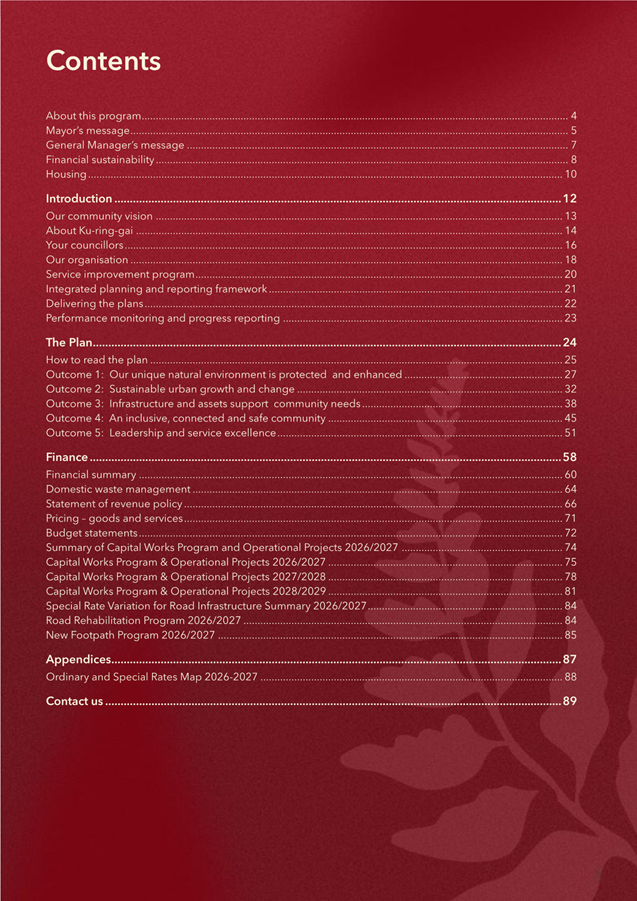
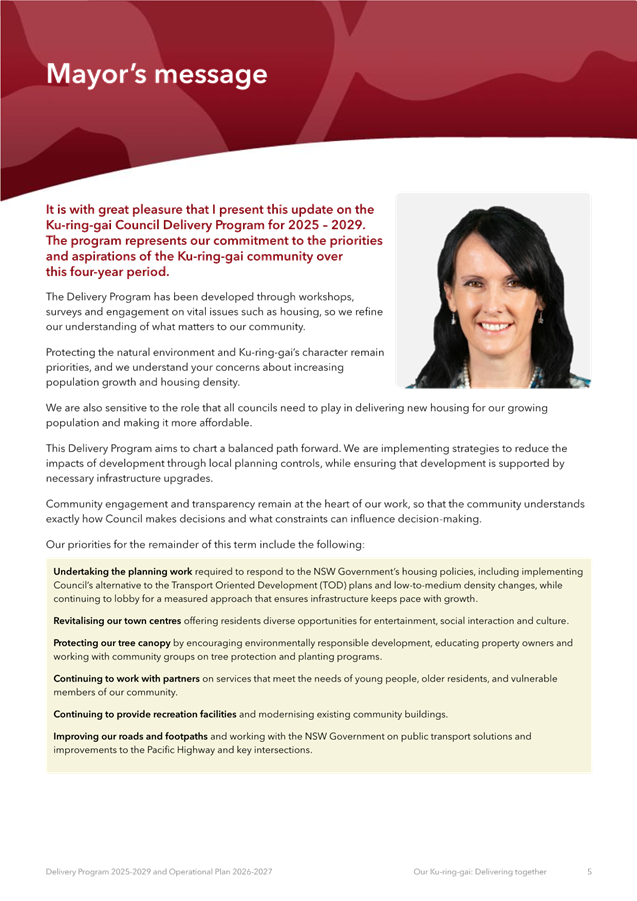
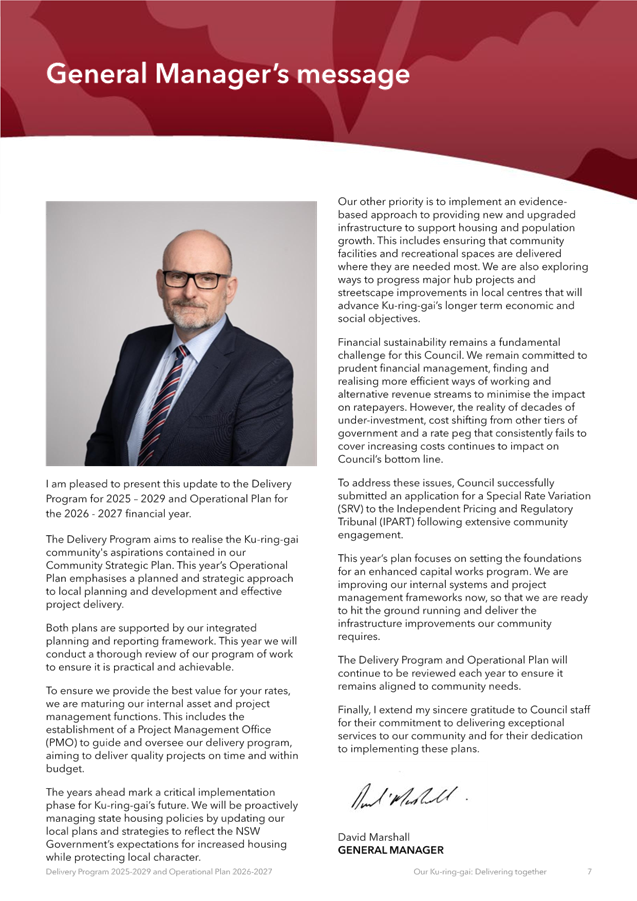

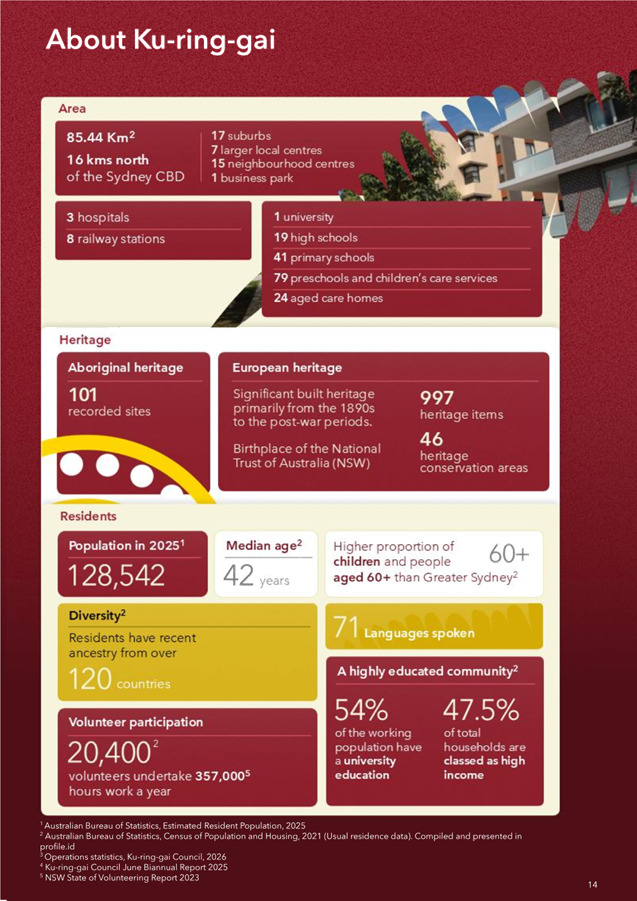
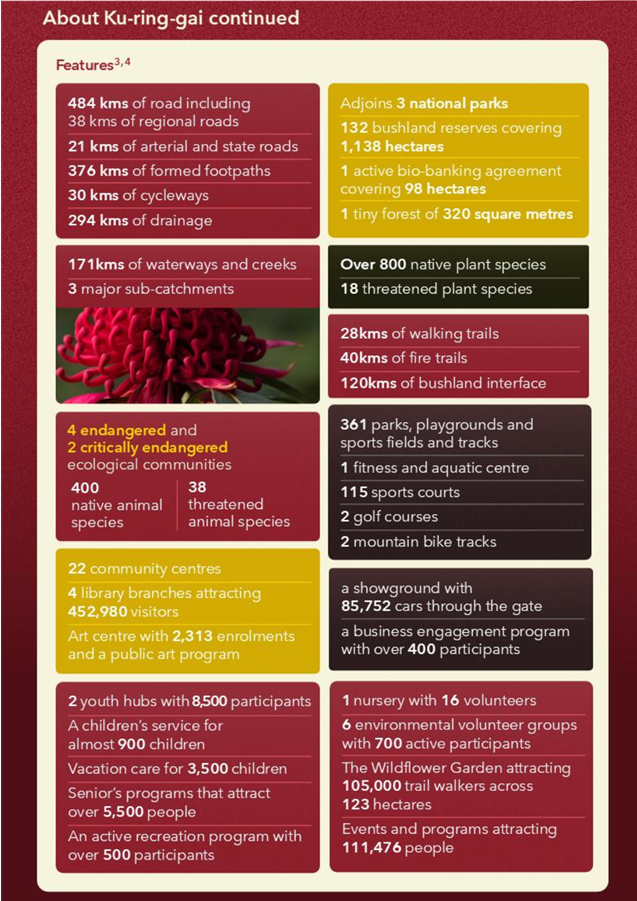



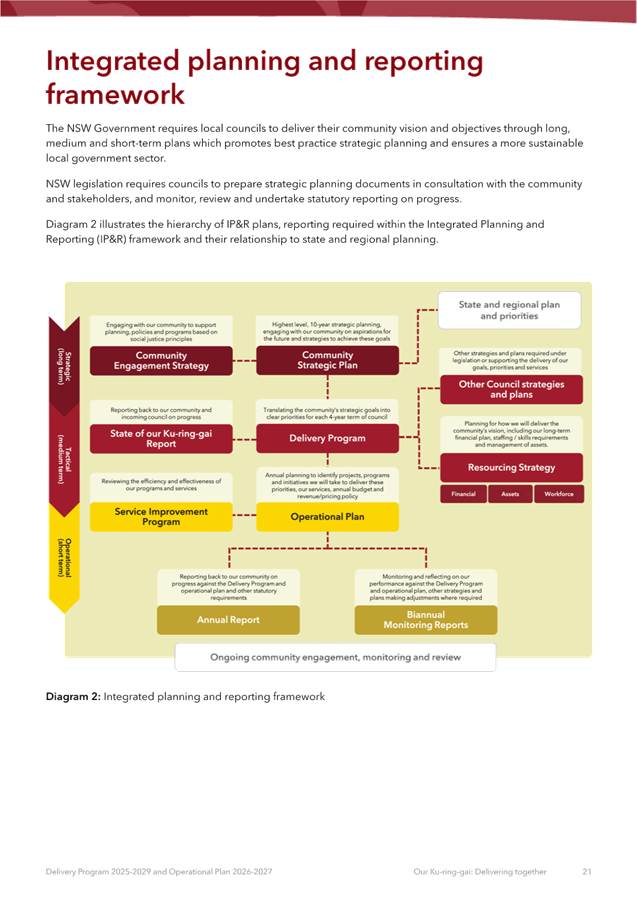
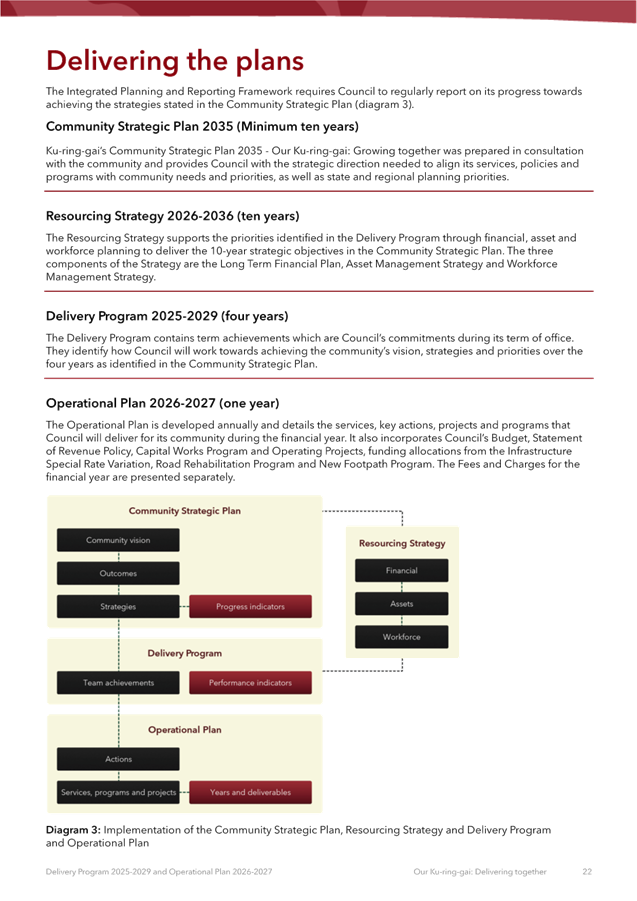


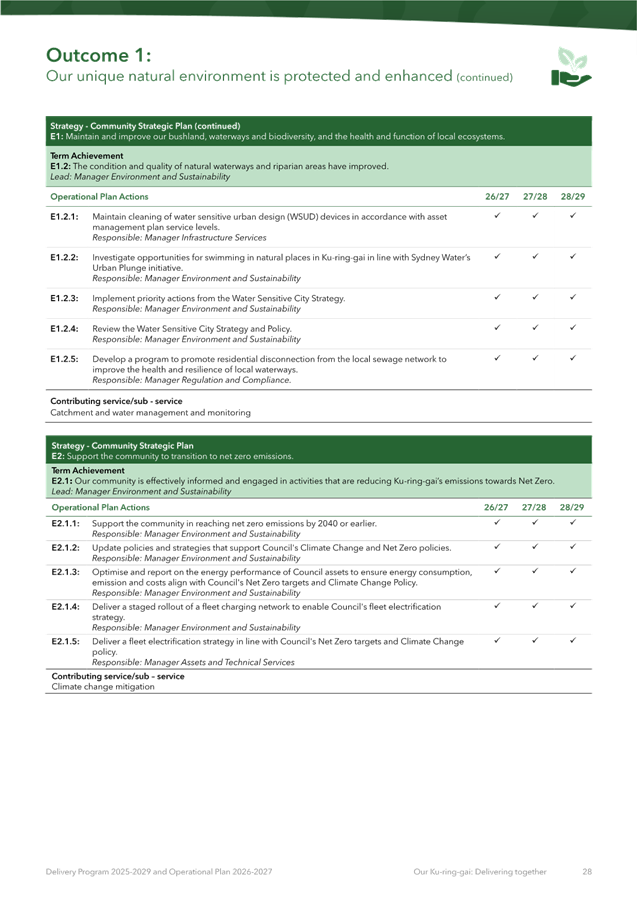
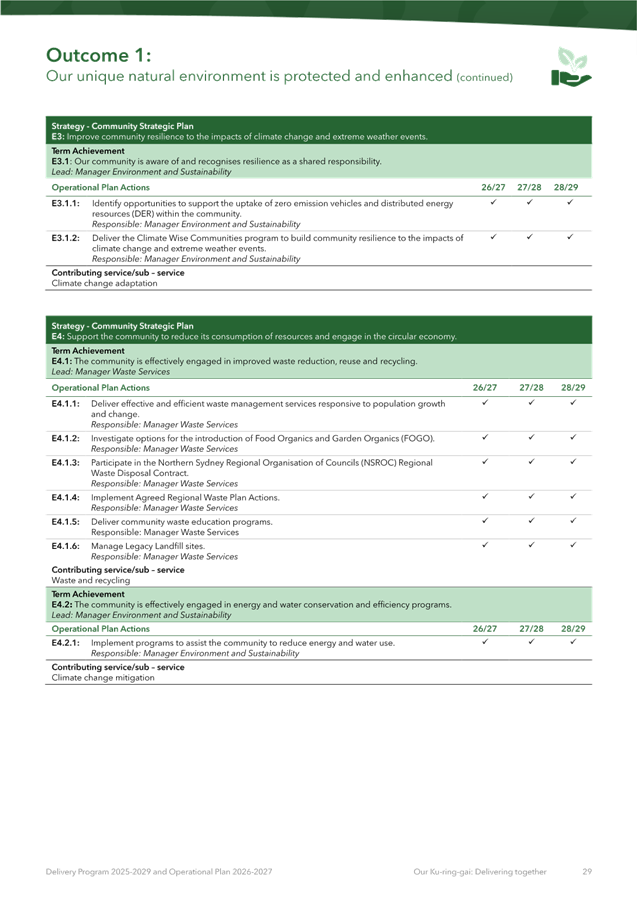
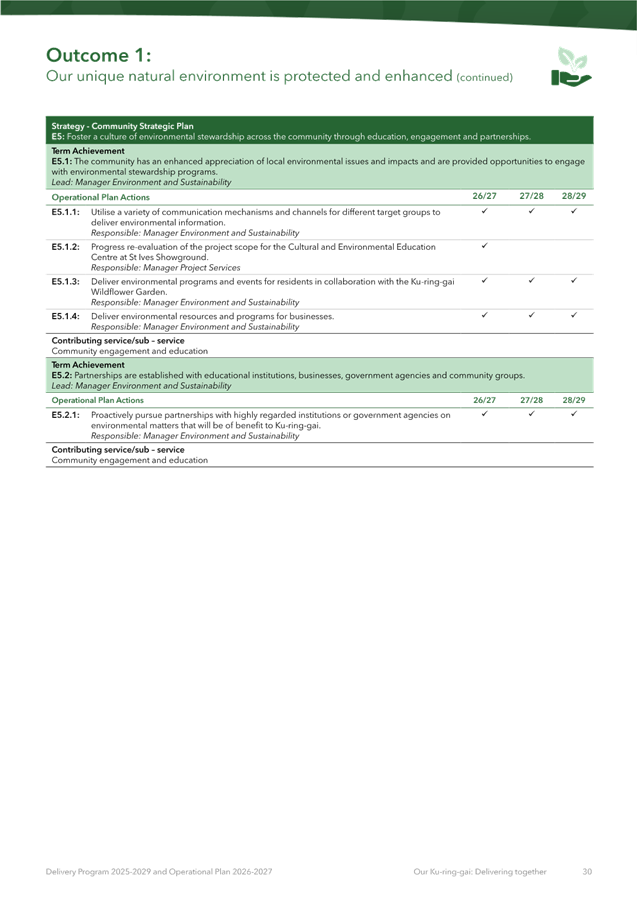
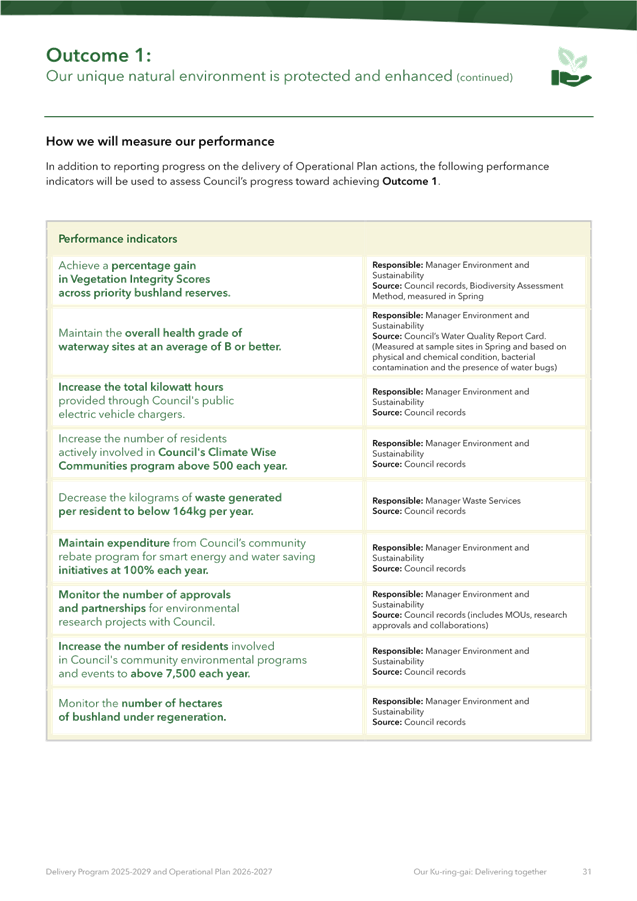
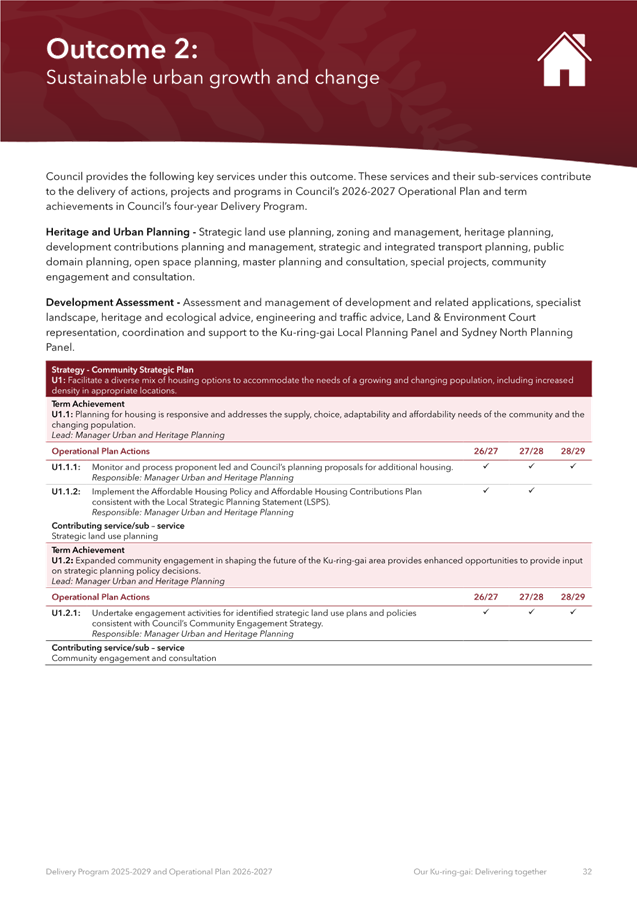
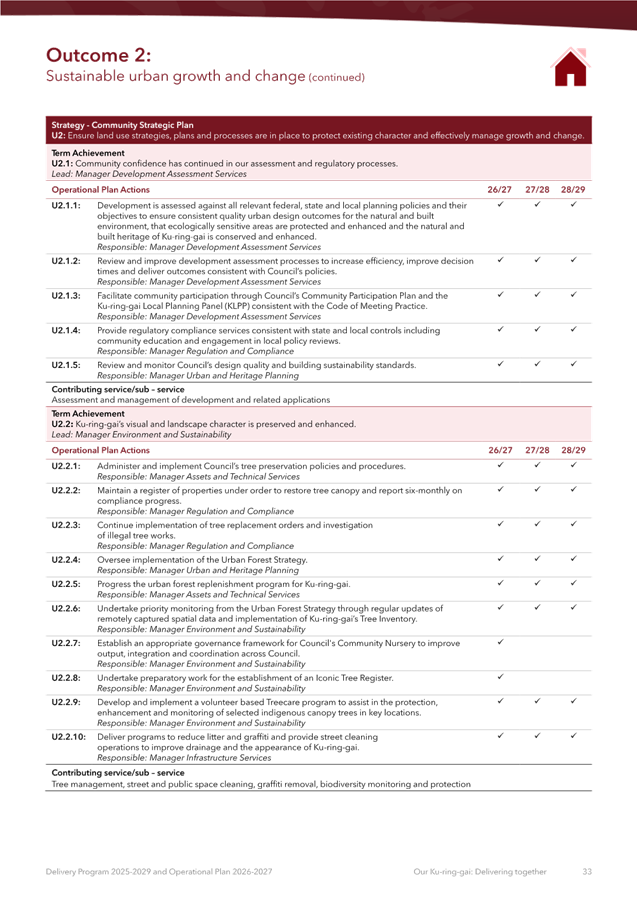
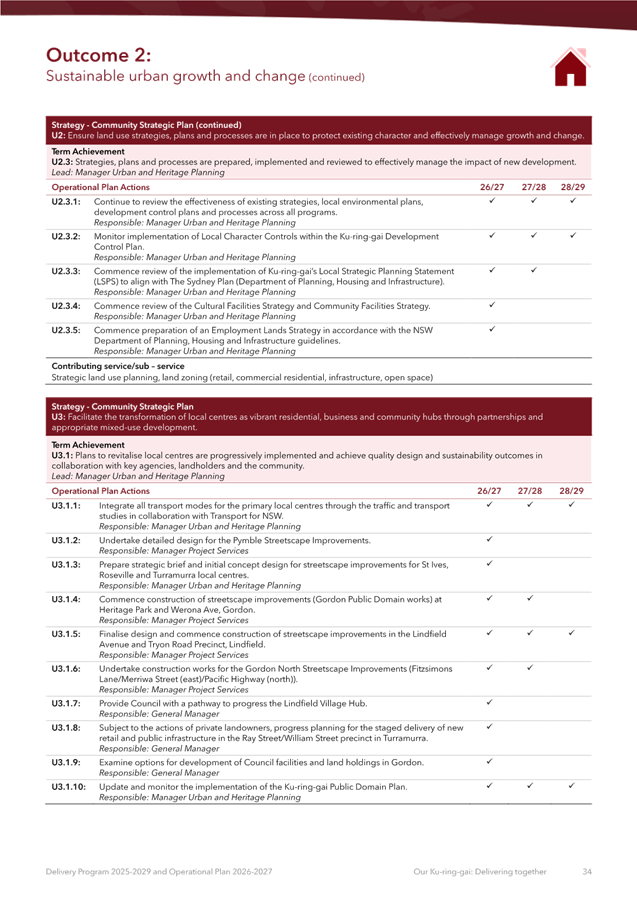
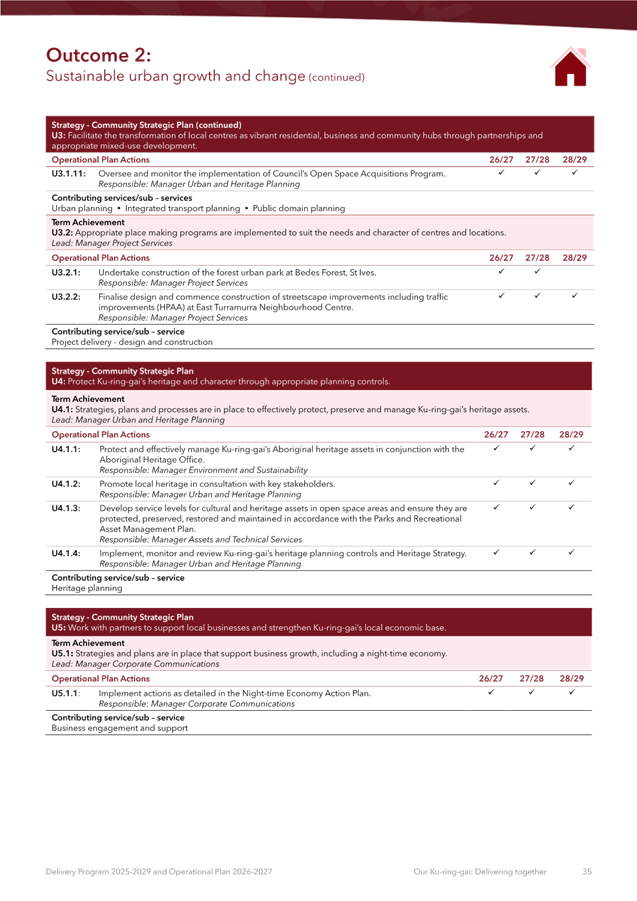
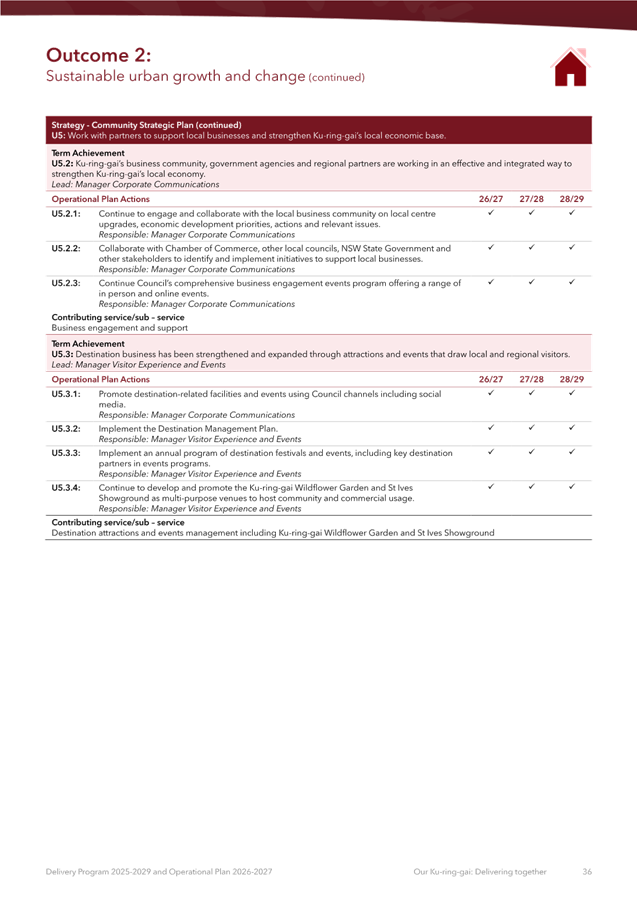
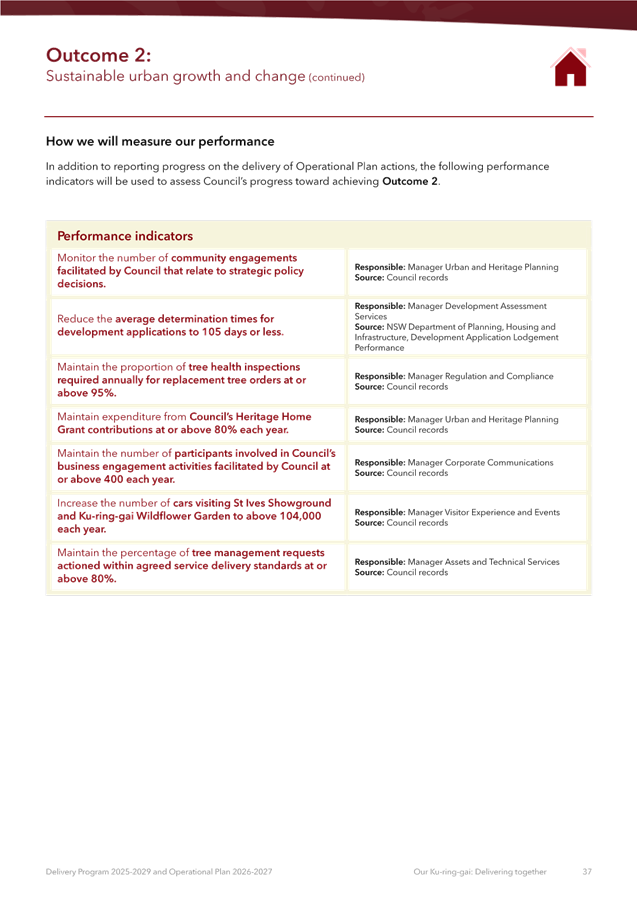
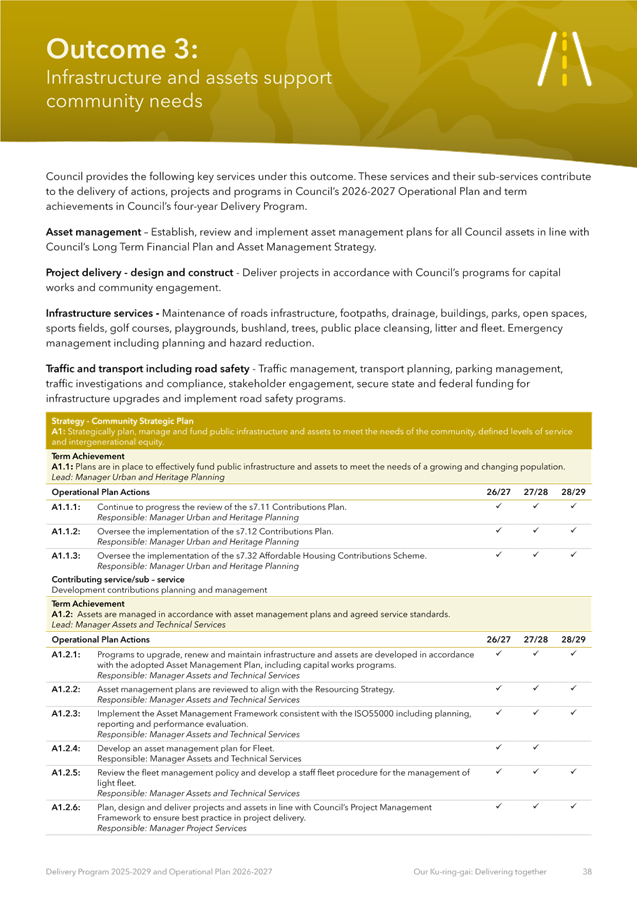
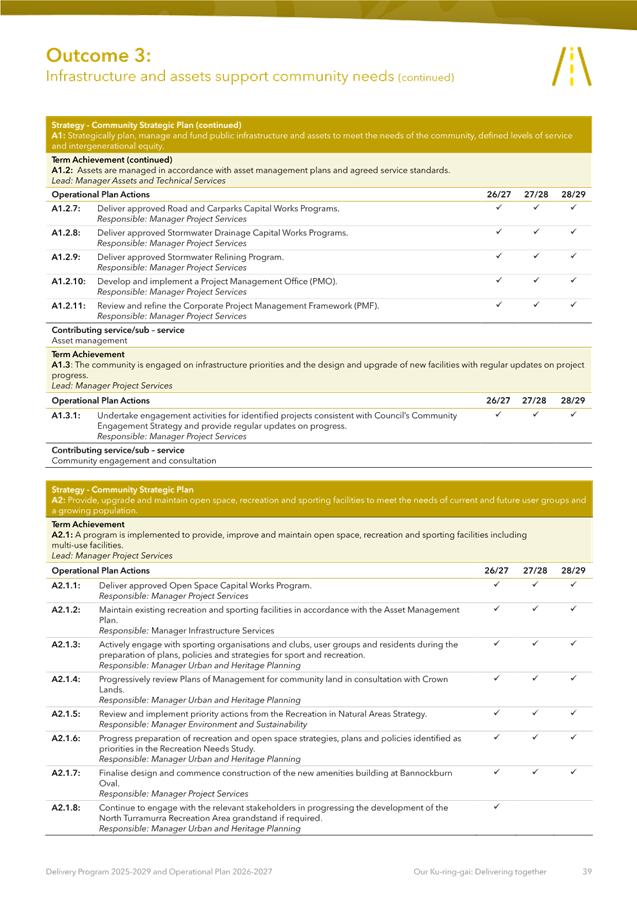


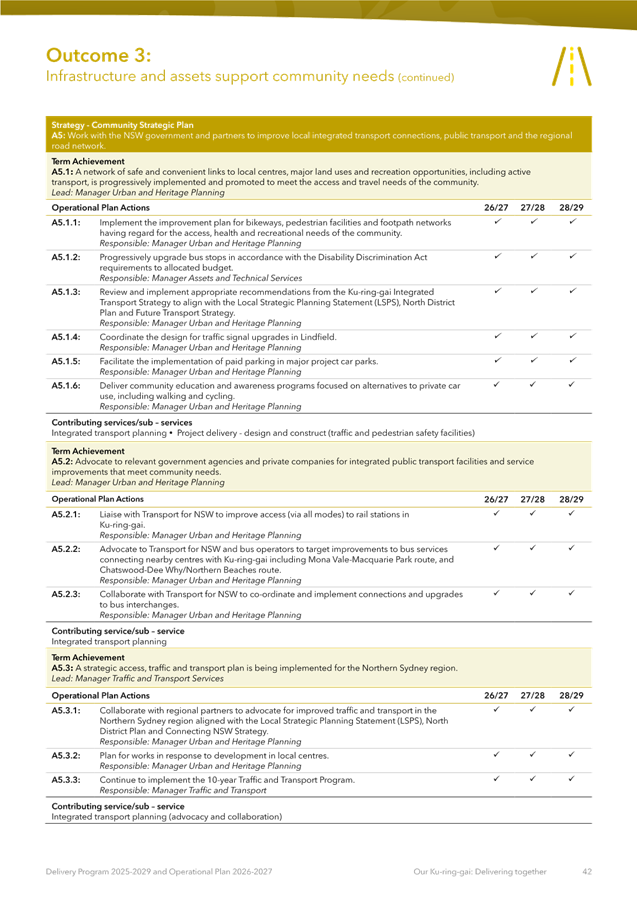
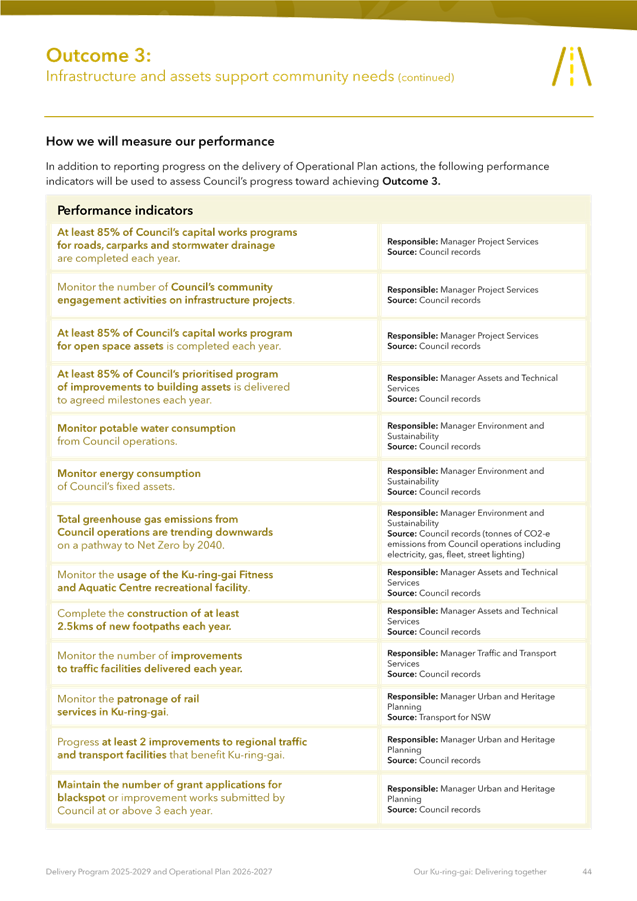
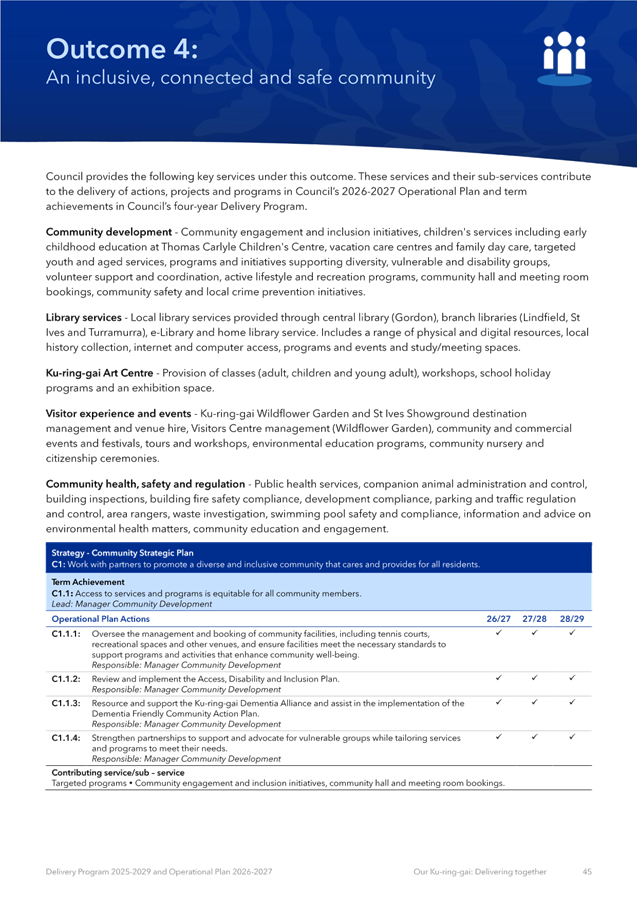
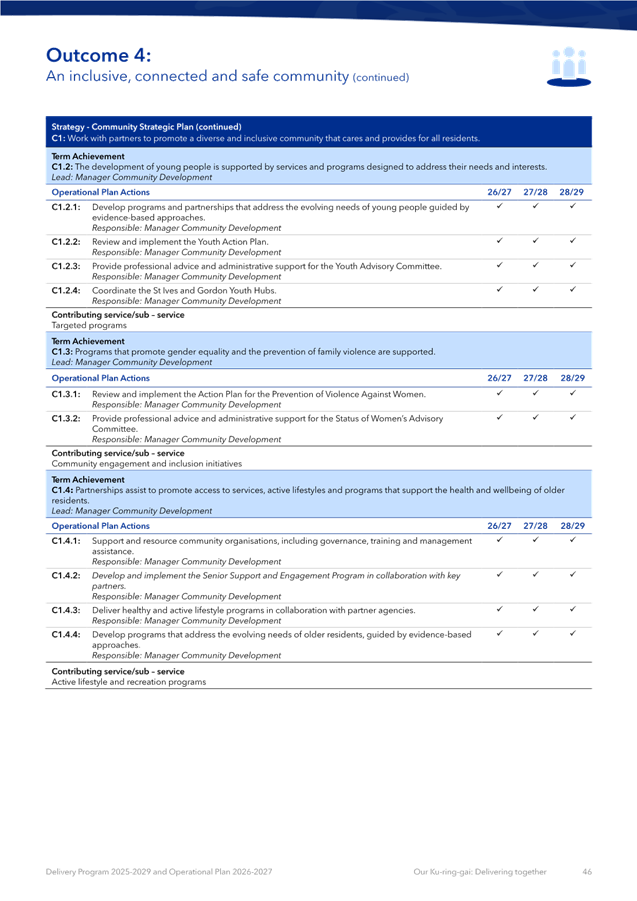
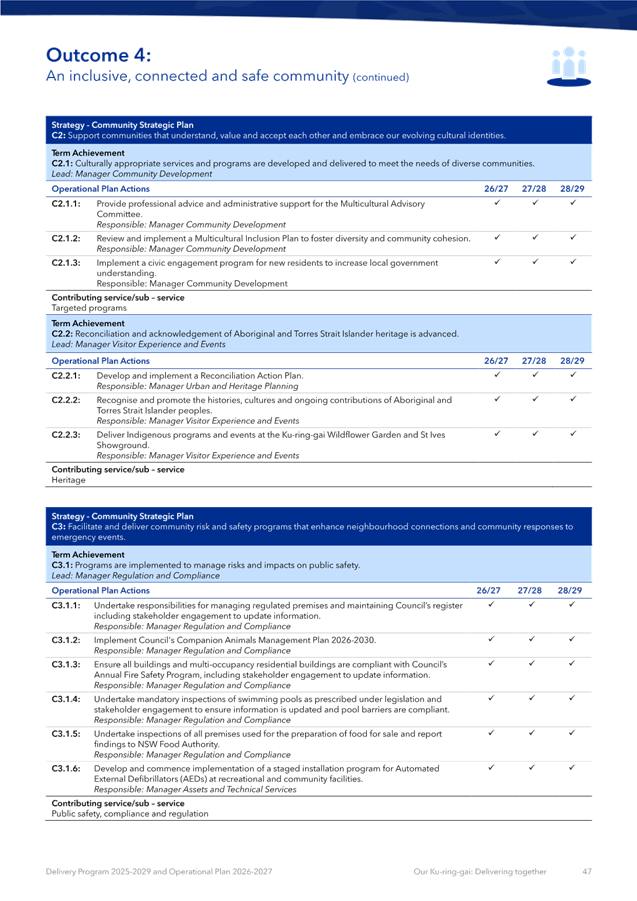
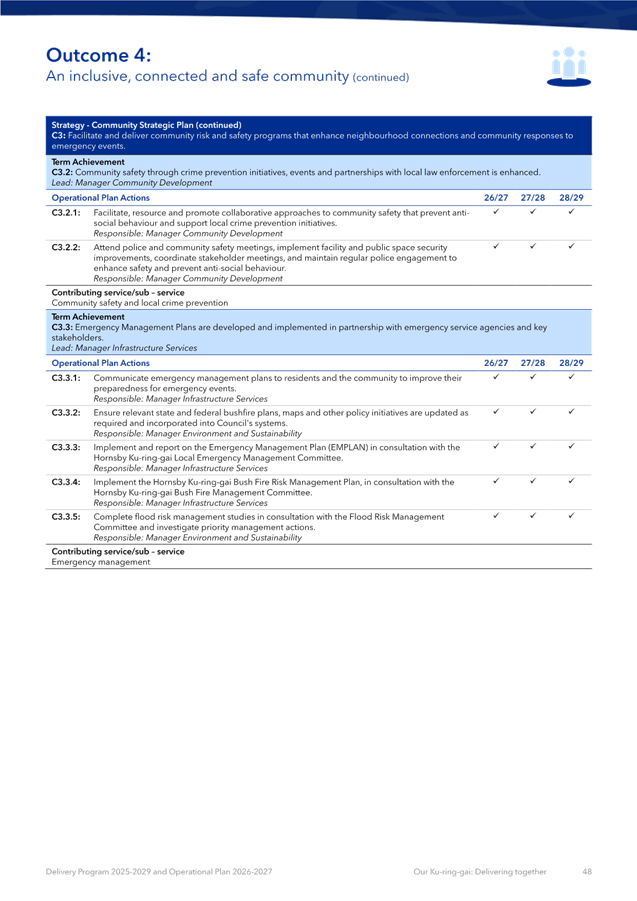
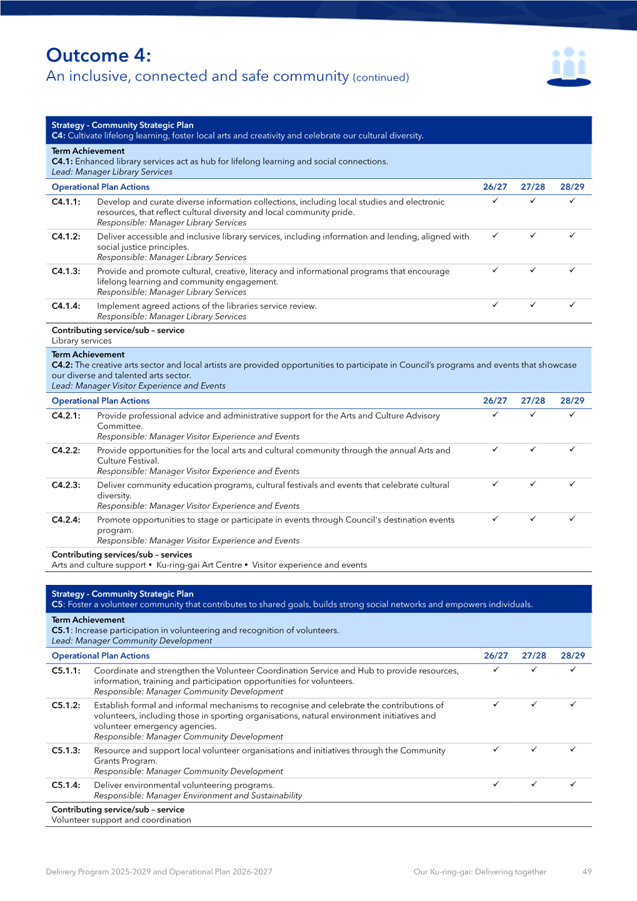
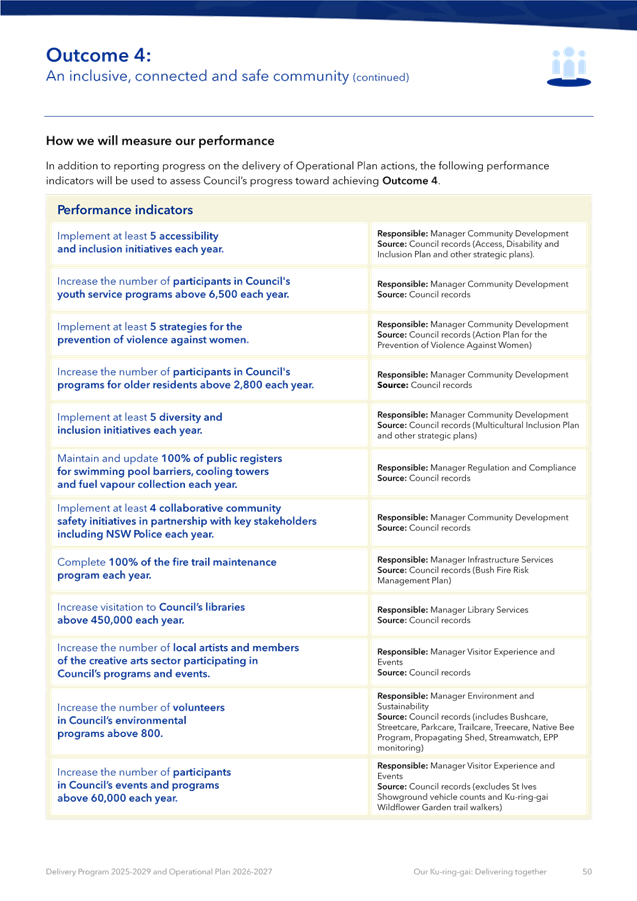


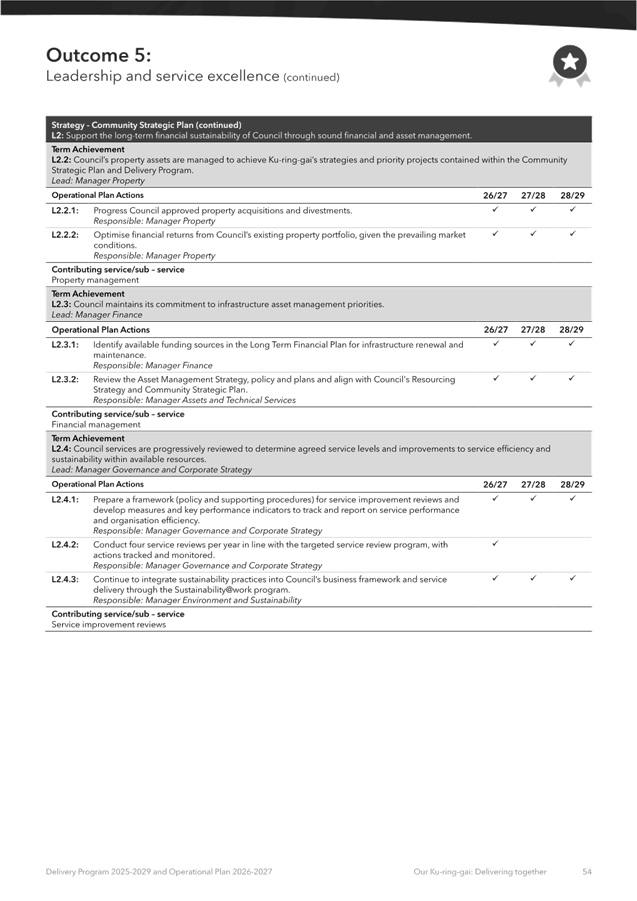
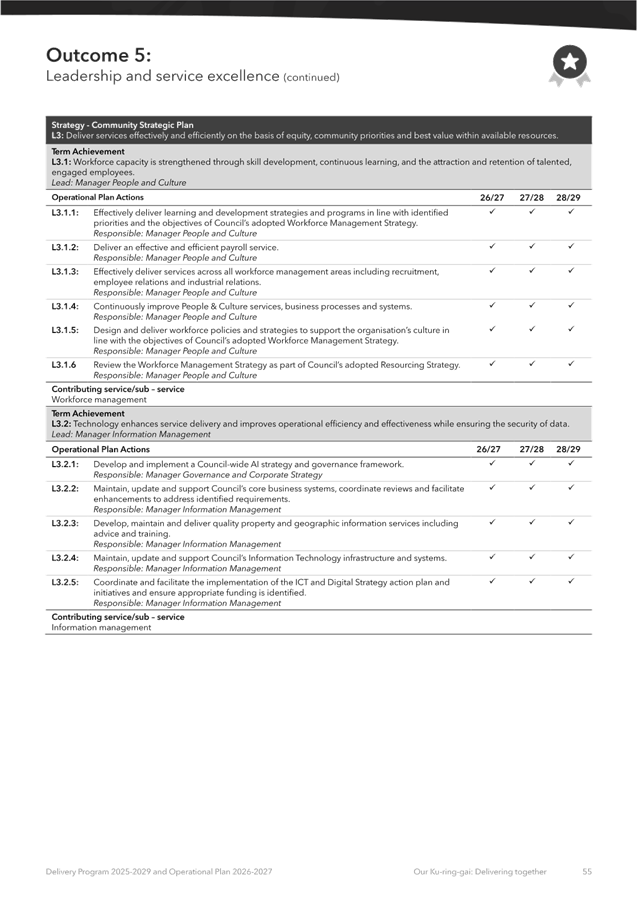
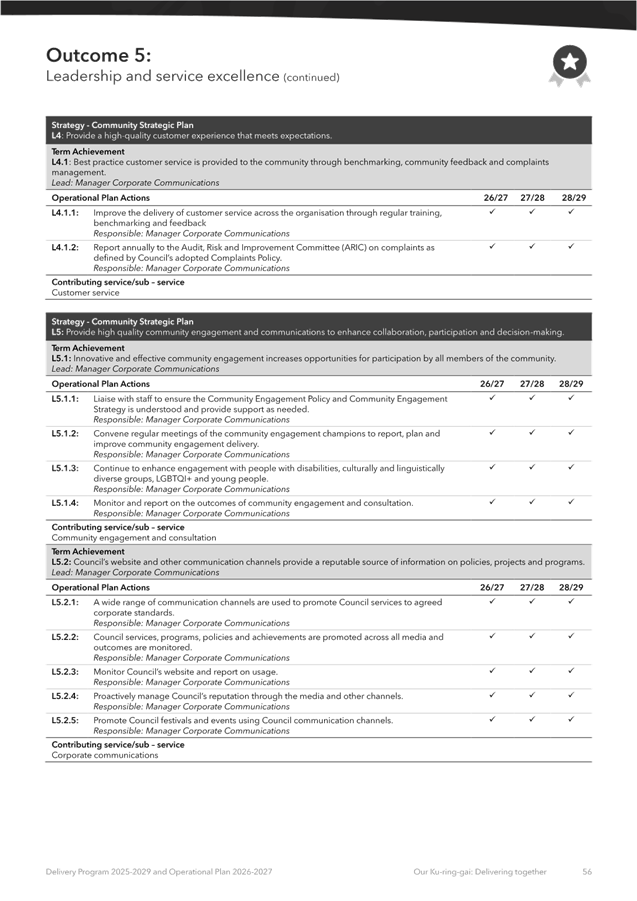
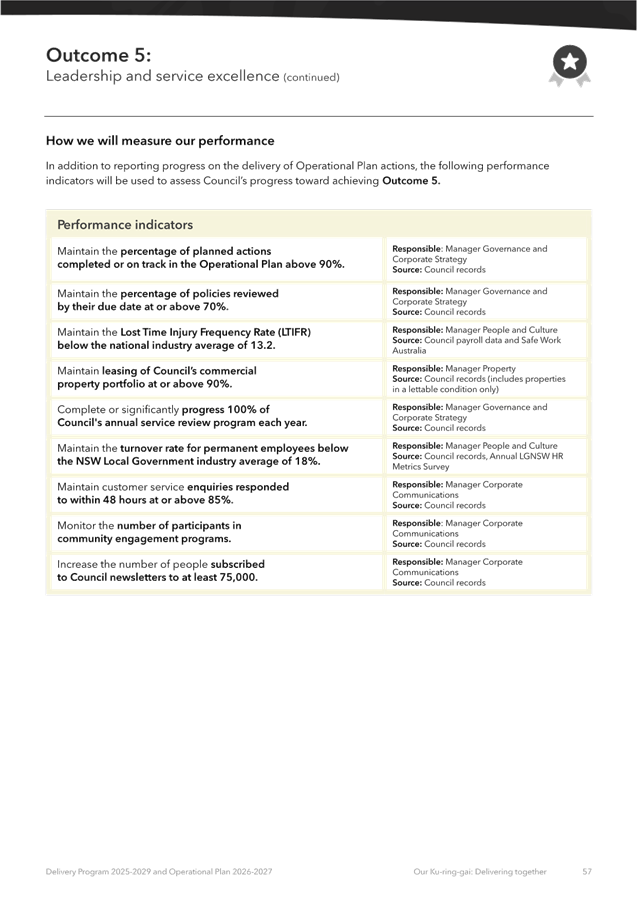


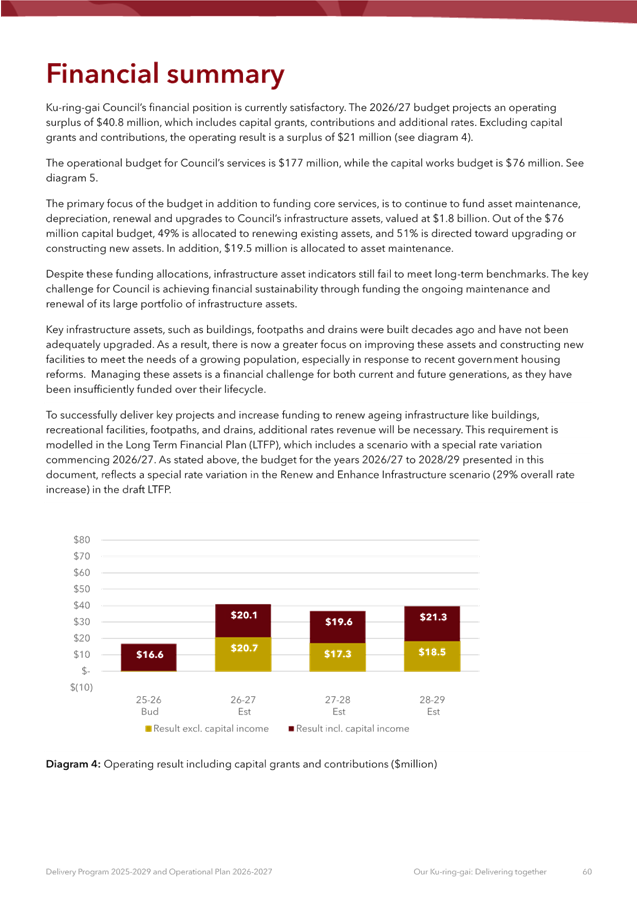
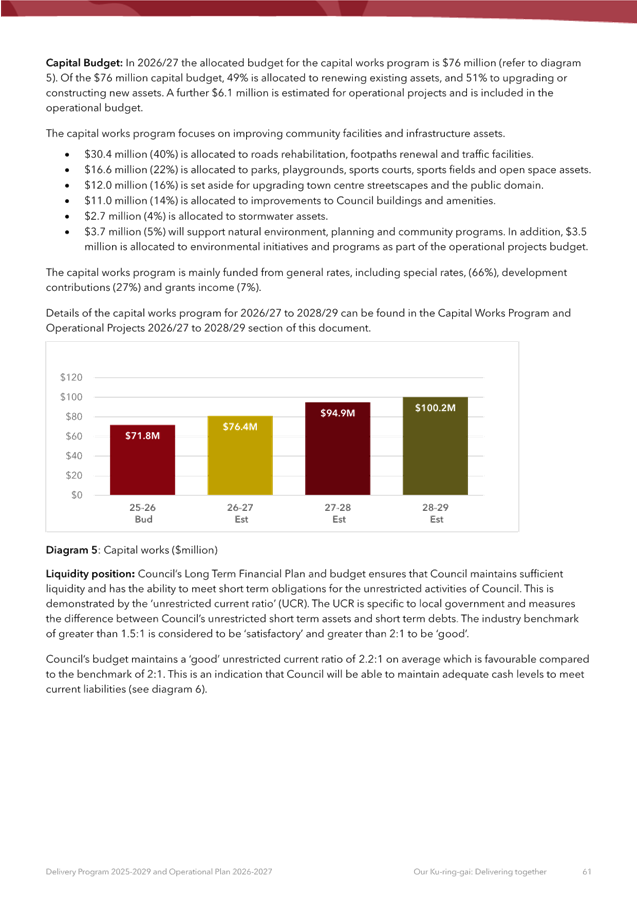
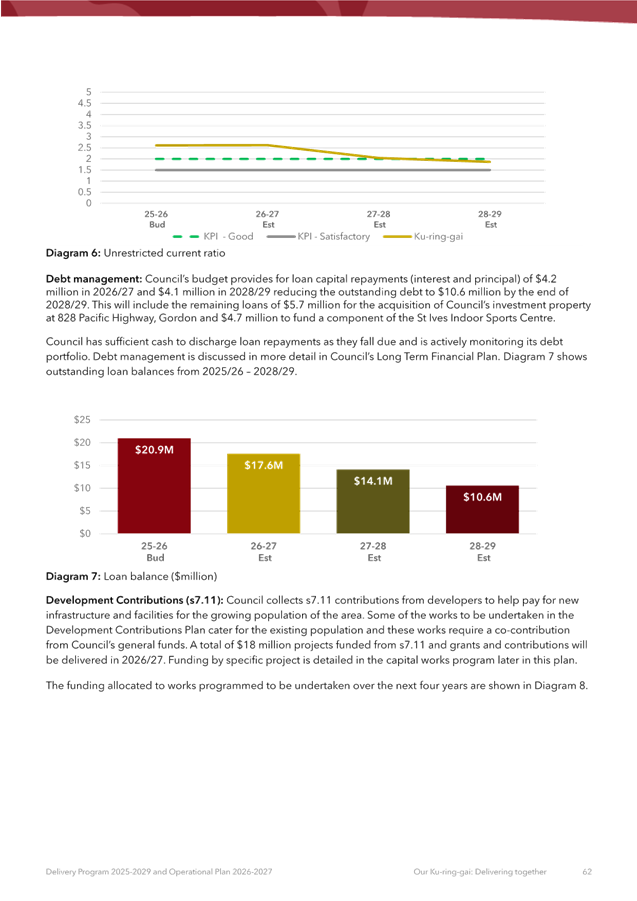
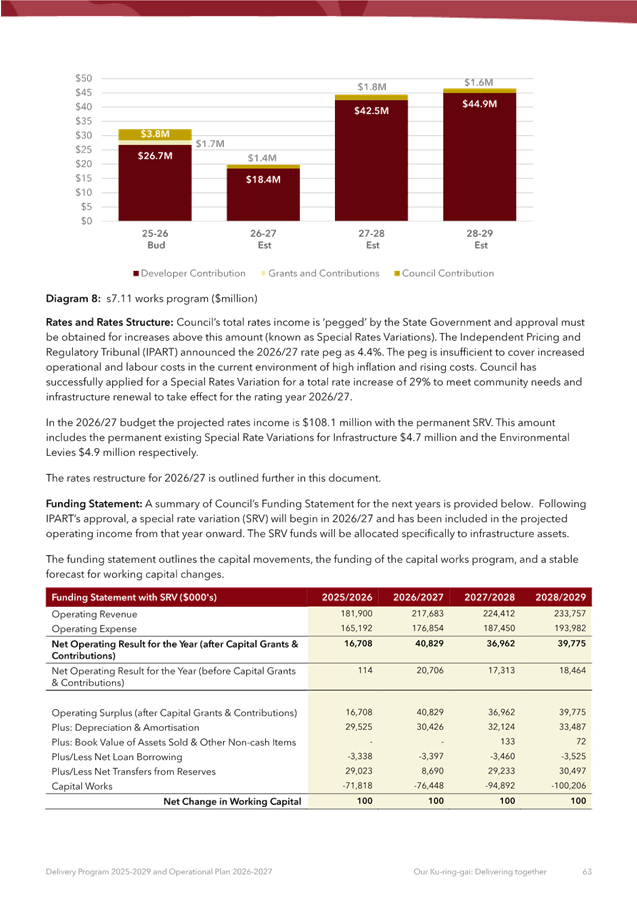
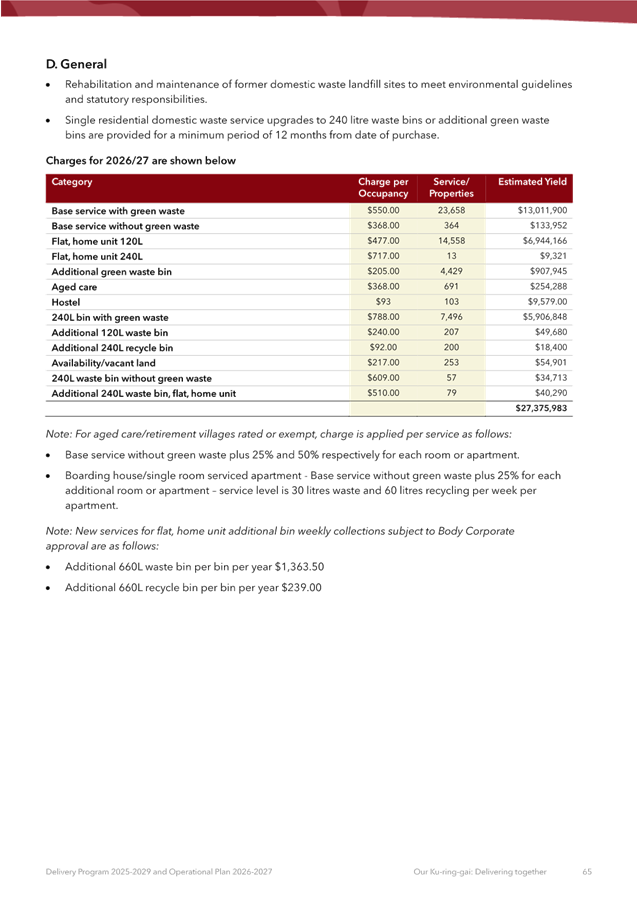
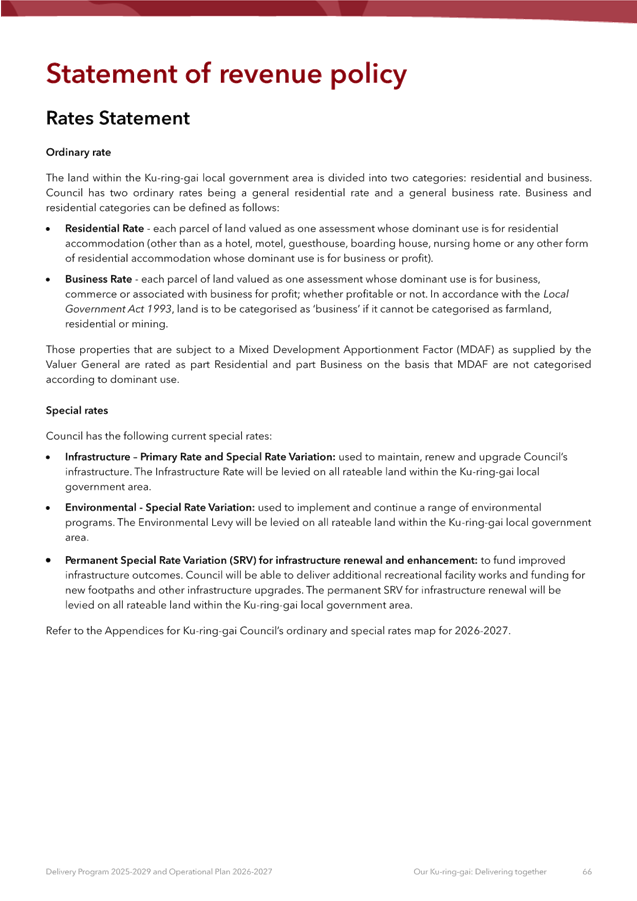
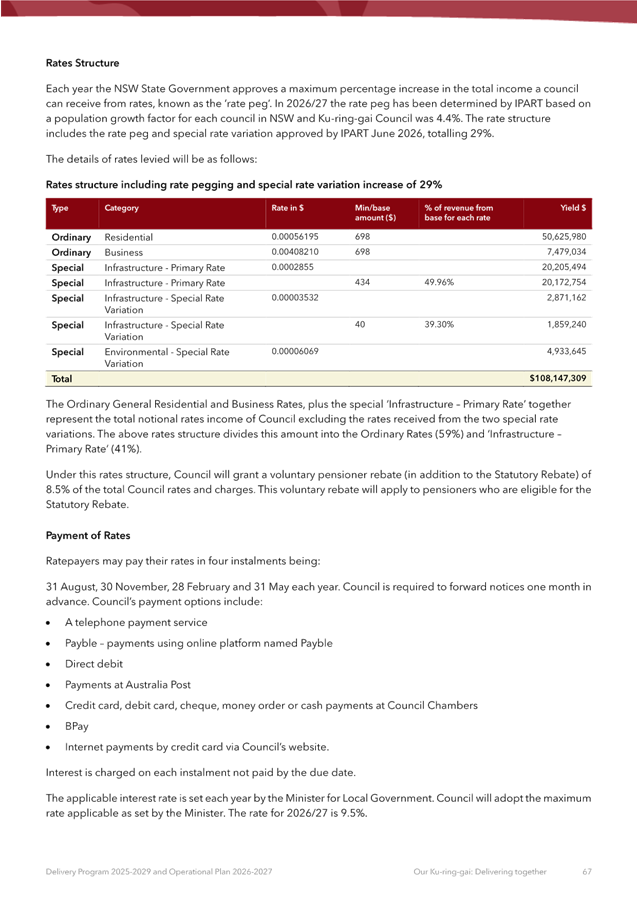
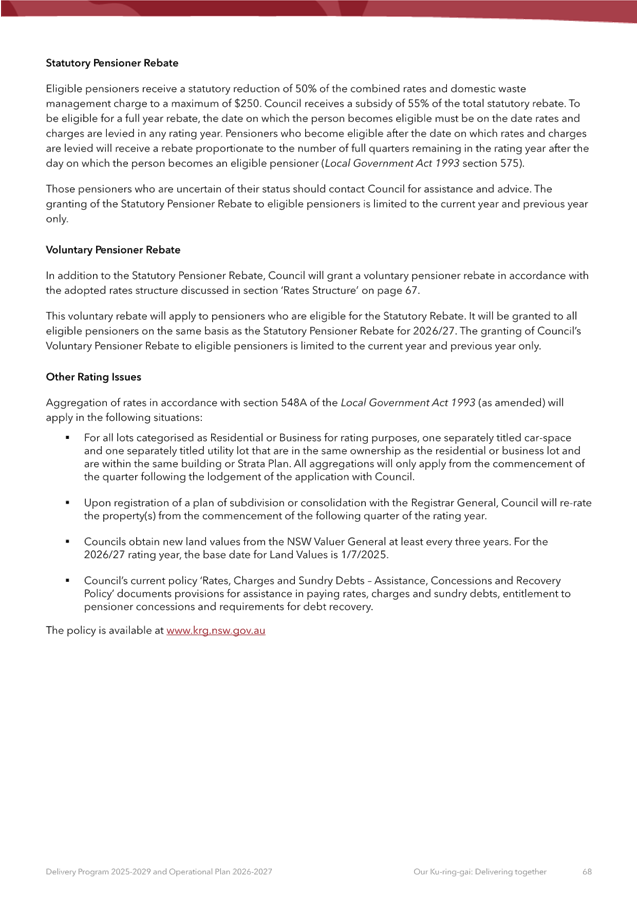
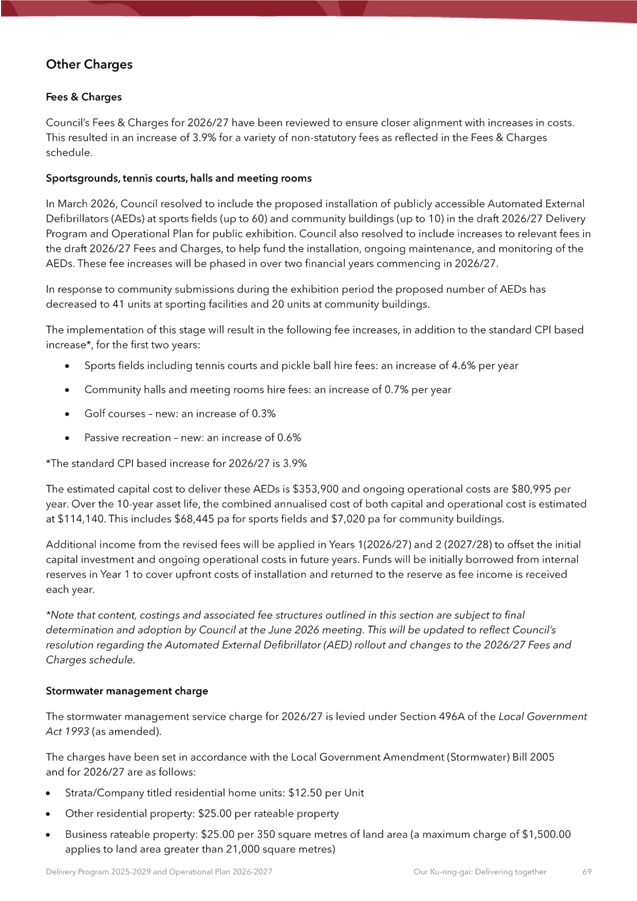
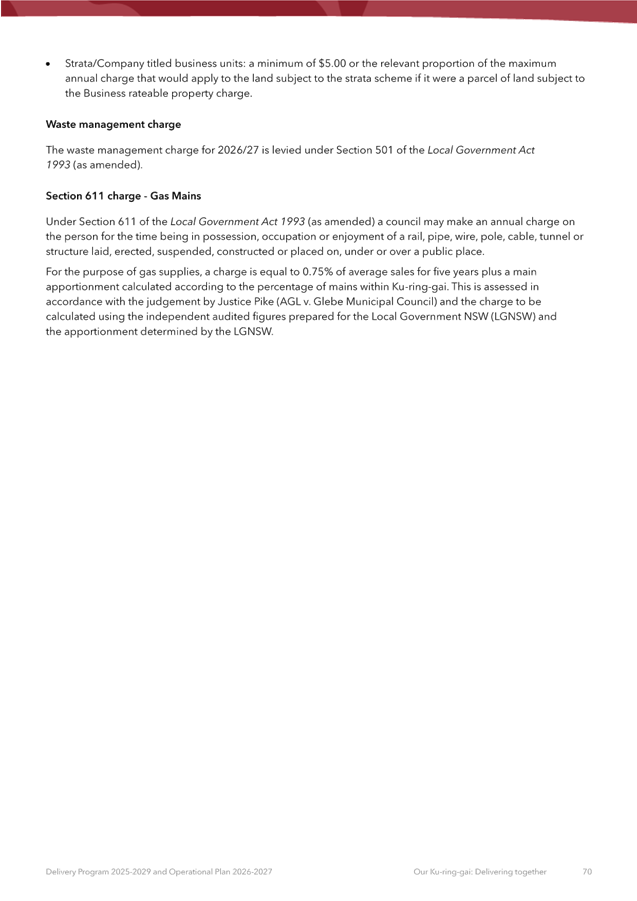
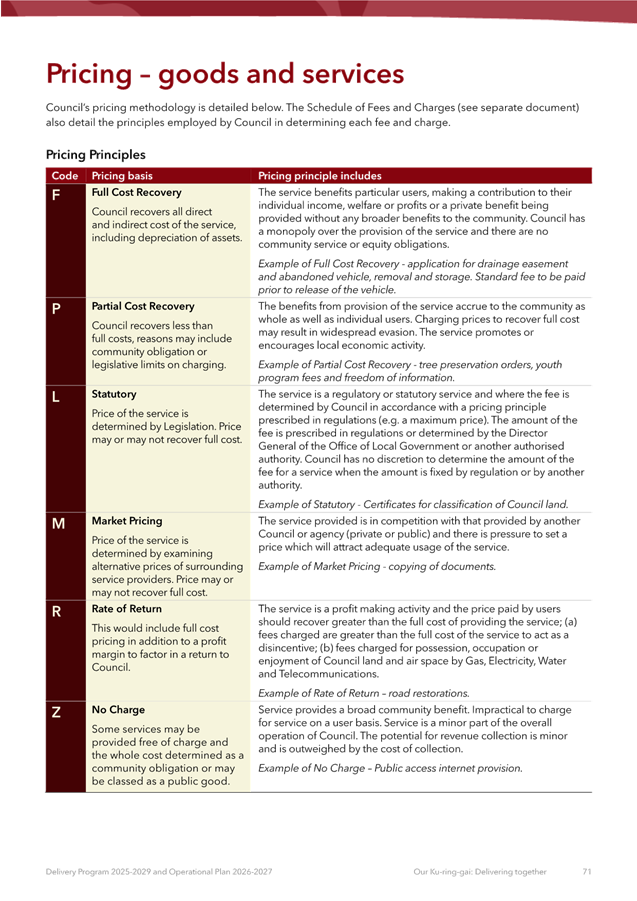
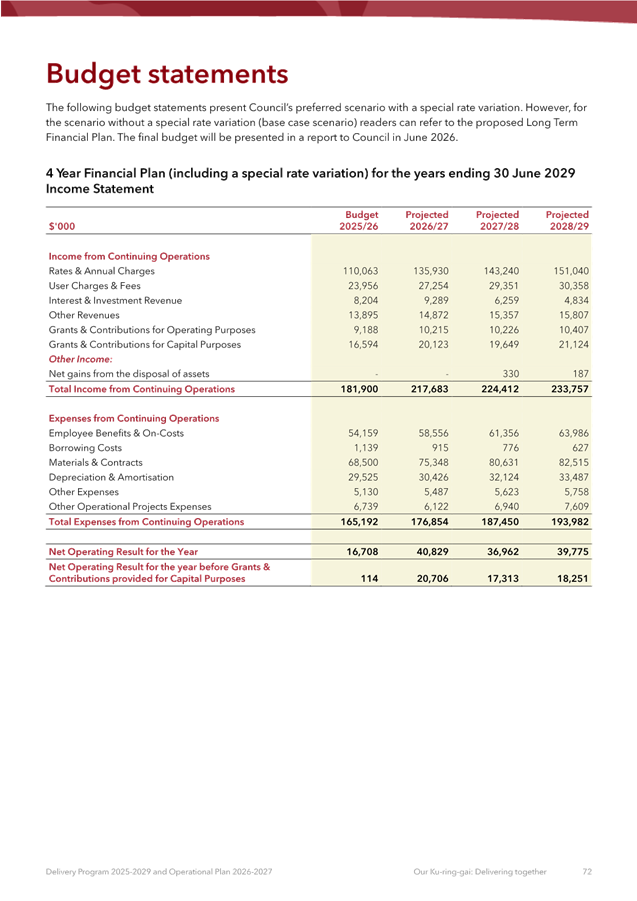
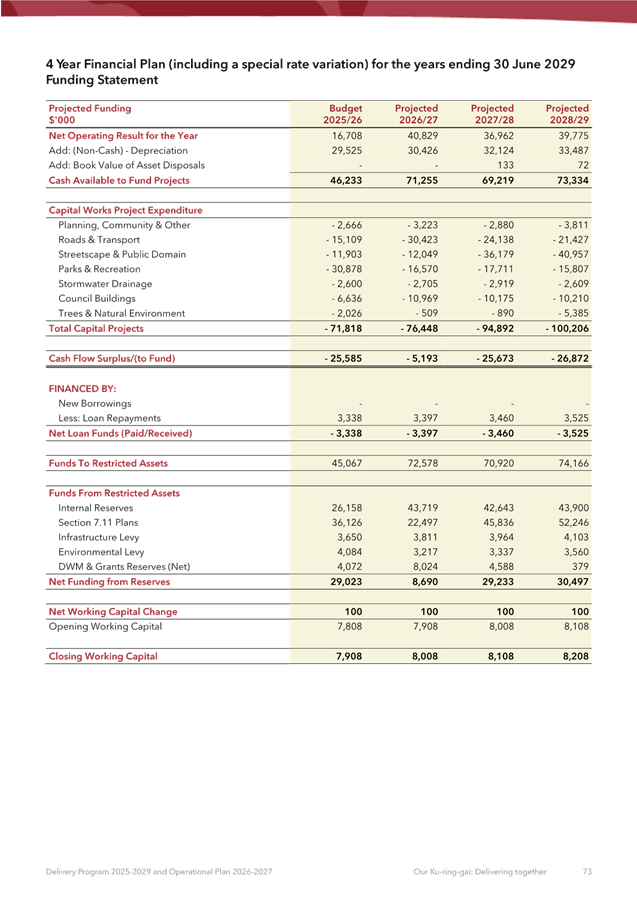
|
ATTACHMENT No: 3 - Attachment 3 - Post-exhibition Long Term Financial Plan 2026-2036 (June 2026) |
|
Item No: GB.4 |
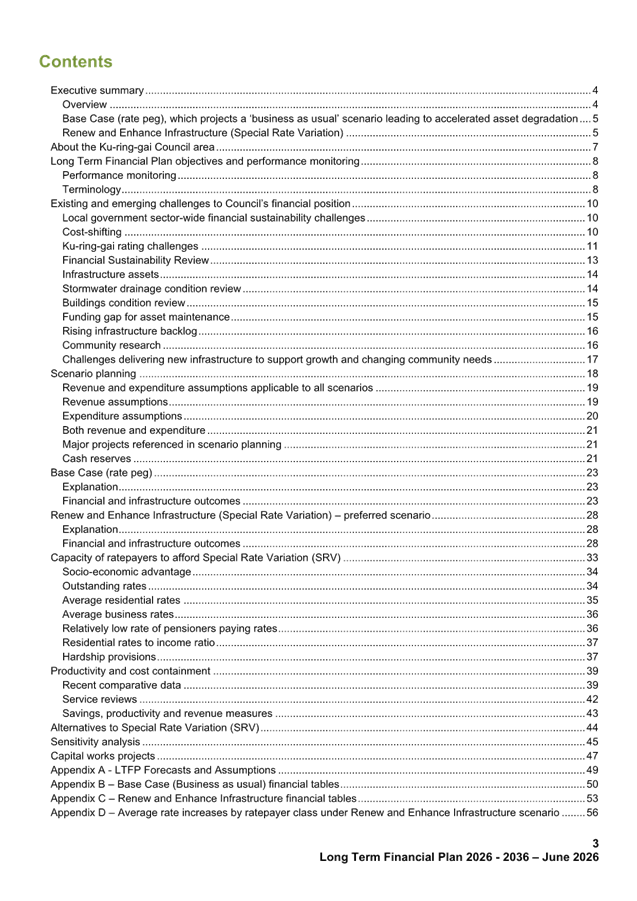
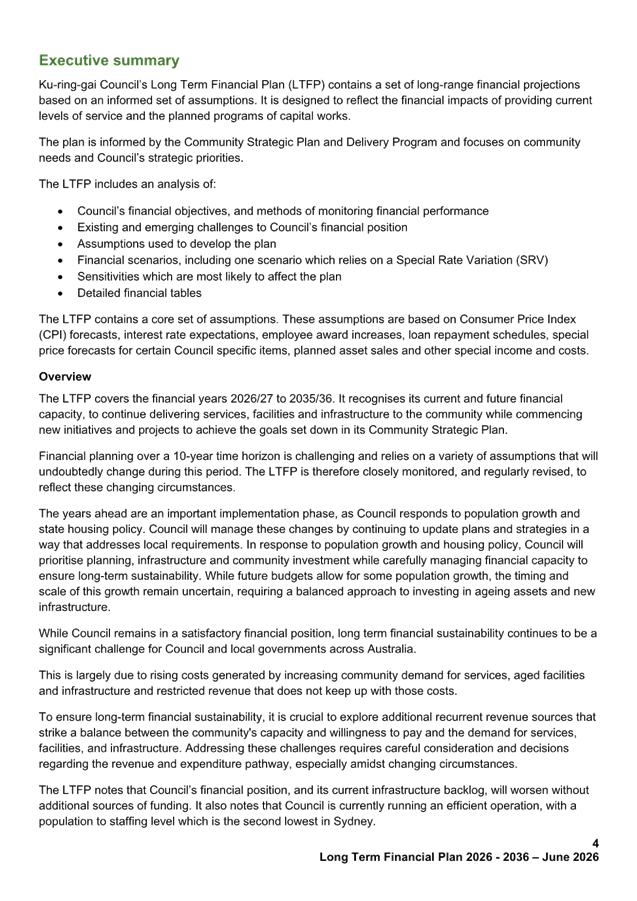
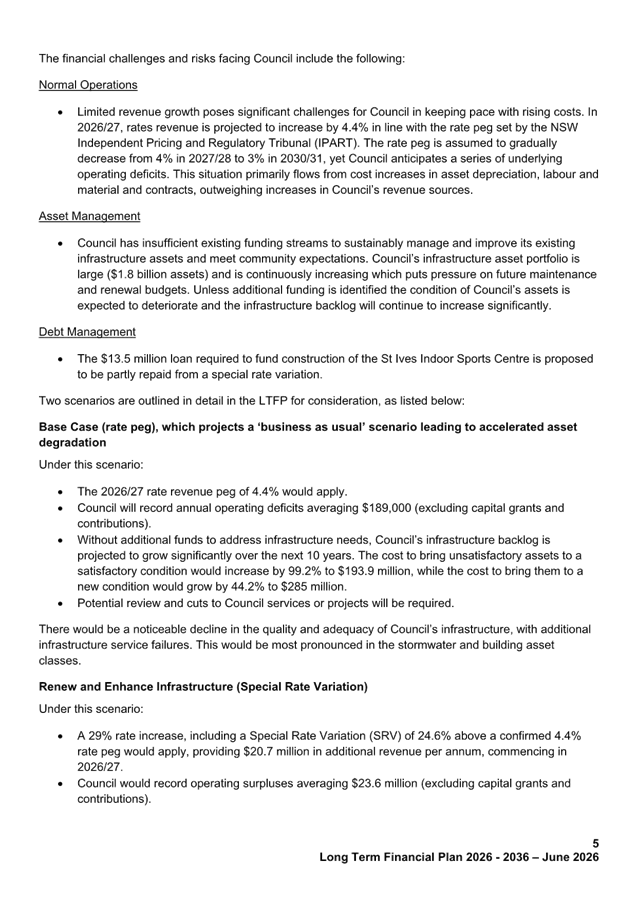
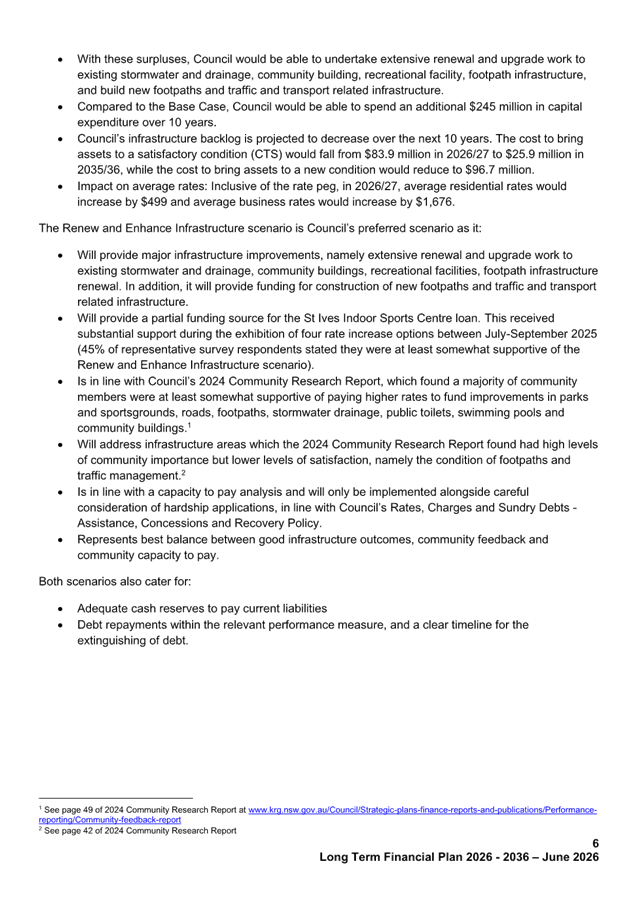
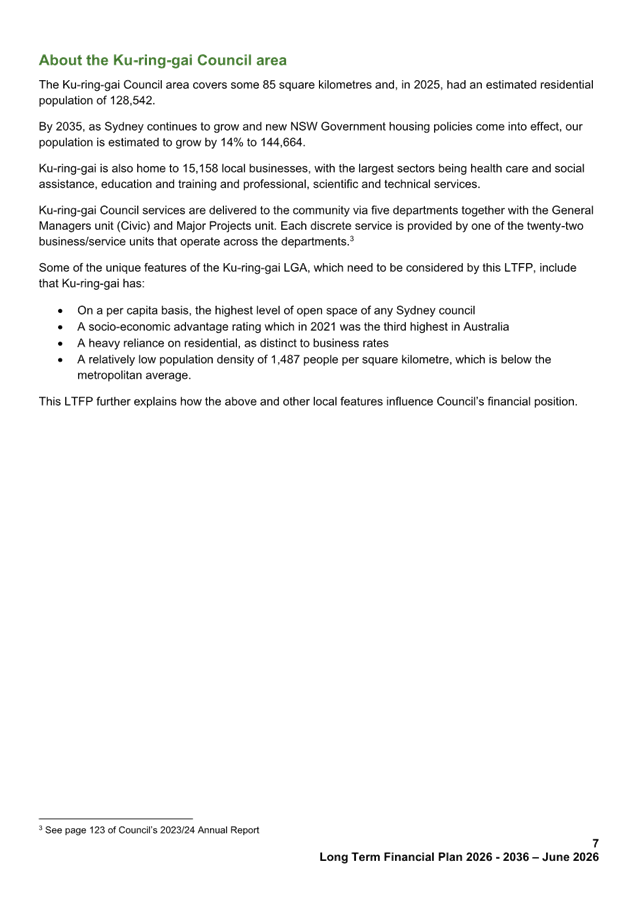
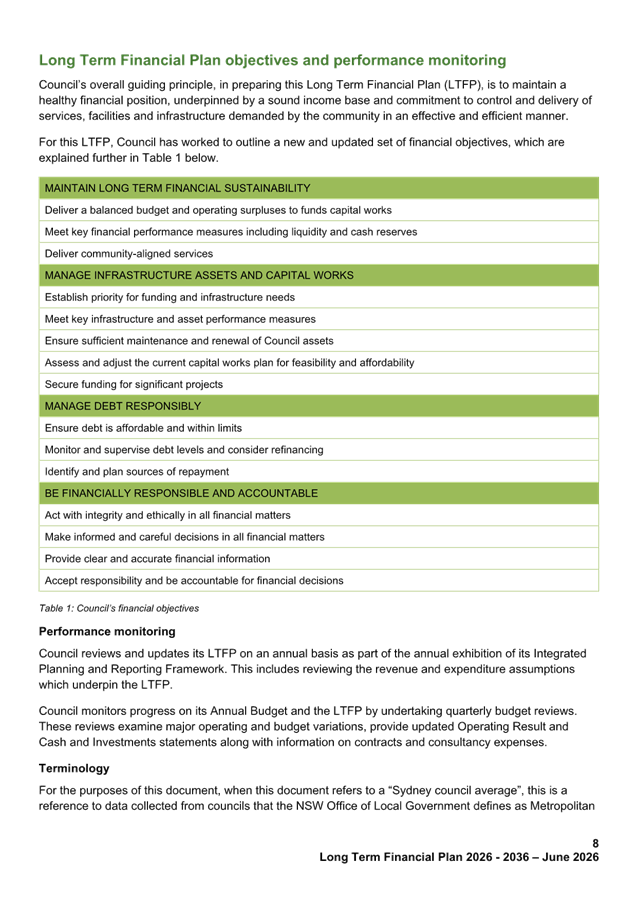

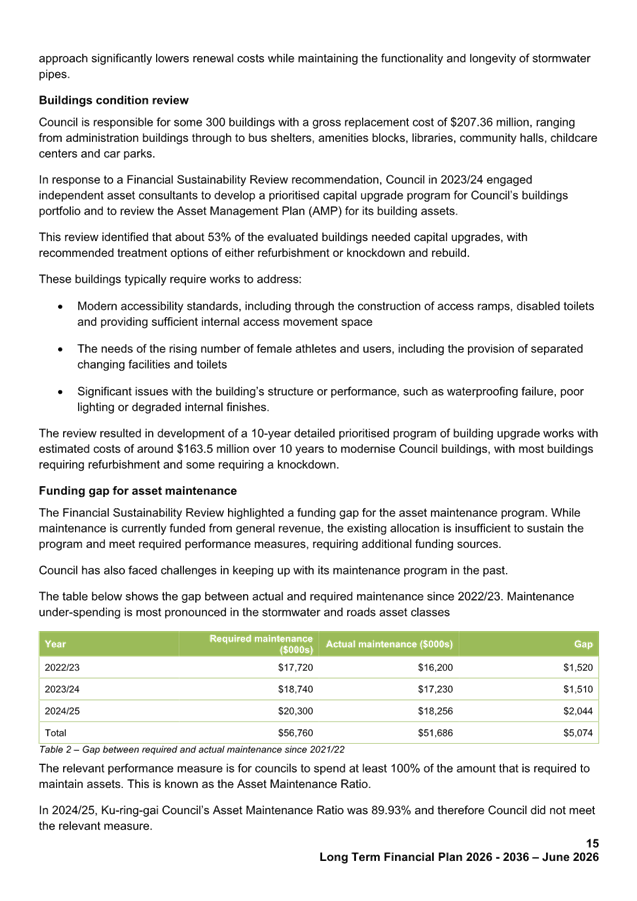
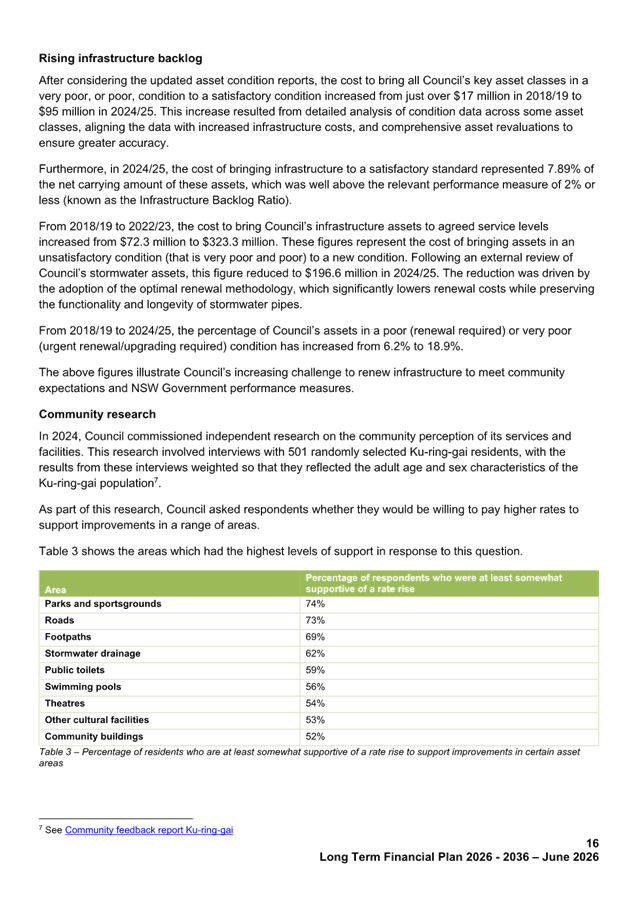
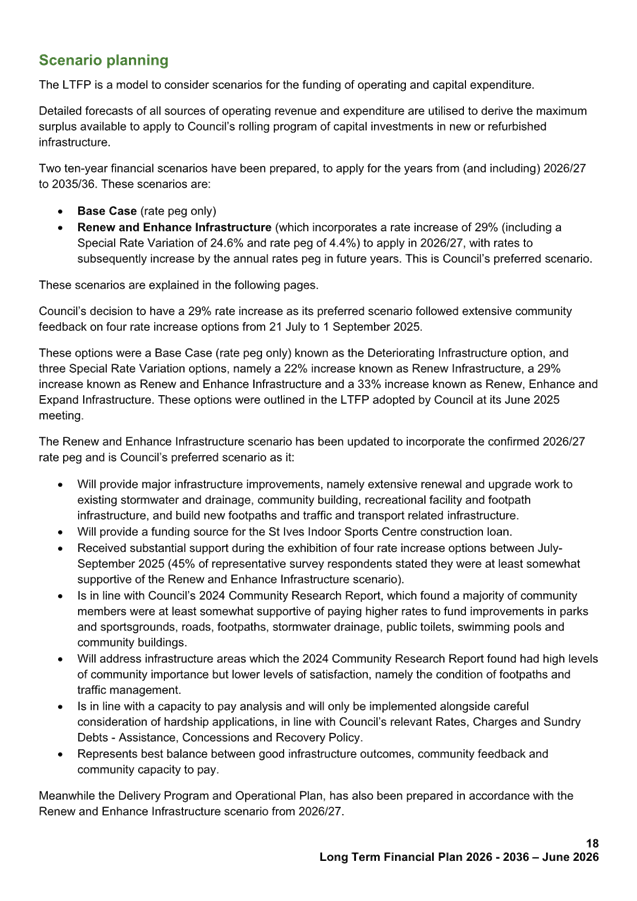
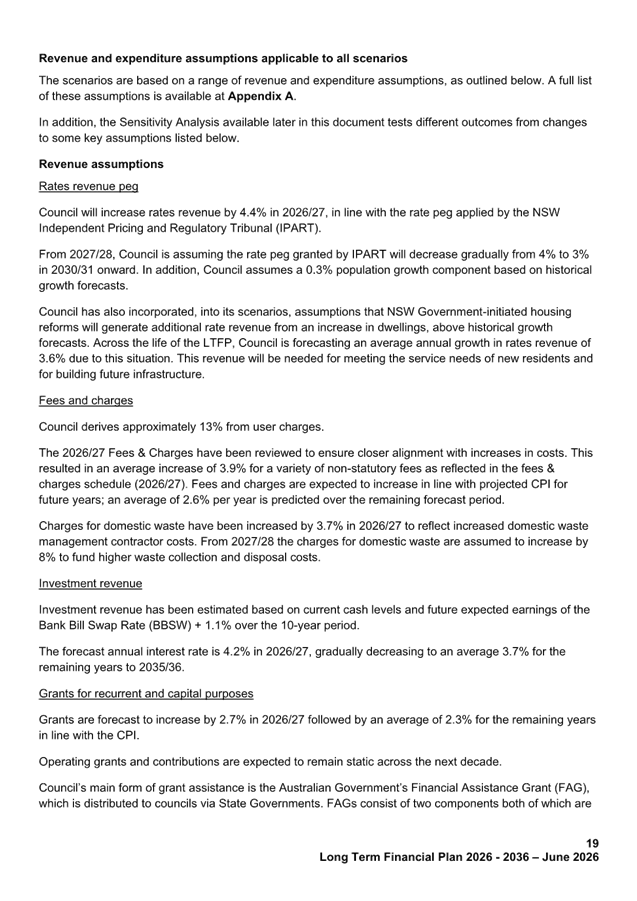
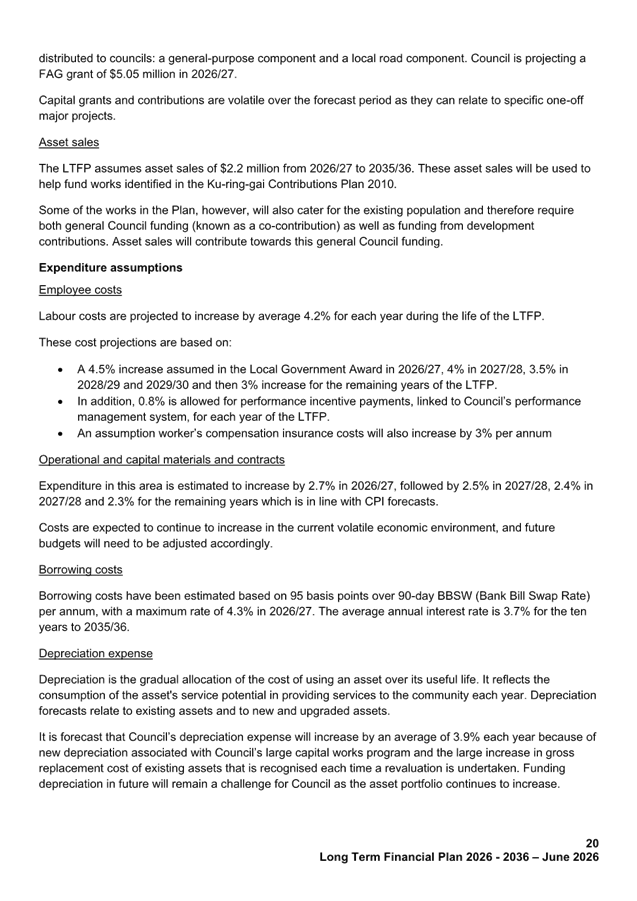
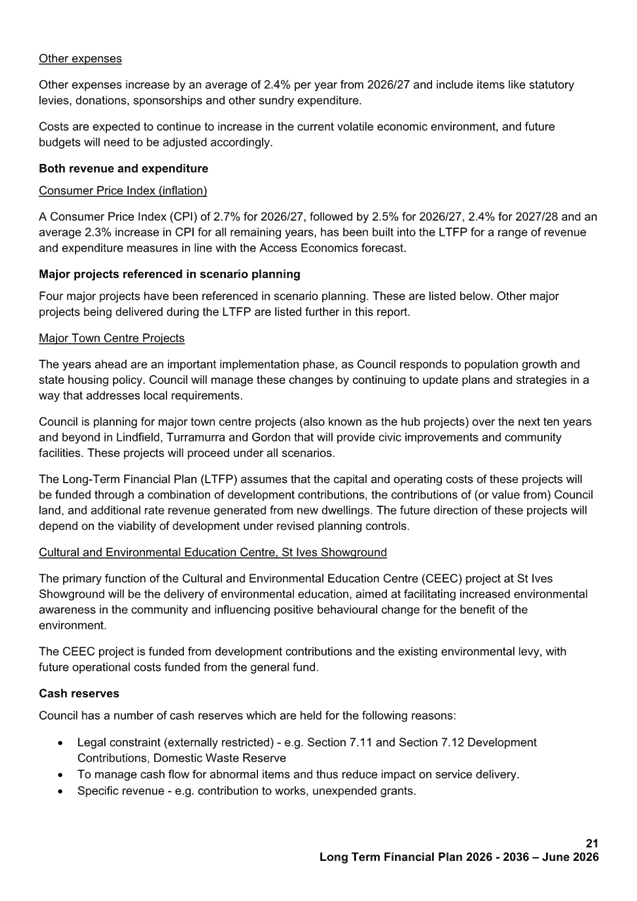

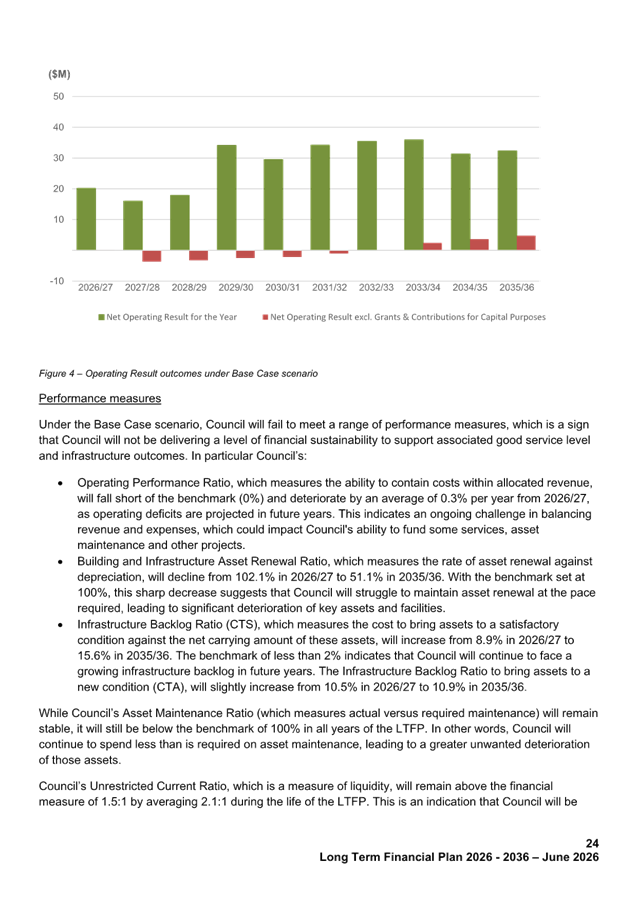
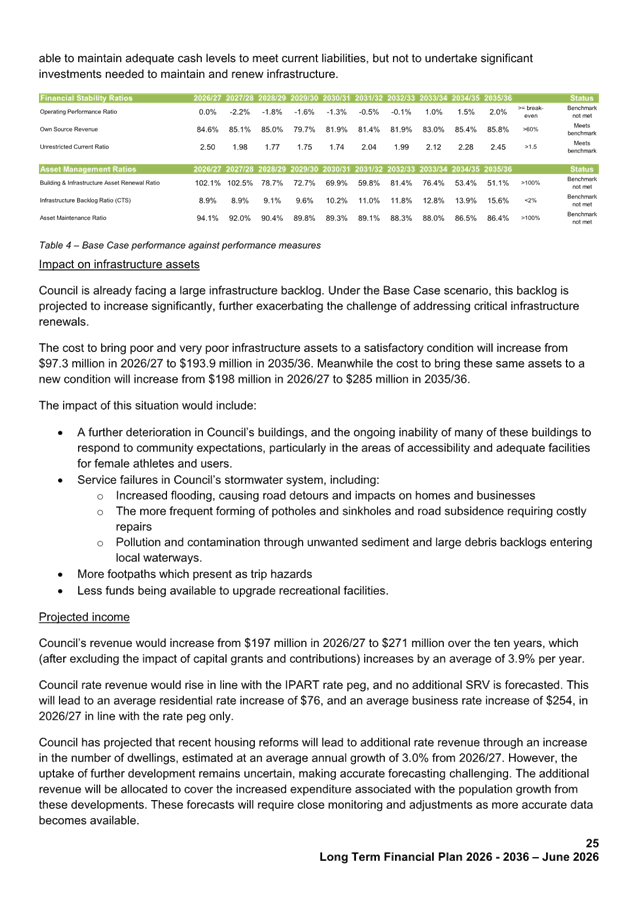
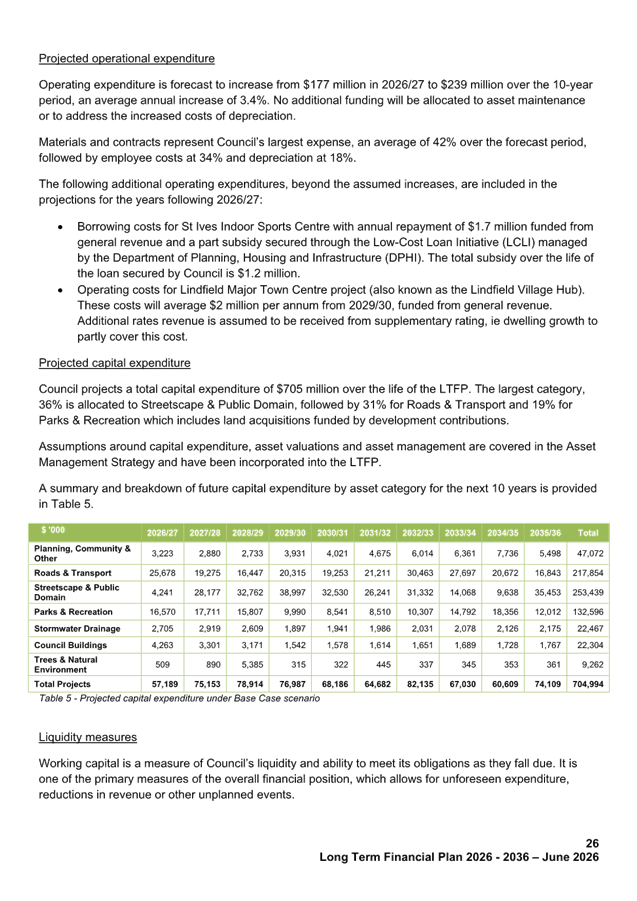
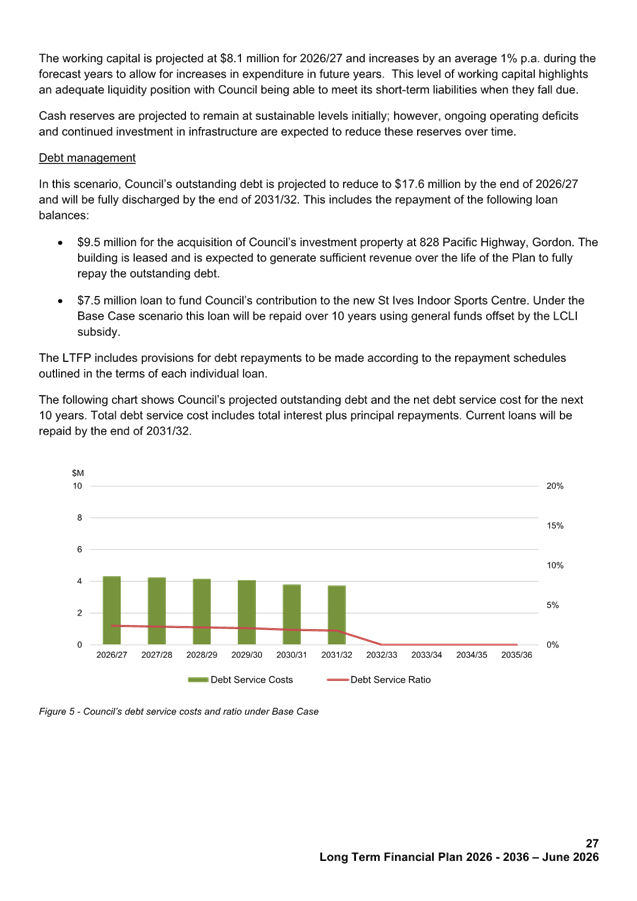
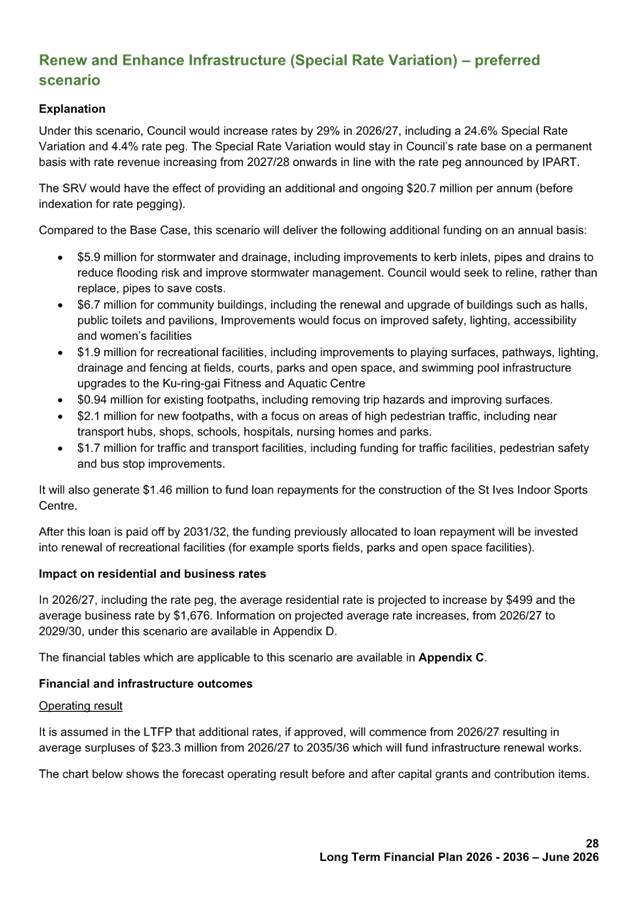
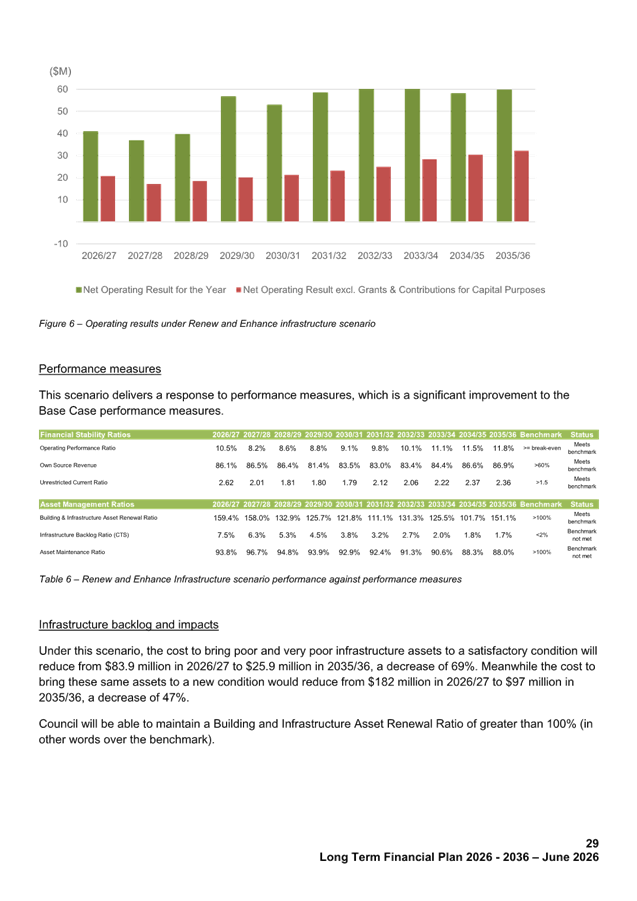
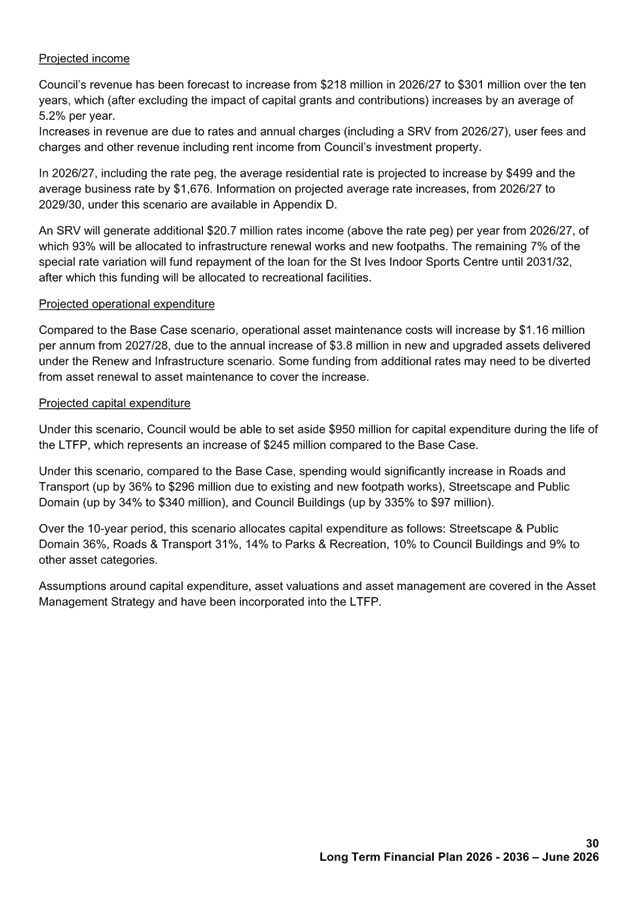
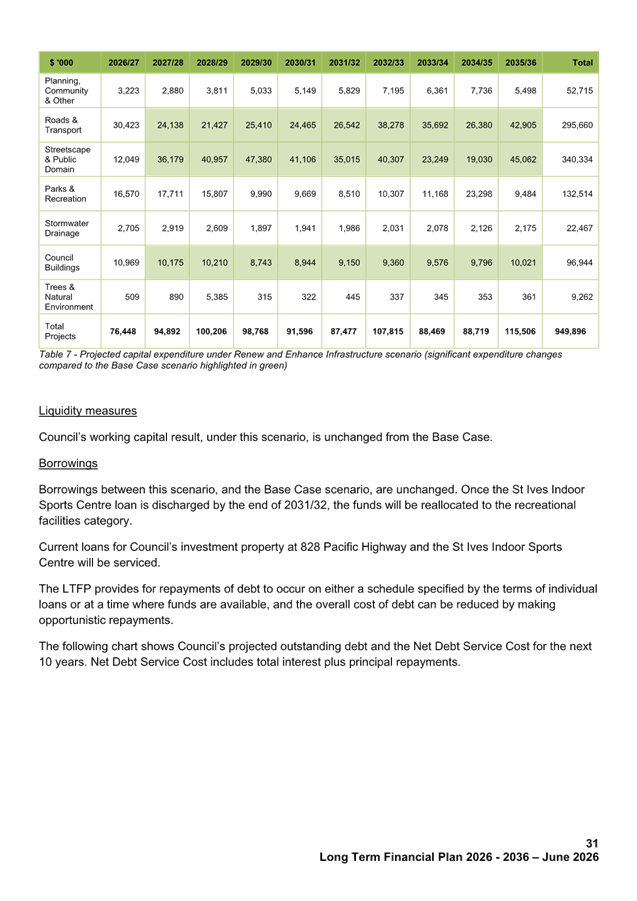
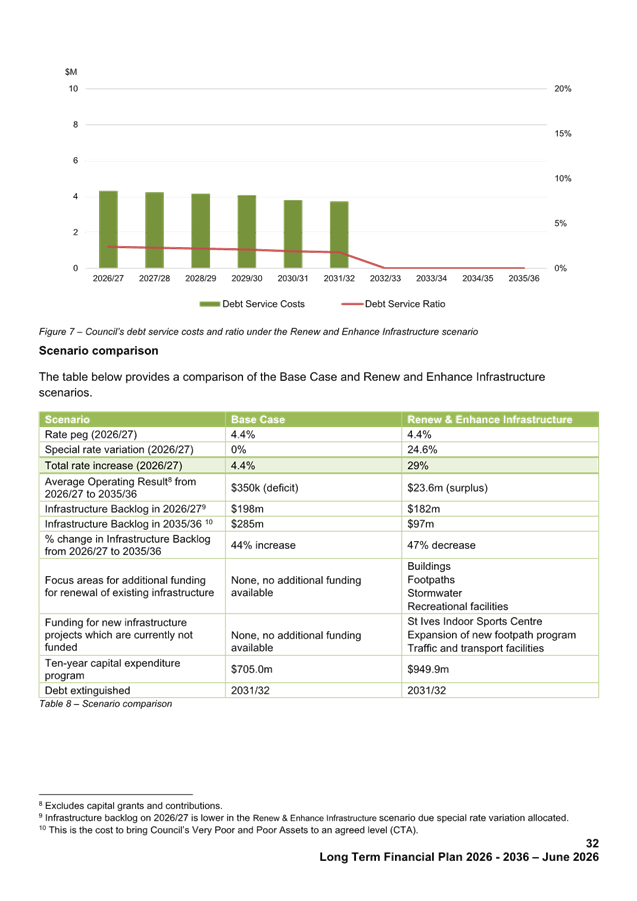
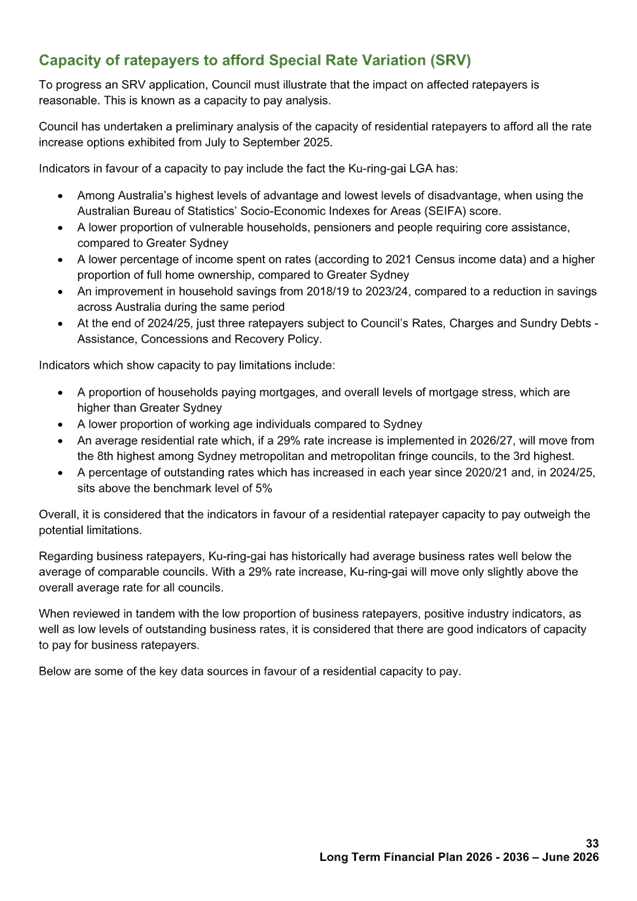
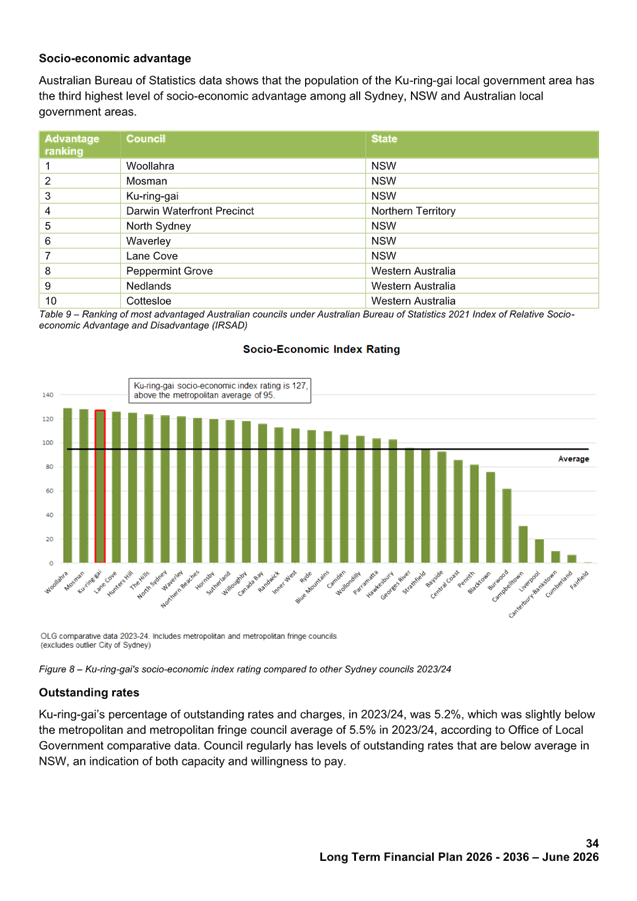
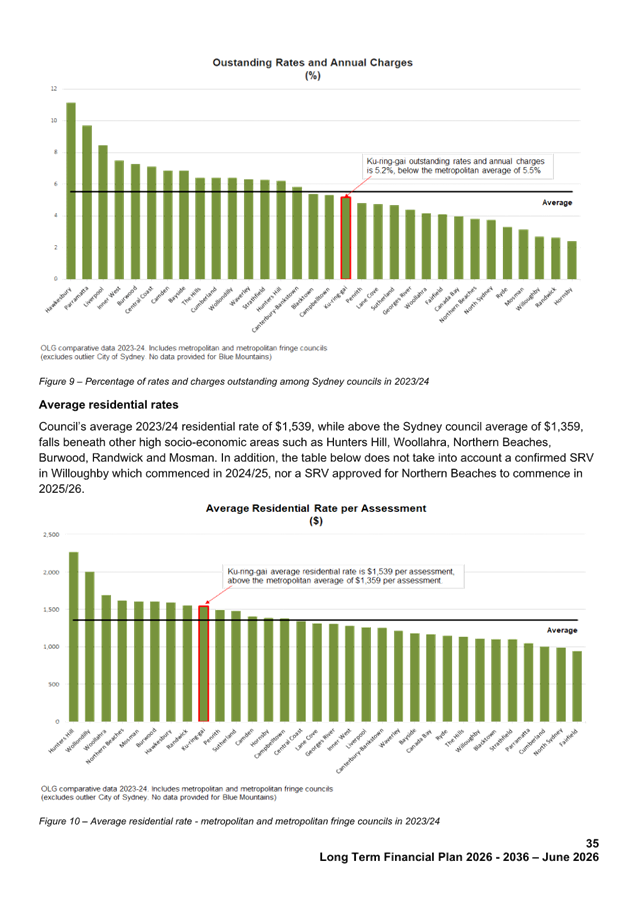
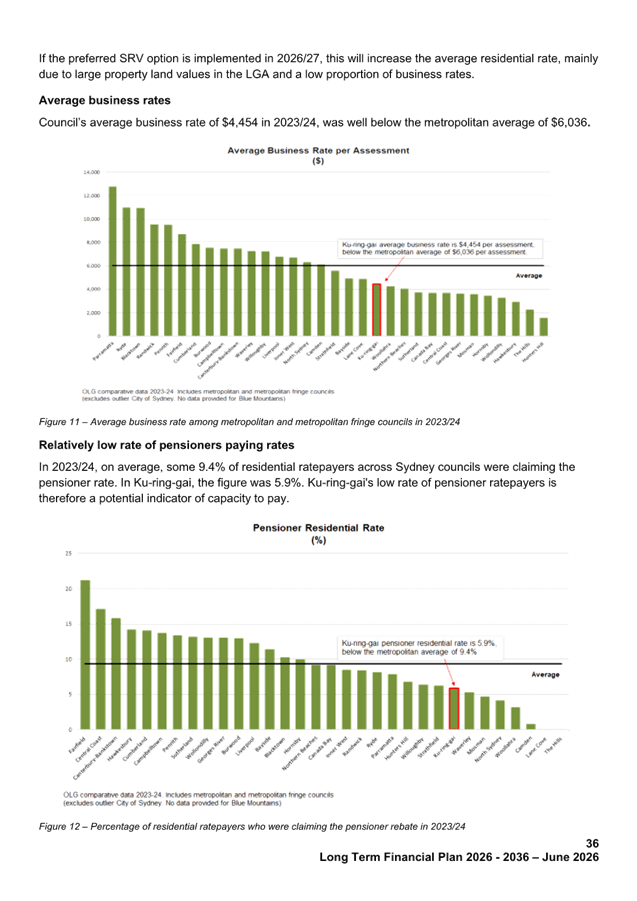
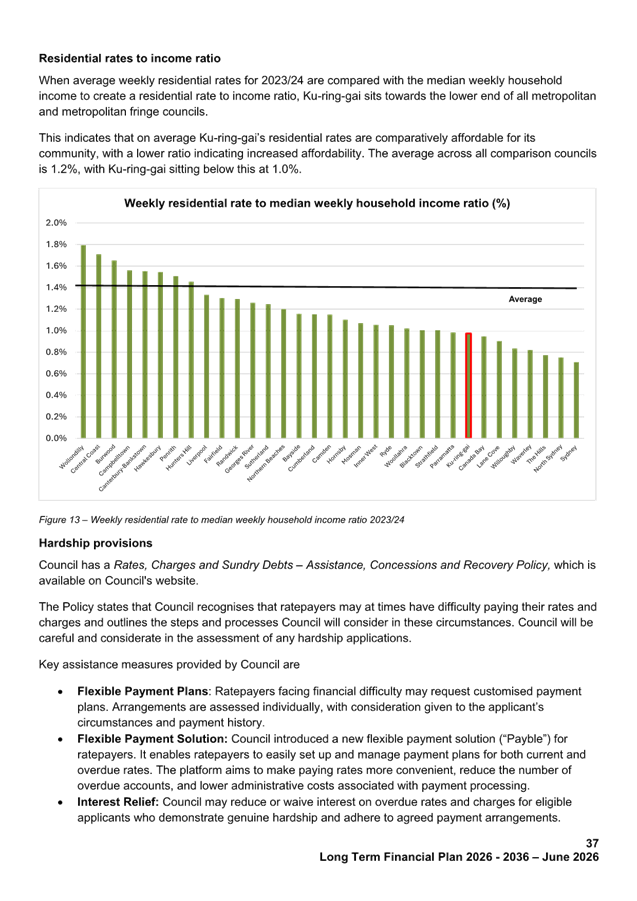
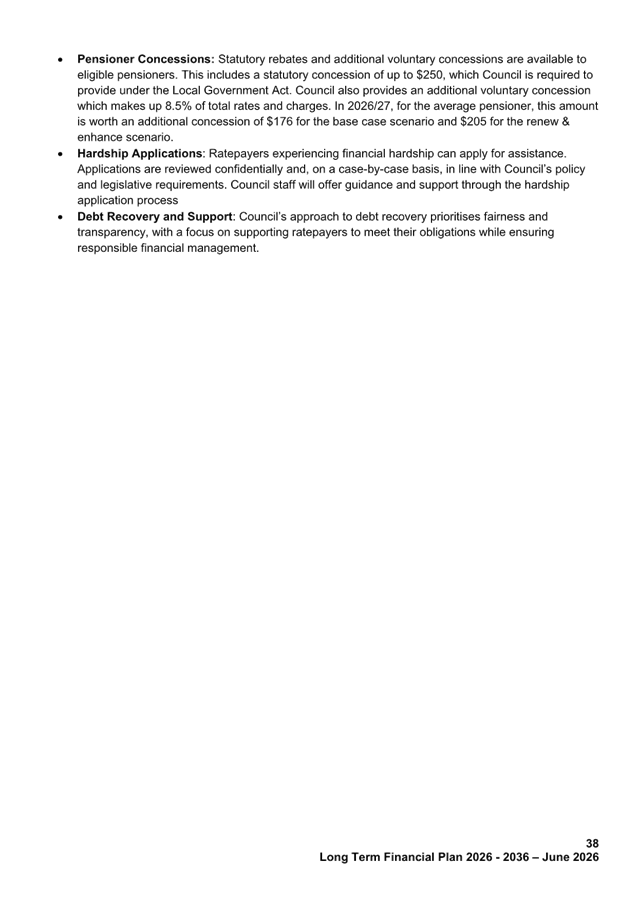
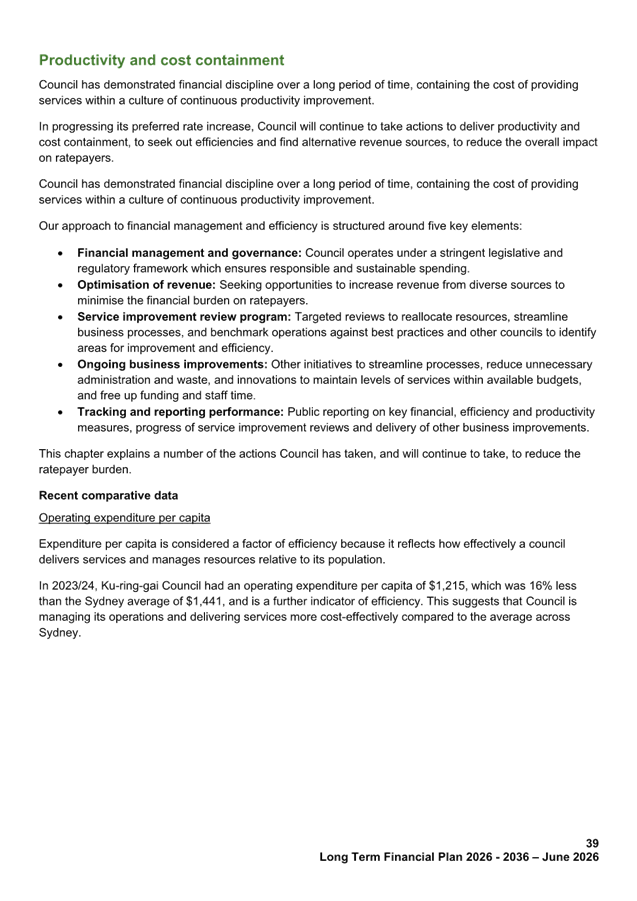
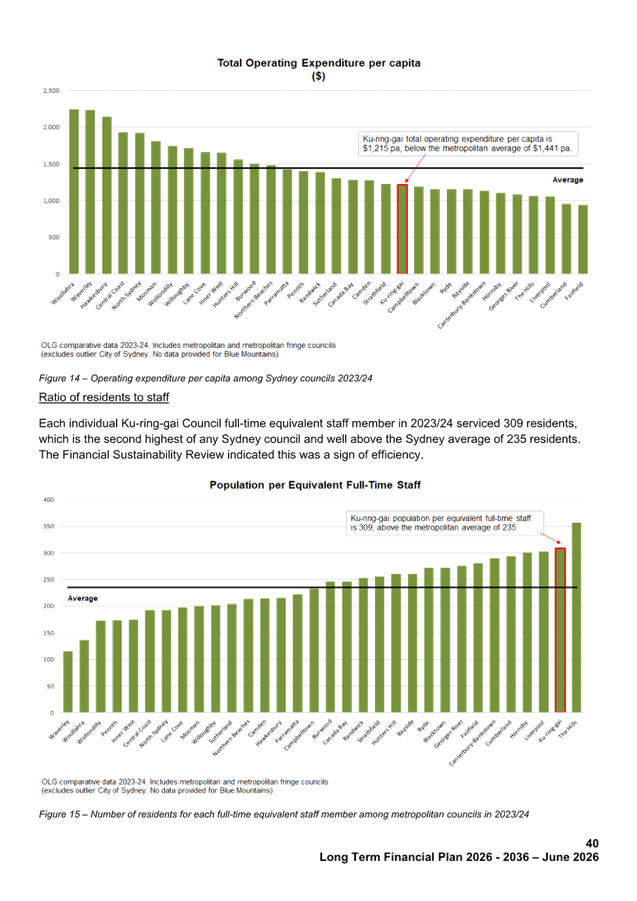
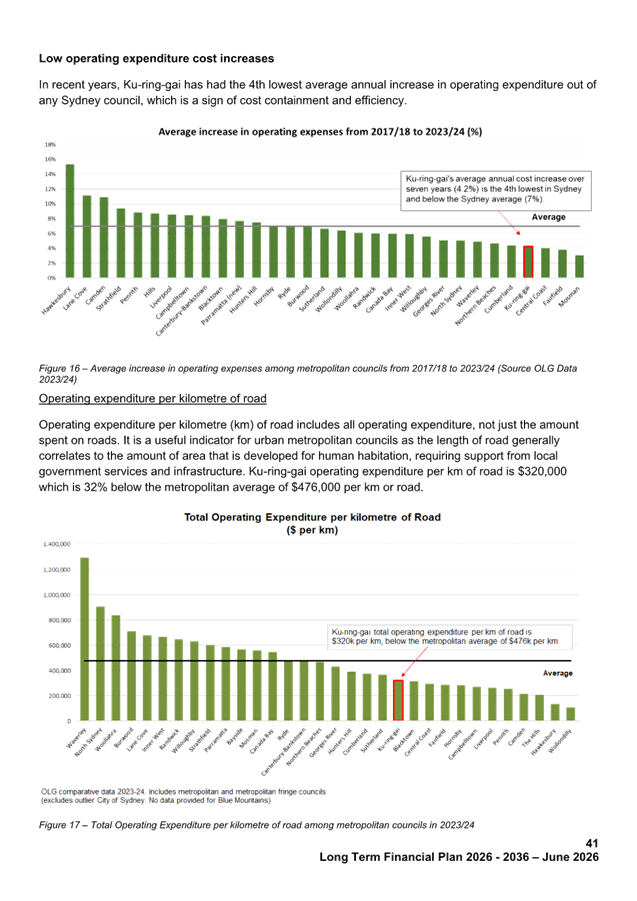
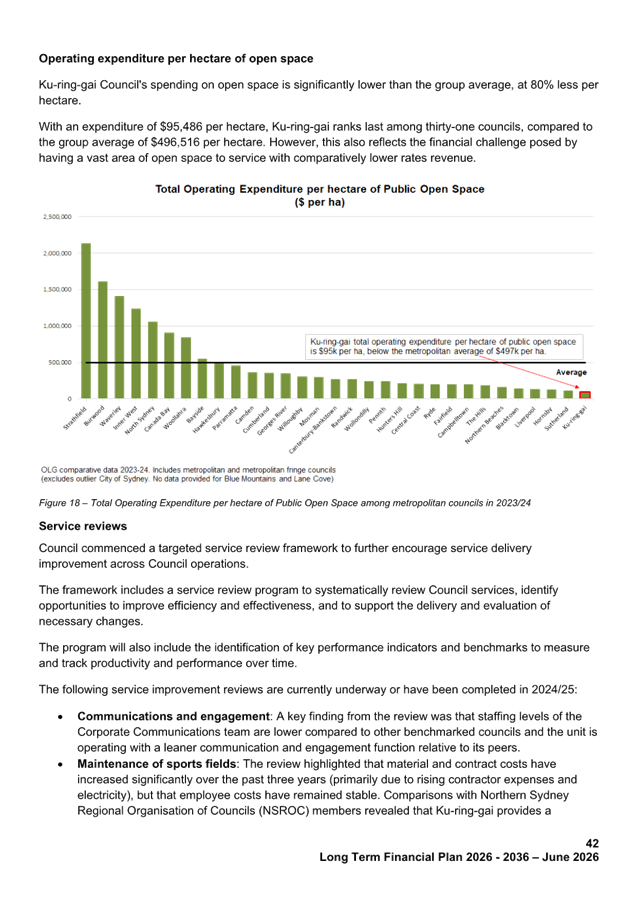
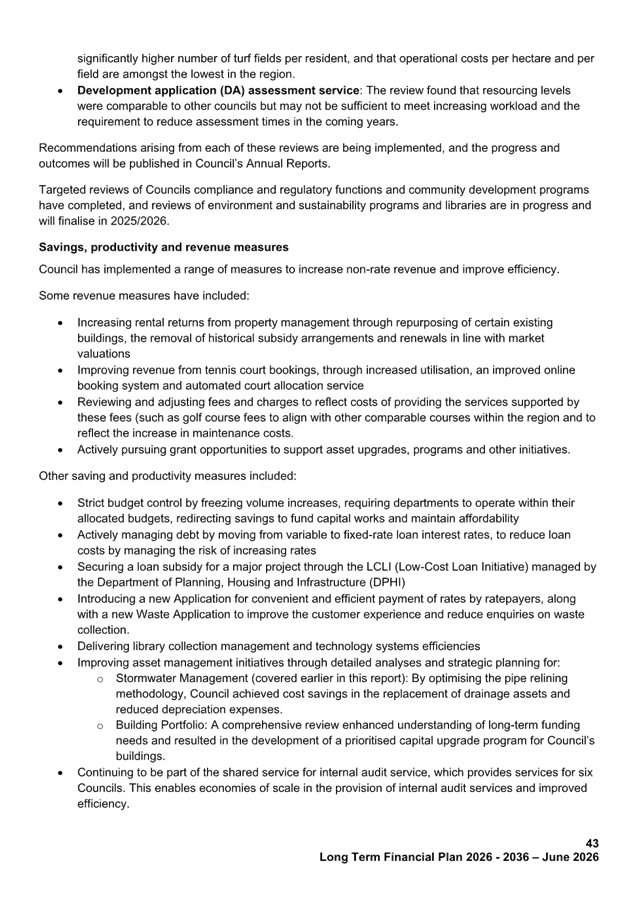
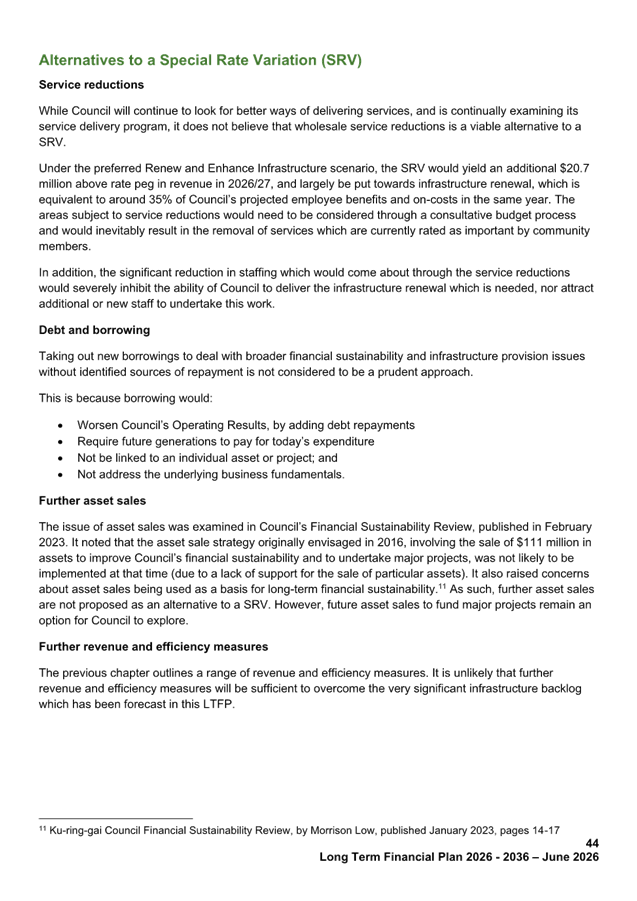
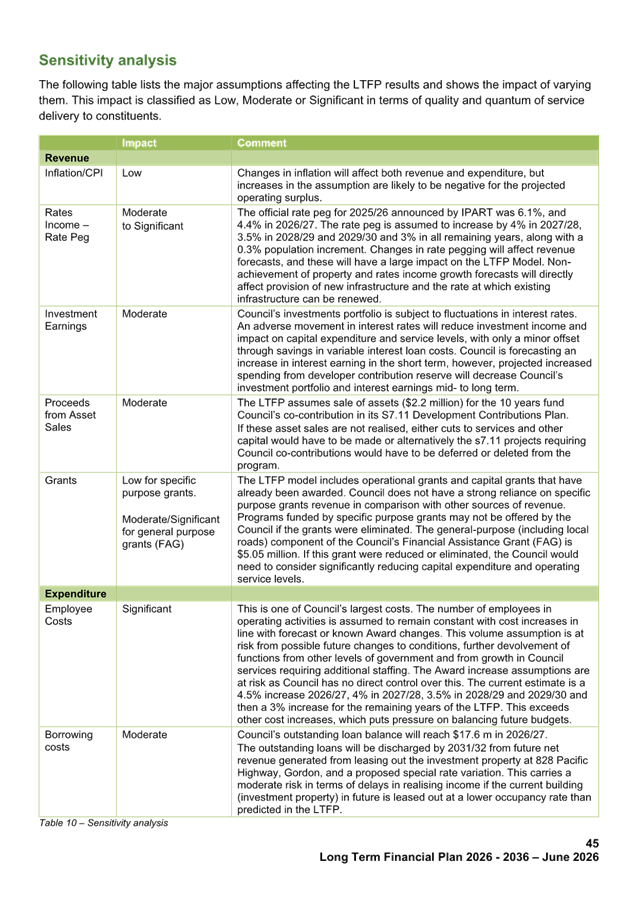
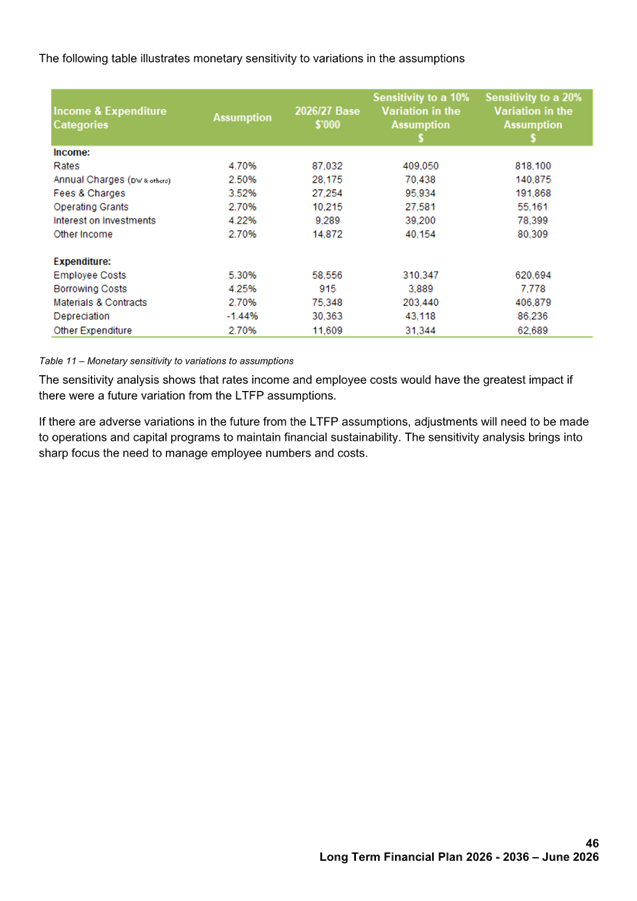
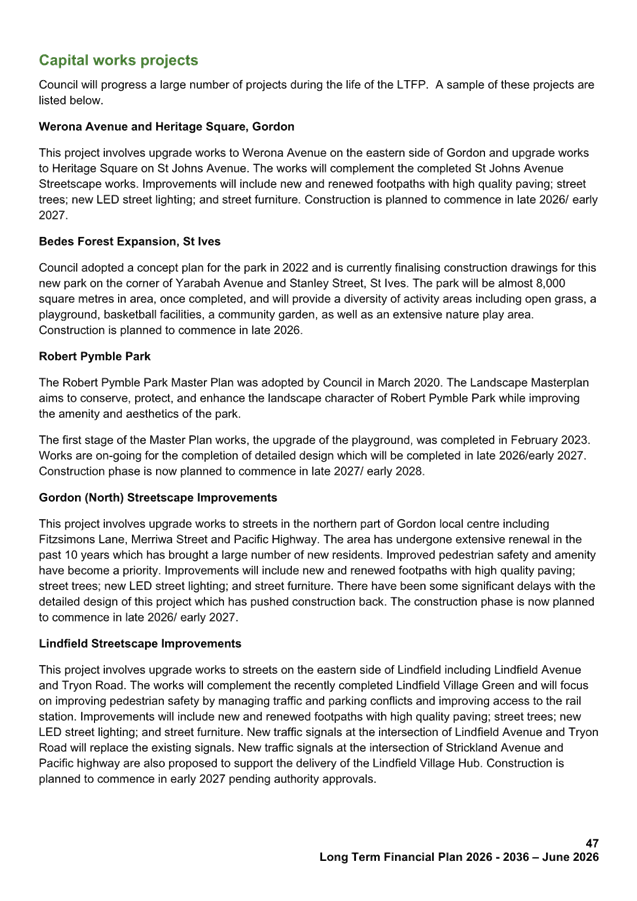
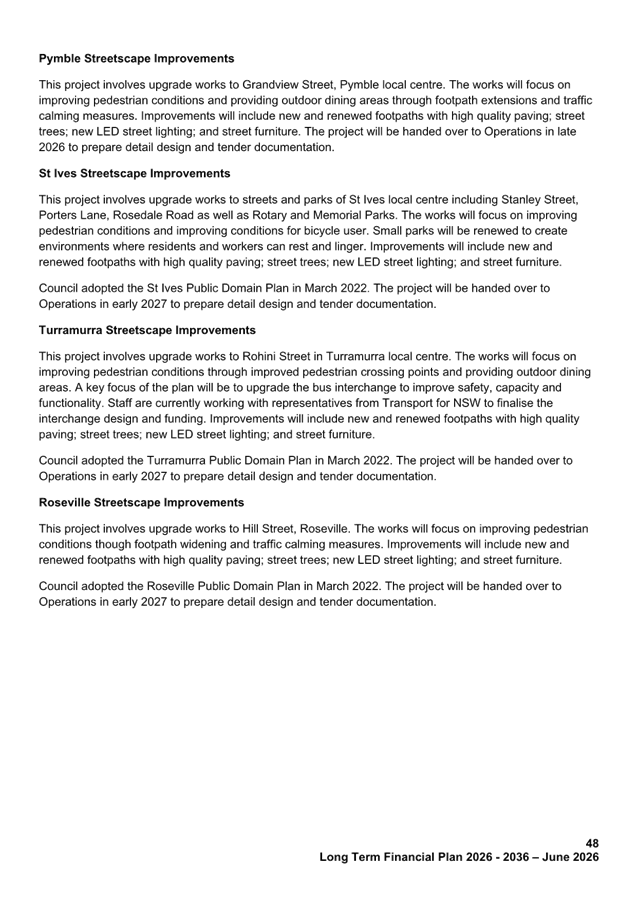
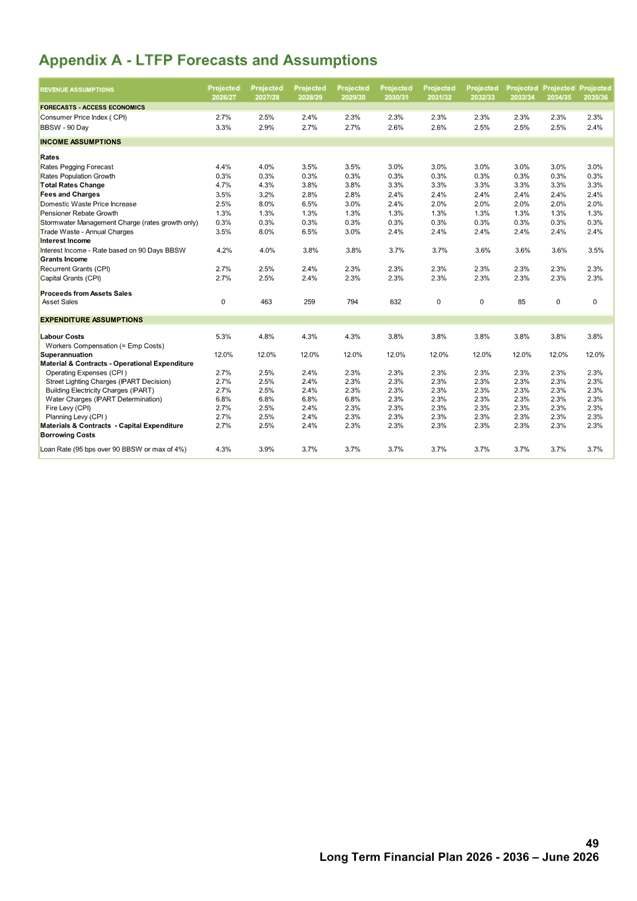
|
ATTACHMENT No: 4 - Attachment 4 - Post-exhibition Asset Management Strategy 2026-2036 (June 2026) |
|
Item No: GB.4 |

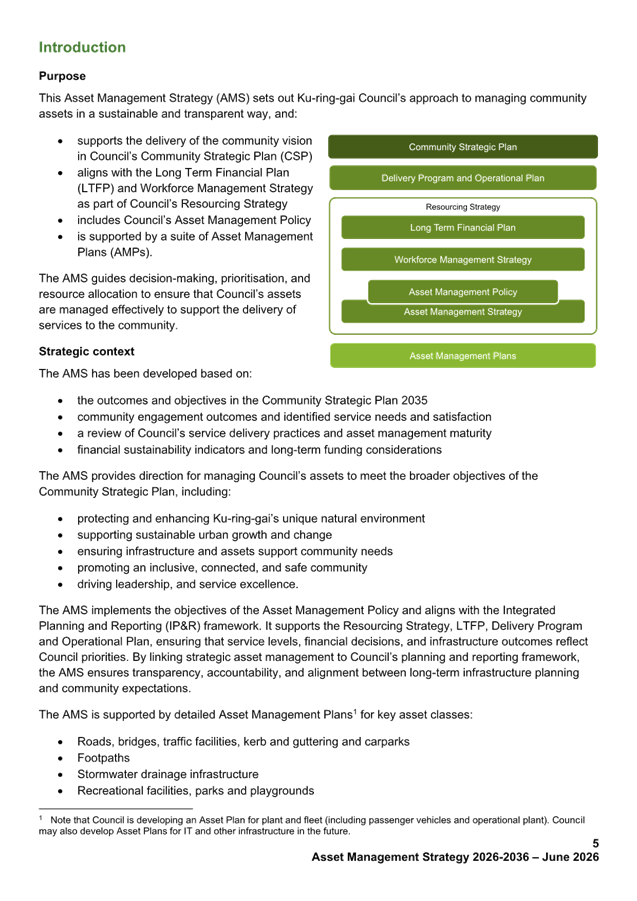
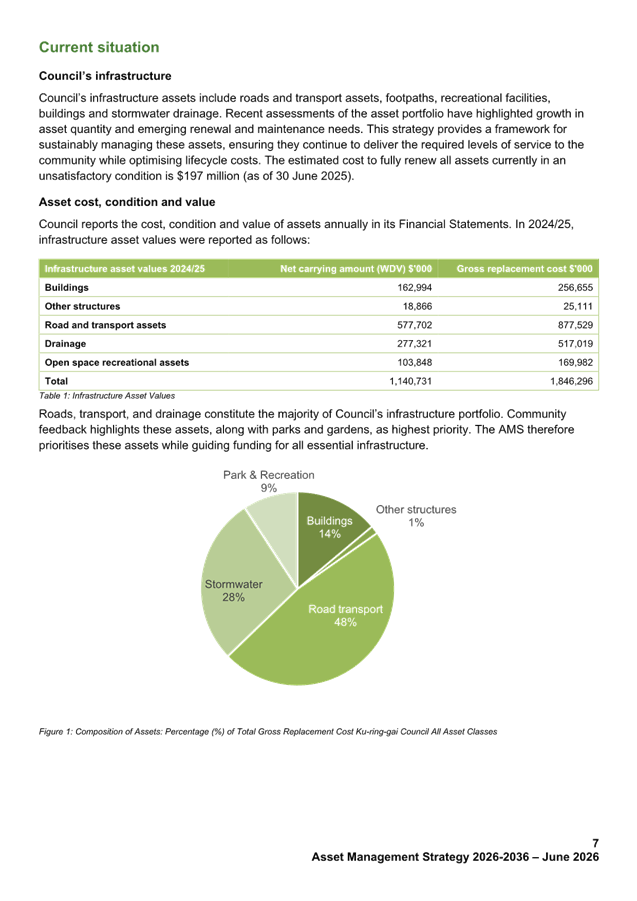
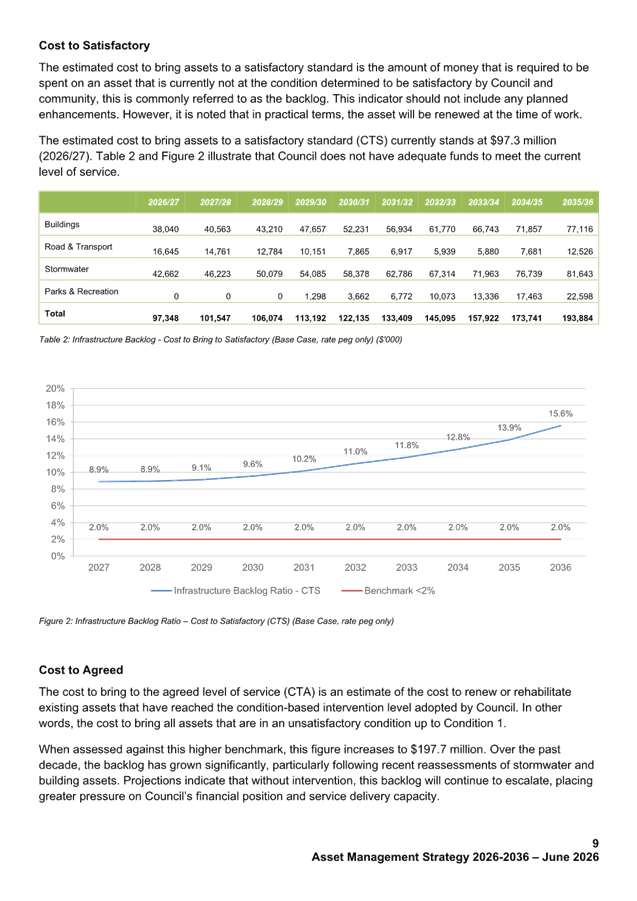
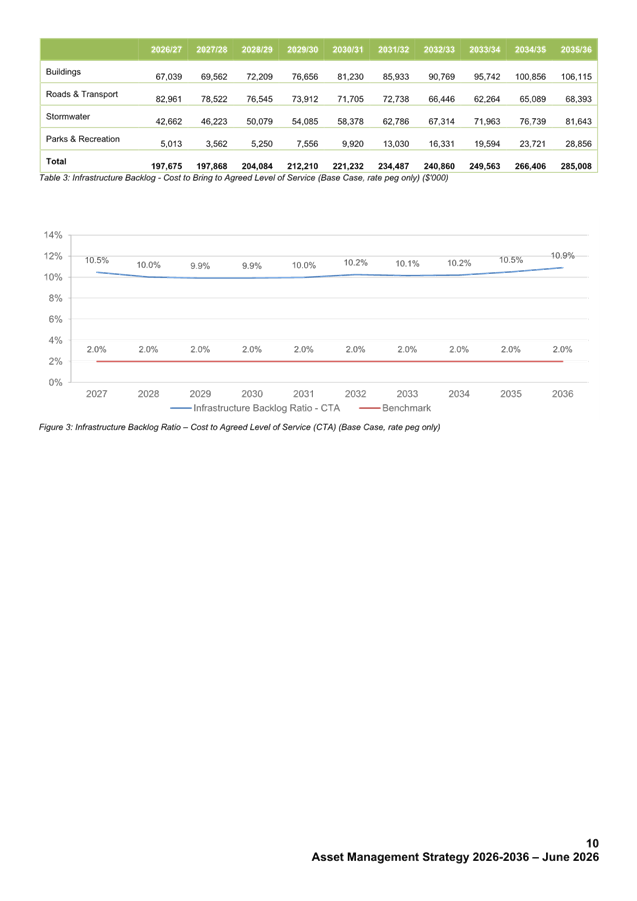
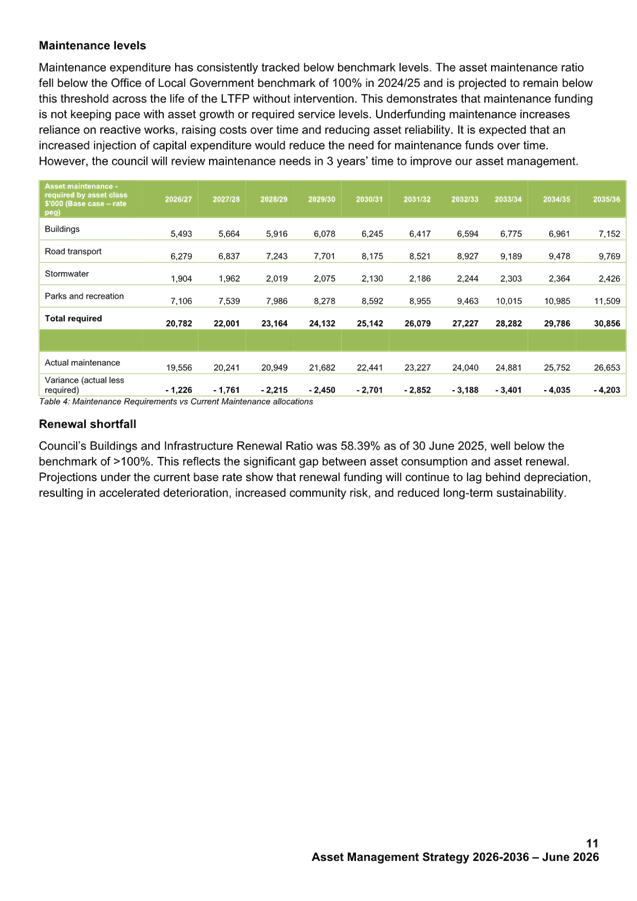
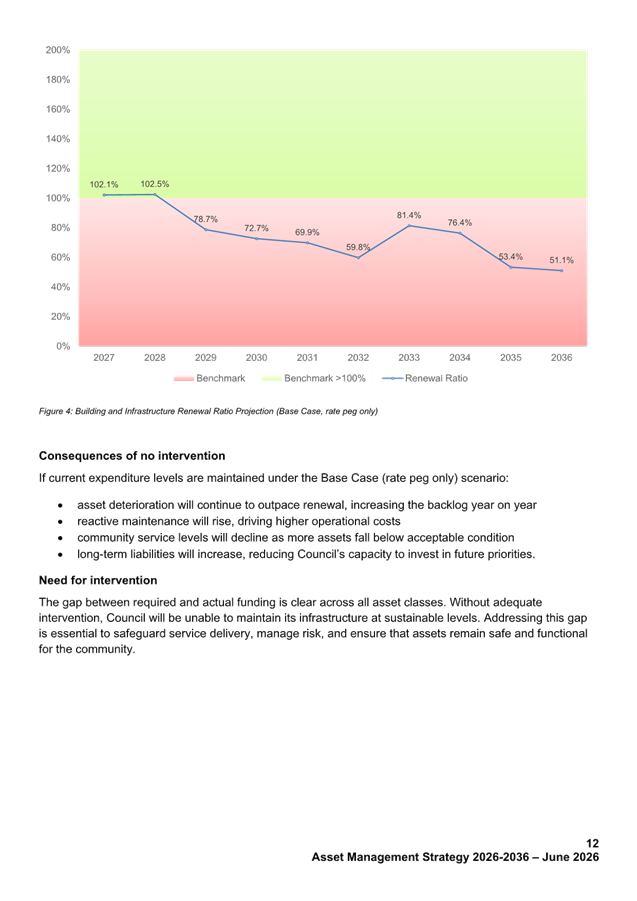
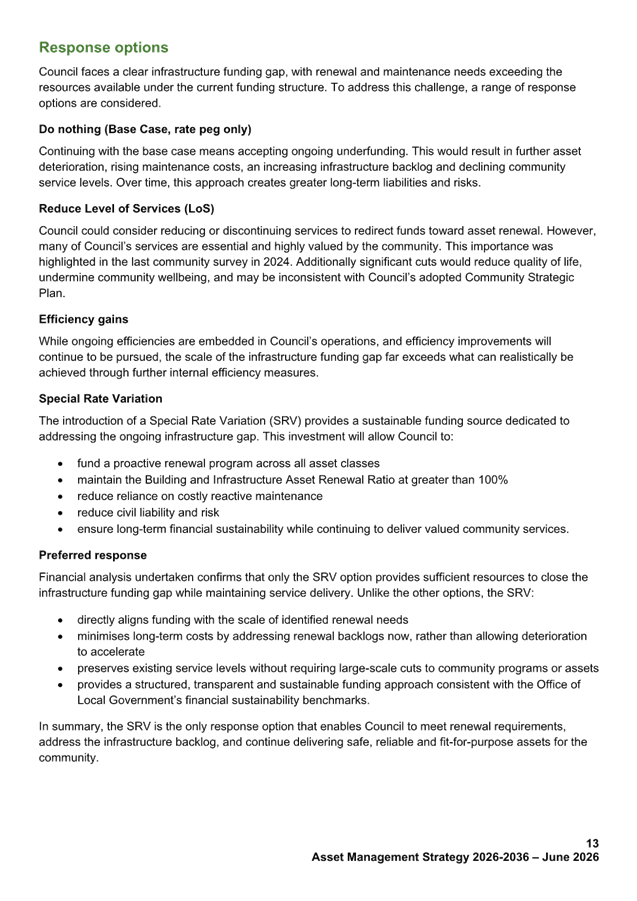
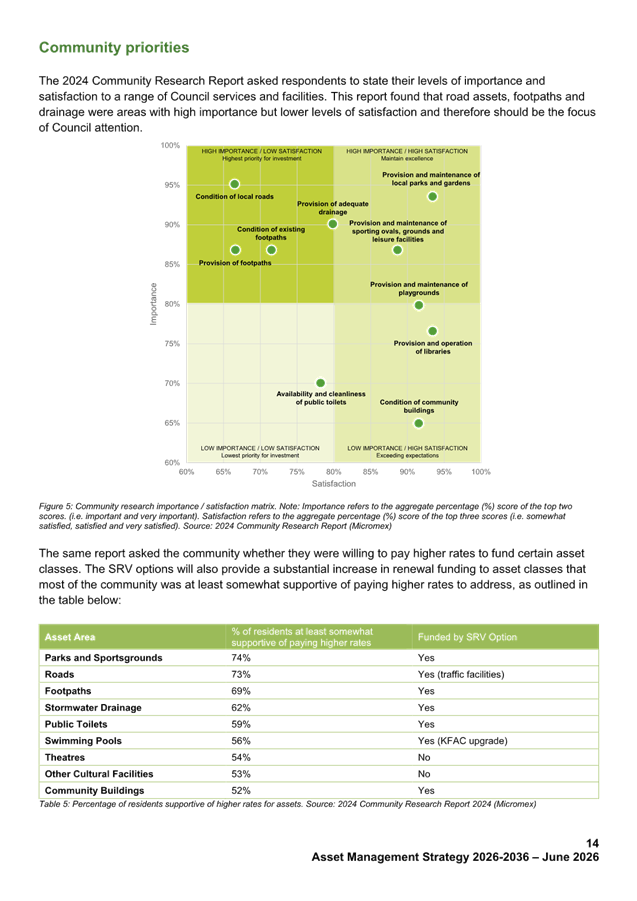
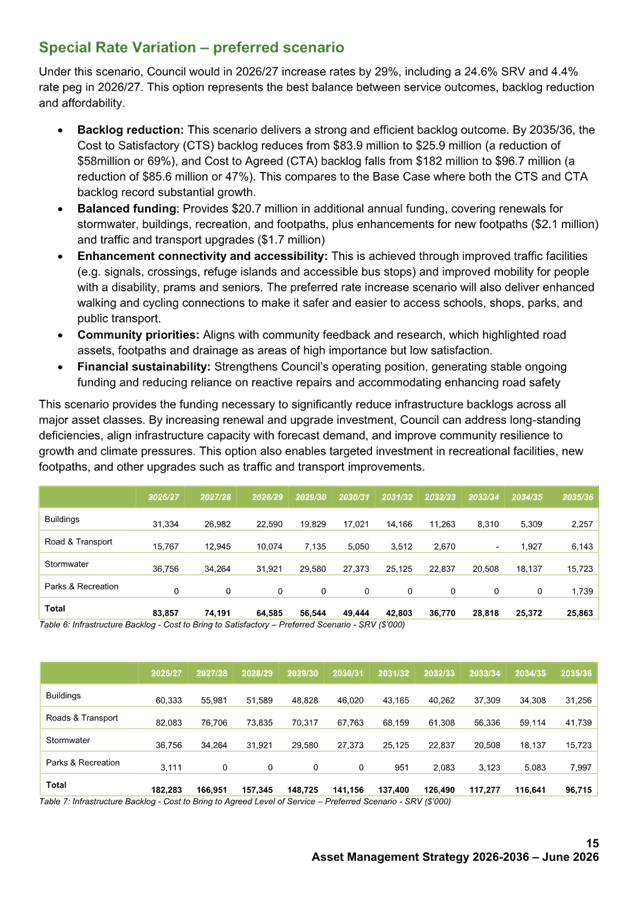
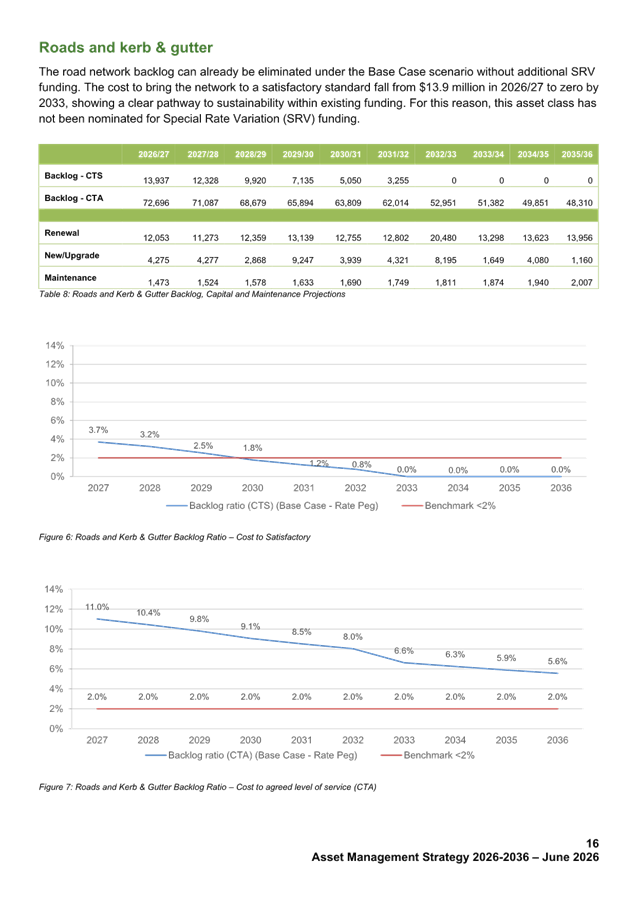
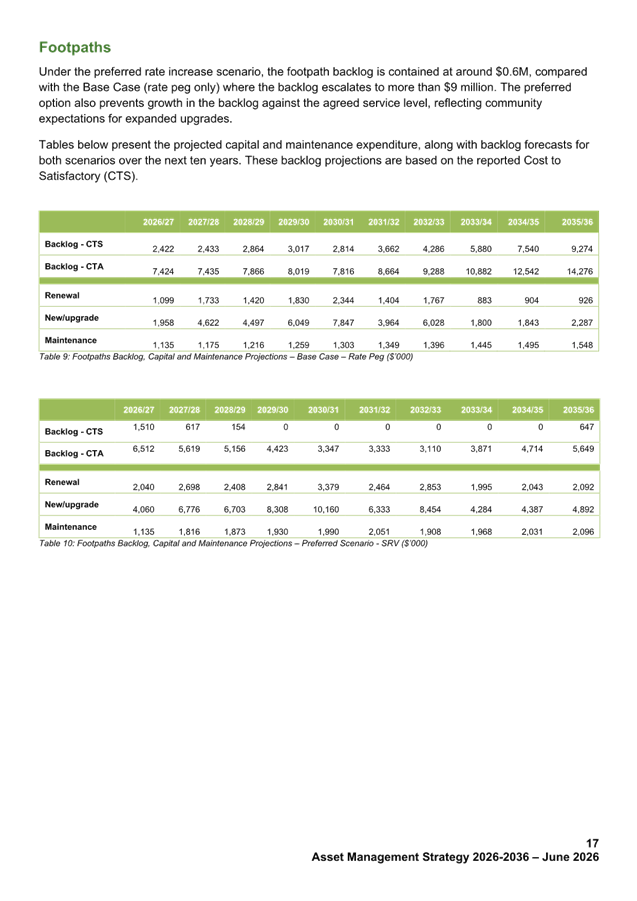
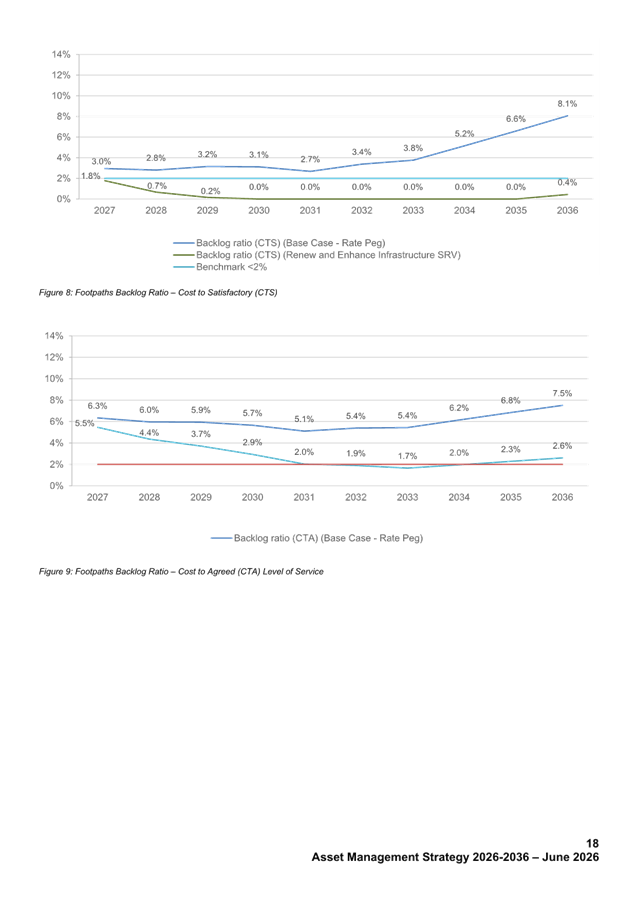
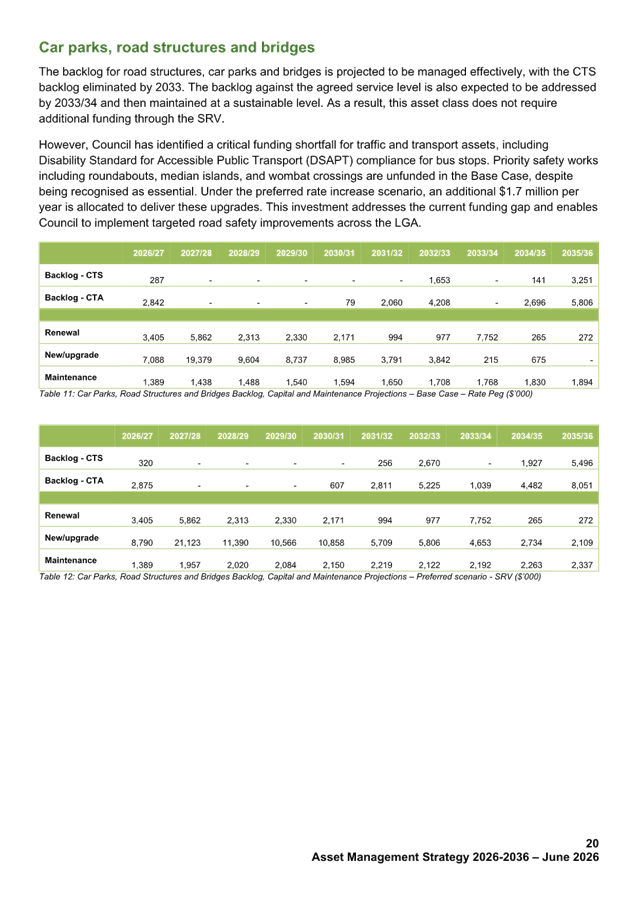
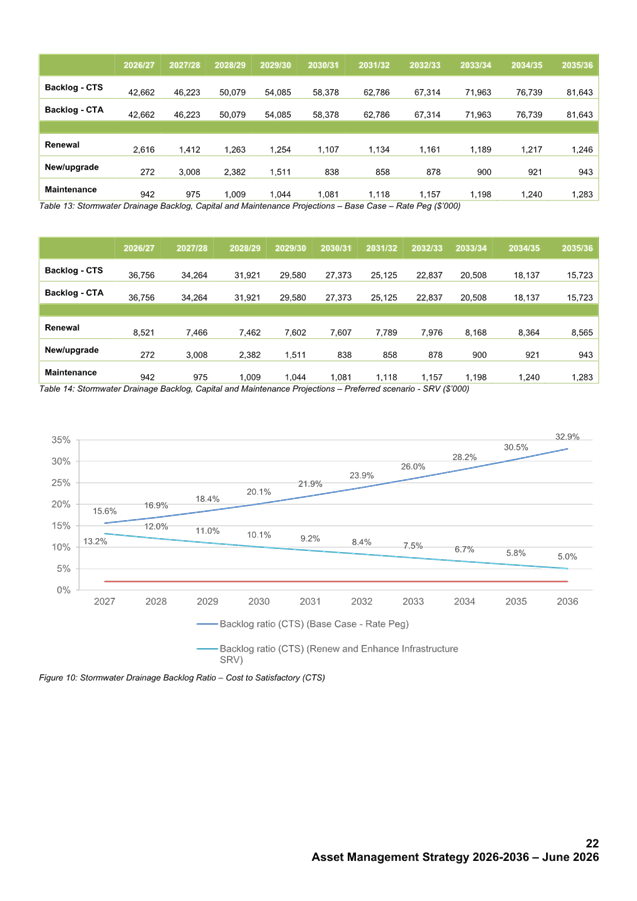
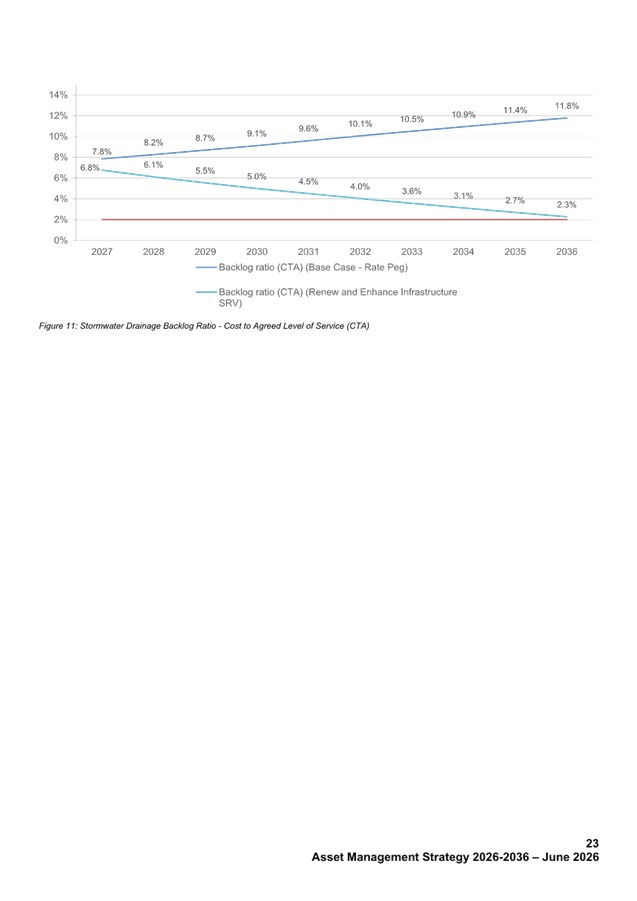
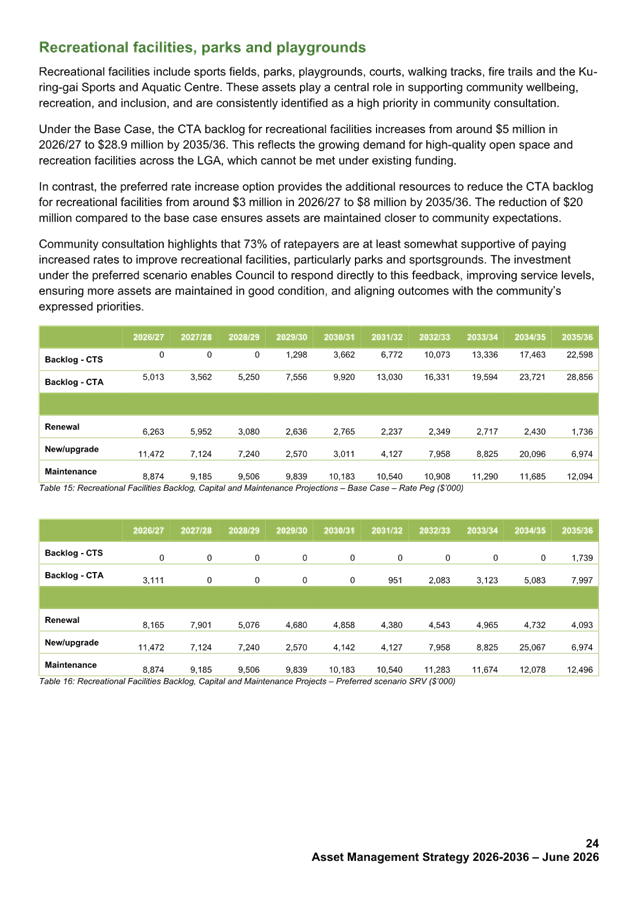
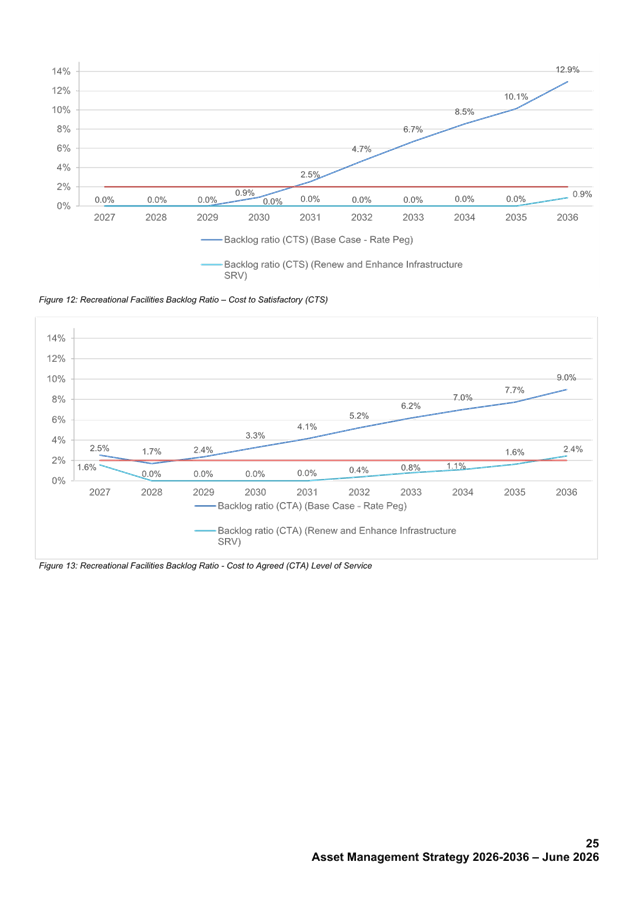
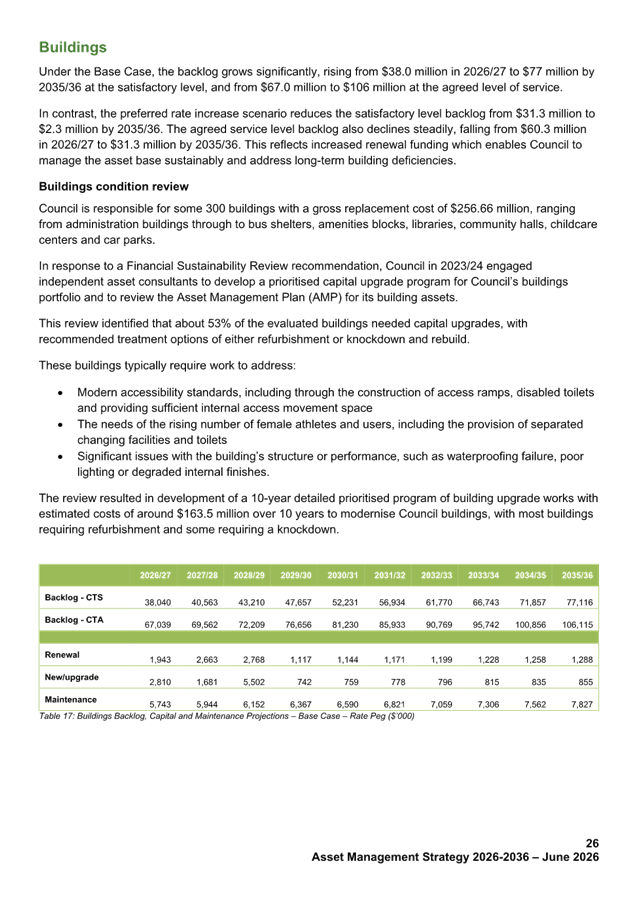
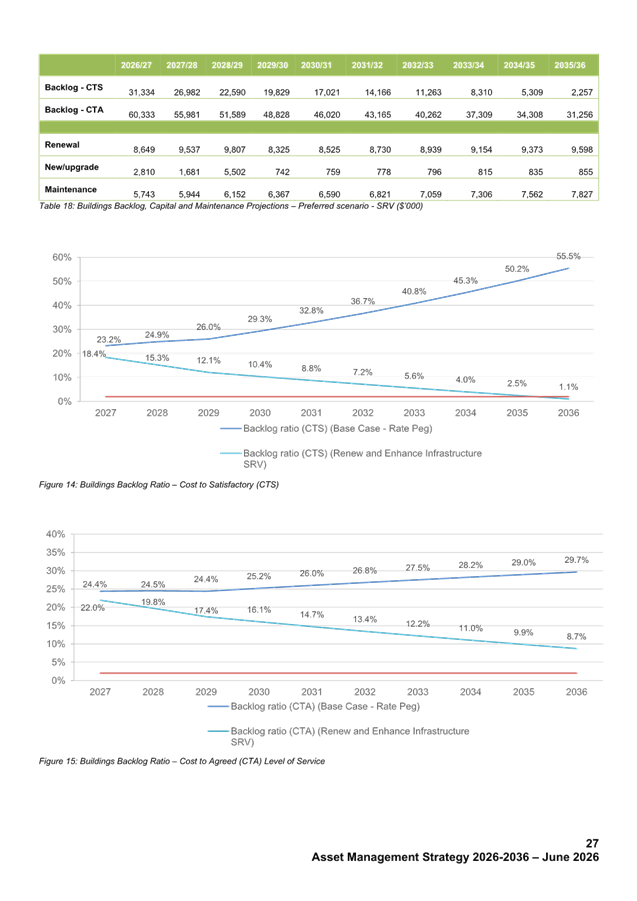
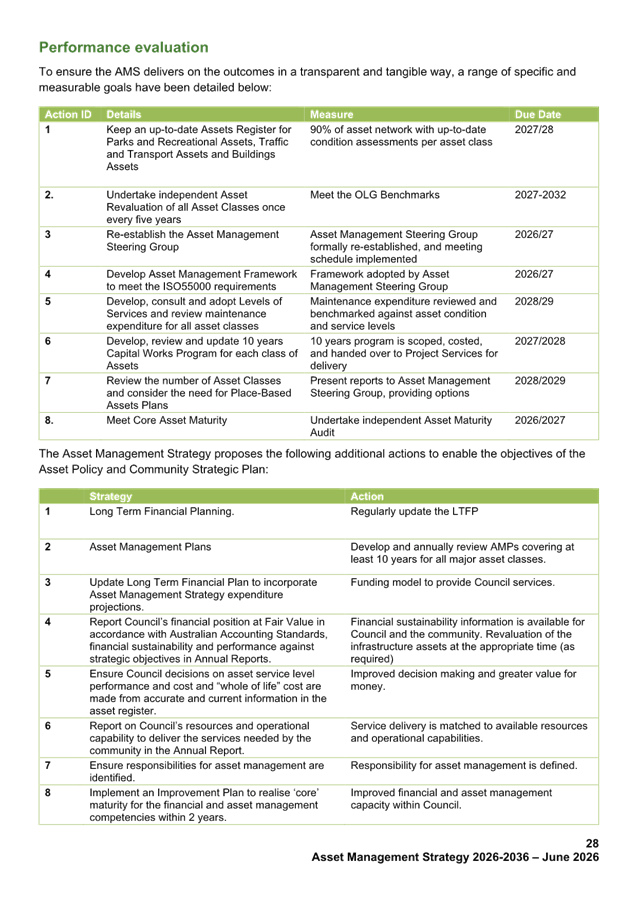
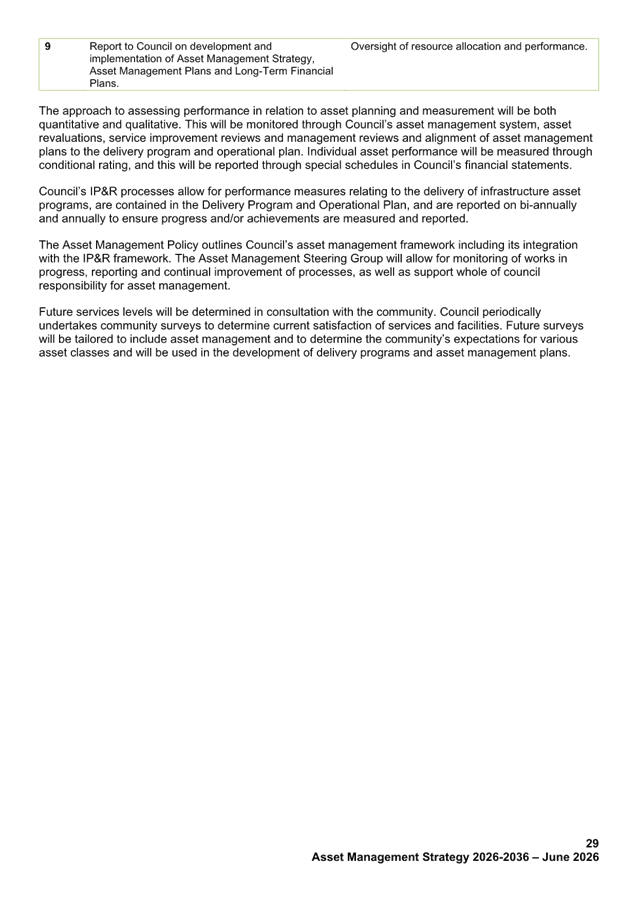
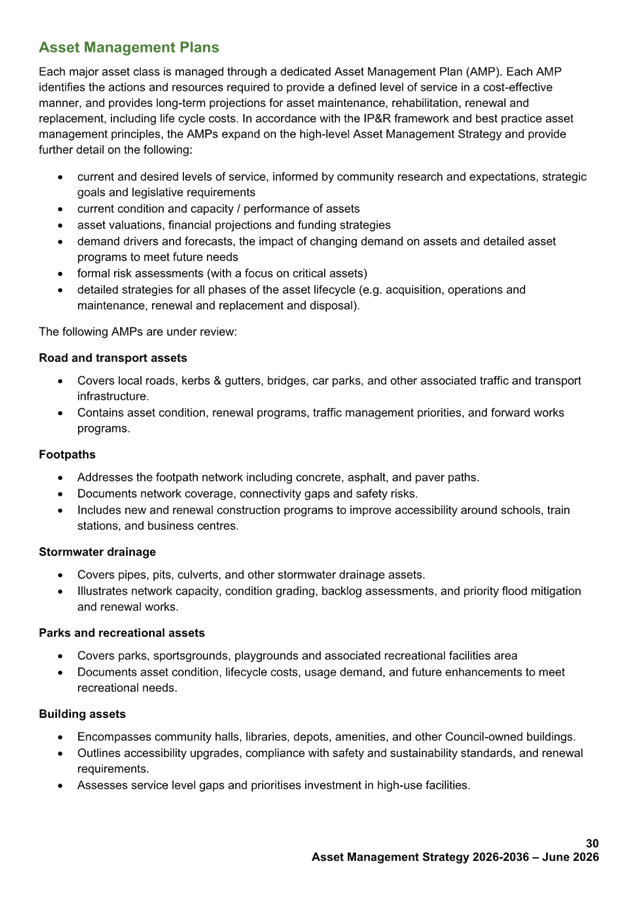
|
ATTACHMENT No: 5 - Attachment 5 - Post-exhibition Workforce Management Strategy 2026-2030 (June 2026) |
|
Item No: GB.4 |
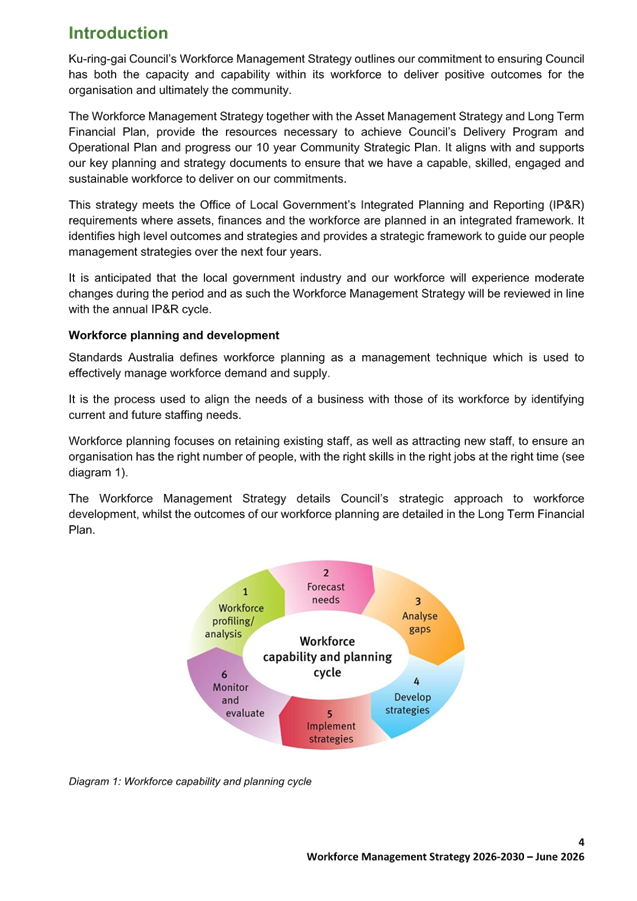

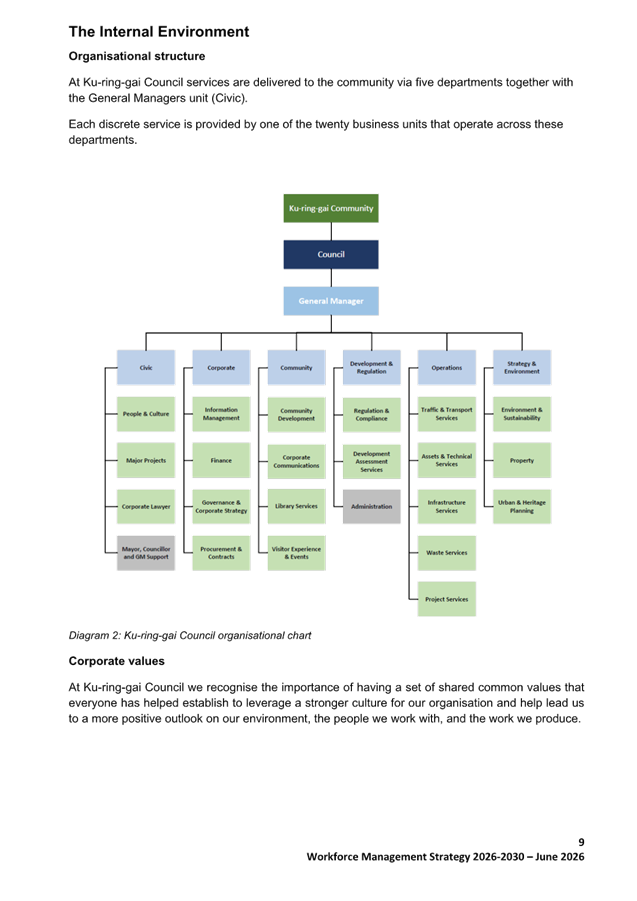
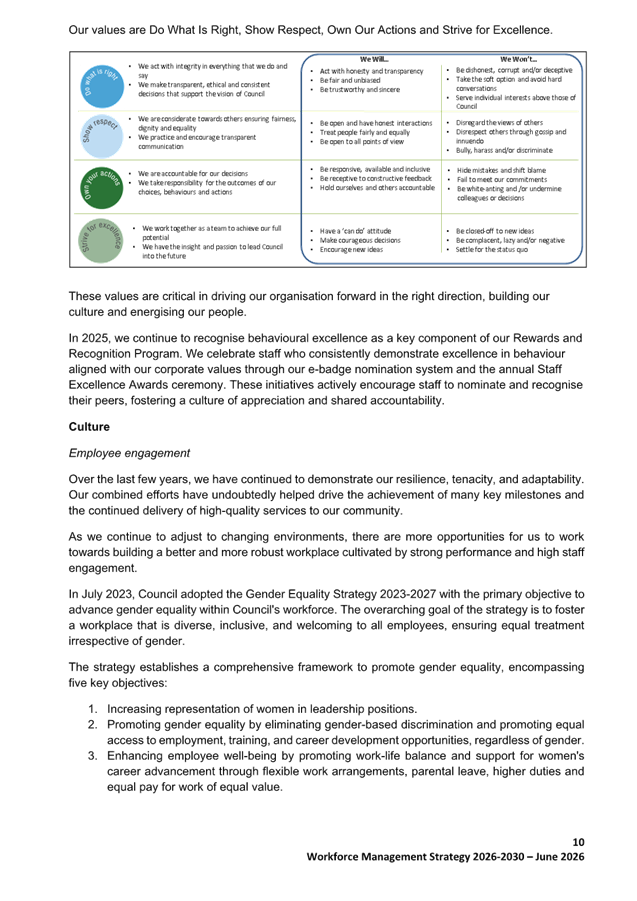
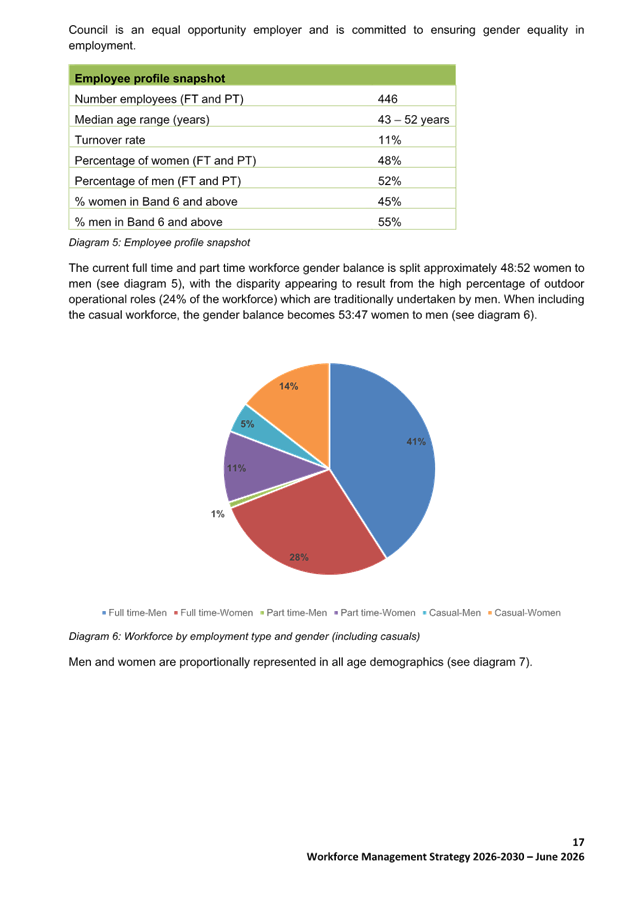
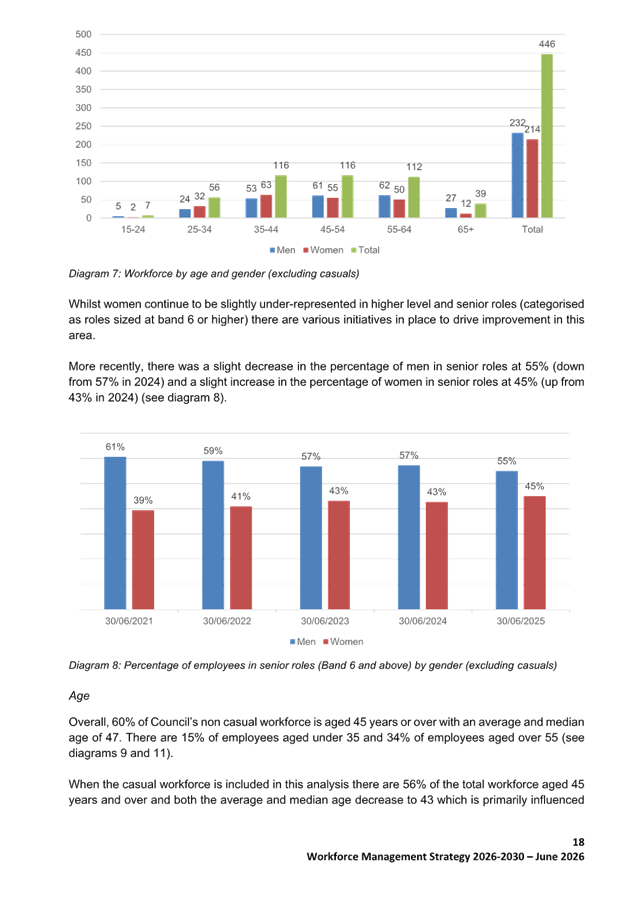
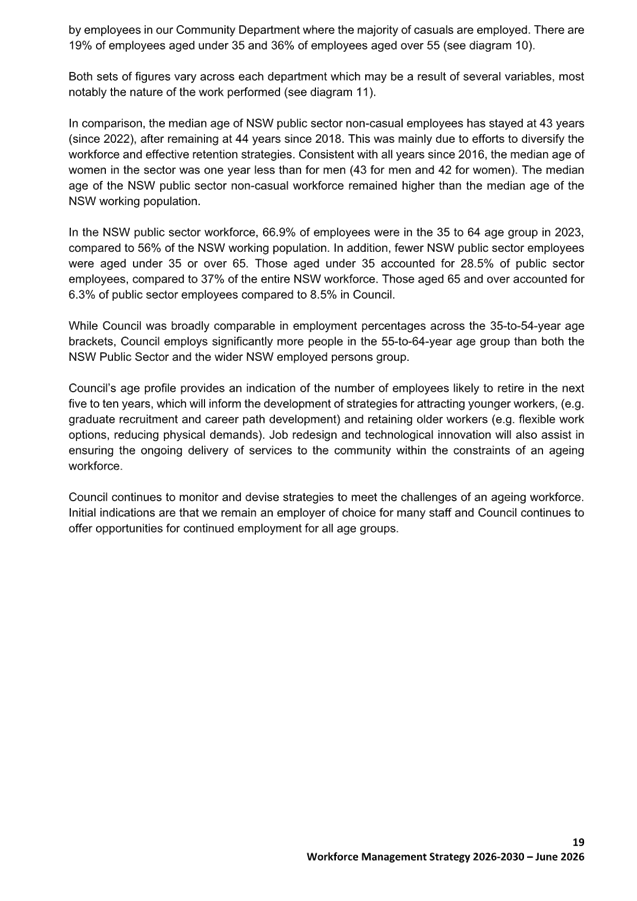
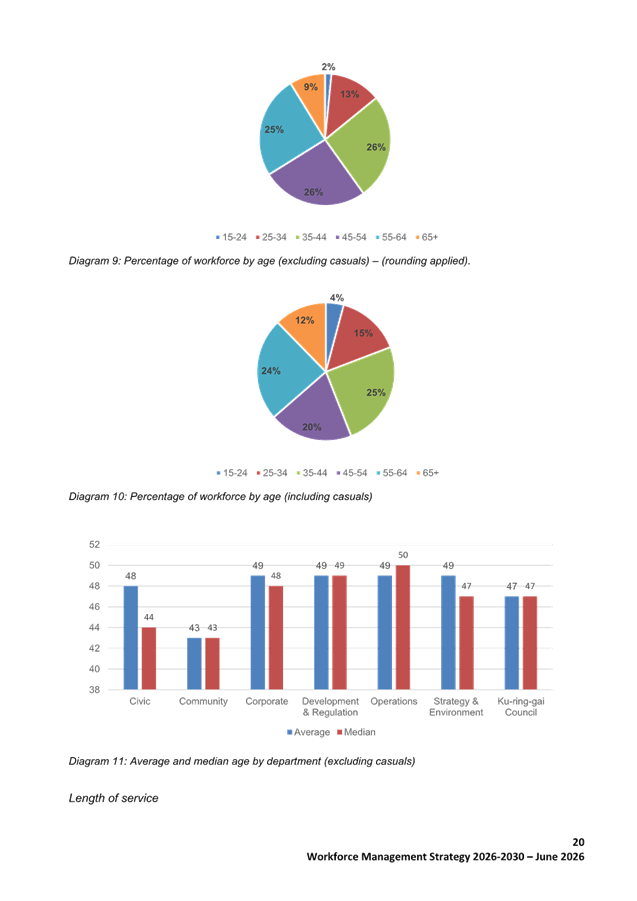
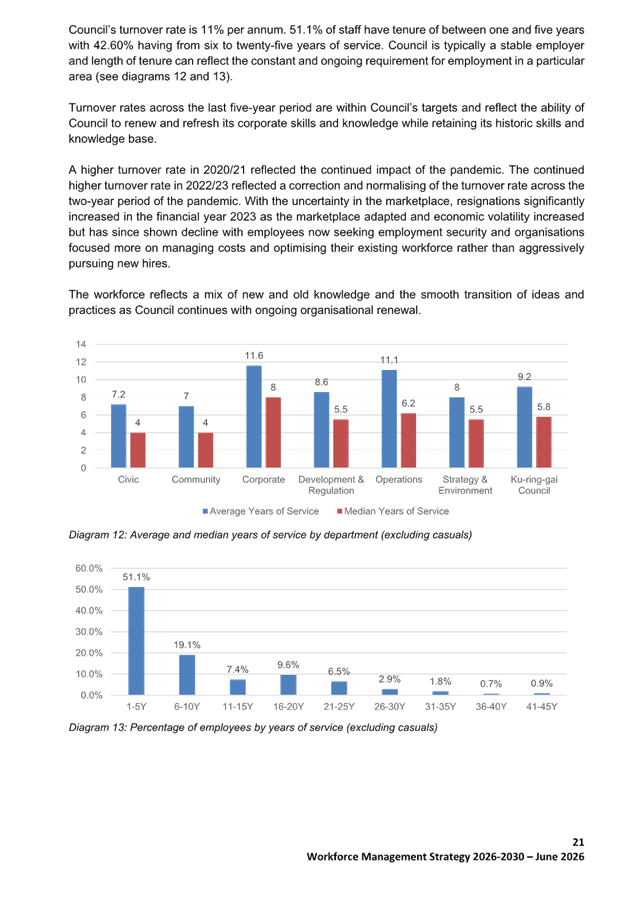
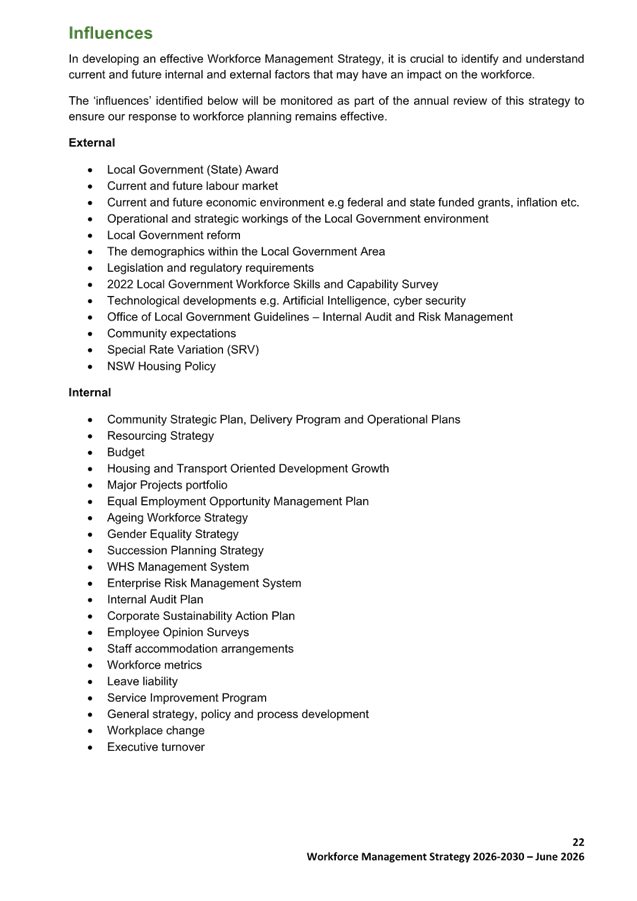
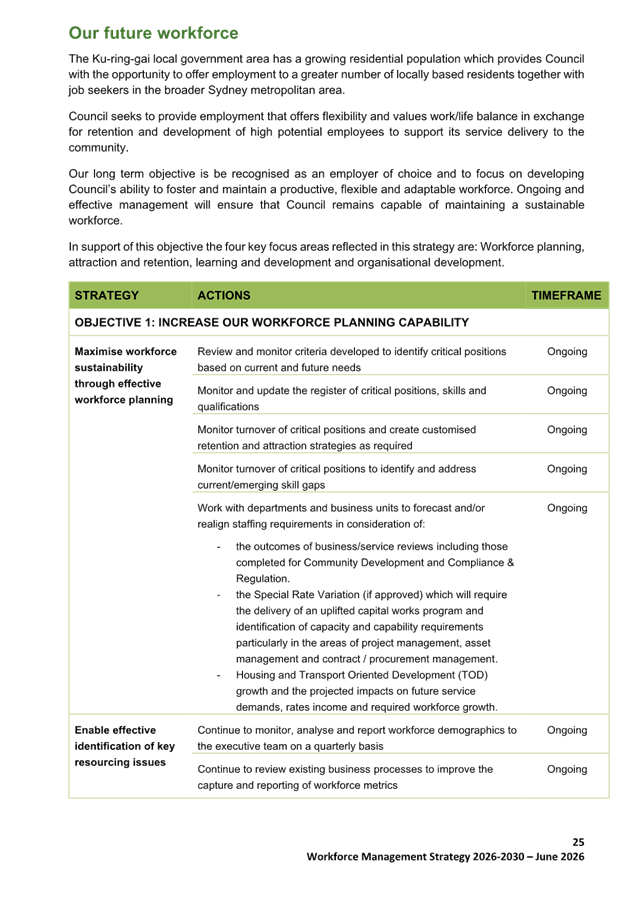

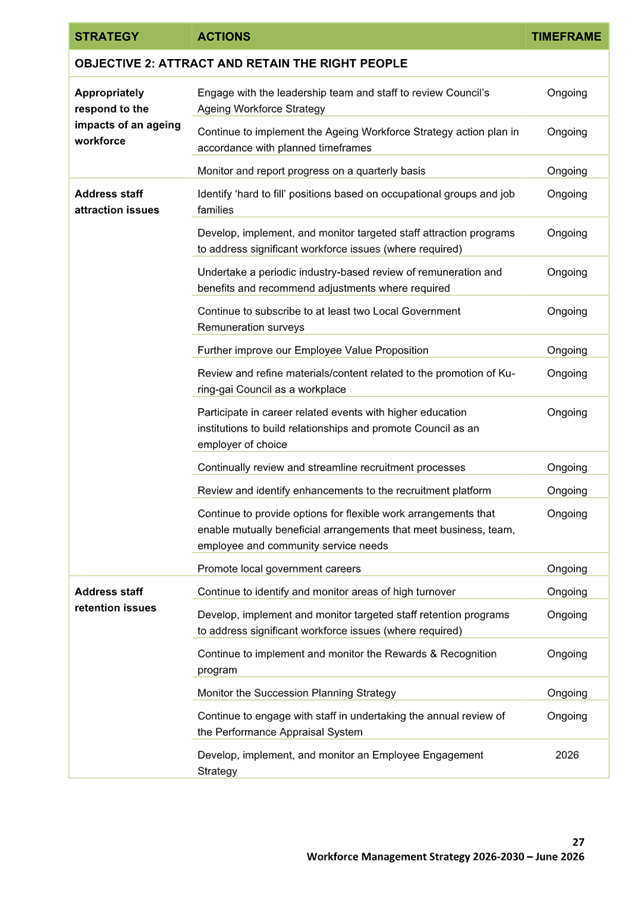

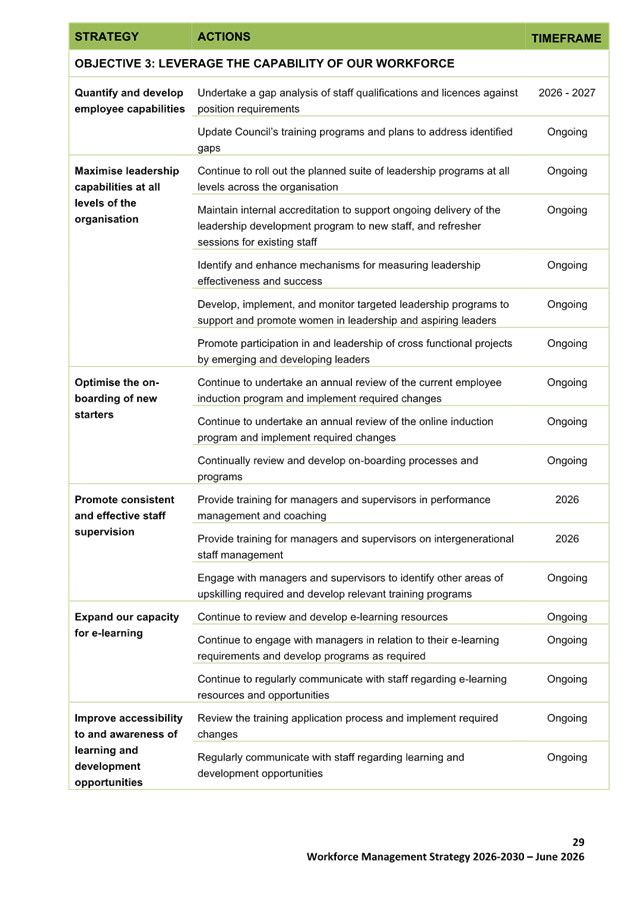
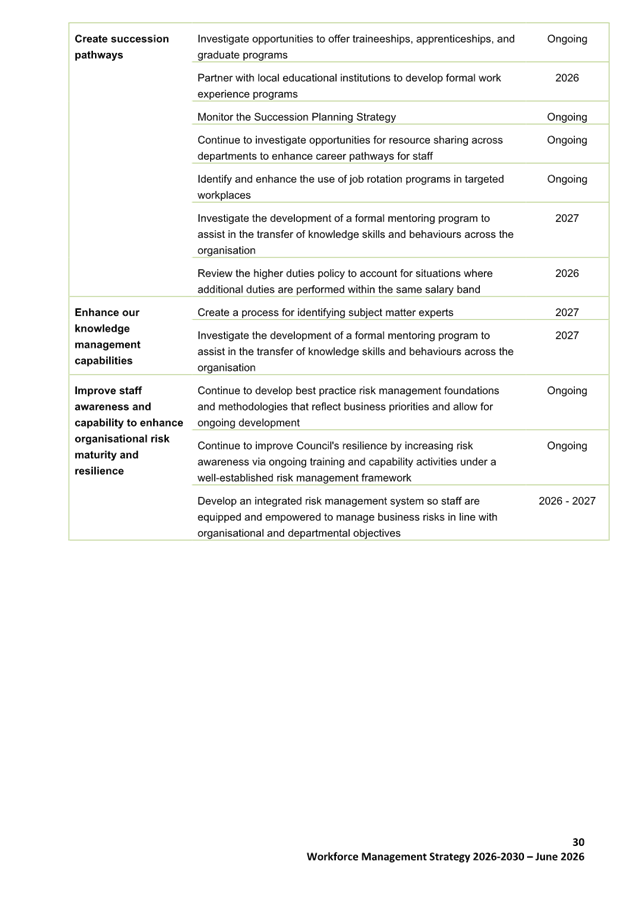
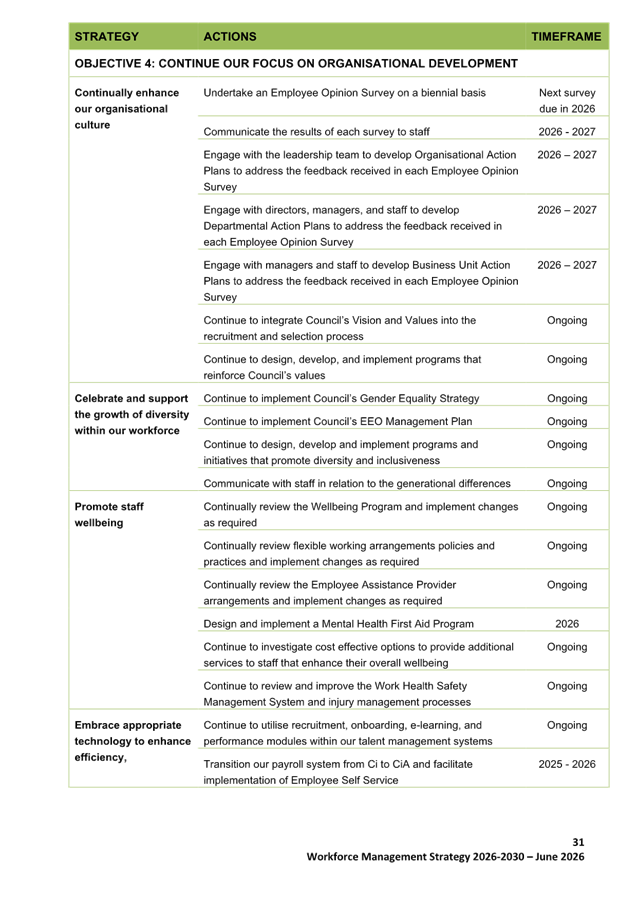
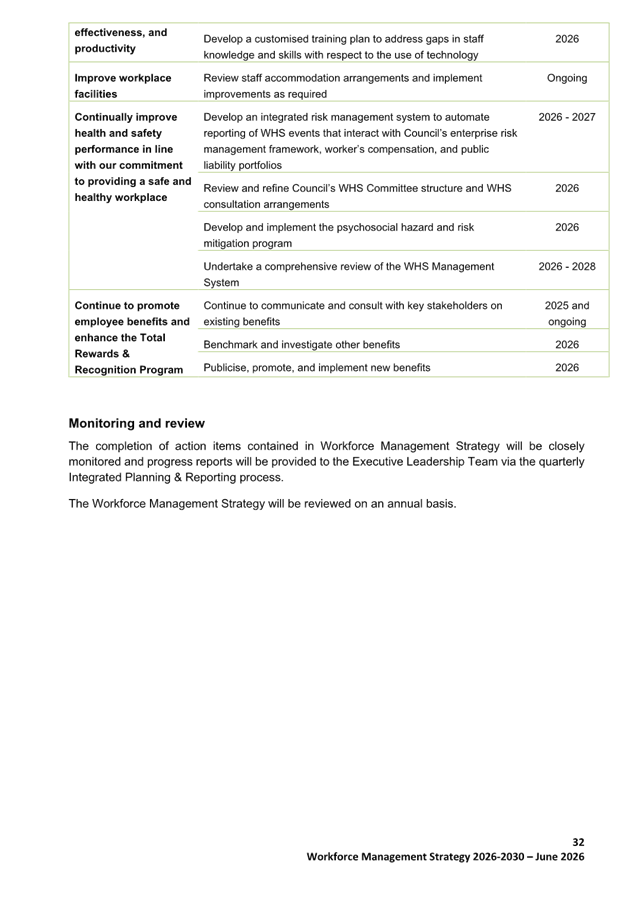
|
ATTACHMENT No: 6 - Attachment 6 - Post-exhibition Asset Management Policy v6 (June 2026) |
|
Item No: GB.4 |
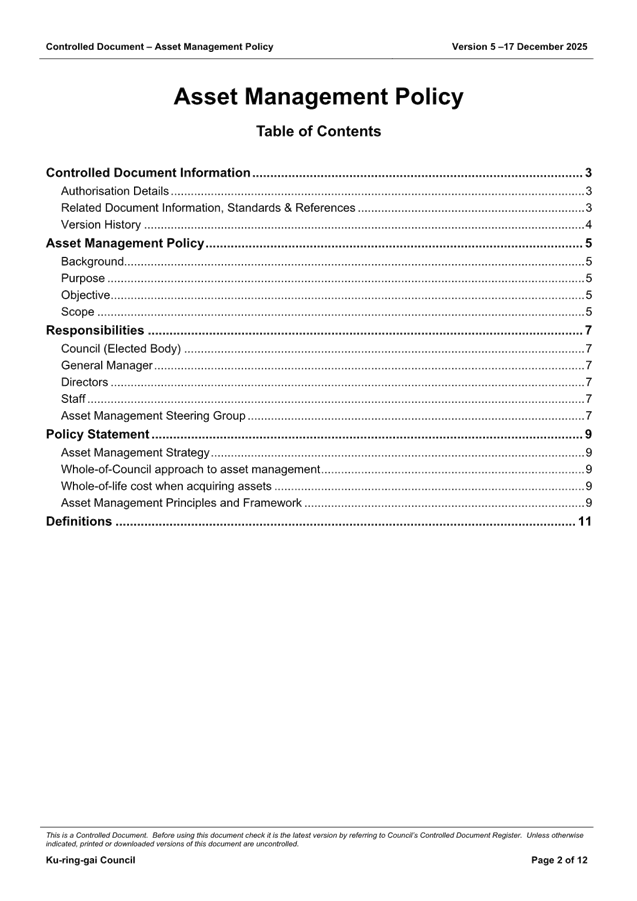
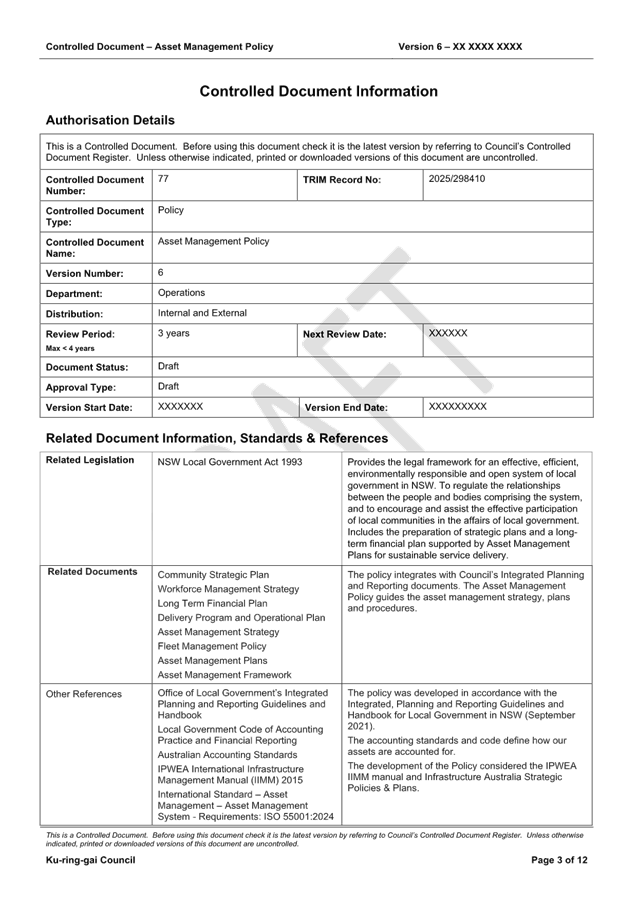
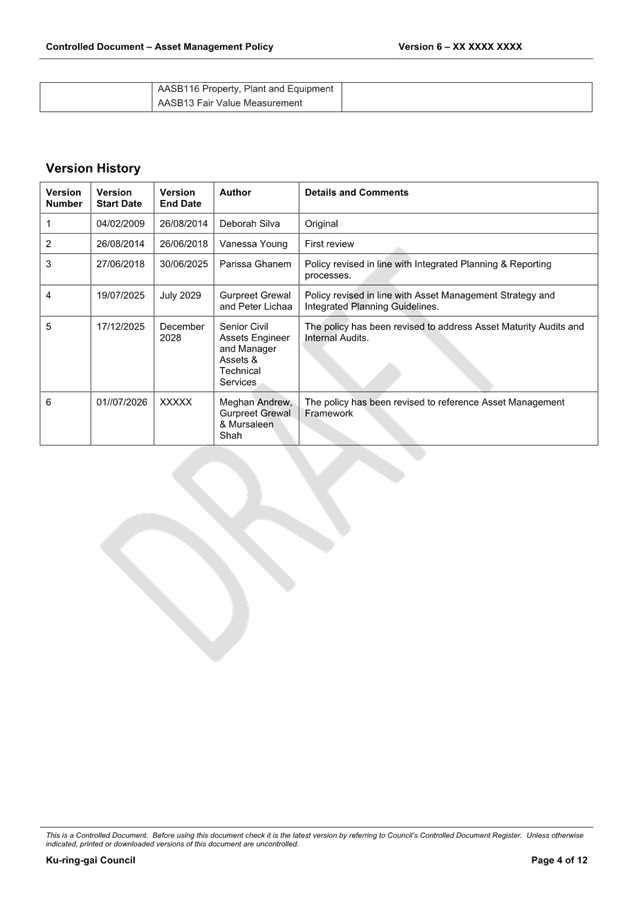
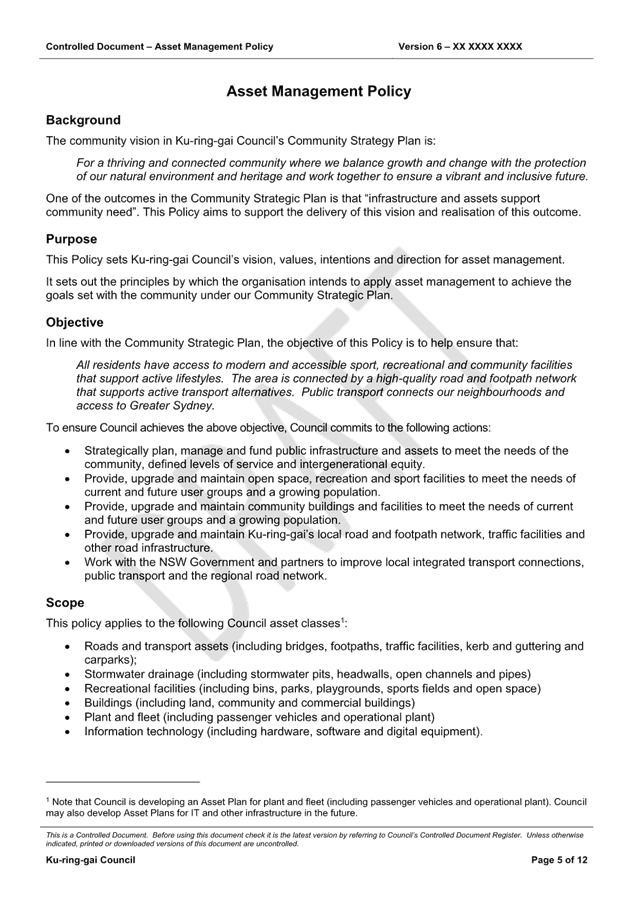
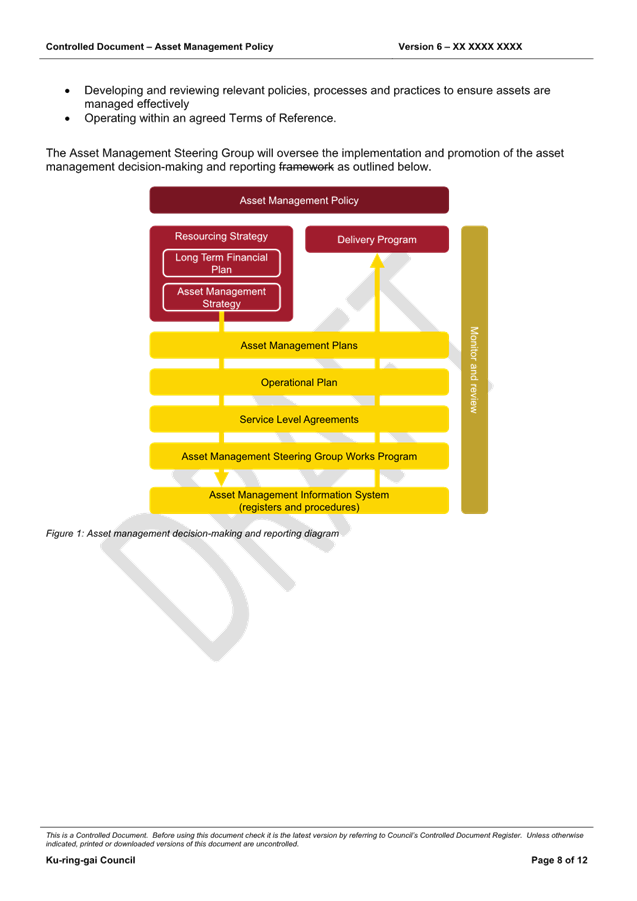
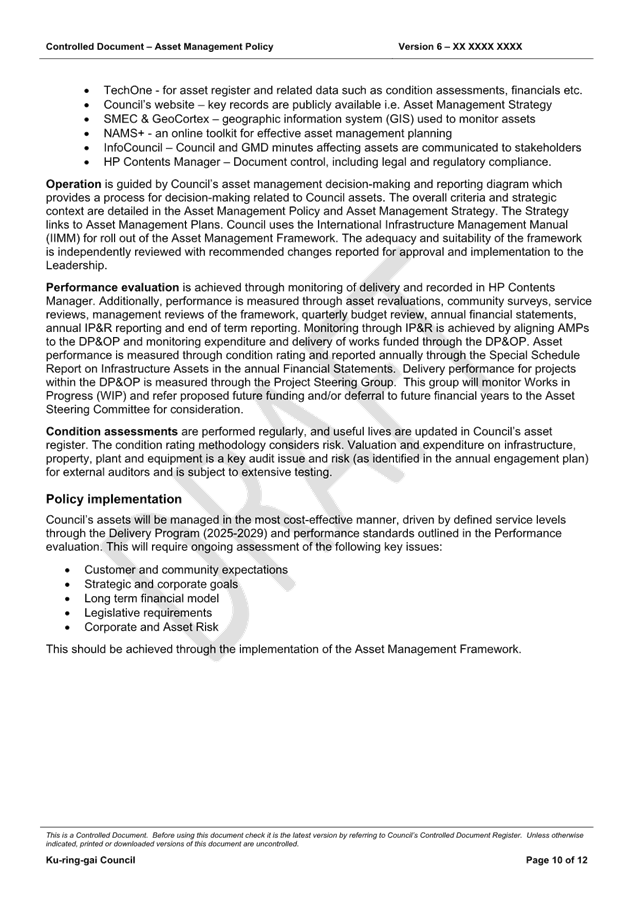
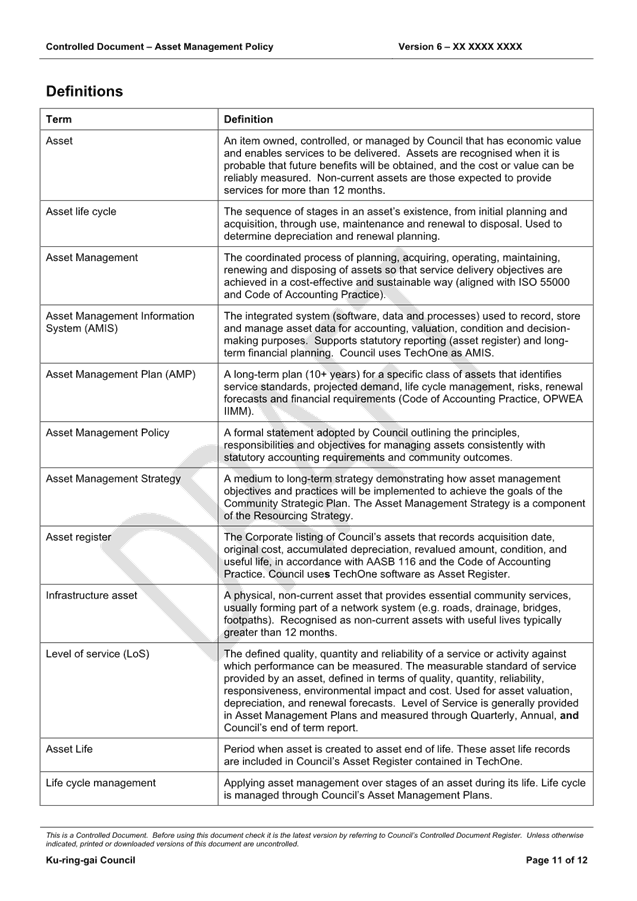
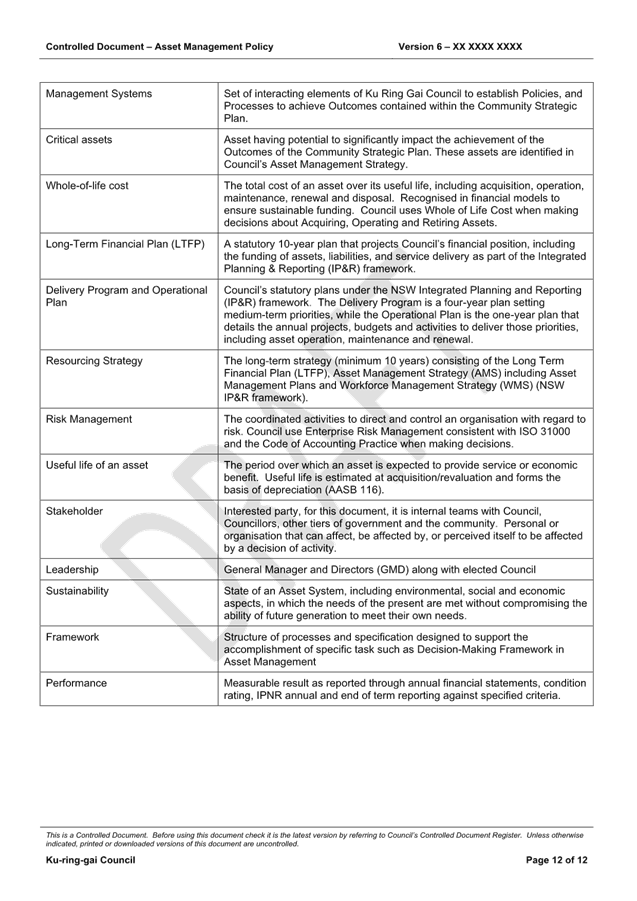
|
GB.5 / 56 |
|
|
|
|
|
Item GB.5 |
EM00049/5 |
Mayor and Councillor Fees - 2026/27 Local Government Remuneration Tribunal Determination
EXECUTIVE SUMMARY
|
purpose of report: |
To determine the mayoral and councillor fees for the 2026/27 financial year. |
|
|
|
|
background: |
Section 241 of the Local Government Act 1993 (the Act) requires that the Local Government Remuneration Tribunal determine the minimum and maximum amount of fees to be paid to mayors and councillors of NSW Councils annually. |
|
|
|
|
comments: |
The Local Government Remuneration Tribunal has released its annual review of the minimum and maximum fees that apply to mayors and councillors for 2026/27 [Attachment A1]. The Tribunal has determined that Ku-ring-gai Council remains in the “Metropolitan Medium” category and has determined a 3.7% per annum increase in the fees applicable to each category from 1 July 2026. |
|
|
|
|
recommendation: |
A. The annual councillor
fee be set at maximum $30,640; and B. The annual mayoral fee be set at $81,380, in addition to the councillor fee. |
Purpose of Report
To determine the mayoral and councillor fees for the 2026/27 financial year.
Background
The Local Government Act 1993 requires the Local Government Remuneration Tribunal to report to the Minister for Local Government each year on its determination of categories of councils and the maximum and minimum amounts of fees to be paid to mayors and councillors.
Section 241 of the Act provides that the Tribunal determine the maximum and minimum amount of fees to be paid to mayors and councillors of councils for each of the categories determined under section 239.
Comments
The Tribunal has released its annual review of the minimum and maximum fees that apply to mayors and councillors for 2026/27 [see Attachment A1].
The Tribunal considered a range of factors in determining the amount to increase minimum and maximum fees payable to councillors and mayors. This included economic data, NSW Public Sector increases and Local Government State Award increases. On this occasion the Tribunal has determined that a 3.7% increase will apply to the minimum and maximum fees applicable to existing categories.
Ku-ring-gai Council remains in the “Metropolitan Medium” category. The minimum and maximum fees for the Ku-ring-gai Council Mayor and councillors have been determined as follows:
|
Category |
Councillor Annual Fee |
Mayor Additional Fee |
||
|
Minimum |
Maximum |
Minimum |
Maximum |
|
|
Metropolitan Medium |
$16,420 |
$30,640 |
$34,870 |
$81,380 |
The conduct of the 2027 Annual Review
The Tribunal has announced that it will commence its 2027 Annual Determination review earlier than usual to allow for a comprehensive overhaul of the existing council categories, criteria and mayoral/councillor fee structures. To facilitate this, the Tribunal is planning to implement a two-stage consultation process:
· Councils will be invited to submit feedback on how the category and criteria structure should be amended, and what the maximum and minimum fees should be (including adjustments for cost-of-living increases).
· Once the new framework is established, submissions will be sought regarding which specific category individual Councils should be placed into under the revised structure.
integrated planning and reporting
Leadership and Service Excellence
|
Community Strategic Plan Long Term Objective |
Delivery Program Term Achievement |
Operational Plan Task |
|
L1: Provide strong and ethical civic leadership to ensure good governance and build and maintain trust and confidence within the community. |
L1.2: Council's governance framework supports probity, transparency, compliance with legislative requirements and a culture of ethical conduct and informed decision-making. |
L1.2.5Review and update Council's policy and procedures for the conduct of Council meetings, public forums and committees in line with Office of Local Government requirements. |
Governance Matters
The Determination of the Local Government Remuneration Tribunal is made in accordance with sections 239 and 241 of the Act. Under section 248 of the Act, Council must either fix an annual fee in accordance with the appropriate determination of the Remuneration Tribunal, or pay the appropriate minimum fee determined by the Remuneration Tribunal.
Risk IMPLICATION STATEMENT
Should Council decide not to accept the annual fee payable to the Mayor and Councillors there is some risk that Council is unable to attract quality candidates at local government elections because of low remuneration levels.
Financial Considerations
The Council’s budget for 2026/27 accounts for an increase to councillor fees.
Social Considerations
Nil.
Environmental Considerations
Nil.
Community Consultation
Nil.
Internal Consultation
Nil.
Summary
The Local Government Remuneration Tribunal determines the minimum and maximum amount of fees to be paid to mayors and councillors. The Tribunal has released its annual review of the minimum and maximum fees that apply to mayors and councillors for 2026/27 [see Attachment A1]. The proposed maximum fees for Ku-ring-gai Council are $30,640 per Councillor and an additional $81,380 for the Mayor.
|
That effective 1 July 2026: A. The annual
councillor fee be set at $30,640; and B. The annual mayoral fee be set at $81,380, in addition to the councillor fee. |
|
Raj Singh Governance Team Leader |
Christopher M Jones Manager Governance and Corporate Strategy |
|
A1⇩ |
LGRT-2026-Annual-Determination |
|
2026/153938 |
|
GB.6 / 60 |
|
|
|
|
|
Item GB.6 |
CY00474/13 |
Review of Councillor Expenses and Facilities Policy
EXECUTIVE SUMMARY
|
purpose of report: |
For Council to adopt the updated Councillor Expenses and Facilities Policy |
|
|
|
|
background: |
Section 252(1) of the Local Government Act 1993 (the Act) requires Council to adopt a Councillor Expenses and Facilities policy within the first 12 months of each term of Council. In accordance with Office of Local Government (OLG) Guidelines, Council reviews this policy on an annual basis. |
|
|
|
|
comments: |
Council has reviewed the policy and suggested amendments as outlined in the report. It is intended that, subject to exhibition, any changes to the expenses, facilities and indexation in this policy come into effect on 1 October 2026. |
|
|
|
|
recommendation: (Refer to the full Recommendation at the end of this report) |
Purpose of Report
For Council to adopt the updated Councillor Expenses and Facilities Policy
Background
Section 252 of the Local Government Act 1993 requires Council to adopt a Councillor expenses and facilities policy within the first 12 months of each term of Council. This policy must comply with the provisions of the Act, regulations and the NSW Office of Local Government’s (OLG) Guidelines for the payment of expenses and the provision of facilities for Mayors and Councillors in NSW issued under section 23A of the Act.
The Councillor Expenses and Facilities Policy is updated regularly to ensure it is:
· updated in line with the Consumer Price Index (CPI)
· consistent with NSW and Council policy, and recommendations of integrity bodies
· based on what Councillors need to effectively carry out their civic duties, and
· what is acceptable to the community.
The current version of the policy was approved by Council in September 2025.
Comments
Council has proposed the following changes to the Councillor Expenses and Facilities Policy (see Attachment A1).
Travel expense limits (clauses 6.2 and 6.3 and Table A)
Travel expenses for official business are not only for reimbursement for use of a private vehicle but also taxi and ride share fares, which are significantly more expensive. The current limit of $1,160 per year of term are inadequate if a Councillor uses taxis and ride share on a regular basis. It is therefore recommended that the limit for travel expenses be increased to $2,000 per year of term.
The reimbursement rates for private vehicle use are currently pegged to the per km rate in the Local Government (State) Award. The cents per km rate from the Australian Tax Office (ATO) is a flat 88 cents per kilometre. A comparison of rates for 2025/26 are shown in Table 1 below. As the Local Government (State) Award rates are well under the ATO rates for electric and hybrid cars, it is recommended that the reimbursement rate be changed to be the greater of the Local Government Award or ATO rates.
|
Cents per km rates (2025/26) |
||
|
Vehicle Type |
Local Govt Award Rate |
ATO Rate |
|
Electric Vehicle (EV) |
$0.44 / km |
$0.88 / km |
|
Hybrid Vehicle |
$0.64 / km |
$0.88 / km |
|
ICE (Under 2.5 Litres) |
$0.83 / km |
$0.88 / km |
|
ICE (2.5 Litres & Over) |
$0.98 / km |
$0.88 / km |
Table 1: Cents per kilometre rates, 2025/26 Local Government (State) Award and Australian Tax Office (ATO) comparisons
The ATO rate for 2026/27 has been determined as 91 cents per in the Income Tax Assessment (Cents per Kilometre Deduction Rate for Car Expenses) Determination 2026. The Local Government (State) Award rates for 2026/27 have not yet been determined. If this change to the policy is adopted by Council, the 2026/27 rates will be updated when the 2026 Award is determined.
Professional development (clause 7.1 and 7.5)
Clause 7.1 has been updated to clarify that professional development includes official Council site visits, such as to facilities in other local government areas, within the annual professional development maximum limits in Table A.
Clause 7.5 has also been updated to clarify that travel costs for attendance at offsite workshops (such as Code of Conduct and strategic planning workshops) are in addition to the professional development maximum limit.
Additional expenses to allow a councillor with a disability to perform their civic duties (clause 13.3)
It is recommended that this be amended to provide a streamlined, delegated pathway for councillors with a disability to access support without requiring a formal Council resolution. This has been set at $2000 per year of term.
Flu vaccinations (clause 16.1)
It is recommended that provision be made for access to annual flu and other public health vaccinations. Where practical, Councillors may participate in Council’s internal staff vaccination clinics at no cost. Alternatively, Council would reimburse the direct cost of the vaccination (excluding any associated private GP consultation fees).
Indexation of expense limits
As outlined in the draft policy, expense limits are updated each year in line with CPI (as at June each year). These limits (highlighted in green in Attachment A1) will be updated when the ABS publishes June data on 29 July 2026.
The updated policy will be placed on public exhibition for a period of 28 days. If any submissions are received, this will be reported back to Council. If no submissions are received, it is recommended that Council adopt the policy (with updated expense limits) to come into effect for the third year of this Council term (1 October 2026 – 30 September 2027).
integrated planning and reporting
|
Community Strategic Plan Long Term Objective |
Delivery Program Term Achievement |
Operational Plan Task |
|
L1: Provide strong and ethical civic leadership to ensure good governance and build and maintain trust and confidence within the community. |
L1.2: Council's governance framework supports probity, transparency, compliance with legislative requirements and a culture of ethical conduct and informed decision-making. |
L1.2.5: Review and update Council's policy and procedures for the conduct of Council meetings, public forums and committees in line with Office of Local Government requirements. |
Governance Matters
Section 252 of the Local Government Act states that Councils are required to establish a policy within the first year of each term that outlines how they will cover expenses and provide facilities for the mayor, deputy mayor and councillors in fulfilling their official duties. Councils cannot pay expenses or provide facilities to the mayor, deputy mayor or any councillor outside the guidelines of this policy.
Risk Implication Statement
The primary risk associated with the recommendation/s contained in this report is related to regulatory procedures. There are no material risks that arise from the recommendations contained in this report. Minor issues may occur, but these can be managed within Council’s current policies, procedures, resources and budget. This policy establishes the provision of councillor expenses and facilities in a manner that is transparent and accountable.
Financial Considerations
While expense limits are proposed to increase in line with CPI, actual expenses are contingent on the usage by Councillors.
Social Considerations
Nil.
Environmental Considerations
Nil.
Community Consultation
Section 253 of the Local Government Act 1993 states that Councils must give public notice of their intention to adopt or amend their expense and facilities policy allowing at least 28 days for public submissions, and consider all public submissions received within the public exhibition period and make necessary changes to the draft policy or amendment. Public exhibition is not required for minor amendments.
Internal Consultation
The draft policy has been developed by the Governance and Corporate Strategy team, in consultation with Finance.
Summary
Section 252 of the Local Government Act 1993 requires Council to adopt a Councillor expenses and facilities policy within the first 12 months of each term of Council, and the guidelines recommend it be updated annually. It is intended that, subject to exhibition, any changes to the expenses, facilities and indexation in this policy come into effect on 1 October 2026.
That the updated Councillor Expenses and Facilities Policy be placed on public exhibition for a period of 28 days. If any submissions are received, the matter be reported back to Council after the consultation period. If no submissions are received, that Council adopt the policy to come into effect on 1 October 2026.
|
Christopher M Jones Manager Governance and Corporate Strategy |
|
|
Attachments: |
A1⇩ |
Draft Councillor Expenses and Facilities Policy (v20) |
|
2026/161155 |
|
ATTACHMENT No: 1 - Attachment 1 - Draft Councillor Expenses and Facilities Policy (v20) |
|
Item No: GB.6 |
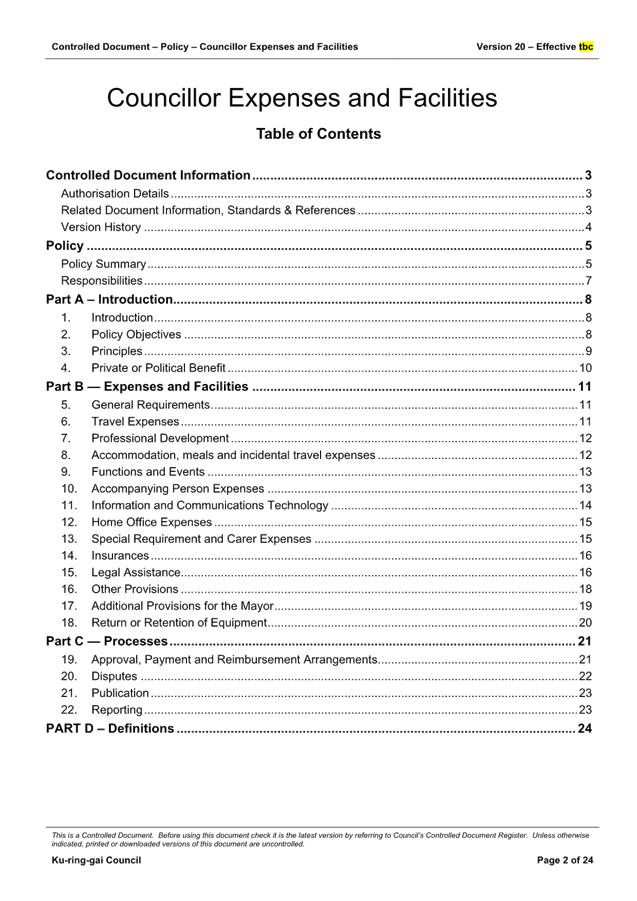
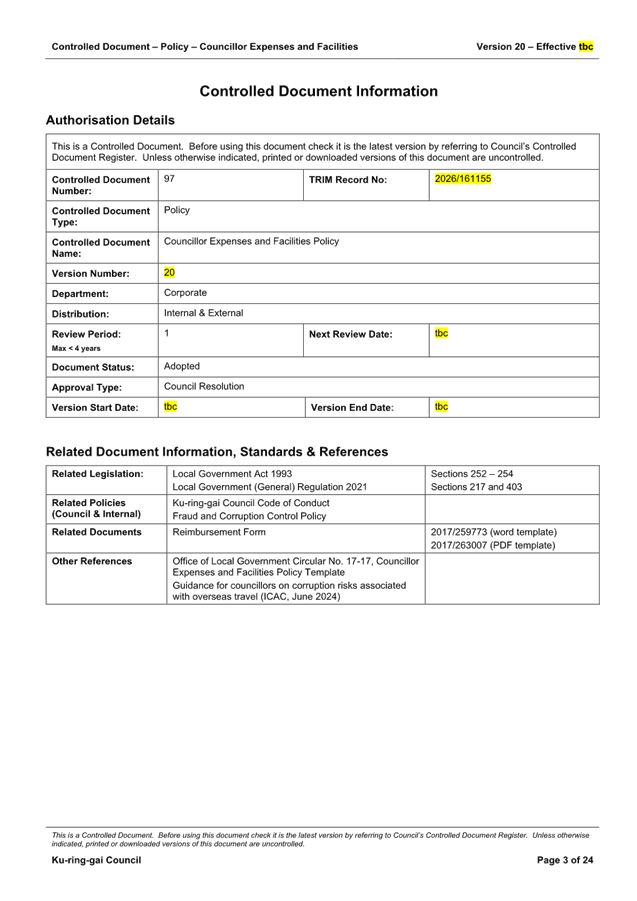
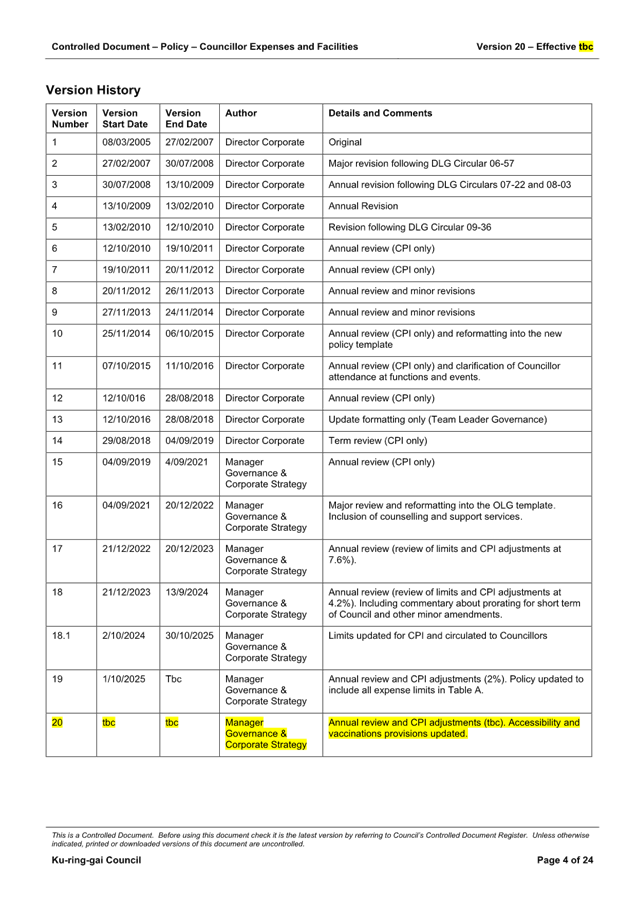
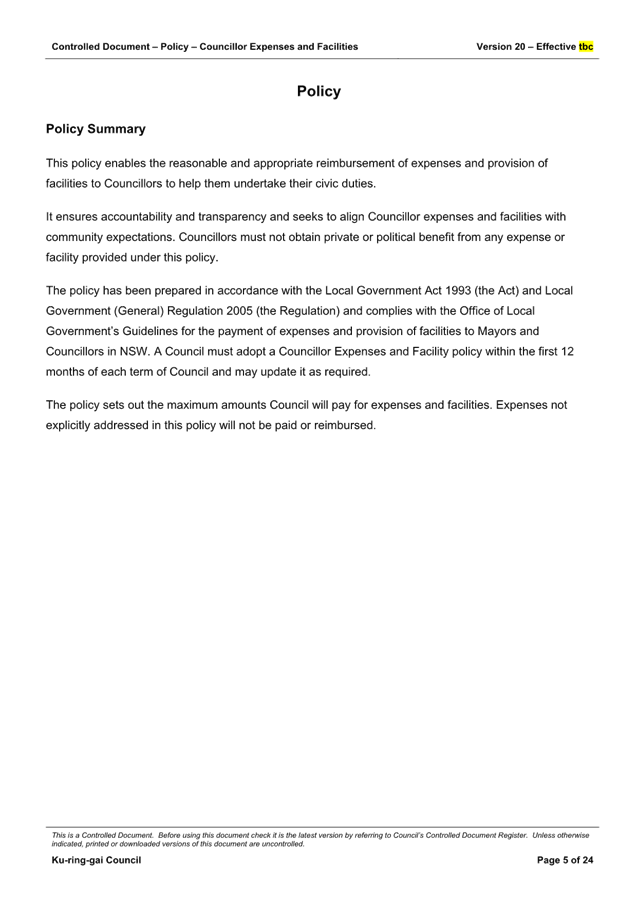
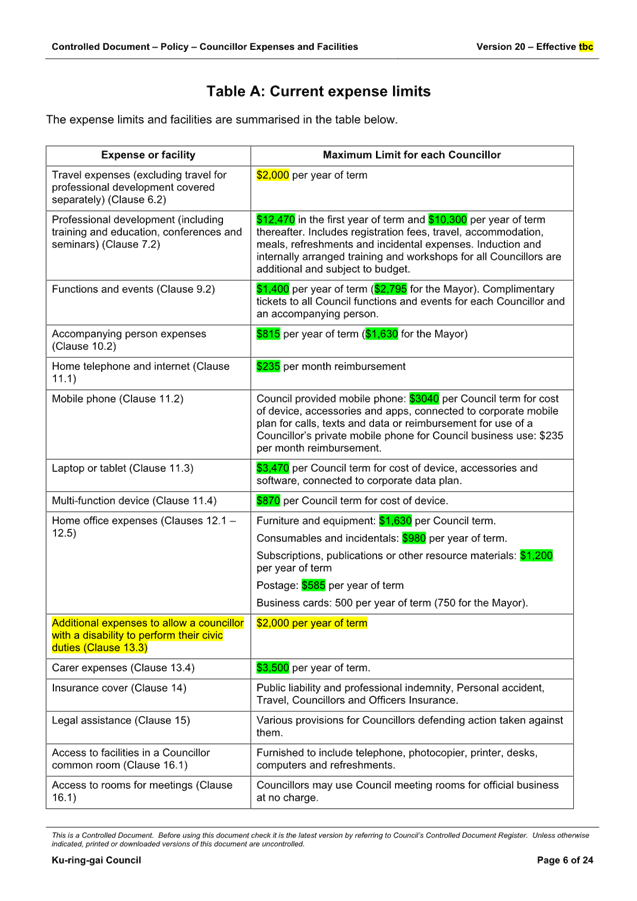
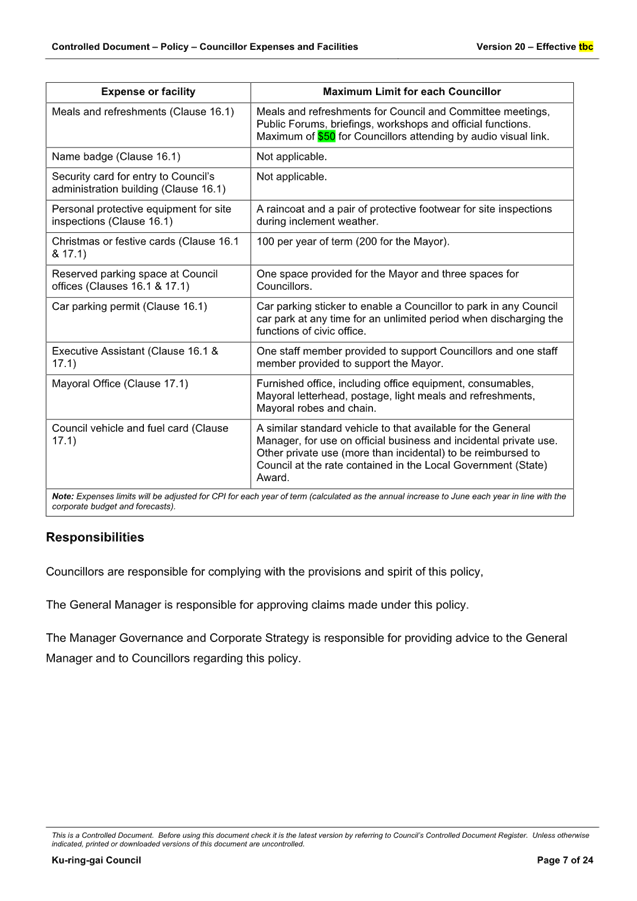
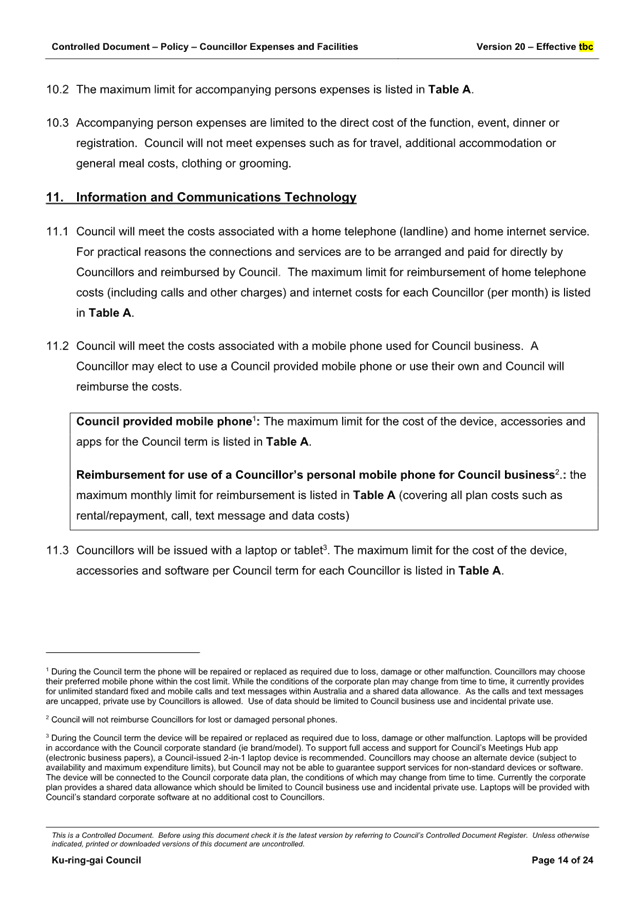
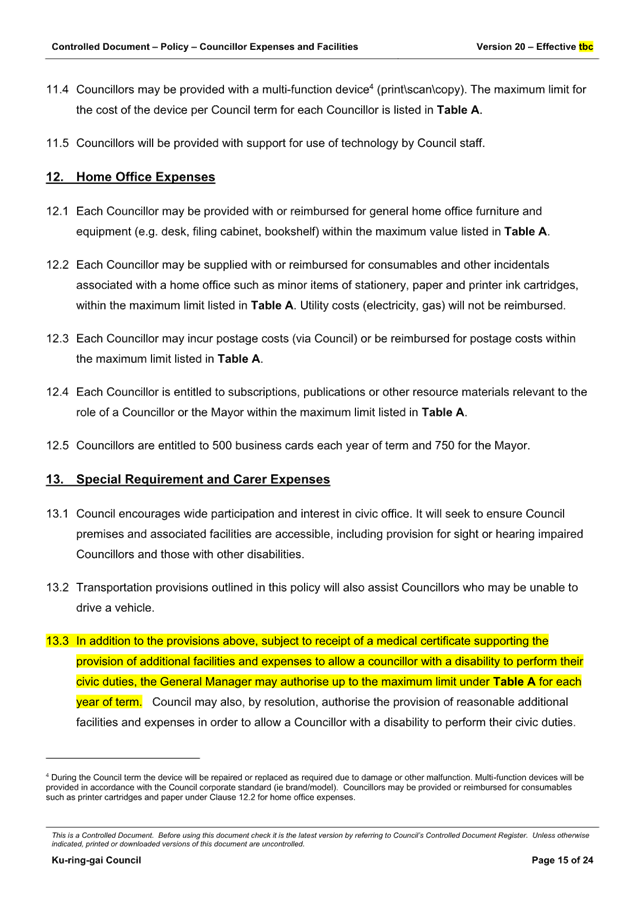
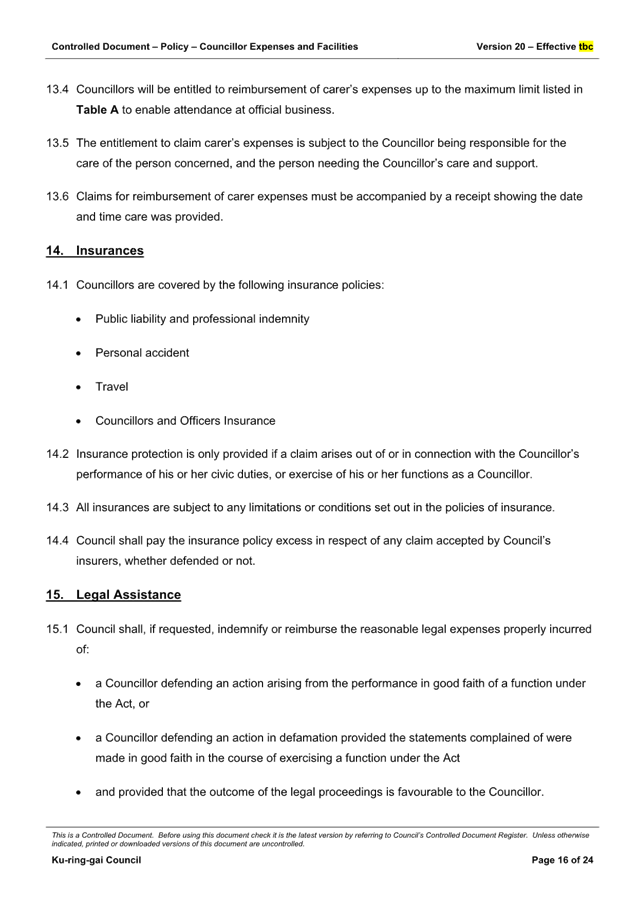
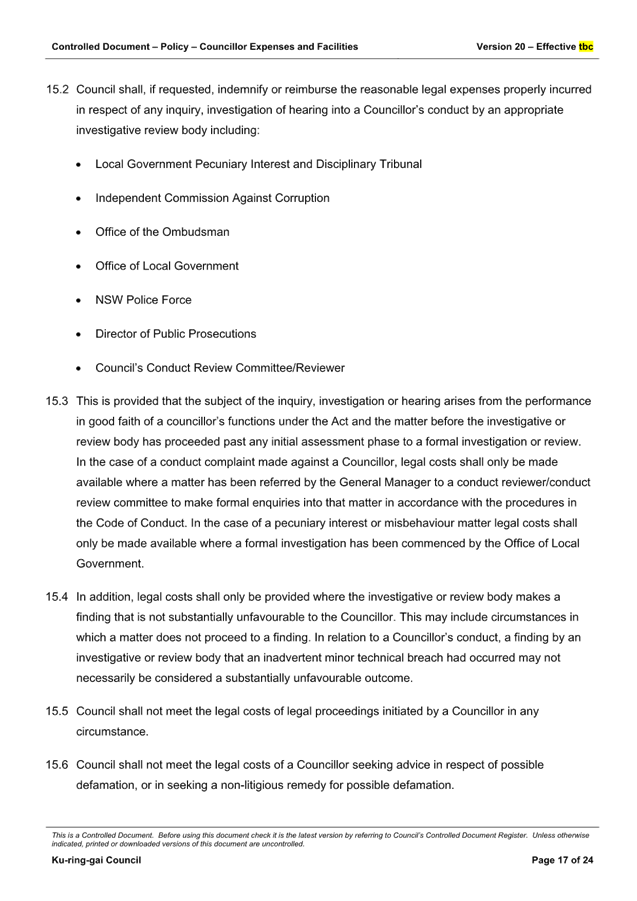
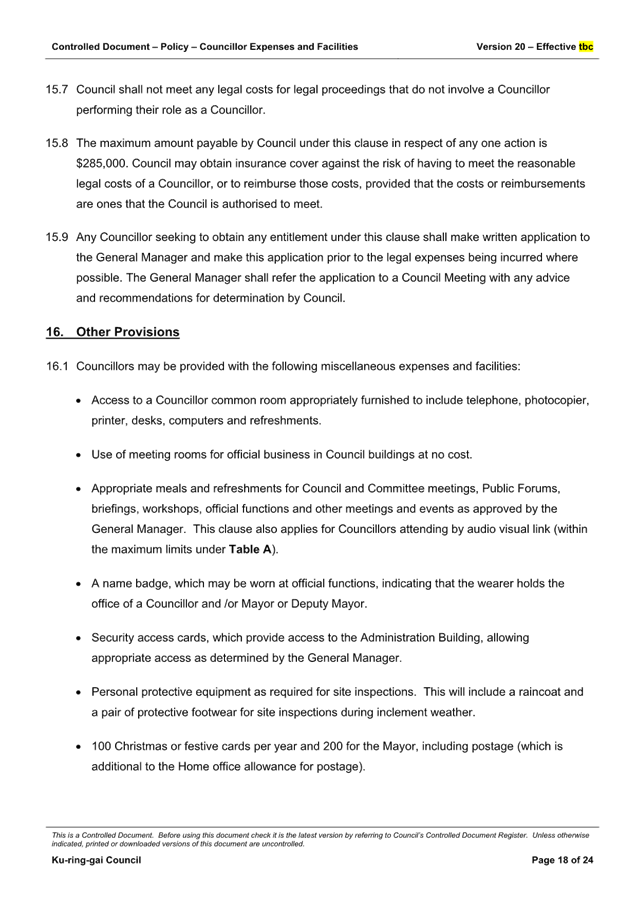
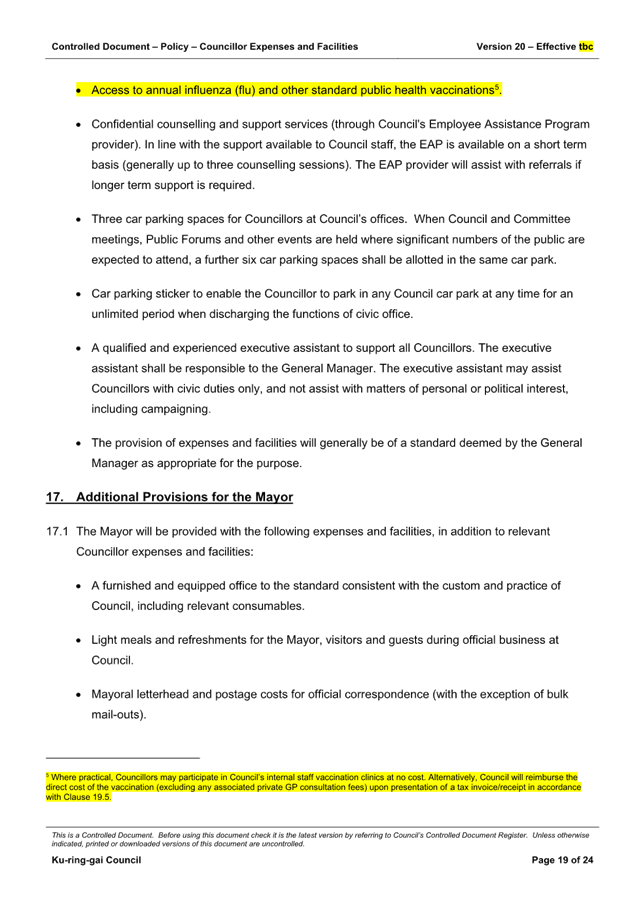
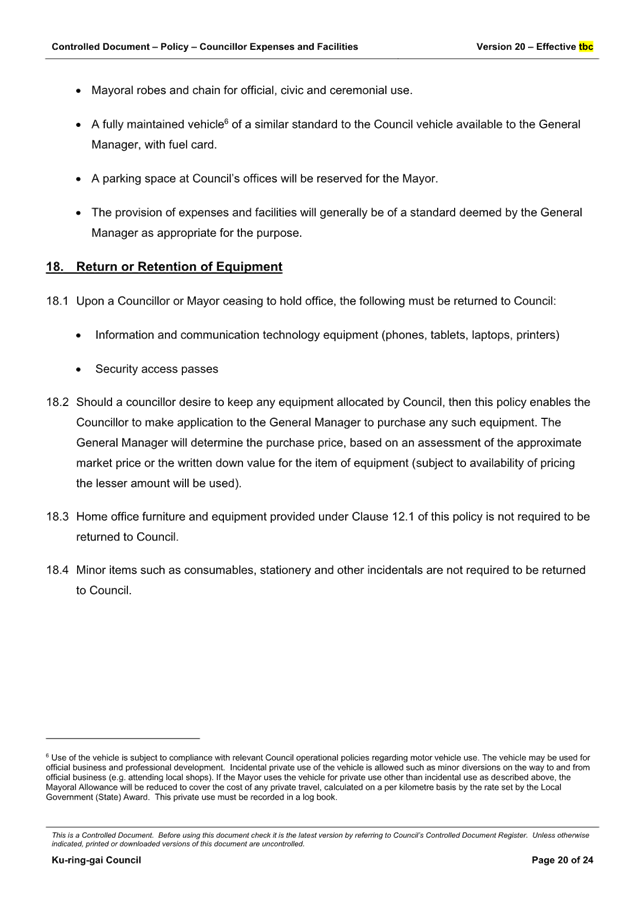
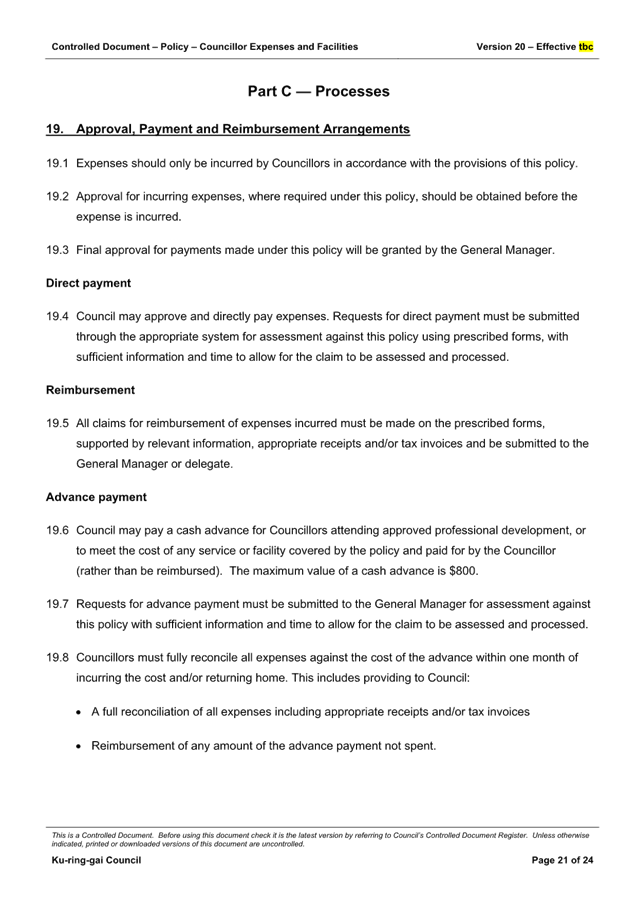
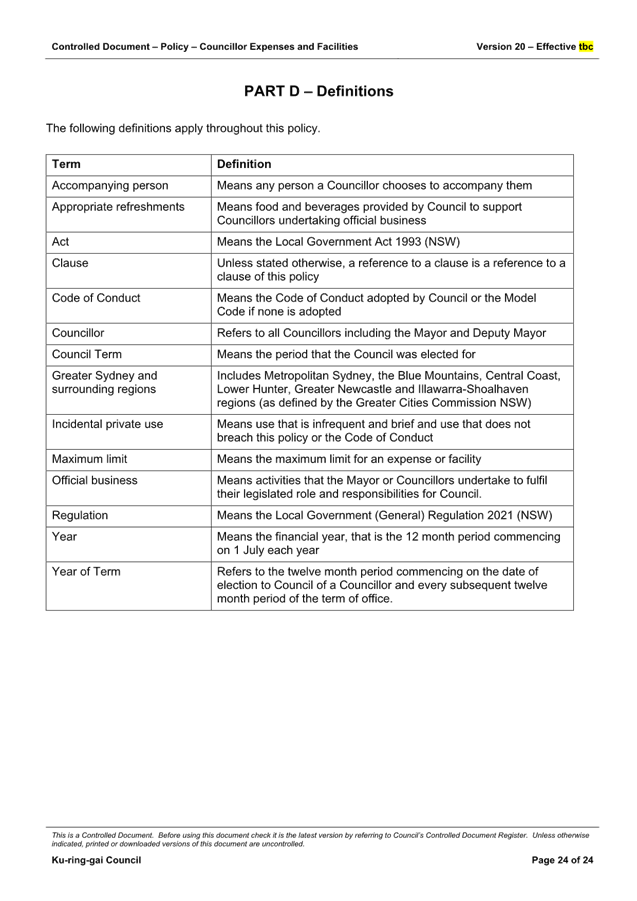
|
GB.7 / 64 |
|
|
|
|
|
Item GB.7 |
FY00623/8 |
Investment Report as at 31 May 2026
EXECUTIVE SUMMARY
|
PURPOSE OF REPORT: |
To present Council’s investment portfolio performance for May 2026. |
|
|
|
|
background: |
Council’s investments are reported monthly to Council in accordance with the Local Government Act 1993, the Local Government (General) Regulation 2005 and Council’s Investment Policy. |
|
|
|
|
comments: |
The net return on investments for the financial year to the end of May 2026 was $8,772,000, against the revised budget of $8,321,000 giving a year-to-date favourable variance of $451,000. |
|
|
|
|
recommendation: |
Purpose of Report
To present Council’s investment portfolio performance for May 2026.
Background
Council’s investments are reported monthly to Council in accordance with the Local Government Act 1993, the Local Government (General) Regulation 2005 and Council’s Investment Policy.
Comments
Investment Portfolio Performance Snapshot
The table below provides the investments portfolio performance against targets identified in Council’s Investment Policy as well as other key performance indicators based on industry benchmarks.
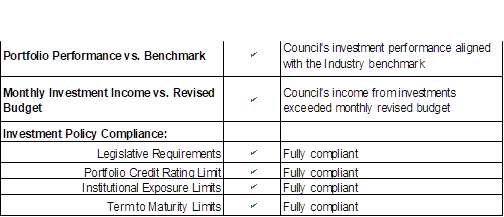
Cumulative Investment Returns against Revised Budget
The net return on investments for the financial year to the end of May 2026 is $8,772,000, compared to the revised budget of $8,321,000, resulting in a favourable year-to-date variance of $451,000 mainly due to a larger than anticipated investment portfolio and higher than forecast interest rates.
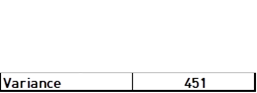
A comparison of the cumulative investment returns against year-to-date revised budget is shown in the chart below.
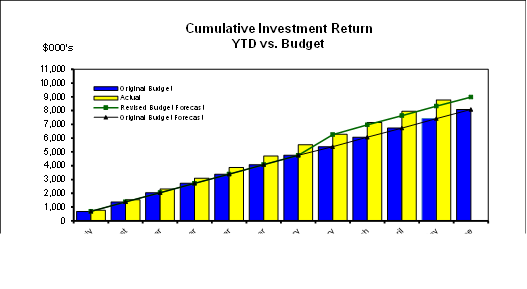
Cash Flow and Investment Movements
Council’s total cash and investment portfolio as at 31 May 2026 was $204,557,000 compared to $201,287,000 at the end of April 2026. The net cash inflow of $3,270,000 was mainly due to the fourth instalment of rates income.
During the month, two investments have matured and three new investments were made.
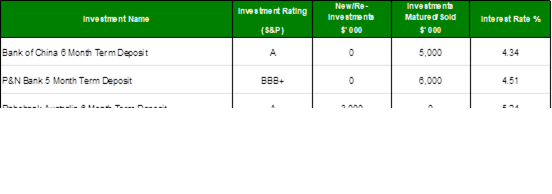
Investment Performance against Industry Benchmark
Overall, the investment performance in May was above the industry benchmark.
The benchmark is specific to the type of investment and the details are provided below. Bloomberg AusBond Bank Bill Index is used for all Council’s investments.
Table 1 - Investments Performance against Industry Benchmarks

Table 2 below provides a summary of all investments by type and performance during the month.
Table 2 - Investments Portfolio Summary during May 2026
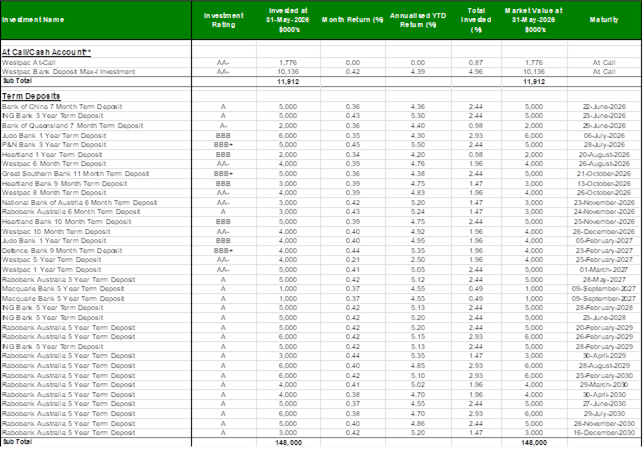
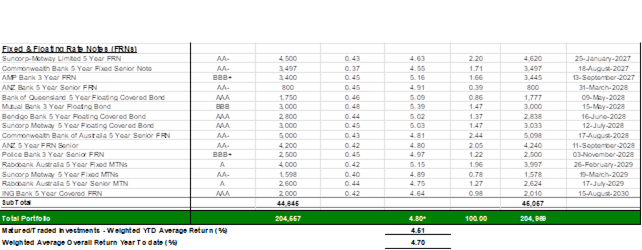
* Weighted average returns.
** Funds in at-call/short term accounts are working funds kept for the purpose of meeting short term cash outflow requirements. At-call investments portfolio is being monitored on a regular basis to ensure funds are reinvested at higher rates when opportunities arise, whilst also keeping and adequate balance for short-term cash outflows.
*** Market Values as at 31 May 2026 were not available at the time of writing the report.
Investment by Credit rating and Maturity Profile
The allocation of Council’s investments by credit rating and the maturity profile are shown below:
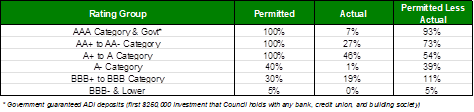
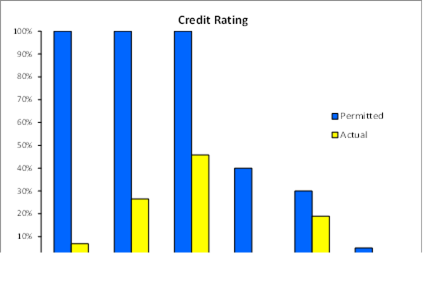
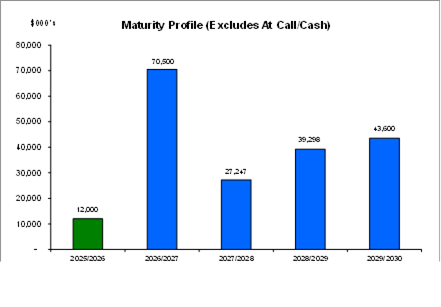
integrated planning and reporting
Leadership & Governance
|
Community Strategic Plan Long Term Objective |
Delivery Program Term Achievement |
Operational Plan Task |
|
L2.1 Council rigorously manages its financial resources and assets to maximise delivery of services |
Council maintains and improves its long-term financial position and performance |
Continue to analyse opportunities to expand the revenue base of Council |
Governance Matters
Council’s investments are made in accordance with the Local Government Act (1993), the Local Government (General) Regulation 2005 and Council’s Investment Policy.
Section 212 of the Local Government (General) Regulation 2005 states:
(1) The responsible accounting officer of a council:
(a) must provide the council with a written report (setting out details of all money that the council has invested under section 625 of the Act) to be presented:
(i) if only one ordinary meeting of the council is held in a month, at that meeting, or
(ii) if more than one such meeting is held in a month, at whichever of those meetings the council by resolution determines, and
(b) must include in the report a certificate as to whether or not the investment has been made in accordance with the Act, the regulations and the council’s investment policies.
(2) The report must be made up to the last day of the month immediately preceding the meeting.
Risk Management
Council manages the risk associated with investments by diversifying the types of investment, credit quality, counterparty exposure and term to maturity profile.
Council invests its funds in accordance with The Ministerial Investment Order.
All investments are made with consideration of advice from Dynamic Asset Consulting Pty Ltd (DAC), as the successor to Council's appointed advisor, CPG Research and Advisory (CPGRA).
CPGRA provided investments advisory services to Council. In January 2026, CPGRA was purchased by DAC. DAC is a financial services consultancy operating under an Australian financial services licence.
Council’s advisory services will continue under DAC’s financial services licence and there is no change to the service or the advice provided to Council.
Financial Considerations
The adopted revised budget for interest on investments for the financial year 2025/2026 is $8,983,000. Of this amount approximately $4,815,300 is restricted for the benefit of future expenditure relating to development contributions, $1,870,400 transferred to the internally restricted Infrastructure & Facility Reserve, and the remainder of $2,297,300 is available for operations.
Social Considerations
Not applicable.
Environmental Considerations
Not applicable.
Community Consultation
None undertaken or required.
Internal Consultation
None undertaken or required.
Certification - Responsible Accounting Officer
I hereby certify that the investments listed in the attached report have been made in accordance with Section 625 of the Local Government Act 1993, clause 212 of the Local Government General Regulation 2005 and Council’s Investment Policy.
Summary
As at 31 May 2026:
· Council’s total cash and investment portfolio was $204,557,000, the net cash inflow of $3,270,000 was mainly due to the fourth instalment of rates income.
· The net return on investments for the financial year to the end of May 2026 is $8,772,000, compared to the revised budget of $8,321,000, resulting in a favourable year-to-date variance of $451,000. This is mainly attributed to a larger than anticipated investment portfolio at the time of budgeting along with higher rates than forecast.
|
That:
A. The summary of investments and performance for May 2026 be received and noted.
B. The Certificate of the Responsible Accounting Officer be noted and the report adopted.
|
|
Tony Ly Financial Accounting Officer |
Mette Kofoed A/Manager Finance |
|
Angela Apostol Director Corporate |
|
|
GB.8 / 66 |
|
|
|
|
|
Item GB.8 |
S15140 |
Charles Bean Oval Lindfield - Renewal of Playing Surface
EXECUTIVE SUMMARY
|
purpose of report: |
|
|
|
|
|
background: |
Charles Bean Oval is used extensively throughout the year by community sporting groups, casual hirers, Lindfield College and the general public. The playing surface is due for replacement. |
|
|
|
|
comments: |
Community consultation took place in late 2025 and reached a broad audience. The opt-in survey indicated a majority in favour of retaining a synthetic turf surface. However, there were also issues raised about environmental and health concerns for a synthetic turf surface. Based on the assessment of carrying capacity, a reduction in booked hours by about 50% is likely to be required in the winter season should the current synthetic turf surface be replaced with a best practice natural turf surface. If school enrolments at Lindfield College increase with the growing population in the area, the demand on the oval will also increase. The cost of both types of playing surfaces could be in the order of $2.5M. Council recently resolved to obtain an independent cost comparison for a best practice natural turf field compared to a synthetic field at Norman Griffiths Oval. It would be opportune for Council to extend the brief to include Charles Bean Oval and decide about the type of playing surface when the independent costing is reported back to Council. |
|
|
|
|
recommendation: (Refer to the full Recommendation at the end of this report) |
That Council receive and note this report, engage NSW Public Works or another suitably qualified independent expert to provide a cost comparison of delivering a best practice natural turf field at Charles Bean Oval compared to a synthetic turf field, and make a decision on the type of playing surface for Charles Bean Oval when the independent costing is reported back to Council. |
Purpose of Report
This report provides Council with an update on the renewal of the synthetic turf playing surface project at Charles Bean Oval Lindfield including the community consultation undertaken.
Background
Charles Bean Oval Lindfield was built by Defence Housing Australia in early 2013 and transferred to Council in December 2013. It was Council's first synthetic turf surface sports field.
The field is currently an important community facility used extensively throughout the year by community sporting groups for seasonal competitions and training, casual hirers for training and sports activities, Lindfield Learning Village (now Lindfield College) as a playground and sports activities on weekdays and by the public for passive recreation.
In 2022, Council commissioned a condition report on the synthetic playing surface at Charles Bean Oval. At the time, although the synthetic surface was generally in a satisfactory condition, it was concluded that it did not meet all the FIFA quality standards with absorption being the main concern. At the time, the report suggested surface renewal would be appropriate within a few years.
The age of the synthetic turf surface is now approximately 13 years. Typically, synthetic turf playing surfaces would be replaced every 10-12 years.
There are conflicting community views on the use of synthetic turf playing surfaces including availability for use and concerns regarding health and environmental impacts. As part of the project scoping, in late 2025 Council sought community feedback on the preferred renewal of this playing surface. The consultation process included the engagement of industry experts for natural and synthetic turf, letters to residents, community survey, direct email to sporting, community and environmental groups, meeting with Lindfield College and an open public forum on 3 December 2025.
Comments
Industry Experts
Prior to community consultation, Council engaged two independent industry experts to evaluate Charles Bean Oval and provide specialist insights to support informed community input.
AgEnviro Solutions provided expert advice for a natural turf playing surface. A copy of this report is provided in Attachment A1: Technical Report – AgEnviro Solutions.
Smart Connections Consultancy provided expert advice on a synthetic turf playing surface. A copy of this report is provided in Attachment A2: Technical Report - Smart Connections Consultancy.
The expert reports were made available through Council’s Engagement Hub and the industry experts presented at a community forum on Wednesday 3 December 2025. A copy of the two presentations is provided in Attachment A3: Community Forum Presentations by AgEnviro Solutions and Smart Connections Consultancy.
A high-level summary of the general pros and cons from the expert reports for each surface option are included in Table 1.
Table 1 – General high-level Pros and Cons of Playing Surface Options
|
|
Pros |
Cons |
|
Natural Turf Surface |
- Natural cooling effect and reduced environmental concerns. - Softer playing surface. - Grass plays a role in sequestering carbon from the atmosphere, helping to combat climate change. - Increased general recreational use (e. g. for dog walking) - Reduced renewal costs (maintenance dependant). |
- Marginally higher yearly maintenance cost including watering, mowing. - Requirement for pesticides, herbicides and fertilisers. - Greater wear during peak periods and potential recovery time required for long-term health of field. - More even spread of wear would occur if corresponding. improvements were also made to other fields used in the area. - Would require high water usage for irrigation. - Limited field use (weather and maintenance dependent). |
|
Synthetic Turf Surface |
- All-weather usability and extended playing hours. - Marginally lower regular yearly maintenance cost (no mowing, watering). - Higher usage yield (multiple sports codes, training, and games). - Potentially an earlier delivery date for synthetic turf as no establishment time is required for the turf to grow |
- Longer term upgrade costs are higher (with surface replacement). - Environmental and health concerns (e.g. urban heat, microplastics, chemicals) - Potential reduced usability in hot weather. - Limited general recreational use (e.g. for dog walking) - Surface should be replaced every 10-12 years. |
Community Engagement
In late 2025, community engagement was undertaken, with a primary objective to ascertain community views on the renewal of the synthetic turf playing surface at Charles Bean Oval. The engagement reached a broad audience through multiple channels. The Community Engagement report is provided in Attachment A4: Charles Bean Oval – Community Engagement Report. Some of the highlights are:
· 11,399 page views from 4,041 visitors and 913 document downloads were received via Council’s Engagement Hub.
· 1,126 opt-in survey responses.
· 41 written submissions from environmental groups, community groups and residents, and
· twenty-five (25) community members attended the community forum on 3 December 2025 to watch presentations from the two independent industry experts and were provided the opportunity to ask questions and seek feedback on either synthetic turf or natural turf options.
Surface preference by user group
The opt-in survey of 1,126 participants found an overall majority preference for synthetic turf (83.1%), with 16.4% preferring natural turf. Preferences varied significantly across user groups and were closely linked to sporting involvement.
Preferences by user group (survey participants could select more than one group)
· Sports users showed the strongest preference for synthetic turf (94%).
· Community members/visitors followed at 81% in favour of synthetic.
· Local residents preferred synthetic turf at 75%.
· Lindfield College (LC) connected participants were nearly evenly split — 50% synthetic vs 49% natural.
Impact of association with sport
Sporting involvement was a key driver of surface preference across all groups:
· Participants with a sporting connection strongly favoured synthetic turf — 92% of sport-associated local residents and 93% of sport-associated community members/visitors
· Participants without a sporting connection were more likely to prefer natural turf — 58% of non-sport local residents, 52% of non-sport community members/visitors, and 75% of non-sport Lindfield College connected participants.
Preference by frequency of use
· Weekly visitors overwhelmingly preferred synthetic turf (464 vs 51 for natural), reflecting that support for synthetic turf was primarily driven by high-frequency users and the sporting community.
· Those who rarely or never visit the site were more likely to prefer natural turf (23 of 31 respondents), consistent with the pattern that support for natural turf was most concentrated among infrequent visitors and residents.
Reasoning for surface preferences
Participants were asked to describe their main reason for their surface preference. This is summarised in Table 2.
Table 2: Main reason for surface preferences
|
Support for natural turf surface |
Support for synthetic turf surface |
|
Environmental concerns: microplastics, PFAs, sustainability issues. |
All-weather reliability: reduces cancellations due to wet weather. |
|
Health and safety: cooler surface than synthetic turf, elimination of exposure to rubber crumb, perception that natural turf is safer to play on, safety near bushfire zones. |
Increased usage capacity: allows for more hours of use per week which supports school/club/community use, supports regular physical activity, responds to growing community need. |
|
Community use: welcoming for a range of activities including passive recreation and dog walking, no “plastic” smell. |
Playing surface quality: consistent surface throughout sporting seasons, avoidance of holes and divots common to grass fields. |
|
Cost and maintenance: lower long term cost (does not require full replacement every decade). |
Cost and maintenance: less maintenance required than natural turf, more cost effective over life of turf. |
A total of forty-one (41) written submissions were received. Eighteen (18) of these submissions were in favour of retaining synthetic turf surface and twenty (20) submissions were in favour of a natural turf surface. Three (3) submissions were neutral.
Key issues raised in the submissions in favour of a natural turf surface were:
· there are harmful impacts of PFAS and microplastics including impacts on human health and environment;
· the harmful environmental impacts of water runoff into creeks and local sensitive areas including nearby bushland;
· the end-of-life recycling process for synthetic turf is not feasible;
· synthetic turf surface provides increased bushfire risk to residents due to proximity to Lane Cove National Park;
· synthetic turf surface has heat impact on users and neighbours, and
· costings show that natural turf would be cheaper.
Key issues raised in submissions in favour of synthetic turf surface were:
· synthetic turf provides a reliable surface quality throughout the season and meets the demand of local sporting groups;
· there would be significant wet weather loss on winter sport if the field was converted to a natural turf surface, this loss would be more significant than losses to heat in summer months, and
· synthetic turf surface requires less maintenance and cost per hour is more favourable due to higher usage.
A summary of written submissions and responses can be found in Attachment A5: Summary of written submissions and response.
The submission from National Parks and Wildlife requested consideration of historical environment impacts from synthetic turf including hydrologic and hydraulic flows, catchment water quality, pollution and sedimentation and soil impacts. This will be duly considered in the preparation of a Review of Environmental Factors (REF).
Council staff also met with Lindfield College staff, P&C and Schools Infrastructure. The key issues raised during this meeting related to heat impact during summer months and the impact on participation, additional shade requirements off the field, environmental concerns and potential health impacts associated with synthetic turf surfaces.
Recently, the Principal of Lindfield College provided the following statement:
“Given the conflicting reports of the long term suitability and safety of synthetic turf blades (irrespective of the fill used), a precautionary approach would be preferred, meaning that natural turf is the school's preferred option. We are mindful that the facility is heavily utilised by students of all ages, some as young as 5 years old. Additionally, the heat profile of the synthetic turf is such that our measurements have indicated that the oval is too hot to be used when the ambient temperature is over 30 degrees, leading to a significant reduction to the usable time of the oval.”
Additionally, a representative from the NSW Department of Education (Schools Infrastructure) has advised:
“The department doesn’t have a position on the renewal, given it is council land. We appreciate the work council has done to engage the school and seek community feedback on the proposal. Currently, synthetic turf is considered within the Department’s Education Facilities Standards and Guidelines (EFSG) primarily for high-traffic areas, shaded locations, or sites where sustaining natural turf is challenging.”
Usage - Hours per week
Charles Bean Oval is an intensively used field with the highest usage in the winter football season. In addition to use by sporting clubs and the community, it serves as an oval for the adjacent Lindfield College for PDHPE, school sport and informal recreation during recess and lunch.
The capacity to cope with this high usage is an important consideration in the choice of surface.
Actual bookings at Charles Bean Oval
During the 2025 calendar year, Council’s booking system shows Charles Bean Oval was booked a total of 3,663 hours. Table 3 shows the usage of Charles Bean Oval in terms of booked hours during the winter and summer seasons.
Anecdotally, there is a high correlation between booked hours and the actual usage of the field. This reflects the high demand for the field and the higher user fees compared to natural turf fields.
Table 3: Usage (average booked hours per week)
|
Winter Season (hours/week) |
Summer Season (hours/week) |
||||
|
Competition |
Training |
Lindfield College |
Competition |
Training |
Lindfield College |
|
22.5 hrs
|
32.5 hrs
|
30 hrs
|
4 hrs
|
24 hrs
|
30 hrs
|
|
Total: 85 hours/week |
Total: 58 hours/week
|
||||
Capacity
The AgEnviro Solutions report states that if Charles Bean Oval was converted to a best practice natural turf surface it would be capable of handling more than 2,000 hours of annual usage. This equates to about 40 hours per week.
The Smart Connection Consultancy report states that a natural turf surface could support a maximum of 20 to 25 hours per week.
Charles Bean Oval is booked for around 85 hours per week in the winter season, more than double the most generous capacity estimate of 40 hours per week for a best practice natural turf field.
As a practical benchmark, a new best practice natural turf field at Bob Campbell Oval in Greenwich is in its first winter season of use. This field has been booked for 34 hours per week for the four weeks prior to 25 May 2026. The wear as at 25 May 2026 is shown in the images below.
Western end:
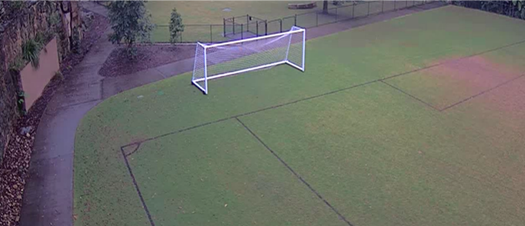
Northwestern end:
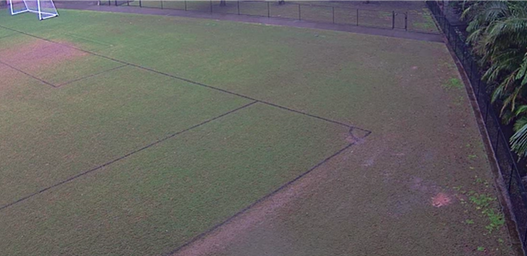
Looking northeast:
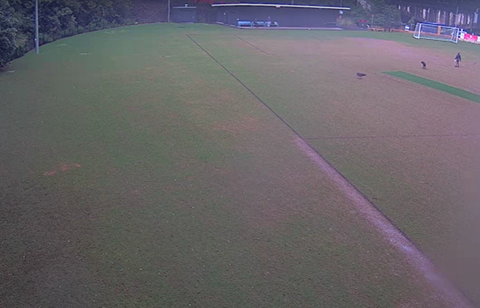
Looking southwest:
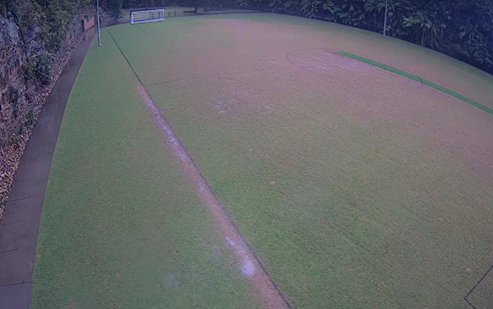
Western end:
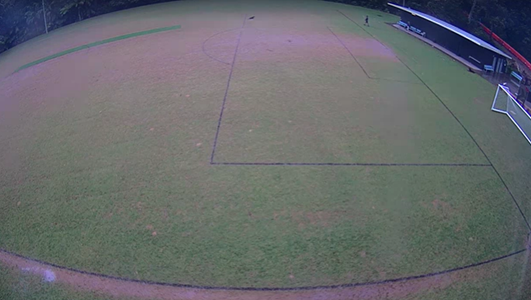
Another benchmark are the fields in Mosman at Middle Head Oval and Balmoral Oval. The following information has been provided by Mosman Council.
The field at Middle head Oval was upgraded in 2018. Drainage works were not required as the drainage system was installed in 2011 and continues to perform effectively. There is no current need to spend money on turf patching. A 12-month nutritional program, commenced in 2024, has significantly improved turf quality. The current wear pattern is primarily attributable to increased usage, including soccer training throughout the summer and earlier commencement of pre-season games this year. Current winter use is high, about 40 hours a week.
The wear as at 1 June 2026 is shown in the images below.
Eastern end:
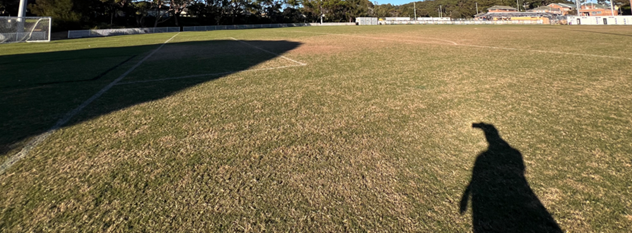
Western end:
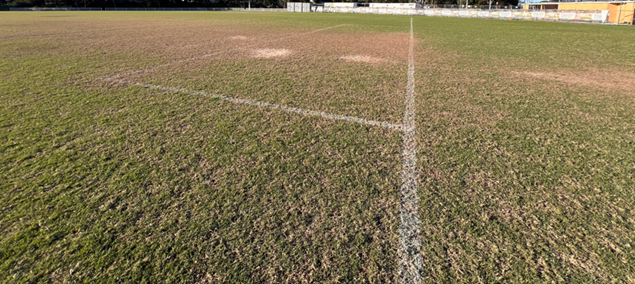
Middle of the field:
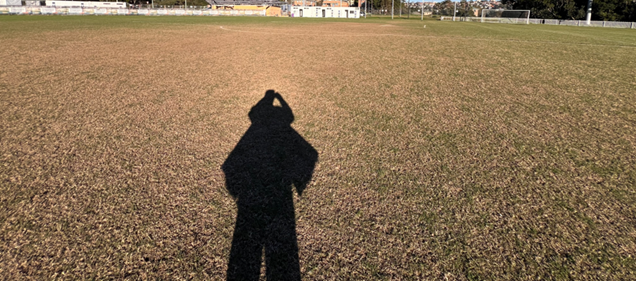
Middle of the field:
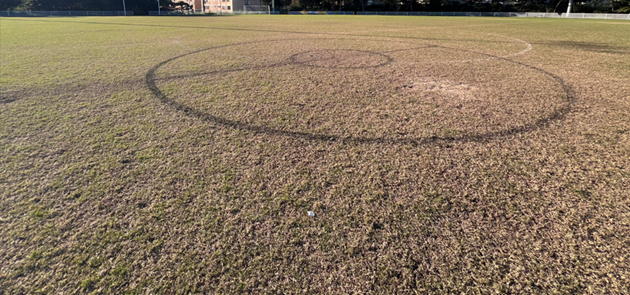
Balmoral Oval was upgraded in 2023. The works included full field reconstruction, drainage and irrigation installation. Winter use is about 40 hours a week. While both Middle Head Oval and Balmoral Oval perform well in wet weather, Balmoral Oval performs better in terms of drainage as it has closer drainage collector spacing (2m interval vs 3m intervals) and it is newer (installed in 2023 vs 2011).
The wear as at 1 June 2026 is shown in the images below.
Southern end:
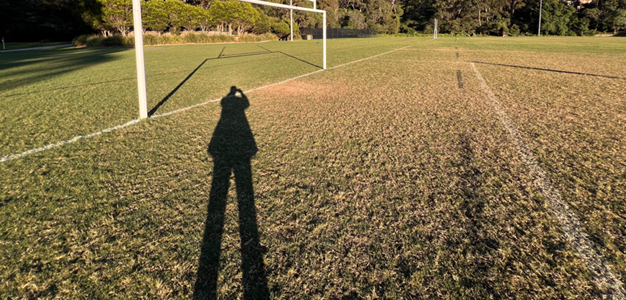
Southern end:
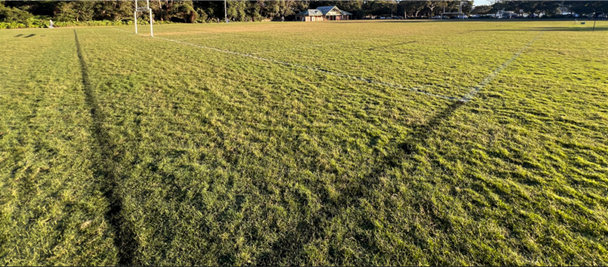
Northern end:
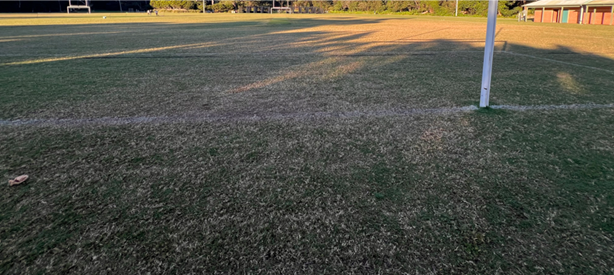
Northern end:
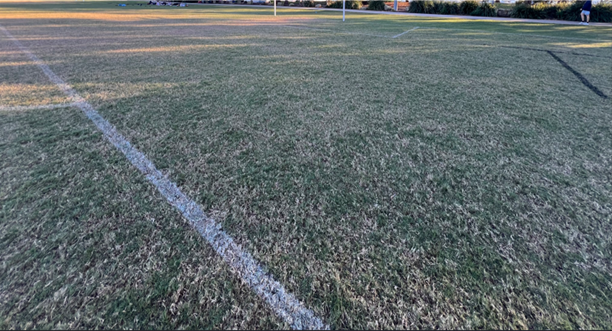
Middle of field, looking south:
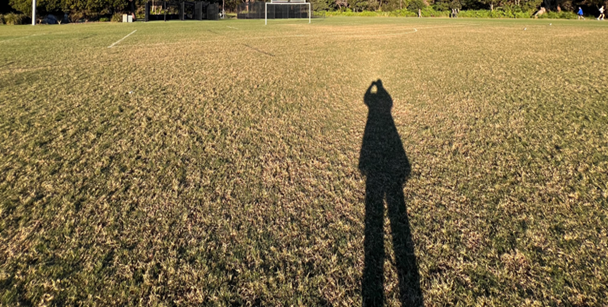
Middle of field, looking south:
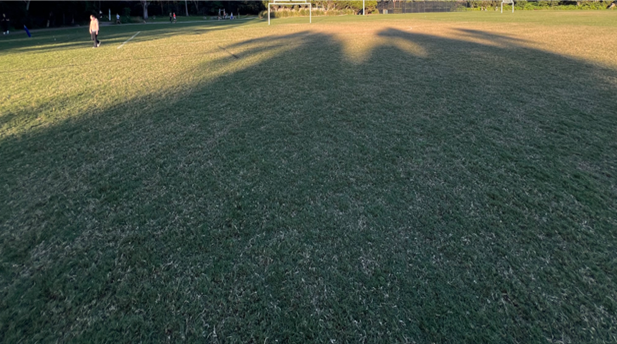
Usage – Number of registered players
The AgEnviro Solutions report states that not all hours of use have the same impact, with school use typically causing less damage than formal sport. For this reason, AgEnviro Solutions advise that carrying capacity is more accurately expressed in terms of registered players per week, rather than hours of usage.
Capacity
A summary of the carrying capacities in terms of players per week as provided by the experts is shown in Table 4.
Table 4: Number of players - Capacity comparison as provided by the Industry Experts
|
|
Natural Turf Surface |
Synthetic Turf Surface |
|
AgEnviro Solutions |
550 players per week should be regarded as the logistical limit for a single football field, regardless of whether its natural turf or synthetic turf. A natural turf playing field at Charles Bean would be capable of handling more than 550 players per week. Though not recommended, the most intensely used natural turf field in Sydney hosts approximately 800 registered players per week and sport from 3 schools. |
550 players per week should be regarded as the logistical limit for a single football field, regardless of whether its natural turf or synthetic turf. |
|
Smart Connection Consultancy |
Could support a maximum of 20-25 hours per week, up to 25 players per hour. This equates to a maximum number of players of between 500 to 625 per week. |
Will reliably accommodate 60-80 hours per week, up to 60 players per hour. |
Actual number of players
The AgEnviro Solutions report allows for 250 registered football players from the UTS Football Club in the winter season, plus an estimate of school use by Lindfield College from 810 students to be the equivalent of 200 registered football players. The total winter wear from football and school use is therefore estimated by AgEnviro Solutions at 450 registered players.
However, there are also football players from Lindfield Football Club and the Northern Tigers who use the field during the winter season. The AgEnviro Solutions calculation also did not consider that UTS uses two (2) fields for training.
Using the same methodology as AgEnviro Solutions but including the Lindfield Football Club and Northern Tigers who also use Charles Bean Oval, and also adjusting for multiple fields used by clubs for training, a more realistic estimate of the number of registered players for Charles Bean Oval in the winter season is shown in Table 5.
Table 5: Estimate of the number of registered players for Charles Bean Oval in the winter season
|
Club |
Registered Players |
Number of fields used by Club / School |
Estimate of number of registered players for Charles Bean Oval in winter |
|
UTS FC |
256 |
2 |
128 |
|
Lindfield College* (for 810 students) |
220* |
1 |
220* |
|
Lindfield FC |
2,315 |
6 |
386 |
|
Northern Tigers |
839 |
2 |
420 |
|
Estimated total number of register players for Charles Bean Oval |
|
|
1,154 |
|
Estimated total number of players using Charles Bean Oval if Lindfield College increases student numbers to the planned capacity of 2,000 |
|
|
1,334 to 1,434 |
* Based on current student enrolment of 810 provided by Department of Education, AgEnviro Solutions (page 8) estimates school usage to cause the equivalent wear of about 220 registered football players. AgEnviro Solutions notes that Lindfield College has a planned capacity of up to 2,000 students which in theory could increase wear levels to the equivalent of 400 to 500 registered football players.
The number of registered players for Charles Bean Oval is estimated at 1,154 per week during the winter season. Even if this is conservatively rounded down to 1,000 registered players, it still far exceeds the capacity of 550 players stated by AgEnviro Solutions as the logistical limit. It also far exceeds the maximum for a natural turf field provided by Smart Connections Consultancy of 500 to 625 per week.
Conclusion on the capacity of a natural turf field to cope with the usage requirements of Charles Bean Oval
Charles Bean Oval is booked for 85 hours per week in the winter season. This far exceeds the capacity for a natural turf field as follows:
· AgEnviro Solutions stated capacity of about 40 hours per week (based on 2,000 hours per year).
· Smart Connection Consultancy stated capacity of 20 to 25 hours per week.
· Actual winter usage of Bob Campbell Oval of 34 hours per week.
· Actual winter usage of Middle Head Oval and Balmoral Oval of about 40 hours per week.
There are currently an estimated 1,154 registered players for Charles Bean Oval in the winter season. This could increase to 1,334 to 1,434 players if Lindfield College increases student numbers to the planned capacity of 2,000. This far exceeds the capacity for a natural turf field as follows:
· AgEnviro Solutions stated logistical capacity of 550 players.
· Smart Connections Consultancy stated maximum players numbers of 500 to 625.
Charles Bean Oval is an intensely used sports field. Based on the assessment of carrying capacity, a reduction in booked hours by about 50% is likely to be required in the winter season should the current synthetic turf surface be replaced with a best practice natural turf surface. If school enrolments at Lindfield College increase with the growing population in the area, the demand on the oval will also increase.
High-level Cost Estimates
The two industry experts provided indicative capital costs as shown in Table 6.
Table 6: Capital Costs as provided by the Industry Experts
|
|
Natural Turf Playing Surface |
Synthetic Turf Playing Surface |
||
|
AgEnviro Solutions (Best Practice) ($) |
Smart Connections Consultancy ($) |
AgEnviro Solutions ($) |
Smart Connection Consultancy ($)
|
|
|
Capital Cost |
$2,200,000 (from AgEnviro report page 13) |
Initial capital cost $900,000 plus $700,000 to take away the current top = $1,600,000 (from Smart Connections report page 14 and community forum presentation)
|
Not estimated for the initial construction but estimated at $1,375,000 when replaced every 10 years (from AgEnviro report page 13) |
$1,662,000 (from Smart Connections report Appendix 3)
|
Council staff are of the view that the cost for both types of fields could be significantly higher than estimated above, possibly around $2.5M.
At the recent Extraordinary Council Meeting held on 18 May 2026, Council resolved as follows (in part) with respect to the Norman Griffiths Oval upgrade project:
D. Council engage NSW Public Works or another suitably qualified independent expert to provide an updated cost comparison of delivering a best practice natural turf field at Norman Griffiths Oval compared to a synthetic turf field. This report will provide minimum and maximum construction cost estimates to complete the project with the two alternate surfaces. To report to the August 2026 council meeting.
It would be opportune for Council to extend the brief to include Charles Bean Oval and decide about the type of playing surface when the independent costing is reported back to Council.
High-level delivery timeline
Subject to funding, a high-level delivery timeline is shown in Table 7 and will be subject to a more detailed analysis once the project has been further developed.
Table 7: High-level delivery timeline
|
Forecast completion of milestone (not including contingency which is applied at the end) |
Comment |
|
|
Design/ REF |
June 2027 |
Full design to be completed for project. Assumption is REF will be exhibited in this timeframe. |
|
Tender |
August 2027 |
|
|
Council approval to award contract |
September 2027 |
Football offseason and end of year school holiday period. |
|
Construction end |
March 2028 |
Duration of construction will be dependent on successful contractor’s program and excludes the contingency.
|
|
Field open for use by the public |
April 2028 |
This is dependent on the surface type as natural turf will require an extended establishment period. |
|
Project Completion including contingency |
July 2028 |
Includes uncertainties such as the impact of the current world events on the supply chain; availability of suitable contractors; outcomes of the REF process, and adverse weather conditions. |
Ideally, construction would be scheduled to occur at the end of the 2027 soccer season, also incorporating the end of year school holiday period so as to minimise impacts on the soccer season and school use. The construction timing may also be impacted by the progress of the Norman Griffiths Oval upgrade project as it would not be recommended to make both sites unavailable at the same time.
Carpark
The community engagement project also asked respondents about the parking at Charles Bean Oval with most respondents believe parking is an issue this sports field (69%). There was overwhelming community support for Council entering into a commercial agreement with Lindfield College to utilise their carpark for public parking (79%). This will be taken up with Schools Infrastructure and reported separately to Council.
integrated planning and reporting
Outcome 3: Infrastructure and assets support community needs
|
Community Strategic Plan Strategy |
Delivery Program Term Achievement |
Operational Plan Action |
|
A1: Strategically plan, manage and fund public infrastructure and assets to meet the needs of the community, defined levels of service and intergenerational equity
A2: Provide, upgrade and maintain open space, recreation and sporting facilities to meet the needs of current and future user groups and a growing population.
|
A1.3: The community is engaged on infrastructure priorities and the design and upgrade of new facilities with regular updates on project progress.
A2.1: A program is implemented to provide, improve and maintain open space, recreation and sporting facilities including multi-use facilities. |
A1.3.1: Undertake engagement activities for identified projects consistent with Council’s Community Engagement Strategy and provide regular updates on progress.
A2.1.1: Deliver Council’s adopted Open Space Capital Works Program on time and within budget.
|
Governance Matters
The consultation is consistent with Council’s policies and procedures in relation to consultation and community engagement.
Risk Implication statement
The community consultation demonstrates the diversity of opinion for surface renewals. Both surface renewal options expose Council to risk including environmental, financial and reputational risks. The expert reports and community consultation is provided to reduce this risk.
A further project risk assessment will be developed during project planning, programming and delivery.
Financial Considerations
The Charles Bean Surface Renewal is funded in draft DP&OP and Council has allocated $919,300 for the delivery of this project. This amount is insufficient to complete a surface renewal, which could be in the order of $2.5M.
Council has applied to IPART for a special rates variation. If successful, there could be $1.9M additional funds per year for open space/recreational assets commencing in 2026/27. This could be allocated by Council to Charles Bean Oval upon considering of the wider program and requirements.
Council recently resolved to obtain an independent cost comparison for a best practice natural turf field compared to a synthetic field at Norman Griffiths Oval. It would be opportune for Council to extend the brief to include Charles Bean Oval and decide about the type of playing surface when the independent costing is reported back to Council.
Social Considerations
Charles Bean Oval is an important recreational facility for Lindfield College, local sporting groups and the public. A change to natural turf may have a significant impact on facility availability for all users due to impacts of weather conditions and intensity of usage.
Environmental Considerations
The community consultation identified environmental concerns with proceeding with a synthetic turf playing surface.
Regulations and industry standards around synthetic turf playing surfaces have changed since Charles Bean Oval was constructed in 2013. The NSW Government has undertaken significant studies in this area and have developed Synthetic Turf in Public Space – Guideline for Decision-Makers and Guidelines for Division 5.1 assessments – Addendum for synthetic turf sports fields. In these guidelines, factors such as stormwater and soil health, human health, biodiversity, amenity and intensification of use and material selection and management must be considered within the design. This process requires Council to address environmental concerns before works take place.
With respect to a natural turf playing surface, this would be in accordance with the Best-practice guidelines for sporting fields – A guide for climate-resilient surfaces in New South Wales.
A Review of Environment Factors (REF) will also be compiled for the chosen playing surface.
AUSMAP consideration
Council is in a joint AUSMAP project with the Sydney Coastal Councils Group evaluating conditions of synthetic turf fields as a potential source of microplastic. Over two (2) years the study is evaluating conditions of synthetic turf fields as a potential source of microplastic, in an effort to determine and implement effective mitigation measures to reduce microplastic loss. The project also includes an education campaign with stakeholders to promote best practice. The project team is working closely with Sydney Coastal Councils and the NSW EPA to research effective approaches to waste reduction and resource recovery, in line with the goals of a circular economy.
The project involves 3 phases being:
· Phase 1: Rapid appraisals
· Phase 2: Case studies
· Phase 3: Promotion
Community Consultation
In late 2025, community engagement was undertaken, with a primary objective to ascertain community views on the renewal of the playing surface at Charles Bean Oval. The community consultation is discussed earlier in this report and is provided in detail in Attachment A4: Charles Bean Oval – Community Engagement Report.
Since Council’s formal engagement period, several campaigns were launched from which correspondence have been sent to Councillors, expressing views both in support of converting to natural turf surface and in favour of retaining a synthetic surface. The campaigns have attracted many hundreds of participants and remain ongoing. However, as they fall outside the period and structure of the official engagement process, the campaigns are not addressed in this report.
Internal Consultation
Multiple teams across Council have been consulted during the preparation of this report including Infrastructure Services, Assets and Technical Services, Finance, Project Services, Strategy & Environment and Communications.
Summary
Charles Bean Oval is an important and heavily used recreational facility.
In late 2025, Council undertook community consultation seeking feedback on the renewal of the existing synthetic turf playing surface. Council engaged two independent industry experts to evaluate Charles Bean Oval and provide specialist insights to inform the community.
The engagement generated 1,126 survey responses, 41 written submissions from residents, environmental groups and community groups. 25 community members attended the community forum. The opt-in survey indicated a majority in favour of retaining a synthetic turf surface.
Community consultation highlighted concerns about the potential loss of booking hours including due to wet weather if a natural turf surface was installed. Issues were also raised about environmental and health concerns for a synthetic turf surface.
Based on the assessment of the carrying capacity, a reduction in booked hours by about 50% is likely to be required in the winter season should the current synthetic turf surface be replaced with a best practice natural turf surface. If school enrolments at Lindfield College increase with the growing population in the area, the demand on the oval will also increase.
The cost of both types of playing surfaces could be in the order of $2.5M. Council recently resolved to obtain an independent cost comparison for a best practice natural turf field compared to a synthetic field at Norman Griffiths Oval. It would be opportune for Council to extend the brief to include Charles Bean Oval and decide about the type of playing surface when the independent costing is reported back to Council.
That Council:
A. Receive and note this report.
B. Engage NSW Public Works or another suitably qualified independent expert to provide a cost comparison of delivering a best practice natural turf field at Charles Bean Oval compared to a synthetic turf field. This report will provide minimum and maximum construction cost estimates to complete the project with the two alternate surfaces.
C. Makes a decision on the type of playing surface for Charles Bean Oval when the independent costing is reported back to Council.
|
Meghan Andrew Coordinator Open Space, Recreational and Building Assets |
William Adames Community & Business Engagement Co-ordinator |
|
Mursaleen Shah Manager Assets & Technical Services |
Matthew Drago Manager Infrastructure Services |
|
Peter Lichaa Director Operations |
|
|
Attachments: |
A1⇩ |
Technical Report - AgEnviro |
|
2026/076353 |
|
|
A2⇩ |
Technical Report - Smart Connections Consultancy |
|
2026/076352 |
|
|
A3⇩ |
Community Forum Presentations by AgEnviro Solutions and Smart Connections Consultancy |
|
2026/133234 |
|
|
A4⇩ |
Charles Bean Oval - Community Engagement Report |
|
2026/145051 |
|
|
A5⇩ |
Summary of Written Submissions and Responses - Charles Bean Surface Renewal |
|
2026/163019 |
|
ATTACHMENT No: 3 - Attachment 3 - Community Forum Presentations by AgEnviro Solutions and Smart Connections Consultancy |
|
Item No: GB.8 |
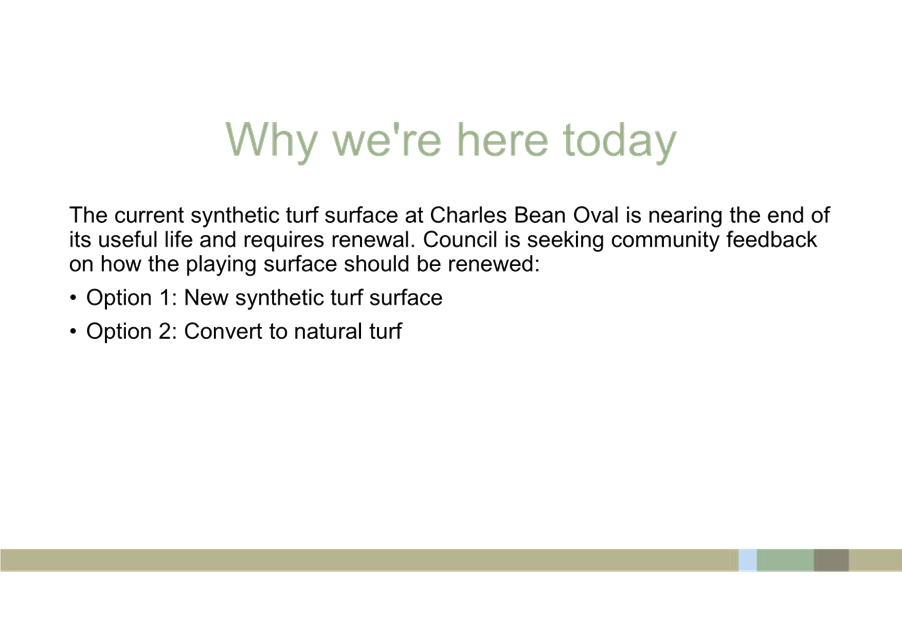

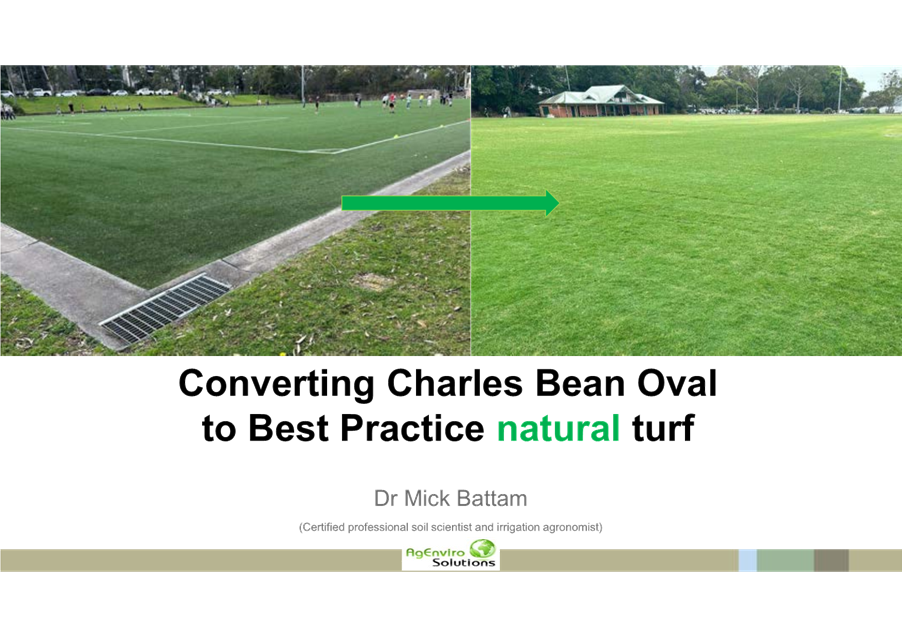
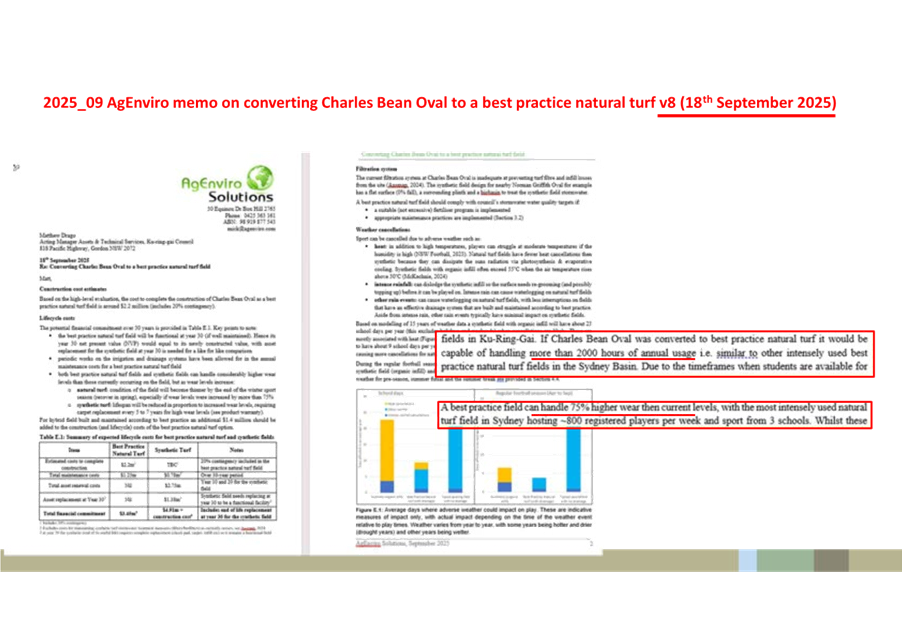
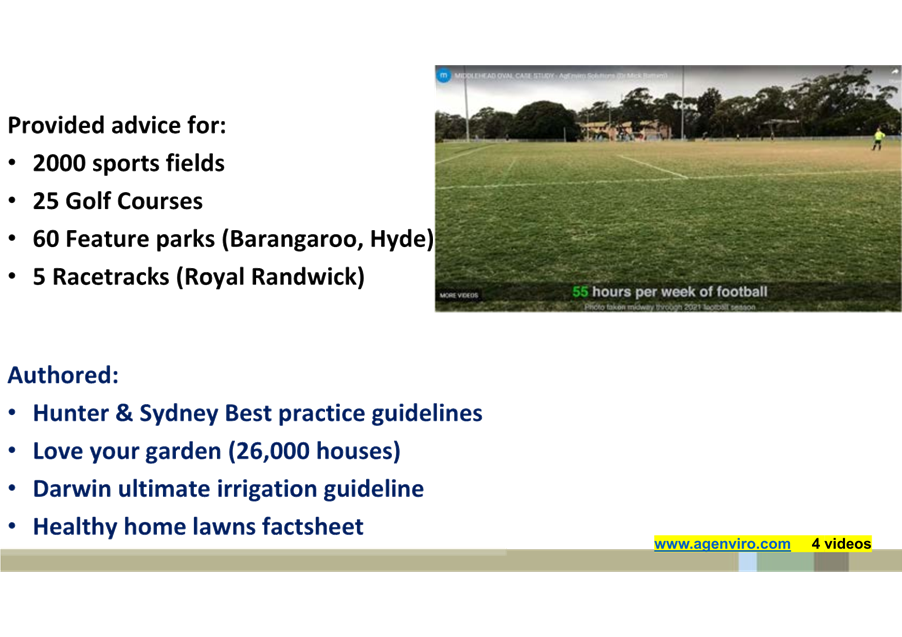
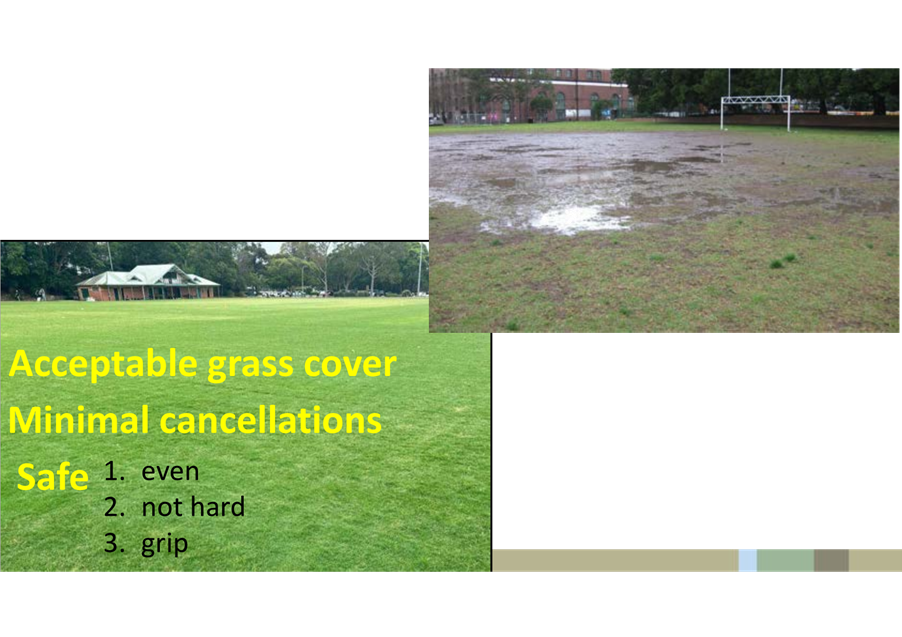
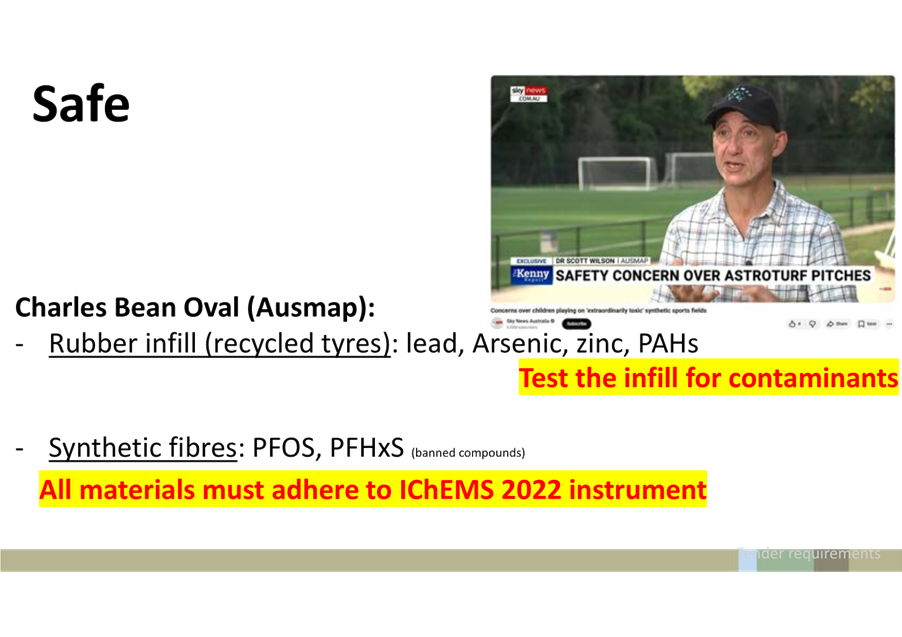
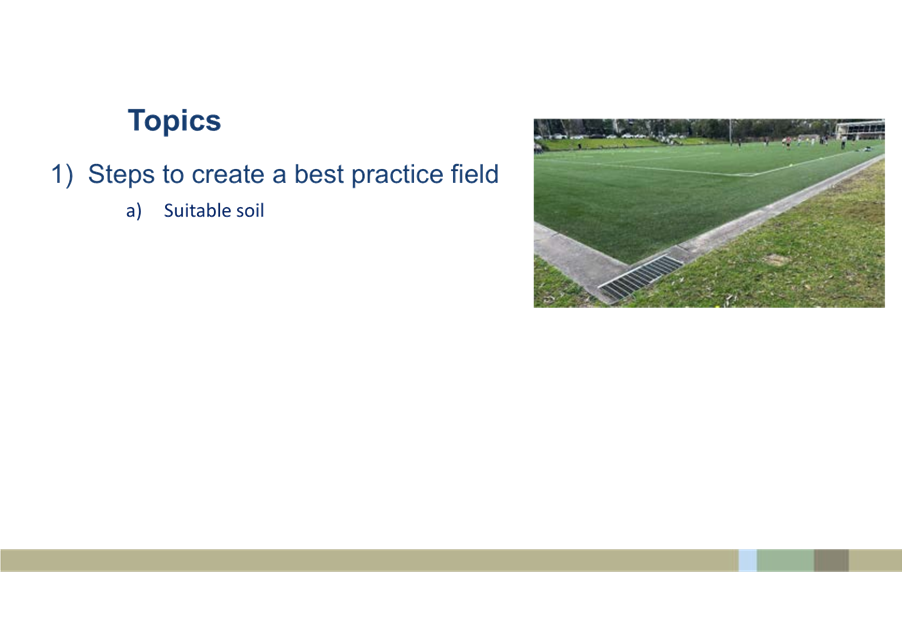
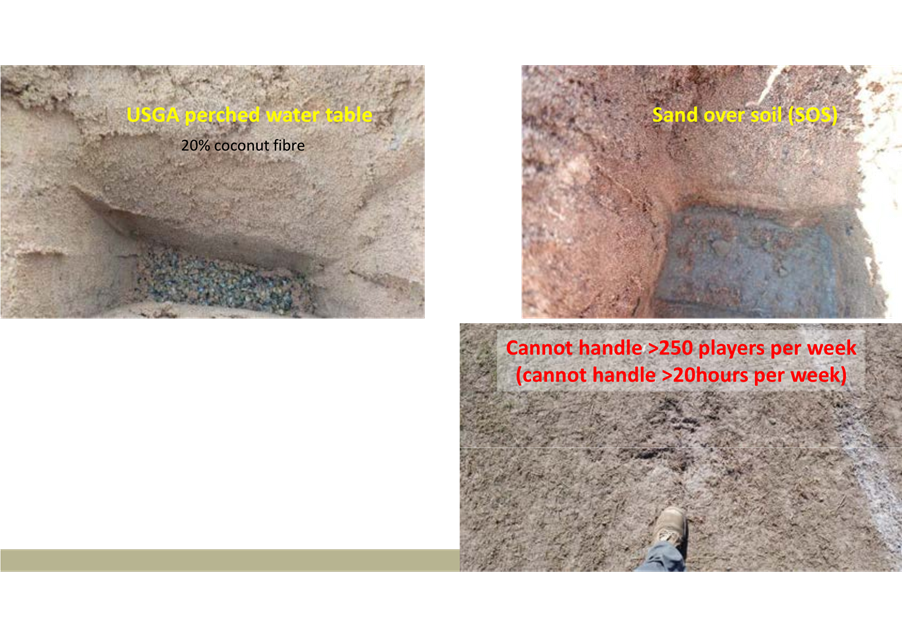
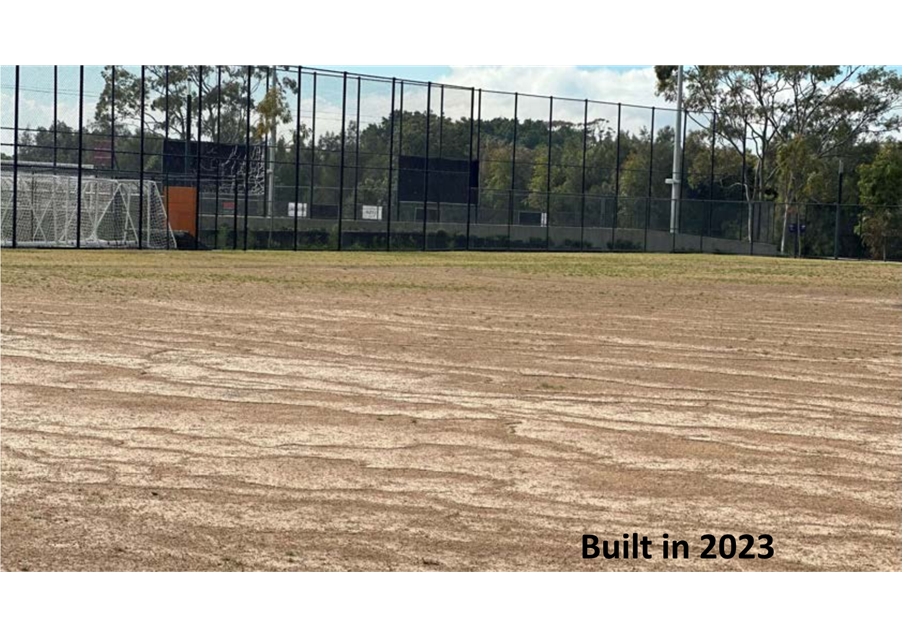
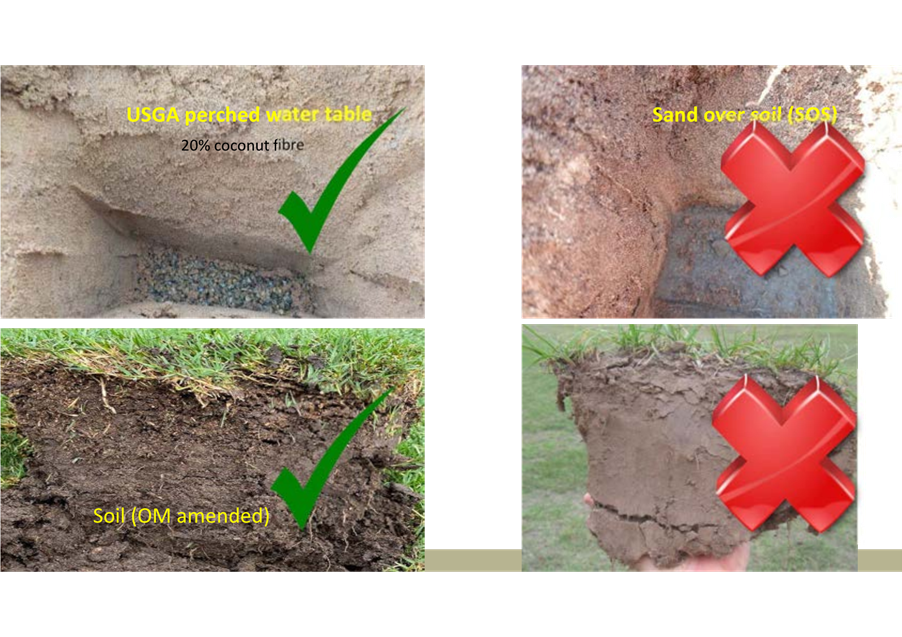
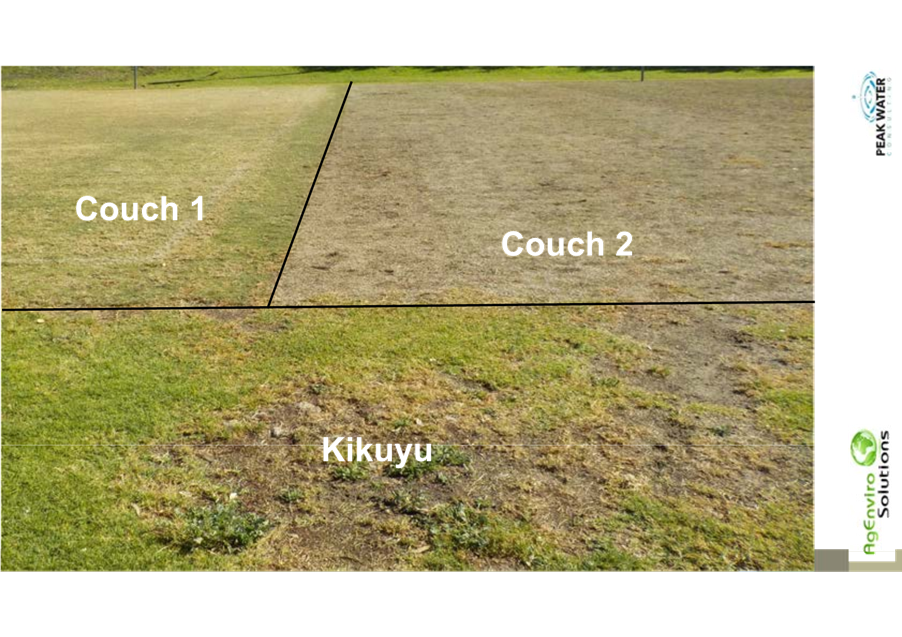
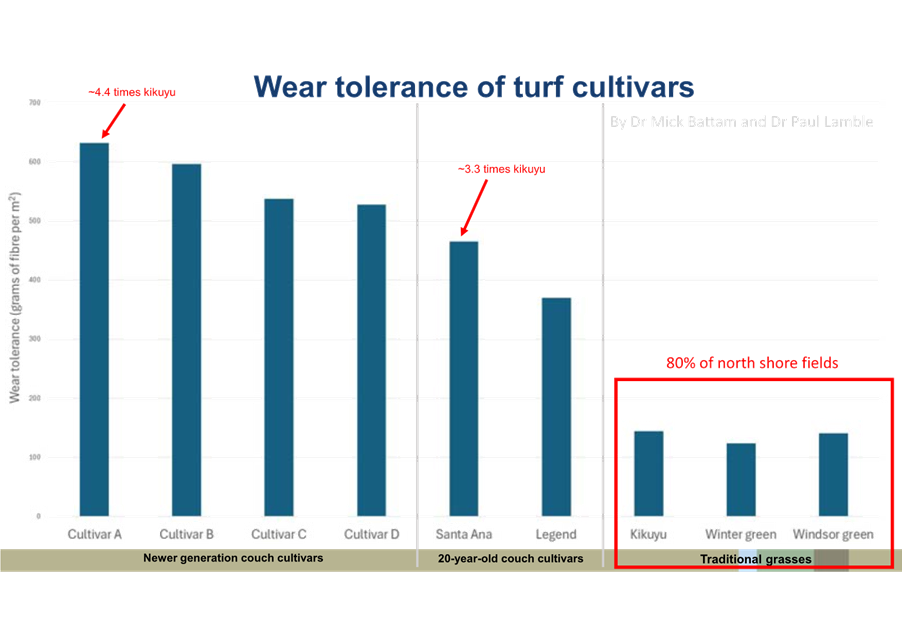
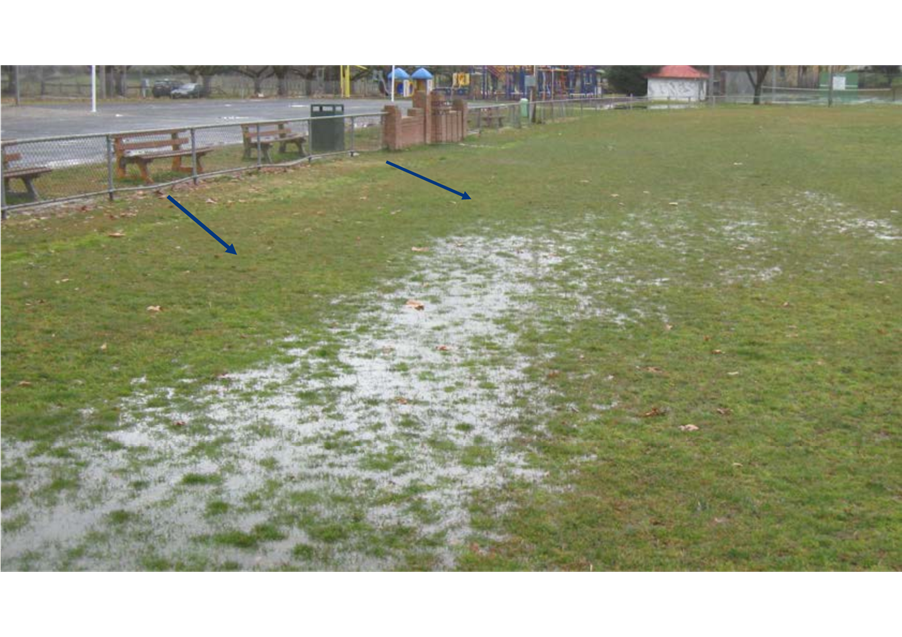
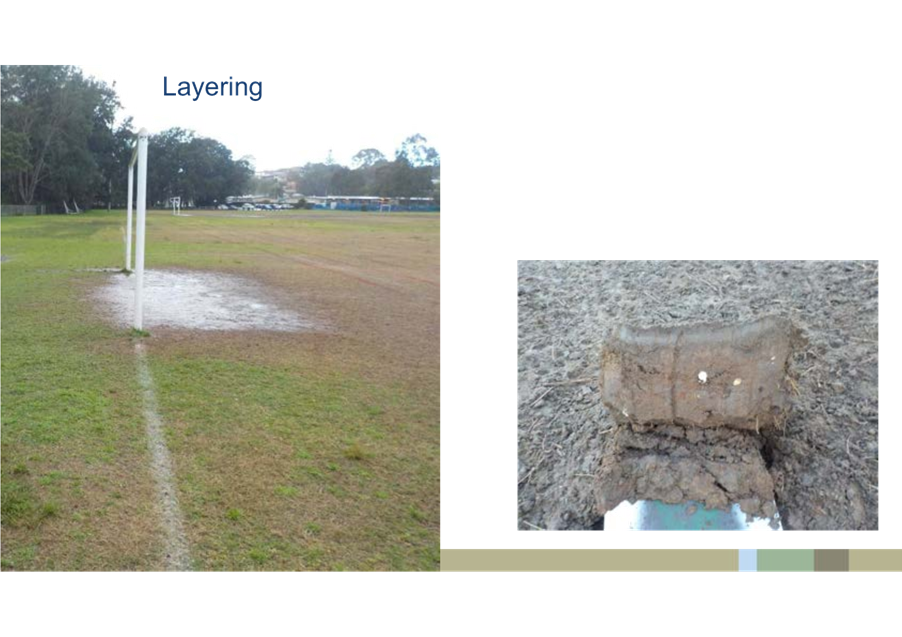
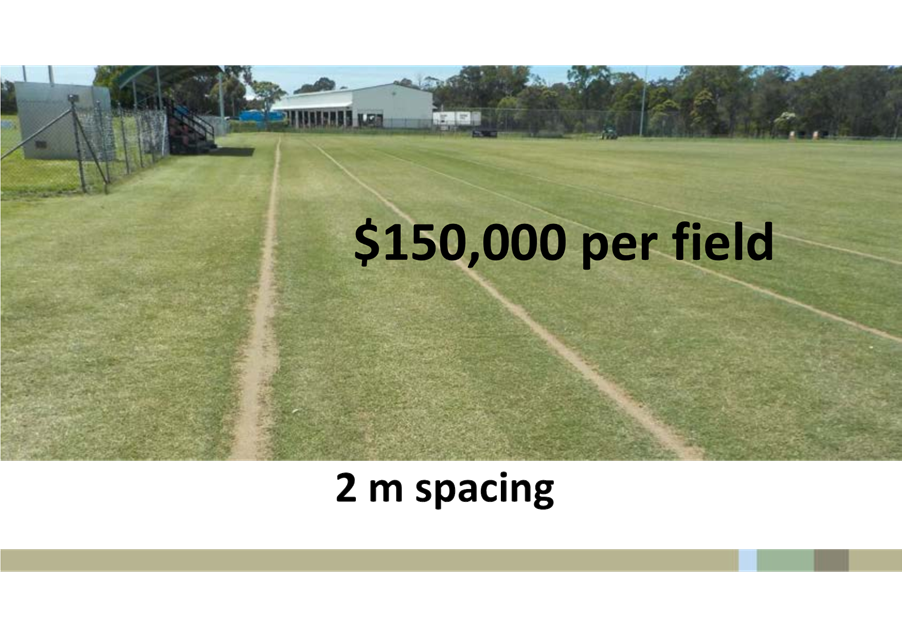
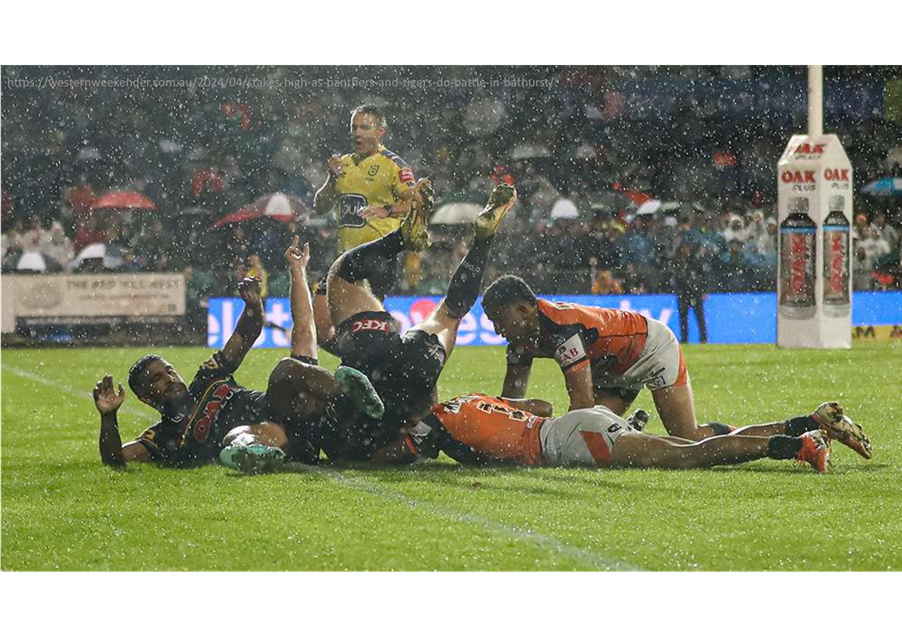

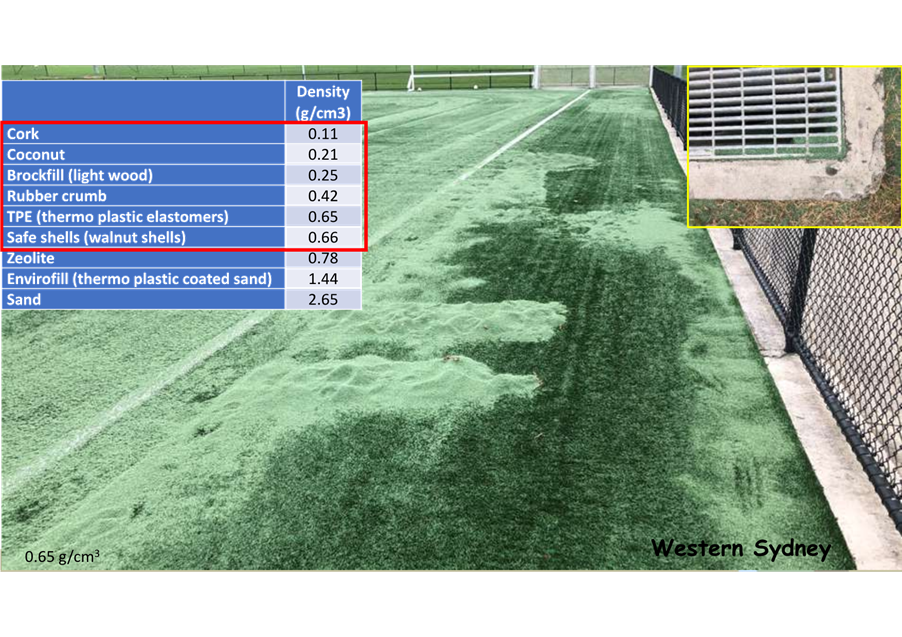
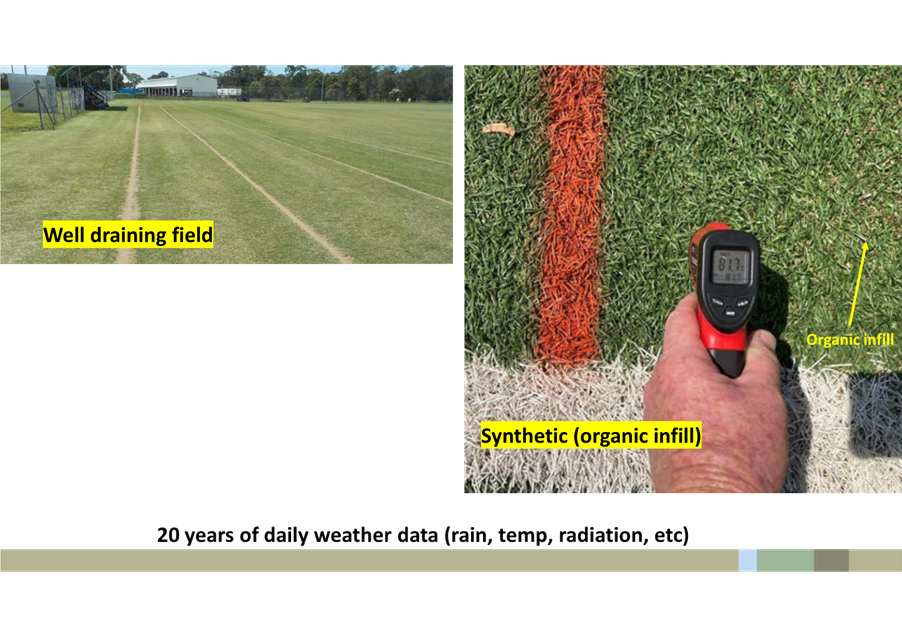
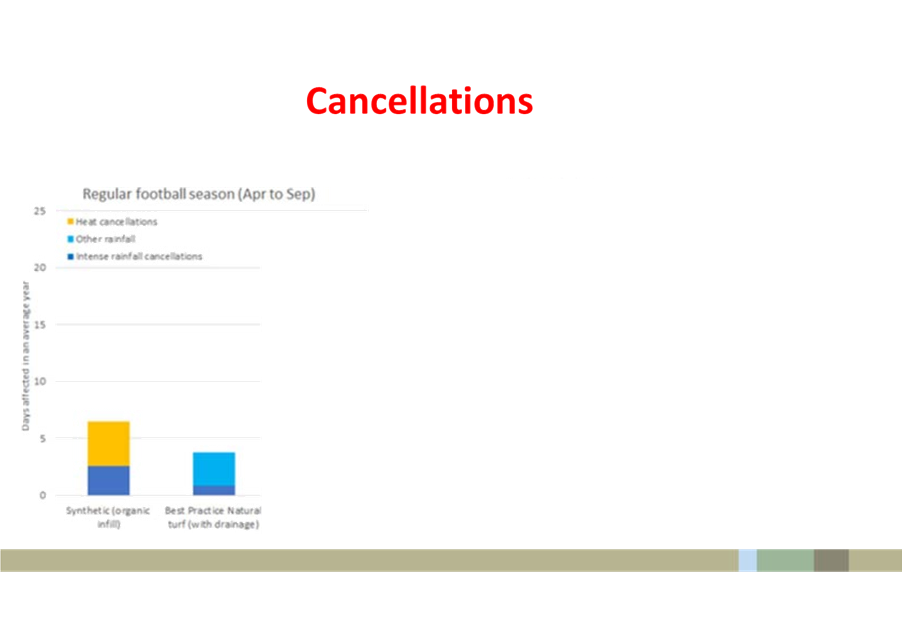
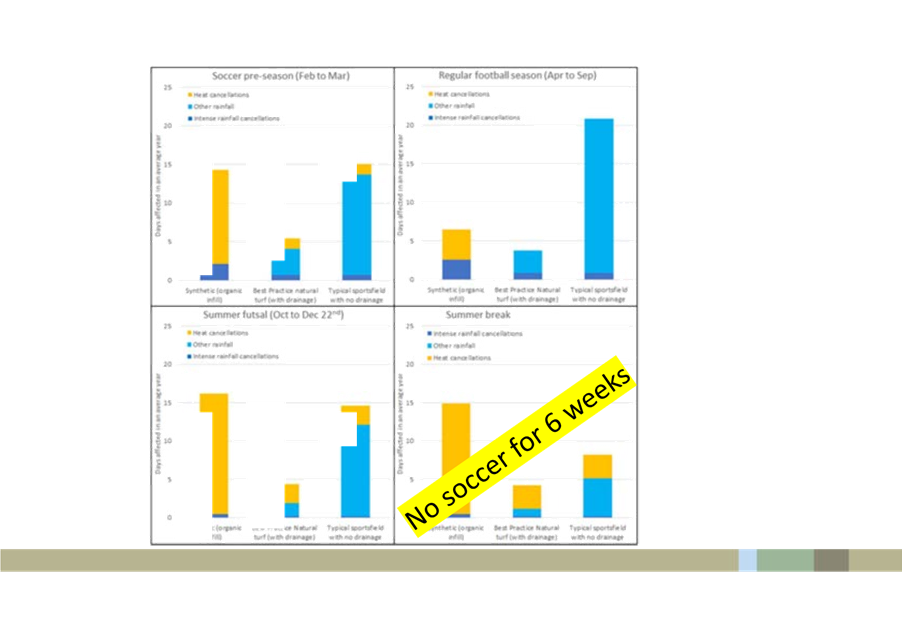
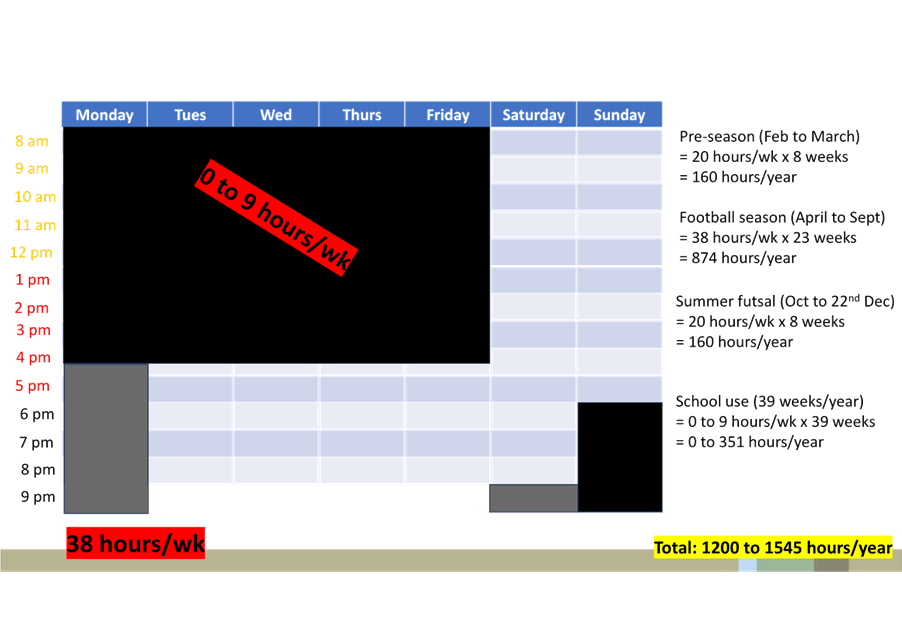
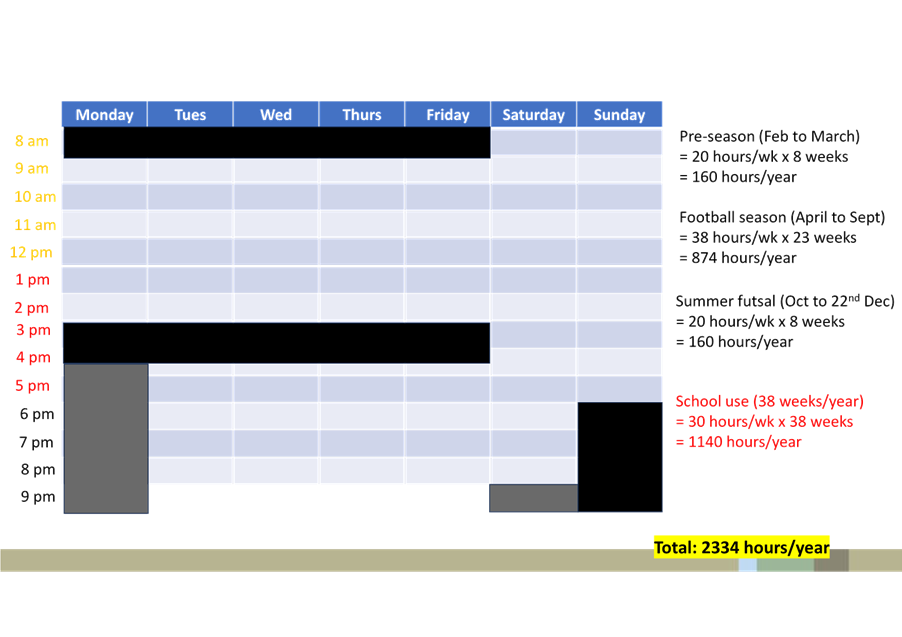
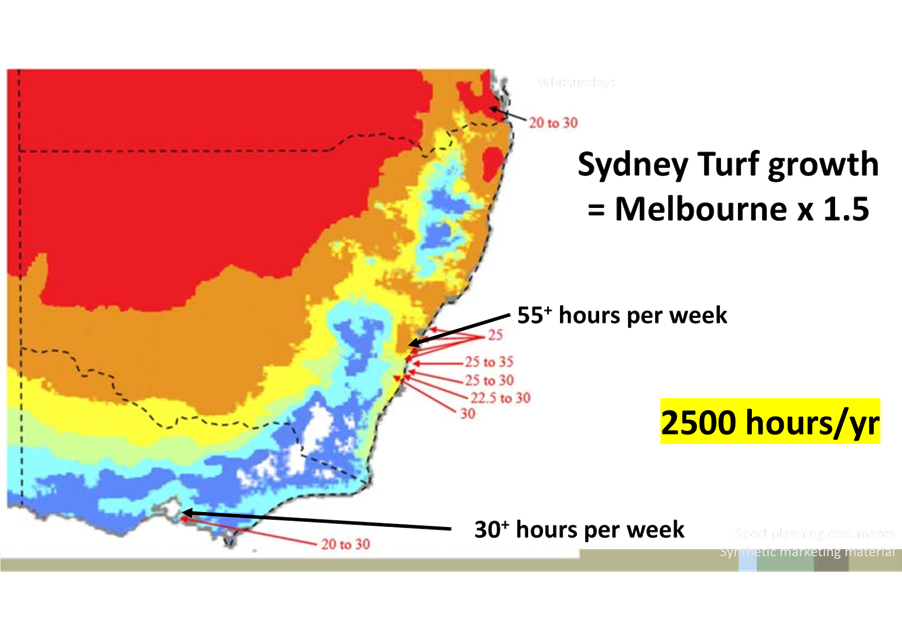
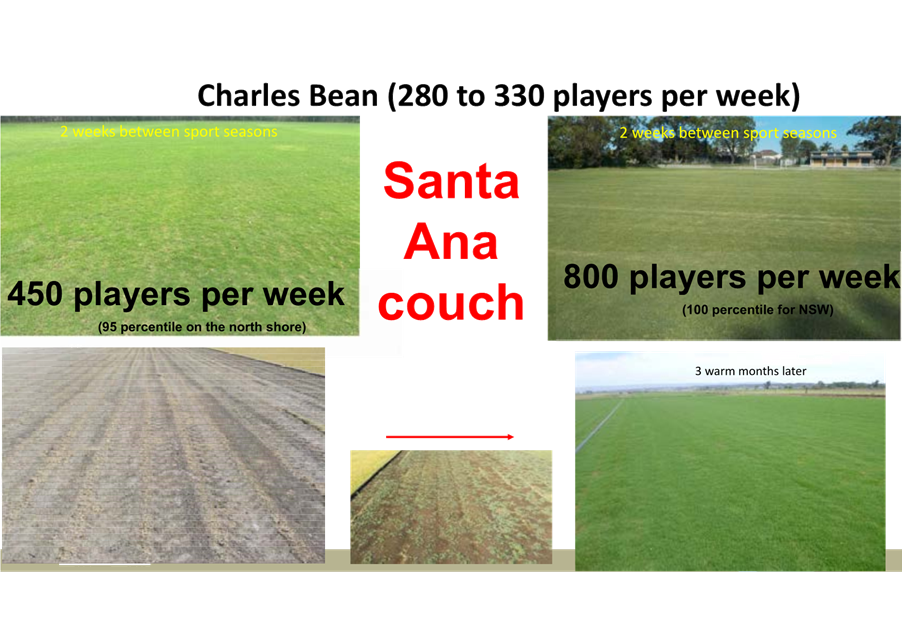
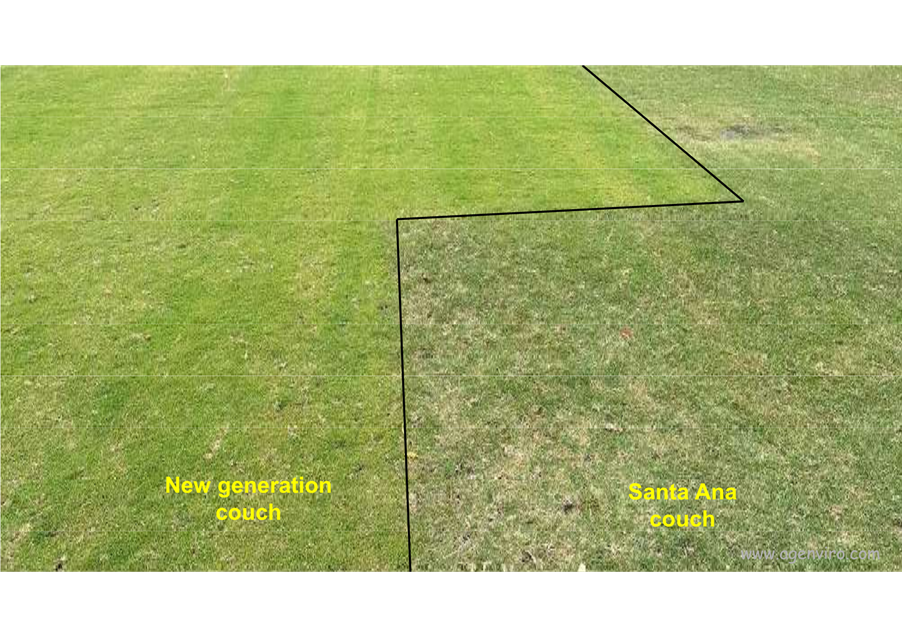
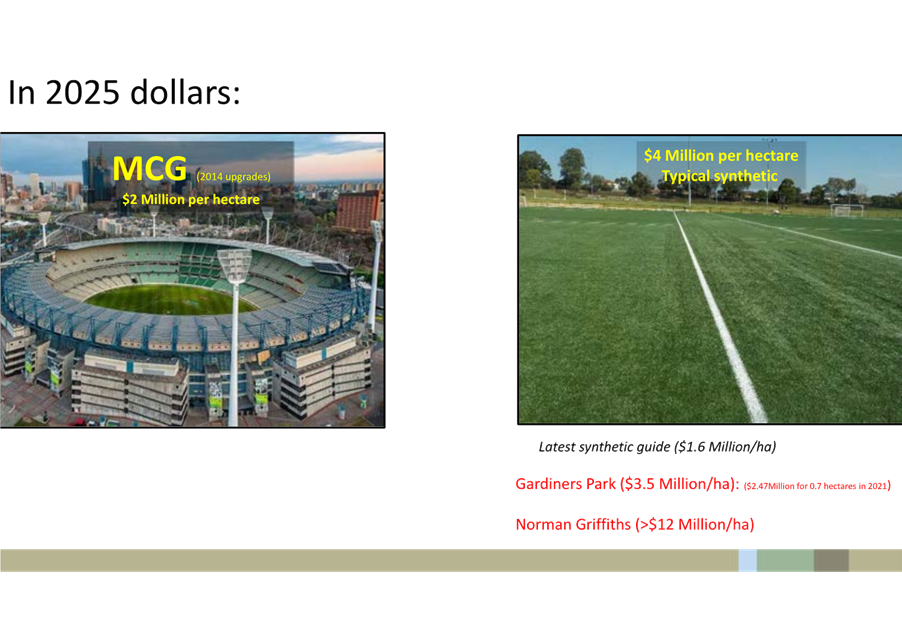
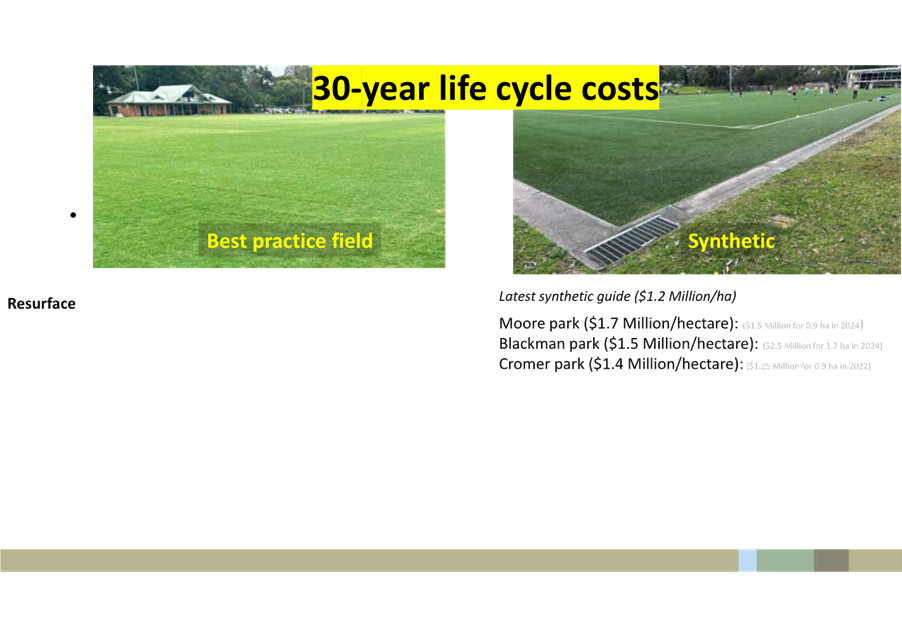
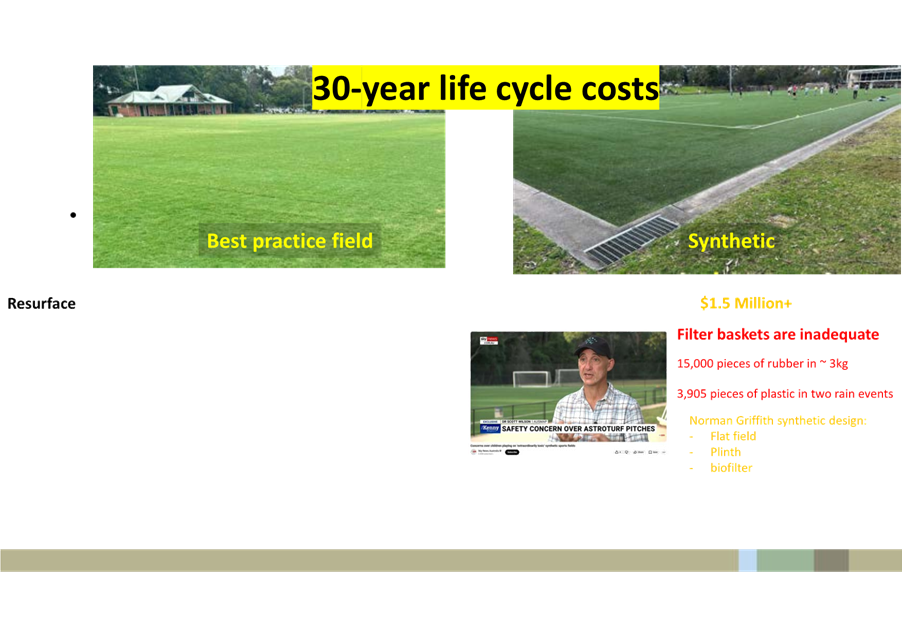
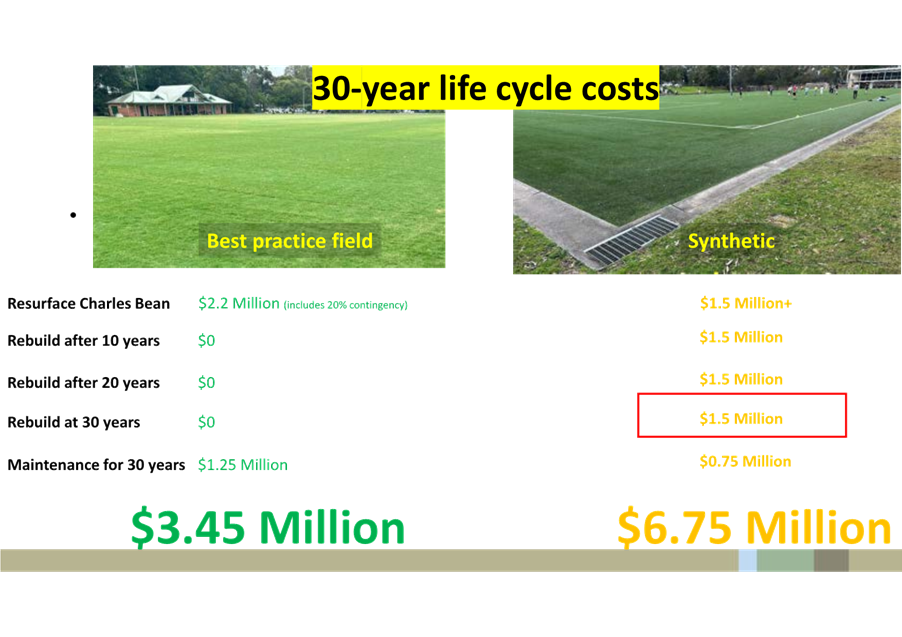
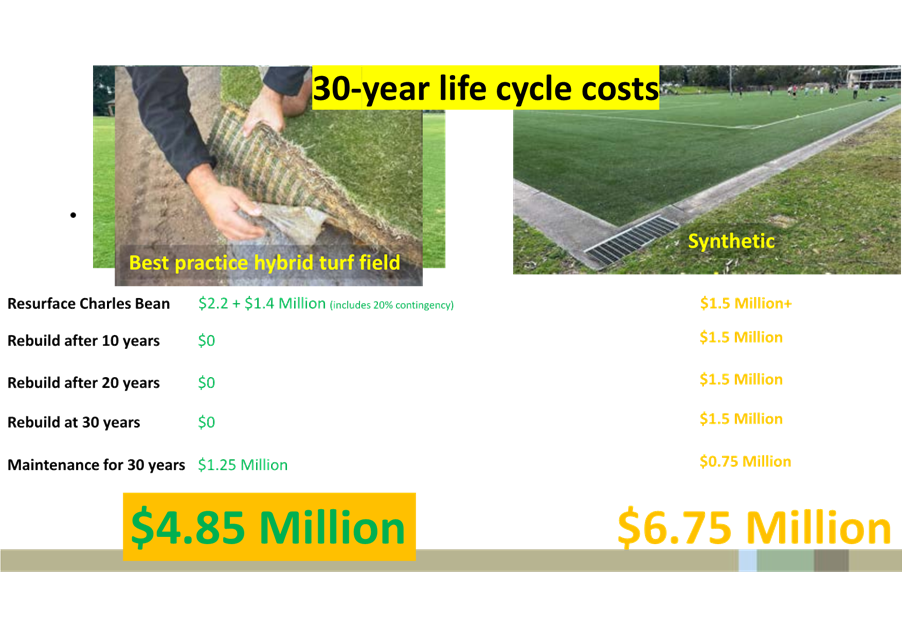
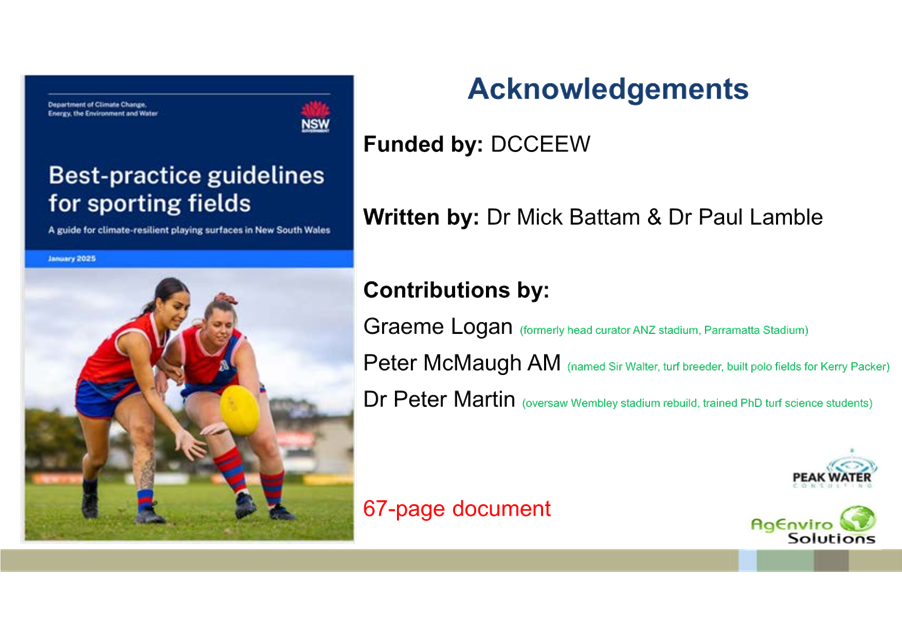
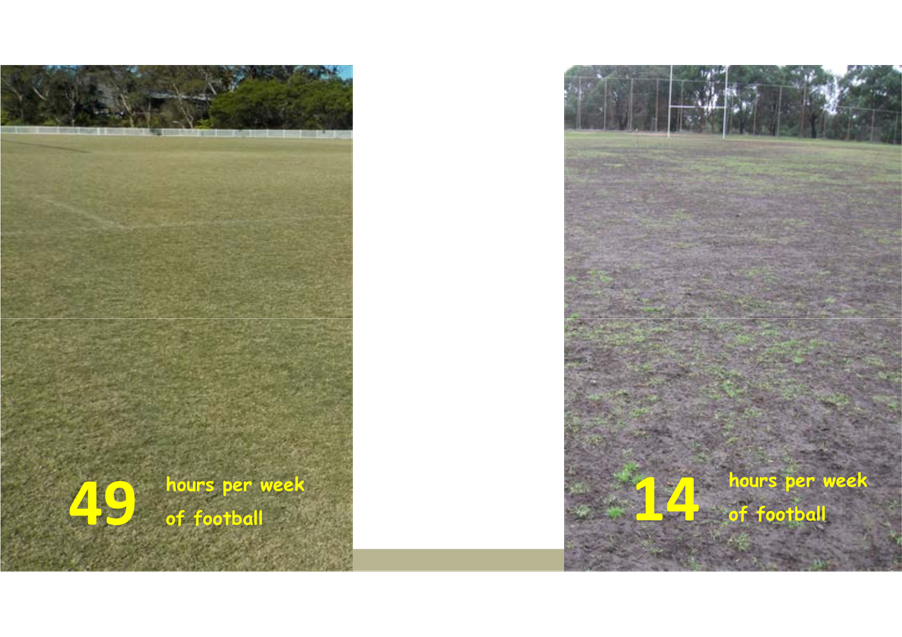

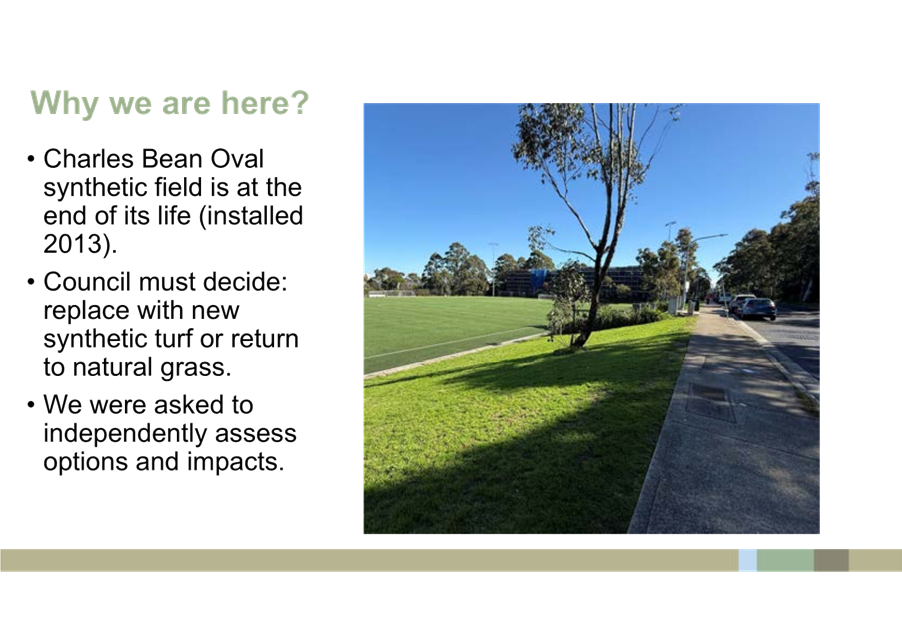
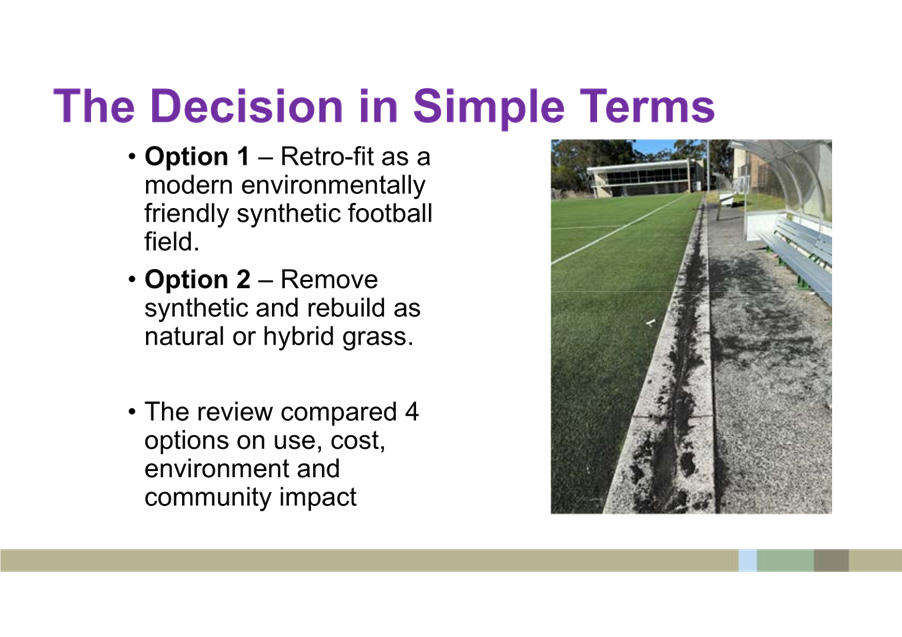


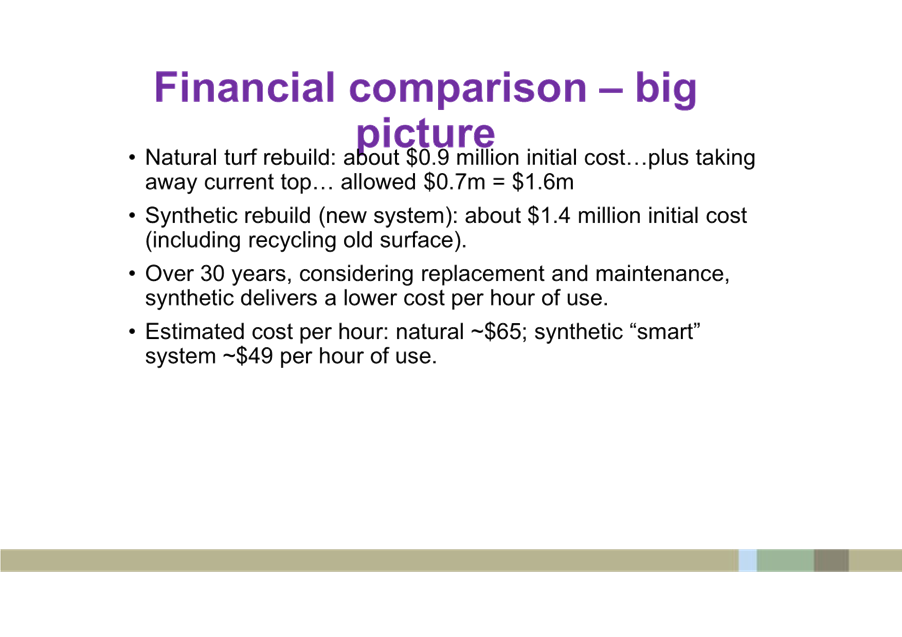
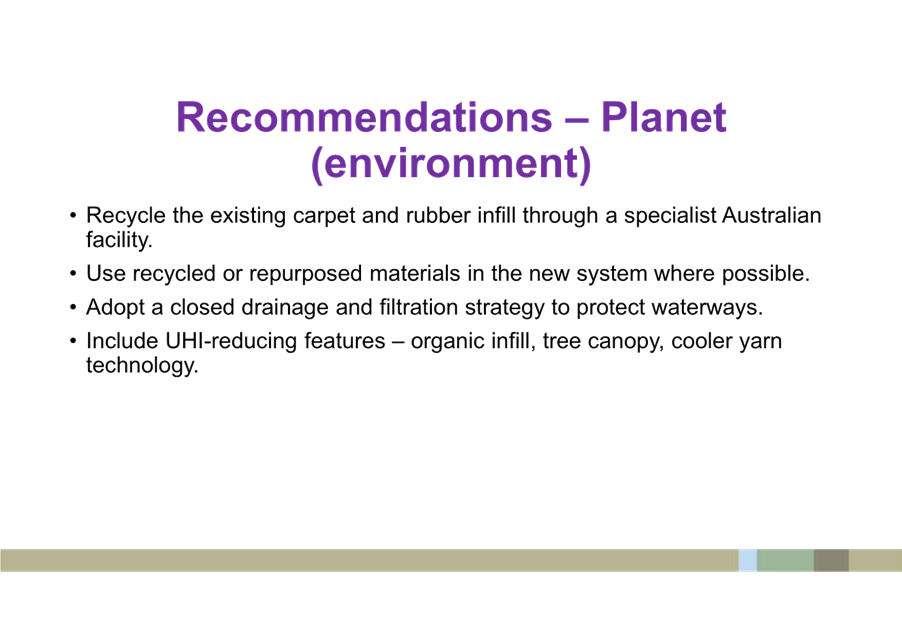
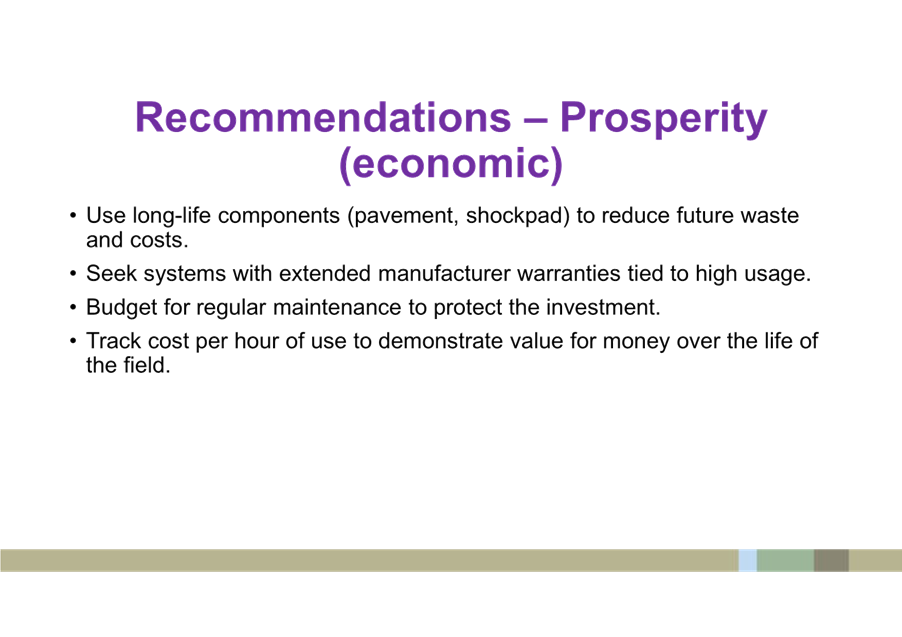
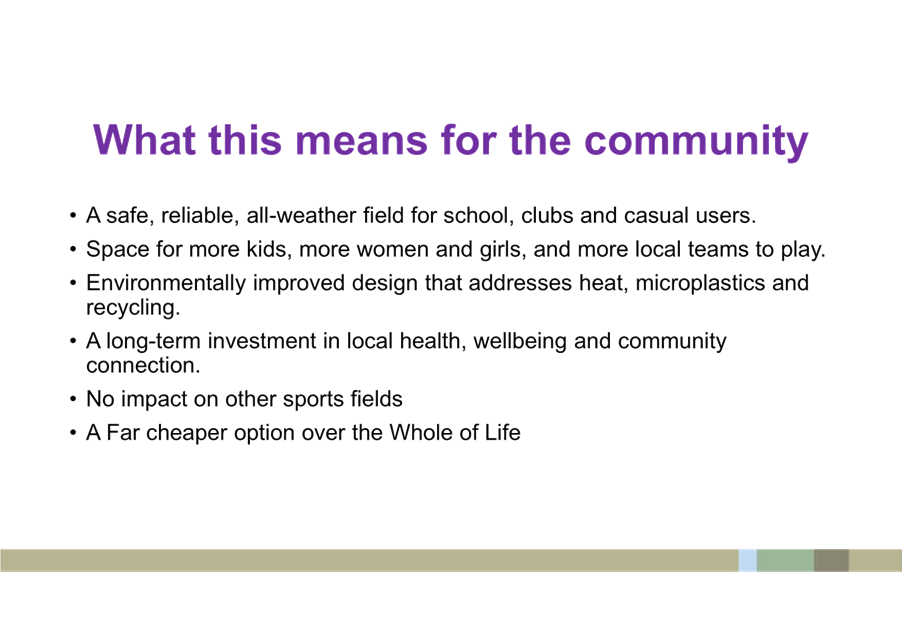

|
ATTACHMENT No: 5 - Attachment 5 - Summary of Written Submissions and Responses - Charles Bean Surface Renewal |
|
Item No: GB.8 |
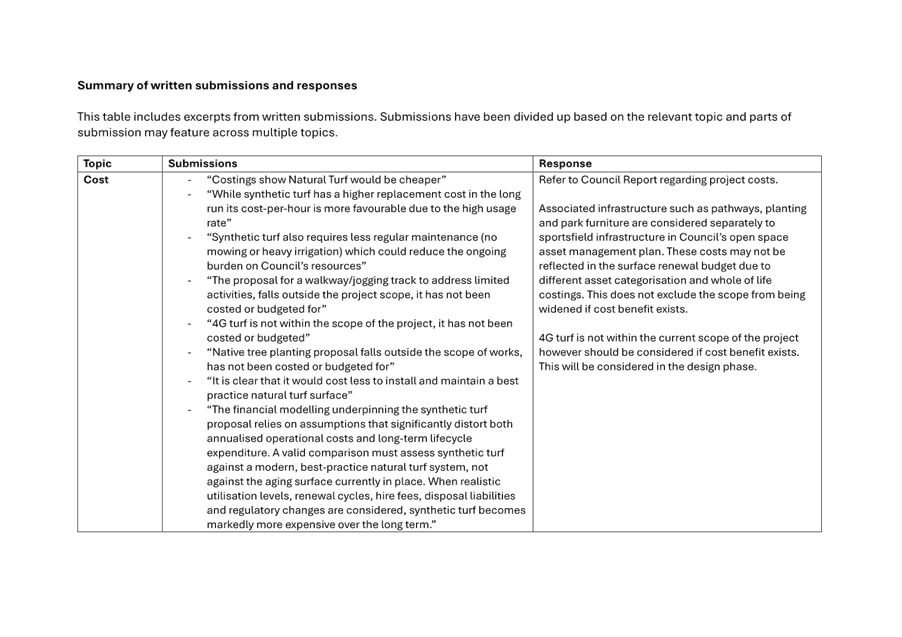
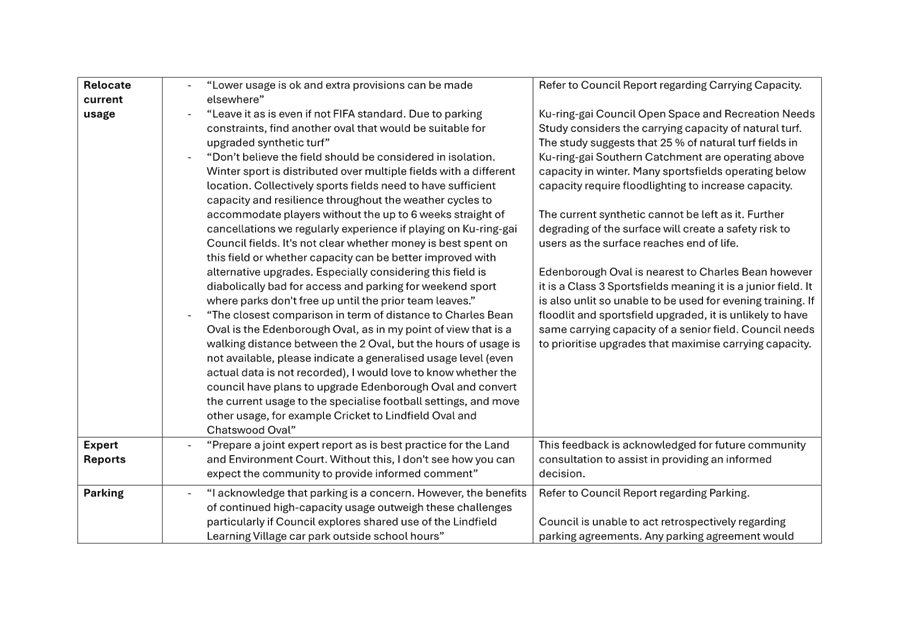
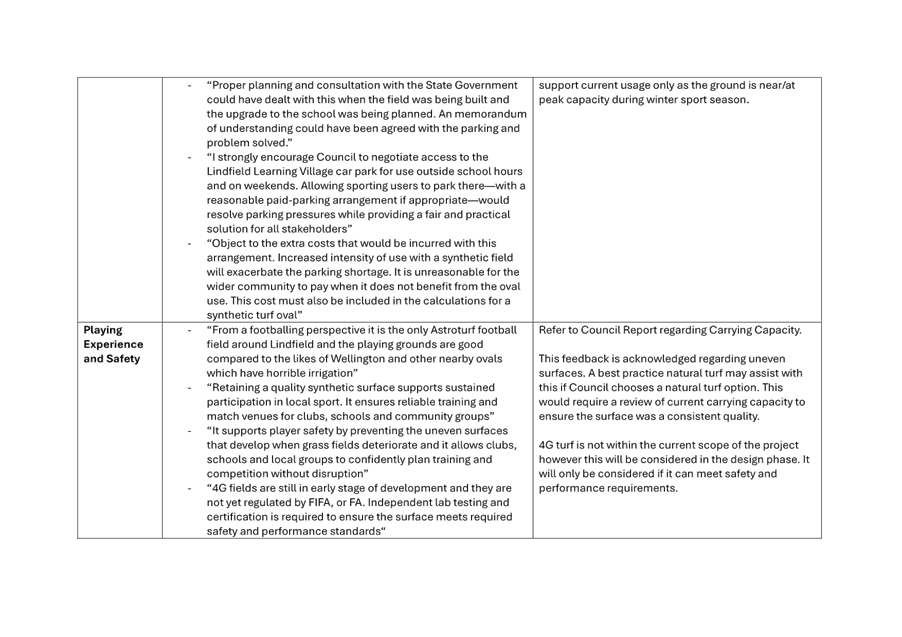
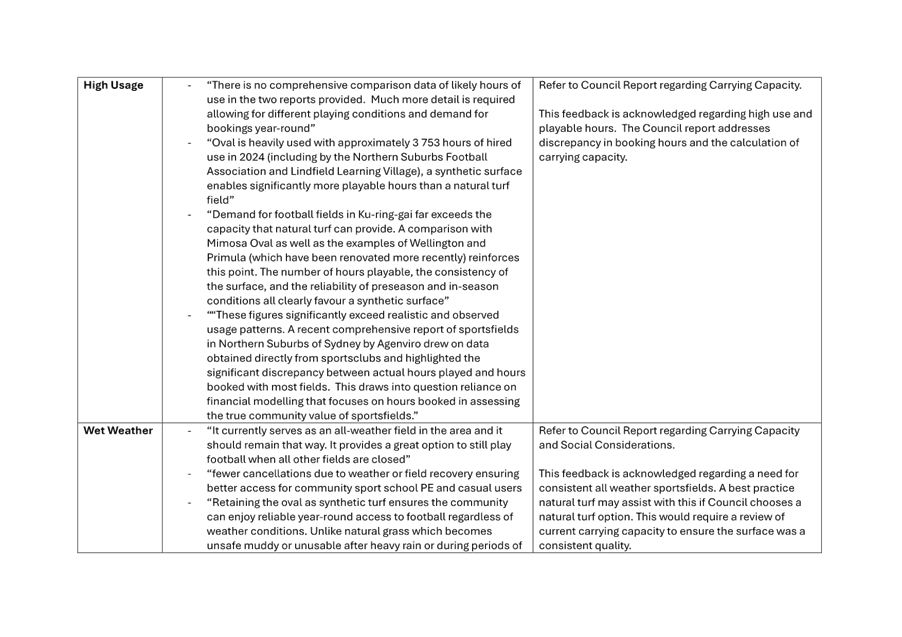
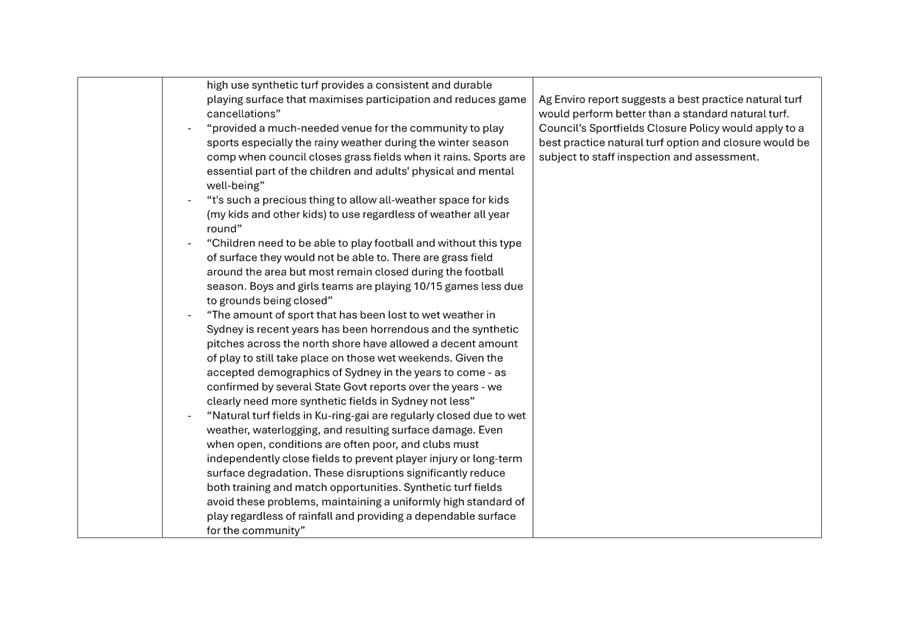
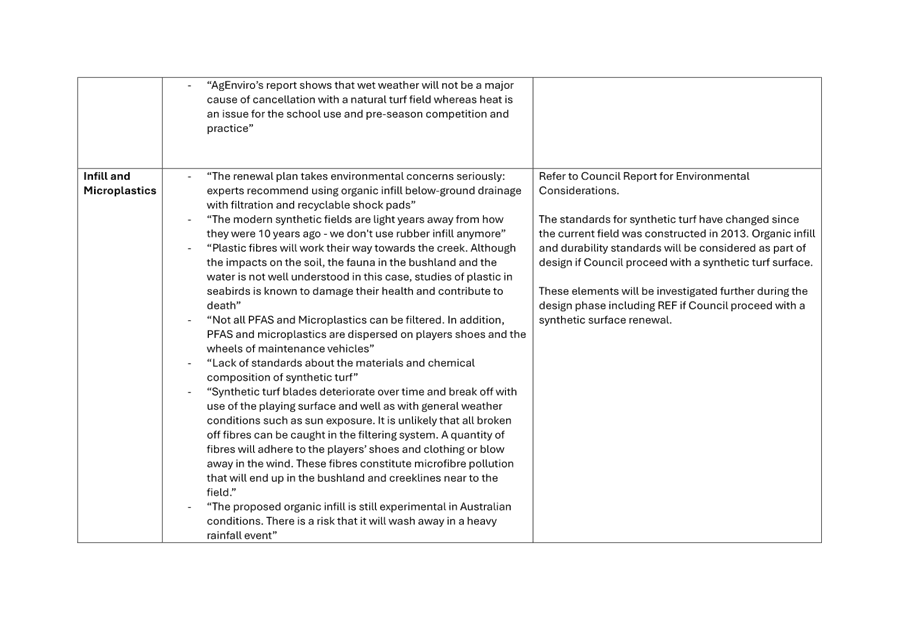
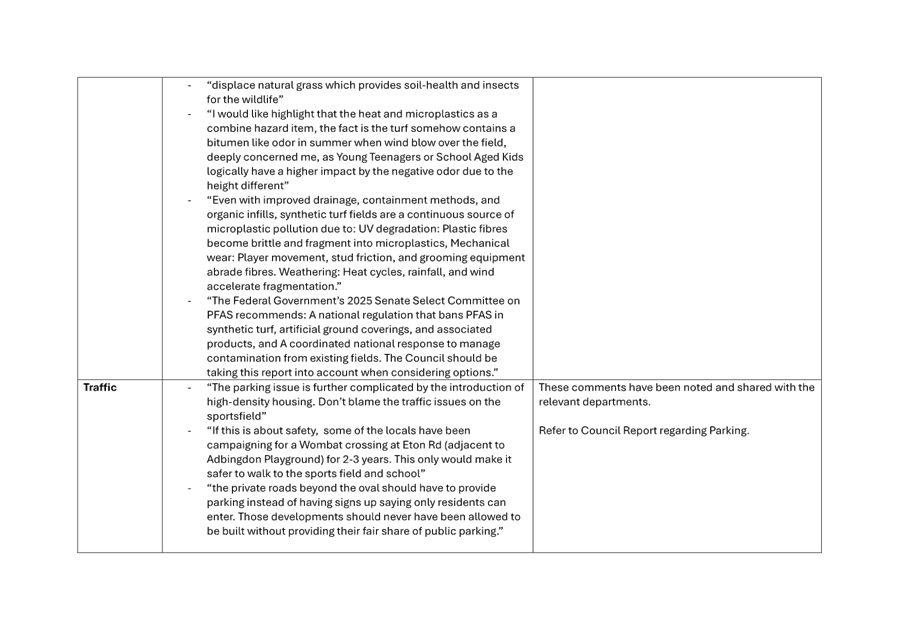
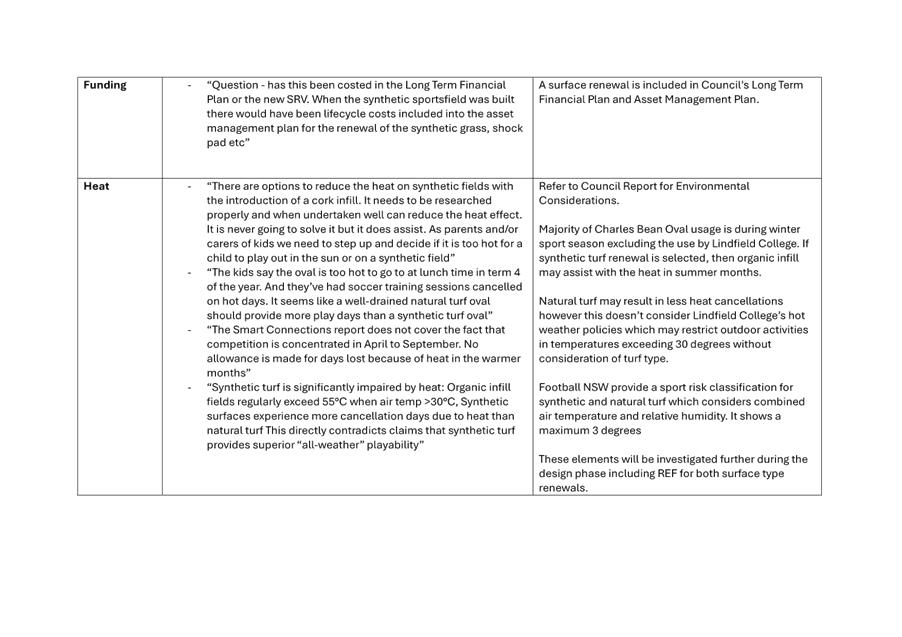
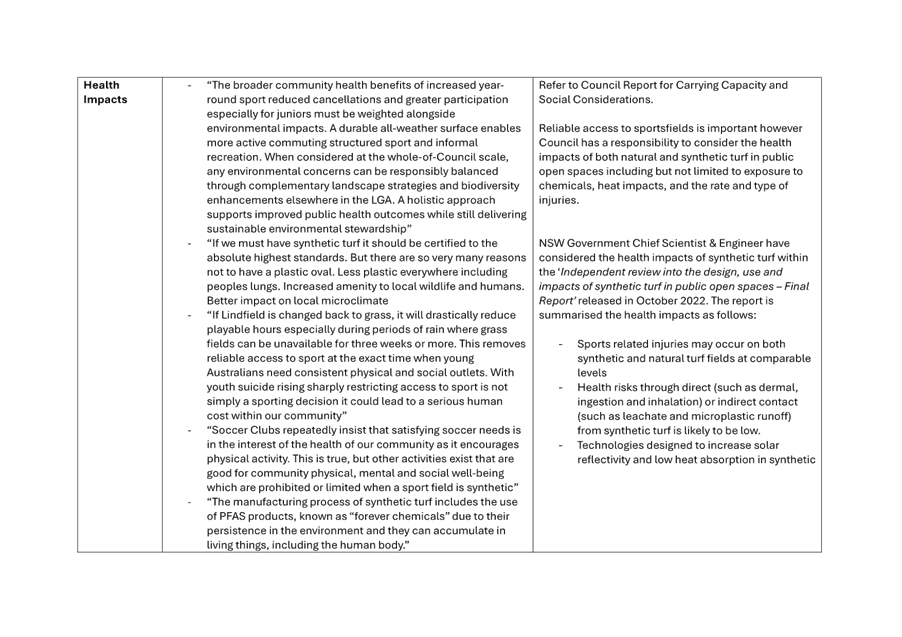
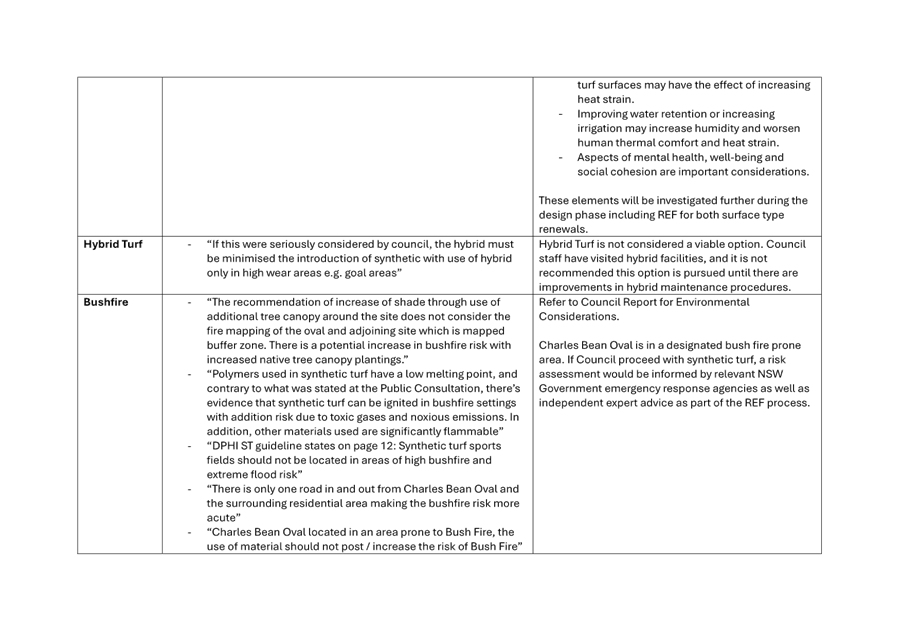
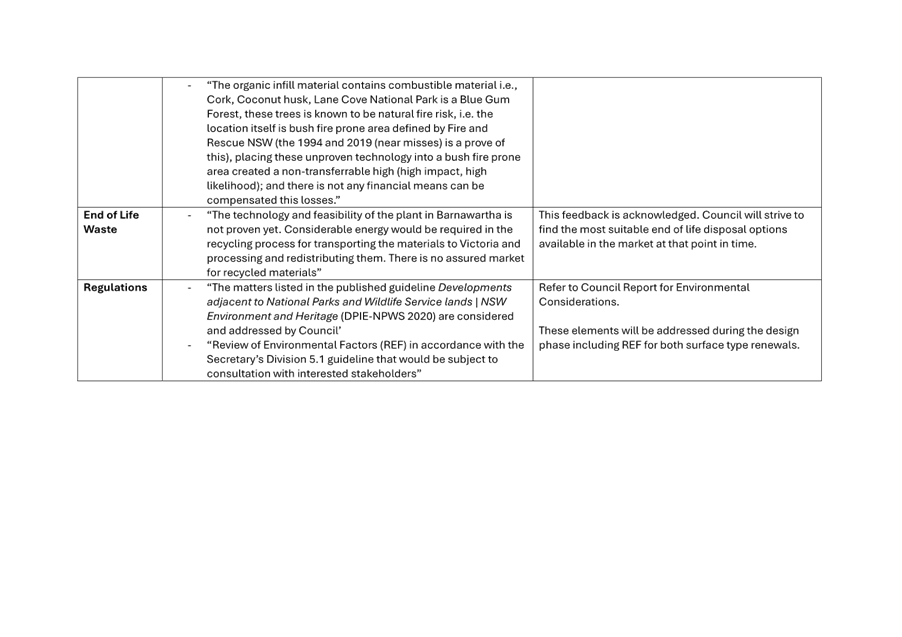
|
GB.9 / 78 |
|
|
|
|
|
Item GB.9 |
RFT7-2026 |
RFT7-2026 Playspace Upgrade Sequoia Close Park, West Pymble
EXECUTIVE SUMMARY
|
purpose of report: |
|
|
background: |
Council has allocated funding for the upgrade of the existing playspace at Sequoia Park, West Pymble, and the appointment of a contractor is required to undertake construction. Tender documents were released through Tenderlink on 17 March 2026 and closed on the 14 April 2026. |
|
|
|
|
comments: |
Council received five (5) tender submissions and two (2) non-conforming submissions. The tenders were assessed using agreed criteria which identified the best value for money to Council. |
|
recommendation: |
Purpose of Report
The purpose of this report is to consider the tenders received for RFT7-2026 Playspace Upgrade Sequoia Close Park, West Pymble so as to appoint the preferred tenderer.
Background
Council has allocated funding for the upgrade of the existing playspace at Sequoia Close Park, West Pymble. The appointment of a contractor is required to undertake construction work.
The upgrade will create an attractive, engaging and inclusive community place. The features include the following, as shown in the schematic in Figure 1:
· a playground that caters for a range of age groups and abilities;
· a range of passive, imaginative and active play activities;
· replacement of fencing to the perimeter of the play area;
· installation of park furniture, bins and bubbler;
· improved accessibility for users of all age groups and abilities, and
· increased
planted areas and nature play elements.
Tender documents were released through Tenderlink on 17 March 2026 and closed on the 14 April 2026, in accordance with the tender requirements of the Local Government Act and Regulation 2021.
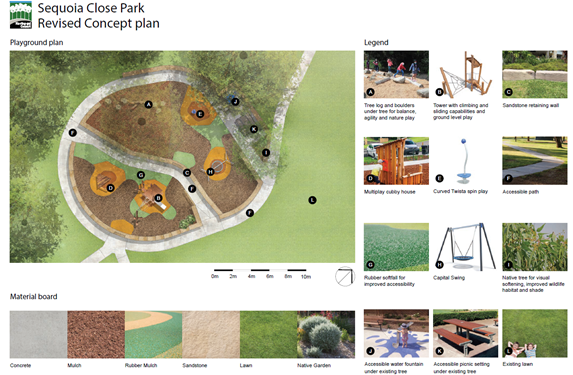
Figure 1: Sequoia Close Park Playspace Upgrade Concept Plan
Comments
Five (5) tenders were received and recorded in accordance with Council’s tendering policy.
A Tender Evaluation Committee
was formed to assess the five (5) tenders received. Two (2)
non-conforming submissions were received. One (1) tender submitted an empty
file on Tenderlink with nothing attached. This was confirmed by Tenderlink IT
Support. One (1) tenderer submitted a tender past the closing time. As such,
these two (2) tender submissions were not evaluated by the Tender Evaluation
Committee.
At the conclusion of the tender evaluation, Tenderer A was identified as providing the best value for money to Council.
The preferred Tenderer A has recently successfully completed projects of similar a nature for Council.
integrated planning and reporting
Outcome 3: Infrastructure and assets meet community needs
|
Strategy - Community Strategic Plan |
Term Achievement |
Operational Plan Actions |
|
A2: Provide, upgrade and maintain open space, recreation and sporting facilities to meet the needs of current and future user groups and a growing population. |
A2.1: A program is implemented to provide, improve and maintain open space, recreation and sporting facilities including multi-use facilities. |
A2.1.1: Deliver Council’s adopted Open Space Capital Works Program on time and within budget.
|
Governance Matters
Tender documents were prepared and released through Tenderlink on 17 March 2026 and closed on the 14 April 2026. At the close of tender, five (5) tenders were received. All submissions were recorded in accordance with Council’s tendering policy. A Tender Evaluation Committee was formed to assess the conforming five (5) tenders received. The evaluation considered:
· Conformity of submission.
· Lump sum fee.
· Capacity, capability with suitably qualified staff.
· Experience.
· Availability – Start Date, methodology and estimated duration of work.
· Work Health and Safety (WHS) and Risk Management.
· Environmental.
· Performance and Financial Assessment.
Confidential attachments to this report are:
· List of tenders received (Attachment A1).
· Tender Evaluation Report (Attachment A2).
The attachments are considered to be confidential in accordance with Section 10A (2)(d)(ii) of The Local Government Act as they are considered to contain commercial in confidence information.
Risk Management
Three (3) key areas of risk were identified in relation to the proposed work:
· That the construction be carried out by a contractor with the ability to provide a full range of services with suitably qualified staff.
· Work Health and Safety (WHS), Risk Management and Environmental.
· That Council should not be exposed to financial risk - as part of the evaluation process, tenderers were assessed on providing all information and costs requested within the tender document. An independent Performance and Financial Assessment was carried out on the preferred tenderer to ensure that they were trading responsibly and had the financial capacity to undertake the work as detailed within the tender documents.
Financial Considerations
There is available budget allocated to undertake the scope of works outlined in the delivery plan.
Social Considerations
On completion, the proposed work will provide a facility which is in line with Council’s Community Strategic Plan to provide upgrade and maintain open space and recreation to meet the needs of current and future user groups and a growing population.
Environmental Considerations
A Review of Environmental Factors (REF) has been undertaken and there were no proposed activities that are likely to cause significant impacts with mitigations duly considered and put in place.
Community Consultation
Council has undertaken a community survey through an online platform and a mail out to residents within a 500m radius of the reserve. Following that, Council sought further community comment on the concept plan prior to finalising the design of the play space. Council will undertake a before and after quality of play space survey with the community.
Internal Consultation
Consultation was undertaken with relevant departments.
Summary
Tender RFT7-2026 Playspace Upgrade Playspace Upgrade Sequoia Close Park was released through Tenderlink on 17 March 2026 and closed on the 17 April 2026. Five (5) tenders were received and two (2) non-conforming tenders were received. All tenders were recorded in accordance with Council’s tendering policy. A Tender Evaluation Committee assessed the submissions.
An independent financial and performance assessment was undertaken of the recommended Tenderer A, and it is recommended that Tenderer A be appointed on the basis of providing the best value for money to Council after a thorough assessment of both price and non-price criteria on the procurement matter.
|
That:
A. Council accepts the tender submission from Tenderer A to carry out the Playspace Upgrade Playspace Upgrade Sequoia Close Park.
B. The Mayor and General Manager be delegated authority to execute all tender documents on Council’s behalf in relation to the contract.
C. The Seal of Council be affixed to all necessary documents.
D. All tenderers be advised of Council’s decision in accordance with Clause 178 of the Local Government Tendering Regulation 2021.
|
|
Pip Grant Project Manager |
Claire Ashby Manager Project Services |
|
RFT7-2026 Playspace Upgrade - Sequoia Close - List of Submitters |
|
Confidential |
||
|
|
RFT7-2026 Placespace Upgrade - Sequoia Park - Tender Evaluation Report |
|
Confidential |
|
GB.10 / 80 |
|
|
|
|
|
Item GB.10 |
RFT1-2026/R |
RFT1-2026 Pacific Highway and Beaconsfield Parade Lindfield - Traffic Signal Modelling and Detailed Design
EXECUTIVE SUMMARY
|
purpose of report: |
|
|
|
|
|
background: |
Council received approval in-principle from Transport for NSW to upgrade the intersection of Pacific Highway and Beaconsfield Parade in Lindfield, as part of its response to the Lindfield Village Hub Planning Proposal. To prepare the necessary documentation and approvals for construction, Council needs to engage a suitably qualified multi-disciplinary engineering design consultant with relevant experience. Tender documents were released through Tenderlink on 10 February 2026 and closed on 3 March 2026. |
|
|
|
|
comments: |
Council received six (6) tender submissions. The tenders were assessed using agreed criteria which identified the best value for money to Council. |
|
|
|
|
recommendation: (Refer to the full Recommendation at the end of this report) |
Purpose of Report
To consider the tenders received for RFT1-2026 Pacific Highway and Beaconsfield Parade Lindfield - Traffic Signal Modelling and Detailed Design, and to appoint the preferred tenderer.
Background
In mid-2021, Council received approval in-principle from Transport for NSW (TfNSW) to upgrade the intersection of Pacific Highway and Beaconsfield Parade in Lindfield. Approval was given by Transport for NSW as part of its response to the Lindfield Village Hub Planning Proposal.
Key components of TfNSW’s approval in-principle include:
· New traffic signals with pedestrian crossing facilities on all 3 legs;
· modifications to kerb geometry and Beaconsfield Parade road geometry to suit vehicle swept paths; and
· relocation of existing mid-block pedestrian activated signals on Pacific Highway outside Lindfield station to a location further north.
To prepare the necessary documentation and approvals for construction, Council needs to engage a suitably qualified multi-disciplinary engineering design consultant with relevant experience.
Tender documents for traffic signal modelling and detailed design were released through Tenderlink on 10 February 2026 and closed on 3 March 2026, in accordance with the tender requirements of the Local Government Act and Regulation 2021.
Comments
Six (6) tenders were received and recorded in accordance with Council’s tendering policy.
A Tender Evaluation Committee was formed to assess the six (6) tenders received.
At the conclusion of the tender evaluation, Tenderer A was identified as providing the best value for money to Council.
integrated planning and reporting
In the DP&OP, the project relates to Outcome 3: Infrastructure and assets support community needs.
|
Community Strategic Plan Strategy |
Delivery Program Term Achievement |
Operational Plan Action |
|
A5: Work with the NSW government and partners to improve local integrated transport connections, public transport and the regional road network. |
A5.1: A network of safe and convenient links to local centres, major land uses and recreation opportunities, including active transport, is progressively implemented and promoted to meet the access and travel needs of the community. |
A5.1.4: Coordinate the design for traffic signal upgrades in Lindfield. |
Governance Matters
Tender documents were prepared and released through Tenderlink on 10 February 2026 and closed on 3 March 2026. At the close of tender, six (6) tenders were received. All submissions were recorded in accordance with Council’s tendering policy. A Tender Evaluation Committee was formed to assess the six (6) tenders received. The evaluation considered:
· Conformity of submission.
· Lump sum fee.
· Capacity, capability with suitably qualified staff.
· Experience.
· Methodology and estimated duration of work.
· Work Health and Safety (WHS) and Risk Management.
· Environmental.
· Financial Assessment.
Confidential attachments to this report are:
· Tender Evaluation Plan, which outlines the procurement strategy implemented for this project (Attachment 1).
· List of tenders received (Attachment 2).
· Tender Evaluation Report and recommendation (Attachment 3).
The attachments are considered to be confidential in accordance with Section 10A (2)(d)(iii) of the Local Government Act,1993 as they are considered to contain commercial in confidence information.
Risk Implication statement
Three (3) key areas of risk were identified in relation to the proposed services:
· That the consultant selected is suitable to undertake the services, as the project is a multi-disciplinary traffic and civil engineering project with a wide range of scope. This was assessed as part of the capability criteria of the tender evaluation.
· Work Health and Safety (WHS), Risk Management and Environmental.
· As part of the traffic signal modelling and detailed design process, TfNSW approval and oversight is required at defined stages, as TfNSW is the approval authority and asset manager for projects and works involving traffic signal infrastructure. This reduces the ultimate risk for Council.
Financial Considerations
At the Ordinary Meeting of Council on 26 April 2022, Council endorsed the delivery mechanisms and funding sources for proposed road infrastructure in the Lindfield Local Centre.
The delivery of the proposed intersection upgrades and road modifications will be the responsibility of Council or the selected development partner for the Lindfield Village Hub project, with the new traffic signals at the intersection of Pacific Highway and Beaconsfield Parade to be delivered as part of the Lindfield Village Hub project:
|
Table 1 – Recommended Delivery Mechanism and Funding Source for Proposed Road infrastructure – Lindfield Local Centre |
||||
|
|
Location |
Proposed road infrastructure |
Delivery Mechanism |
Funding source |
|
1 |
Intersection Pacific Highway and Beaconsfield Parade |
New traffic signals with pedestrian crossing facilities |
Delivered as part of Lindfield Village Hub project |
LVH |
|
2 |
Pacific Highway near Tryon Place |
Relocation of mid-block pedestrian activated signals |
Delivered as part of Lindfield Village Hub project |
LVH |
|
3 |
Intersection Pacific Highway and Strickland Avenue |
New traffic signals with pedestrian crossing facilities |
Delivered by Council as a capital works project |
Council |
|
4 |
Bent Street between Pacific Highway and Bent Lane. |
Closure to vehicle traffic and installation of pedestrian plaza. |
Delivered as part of Lindfield Village Hub project. |
LVH |
|
5 |
Intersection of Pacific Highway and Balfour Street/Havilah Road. |
Modifications to existing signals to ban right turn movement from Havilah Road into Pacific Highway, and other associated modifications (such as line markings etc.). |
Delivered as part of Lindfield Village Hub project. |
LVH |
|
6 |
Intersection Pacific Highway and Balfour Street/Havilah Road |
Localised widening of Pacific Highway to accommodate extension of existing right turn bay on the Pacific Highway for vehicles turning into Balfour Street. |
Delivered by Council as a capital works project.
May require land acquisition or land dedication through future redevelopment of adjoining site. |
Council |
|
7 |
Woodford Lane. |
Modification to existing laneway to convert to one-way traffic flow (southbound). |
Delivered as part of Lindfield Village Hub. |
LVH |
|
8 |
Intersection Lindfield Avenue and Tryon Road. |
Removal of existing mid-block pedestrian activated signals on Lindfield Avenue and installation of new traffic signals with pedestrian crossing facilities at intersection of Tryon Road and Lindfield Avenue. |
Delivered by Council as a capital works project - part of Lindfield Avenue Streetscape Works. |
Council |
|
9 |
Grosvenor Road at intersection with Pacific Highway. |
Localised road widening to accommodate an additional approach lane on Grosvenor Road. |
Delivered by Council as a capital works project. |
Council |
|
10 |
Bent Lane between Bent Street and Balfour Avenue. |
Modifications to existing laneway for one-way traffic flow (southbound). |
Delivered as part of Lindfield Village Hub. |
LVH |
Where Council is identified as responsible for funding and delivery of proposed intersection upgrades and road modifications the following sources have been identified:
· Development Contributions (S 7.11); and
· Funds from the sale of Balfour Lane, Lindfield.
The tender process ensures Council achieves best value for money for the traffic signal modelling and detailed design component of the project.
Social Considerations
On completion, the proposed work will provide a facility which is in line with Council’s Community Strategic Plan, Our Ku-ring-gai 2038 and the Plan’s long-term directions including providing infrastructure and assets to meet community needs.
Environmental Considerations
The traffic signal modelling and detailed design component of the project are not expected to have environmental impacts.
Community Consultation
The broader community consultation for new traffic signals at the intersection of Pacific Highway and Beaconsfield Parade was undertaken as part of the public exhibition of the Lindfield Village Hub Planning Proposal, where the traffic signals was one of the upgrades featured in the Transport Impact Assessment supporting the Planning Proposal.
Internal Consultation
Consultation was undertaken with relevant departments.
Summary
Council received approval in-principle from Transport for NSW to upgrade the intersection of Pacific Highway and Beaconsfield Parade in Lindfield, as part of its response to the Lindfield Village Hub Planning Proposal. To prepare the necessary documentation and approvals for construction, Council needs to engage a suitably qualified multi-disciplinary engineering design consultant with relevant experience.
Tender documents were released through Tenderlink on 10 February 2026 and closed on 3 March 2026, and six (6) tender submissions were received. The tenders were assessed using agreed criteria which identified the best value for money to Council.
That:
A. Council accepts the tender submission from Tenderer A to carry out the Traffic Signal Modelling and Detailed Design for new traffic signals at the intersection of Pacific Highway and Beaconsfield Parade Lindfield.
B. The General Manager be delegated authority to execute all tender documents on Council’s behalf in relation to the contract.
C. The Seal of Council be affixed to all necessary documents.
D. All tenderers be advised of Council’s decision in accordance with Clause 178 of the Local Government Tendering Regulation 2021.
|
Joseph Piccoli Strategic Traffic Engineer |
Antony Fabbro Manager Urban & Heritage Planning |
|
Andrew Watson Director Strategy & Environment |
|
|
Attachments: |
RFT1-2026 - Tender Evaluation Plan |
|
Confidential |
|
|
|
RFT1-2026 - List of tenders received |
|
Confidential |
|
|
|
RFT1-2026 - Tender Evaluation Report |
|
Confidential |
|
GB.11 / 82 |
|
|
|
|
|
Item GB.11 |
S15328 |
DCP Amendment - to align with state government housing reforms
EXECUTIVE SUMMARY
|
purpose of report: |
|
|
|
|
|
background: |
The recent NSW Government Low and Mid-rise (LMR) and Transport Orientated Development (TOD) housing reforms have resulted in overriding amendments to the Ku-ring-gai Local Environmental Plan 2015 (KLEP) via the State Environmental Planning Policy (Housing) 2021.
The reforms now enable certain development types in zones where those typologies were previously not permitted under the KLEP 2015.
The KDCP currently links and limits residential development types to those permitted in the KLEP 2015 land use zones prior to the LMR and TOD reforms. Proponent planners are now claiming that the KDCP does not apply to development outside the zones stated in the KDCP. |
|
|
|
|
comments: |
Council has received legal advice stating the KDCP controls do continue to apply despite the KDCP not being updated to reflect the new zonings; however, it advises Council to make a timely amendment to the KDCP. This report states the proposed amendments to address this issue. |
|
|
|
|
recommendation: (Refer to the full Recommendation at the end of this report) |
Purpose of Report
For Council to consider the amendment to update the Ku-ring-gai Development Control Plan (KDCP) so that it is consistent with, and applicable to, development introduced by the recent low and mid-rise housing reforms and for Council to endorse the public exhibition of the proposed amendment.
Background
NSW Government Housing Reforms
The recent NSW Government low and mid-rise (LMR) and transport orientated development (TOD) housing reforms have resulted in overriding amendments to the Ku-ring-gai Local Environmental Plan 2015 (KLEP 2015) via the State Environmental Planning Policy (Housing) 2021. The reforms now enable certain development types in zones where those typologies were previously not permitted under the KLEP 2015.
Challenges to Council’s Development Control Plan
Council’s KDCP has served to reinforce the KLEP 2015 standards and in certain sections makes direct reference to the KLEP 2015 zoning. These references link and limit the residential development types within the KDCP to the KLEP 2015 land use zone, an approach that was deemed suitable at the time of that previous drafting when it was necessary to clarify where those (at that time new) typologies would be delivered.
This wording is now being challenged with proponent planners arguing that the KDCP controls for particular development typologies only apply within the zones stated in the KDCP, and not to the newly permitted zones under the LMR. This interpretation was not then, nor now, the intention of the KDCP which seeks to provide design guidance by development typology wherever that development is permitted.
Specifically, the LMR now permits the following residential development typologies within an 800m walking distance of a transport hub/local town centre:
· Multi dwelling housing (townhouses, terraces) are now permitted in the R2 Low Density Residential zone, where previously the KLEP 2015 only permitted townhouses in the R3 Medium Density Residential zone, as mentioned in the KDCP.
· Residential flat buildings (2-storey manor houses) are now permitted in the R2 Low Density Residential and R3 Medium Density Residential zone where previously the KLEP 2015 only permitted residential flat buildings in the R4 High Density Residential zone, as mentioned in the KDCP.
· Residential flat buildings (6-storey buildings) are now permitted in the R2 Low Density Residential and R3 Medium Density Residential zone within 400m of a transport hub/local town centre, where previously the KLEP 2015 only permitted them in the R4 High Density Residential zone, as mentioned in the KDCP.
In recent development applications, proponents argue that the KDCP Part 6 Multi-dwelling Housing controls only apply to the R3 Medium Density Residential zone mentioned in that section, and do not apply to their multi-dwelling applications located in the R2 Low Density Residential zone.
Consequently, multi-dwelling housing applications are being submitted that ignore Council’s controls for townhouse development, including setbacks, deep soil, landscape, access, communal open and private open space controls. This approach results in poor development outcomes that make little attempt to assimilate new development into Ku-ring-gai’s landscape character and the built-in KDCP environmental considerations.
Legal Advice
Council’s Development Assessment team are facing multiple disputes on this issue and have now obtained legal advice (Confidential Attachment A1). The advice states that the controls do continue to apply despite the KDCP not being updated to reflect the new zonings; however, it advises Council to make a timely amendment to the KDCP to remove ambiguity on this issue. This amendment would provide more clarity and certainty to applicants, improve development outcomes, and reduce the growing number of disputes and court appeals.
New residential typologies not mentioned in Council’s Development Control Plan
Another issue raised by the LMR and TOD reforms is that of the introduction of new residential typologies not previously permitted under the KLEP 2015 and therefore not included in the KDCP. These include terraces, manor houses, high density residential and mixed-use buildings of greater height and floor space ratios.
Without KDCP objectives and controls for these typologies, proponents are likely to apply their own standards in their development applications. Council’s assessment officers will have to make merit assessments and argue for the delivery of outcomes consistent with Ku-ring-gai’ s standards across other existing development types.
It is noted that the NSW government has made statements referring Councils to their Low Rise Housing Diversity Design Guide for Development Applications (DPHI 2020) where a local DCP has not yet included standards for the newly permissible typologies. However, since the SEPP (Housing) 2021 does not make a direct reference to this document for the development application pathway, there is currently no mechanism to ensure it is considered as an alternative design guide in the absence of locally relevant DCP standards.
Why this Amendment is Required
The consequences of the current KDCP ambiguities are as follows:
· Where proponents ignore the design guidelines of the KDCP:
- development will be inconsistent with Council’s underpinning considerations of character, landscape, ecology and amenity, and
- undermine Council’s long-standing efforts to ensure development proposals deliver high quality built form that assimilates into and retains the local area values.
· Where proponents ignore the NSW government’s Low Rise Housing Diversity Design Guide (DPHI 2020) in the absence of local DCP standards for particular housing typologies:
- development will be delivered in an ad-hoc manner without basic guiding principles, and
- require Council’s assessment offices to apply merit considerations on every development and enter disputes on the validity of the merits.
Comments
To clarify the application of the KDCP standards and the Low Rise Housing Diversity Design Guide for Development Applications (DPHI 2020), it is proposed to amend the KDCP as listed below and detailed at Attachment A2 to this report:
1. Delete all references to the KLEP 2015 land use zones and, where required, replace them with generic terms, to make the KDCP relevant to the housing typology regardless of the zoning. This will mean that the KDCP will apply to any multi-dwelling housing or residential flat building development within the local government area. . Clarify inconsistent controls within Part 6.
2. Re-title the existing Part 6 Multi-Dwelling Housing to Part 6 Multi-Dwelling Housing (excluding terraces) to clarify this section of the KDCP applies only to townhouse and villa type development.
3. Introduce a new Part 6.1 Multi-Dwelling Housing – Terraces and note all development applications are to comply with the Low Rise Housing Diversity Design Guide for Development Applications (DPHI, July 2022) as an interim measure while Council develops its local standards for terrace development.
4. Introduce a new Part 7.1 Residential Flat Building - Manor House and note all development applications are to comply with the Low Rise Housing Diversity Design Guide for Development Applications (DPHI, July 2022) as an interim measure while Council develops its local standards for 2-storey residential flat buildings.
5. Amend and introduce definitions that relate to the low and mid-rise development types as defined in the Ku-ring-gai Local Environmental Plan 2015 and the State Environmental Planning Policy (Exempt and Complying Development Codes) 2008 (Codes SEPP).
Work is underway to engage an architectural consultant to develop locally sensitive controls to populate the two new sections with interim reliance on DPHI’s design guide: Multi-Dwelling Housing - Terraces and Residential Flat Building - Manor House. These controls will then replace the Low Rise Housing Diversity Design Guide for Development Applications (DPHI 2020) proposed to be referenced in those sections of the KDCP.
integrated planning and reporting
Outcome 2: Sustainable urban growth and change
|
Community Strategic Plan Strategy |
Delivery Program Term Achievement |
Operational Plan Action |
|
U2: Ensure land use strategies, plans and processes are in place to protect existing character and effectively manage growth and change. |
U2.3: Strategies, plans and processes are prepared, implemented and reviewed to effectively manage the impact of new development. |
U2.3.2: Investigate the inclusion of Local Character Controls within the Ku-ring-gai Development Control Plan. |
Governance Matters
The recent NSW Government low and mid-rise (LMR) and transport orientated development (TOD) housing reforms have resulted in overriding amendments to the KLEP 2015 via the SEPP (Housing) 2021. The reforms now enable certain development types in zones where those typologies were previously not permitted under the KLEP 2015. The KDCP has not yet been updated to reflect the new permissibility and the new housing typologies. The proposed KDCP amendment will ensure the KDCP captures development being delivered under the new reforms and require their compliance with local controls.
Risk Implication statement
Without DCP standards to guide the delivery of the now permitted development under the LMR, development applications will continue to be assessed on merit by Council staff. Merit assessment on a site-by-site basis will result in inconsistent outcomes for the typology across Ku-ring-gai and Court proceedings where there is dispute on the merit assessment.
Financial Considerations
The cost of preparing this report is covered by the Urban Planning and Heritage budget.
Social Considerations
Updated KDCP references will ensure the application of the KDCP to the existing typologies now permitted in other zone areas and will stipulate the application of the NSW design guideline for housing typologies not yet included in the KDCP. The development of locally sensitive design guidelines for new typologies, terraces and townhouses, will ensure housing development is consistent with existing standards and takes into consideration key aspects of delivery of high quality built form, local character, deep soil, tree canopy and landscape. The inclusion of a reference to the Low Rise Housing Diversity Design Guide for Development Applications (DPHI 2022), as an interim measure while Council develops its local standards for 2-storey residential flat buildings, will ensure proponents have some reference controls for new typologies in Ku-ring-gai.
Environmental Considerations
It is acknowledged that the NSW Government housing reforms have enabled development standards that challenge the environmental values of this LGA. Ensuring the KDCP continues to apply to development submitted via the DA pathway would enable due consideration is given to controlling both environmental impacts, and impact on the local character of built form within high quality landscaped garden settings including tall canopy trees.
Community Consultation
It is proposed to place the draft DCP amendment on public exhibition for 28 days, during which time the community will be invited to make submissions. The exhibition will be in accordance with Council’s Community Participation Plan and the Environmental Planning and Assessment Regulation 2000.
Internal Consultation
Other sections of Council have been consulted in the preparation of this report including Strategic Planning staff and Council’s Development Assessment Team.
Summary
The recent NSW Government low and mid-rise (LMR) and transport orientated development (TOD) housing reforms have resulted in overriding amendments to the KLEP 2015 via the SEPP (Housing) 2021. The reforms now enable certain development types in zones where those typologies were previously not permitted under KLEP 2015.
The Ku-ring-gai Development Control Plan (KDCP) links residential development types to their KLEP 2015 land use zones applicable prior to the LMR and TOD reforms. Proponent planners are now arguing that the KDCP does not apply to development outside the zones stated in the KDCP and therefore seek to ignore those standards.
In addition, the KDCP does not yet include controls for housing typologies that were previously not permitted in Ku-ring-gai. It is proposed to include references to those typologies and require their assessment against the Low Rise Housing Diversity Design Guide for Development Applications (DPHI 2022) as an interim measure while Council prepares locally sensitive controls for inclusion into the KDCP. This will ensure some design standards are applied to these development types.
Council has received legal advice stating the KDCP controls do continue to apply despite the KDCP not being updated to reflect the new zonings; however, it advises Council to make a timely amendment to the KDCP to avoid ongoing dispute.
This report states the proposed amendments to address this issue with details at Attachment A2.
Next Steps
· The proposed amendments will be placed on public exhibition.
· A report will be brought back to Council following the public exhibition.
· Work will commence to develop standards for terraces and manor houses for insertion into the KDCP, and be reported to Council prior to exhibition.
A. That Council endorse the proposed amendment to the Ku-ring-gai Development Control Plan to make updates consistent with state government reforms and to apply a uniform approach across the whole policy as detailed in Attachment A2 of this report.
B. That the proposed amendments to the Ku-ring-gai Development Control Plan be placed on public exhibition in accordance with provisions under the Environmental Planning and Assessment Regulation 2000.
C. That delegation be given to the Director, Strategy and Environment to correct any minor amendments or errors and inconsistencies to the draft Ku-ring-gai Development Control Plan prior to public exhibition.
D. That a report be brought back to Council at the conclusion of the exhibition period.
|
Rathna Rana Executive Urban Planner |
Craige Wyse Team Leader Urban Planning |
|
Antony Fabbro Manager Urban & Heritage Planning |
Andrew Watson Director Strategy & Environment |
|
Attachments: |
Confidential Legal Advice - LMR and Part 6 |
Excluded |
Confidential |
|
|
|
A2⇩ |
KDCP - Table of LMR amendments |
|
2026/155829 |
|
NM/1 / 86 |
|
|
|
|
|
Item NM.1 |
EM00049/5 |
Notice of Motion
Tulkiyan House – Future Ownership and Long-Term Financial Sustainability
Notice of Motion from Councillor Taylor dated 29 May 2026
Tulkiyan is a State heritage-listed property bequeathed to Council by the Donaldson family in 1985. The property is currently managed under agreement by the Historic Houses Association of Australia and is intended to operate as a heritage house museum.
Council currently allocates operational funding toward the maintenance, management and conservation of the property, with additional capital expenditure proposed in future budgets for accessibility and associated improvements.
This Notice of Motion seeks to consult with the Heritage Committee at its next meeting, prior to undertaking an assessment of alternative custodial or ownership arrangements, including the legal pathway to a change in future ownership whether by sale or other form of transfer.
It is therefore recommended that Council seeks advice from the Heritage Committee on the following items:
A. That Council receive a report that outlines:
a. the legal, statutory and heritage considerations applying to Tulkiyan House;
b. the operational and capital expenditure associated with the property over the past 10 years and forecast for the coming five years;
c. the current management arrangements associated with the property;
d. the current and proposed use of the property and associated community benefit outcomes;
e. potential alternative custodial or ownership models for Tulkiyan House and its contents;
f. constraints on the transfer of ownership or disposal by sale of the property; and
g. the indicative statutory and planning processes associated with any such options.
B. That the forthcoming Heritage Strategy refresh includes a review of heritage assets that the Council owns or manages.
Advice received from the Heritage Committee will be reported to Council once received, and expenditure on Tulkiyan will be limited to basic maintenance until council has considered it.
That the above Notice of Motion as printed be adopted.
|
Councillor Alec Taylor Councillor for Roseville Ward |
|
|
NM/2 / 88 |
|
|
|
|
|
Item NM.2 |
S10577/5 |
Notice of Motion
Marian Street Theatre Redevelopment Project: Financial Accountability, Strategic Accountability and Community Mandate
Notice of Motion from Councillor Ward dated 29 May 2026
The Marian Street Theatre redevelopment project has been before Council and the community for many years as a significant proposed investment in arts and cultural infrastructure.
The Save Marian Street Theatre Fundraising Feasibility Study was undertaken in October 2017. A business Plan, based on the recommendations from the fundraising feasibility study, was developed by the Save Marian Street Theatre Committee (SMSTC) in May 2018. The Feasibility Study and Business Plan provided a strategy for the refurbishment and re-opening of the Marian Street Theatre through a $4m public fund-raising campaign (no funds were raised). The Feasibility Study and Business Plan also required a capital contribution from Council of approximately $6m, plus up to $900,000 for fundraising costs, an operational subsidy of $1m p.a. for the first 2 years followed by an annual subsidy of $546,000, and a 25-year lease on the theatre to the SMSTC. Council received and noted the Feasibility Study and Business Plan in June 2018 but did not commit to the financial model presented.
In March 2019 Council considered a feasibility study and business case, both now outdated, that provided three recommendations to Council. The three design Options were as follows:
1. ‘Minimum Option’. A slight improvement on the existing facilities prior to the building’s closure (estimated $8.5m),
2. ‘Medium Option’. An improvement on the building and facilities prior to its closure but within the existing building shell (estimated $10.5m),
3. ‘Maximum Option’. Based on the ‘Save Marian Street Theatre’ design including a new child learning Centre. This Option explores extending the building to the east into Selkirk Park (estimated $22m).
While Council adopted the ‘Medium Option’ at $10.5 million, scope creep subsequently saw the project looking more like Option 3 than Option 2. Consequently, with the progress of time, change of scope, cost escalation throughout Covid and beyond, due diligence, delays in commencement, and costs of satisfaction of conditions of development consent saw the “all in” cost of the project increase from $10.5m to $30.3m by October 2024.
Possible delivery of the Marian Street Theatre redevelopment in recent years has principally been linked to potential funding associated with a Special Rate Variation.
However:
1. Council's final Special Rate Variation package submitted to IPART does not include Marian Street Theatre redevelopment funding,
2. No confirmed State Government or Commonwealth Government funding pathway has been identified for delivery of the full project,
3. Approximately $500,000 has been allocated in the current financial year for works associated with preserving the existing Development Consent,
4. Council presently has multiple competing capital priorities across community infrastructure, transport infrastructure, public domain improvements, sporting infrastructure, parks and cultural infrastructure investment opportunities.
Council recognises and supports arts and culture as a critical component of community life. However, Council also recognises that contemporary cultural delivery models increasingly incorporate:
1. Distributed community arts spaces,
2. Partnership opportunities with mixed-use developments and strategic centres,
3. Co-location opportunities within community hubs,
4. Multiple accessible cultural facilities rather than concentrated investment in a single location.
Council further notes that where no identified funding pathway or implementation strategy exists, it is appropriate that any further expenditure be supported by strategic justification, community mandate and appropriate financial accountability.
Council also notes the NSW Office of Local Government Capital Expenditure Review framework requirements relating to strategic justification, options appraisal, community consultation and risk management.
I, therefore, move that:
Financial accountability
A. Council notes that no identified funding source presently exists for the delivery of the Marian Street Theatre redevelopment project,
B. Council notes that the project has been subject to successive increases in budget estimates:
1. $6m June 2018 (forecast Council co-contribution. The report also indicated “that theatres operated by local government generally rely on subsidies of anywhere between on $0.5m up to $1.5m per annum”),
2. $10.5m March 2019 (approves a capital funding budget of $10.5m for refurbishment of the Marian Street Theatre),
3. $30.3m October 2024 (quantity surveyor report).
C. Council notes that Council's final Special Rate Variation package, following extensive community consultation, and submitted to IPART does not include funding for the Marian Street Theatre redevelopment.
D. The following elements be incorporated into the Community and Cultural Facilities Strategy commencing in 2026/2027, where possible:
1. Continuation of the existing Marian Street Theatre redevelopment proposal;
2. Distributed smaller arts and cultural spaces across the LGA,
3. Partnership opportunities associated with strategic centres and mixed-use development opportunities,
4. Co-location opportunities within community hubs and emerging centres;
5. Alternate cultural infrastructure delivery models that maximise community accessibility and usage,
6. Comparative capital and operating costs across alternate options;
7. Comparative assessment of geographic accessibility outcomes across the Local Government Area,
8. Comparative assessment of activation outcomes, including opportunities to support night-time economy activity and precinct development,
9. An assessment of the estimated cost and strategic feasibility of delivering multiple connected performance, exhibition and community arts spaces distributed across the Local Government Area compared to delivery of a single legacy venue.
Community mandate
E. Council notes that expenditure of this scale warrants demonstrated contemporary community support prior to committing further expenditure,
F. In conjunction with and to inform the Community and Cultural Facilities Study referred to in D above, Council conduct representative (not opt-in) community consultation through an external provider, with a budget of $30,000, regarding priorities for future cultural infrastructure investment including:
1. Resident preferences regarding delivery of arts and cultural infrastructure,
2. Comparative information regarding costs, benefits and strategic trade-offs associated with alternate delivery models,
3. Geographic accessibility and distribution of arts and cultural opportunities across the Local Government Area,
4. Reporting outcomes back to Council no later than March 2027.
Strategic accountability
G. No expenditure associated with preserving, substantially commencing or otherwise extending the life of Development Consent DA0144/20 occur until Council has considered and determined the outcomes of this review process,
H. Subject to the outcomes of the Community and Cultural Facilities Strategy and representative survey in Items D and F above, Council undertake and complete a Capital Expenditure Review consistent with NSW Office of Local Government requirements and relevant OLG guidance material, including:
1. Strategic justification,
2. Option appraisal,
3. Community consultation requirements,
4. Risk assessment and risk management,
5. Whole-of-life financial implications,
6. Funding pathway identification,
7. Opportunity cost assessment relative to competing Council infrastructure priorities.
That the above Notice of Motion as printed be adopted.
|
Councillor Barbara Ward Councillor for Gordon Ward |
|
|
QN.1 / 90 |
|
|
|
|
|
Item QN.1 |
EM00049/5 |
QUESTION WITH NOTICE
TOD Acquisitions
Question from Councillor Sam Ngai dated 29 May 2026
As background, the business papers for the Extraordinary Meeting of Council held on 22 May 2025 said the following.
“Council’s Preferred TOD alternative includes the proposed acquisition of a number of properties for open space and new road links. They are intended to be identified as acquisitions in a reservations map to be gazetted as part of the package of planning controls forming an alternative to the TOD.
Council is proposed to be the nominated acquisition authority for these reservations.
Some of these prospective acquisitions have been previously adopted by Council, and partially implemented, though not always reflected in LEP reservations (Roseville Avenue and Dumaresq Street for example). The need for others arises specifically because of extra demand generated by the TOD or a Council alternative to the TOD (Pockley/Shirley and Bent/Newark).
Proposed rezoning for future land acquisition understandably has a significant impact on owners and their families. Council acknowledges this. Council has an ongoing role to plan for future needs for public land for the whole of the community.
The time and timeframes of the current proposals for acquisition have been driven by factors emanating from actions of the NSW government, and it is acknowledged that this has led to a greatly expedited process of public consultation.
Council also recognises the uncertainty arising, particularly in relation to timing, amenity impacts, and the valuation of compensation.
It is instructive to note that:
· The compulsory acquisition of land for public purposes, including open space, is a long-established part of the planning system and follows a structured legal process.
· Acquisition is generally not immediate and in the past Council has not initiated compulsory acquisition, with a preference for acquisition at a mutually convenient time. It is expected that Council will use the power to compulsorily acquire sparingly in the future.
· Council will endeavour to acquire land by negotiation if and when requested by an owner. Owner initiated compulsory acquisition can also be triggered in cases of hardship.
· The process for compulsory acquisition, including compensation, is governed by the Land Acquisition (Just Terms Compensation) Act 1991, which includes independent valuation by the Valuer General.
· Whilst Council can indicate planning intent and facilitate owner-initiated acquisition requests where appropriate, Council is not the final arbiter of compensation offers under compulsory acquisition.”
As part of Council’s alternate Transport Oriented Development (TOD) scenario, it was proposed that several private properties be acquired to provide for future road links and parks. My query is on behalf of affected residents from two separate suburbs, and it is regarding the mechanics and timing of the land acquisition.
These residents say that they are interested in selling up and moving on with their lives, however, they claim that when they approach Council to purchase the property Council has declined. These residents also claim that when they try to sell their property on the open market there are no interested buyers with reasonable offers as many are scared of purchasing a property that’s flagged for acquisition. In other words, they claim that they are trapped in a detrimental position.
Can Council officers please provide more commentary on what mechanisms are available for purchasing the properties flagged for acquisition? If a property owner approaches Council to sell today, will Council honour it or is Council under no obligation to proceed?
ReSPONSE:
Response from General Manager
Council may initiate an acquisition, either by negotiation or compulsory acquisition. If an owner requests that Council acquire their land prior to Council initiating the process, Council will engage in good faith negotiation to purchase it in accordance with Council’s Acquisition and Divestment of Land Policy. An owner also has the option of seeking to initiate the acquisition under the Land Acquisition (Just Terms Compensation) Act 1991 (the Act). For owner-initiated acquisition, owners must be able to demonstrate hardship as defined under the Act. Two fact sheets from the NSW Government are attached which provide information for property owners about owner-initiated acquisition in cases of hardship.
An internal acquisitions review panel will be established in June 2026 to monitor the acquisitions process, consisting of the General Manager and other key staff. Approaches received to date from property owners seeking to initiate acquisitions will be reviewed and the process and timing for acquisition clarified and communicated, if required, no later than July 2026. Update reports on acquisitions will be provided to Council every 6 months.
|
Councillor Sam Ngai Councillor for Roseville Ward |
|
|
Attachments: |
A1⇩ |
Owner-initiated
acquisition in cases of hardship: |
|
2026/165052 |
|
|
A2⇩ |
Owner-initiated
acquisition in cases of hardship: |
|
2026/165053 |
|
ATTACHMENT No: 1 - Attachment 1 - Owner-initiated acquisition in cases of hardship: Fact sheet |
|
Item No: QN.1 |


|
ATTACHMENT No: 2 - Attachment 2 - Owner-initiated acquisition in cases of hardship: Minimum requirements |
|
Item No: QN.1 |

|
Ordinary Meeting of Council - 16 June 2026 |
QN.2 / 96 |
|
|
|
|
Item QN.2 |
EM00049/5 |
QUESTION WITH NOTICE
Council’s Artificial Intelligence Policy
Question from Councillor Sam Ngai dated 29 May 2026
The power and accessibility of Artificial Intelligence has significantly increased and while it provides substantial benefits, it is also not without risk.
Many of the larger organisations in the private sector have adopted AI Policies which lay out who can use AI, which AI systems they can use, where these AI systems are hosted, what data they can plug into the AI, and how they can us the outputs of AI.
QUESTIONS:
1. AI Use in Council
I am interested in knowing where Ku-ring-gai is along this journey.
a. Are we using AI anywhere?
b. Do we have a formal AI Policy yet and if not, are we about to establish one?
c. In the interim, what safeguards do we have in place to prevent unintended events such as the disclosure of private / confidential information or poorly made decisions informed by inaccurate or hallucinated AI output?
ReSPONSE:
Response Councillor for Roseville Ward Councillor Sam Ngai and Director Corporate Angela Apostol Angela Apostol
1. AI Use in Council
I am interested in knowing where Ku-ring-gai is along this journey.
a. Are we using AI anywhere?
b. Do we have a formal AI Policy yet and if not, are we about to establish one?
c. In the interim, what safeguards do we have in place to prevent unintended events such as the disclosure of private / confidential information or poorly made decisions informed by inaccurate or hallucinated AI output?
Management response:
Council is in the early stages of developing its approach to AI. Council has engaged a consultant to assist in preparing an AI Strategy and Policy. This includes reviewing current AI use, identifying suitable AI tools, and adopting the right governance, risk, recordkeeping, and security controls. The strategy and policy are expected to be completed by around September 2026.
The AI Strategy is intended to:
· Make sure AI use meets legal, ethical and security requirements
· Identify practical AI solutions that could support Council’s work
· Move from ad-hoc use to a more coordinated approach across the organisation
· Give staff the tools and guidance to use AI safely
· Make sure AI supports Council’s long-term goals and priorities
So far Council has conducted a survey across the organisation to better understand how AI is currently being used, along with staff concerns, opportunities and support needs. The results will inform the policy and provide guidance and training needed for safe and effective use of AI across Council.
Through various communication means and information awareness training sessions staff are reminded not to enter private, confidential or sensitive Council information into public AI tools. Staff must also check AI generated content for accuracy before using it.
Council’s approach is being developed in line with NSW guidelines, privacy and recordkeeping requirements. The formal AI policy and strategy being developed will provide clearer rules for approved use, risk management and accountability.
|
Councillor Sam Ngai Councillor for Roseville Ward |
Angela Apostol Director Corporate |